Teaching after Covid

Posted in Covid-19, Education, Maynooth with tags , , , on January 26, 2021 by telescoper

I know it’s a Business lecture, but at least there is a periodic table on the wall to remind students of the time when Universities used to care about science.

Near the end of a planning meeting this morning I was asked to give my thoughts about any long-term impacts of the Covid-19 pandemic on teaching and/or research. That also echoed a discussion I had with staff in the Department of Theoretical Physics on Teams a while ago, which touched on the same question.

My own view in general is that although we find ourselves constantly saying things like “When we get back to normal…” I think we have to accept that the pandemic is going to change many things irreversibly. We’re going to have to get used to new ways of working in both teaching and research. Some changes will be made to make financial savings owing to loss of income over however long the pandemic lasts, and some of those will no doubt be painful and sad. Others will be opportunities created by us learning how to do things differently and a number of these could be very positive, if we seize the initiative and make the most of them.

One specific thing in the latter category is that Maynooth University installed a system of lecture capture to help deliver teaching when access to campus was restricted (as it is now). The hardware and software installed is fairly basic and isn’t by any means perfect, but it has worked pretty well. The main problem is that the cameras that have been installed are very limited webcams and are not capable of capturing, e.g. a blackboard.

One thing I hope will happen in the long term is that we include lecture capture as a routine way of augment students’ learning. That will require additional investment in infrastructure, but I think it would be well worth it.

Some years ago I blogged about this at another institution, which had facilities allow lecturers to record videos of their own lectures which are then made available for students to view online.

This is of course very beneficial for students with special learning requirements, but in the spirit of inclusive teaching I think it’s good that all students can access such material. Some faculty are apparently a little nervous that having recordings of lectures available online would result in falling attendances at lectures, but in fact there is evidence that indicates precisely the opposite effect. Students find the recorded version adds quite a lot of value to the “live” event by allowing them to clarify things they might not have not noted down clearly. In my experience they rarely watch the whole video, instead focusing on things they didn’t get first time around. And if a few students decide that it’s good enough for them just to watch the video, then so what? That’s their choice. They are adults, after all.

I’ll add that I do feel we should still make the effort to return to doing live lectures in some form and not rely entirely on recordings. I think that what you can do in a lecture is fairly limited part of the overall educational package, but that’s not the same as saying that they should be scrapped. Many students do enjoy lectures and find them very helpful. I just think we should make the best of the available technology to offer as wide a range of teaching methods as possible. No two students are the same and no two students learn precisely the same way. Let us offer them a variety of resources and they can choose which serves them best.

Another important, but perhaps less tangible, aspect of this is that I think education is or should be a shared experience for students. Just having everyone sit in the same room “enjoying” the same teaching session is a great benefit compared with having them sit in their room watching things on a laptop screen. I think that’s one of the worst issues with remote teaching, and wish we had found better ways of dealing with that over the past year.

There is a benefit for the lecturer of having a live audience too, in that actually seeing the people you’re trying to teach helps you gauge how well you’re getting it across.

Anyway, I started a poll on lecture capture a while ago before the pandemic. Feel free to add your opinion. It will be interesting to see if opinions have changed!

Imagining an Eighties Coronavirus Pandemic

Posted in Biographical, Covid-19, History, Television on January 25, 2021 by telescoper

Thinking about the TV series It’s A Sin I blogged about on Saturday a couple of things struck me in relation to our current situation trying to cope with the Covid-19 pandemic.

In the early 1980s we had no access to the internet – it only really get going until 1983 and most households didn’t get connected until much later. There wasn’t even email either. And nobody had mobile phones – smart or otherwise, so there were no text messages.

Had the Covid-19 pandemic occurred forty years ago we would have had to face it in very different ways. Working from home for most people would have been impossible so any kind of lockdown would have had dire economic consequences.

In the education sector, in which I work, the existence of the internet has allowed us to switch to remote teaching and learning (and assessment). Although it has been very far from ideal, at least we have been able to do something. What would we have done in the 1980s? I really don’t know.

One possibility is to have used the TV to broadcast some form of educational service. But until 1982 (when Channel 4 arrived) there were only three channels in the UK so it would not have been easy to devote a lot of time for live broadcasts. On the other hand people did have video recorders, so programmes could have been transmitted during the night for later consumption. I guess also that some materials, assignments, etc could have been delivered using the regular mail rather like old-fashioned correspondence courses. The Open University was already doing that, of course, but expanding it to include every student at every level in the country at very short notice would have been very difficult indeed.

The number of people in other sectors who would be able to work from home would also have been very small, so the economic cost of a lockdown would have been even higher than at present. I suspect that Governments wouldn’t even have tried, with the resulting increase in mortality.

And there is also the social dimension. During this pandemic people have been able to use software such as Zoom to stay in touch, including with elderly relatives who might otherwise be completely isolated. That would have been impossible in the Eighties.

In any case socializing for young people during the 1980s – which is what I was then – was very different. We didn’t (because we couldn’t) use texts or mobile phone calls to arrange nights out or other things. I didn’t get my
first (very basic) mobile phone until the 1990s – and I think I was an early adopter. I kept in touch with my friends in normal times by frequenting the same bars and clubs as my friends. We’d often meet up without arranging anything specifically.

There were no dating apps then either, so people used to hook up in bars and clubs (and frequently elsewhere). I suppose that has changed a lot over the past couple of decades (although I don’t go to such places any more, being an oldie).

Suffice to say that compared to today the impact on social lives and wellbeing would have been even more drastic had we had lockdowns in the 1980s.

A Little Local History

Posted in Biographical, History, Maynooth with tags , , , , , , , , on January 24, 2021 by telescoper

I’ve lived in Maynooth for over three years now and for a large part of that time my home was a flat on Straffan Road near Court House Square. Across the road from where I lived is Lyreen House (sometimes called Larine House). The Lyreen, incidentally, is the name of the small river that runs through Maynooth, on which the old mill was built.

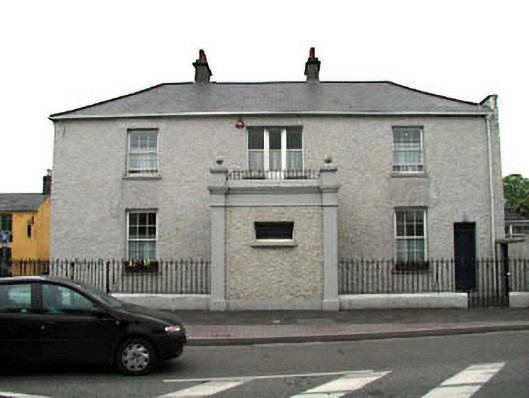
The house was built in the 1780s and is now used as a day care centre. Towards the rear it has a very pleasant walled garden; from the side looking across Straffan Road it looks like this:

The car is not always there. Note the rather unattractive grey pebbledash rendering which is I’m afraid rather ubiquitous on old buildings in this area. I think this is because many of these buildings are made from limestone which needs to be protected from weathering. There is a lot of this rendering on the South Campus at Maynooth University too.

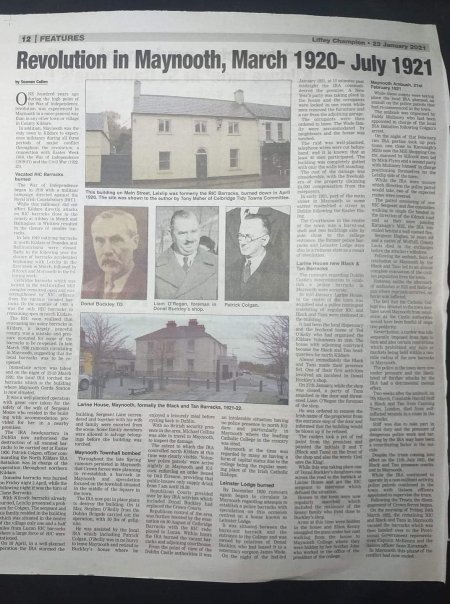
Anyway, I walked past Lyreen/Larine House every time I went to work without ever really thinking about its history. Then, yesterday, I saw this:

The picture at the bottom shows Lyreen House as seen looking South from Court House Square, with Straffan Road to the right. The article in the local paper explains that during the War of Independence a hundred years ago, it was for a time used as a barracks for the Black and Tans! I had absolutely no idea about that until yesterday!

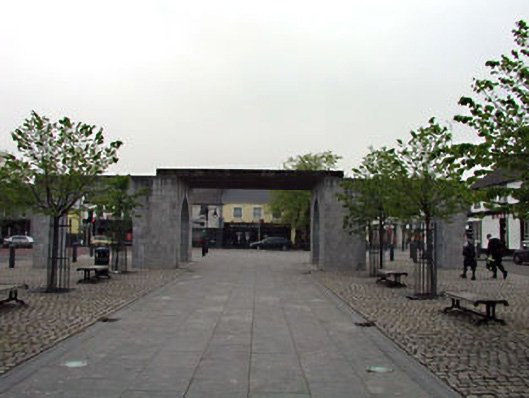
Nowadays the view looking North through Court House Square towards Main Street is this:

The white building to the right is Brady’s pub. The structure you see is a monument to the victims of the Great Hunger in a pleasant seating area that is often used for craft fairs, musical performances and other gatherings. Or at least it was in the pre-Covid era.

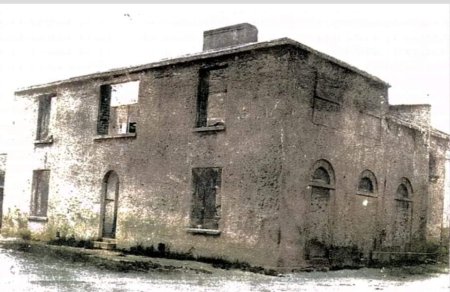
What you don’t see is any sign of a Court House. That is because it was destroyed by the IRA in 1920. This is what it looked like after the attack.

The War of Independence in County Kildare didn’t see anything like as much violence as other parts of Ireland, abut that didn’t mean there wasn’t a strong Republican presence here. When rumours circulated that the British were going to use the Court House as a garrison the local IRA decided to deny them that opportunity by setting it on fire (though they first ensured that everyone inside was taken to safety).

The Old Court House lay derelict for many years and was eventually demolished. Then a public convenience was built on the site. This was not only an eyesore but also a smelly and unpleasant place that people generally avoided. It  was then demolished and the monument was constructed in 1993.

I walked through Court House Square last night on a rare trip out of my house to collect a takeaway for my dinner. I noticed that the Christmas lights and nativity scene were still there, almost a month after Christmas. I wonder when they’ll take them down?


It’s a Sin

Posted in Biographical, History, LGBTQ+, Television with tags , , , , , on January 23, 2021 by telescoper

My Twitter feed was on fire last night with reactions to the first episode of the new Channel 4 drama series It’s a Sin. The title is taken from the 1987 hit of the same name by the Pet Shop Boys.

I didn’t watch it. I told a friend that I would find it impossible to watch. He asked “Why, would the memories be uncomfortable?”. I said “No. I can’t get Channel 4 on my television”.

I only have the minimum Saorview you see.

Now I’ve been informed that it is possible to stream Channel 4 for free in Ireland I will definitely watch it, so consider this a prelude to the inevitable commentary when I’ve actually seen it.

The reason why my friend thought I’d find it uncomfortable is that the story of the first episode is set in 1981 and revolves around five characters who were eighteen years old at that time. As it happens I was also 18 in 1981. On the other hand the story involves the protagonists all moving to London in 1981, which I didn’t. I was living in Newcastle in 1981, doing my A-levels and then taking the entrance exam for Cambridge where I went the following year (1982).

Before going on I’ll just mention that 1981 was – yikes – 40 years ago and – double yikes – is closer in time to the end of World War 2 than to today.

Anyway, a major theme running through the 5-part series is the AIDS epidemic that was only just starting to appear on the horizon in 1981. I recall reading an article in a magazine about GRIDS (Gay Related Immune Deficiency Syndrome), which it was what AIDS was called in the very early days. I remember it only vaguely though and didn’t think much about AIDS during the time I was an undergraduate student, although became terrifyingly relevant when I moved to Sussex in 1985 to start my graduate studies.

Although I had been (secretly) sexually active at school and definitely knew I was gay when I was an undergraduate at Cambridge, I wasn’t very open about it except to my closest friends. I also didn’t do much about it either, apart from developing a number of crushes that were doomed to be unrequited.

In my final year at Cambridge I decided that I would try to get a place to do a PhD (or, as it turned out, a DPhil). I applied to a few places around the country, and was very happy to get an offer from Sussex and started my postgraduate studies there in 1985. The reputation of Brighton as being a very `gay’ place to live was definitely part of the decision to go there.

Having been very repressed at Cambridge and mostly unhappy as a consequence I decided that I couldn’t continue to live that way. One of the first things I did during `Freshers Week’ at Sussex was join the GaySoc (as it was called) and I gradually became more involved in it as time went on. To begin with I found it helped to pluck up the nerve to go into gay bars and clubs, which I was a bit scared to do on my own having never really experienced anything like them in Newcastle or Cambridge.

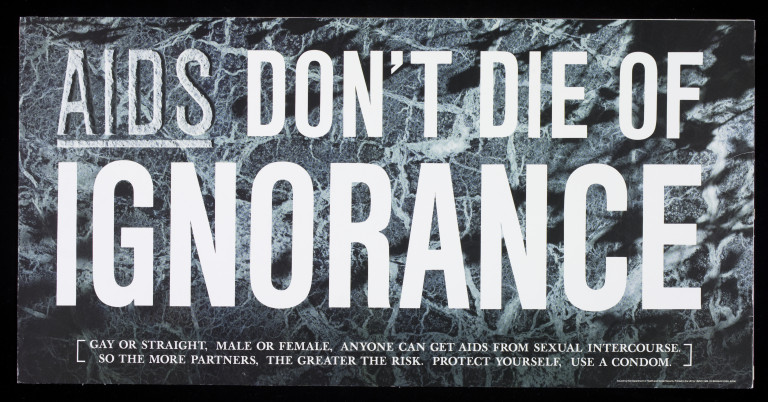
It didn’t take me long to acquire an exciting sex life, picking up guys here and there and having (mostly unprotected) sex with strangers several times a week (or more). I then met an undergraduate student through the GaySoc. Although younger than me he was more experienced and more confident about sex. The relationship I had with him was a real awakening for me. We had a lot of sex. I would often sneak off form my office to his room on campus during the day for a quickie. We never even talked about wearing condoms or avoiding ‘risky’ behaviour. This was in 1986. The infamous government advertising campaign began in 1987.

Then one evening we went together to a GaySoc meeting about AIDS during which a health expert explained what was dangerous and what wasn’t, and exactly how serious AIDS really was. Most of us students were disinclined to follow instructions from the Thatcher government but gradually came round to the idea that it wasn’t the attempt at social control that we suspected but a genuine health crisis. That day my partner and I exchanged sheepish glances all the way through the talk. Afterwards we discussed it and decided that it was probably a good idea for us both to get tested for HIV, though obviously if one of us had it then both of us would.

Having been told what the riskiest sexual practices were, and knowing that I had been engaging very frequently precisely in those behaviours, I just assumed that I would be found HIV+. When I did eventually have a test I was quite shocked to find I was negative, so much so that I had another test to make sure. It was negative again. We were both negative, in fact, so we carried on as before.

It was in the next few years that people I knew started to get HIV, and then AIDS, from which many died. I imagine, therefore, that It’s a Sin will have a considerable personal resonance for me. Even without watching it (yet) a question that often troubles me returned once again to my mind: why am I still alive, when so many people I knew back then are not?

Delivery Notes

Posted in Biographical, Politics with tags , , on January 22, 2021 by telescoper

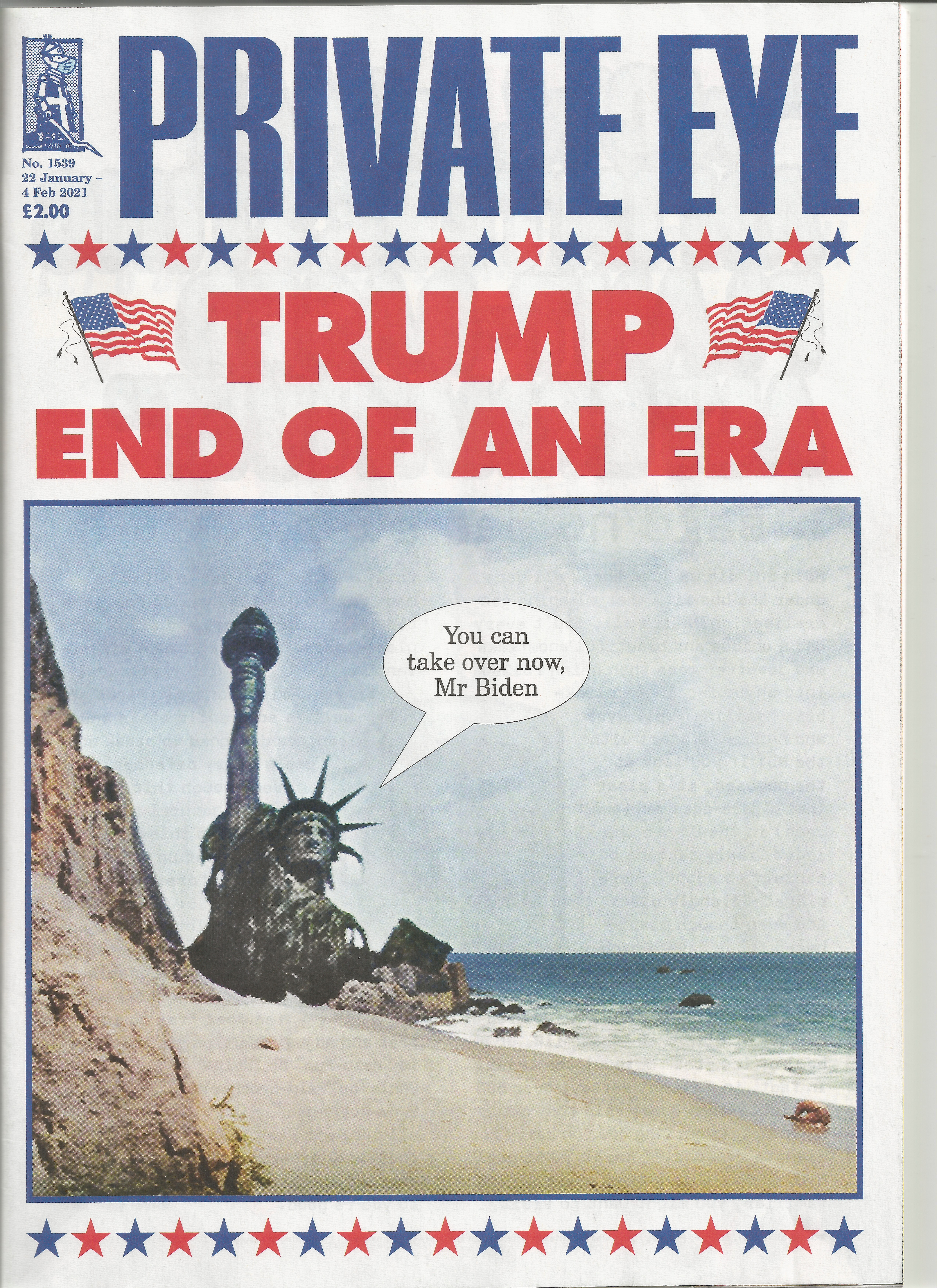
I was a bit surprised to see the latest issue of Private Eye was delivered this morning. The Eye is published every fortnight on a Wednesday but, until recently, it normally took about a week to arrive in Ireland. Since the New Year however it has been taking much less time to get here. In fact this one arrived on the nominal issue date (22nd January):

I’m not sure why it’s suddenly got much faster, but I wonder if it might be related to a reduction in other items being sent to Ireland from the UK because of difficulties that kicked in as a result of Boris Johnson’s Trade Reduction Treaty on January 1st? (Perhaps not, though, because my 1st January Physics World still hasn’t arrived and that presumably comes via a similar route…)

Anyway, I’ve been reading quite a lot of stories about the changes that have occurred in receiving goods from the UK: long delays, vastly increased delivery charges, VAT and customs payments due on arrival, and sometimes orders cancelled entirely. I think items only worth a few euro are exempt from these new charges but I know of a few people who have been handed large bills when goods they have ordered over the internet have been delivered. I think it’s going to be very important in future that firms advertising in Ireland make it clear if the goods they are selling are going to be delivered from the UK.

These developments have at least provided some possible explanations of the reasons why so many people voted for Brexit. One might be that they enjoy filling in forms and wrestling with other kinds of red tape. Another, more likely, is “sovereignty” which I interpret as meaning “not having to deal with nasty foreigners”.

As regular readers of this blog will know I voted Remain and now live in the EU as a nasty foreigner. I do however think we nasty foreigners should accept the reality of this situation and respect British sovereignty.

Indeed I have seen many interviews with British business leaders who voted for Brexit complaining about all the difficulties that now exist to trade with nasty foreigners. I think there’s only one way for decent folk to react to this and that is to help these people in their hour of need by saving them the effort of form-filling, the extra expense of delivery, along with all the other headaches, and at the same time fully respecting their sovereignty, by simply not buying goods from them any more. It’s the honorable thing to do.

Fortunately it is increasingly possible for people in Ireland to do what Brexiters want by avoiding buying British goods. There are now 30 weekly sailings from Ireland to France, operated by 4 different companies. From tomorrow there will also be a new route from Dublin to Cherbourg by Stena Line.

But now I’m in a quandary. Am I disrespecting British sovereignty by continuing to subscribe to Private Eye?

Physics versus Astrophysics

Posted in The Universe and Stuff with tags , on January 21, 2021 by telescoper

I don’t often post memes on here, but I couldn’t resist this one. Credit here.

NUI Dr Éamon De Valera Post-Doctoral Fellowship in Mathematical Sciences

Posted in History, mathematics, Maynooth, The Universe and Stuff with tags , , , on January 21, 2021 by telescoper

I found out yesterday that the National University of Ireland is commemorating the centenary of the election of Éamon de Valera as its Chancellor. To mark this occasion, NUI will offer a special NUI Dr Éamon De Valera Post-Doctoral Fellowship in Mathematical Sciences. This post is in addition to the regular NUI awards, which include a position for Science & Engineering.

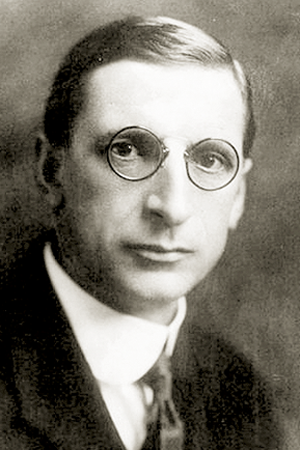
Éamon de Valera, photographed sometime during the 1920s.

Éamon de Valera, founder of Fianna Fáil (formerly one of the two largest political parties in Ireland) and architect of the Irish constitution. De Valera (nickname `Dev’) is an enigmatic figure, who was a Commandant in the Irish Republican Army during the 1916 Easter Rising, who subsequently became Taoiseach  and then President of the Irish Republic.

You may or may not know that de Valera was a mathematics graduate, and for a short time (1912-13) he was Head of the Department of Mathematics and Mathematical Physics at St Patrick’s College, Maynooth,  a recognized college of the National University of Ireland. The Department became incorporated in Maynooth University, when it was created in 1997.Mathematical Physics is no longer a part of the Mathematics Department at Maynooth, having become a Department in its own right and it recently changed its name to the Department of Theoretical Physics.

Anyway, the Fellowship will be awarded on the basis of a common competition open to NUI graduates in all branches of the Mathematical Sciences. All branches of the Mathematical Sciences will be deemed as including, but not limited to, all academic disciplines within Applied Mathematics, Pure Mathematics, Mathematical Physics and Statistics and Probability.

You can find more details of the position here. I should say however that it is open to NUI graduates only, though it can be held at any of the constituent colleges of the National University of Ireland. Given the de Valera connection with Maynooth, it would be fitting if it were held here!
The deadline for applications is February 9th.

On the Colours of Stars

Posted in The Universe and Stuff with tags , , , on January 20, 2021 by telescoper

There’s an interesting paper on the arXiv by Harre & Heller with the title Digital Color Codes of Stars. Here’s the abstract:

Publications in astrophysics are nowadays mainly published and read in digitized formats. Astrophysical publications in both research and in popular outreach often use colorful representations of stars to indicate various stellar types, that is, different spectral types or effective temperatures. Computer generated and computer displayed imagery has become an integral part of stellar astrophysics communication. There is, however, no astrophysically motivated standard color palette for illustrative representations of stars and some stars are actually represented in misleading colors. We use pre-computed PHOENIX and TLUSTY stellar model spectra and convolve them with the three standard color matching functions for human color perception between 360nm and 830nm. The color matching functions represent the three sets of receptors in the eye that respond to red, green, and blue light. For a grid of main sequence stars with effective temperatures between 2300K and 55,000K of different metallicities we present the red-blue-green and hexadecimal color codes that can be used for digitized color representations of stars as if seen from space. We find significant deviations between the color codes of stars computed from stellar spectra and from a black body radiator of the same effective temperature. We illustrate the main sequence in the color wheel and demonstrate that there are no yellow, green, cyan, or purple stars. Red dwarf stars (spectral types M0V – M9V) actually look orange to the human eye. Old white dwarfs such as WD1856+534, host to a newly discovered transiting giant planet candidate, occur pale orange to the human eye, not white. Our freely available software can be used to generate color codes for any input spectrum such as those from planets, galaxies, quasars etc.

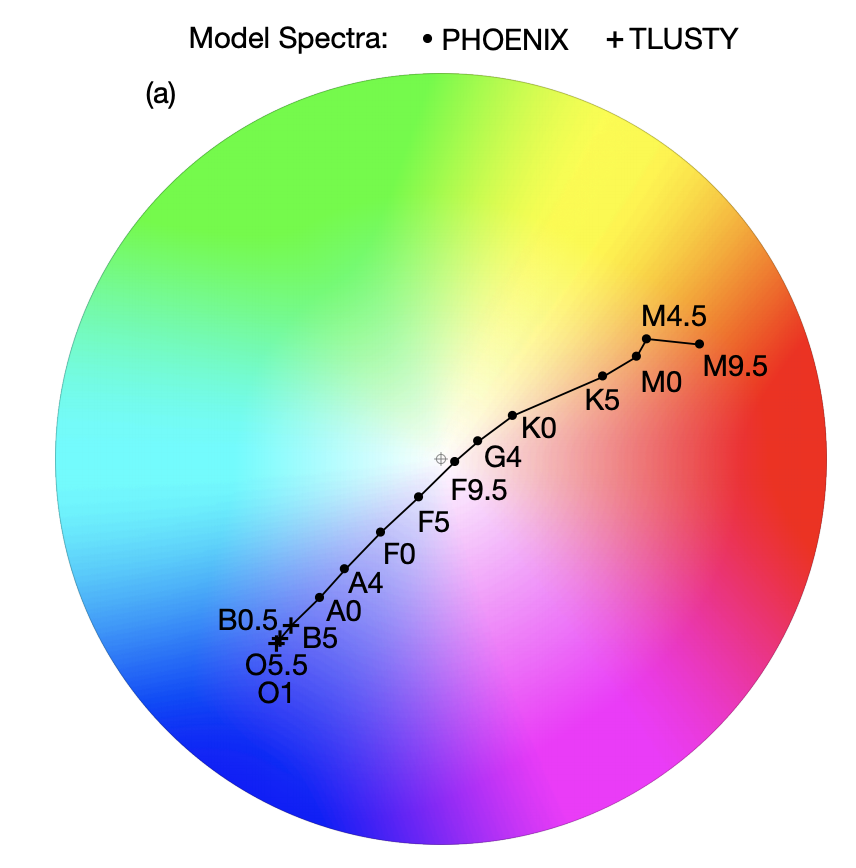
This reminded me of a post I wrote in 2011 about why you never see any green stars. They say a picture paints a thousand words so here’s an illustration from the above paper:

This shows that although there are stars in the Main Sequence whose spectra peak at wavelengths corresponding to green light, none of them look green. The paper also claims that there are no yellow stars either. The Sun can look yellow when viewed from Earth but that is to do with scattering in the atmosphere: from space, the Sun looks white.

For another discussion of the use of colour representations in cosmology, see here.


It’s raining…

Posted in Biographical, Maynooth, Poetry with tags , , , , , , on January 19, 2021 by telescoper

Taking a short break from examination marking I had a look outside. I’m not sorry to be cooped up indoors given that it’s pouring with rain. In fact it rained all night and morning and is set to continue in the same vein until tomorrow.

While I was waiting for my coffee to brew I was thinking about some idiomatic expressions for heavy rain. The most familiar one in English is Raining Cats and Dogs which, it appears, originated in a poem by Jonathan Swift that ends with the lines:

Drowned puppies, stinking sprats, all drenched in mud,
Dead cats and turnip tops come tumbling down the flood.

My French teacher at school taught me the memorable if slightly indelicate Il pleut comme vache qui pisse, although there are other French expressions involving, among other things nails, frogs and halberds.

One of my favourites is the Welsh Mae hi’n bwrw hen wragedd a ffyn which means, bizarrely, “It’s raining old ladies and sticks”. There is also Mae hi’n bwrw cyllyll a ffyrc – “It’s raining knives and forks”.

Related idiomatic expressions in Irish are constructed differently. There isn’t a transitive verb meaning “to rain” so there is no grammatical way to say “it rains something”. The way around this is to use a different verb to represent, e.g., throwing. For example Tá sé ag caitheamh sceana gréasaí which means “It’s throwing cobblers’ knives”.

Talking (of) cobblers, I note that in Danish there is Det regner skomagerdrenge – “It’s raining shoemakers’ apprentices” and in Germany Es regnet Schusterjungs – “It’s raining cobblers’ boys”.

Among the other strange expressions in other languages are Está chovendo a barba de sapo (Portuguese for “It’s raining toads’ beards”), Пада киша уби миша (Serbian for “It’s raining and killing mice”),  Det regner trollkjerringer (Norwegian for “It’s raining female trolls”) and Estan lloviendo hasta maridos (Spanish for “It is even raining husbands”).

No sign of any husbands outside right now so I’ll get back to correcting exams.

Cosmology Talks: Marika Asgari on Kids 1000

Posted in Cardiff, Maynooth, The Universe and Stuff with tags , , , , on January 18, 2021 by telescoper

It’s time I shared another one of those interesting cosmology talks on the Youtube channel curated by Shaun Hotchkiss. This channel features technical talks rather than popular expositions so it won’t be everyone’s cup of tea but for those seriously interested in cosmology at a research level they should prove interesting. Since I haven’t posted any of these for a while I’ve got a few to catch up on – this one is from September 2020.

In this talk Marika Asgari tells us about the recent Kilo-Degree Survey (KiDS) cosmological results. These are the first results from KiDS after they have reached a sky coverage of 1000 square degrees. Marika first explains how they know that the results are “statistics dominated” and not “systematics dominated”, meaning that the dominant uncertainty comes from statistical errors, not systematic ones. She then presents the cosmological results, which primarily constrain the clumpiness of matter in the universe, and which therefore constrain Ωm and σ8. In the combined parameter “S8“, which is constrained almost independently from Ωm by their data they see a more than 3σ tension with the equivalent parameter one would infer from Planck.

P. S. The papers that accompany this talk can be found here and here.