I couldn’t resist sharing this clip of Nobel Laureate and Vice Chancellor of the Australian National University, Brian Schmidt giving it to the university rankings system with both barrels. The whole video is quite long but the link hopeully takes you to the point where Brian takes aim:
If it doesn’t jump to about 23.28 please go there manually using the slider or try this link.
There are two important points to amplify here. One is a lesson I learned in my own brief time as sort of Senior Management at Sussex, which is that rankings are not just “important” in such circles: they are literally the only thing that drives decision-making. The reason for that is something Brian touches upon, namely that most Vice-Chancellors are driven by their own ambitions more than they are by the good of education and research. Those that think this way want to make sufficient impact on the league table position of their University so by the end of their period of tenure they will be in line for a more prestigious job with an even higher salary. Not every VC thinks like this of course – Brian for one certainly doesn’t – but those that do are in the majority. That’s why so many institutions are driven by short-term decision-making in a way that reminds me of a warship, forever steering towards the last fall of shot.
In my view the pathological obsession with rankings is at least in part a symptom. The underlying cause is this group of management types who know little about and care little for what the purpose of academia actually is. In my opinion the quickest way to improve universities worldwide is to eliminate these Leadership positions and instead have Vice Chancellors or Presidents or Whatever They’re Called and simply have leaders elected by the academics of the institution from among their ranks.
It’s been too long since I shared one of those interesting cosmology talks on the Youtube channel curated by Shaun Hotchkiss. This channel features technical talks rather than popular expositions so it won’t be everyone’s cup of tea but for those seriously interested in cosmology at a research level they should prove interesting.
Anyway, although I’ve been too busy to check out the talks much recently I couldn’t resist sharing this one not only because it’s on a topic I find interesting (and have worked on) but also because one of the presenters (Mateja Gosença) is a former PhD student of mine from Sussex! So before I go fully into proud supervisor mode, I’ll just say that the talk is about AxioNyx, which is a new public code for simulating both ultralight (or “Fuzzy”, so called because its Compton de Broglie wavelength is large enough to be astrophysically relevant) dark matter (FDM) and Cold dark matter (CDM) simultaneously. The code simulates the FDM using adaptive mesh refinement and the CDM using N-body particles.
P. S. The paper that accompanies this talk can be found on the arXiv here.
It’s just over a year since my Mam passed away after several years of struggle with dementia. It seems like a century since I flew back to Newcastle to attend her funeral, so much has happened in the world since then. I got through the sad anniversary reasonably well until this morning I came across this video, which had me in pieces. It’s of a lady by the name of Marta C Gonzalez, a former ballet dancer, who passed away last year; the film was made at her care home in Valencia. A care worker plays her music from Tchaikovsky’s ballet Swan Lake and briefly she is a prima ballerina once more; the film is intercut with footage of herself dancing on stage in New York in the 1960s. It’s unbearably moving, bringing together the awful tragedy of dementia with the power of music if not to heal but at least to provide some measure of respite. Even when almost all is gone, music seems to remain in the deepest part of our being alongside our most cherished memories which it can bring back to life, if only briefly, before the darkness comes.
History says, Don’t hope
On this side of the grave.
Well, there’s an additional reason for hope this morning, in the announcement of good progress in the search for a vaccine against Covid-19. The two pharmaceutical companies involved are Pfizer (USA) and BioNTech SE (Germany). The reported efficacy of the vaccine tested so far is over 90%, which is far higher than experts have predicted. Now these are preliminary results, not yet properly reviewed, based on a sample of only 94 subjects, and I’m not sure what motivated the press release so early in the process. I’m given to understand that the type of vaccine concerned here would also be challenging to manufacture and distribute, but we’re due for some good news on the Coronavirus front so let’s be (cautiously) optimistic.
I thought I’d share this old film that I came across a few days ago. It dates from 1955, at which time Éamon de Valera was leader of the opposition. It is quite a strange film. Notice how the camera position keeps changing as does the placing of the interviewer (Professor Curtis Baker Bradford), who at one point is standing up near to the sitting interviewee in a way that looks very unnatural. Notices the frequent changes of camera angle too. I’m guessing they had to change reels quite frequently and the camera operator used those opportunities to change the set up. It all looks rather stilted with de Valera not at all relaxed but that might have been typical of him. He seems particularly uncomfortable, though, talking about the Easter Rising of 1916: notice how he skips from the Proclamation of the Republic directly to the surrender. I’ve heard it said that Éamon de Valera was not a particularly effective leader of the battalion at he commanded Boland’s Mill during the uprising (which would not be surprising because he had no real military training). Some even say that he had some sort of breakdown while under fire and couldn’t really function during the fighting. It may just be what his political opponents who spread that around, of course. Nobody who wasn’t there will ever really know.
P.S. Apart from anything else, this film shows what a great job Alan Rickman did at “doing” Éamon de Valera in the film Michael Collins…
Edward Thomas was killed in action at the Battle of Arras. His friend W.H. Davies was devastated by this and responded by writing this poem called Killed in Action (Edward Thomas):
Happy the man whose home is still In Nature’s green and peaceful ways; To wake and hear the birds so loud, That scream for joy to see the sun Is shouldering past a sullen cloud.
And we have known those days, when we Would wait to hear the cuckoo first; When you and I, with thoughtful mind, Would help a bird to hide her nest, For fear of other hands less kind.
But thou, my friend, art lying dead: War, with its hell-born childishness, Has claimed thy life, with many more: The man that loved this England well, And never left it once before.
Well it took a while to get there, but less than an hour ago all the major media networks in the USA “called” the result of the 2020 Presidential Election. It looks as if they were all waiting for Joe Biden’s lead in Pennsylvania to exceed the 0.5% threshold needed to rule out a mandatory recount. Once that happened, they all (CNN, CBS, Associated Press, et al – even Fox News) projected that Joe Biden had won. It had been looking that way for some time, but the press agencies wanted to be sure of their ground. Moments after the Pennsylvania result, AP and others also called Nevada in favour of Biden. The remaining tight race, in Georgia, can still go either way, but Biden now has enough electoral votes to be President Elect.
Congratulations to Joe Biden, and to everyone who helped his campaign. A special vote of thanks is due to Jo Jorgensen, the “Libertarian” candidate who polled considerably more votes in the key Swing States than Biden’s margin of victory…
The result is, among many other things, very good news for Ireland. Joe Biden is an Irish-American and we can be confident that he will not allow the Belfast Agreement to be sabotaged by Johnson & Gove. It’s not so good news for Boris Johnson but at least we’ll have the pleasure of seeing him twist in the wind until he resigns in a few months’ time.
Nobody expects Donald Trump to go quietly, however, and there’s no sign that he is going to concede. I think he’d be quite happy to watch his country burn rather than admit being a loser. Some patriot. I think the USA is now entering a very dangerous period in its history. It’s really a question of whether Trump’s entourage can persuade him to accept reality. I’m not sure they will be able to do that. Instead there’s a real possibility that Trump will try to encourage his followers to violent protest. At the very least we can expect him to issue a string of executive orders intend the sabotage the new President. I hope I’m wrong, but I’m more anxious about the next few weeks than I was about the election.
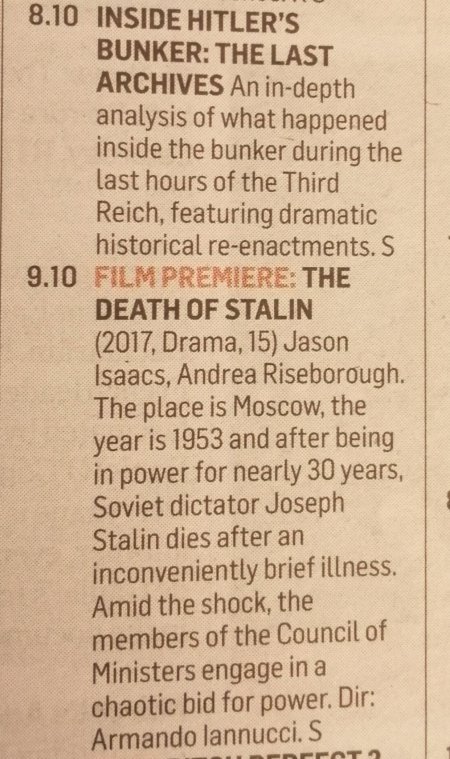
PS Can this evening’s TV schedule on RTÉ 2 really be a coincidence?
PPS. I watched “The Death of Stalin” last night and thought it was very good!
So it’s past 1pm GMT on Friday 6th November and the USA is still trying to work out who will be its next President after the elections that took place on Tuesday. The process is taking so long I wonder if Americans might be starting to appreciate the nature of Test Match cricket?
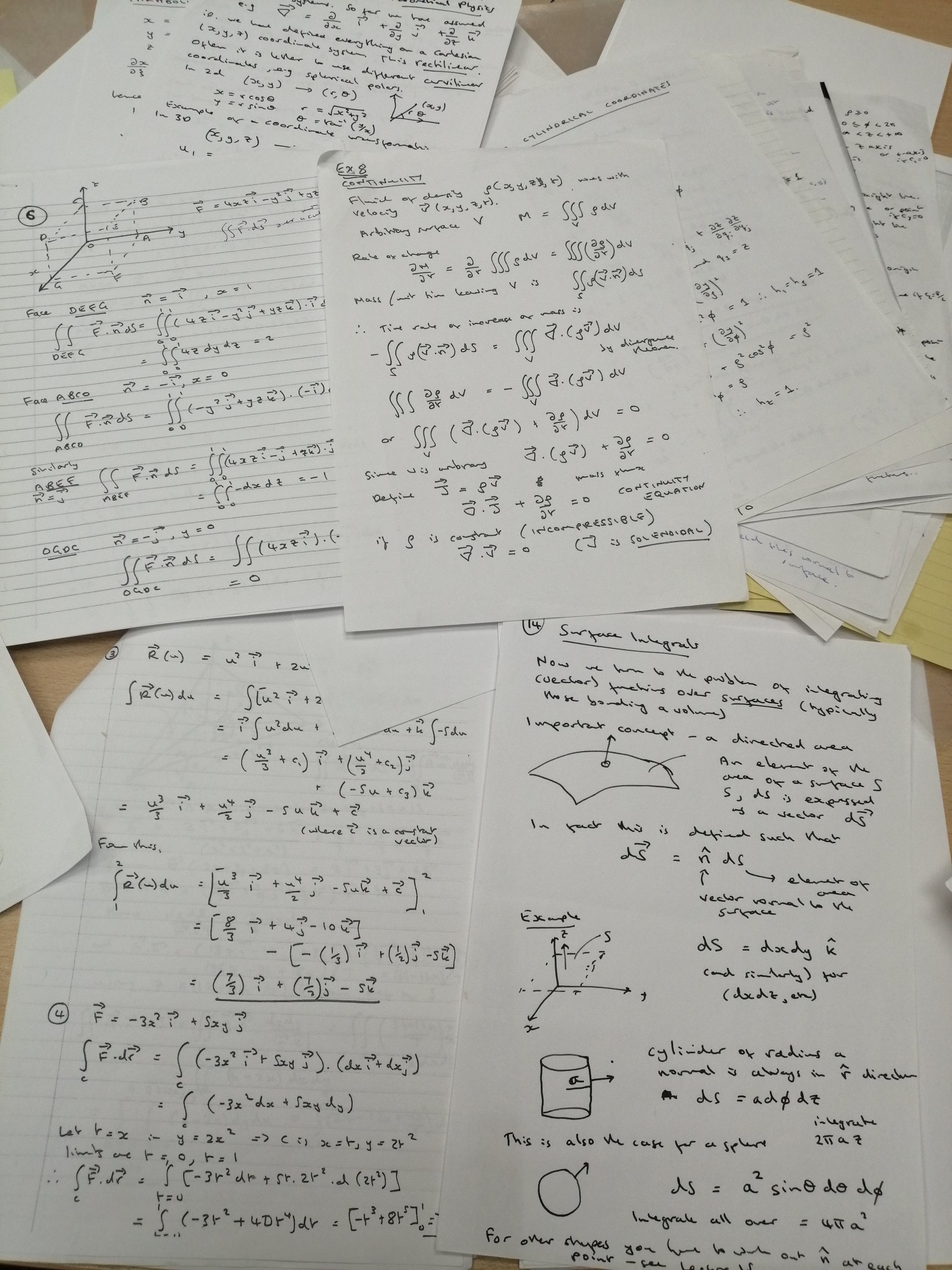
In the meantime I’ve been occupying myself with some simpler calculations for my second-year vector calculus module:
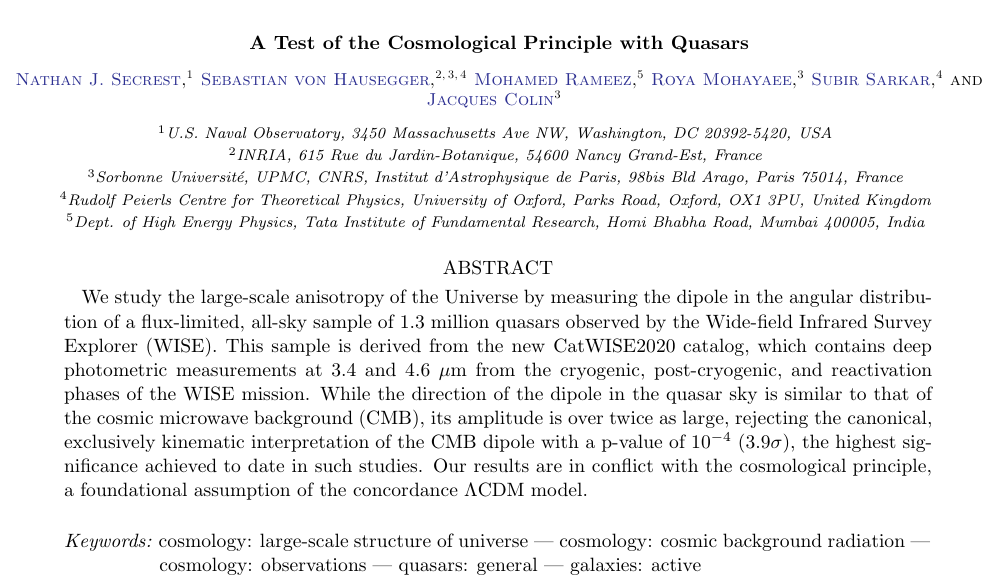
In that post I mentioned that Subir would be taking part in an online debate about this issue. Well, although I wasn’t able to watch it live there is a recording of it which is available here:
It’s rather long, but there are many interesting things in it…
Before you ask, no I didn’t stay up all night for the US presidential election results. I went to bed at 11pm and woke up as usual at 7am when my radio came on. I had a good night’s sleep. It’s not that I was confident of the outcome – I didn’t share the optimism of many of my friends that a Democrat landslide was imminent – it’s just that I’ve learnt not to get stressed by things that are out of my control.
On the other hand, my mood on waking to discover that the election was favouring the incumbent Orange Buffoon is accurately summed up by this image:
Regardless of who wins, I find it shocking that so many are prepared to vote for Trump a second time. There might have been an excuse first time around that they didn’t know quite how bad he was. Now they do, and there are still 65 million people (and counting) willing to vote for him. That’s frightening.
As I write (at 4pm on November 3rd) it still isn’t clear who will be the next President, but the odds have shortened dramatically on Joe Biden (currently around 1/5) having been short on Donald Trump when the early results came in; Trump’s odds have now drifted out between 3/1 and 4/1. Biden is now clearly favourite, but favourites don’t always win.
What has changed dramatically during the course of the day has been the enormous impact of mail-in and early voting results in key states. In Wisconsin these votes turned around a losing count for Biden into an almost certain victory by being >70% in his favour. A similar thing looks likely to happen in Michigan too. Assuming he wins Wisconsin, Joe Biden needs just two of Michigan, Nevada, Pennsylvania and Georgia to reach the minimum of 270 electoral college votes needed to win the election. He is ahead in two – Michigan and Nevada.
This is by no means certain – the vote in each of these states is very close and they could even all go to Trump. What does seem likely is that Biden will win the popular vote quite comfortably and may even get over 50%. That raises the issue again of why America doesn’t just count the votes and decide on the basis of a simple majority, rather than on the silly electoral college system, but that’s been an open question for years. Trump won on a minority vote last time, against Hillary Clinton, as did Bush in 2000.
It’s also notable that this election has once again seeing the pollsters confounded. Most were predicted a comfortable Biden victory. Part of the problem is the national polls lack sufficient numbers in the swing states to be useful, but even the overall voting tally seems set to be much closer than the ~8% margin in many polls.
Obviously there is a systematic problem of some sort. Perhaps it’s to do with sample selection. Perhaps it’s because Trump supporters are less likely to answer opinion poll questions honestly. Perhaps its due to systematic suppression of the vote in pro-Democrat areas. There are potentially many more explanations, but the main point is that when polls have a systematic bias like this, you can’t treat the polling error statistically as a quantity that varies from positive to negative independently from one state to another, as some of the pundits do, because it is replicated across all States.
As I mentioned in a post last week, I placed a comfort bet on Trump of €50 at 9/5. He might still win but if he doesn’t this is one occasion on which I’d be happy to lose money.
P.S. The US elections often make me think about how many of the States I have actually visited. The answer is (mostly not for very long): Kansas, South Dakota, Colorado, Iowa, Missouri, Arkansas, Louisiana, California, Arizona, New York, New Jersey, Maryland, Massachusetts, New Hampshire, Maine, and Pennsylvania. That’s way less than a majority. I’ve also been to Washington DC but that’s not a State..
The views presented here are personal and not necessarily those of my employer (or anyone else for that matter).
Feel free to comment on any of the posts on this blog but comments may be moderated; anonymous comments and any considered by me to be vexatious and/or abusive and/or defamatory will not be accepted. I do not necessarily endorse, support, sanction, encourage, verify or agree with the opinions or statements of any information or other content in the comments on this site and do not in any way guarantee their accuracy or reliability.




 In the Dark