A Day at DIAS

Posted in Biographical, Books, Talks and Reviews with tags , , on March 27, 2018 by telescoper

Last night I flew back to Ireland for a few days of work here before the Easter Weekend. The schedule of flights from Cardiff to Dublin has changed for the spring, with the afternoon flight much later: at 7.45pm instead of 3.40pm, so I left from Cardiff after work on Monday and had dinner in the airport (an overpriced and barely edible beefburger).

Although there is no teaching in either on Maynooth or Cardiff this week I had to come to Ireland for a few reasons, including giving a seminar today at the Dublin Institute for Advanced Studies (DIAS) this afternoon which provided me with the chance to visit it for the first time.

It being a pleasant morning I walked to DIAS from Connolly Station after taking the train there from Maynooth. It’s about half an hour’s walk.

DIAS is actually spread over several sites. Officially my talk was at the School of Theoretical Physics, but there were some people there from the School of Cosmic Physics, which is located not too far away. There were also a few people from Maynooth there, as there are a number of collaborations going on between the two institutions involving staff and students. There was also a visitor from even further afield, in the form of Cormac O’Rafferty who also visits this blog from time to time.

Anyway I had a nice curry for lunch before the talk, which generated a lot of questions from which I infer that it was either confusing or stimulating (or possibly both). Here are the slides in case anyone feels like taking a look.

For a change I decided to take the train back to Maynooth from Pearse rather than Connolly, but as it was rush hour I found it packed.

Maynooth by contrast is very quiet with most students away for the break. I can also report that the annoying roadworks that have been going outside my Maynooth residence for months have now finished.

Anyway, thanks to my hosts at DIAS for inviting me and I hope my talk was reasonably bearable. Hopefully this will be the first visit of many!

Is the Cosmological Flatness Problem really a problem?

Posted in Bad Statistics, The Universe and Stuff with tags , , on March 26, 2018 by telescoper

A comment elsewhere on this blog drew my attention to a paper on the arXiv by Marc Holman with the following abstract:

Modern observations based on general relativity indicate that the spatial geometry of the expanding, large-scale Universe is very nearly Euclidean. This basic empirical fact is at the core of the so-called “flatness problem”, which is widely perceived to be a major outstanding problem of modern cosmology and as such forms one of the prime motivations behind inflationary models. An inspection of the literature and some further critical reflection however quickly reveals that the typical formulation of this putative problem is fraught with questionable arguments and misconceptions and that it is moreover imperative to distinguish between different varieties of problem. It is shown that the observational fact that the large-scale Universe is so nearly flat is ultimately no more puzzling than similar “anthropic coincidences”, such as the specific (orders of magnitude of the) values of the gravitational and electromagnetic coupling constants. In particular, there is no fine-tuning problem in connection to flatness of the kind usually argued for. The arguments regarding flatness and particle horizons typically found in cosmological discourses in fact address a mere single issue underlying the standard FLRW cosmologies, namely the extreme improbability of these models with respect to any “reasonable measure” on the “space of all space-times”. This issue may be expressed in different ways and a phase space formulation, due to Penrose, is presented here. A horizon problem only arises when additional assumptions – which are usually kept implicit and at any rate seem rather speculative – are made.

It’s an interesting piece on a topic that I’ve blogged about before. I think it’s well worth reading because many of the discussions of this issue you will find in the literature are very confused and confusing. Apart from mine of course.

Debussy, Mozart and Messiaen at St David’s Hall

Posted in Music with tags , , , , , , on March 25, 2018 by telescoper

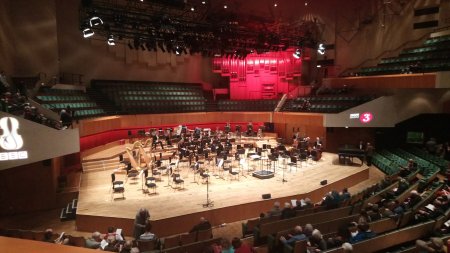
The view from Tier 2 before the concert

After work (and a pint or two) on Friday evening I headed to St David’s Hall for a concert by the BBC National Orchestra of Wales conducted by Jac van Steen. The concert was broadcast live on BBC Radio 3 so you can listen to it on the iPlayer for a month.

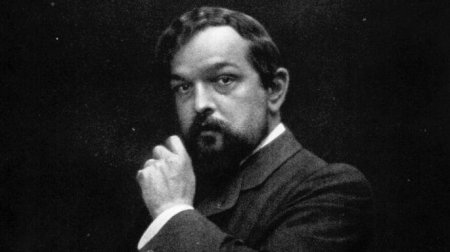
Two of the four pieces on the programme were by Claude Debussy (abovel, to mark the centenary of his death which was 100 years ago today (on 25th March 1918).

The concert opened with Debussy’s Nocturnes and ended with La Mer , both works consisting of three movements for a large orchestra and showing the vivid chromaticism and lush orchestration that typifies so many of his compositions. The last movement of Nocturnes includes some wordless singing, which was performed beautifully by female singers from the Royal Welsh College of Music and Drama.

The second piece was Mozart’s Piano Concerto No. 27 in B flat Major K. 595, with soloist Steven Osborne. This, Mozart’s last piano concerto, is a nice piece, well played by both pianist and (pared-down) orchestra but I felt it was a rather incongruous choice for this programme. It was probably chosen because it is in some sense a valedictory piece, but all it did for me in this concert was emphasize how much the harmonic vocabulary of music expanded between Mozart and Debussy, and left me feeling that the Mozart piece was rather trite in comparison.

After the wine break we heard a piece that was completely new to me, Les Offrandes Oubliées by Olivier Messiaen, a wonderfully expressive piece with wildly contrasting moods, clearly influenced by Debussy but with a distinctive voice all its own. Messiaen is one composer I definitely wish I knew more about.

After the superb La Mer which ended the published programme, something very unusual happened for a classical concert in the UK: there was an encore by the orchestra in the form of a dance by Debussy orchestrated by Maurice Ravel.

All in all, a very enjoyable evening and a fitting tribute to Claude Debussy, a composer who was both modernist and impressionist and whose influence on the development of music is incalculable.

The Lamentations of Jeremiah

Posted in Music with tags , , , on March 24, 2018 by telescoper

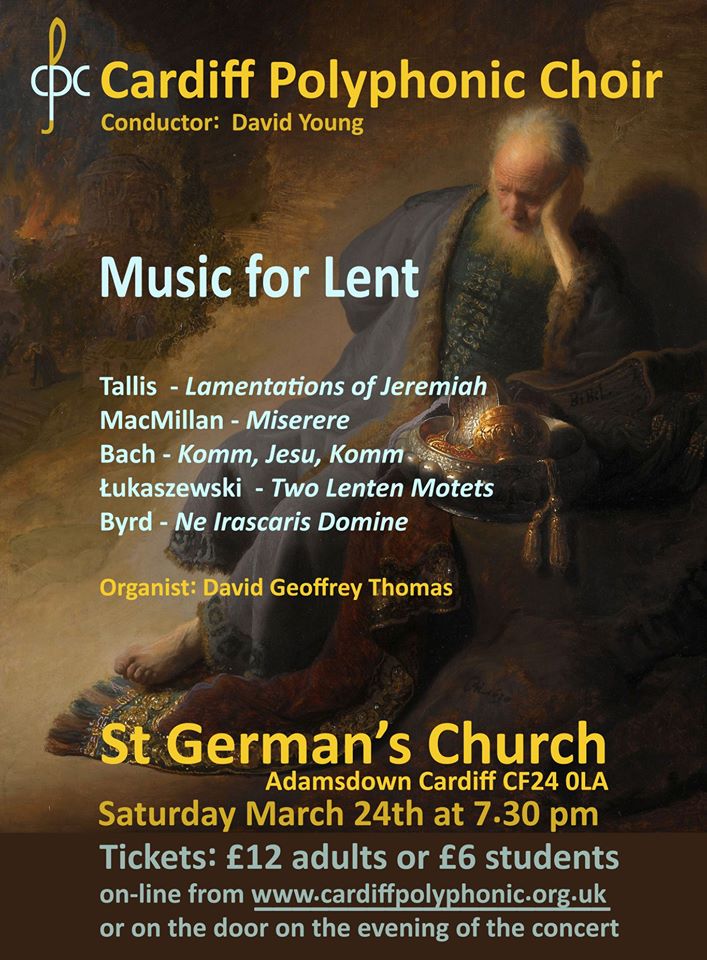
This evening I’m going to this concert, which I’ve been looking forward to for some time.

It may be sombre and melancholy, but the setting of The Lamentations of Jeremiah by Thomas Tallis is also astonishingly beautiful and it’s been one of my favourite choral works for many years. In fact it’s one of the most frequently played recordings on my iPod because I turn to it when I need to listen something peaceful and reflective. I have never heard it performed live, however, so this will be a treat for me. To give you a taster, here is the work (performed by The Sixteen):

P.S. The Hebrew text of the Book of Lamentations is remarkable for being in the form of an acrostic, with each verse starting with consecutive letters of the Hebrew alphabet. Tallis sets verses from the Latin (Vulgate) translation, but includes the initial letters of the Hebrew version: Aleph, Beth, etc..

UPDATE: I went to the concert as planned. Very enjoyable it was, though I was a bit surprised to find the two parts of The Lamentations of Jeremiah were not performed one after the other but either side of two motets by Lukaszewski. I guess this is to emphasise that they are separate pieces rather than one 20-minute long work but I always listen to them together.

The concert had an interval of about 25 minutes but, lamentably, no drinks were on sale…

Ariel to Fly

Posted in The Universe and Stuff with tags , , , , on March 23, 2018 by telescoper

All hail, great master! Grave sir, hail! I come
To answer thy best pleasure. Be ‘t to fly,
To swim, to dive into the fire, to ride
On the curled clouds, to thy strong bidding task
Ariel and all his quality.

The Tempest, Act I, Scene 2.

It’s nice to be able to pass on a bit of good news for the good folk of the Astronomy Instrumentation Group here in the School of Physics & Astronomy at Cardiff University.

The ARIEL mission has been given the green light by the European Space Agency and will launch sometime around 2028. It will produce the first ever large-scale survey of the atmospheric chemistry of planets outside our solar system. Ariel will extract the chemical fingerprints of the gases in the atmospheres of over 1000 exoplanets, as well as capturing information about the temperatures and pressures in their atmospheres and the presence of clouds.

Whenever I read of exciting news from the field of exoplanet research – which happens quite frequently nowadays – it reminds me that when I started my graduate studies (in 1985) the field didn’t really exist. Now it’s one of the biggest and most active areas of astronomy! Another thing that makes me feel a bit of a dinosaur is that when Ariel actually launches I’ll be 65…

As with all such missions, a large international collaboration will be involved in Ariel, and much of the detail of who will do what is yet to be worked out, but Cardiff scientists will be providing detailed computer simulations of the Ariel satellite and its instruments, ensuring that the scientific observations can be carefully planned and the resulting data can be analysed correctly. The team will also be involved in the ground segment after launch, interpreting the data from the observations to characterise the atmospheres of the exoplanets. The Principal Investigator of the whole mission is Professor Giovanna Tinetti of University College, London, who I see regularly at dinner with the RAS Club.

Head Irishman of the School, Matt Griffin, who will himself is quoted in the news item as saying

The decision to select the Ariel mission demonstrates the scientific vision and ambition of ESA, and it’s the start of a great adventure for everyone involved. This is a mission that will hugely advance our understanding of the nature of planets and of our place in the Universe, and at Cardiff we are very much looking forward to our participation in the project.

The launch date of 2028 is some way off but space missions are exceedingly complicated things and there’s a lot to do in the next decade or so until Ariel finally flies. Hopefully neither swimming, nor diving into fire nor riding on the curled clouds will be involved, but the scientific quality is something of which we can be very confident.

Congratulations to everyone involved in getting this mission selected and best wishes to all those involved in Cardiff and elsewhere!

Peter Tatchell: Equality is not Enough

Posted in Cardiff, History, LGBTQ+, Politics with tags , on March 23, 2018 by telescoper

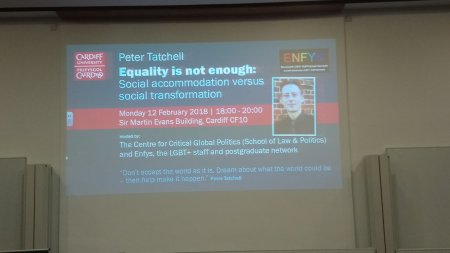
On the evening of Monday 12th February, during LGBT History Month, I went to a lecture by Peter Tatchell which was held in the Sir Martin Evans lecture theatre at Cardiff University. I was going to do a post about it but never found the time. Here’s a snap of the title slide I took at the time:

Today I noticed that a video of the lecture had been posted on Cardiff University’s youtube channel which reminded me to say something about it. I admire and respect Peter Tatchell’s integrity and determination, and the way he has stood up against homophobia for more than 50 years is inspirational. I don’t agree with everything he says, but I found myself agreeing with most of the content of this lecture, the main idea of which was that it is not enough for LGBT people to seek equality within a system that is so manifestly discriminatory against whole sectors of the population. The aim of of LGBT campaigners should be to transform society, not to be accommodate within it.

Anyway, here’s his lecture. Form your own opinions!

A photograph of Sir John Herschel

Posted in Art, History on March 22, 2018 by telescoper

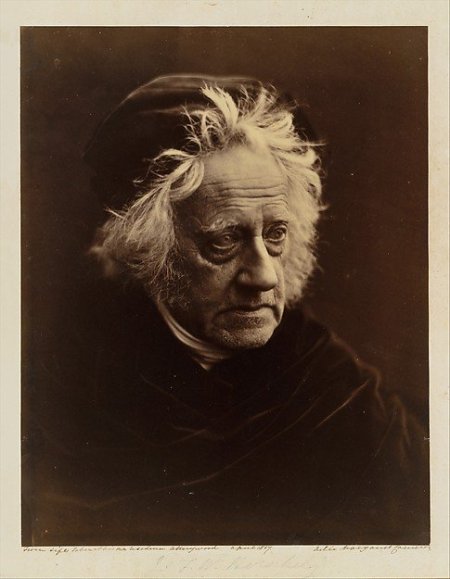
I didn’t have time to write a post today before it became necessary for me to go to the pub, so I thought I’d just share this marvellous photograph of astronomer Sir John Herschel taken in 1867 by pioneering portrait photographer Julia Margaret Cameron.

Manchester Hill – “Here we fight, and here we die”

Posted in History with tags , , , , on March 21, 2018 by telescoper

Today is the centenary of the start of a major offensive of the Western Front by the German forces against the British and French armies during the First World War. One particular action that took place on the first day of that offensive took place at a location now known as Manchester Hill, a region of high ground forming a salient overlooking the town of St Quentin, on this day 100 years ago i.e. on 21st March 1918. I read about this some time ago, but thought I would do a brief post about it to mark this grim anniversary.
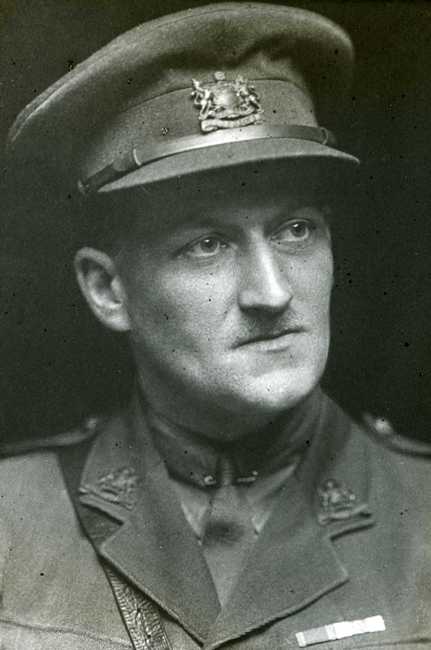
Lieutenant-Colonel Wilfrith Elstob, Commanding Officer, 16th Battalion Manchester Rifles.

Manchester Hill had been captured by the 2nd Battalion of the Manchester Regiment in April 1917 and in March 2018 it was held by the 16th Battalion of the same Regiment under the command of Lieutenant-Colonel Wilfrith Elstob, a schoolteacher before the War who had joined the army in 1914 as a private soldier and was promoted through the ranks. His gallantry on that day earned him a posthumous Victoria Cross with the citation:

For most conspicuous bravery, devotion to duty and self-sacrifice during operations at Manchester Redoubt, near St. Quentin, on the 21st March, 1918. During the preliminary bombardment he encouraged his men in the posts in the Redoubt by frequent visits, and when repeated attacks developed controlled the defence at the points threatened, giving personal support with revolver, rifle and bombs. Single-handed he repulsed one bombing assault driving back the enemy and inflicting severe casualties. Later, when ammunition was required, he made several journeys under severe fire in order to replenish the supply. Throughout the day Lieutenant-Colonel Elstob, although twice wounded, showed the most fearless disregard of his own safety, and by his encouragement and noble example inspired his command to the fullest degree. The Manchester Redoubt was surrounded in the first wave of the enemy attack, but by means of the buried cable Lieutenant-Colonel Elstob was able to assure his Brigade Commander that “The Manchester Regiment will defend Manchester Hill to the last.” Sometime after this post was overcome by vastly superior forces, and this very gallant officer was killed in the final assault, having maintained to the end the duty which he had impressed on his men – namely, “Here we fight, and here we die.” He set throughout the highest example of valour, determination, endurance and fine soldierly bearing.

His last action, after the Germans had broken through the last line of defences, was to use the field telephone to call down an artillery barrage onto his own position. His body was never found and he has no known grave.

You can read the stories of other soldiers who fought and died that day here.

Manchester Hill jutted out into the German lines so, although it was heavily fortified, it was very vulnerable and difficult to defend. Enemy troops were in position on three sides of the hill, and in the event of an attack was difficult to prevent it being surrounded, isolated and destroyed. In the days and hours preceding March 21st the troops on Manchester Hill could see the Germans moving into position and knew a major offensive was imminent. Elstob repeatedly asked his superior offices for permission to withdraw, but it was repeatedly refused. When specific intelligence was received that the attack would take place in the morning of 21st March he once more contacted his HQ to request position to withdraw. After having his request refused once more, he returned to his men and made the famous statement “This is our position. He we fight and here we die.”

There was thick fog the following morning, hiding the inevitable German advance which began at 6.30am with an artillery bombardment until it was too late to prevent them encircling the British garrison. By 11.30 the British were completely encircled. Nevertheless the defenders of Manchester Hill fought off repeated attacks and managed to hold their position until late afternoon against an overwhelmingly larger force. Elstob was in the thick of the action throughout, once holding a position alone using his service revolver and hand grenades. By 4pm however, the battle was lost and virtually all the defenders were dead. Of the 168 men (8 officers and 160 other ranks) who participated in the defence of the Manchester Hill redoubt, just 17 survived (two officers and 15 other ranks).

The German advance broke through Allied lines and stormed on, even at one point threatening Paris, but the pace of the advance led to supply difficulties and it eventually stuttered, was stopped and then flung back into a full retreat. Although German forces had been reinforced by troops no longer needed in the East after the Russian Revolution of 1917, American forces had been arriving in huge numbers – 300,000 a month – at the time of the Spring offensive and it this influx of troops across the Atlantic that proved decisive in the end.

We should celebrate the bravery of the defenders of Manchester Hill, especially Lieutenant-Colonel Elstob, but one can’t help asking why he was not given permission to withdraw. It is true that they delayed and disrupted the German advance, but at a terrible cost. It does seem to me that for all the courage and gallantry displayed by Elstob and his men, their sacrifice was unnecessary.

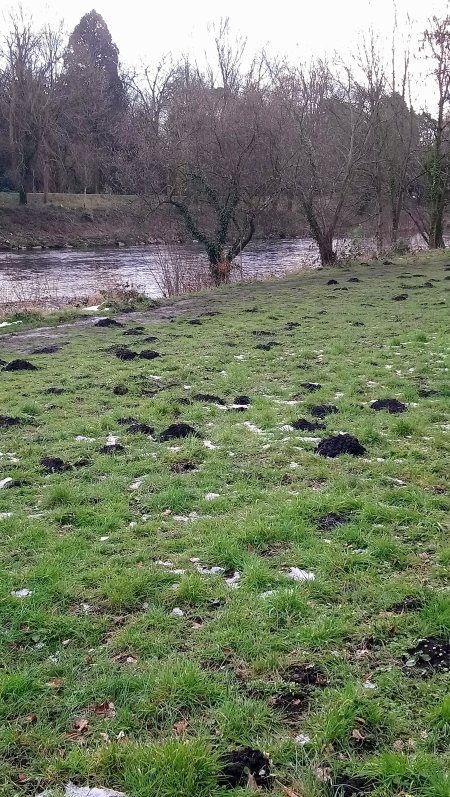
Equinoctial Molehills

Posted in Biographical, Bute Park, The Universe and Stuff with tags , , , on March 20, 2018 by telescoper

Very busy today, what with a return to lecturing in Cardiff and so on, so I’ve just got time for a quick post to mark the fact that the Vernal Equinox in the Northern Hemisphere took place today, Tuesday 20th March 2018, at 16.15 UTC (which is 16.15 GMT). This means that the Sun has just crossed the celestial equator on its journey Northward. Some people regard this as the first day of spring, which is fair enough as it does correspond fairly well to the end of the Six Nations rugby.

It wasn’t exactly spring weather when I walked into work this morning, as there are still bits of snow around in Bute Park.

More significantly, a huge number of molehills have appeared. Not quite a mole of molehills, but still quite a few. I’m not sure of the reason for all this molar activity. Perhaps moles have special rituals for marking the Vernal Equinox?

Incidentally I was dismayed to see that my Royal Astronomical Society diary gives the time of the 2018 Vernal Equinox as 16.16 GMT while the wikipedia page I linked to above gives 16.15 GMT. I find a discrepancy of this magnitude extremely unnerving. Or am I making a mountain out of a molehill?

Back to work in Cardiff..

Posted in Biographical, Education with tags , on March 19, 2018 by telescoper

So here I am, then. Back in the offices of the Data Innovation Research Institute in Cardiff for the first time in almost a fortnight. The four-week batch of strikes over pensions has come to an end so I have returned to work. No agreement has been reached so it seems likely there will be further industrial action, but for the time being normal services are being resumed. In fact it’s not exactly back to normal because there’s a large backlog of things to be done (including marking coursework and setting examinations), but I mean at least that lectures resume and will be delivered on the normal timetable. In my Physics of the Early Universe module I have only given four (two-hour) lectures and have missed three. I return to the fray tomorrow morning to give Lecture 8. Frustratingly, that’s the only lecture I have before the Easter break which starts on Friday and lasts for three weeks. Assuming there are no further strikes I’ll be giving lectures 9-12 (the last a revision lecture) after the holiday.

I now have to figure out how to cope with the six hours of lectures missed because of industrial action. That will be tricky, but I’ll do my level best to ensure that I cover everything needed for the examination. I spent most of this morning trying to figure out how to reorganise the remaining material, and I think I can do it as long as we don’t lose any more teaching time. At any rate I have made the decision not to give additional lectures to cover what I’ve missed. Owing to the timing of the strikes (and the fact that only work half the time here in Cardiff) I have been on strike for all the days I would have been working for three weeks. That means I will lose three full weeks pay. Even if it were logistically possible to fit in 6 hours of extra lectures after Easter, I don’t think it’s reasonable for me to do that for free.

While I was on strike a group of my students emailed the Vice-Chancellor of Cardiff University (copying me in) to point out how much teaching they were missing and request some form of compensation. I have a lot of sympathy for their situation and in no way do I want to damage their education. I will do what I can to mitigate the effect of the strike but won’t take any action that reduces the effectiveness of the industrial action. It remains to be seen if any compensation will be offered by the University management, but I think their best policy would be pressure Universities UK to stop pratting about and find a speedy settlement of the dispute.

Anyway, today is a bank holiday in Maynooth – St Patrick’s Day fell on a Saturday this year – and the rest of the week is `Study Week’, so there are no lectures or laboratory sessions. I’ll therefore be staying in Cardiff all week, which gives me the chance to go to a concert on Friday at St David’s Hall – the first for quite a while.

Now, time to get back to writing tomorrow’s lecture…