MSc Opportunities in Data-Intensive Physics and Astrophysics

Posted in Biographical, Education with tags , , , , on June 22, 2017 by telescoper

Back to the office after external examining duties, I received an email this morning to say that the results have now been posted in Cambridge. I also had an email from Miss Lemon at Sussex that told me that their finalists’ results went up last Friday. We did ours in Cardiff last week. This provides me with a timely opportunity to congratulate all students at all three of these institutions – and indeed everywhere else – on their success!

It also occurred to me tha,t now that most students know how well they’ve done in their undergraduate degree, some may be thinking about further study, at postgraduate level. It seems a good opportunity to remind potential applicants about our two brand new MSc courses at Masters (MSc) level, called Data-Intensive Physics and Data-Intensive Astrophysics and they are both taught jointly by staff in the School of Physics and Astronomy and the School of Computer Science and Informatics in a kind of major/minor combination.

The aim of these courses is twofold.

One is to provide specialist postgraduate training for students wishing to go into academic research in a ‘data-intensive’ area of physics or astrophysics, by which I mean a field which involves the analysis and manipulation of very large or complex data sets and/or the use of high-performance computing for, e.g., simulation work. There is a shortage of postgraduates with the necessary combination of skills to undertake academic research in such areas, and we plan to try to fill the gap with these courses.

The other aim is to cater for students who may not have made up their mind whether to go into academic research, but wish to keep their options open while pursuing a postgraduate course. The unique combination of physics/astrophysics and computer science will give those with these qualifications the option of either continuing or going into another sphere of data-intensive research in the wider world of Big Data.

The motivation for these courses has been further strengthened recently by the announcement earlier this year of extra funding for PhD research in Data-Intensive Physics. We’ve been selecting students for this programme and making other preparations for the arrival of the first cohort in September. We’ve had many more applicants than we can accommodate this time, but this looks set to be a growth area for the future so anyone thinking of putting themselves in a good position for a PhD in Data-Intensive Physics or Astrophysics in the future might think about preparing by taking a Masters in Data-Intensive Physics or Astrophysics now!

I just checked on our admissions system and saw, as expected, conditional offers turning into firm acceptances now that the finals exam results are being published across the country but we have still got plenty of room on these courses so if you’re thinking about applying, please be assured that we’re still accepting new applications!


LISA gets the go-ahead!

Posted in The Universe and Stuff with tags , , , , , on June 21, 2017 by telescoper

Just taking a short break from examining duties to pass on the news that the European Space Agency has selected the Laser Interferometric Space Experiment (LISA) – a gravitational wave experiment in space – for its large mission L3. This follows the detection of gravitational waves using the ground-based experiment Advanced LIGO and the success of a space-based technology demonstrator mission called Lisa Pathfinder.

LISA consists of a flotilla of three spacecraft in orbit around the Sun forming the arms of an interferometer with baselines of the order of 2.5 million kilometres, much longer than the ~1km arms of Advanced LIGO. These larger dimensions make LISA much more sensitive to long-period signals. Each of the LISA spacecraft contains two telescopes, two lasers and two test masses, arranged in two optical assemblies pointed at the other two spacecraft. This forms Michelson-like interferometers, each centred on one of the spacecraft, with the platinum-gold test masses defining the ends of the arms.

Here’s an artist’s impression of LISA:

This is excellent news for the gravitational waves community, especially since LISA was threatened with the chop when NASA pulled out a few years ago. Space experiments are huge projects – and LISA is more complicated than most – so it will take some time before it actually happens. At the moment, LISA is pencilled in for launch in 2034…

Astronomy Look-alikes, No. 98

Posted in Astronomy Lookalikes with tags , on June 20, 2017 by telescoper

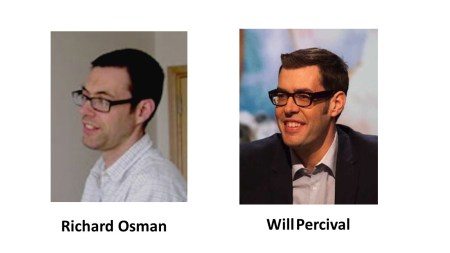
I’ve been reminded that it has been a while since I last posted an Astronomy Look-alike so I was wondering if anyone else has noticed the spectacular similarity between Professor Will Percival of the University of Portsmouth and TV presenter Richard Osman? Is it pointless to ask whether they might possibly be related?

Percival

From the Cavendish Committee Room

Posted in Uncategorized on June 20, 2017 by telescoper

The annual cycle of academic life has brought me once again to as External Examiner for Natural Sciences (Physics) at the famous Midlands University called Cambridge, so I’m getting ready to take the train there. We’ve just finished the meeting for Part II of the Tripos examination, had a quick buffet lunch and are waiting for the official pass lists to be produced and signed.

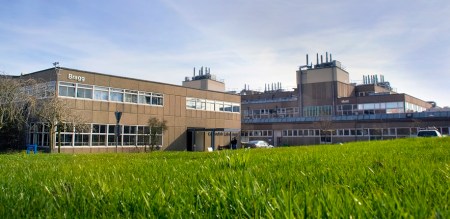
Here’s a picture of the Cavendish laboratory where we are located:

bragg_building_110309

The Committee room that we’ve been in all morning has no windows, which means we’re missing out on the sunny weather but at least it means we’re not distracted from the job at hand. Obviously I can’t write about the details, but I can assure you that we do as thorough a job as possible. Once we’ve signed sealed and delivered the Part II results it will be time to start work on Part III in advance of the meeting tomorrow morning.

Anyway, we’re almost ready to resume so toodle-pip!

Cambridge Heat

Posted in Biographical on June 19, 2017 by telescoper

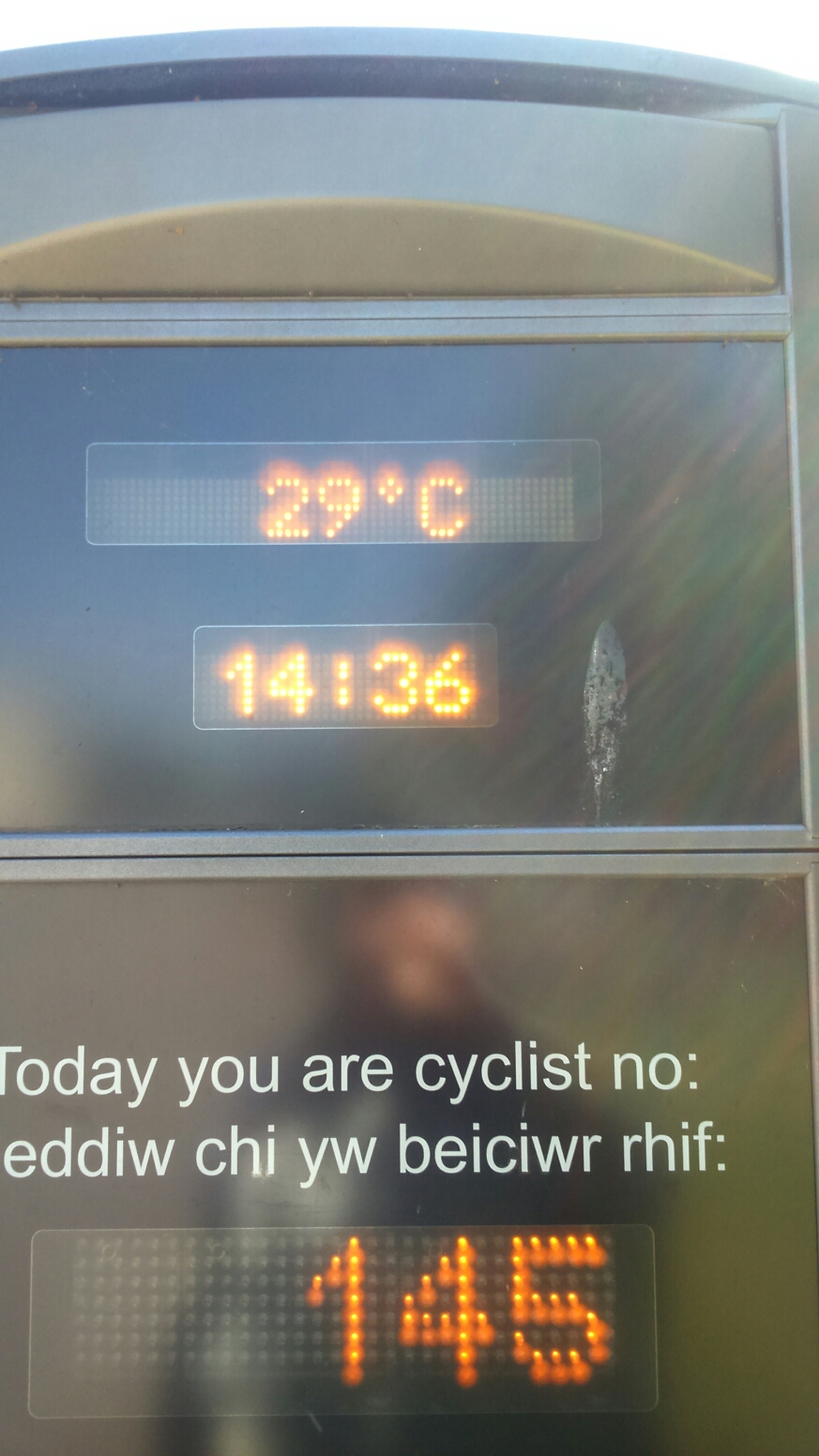
I’m in Cambridge, where it is very hot, for a few days on external examining duty for Part II and Part III of the Natural Sciences Tripos (Physics).

My trip here from Cardiff didn’t go entirely as planned. I had intended to catch the 10.26 from Cardiff to London Paddington, but the train that should have formed that service was so late that it was cancelled, or rather `retimed’ to be the 10.56. That train trundled through countryside getting later and later until it stopped entirely at Hayes, where it got stuck behind a stricken overhead power line. And at Hayes we sat for the best part of an hour. I had planned to arrive at Paddington at about 12.30, but actually got there at 2.30…

I didn’t arrive in Cambridge until after 4pm, and was not inconsiderably flustered. I hadn’t even had any lunch, though I was somewhat relieved to discover that the other external examiner had similar problems and was actually even later than me. Fortunately we were able to rearrange the meeting we had planned and managed to get through (by about 8pm) the preparations needed for the meeting of the Board of Examiners planned for tomorrow morning at 9.30am.

A couple of beers and burger later I’m now in my hotel room and feeling a little more mellow.

It’s a bit warmer than previous years I’ve been here at this time of year, but otherwise it’s the same: we passed crowds of young people in their glad rags queuing for various May Balls. No doubt we’ll meet the bedraggled remnants tomorrow morning on the way back to the Cavendish.

And now, if you’ll excuse me I’m going to have a cup of tea and relax. It’s been a long day…

Heat Wave in Cardiff 

Posted in Cardiff on June 18, 2017 by telescoper

And it’s going to be even hotter tomorrow!

Questioning LIGO

Posted in The Universe and Stuff with tags , on June 17, 2017 by telescoper

Well. Cat, meet pigeons..

A paper appeared on the arXiv this week with the following abstract:

To date, the LIGO collaboration has detected three gravitational wave (GW) events appearing in both its Hanford and Livingston detectors. In this article we reexamine the LIGO data with regard to correlations between the two detectors. With special focus on GW150914, we report correlations in the detector noise which, at the time of the event, happen to be maximized for the same time lag as that found for the event itself. Specifically, we analyze correlations in the calibration lines in the vicinity of 35 Hz as well as the residual noise in the data after subtraction of the best-fit theoretical templates. The residual noise for the two more recent events, GW151226 and GW170104, exhibits equivalent behavior with respect to each of their time lags. A clear distinction between signal and noise therefore remains to be established in order to determine the contribution of gravitational waves to the detected signals.

I’m going to tread carefully here because (a) I have a number of colleagues at Cardiff who are directly involved in the analysis of LIGO data; (b) one of the authors of the new paper (Panel Naselsky) is a longstanding collaborator of mine; and (c) the new paper has not yet been refereed.

In fact I’m planning to visit Copenhagen in July/August and will catch up with Pavel and the other authors then.

Whether or not the points raised in the new paper are correct – and I am firmly agnostic, having not done the analysis myself – I think it’s entirely reasonable of the authors to subject the LIGO data to independent analysis. That’s how science is supposed to work; the relevant data are in the public domain now. 

No doubt the LIGO consortium will respond officially in due course. Of course, if anyone would like to comment unofficially then they are free to do so through the box below.

Update: Here is a fairly detailed rebuttal post.

June 1915, by Charlotte Mew

Posted in Poetry with tags , , on June 16, 2017 by telescoper

Who thinks of June’s first rose today?
Only some child, perhaps, with shining eyes and
rough bright hair will reach it down.
In a green sunny lane, to us almost as far away
As are the fearless stars from these veiled lamps of town.
What’s little June to a great broken world with eyes gone dim
From too much looking on the face of grief, the face of dread?
Or what’s the broken world to June and him
Of the small eager hand, the shining eyes, the rough bright head?

by Charlotte Mew (1869-1928)


Week Ending

Posted in Biographical on June 16, 2017 by telescoper

I’ve spent most of today involved in interviewing prospective PhD students for our new Centre for Doctoral Training in Data-Intensive Science run jointly between the universities of Bristol and Swansea which I advertised on here just a couple of months ago. I spent most of Monday in Bristol meeting representatives of industrial and other businesses, who are offering placement opportunities for PhD students on this new scheme. This activity is taking up quite a lot of my time these days and it’s not over yet as we haven’t yet finished the process of recruiting students which has to be done in connection with our academic and business partners.

I’ll be in Cambridge for the first half of next week, on external examining duties, and then the following week we have our little workshop on Random Fields. People generally think that, once our undergraduate lecture courses are finished and associated examinations are marked, we are free to do research until October. If only. There are many other things to be done.

Anyway that’s enough for this week. I’m off to the pub for a pint. Have a good weekend!


Cosmological Wave Mechanics

Posted in The Universe and Stuff with tags , , , , on June 15, 2017 by telescoper

As promised here are the slides I used for my talk yesterday at Imperial College. I stole some of them from an old presentation given by Chris Short, who was a PhD student of mine when I was at Nottingham. Chris now works for the Met Office, working on rather different application of fluid mechanics!