The Tempest in Musick

Posted in Brighton, Literature, Music with tags , , , , , , , on May 17, 2014 by telescoper

I haven’t done a music review type of thing on this blog for some time, for the simple reason that I haven’t had the time to go to many live music events recently. However, this being Festival time in Brighton I felt I should make an extra-special effort to take a bit of time out to take in a bit of culture. All work and no play and all that.

Anyway, yesterday evening found me in the Concert Hall of the Brighton Dome for a performance entitled The Tempest in Musick by the New London Consort. The programme for the show featured all the music written for the 17th and early 18th century revivals of William Shakespeare’s play, The Tempest. That in itself tells an interesting story. In 1667, after the Restoration of the Monarchy, John Dryden and Willian Davenant put together an enlarged and adapted version of Shakespeare’s play with a host of new characters and numerous musical interludes and additions. This piece was later revised further  aa number of times, each including even more music, a process which culminated in a semi-operatic version compiled by Thomas Shadwell in 1674. As if Shakespeare’s original tale were not exotic enough, these new versions had extra devils, Tritons, and Nereids along with spectacular stage effects and costumes. London audiences clearly wanted to let their hair down after the severe restrictions on popular entertainment imposed by Puritans during the Protectorate. The Shadwell version was the top show in London for over fifty years: it ran from 1674 until 1728, until it was eventually replaced in popularity by The Beggar’s Opera.

In the concert we heard most if not all of the music that survives from the multiple revivals and revisions of the Tempest, written by various composers over the period 1667 to 1712, including a setting of “Dear pretty youth” by Henry Purcell dated to 1695. There were two different versions of the most famous song from the original play, Full Fathom Five, sung by Ariel:

Full fathom five thy father lies;
Of his bones are coral made;
Those are pearls that were his eyes;
Nothing of him that doth fade,
But doth suffer a sea-change
Into something rich and strange.
Sea-nymphs hourly ring his knell:
Ding-dong.
Hark! now I hear them — Ding-dong, bell

Of course the New London Consort play using period instruments, which gives me an excuse to post this again:
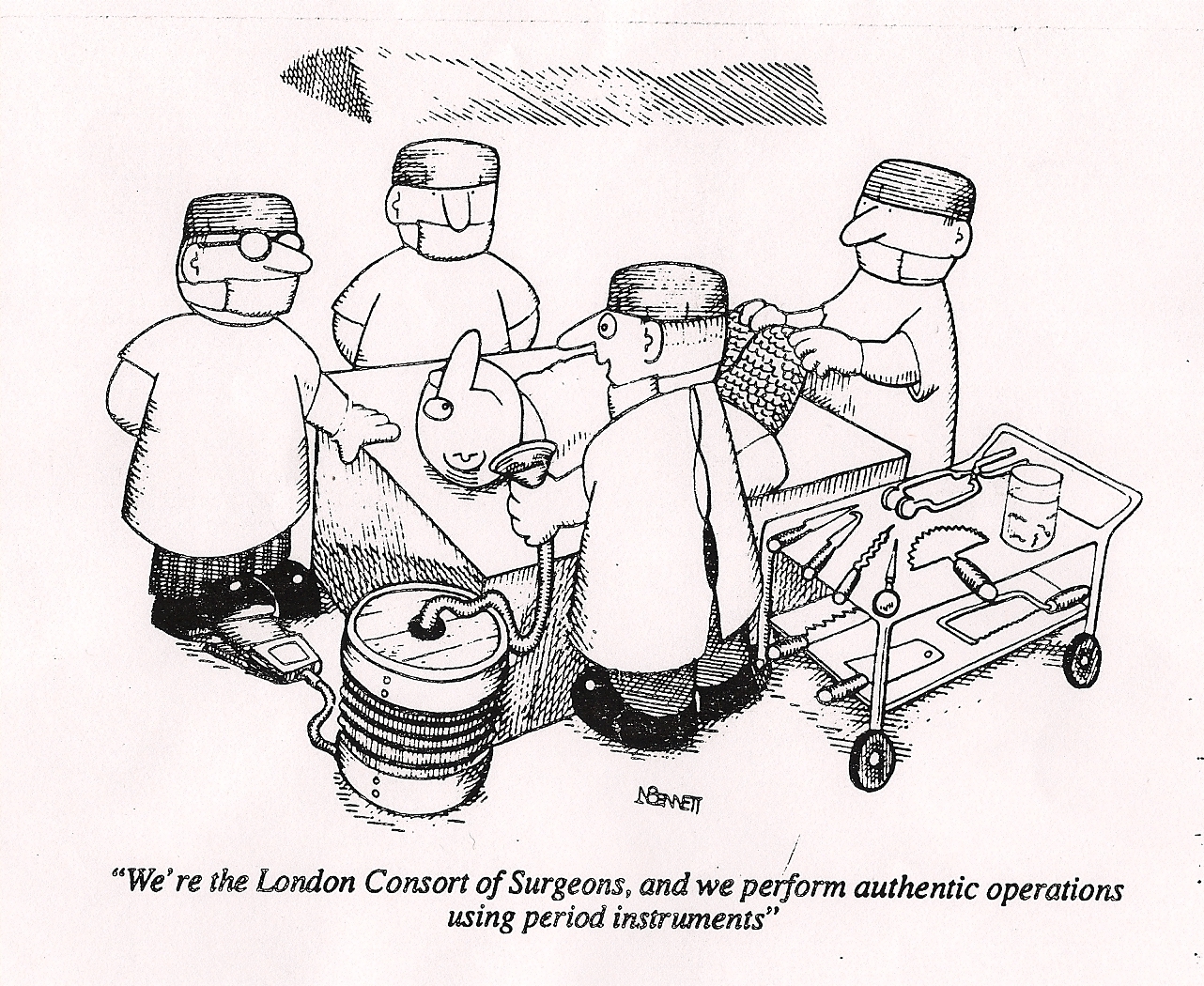
periodinstruments

I’m not a fan of period instruments generally, but because of the historical interest in the music I thought I’d give it a go. I had grave misgivings when I saw that the musicians were to be directed by David Roblou from a harpsichord, but decided to grit my teeth and perservere instead of fleeing to the nearest pub.

As it happened, although it was good in parts, the concert basically just confirmed my prejudices. To start with, much of the music is very ordinary and the musicians for the most part failed to bring it to life. The strings, played without vibrato throughout and occasionally rather ragged to boot, didn’t produce much in the way of colour or dynamics; this way of playing also exposed their uncertain pitching. The recorders, a long way from the audience right at the back of the stage, found it difficult to project. They would have been much better off in a smaller venue, I think, especially because of the large gap between audience and stage left for standing customers (of whom there were very few). The dreaded harpsichord was barely audible too. Not that I’m complaining about that.

On the other hand there was some brilliant trumpet playing by Simon Munday on a period instrument. Also I think this is the first time I’ve ever heard a Serpent played and I really enjoyed hearing it. Apart from these highlights though I found the music rather undistinguished and the performance curiously flat.

The singing was much better: the three lovely female voices (Anna Dennis, Faye Newton and Penelope Appleyard) are worth mentioning and tenor Jorge Navarro-Colorado sang well and was a striking presence on stage during the occasional semi-staged pieces. I wasn’t that keen on any of the bass-baritones though.

I realise that there will probably be early music fans out there who would have loved last night’s performance. That’s fine of course. Les gouts et les couleurs ne se discutent pas.


On a Forenoon of Spring

Posted in Poetry with tags , , , on May 16, 2014 by telescoper

I’m glad I am alive, to see and feel
The full deliciousness of this bright day,
That’s like a heart with nothing to conceal;
The young leaves scarcely trembling; the blue-grey
Rimming the cloudless ether far away;
Briars, hedges, shadows; mountains that reveal
Soft sapphire; this great floor of polished steel
Spread out amidst the landmarks of the bay.

I stoop in sunshine to our circling net
From the black gunwale; tend these milky kine
Up their rough path; sit by yon cottage-door
Plying the diligent thread; take wings and soar–
O hark how with the season’s laureate
Joy culminates in song! If such a song were mine!

by William Allingham (1824-1889)


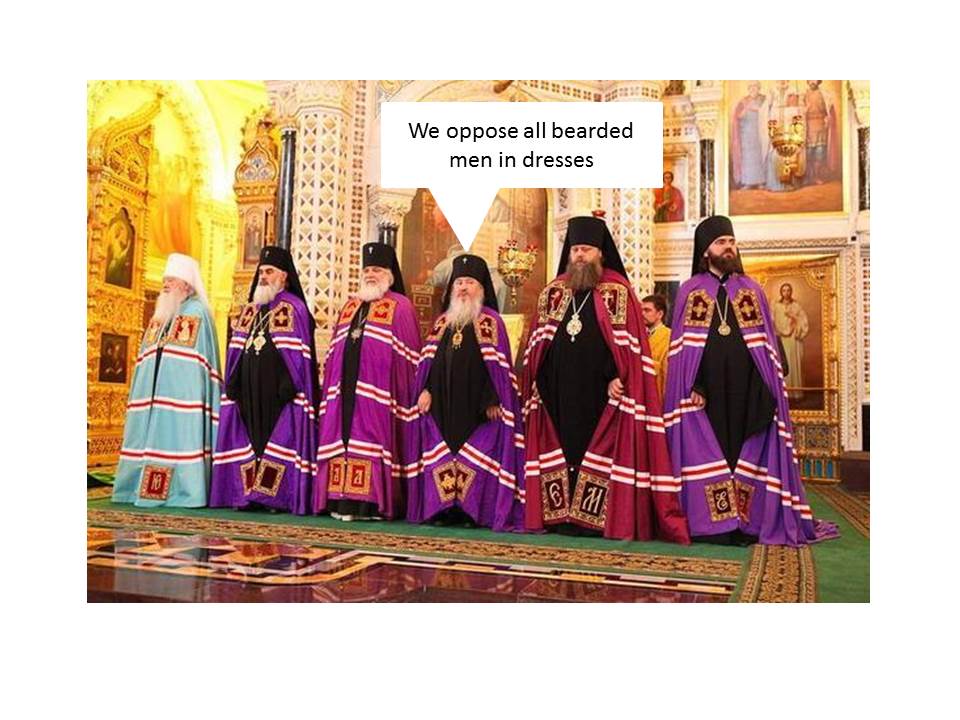
The Russian Orthodox Church Condemns Eurovision

Posted in LGBTQ+ with tags , , on May 15, 2014 by telescoper

Eurovision_1

That BICEP Rumour…

Posted in The Universe and Stuff with tags , , , on May 14, 2014 by telescoper

So there’s been another twist in the story of BICEP2 and whether or not it has actually detected primordial gravitational waves.

This time it is a blog post on a site called Résonaances by Adam Falkowski who alleges that the BICEP2 team has made a pretty astounding error in their analysis of the data. This suggestion has been picked up by a couple of fairly influential science news sites (here and here). The BICEP2 team deny having made any such error and are quoted in the news stories defending their results in robust terms.

Before I continue let me make it clear that I stand by the scepticism I have expressed on this blog about this result (which, in fact, is shared by many of my colleagues in the cosmology fraternity1). The problem is that the measurement is made at a single frequency (150 GHz) and it is by no means clear on that basis whether it has the black-body spectrum that would characterize it as being associated with the cosmic microwave background rather than some sort of foreground emission. At 150 GHz the major worry is that polarized emission from galactic dust might contribute significantly to the signal, and might even swamp any primordial contribution.

Anyway, the blog post states that:

To estimate polarized emission from the galactic dust, BICEP digitized an unpublished 353 GHz map shown by the Planck collaboration at a conference.  However, it seems they misinterpreted the Planck results: that map shows the polarization fraction for all foregrounds, not for the galactic dust only (see the “not CIB subtracted” caveat in the slide). Once you correct for that and rescale the Planck results appropriately, some experts claim that the polarized galactic dust emission can account for most of the BICEP signal.

Here’s the map concerned as it appeared in the conference talk as presented on the blog post:

culprit

The point about this is that dust emission increases with frequency, so that at 353 GHz it would be expected to dominate the primordial cosmic microwave component. However, if one can measure the polarized component of this emission at high frequency (where it is larger and consequently easier to measure) then one could try to estimate the polarized contribution at the lower frequency measured at 150 GHz by BICEP2 by assuming it has a similar polarized fraction. This is actually just about the only way to estimate the foreground contribution.

Unfortunately in this map there is an additional unpolarized foreground arising from the Cosmic Infrared Background (CIB) which comprised integration dust emission from extragalactic sources. Including this component makes the polarized fraction look lower than it would if it were separated out and only the more highly polarized Galactic contribution considered. In other words including the CIB leads to an underestimate of the polarized fraction and consequently an underestimate of the foreground contamination at 150 GHz.

So now there are three issues:

  1. Did BICEP2 actually use this digitized image to estimate the polarized foreground for their experiment?
  2. Did they make the error of which they have been accused?
  3. Does this invalidate the BICEP2 announcement?

The answer to (1) is that I don’t know for sure but it’s certainly possible that they did. It sounds a pretty ropey approach, but the Planck data are not publicly available so they had to improvise. Even if (1) is the case, I am not at all sure that (2) is true. They may have, but in their responses to the suggestion they have denied it. It seems such a silly error that I’d be surprised, but that doesn’t in itself make it untrue.

However, even if (1) and (2) are the case that doesn’t mean that (3) is true, i.e. it does not imply that the entire analysis presented by BICEP2 is wrong. They have several different estimates of the foreground contribution using other methods so the entire result clearly does not stand or fall on the basis of the use of this particular map in a particular way.

I repeat what I’ve said before in response to the BICEP2 analysis, namely that the discussion of foregrounds in their paper is disappointing. I’d also say that I think the foreground emission at these frequencies is so complicated that none of the simple approaches that were available to the BICEP2 team are reliable enough to be convincing. My opinion on the analysis hasn’t therefore changed at all as a result of this rumour. I think BICEP2 has definitely detected something at 150 GHz but we simply have no firm evidence at the moment that it is primordial. That will change shortly, with the possibility of other experiments (specifically Planck, but also possibly SPTPol) supplying the missing evidence.

I’m not particularly keen on the rumour-mongering that has gone on, but then I’m not very keen either on the way the BICEP2 result has been presented in some quarters as being beyond reasonable doubt when it clearly doesn’t have that status. Yet.

Rational scepticism is a very good thing. It’s one of the things that makes science what it is. But it all too easily turns into mudslinging.

Note: 1 I use the word “fraternity” in the sense given in the Chambers Dictionary as “any set of people with something in common” rather than as “an all-male N American college association”. Cosmology is neither “all-male” nor exclusively American and I did not mean to imply either by my use of English.


Sibelius of the Rings

Posted in Film, Music with tags , , , , , on May 13, 2014 by telescoper

My frame of mind for the day is largely determined by what is playing on BBC Radio 3 when it switches on at 6am as it does every morning to wake me up. This morning it happened to be the rousing Intermezzo from the Karelia Suite by Jean Sibelius. An intermezzo is very often a piece of fairly nondescript music played while people change the sets on stage during an opera or theatre performance, but this one is actually a terrific piece in its own right.

Often when the radio switches on when I’m asleep I don’t actually wake up immediately, but somehow seem to be able to incorporate the music into a dream. As I slowly emergedfrom my slumbers this morning my half-asleep mind somehow put this music together with a sort of action replay of the Ride of the Rohirrim, as Theoden’s army arrives to relieve the siege of Minas Tirith from The Lord of the Rings; the preamble fits well with the riders and horses gathering into line and preparing for battle, and the main theme conjures up the subsequent cavalry charge in rousing fashion.

My lunchtime task today has therefore been to find a clip of the film on Youtube and see how the music works. I suggest you turn the sound off the film clip (first youtube link) and let it run until about 58s in before starting the second which has the actual music on it. That way the peak of the crescendo and loud cymbal crash in Sibelius’ score coincides with the impact of the charge upon the orc formation.

A Plug for Some Research…

Posted in The Universe and Stuff with tags , , , , on May 12, 2014 by telescoper

Very busy today so I just thought I’d give a bit of publicity to a paper that’s just been accepted for publication. I’m actually one of the authors, but the other guys (Dipak Munshi of Sussex, Bin Hu of Leiden, Alessandro Renzi of Rome, and Alan Heavens of South Kensington Technical Imperial College) did all the work! I’m posting it mainly to remind myself that there is a world outside of administration. If it weren’t for my inestimable (STFC-funded) postdoc, Dipak Munshi, I don’t know where my research would be!

Here is the abstract:

We use the optimised skew-spectrum as well as the skew-spectra associated with the Minkowski Functionals (MFs) to test the possibility of using the cross-correlation of the Integrated Sachs-Wolfe effect (ISW) and lensing of the cosmic microwave background (CMB) radiation to detect deviations in the theory of gravity away from General Relativity (GR). We find that the although both statistics can put constraints on modified gravity, the optimised skew-spectra are especially sensitive to the parameter B0   that denotes the the Compton wavelength of the scalaron at the present epoch. We investigate three modified gravity theories, namely: the Post-Parametrised Friedmanian (PPF) formalism; the Hu-Sawicki (HS) model; and the Bertschinger-Zukin (BZ) formalism. Employing a likelihood analysis for an experimental setup similar to ESA’s Planck mission, we find that, assuming GR to be the correct model, we expect the constraints from the first two skew-spectra, S(0)   and S(1), to be the same: B0 <0.45  at 95  confidence level (CL), and B0 <0.67  at 99  CL in the BZ model. The third skew-spectrum does not give any meaningful constraint. We find that the optimal skew-spectrum provides much more powerful constraint, giving B0 <0.071  at 95  CL and B0 <0.15  at 99  CL, which is essentially identical to what can be achieved using the full bispectrum.

It’s part of a long sequence of papers emanating from work done by Dipak (with various combinations of co-authors, including myself) which have been aimed at optimising the use of statistical techniques for detecting and quantifying possible departures from the standard model of cosmology using various kinds of data; in this case the paper is entitled Probing Modified Gravity Theories with ISW and CMB Lensing; `ISW means the Integrated Sachs-Wolfe Effect and CMB is the cosmic microwave background. This kind of work doesn’t have the glamour of some cosmological research – I don’t think we’ll be writing a press release when it gets published! – but it is the kind of preparatory analysis that is essential if cosmologists are to make the most of present and forthcoming observational data, which is why we keep plugging away…

A Victory for Diversity

Posted in Beards, LGBTQ+ with tags , , , , , on May 11, 2014 by telescoper

I didn’t watch the 2014 Eurovision Song Contest last night, but my Twitter feed was full of comments by people who did. That’s how I found out who won!

Conchita

Conchita Wurst, Winner of the 2014 Eurovision Song Contest

I don’t know what the song was like, but that doesn’t matter at all; the Eurovision Song Contest isn’t about the songs at all. What is important is that Conchita Wurst‘s victory sends out a clear message that there is a world out there that is happy to embrace diversity. Interviewed after the voting, Conchita said “I’m just a singer in a fabulous dress, with great hair and a beard”. That sums it all up, really.

I agree wholeheartedly with the official statement of the Beard Liberation Front:

The Beard Liberation Front the informal network of beard wearers has welcomed the win for Austria’s Conchita Wurst in the Eurovision Song Contest as a victory for a diverse Europe over transphobia and pogonophobia.

The BLF has long campaigned for the right of people to be able to dress and appear as they want.

There will no doubt be those who mock Conchita Wurst (original name Thomas Neuwirth), even within the gay community. But it’s important to remember that the Stonewall Riots of 1969 that galvanised the gay rights movement in the United States into action, paving the way for example to Equal Marriage, began as a  fightback against heavy-handed policing that was predominantly led by drag queens. It takes courage to stand up for the right to be different, and in that respect Conchita is an example to inspire us all.

UPDATE: Here’s the official video made in advance of the contest

P.S. I’m pretty sure that this means that Beard of the Year 2014 is now a foregone conclusion….


The Open Journal for Astrophysics Project

Posted in Open Access with tags , , , , on May 10, 2014 by telescoper

I owe many people various apologies for not posting anything for a while about the Open Journal for Astrophysics. For a start I have to admit that the call for test submissions last year was a bit premature. I should have been more patient and ensured that the system was complete before going public. I hope nobody has been too seriously inconvenienced by the ongoing delay.

The project has got stalled a bit largely because I have just had too many things to do to devote enough time to complete the final stages needed to go fully live and also one of the people helping with the project Arfon Smith moved to a new job. Arfon and Chris Lintott have posted an account of the project so far which gives a bit more detail about how we wanted to realize the project (hosted by GitHub); the code development has involved major work by Robert Simpson and Stuart Lynn in addition to Arfon and Chris.  In essence they say that the job is now about 80% complete. I would have said it was more like 75%, so the OJFA is in some sense just the OJF at the moment! Much of what remains is not actual programming stuff but administrative stuff involved with, e.g., arranging the assignment of  digital object identifiers (DOIs) and so on, all of which has been on my to-do list for several months now.

Anywhere, just to show you that the whole project isn’t just hot air here is a demonstration of the snazzy user interface which we plan to use to facilitate the online refereeing process:

However, in the spirit not only of open access publishing but also of open source programming, Arfon has made available all the codes that have been developed so far. One intention of this is that  these can be adapted  for other OJFs hence the construction of a generic website (theoj.org) as well as the hope that some folks out there might help us bright the OJFA itself to completion. Anyone out there with the requisite skills is welcome to volunteer, either through the comments box here or through the OJ repository. If we can get enough volunteers we can meet and put together a plan to bring this idea to completion at last.

Despite being forced to accept that my own workload makes it difficult for me to be as involved as I’d like to be in this project I’d still really love to get this project off the ground. I hope I can use the time freed up by no longer being a member of RAS Council to work on the OJFA. I no longer have a conflict of interest in that regard either; like many other learned societies the RAS currently makes a large fraction of its income from academic publishing!

As Arfon mentions in his piece, the recent BICEP2 episode in particular provides pretty strong motivation that we need a new concept of academic publishing. Practical difficulties may have intervened for now but the motivation for the project itself is stronger now than it has ever been.

RAS Council and after..

Posted in Biographical, Science Politics on May 9, 2014 by telescoper

Just time for a brief post as it’s quite late and I’ve just got back to Brighton after a day out in London. I’ve been too busy to blog until now.

Today was the last day of my year-long stint as an elected Member of the Council of the Royal Astronomical Society; the final Council meeting of the Society’s year is on the day of the Annual General Meeting at which new Council members and other Officers are elected. On this occasion the President, David Southwood, had also reached the end of his term so at the end of the AGM he stood down and was replaced by his successor, Martin Barstow.

There was quite a lot to discuss during today’s Council Meeting in advance of the AGM, but in the end we got through the business and it and the AGM went off quite smoothly.

There then followed the announcement of a major initiative Council has been working on (of which more anon) and a short but very interesting talk about BICEP2 by Stephen Feeney of Imperial College. Thereafter it was dinner at the Athenaeum with RAS Club.

All in all, a busy but pretty productive day. I’ll miss the days out of the office on RAS business, but I suppose the overall reduction in workload is not a bad thing! It just remains for me to wish the new members of Council well in their future endeavours.

On the way in to Burlington House I noticed the enclosed poster for an exhibition of “Renaissance Impressions” at the Royal Academy. I’m not sure of the identity of the bearded chap who is the subject of that particular impression. I’m no historian, but I think Karl Marx came after the Renaissance..

Illustris, Cosmology, and Simulation…

Posted in The Universe and Stuff with tags , , , , , , on May 8, 2014 by telescoper

There’s been quite a lot of news coverage over the last day or two emanating from a paper just out in the journal Nature by Vogelsberger et al. which describes a set of cosmological simulations called Illustris; see for example here and here.

The excitement revolves around the fact that Illustris represents a bit of a landmark, in that it’s the first hydrodynamical simulation with sufficient dynamical range that it is able to fully resolve the formation and evolution of  individual galaxies within the cosmic web of large-scale structure.

The simulations obviously represent a tremendous piece or work; they were run on supercomputers in France, Germany, and the USA; the largest of them was run on no less than 8,192 computer cores and took 19 million CPU hours. A single state-of-the-art desktop computer would require more than 2000 years to perform this calculation!

There’s even a video to accompany it (shame about the music):

The use of the word “simulation” always makes me smile. Being a crossword nut I spend far too much time looking in dictionaries but one often finds quite amusing things there. This is how the Oxford English Dictionary defines SIMULATION:

1.

a. The action or practice of simulating, with intent to deceive; false pretence, deceitful profession.

b. Tendency to assume a form resembling that of something else; unconscious imitation.

2. A false assumption or display, a surface resemblance or imitation, of something.

3. The technique of imitating the behaviour of some situation or process (whether economic, military, mechanical, etc.) by means of a suitably analogous situation or apparatus, esp. for the purpose of study or personnel training.

So it’s only the third entry that gives the meaning intended to be conveyed by the usage in the context of cosmological simulations. This is worth bearing in mind if you prefer old-fashioned analytical theory and want to wind up a simulationist! In football, of course, you can even get sent off for simulation…

Reproducing a reasonable likeness of something in a computer is not the same as understanding it, but that is not to say that these simulations aren’t incredibly useful and powerful, not just for making lovely pictures and videos but for helping to plan large scale survey programmes that can go and map cosmological structures on the same scale. Simulations of this scale are needed to help design observational and data analysis strategies for, e.g., the  forthcoming Euclid mission.