The Strangest Man

Posted in Literature, The Universe and Stuff with tags , , , , , on January 27, 2013 by telescoper

Since getting rid of my telly a few weeks ago I’ve reverted to a previous incarnation as a bookworm, and have been tackling the backlog of unread volumes sitting on my coffee table at home. Over the last couple of days I’ve spent the evenings reading The Strangest Man by Graham Farmelo, a biography of the great theoretical physicist Paul Dirac.

I’m actually quite ashamed that it has taken me so long to get around to reading this. I’ve had it for two years or more and really should have found time to do it before now. Dirac has long been one of my intellectual heroes, for his unique combination of imagination and mathematical rigour; the Dirac equation is one of the topics I most enjoy lecturing about to physics students. I am also immensely flattered to be one of his academic descendants: Paul Dirac was the PhD supervisor of Dennis Sciama, who supervised my supervisor John Barrow, making me (in a sense) his great-grandson. Not that I’ll ever achieve anything of the magnitude he did.

The book is pretty long, and I suppose one of the factors putting me off reading it was that I thought it might be heavy going. That turned out to be far from the case. It’s wonderfully well written, never getting bogged down in details, and cleverly interweaving Dirac’s life and scientific career together against a vivid historical backdrop dominated by the rise of Nazism in Germany and the tragedy of World War 2. It also beautifully conveys the breathless sense of excitement as the new theory of quantum mechanics gradually fell into place. Altogether it’s a gripping story that had me hooked from the start, and I devoured the 400+ pages in just a couple of evenings (which is quick by my standards). I’ve never read a scientific biography so pacey and engaging before, so it’s definitely hats off to Graham Farmelo!

Among the book’s highlights for me were the little thumbnail sketches of famous physicists I knew beforehand mostly only as names. Niels Bohr comes across as a splendidly warm and avuncular fellow, Werner Heisenberg as a very slippery customer of questionable political allegiance (likewise Erwin Schrödinger), Ernest Rutherford as blunt and irascible. I was already aware of the reputation of Wolfgang Pauli had for being an absolute git; this book does nothing to dispel that opinion. We tend to forget that the names we came to know through their association with physics also belonged to real people, with all that entails.

I was also interested to learn that Dirac and his wife Manci spent their honeymoon in 1937, as the clouds of war gathered on the horizon, in Brighton, which Farmelo describes as

..a peculiarly raffish town., famous for its two Victorian piers jutting imperiously out to sea, for the pale green domes of its faux-oriential pavilions, its future-robot and a host of other tacky attractions.

So in most respects it hasn’t changed much, although one of the two piers  has since gone for a Burton.

So what of Dirac himself? Most of what you’re likely to hear about him concerns his apparently cold and notoriously uncommunicative nature. I never met Dirac. He died in 1984. I was an undergraduate at Cambridge at the time, but he had moved to Florida many years before that. I have, however, over the years had occasion to talk to quite a few people who knew Dirac personally, including Dennis Sciama. All of them told me that he wasn’t really anything like the caricature that is usually drawn of him. While it’s true that he had no time for small talk and was deeply uncomfortable in many social settings, especially formal college occasions and the like, he very much enjoyed the company of people more extrovert than himself and was more than willing to talk if he felt he had anything to contribute. He got on rather well with Richard Feynman, for example, although they couldn’t have had more different personalities. This gives me the excuse to include this wonderful picture of Dirac and Feynman together, taken in 1962 – the body language tells you everything there is to know about these two remarkable characters:

feyndir2

Feynman is also an intellectual hero of mine, because he was outrageously gifted not only at doing science but also at communicating it. On the other hand, I suspect (although I’ll obviously never know) that I might not have liked him very much at a personal level. He strikes me as the sort of chap who’s a lot of fun in small doses, but by all accounts he could be prickly and wearingly egotistical.

On the other hand, the more I read The Strangest Man the more I came to think that I would have liked Dirac. He may have been taciturn, but at least that meant he was free from guile and artifice. It’s not true that he lacked empathy for other people, either. Perhaps he didn’t show it outwardly very much, but he held a great many people in very deep affection. It’s also clear from the quotations peppered throughout the book that people who worked closely with him didn’t just admire him for his scientific work; they also loved him as a person. A strange person, perhaps, but also a rather wonderful one.

In the last Chapter, Farmelo touches on the question of whether Dirac may have displayed the symptoms of autism. I don’t know enough about autism to comment usefully on this possibility. I don’t even know whether the term autistic is defined with sufficient precision to be useful. There is such a wide and multidimensional spectrum of human personality that it’s inevitable that there will be some individuals who appear to be extreme in some aspect or other. Must everyone who is a bit different from the norm be labelled as having some form of disorder?

The book opens with the following quote from John Stuart Mill’s On Liberty, which says it all.

Eccentricity has always abounded when and where strength of character has abounded; and the amount of eccentricity in a society has generally been proportional to the amount of genius, mental vigor, and courage which it contained. That so few now dare to be eccentric, marks the chief danger of the time.

Another thought occurred to me after I’d finished reading the book. Dirac’s heyday as a theoretical physicist was the period 1928-1932 or thereabouts. Comparatively speaking, his productivity declined significantly in later years; he produced fewer original results and became increasingly isolated from the mainstream. Eddington’s career followed a similar pattern: he did brilliant work when young, but subsequently retreated into the cul-de-sac of his Fundamental Theory. Fred Hoyle is another example – touched by greatness early in his career, but cantankerous and blinded by his own dogma later on. Even Albert Einstein, genius-of-geniuses, spent his later scientific life chasing shadows.

I think there’s a tragic inevitability about the mid-life decline of these geniuses of theoretical physics, because the very same determination and intellectual courage that allowed them to break new ground also rendered them unwilling to be deflected by subsequent innovations elsewhere. And break new ground Dirac certainly did. The word genius is perhaps over-used, but it certainly applies to Paul Dirac. We need more like him.

Critical Masses

Posted in Education, Science Politics with tags , , , , , , , on January 26, 2013 by telescoper

One of the interesting bits of news floating around academia at the moment is the announcement that my current employer (until the end of next week), Cardiff University is to join forces with the Universities of Bath, Exeter and Bristol in an alliance intended to create a ‘critical mass of knowledge’ and help Cardiff  ‘better compete for more research income’ (apparently by pretending to be in England rather than in Wales).  How successful this will be – or even what form this alliance will take – remains to be seen.

There’s been a lot of gossip about what inspired this move, but it’s not the first attempt to create a collaborative bloc of this kind. Last year five universities from the Midlands announced plans to do something similar. The “M5” group of   Birmingham, Leicester, Loughborough, Nottingham and Warwick got together primarily to share infrastructure in order to help them win grants, which is probably what also lies behind the Cardiff-Bath-Exeter-Bristol deal.

Of course there are also a myriad  alliances at the level of individual Schools and Departments. I’ll shortly be joining the University of Sussex, which is a major player in SEPNET – the South-East Physics Physics Network which was set up with help from HEFCE There are other such networks in England, as well as SUPA in Scotland, funded by the devolved Scottish Funding Council. Attempts to form a similar arrangement for Physics in Wales were given short shrift by the Welsh Funding Agency, HEFCW. The inability or unwillingness of HEFCW to properly engage with research in Wales is no doubt behind Cardiff’s decision to seek alliances with English universities but I wonder how it will translate into funding. Surely HEFCE wouldn’t be allowed to fund a Welsh University, so presumably this is more aimed at funding from the research councils or further afield, perhaps in Europe. Or perhaps the idea is that if GW4 can persuade HEFCE to fund Bath, Bristol and Exeter, HEFCW will be shamed into stumping up something for Cardiff? Sneaky.

Anyway, good luck to the new “GW4” alliance. Although I’m moving to pastures new I’ll certainly keep an eye on any developments, and hope that they’re positive. The only thing that really disturbs me is that the name “Great Western Four” is apparently inspired by the Great Western Railway, now run by an outfit called First Great Western. My recent experiences of travelling on that have left a lot to be desired and I’m sure the name will have negative connotations in the minds of many who are fed up of their unreliable, overcrowded, overpriced and poorly managed services. They say a rose by any other name would smell as sweet, but so far this is only a name – and one with a distinctly questionable odour.

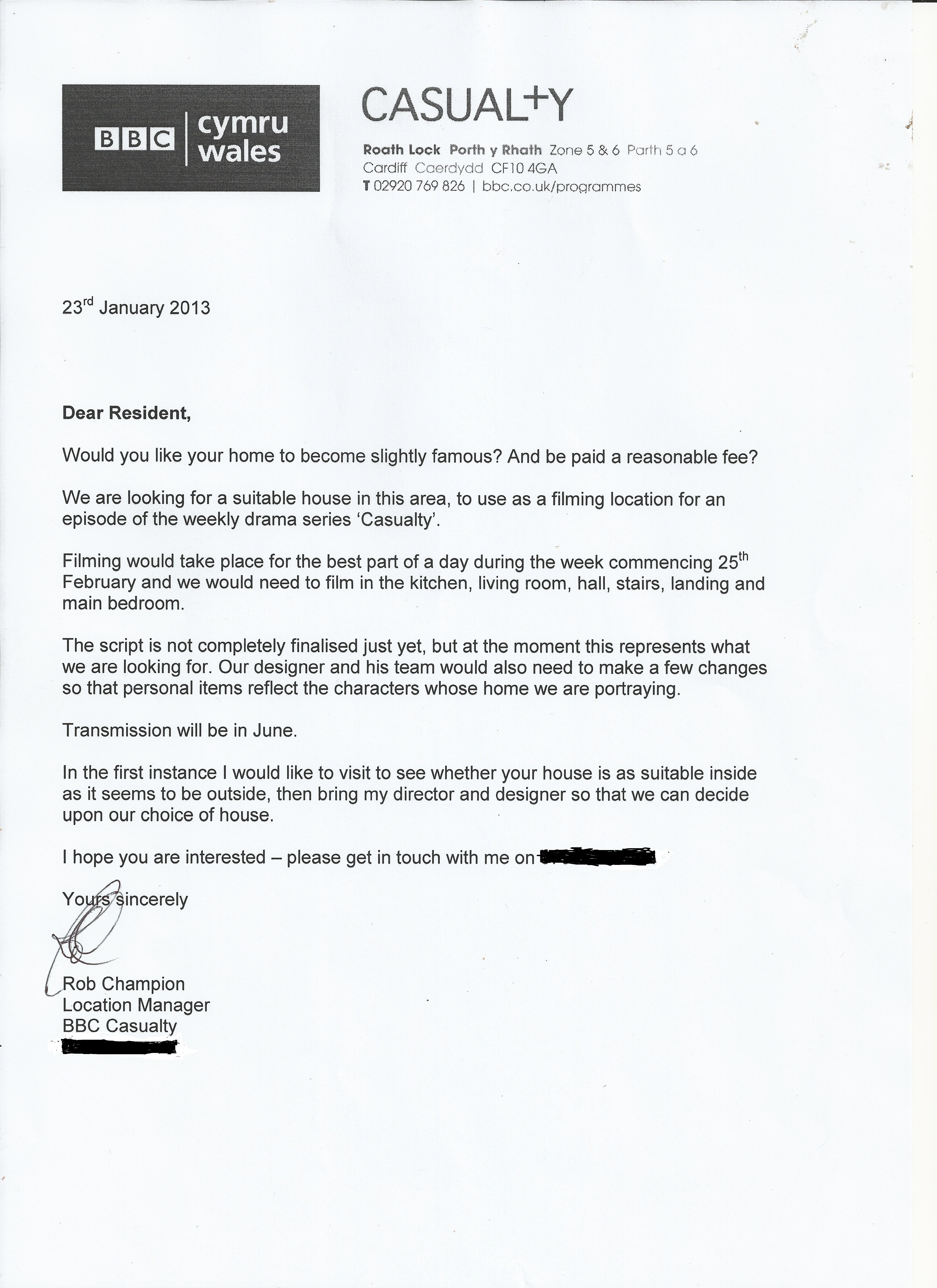
Slightly Famous?

Posted in Biographical, Television with tags , on January 25, 2013 by telescoper

slightly_famous

Astronomy Look-alikes, No. 83

Posted in Astronomy Lookalikes with tags , , on January 24, 2013 by telescoper

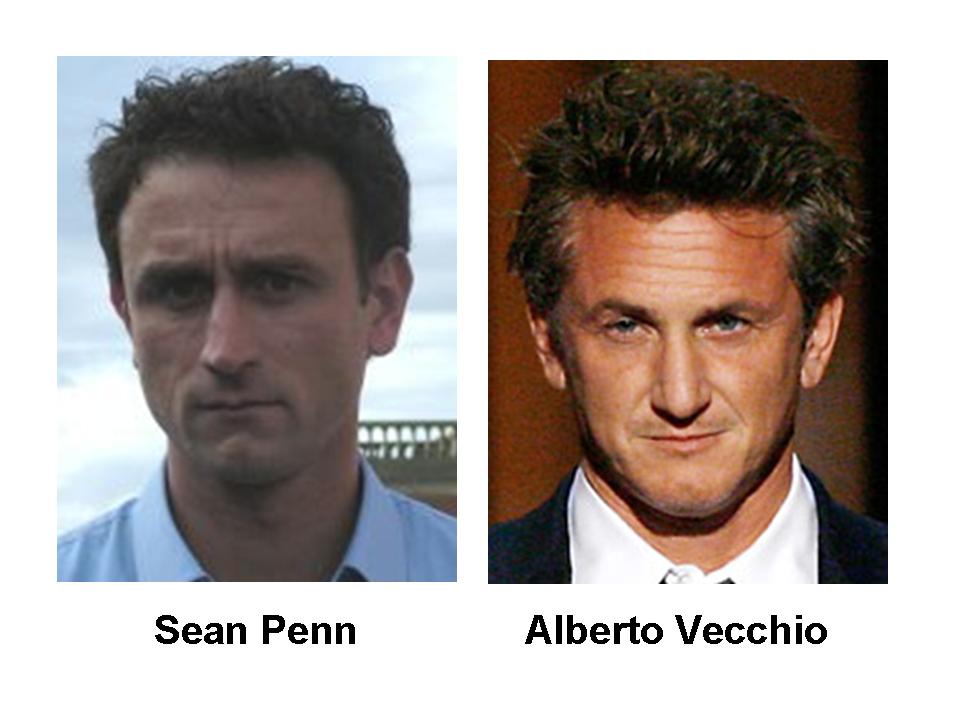
Bad-boy Hollywood actor-director Alberto Vecchio bears a striking resemblance to Birmingham University’s gravitational wave physicist (and former Cardiff University postdoc) Sean Penn. I’ve long suspected that gravitational waves were pure Hollywood, but I’m still looking forward to Advanced LIGO, the movie,  in which our hero single-handedly discovers a stochastic background of tensor perturbations from the epoch of inflation.

Lookalikes

Winterreise – Im Dorfe

Posted in Music with tags , , , , on January 23, 2013 by telescoper

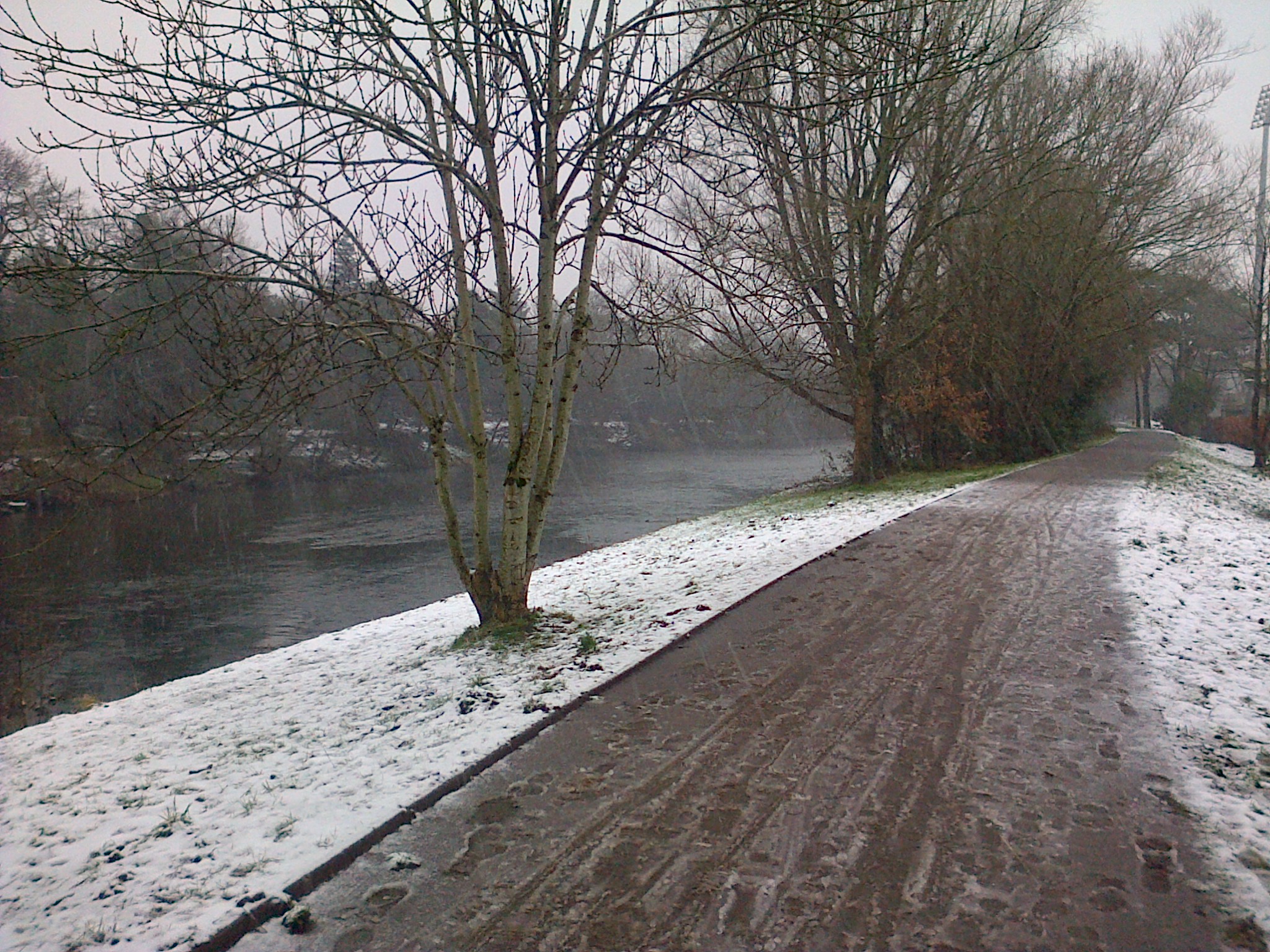
It’s quite difficult to catch the snow as it’s falling with a simple camera like the one on my Blackberry, but here’s an attempt taken yesterday…

As pure as the driven slush...

As pure as the driven slush…


Anyway, today it’s cold again and it’s started snowing again and I’m going to be working late again finishing this wretched report,  so I thought I’d take a quick break to post some suitably wintry music. This is from the wonderful recording of Winterreise by Benjamin Britten and Peter Pears, complete with sheet music so you can sing along. The piano accompaniments for Schubert’s songs are so simple only a genius could have written them…

I’m appalled

Posted in Biographical, Education with tags , , , , , on January 22, 2013 by telescoper

I was a research student at the University of Sussex from 1985 until 1988, as a result of which I can now put the letters DPhil after my name.  Now I’m gearing up to begin recruiting research students at Sussex when I move there at the end of this month; a list of available projects can be found here, if you’re interested.

However, in the course of this I learned that the University of Sussex has changed the abbreviated form of its postgraduate doctoral degree from DPhil to PhD. Future Susssex researchers will therefore be deprived of the ability to write the letters MADPhil after their name as I do.

The idea that anything in academia should ever actually change sets a dangerous precedent.  What were they thinking of? Everyone knows that PhD just stands for Doctor of Photocopying.

Not to put too fine a point on it, I’m appalled…

In defence of the Royal Institution

Posted in Uncategorized with tags , , on January 22, 2013 by telescoper

Just a quick reblog to draw attention to the campaign to save the Royal Institution from oblivion. Following catastrophic management by Susan Greenfield when she was Director of the RI, it is now virtually bankrupt and forced to contemplate the sale of the historic buildings in Mayfair it has occupied for over two hundred years. Please support the campaign.

harrykroto's avatarSave the Ri

I am pleased to join forces with, and lend my support to, the Save21AlbemarleStreet campaign set-up last Friday by Mary R. Perkins.  The following statement reflects discussions we have been having. A new joint website will be appearing later, and in the meantime I encourage people to follow @Save21Albemarle on Twitter and, for those on Facebook, to join the group:

http://www.facebook.com/groups/Save21AlbemarleStreet

Thank you to the overwhelming level of support so far.  I apologise for not replying to each email individually – there are just too many!

Harry

Campaign to Save the Royal Institution

“We shape our buildings, and afterwards our buildings shape us.”  So wrote Winston Churchill, and there is no building anywhere in the world to which this profound observation applies more than the Royal Institution.  We can move all the books in the British Library to a new building, as has been done, and we can move all…

View original post 789 more words

University Admissions Turbulence

Posted in Education with tags , , , , on January 21, 2013 by telescoper

This morning I’ve been compiling various bits of statistical information for our Annual Programme Review and Evaluation. Yes, it really is as exciting as it sounds. In the course of this I remembered a news item in last week’s Times Higher concerning the latest University admissions figures from UCAS.

The story compares overall admissions figures (i.e. the total number of students entering each university) for 2011 and 2012, pointing out that there are huge changes in some institutions with winners and losers even within the Russell Group. The University of Bristol, for example, increased its intake by a whopping 28% whereas Sheffield was down by 13%.

Similar comments can be found here, in the Grauniad.

For your information you can find complete lists for 2011 and 2012 on the UCAS website.

What I usually do when statistics like this are released is look at the places I have worked in my own career, so here we are:

2011

2012

change

Cardiff

5130

5799

+13%

Nottingham

7187

7160

-0.4%

Queen Mary

3704

3484

-5.9%

Sussex

3203

3221

+0.6%

My current employer, Cardiff University, was well up in 2012 compared with 2011, whereas Queen Mary was significantly down. Nottingham was slightly down and Sussex slightly up, but both these variations are really within the level of √N noise.

Of course these are overall (institutional) figures, and I suspect they hide considerable variations at subject level. For example, although Physics has seen something of a resurgence in popularity lately, it’s difficult for Physics departments to over-recruit given constraints on laboratory space.

I’ve heard these changes described as “Darwinian”, but I’m not sure I agree. The big factor allowing Bristol to do so well has been the ability of institutions to recruit unlimited numbers of students with at least AAB at A-level. This completely changed the dynamics of the UCAS clearing system so it’s not at all surprising that it generated short-term chaotic variations. This year it is different again, with ABB now set to be unrestricted; similar turbulence is inevitable.

It’s difficult enough for universities to navigate safely through such unpredictable waters, and persistent tinkering with the controls is not helping in the slightest. Will the chaos decay naturally, or will it be constantly regenerated by badly thought-out interventions from those in charge?

Sonnet No. 6

Posted in Poetry with tags , , on January 21, 2013 by telescoper

Then let not winter’s ragged hand deface,
In thee thy summer, ere thou be distilled:
Make sweet some vial; treasure thou some place
With beauty’s treasure ere it be self-killed.
That use is not forbidden usury,
Which happies those that pay the willing loan;
That’s for thy self to breed another thee,
Or ten times happier, be it ten for one;
Ten times thy self were happier than thou art,
If ten of thine ten times refigured thee:
Then what could death do if thou shouldst depart,
Leaving thee living in posterity?
Be not self-willed, for thou art much too fair
To be death’s conquest and make worms thine heir.

Sonnet No. 6, by William Shakespeare (1564-1616)

Time To Change

Posted in Biographical, Mental Health with tags , , , , , , on January 20, 2013 by telescoper

I suppose you could consider this post to be my New Year’s resolution, so apologies that it’s three weeks overdue. Apologies too if it’s a bit too personal for comfort; it’s difficult to get the mixture of public and private right when you run a blog.

Anyway, regular followers of this blog will know that I had some problems with my mental health last summer;  I posted a partial explanation here.  I completed a course of treatment last autumn and have since been feeling much better.  Words can’t express my gratitude to the people who looked after me when I was unwell nor to the friends and colleagues who put up with my unexplained absences for so long.

In November last year I came across a website run by Time to Change Wales which was in the middle of a campaign to get people talking about mental health issues. Among the things they were doing was getting people to post short blogs about their experiences in order to help people overcome the stigma that sadly still surrounds mental health. It seemed right to contribute something to this campaign, so I decided to write a piece for them. I probably don’t have to explain that I didn’t find this easy to do, and I changed my mind several times about what to include or indeed whether to send anything in at all. In the end I plucked up enough courage, and my piece went live last week.

I was given permission to post it here also but, on reflection, I decided that might detract from the campaign by deflecting traffic from the Time to Change website. I also thought I’d leave it a while before referring to it on here; as it happens, there were also practical reasons why I haven’t had much time to blog in recent days.

If you’d like to read the piece you can do so here. And while you’re there, why not check out the rest of the site? Or maybe even follow them on Twitter?

Closer friends who know the whole story will realise that I’ve edited it quite severely; they’ll probably also understand why. I’d just like to add here a few things I left out because I didn’t think they were relevant in the context of the Time to Change campaign.

First, you will probably now appreciate the irony in the fact that I’ll shortly be returning to live in Brighton when I take up my new job as Head of Mathematical and Physical Sciences at the University of Sussex. That this opportunity came along when it did seemed so implausible a coincidence that  I’ve almost started to believe in fate. I feel a bit like a character in a play with a very strange plot; I haven’t a clue how it’s going to end, but I’m obliged to act out my part regardless.

In case anyone is wondering, before being appointed to my new job I did have to complete a medical questionnaire, and I did make a written statement about the problems I’ve had. I was more than a bit nervous about doing that, actually, and for a time I thought I’d get turned down. But instead of being declared unfit, all that happened was that I had a discussion with an Occupational Health Adviser who was very supportive. I know that my problems may recur, but now I know how to handle them I don’t see any reason why I can’t handle this new job either. I’m very much looking forward to it, in fact.

I’m by no means an expert on mental health, but I couldn’t resist ending with a comment arising from my recent experiences. The human brain is an incredibly complicated thing which means that even when it’s functioning “normally” it gives rise to a vast range of personalities and behaviour patterns that largely defy categorization. Likewise, when things go wrong they can go wrong in so many ways that simple descriptions such as “anxiety” or “depression” aren’t really all that useful or even complete.

You might think, for example, that panic disorder describes a fairly well-defined condition, but it really doesn’t. The things I have experienced during panic attacks – which includes alarming visual and auditory hallucinations as well as an overwhelming impulse to flee – are quite different from what others with panic disorder may describe. Post-traumatic stress disorder can likewise manifest itself in a wide range of behaviours, including extreme aggression. In my own case the dominant factor has been hypervigilance and I’ve never showed any sign at all of some of the other indicators.

It’s no surprise, therefore, that there’s no ab initio theoretical understanding of what causes such conditions, and that treatment is largely by trial and error. In short, neuroscience isn’t at all like physics. It’s also very very much harder.