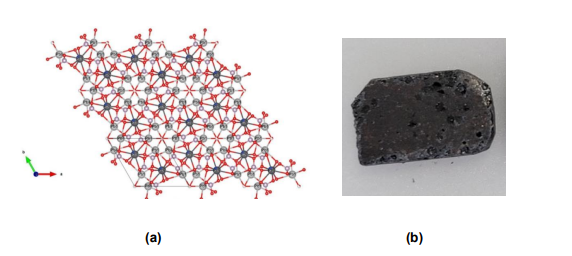
A few weeks ago I reported on a paper on arXiv entitled The First Room-Temperature Ambient-Pressure Superconductor. It presented a material now known as LK-99. The quest for high temperature superconductivity has been very active for many years so this claim generated a lot of interest and LK-99 now has a very active Wikipedia page. Not entirely surprisingly, the claim of superconductivity has been met with some resistance. Geddit?
To summarise, a number of groups seem to have managed to synthesize LK-99, but none have managed to recreate the claimed superconductivity.
This paper on arXiv by scientists at the CSIR National Physical Laboratory in India states:
The report of synthesis of modified Lead apatite (LK-99) with evidence of superconductivity at more than boiling water temperature has steered the whole scientific community. There have been several failures to reproduce superconductivity in LK-99 including partial successes. Here, we have continued our efforts to synthesize phase pure LK-99 with improved precursors. The process has been followed as suggested by Sukbae Lee et. al., [1,2]. The phase purity of each precursor is evidenced by Powder X-ray diffraction (PXRD) and well fitted by Rietveld refinement. The PXRD confirms the synthesis of phase pure polycrystalline LK-99 with apatite structure. The freshly synthesized sample does not show any signature of superconductivity levitation on a magnet (diamagnetism). The magnetization measurements on SQUID also show that LK-99 is diamagnetic at 280 K, there is no sign of superconductivity in LK-99 at room temperature. Moreover, we have also performed first principle calculations to investigate the electronic band structure of the LK-99 near Fermi level. Our study verifies that the Cu doped lead apatite (LK-99) has bands crossing at Fermi level, indicating generation of strong correlation in the system.
arXiv:2308.03544
There is also this paper submitted to arXiv on the same day (7th August) by scientists from the University of Manchester:
Recently, two arXiv preprints (arXiv:2307.12008, arXiv:2307.12037) reported signatures of superconductivity above room temperature and at ambient pressure, striking worldwide experimental research efforts to replicate the results3-7, as well as theoretical attempts to explain the purported superconductivity8-12. The material of interest has chemical formula Pb10−xCux(PO4)6O, where x≈1, and was named by the authors as LK-99. It belongs to lead apatite family, and was synthesized from two precursors, lanarkite (PbSO4⋅PbO) and copper phosphide (Cu3P). Here we performed a systematic study on LK-99, starting from solid-state synthesis, followed by characterisation and transport measurements. We did not observe any signatures of superconductivity in our samples of LK-99.
arXiv:2308.03823
While other studies suggest that LK-99 may have some interesting magnetic properties, it’s not looking good for this as a room-temperature superconductor, or indeed any kind of superconductor at all. I would like to see a few more results published before deciding firmly that the matter is closed, but I don’t think I’ll be buying shares in LK-99.
P.S. Nobody should get too overwrought if the claim is refuted: it’s an example of a thing called the scientific method.

 In the Dark