Archive for astronomy

Austerity bites in Utrecht (via The e-Astronomer)

Posted in Uncategorized with tags , , , , , , , on June 27, 2011 by telescoper

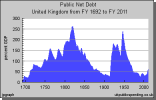
Andy Lawrence on cuts to Astronomy in Utrecht, the importance of rocking the boat, and a realistic perspective of the debt crisis; see also an old post of mine here that uses the same figure to make a similar point: the cuts are based on politics, not economics ….

Austerity bites in Utrecht As you may have heard, the University of Utrecht has taken the extraordinary decision to completely shut down its Astronomical Institute SIU  by 2014. You can read about in a blog post written last week by Sarah Kendrew, and there is also a press statement  issued by the SIU. This is the scariest astro-disaster since the INAF panic. Utrecht is a significant fraction of Dutch astronomy; it is one out of five universities in the NOVA alliance , alt … Read More

via The e-Astronomer

The joy of viXra

Posted in The Universe and Stuff with tags , , , , , on May 19, 2011 by telescoper

From time to time on this blog I post rants about the state of scientific publishing, open access, the importance of the arXiv for astronomy and cosmology, and so on.

This morning, however, I discovered an “alternative” side to the whole business of online science, a site by the name of viXra. Most readers will probably be familiar with this site already – many no doubt publish there, in fact – but I have to say that it’s completely new to me. I urge you to check it out.

The structure and layout of viXra is almost identical to the arXiv, but the content is a bit … er … different. Naturally, I went straight for the section that mirrors astro-ph on the arXiv. The viXra version of astro-ph so far contains only 88 publications, but among them are papers of such outstanding quality that I’m sure this remarkable collection will grow very quickly when like-minded authors around the world find out about it.

I thought I’d post my favourite as an example. Initially, I was going to go with one entitled Ball Lightning, Micro Comets, Sprite-Fireballs and X-Ray/gamma Flashes According to Quantum FFF Theory, with the abstract

FUNCTION FOLLOWS FORM in Quantum FFF THEORY. The FORM and MICROSTRUCTURE of elementary particles, is supposed to be the origin of FUNCTIONAL differences between Higgs- Graviton- Photon- and Fermion particles. As a consequence, a NEW splitting, accelerating and pairing MASSLESS BLACK HOLE, able to convert vacuum energy (ZPE) into real energy by entropy decrease, seems to be able to explain quick Galaxy- and Star formation, down to Sunspots, (Micro) Comets, Lightning bolts, Sprite Fireballs and Ball Lightning.

I decided against this one, however, because of the tendency to burst inexplicably into upper case every now and again, which I found rather alarming.

I was also forced to reject this one, The Structuring Force of the Natural World, on the grounds that (a) it’s in Chinese so I can’t read it and (b) I don’t know what a “basket graph” is. Otherwise I’m sure its a splendid piece of work.

The assumption that the mass distribution of spiral galaxies is rational was suggested 11 years ago. The rationality means that on any spiral galaxy disk plane there exists a special net of orthogonal curves. The ratio of mass density at one side of a curve (from the net) to the one at the other side is constant along the curve. Such curve is called a proportion curve. Such net of curves is called an orthogonal net of proportion curves. I also suggested that the arms and rings are the disturbance to the rational structure. To achieve the minimal disturbance, the disturbing waves trace the orthogonal or non-orthogonal proportion curves. I proved 6 years ago that exponential disks and dual-handle structures are rational. Recently, I have also proved that rational structure satisfies a cubic algebraic equation. Based on these results, this paper ultimately demonstrates visually what the orthogonal net of proportion curves looks like if the superposition of a disk and dual-handle structures is still rational. That is, based on the natural solution of the equation, the rate of variance along the ‘radial’ direction of the logarithmic mass density is obtained. Its image is called the ‘basket graph’. The myth of galaxy structure will possibly be resolved based the further study of ‘basket graphs’.

In the end I decided to go for this impressive article, A Cantorian Superfluid Vortex and the Quantization of Planetary Motion

This article suggests a preliminary version of a Cantorian superfluid vortex hypothesis as a plausible model of nonlinear cosmology. Though some parts of the proposed theory resemble several elements of what have been proposed by Consoli (2000, 2002), Gibson (1999), Nottale (1996, 1997, 2001, 2002a), and Winterberg (2002b), it seems such a Cantorian superfluid vortex model instead of superfluid or vortex theory alone has never been proposed before. Implications of the proposed theory will be discussed subsequently, including prediction of some new outer planets in solar system beyond Pluto orbit. Therefore further observational data is recommended to falsify or verify these predictions. If the proposed hypothesis corresponds to the observed facts, then it could be used to solve certain unsolved problems, such as gravitation instability, clustering, vorticity and void formation in galaxies, and the distribution of planet orbits both in solar system and also exoplanets.

I’m not an expert on the “Cantorian superfluid vortex theory”, but I suspect the author may well be correct in saying that it has not previously been proposed as an explanation for the planetary orbits…

Share/Bookmark

Cutting Remarks

Posted in Finance, Politics, Science Politics with tags , , , , , on May 13, 2011 by telescoper

I know you’ve all been waiting with baited breath for news of the outcome of the House of Commons Science and Technology Committee‘s report into Astronomy and Particle Physics in the UK.

Well, it’s out now. You can find the web version of the report here and it’s also available as a PDF file there. There’s also a press release with the headline

MPs warn astronomy and particle physics budgets cuts will hit UK science hard

Journalists have obviously been busy overnight – the report was released at midnight, I believe – and there are stories all over the press this morning, including The Guardian, and the journal Science as well as the BBC. The Royal Astronomical Society and the Institute of Physics have also been quick to respond.

Apart from the savage cuts themselves – which the committee correctly suggest will reduce astronomy and particle physics spending by 2014/15 to about 50% of the level it was at in 2005 – the great tragedy of this story is that it has taken so long to recognize the scale of the disaster. Most of the damage was done way back in 2007 when the Science and Technology Facilities Council (STFC) was first set up. I’d suggest there is an error in the tense of the verb “to hit” in the headline above. It would be more accurate as

MPs warn astronomy and particle physics budgets cuts HAVE ALREADY hit UK science hard, and are getting worse all the time..

Last year’s Comprehensive Spending Review had relatively good news for STFC, with a settlement corresponding to level funding in cash terms. However, the Bank of England has recently stated that it expects inflation to reach 5% this year, which means that science will actually be getting 5% year-on-year real terms cuts on top of what it received in 2007. It’s a pretty dire situation.

The report also raises a doubt over whether the current Chief Executive, Keith Mason, has the “ability to command the confidence of the scientific community”. No shit.

I don’t have time to write much more on this right now as I have lectures to do, but perhaps others out there might feel the urge to start a discussion through the comments box…

Share/Bookmark

Dust to Dust

Posted in The Universe and Stuff with tags , , , on April 27, 2011 by telescoper

Hey look! It’s our very own Haley Gomez (interviewed by Gemma Lavender) last week in Llandudno!

Share/Bookmark

What’s your mixing angle?

Posted in Science Politics, The Universe and Stuff with tags , , , , on April 5, 2011 by telescoper

Today I’ve been preparing tomorrow’s particle physics lecture on the Cabibbo mechanism for quark mixing, which inspired me to go back to Paul Crowther’s guest post of a couple of days ago to present the data in a slightly different way.

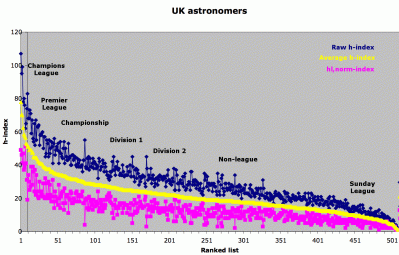
The centrepiece of Paul’s post was the following graph which shows the distribution of two different bibliometric measures for the UK astronomical community. There is the h-index (which is the number h such that the author has h papers cited at least h times) and a normalised version of h in which each paper’s citations are divided by the number of authors of that paper before the index is formed; I call this index hnorm. The results are shown below:

Generally speaking the two indices track each other fairly well, but there are clearly some individuals for whom they diverge. These correspond to researchers whose main mode of productivity is through large consortia and for whom h is correspondingly much larger than hnorm.

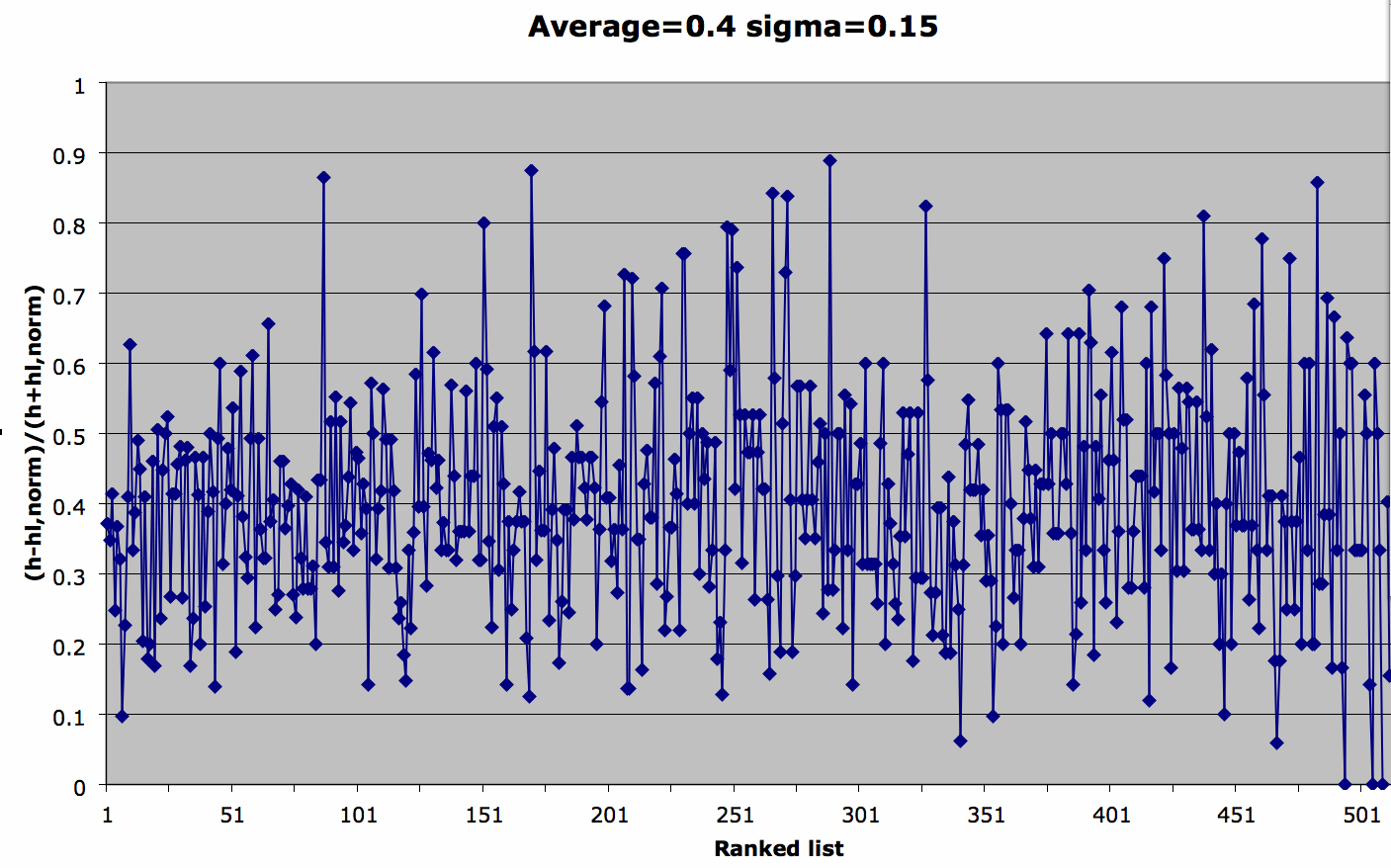
The “outliers” are more easily identified by forming the ratio

l= \frac{h-h_{\rm norm}}{h+h_{norm}}

which is plotted in the graph below kindly provided by Paul Crowther.

Notice that the “lurker index” l is constructed to normalise out any general trend with h and the data do seem consistent with a constant mean across the ranked list. There is, however, a huge spread even among the top performers.

If this were particle physics rather than astronomy the results wouldn’t be presented in terms of a ratio like l but as a mixing angle like the Weinberg angle or the Cabibbo angle. In this scheme we envisage each researcher’s output publication list as involving a mixture of “solo” and “collaborator” basis states, i.e.

|output>=cos(θ) |solo>+sin(θ) |collaborator>

The angle θ gives a quantitative indication of an author’s inclination to lurk in other people’s publication lists. If θ=0 then the individual’s papers are going to be all single-author affairs with no question marks over attribution of impact. If θ=90° then the individual does primarily  collaborative research – perhaps he/she is a good mixer? Most researchers  lie somewhere between these two extremes.

I therefore suggest that we should measure bibliometric productivity and impact not just through one “amplitude”, say h, but by the addition of a mixing angle, i.e. the whole output should be summarised as (h,θ). One could estimate the relevant angle fairly straightforwardly as

\sin\theta = l= \frac{h-h_{\rm norm}}{h+h_{norm}},

but alternative definitions are possible and a more complete understanding of the underlying process is needed to make this more rigorous.

Stephen Hawking has a particularly small mixing angle (~5.7°); many members of the astronomical Premiership have much larger values of this parameter. The value of θ corresponding to the average value of l is about 23.5° and my own angle is about 8.6°.

And here, courtesy of the ever-reliable Paul Crowther, is a graph of mixing angle versus raw h-index for the whole crowd shown in the above diagram.

P.S. If you thinking this application of mixing angle is daft, then you should read this post.


Share/Bookmark

(Guest Post) The Astronomical Premiership

Posted in Science Politics with tags , , , on April 2, 2011 by telescoper

Here’s a contribution to the discussion of citation rates in Astronomy (see this blog passim) by the estimable Paul Crowther who in addition to being an astronomer also maintains an important page about issues relating to STFC funding.

–0–

At last week’s Sheffield astrophysics group journal club I gave a talk on astronomical bibliometrics, motivated in part by Stuart Lowe’s H-R diagram of astronomers blog entry from last year, and the subsequent Seattle AAS 217 poster with Alberto Conti. These combined various versions of google search results with numbers of ADS publications. The original one was by far the most fun.

The poster also included Hirsch’s h-index for Americal Astronomical Society members, which is defined as the number of papers cited at least h times. Conti and Lowe presented the top ten of AAS members, with Donald Schneider in pole position, courtesy of SDSS. Kevin Pimblett has recently compiled the h-index for (domestic) members of the Astronomical Society of Australia, topped by Ken Freeman and Jeremy Mould.

Even though many rightly treat bibliometrics with distain, these studies naturally got me curious about comparable UK statistics. The last attempt to look into this was by Alex Blustin for Astronomy and Geophysics in 2007, but he (perhaps wisely) kept his results anonymous. For the talk I put together my attempt at an equivalent UK top ten, including those working overseas. Mindful of the fact that scientists could achieve a high h-index through heavily cited papers with many coauthors, I also looked into using normalised citations from ADS for an alternative, so-called hl,norm-index. I gather there are a myriad of such indices but stuck with just these two.

Still, I worried that my UK top ten would only be objective if I were to put together a ranked list of the h-index for every UK-based astronomy academic. In fact, given the various pros and cons of the raw and hl,norm-indexes, I thought it best to use an average of these scores when ranking individual astronomers.

For my sample I looked through the astrophysics group web pages for each UK institution represented at the Astronomy Forum, including academics and senior fellows, but excluding emeritus staff where apparent. I also tried to add cosmology, solar physics, planetary science and gravitational wave groups, producing a little over 500 in total. Refereed ADS citations were used to calculate the h-index and hl,norm-index for each academic, taking care to avoid citations to academics with the same surname and initial wherever possible. The results are presented in the chart.

Andy Fabian, George Efstathiou and Carlos Frenk occupy the top three spots for UK astronomy. Beyond these, and although no great football fan, I’d like to use a footballing analogy to rate other academics, with the top ten worthy of a hypothetical Champions League. Others within this illustrious group include John Peacock, Rob Kennicutt and Stephen Hawking.

If these few are the creme de la creme, I figured that others within the top 40 could be likened to Premier League teams, including our current RAS president Roger Davies, plus senior members of STFC committees and panels, including Andy Lawrence, Ian Smail and Andrew Liddle.

For the 60 or so others within the top 20 percent, I decided to continue the footballing analogy with reference to the Championship. At present these include Nial Tanvir, Matthew Bate, Steve Rawlings and Tom Marsh, although some will no doubt challenge for promotion to the Premier League in due course. The remainder of the top 40 per cent or so, forming the next two tiers, each again numbering about 60 academics, would then represent Leagues 1 and 2 – Divisons 3 and 4 from my youth – with Stephen Serjeant and Peter Coles, respectively, amongst their membership.

The majority of astronomers, starting close to the half-way point, represent my fantasy non-league teams, with many big names in the final third, in part due to a lower citation rate within certain sub-fields, notably solar and planetary studies. This week’s Times Higher Ed noted that molecular biology citation rates are 7 times higher than for mathematics, so comparisons across disciplines or sub-disciplines should be taken with a large pinch of salt.

It’s only the final 10 percent that could be thought of as Sunday League players. Still, many of these have a low h-index since they’re relatively young and so will rapidly progress through the leagues in due course, with some of the current star names dropping away once they retire. Others include those who have dedicated much of their careers to building high-impact instruments and so fall outside the mainstream criteria for jobbing astronomers.

This exercise isn’t intended to be taken too seriously by anyone, but finally to give a little international context i’ve carried out the same exercise for a few astronomers based outside the UK. Champions League players include Richard Ellis, Simon White, Jerry Ostriker, Michel Mayor and Reinhard Genzel, with Mike Dopita, Pierro Madau, Simon Lilly, Mario Livio and Rolf Kudritzki in the Premier League, so my ball-park league divisions seem to work out reasonably well beyond these shores.

Oh, I did include myself but am too modest to say which league I currently reside in…


Share/Bookmark

No Cox please, we’re British…

Posted in Television, The Universe and Stuff with tags , , , , , , , on March 29, 2011 by telescoper

The final episode of the BBC television series Wonders of the Universe was broadcast this weekend. Apparently it’s been incredibly popular, winning huge plaudits for its presenter Brian Cox, and perhaps inspiring the next generation of budding cosmologists the way Carl Sagan did thirty-odd years ago with his series Cosmos.

Grumpy old cosmologists (i.e. people like myself) who have watched it are a bit baffled by the peculiar choices of location – seemingly chosen simply in order to be expensive, without any relevance to the topic being discussed – the intrusive (and rather ghastly) music, and the personality cult generated by the constant focus on the dreamy-eyed presenter. But of course the series wasn’t made for people like us, so we’ve got no right to complain. If he does a great job getting the younger generation interested in science, then that’s enough for me. I can always watch Miss Marple on the other side instead.

But walking into work this morning I suddenly realised the real reason why I don’t really like Wonders of the Universe. It’s got nothing to do with the things I mentioned above. It’s because it’s just not British enough.

I’m not saying that Brian Cox isn’t British. Obviously he is. Although I do quibble with him being labelled as a “northerner”. Actually, he’s from Manchester. The North is in fact that part of England that extends southwards from the Scottish border to the Tyne. The Midlands start with Gateshead and include Yorkshire, Manchester and Liverpool and all those places whose inhabitants wish they were from the North, but aren’t really hard enough.

Anyway, I just put that bit in to inform non-British readers of this blog about the facts of UK geography. It’s not really relevant to the main point of the piece.

The problem with Wonders of the Universe is betrayed by its title. The word “wonders” suggests that the Universe is wonder-ful, or even, in a word which has cropped up in the series a few times, “awesome”. No authentic British person, and certainly not one who’s forty-something, would ever use the word “awesome” without being paid a lot of money to do so. It just doesn’t ring true.

I reckon it doesn’t do to be too impressed by anything on TV these days (especially if its accompanied by awful music), but there is a particularly good reason for not being taken in by all this talk about “Wonders”, and that is that the Universe is basically a load of rubbish.

Take this thing, for example.

It’s a galaxy (the Andromeda Nebula, M31, to be precise). We live in a similar article, in fact. Of course it looks quite pretty on the surface, but when you look at them with a physicist’s eye galaxies are really not all they’re cracked up to be.

We live in a relatively crowded part of our galaxy on a small planet orbiting a fairly insignificant star called the Sun. Now you’ve got me started on the Sun. I know it supplies the Earth with all its energy, but it does so pretty badly, all things considered. The Sun only radiates a fraction of a milliwatt per kilogram. That’s hopeless! Pound for pound, a human being radiates more than a thousand times as much. All in all, stars are drastically overrated: bloated, wasteful, inefficient and  not even slightly awesome. They’re only noticeable because they’re big. And we all know that size shouldn’t really matter.

But even in what purports to be an interesting neighbourhood of our Galaxy, the nearest star is 4.5 light years from the Sun. To get that in perspective, imagine the Sun is the size of a golfball. On the same scale, where is the nearest star?

The answer to that will probably surprise you, as it does my students when I give this example in lectures. The answer is, in fact, on the order of a thousand kilometres away. That’s the distance from Cardiff to, say, Munich. What a dull landscape our Galaxy possesses. In between one little golf ball in Wales and another one in Germany there’s nothing of any interest at all, just a featureless incomprehensible void not worthy of the most perfunctory second thought; it’s usually called France.

So galaxies aren’t dazzlingly beautiful jewels of the heavens. They’re flimsy, insubstantial things more like the cheap tat you can find on QVC. What’s worse is that they’re also full of a grubby mixture of soot and dust. Indeed, some are so filthy that you can hardly see any stars at all. Somebody needs to give the Universe a good clean. I suppose you just can’t get the help these days.

And then there’s the Big Bang. Well, I don’t need to go on about that because I’ve already posted about it. Suffice to say that the Big Bang wasn’t anywhere near as Big as you’ve been led to believe. The volume was between about 115 and 120 decibels. Quite loud, but many rock concerts are louder. Very disappointing. If I’d been in charge I would have put on something much more spectacular.

In any case the Big Bang happened a very long time ago. The Universe is now a cold and desolate place, lit by a few feeble stars and warmed only by the fading glow of the heat given off when it was all so much younger and more exciting. It’s as if we inhabit a shabby downmarket retirement home, warmed only by the feeble radiation given off by a puny electric fire as we occupy ourselves as best we can until Armageddon comes.

No, the Universe isn’t wonderful at all. In fact, it’s basically a bit crummy. It’s only superficially impressive because it’s quite large, and it doesn’t do to be impressed by things just because they are large. That would be vulgar.

Digression: I just remembered a story about a loudmouthed Texan who owned a big ranch and who was visiting the English countryside on holiday. Chatting to locals in the village pub he boasted that it took him several days to drive around his ranch. A farmer replied “Yes. I used to have a car like that.”

We British just don’t like showy things. It’s in our genes. We’re fundamentally a rather drab and dowdy race. We don’t really enjoy being astonished either. We prefer things we can find fault with over things that intimidate us with their splendour. We’re much more likely to tut disapprovingly than stare open-mouthed in amazement at something that seems pointlessly ostentatious. If pushed, we might even write a letter of complaint to the Council.

Ultimately, however, the fact is that whatever we think about it, we’re stuck with it. Just like the trains, the government and the weather. Nothing we can do about it, so we might as well just soldier on. That’s the British way.

So you can rest assured that none of this Wonders of the Universe stuff will distract us for long from getting on with the important things in life, such as watching Coronation Street.

Professor Brian Cox is 43.


Share/Bookmark


What Counts as Productivity?

Posted in Bad Statistics, Science Politics, The Universe and Stuff with tags , , , , on March 18, 2011 by telescoper

Apparently last year the United Kingdom Infra-Red Telescope (UKIRT) beat its own personal best for scientific productivity. In fact here’s a  graphic showing the number of publications resulting from UKIRT to make the point:

The plot also demonstrates that a large part of recent burst of productivity has been associated with UKIDSS (the UKIRT Infrared Deep Sky Survey) which a number of my colleagues are involved in. Excellent chaps. Great project. Lots of hard work done very well.  Take a bow, the UKIDSS team!

Now I hope I’ve made it clear that  I don’t in any way want to pour cold water on the achievements of UKIRT, and particularly not UKIDSS, but this does provide an example of how difficult it is to use bibliometric information in a meaningful way.

Take the UKIDSS papers used in the plot above. There are 226 of these listed by Steve Warren at Imperial College. But what is a “UKIDSS paper”? Steve states the criteria he adopted:

A paper is listed as a UKIDSS paper if it is already published in a journal (with one exception) and satisfies one of the following criteria:

1. It is one of the core papers describing the survey (e.g. calibration, archive, data releases). The DR2 paper is included, and is the only paper listed not published in a journal.
2. It includes science results that are derived in whole or in part from UKIDSS data directly accessed from the archive (analysis of data published in another paper does not count).
3. It contains science results from primary follow-up observations in a programme that is identifiable as a UKIDSS programme (e.g. The physical properties of four ~600K T dwarfs, presenting Spitzer spectra of cool brown dwarfs discovered with UKIDSS).
4. It includes a feasibility study of science that could be achieved using UKIDSS data (e.g. The possiblity of detection of ultracool dwarfs with the UKIRT Infrared Deep Sky Survey by Deacon and Hambly).

Papers are identified by a full-text search for the string ‘UKIDSS’, and then compared against the above criteria.

That all seems to me to by quite reasonable, and it’s certainly one way of defining what a UKIDSS paper is. According to that measure, UKIDSS scores 226.

The Warren measure does, however, include a number of papers that don’t directly use UKIDSS data, and many written by people who aren’t members of the UKIDSS consortium. Being picky you might say that such papers aren’t really original UKIDSS papers, but are more like second-generation spin-offs. So how could you count UKIDSS papers differently?

I just tried one alternative way, which is to use ADS to identify all refereed papers with “UKIDSS” in the title, assuming – possibly incorrectly – that all papers written by the UKIDSS consortium would have UKIDSS in the title. The number returned by this search was 38.

Now I’m not saying that this is more reasonable than the Warren measure. It’s just different, that’s all.  According to my criterion however UKIDSS measures 38 rather than 226. It sounds less impressive (if only because 38 is a smaller number than 226),  but what does it mean about UKIDSS productivity in absolute terms?

Not very much, I think is the answer.

Yet another way you might try to judge UKIDSS using bibliometric means is to look at its citation impact. After all, any fool can churn out dozens of papers that no-one ever reads. I know that for a fact. I am that fool.

But citation data also provide another way of doing what Steve Warren was trying to measure. Presumably the authors of any paper that uses UKIDSS data in any significant way would cite the main UKIDSS survey paper led by Andy Lawrence (Lawrence et al. 2007). According to ADS, the number of times this has been cited since publication is 359. That’s higher than the Warren measure (226), and much higher than the UKIDSS-in-the-title measure (38).

So there we are, three different measures, all in my opinion perfectly reasonable measures of, er,  something or other, but each giving a very different numerical value. I am not saying any  is misleading or that any is necessarily better than the others. My point is simply that it’s not easy to assign a numerical value to something that’s intrinsically difficult to define.

Unfortunately, it’s a point few people in government seem to be prepared to acknowledge.

Andy Lawrence is 57.


Share/Bookmark

Batting for Astronomy

Posted in Science Politics with tags , , , , , , on March 9, 2011 by telescoper

I was too busy teaching this morning to watch streaming video of the meeting of the House of Commons Science & Technology Committee I referred to in a previous post, but then, being a confirmed Luddite,  I rarely manage to get such things to work properly anyway. Or is it just that Parliament TV isn’t very good? Anyway, I did get the chance to do a fast-forward skim through the coverage, and also saw a few comments on Twitter.

By all accounts the two big hitters for astronomy, Professor Roger Davies and Dame Jocelyn Bell Burnell both played good innings, watchful in defence, parrying the odd tricky delivery, but also scoring impressively when the opportunity arose. Dame Jocelyn, for example, got in a nice comment to the effect that the shortfall in observatory funding was equivalent to one banker’s bonus.

Any other reactions are welcomed through the comments box.

The e-astronomer (whose pseudonym is Andy Lawrence)  has already blogged about the event, including a delightfully pithy summary of the written evidence submitted beforehand . But then Andy’s never reluctant to take the pith when the opportunity arises…

The thing that depresses me most is the contrast between the forthright and well-considered performances of leading figures from the astronomy establishment with the bumbling efforts of the Chief Executive of STFC, Keith Mason. As Andy Lawrence points out, some of the latter’s responses to questions at the last session of the inquiry were downright misleading, giving the impression that he didn’t know what he was talking about. And that’s the more generous interpretation. Combine the poor grasp of detail with his generally unenthusiastic demeanour, and it becomes easy to see that one of the main reasons for the ongoing crisis at STFC is its Chief Executive.

I’ve been told off repeatedly in private for posting items on here that are severely critical of Professor Mason, sometimes on the grounds that my comments are ad hominem, a phrase so frequently misused on the net that it is in danger of losing its proper meaning. It’s not an “ad hominem” attack to state that a person is demonstrably useless at their job. I stand  my ground. He should have gone years ago.

Unfortunately we still have to wait another year or so before a replacement Chief Executive will be installed at STFC. Good people elsewhere – both  inside and outside science – have lost or are losing their jobs, because of the recession and cutbacks, through no fault of their own. Reality is much less harsh if you’re at the top.


Share/Bookmark

A First Problem in Astrophysics

Posted in Education, The Universe and Stuff with tags , , , , on February 25, 2011 by telescoper

When I first arrived at Cambridge University (nearly 30 years ago) to begin my course in Natural Sciences, eventually leading to a specialism in Physics, one of the books we were all asked to buy was the Cavendish Problems in Physics. One of the first problems I had to solve for tutorial work was from that collection, and I have been setting it (in a slightly amended form) for my own students ever since I started lecturing. I thought I’d put it up here because I think there might be a few budding theoretical astrophysicists who’ll find it interesting and because it provides a simple refutation of a crazy theory that has been doing the rounds on Twitter all morning.

I like this problem because it involves a little bit of lateral thinking, because not all the information given seems immediately relevant to the question being asked, but you can get a long way by just writing down the pieces of information given and thinking about how you might use simple physical ideas to connect them to the answer.

If you haven’t seen this problem before, why not have a go?

Using only the information given in this Question, estimate the ratio of the mean densities of the Earth and Sun:

i) the angular diameter of the Sun as seen from Earth is half a degree

ii) the length of 1° of latitude on the Earth’s surface is 100km

iii) the length of a year is 3×10⁷ seconds

iv) the acceleration due to gravity at the Earth’s surface is 10 m s-2.

HINT: You do not need to look up anything else, not even G!

The answer you should get is that the mean density of the Earth is something like 3.5 times that of the Sun, although the information given in the question isn’t all that accurate.

In fact the mean density of the Earth is about 5500 kg per cubic metre, and that of the Sun is about 1400 kg per cubic metre; the average density of the Sun is just 40% higher than water, which is perhaps surprising to the uninitiated….

The density of solid iron on the other hand is about 7900  kg per cubic  metre, and even higher than that if it is compressed…

UPDATE: I’ve added my Solution.

Share/Bookmark