Archive for Birds

For the Birds

Posted in Biographical, Maynooth with tags , , , , , , , on November 23, 2025 by telescoper

The weather here in Maynooth was very mild until a couple of weeks ago and with the arrival of inclement conditions I started putting out the bird feeders in my garden. I can see the level of the seed from my kitchen window so know when they need filling up. I had one out for a couple of days before the arrival of Storm Claudia with associated torrential rain, but when it passed I was surprised to see the feeders were still half full so I left them.

Last weekend it started to become very cold so I was surprised there were no birds at the feeder. When I went out to look I realized that owing the heavy rainfall some water had got into the seed container, with the result that some of the seeds had started to germinate. This formed a tangled mass of shoots that blocked the gap through which seed is dispensed. The reason the feeders were not empty was not that the birds weren’t hungry, but that no seed was coming out.

I took the feeders inside and cleaned out all the matted seedlings. Then I took them back to the shed to fill up, at which point I knocked over the jar in which I stored the birdseed, scattering the supply all over the floor. There wasn’t much left anyway, but my clumsiness reduced the stock to zero so I was unable to feed the birds despite having functioning feeders.

Yesterday I finally had time to buy some more birdseed. I filled up the feeders as soon as I got home. It was quite interesting to watch the sequence of events. The first to arrive were sparrows who, being small and agile, were quite happy taking terms perching at the feeders. Not long after, however, starlings arrived, squabbling and squawking as they usually do. Starlings are much larger then sparrows and are extremely messy and noisy eaters, their attempts to perch at a feeder causing it to swing and scatter seed all over the ground.

(Incidentally, the term for a large group of starlings is a murmuration, a congregation, a cloud, or a constellation, but there are alternatives for a smaller group like the dozen or so that arrived in my garden. These include a clutter, a scourge, a vulgarity and, my favourite, a filth…)

Some starlings and sparrows started to feed on the ground, as did a very bonny collared dove, walking around calmly amid the flurry of other birds and paying them no attention at all .

At this point the feeder was almost empty.

The last cohort to arrive were the rooks and jackdaws. These are too big to even attempt to perch so their modus operandi is to crash into the feeders to try to break them or knock them down to the ground where they are easier to attack. They didn’t succeed, so they left.

Now the feeders are empty, the birds have gone, and all is quiet. I think I’ll put more food out tomorrow before I go to work. I imagine they’ll be empty by the time I get back home.

A Lamentation of Swans

Posted in Maynooth with tags , , , , , , , , on July 18, 2024 by telescoper

I was looking forward to making acquaintance with the beautiful swans of Maynooth when my sabbatical is over, but I’ve heard that recent tragic events mean that won’t be happening. The title of this post is not a reference to the collective noun for swans, but literally a lamentation.

A pair of swans had been nesting for several years on the little island in the harbour of the Royal Canal at Maynooth for several years- since before I arrived here. Every spring they have raised a batch of cygnets and these have grown up each summer and departed for a new life elsewhere. I’ve always enjoyed watching the little ones grow and learn how to find food under the very watchful eye of their parents. I had no reason to think things would be any different this year. I was wrong.

The first calamity to occur, earlier this year, was that the island flooded destroying this year’s batch of eggs. The swans tried again, and managed two more cygnets, but neither survived. I’m not sure exactly what happened but it seems, various locks were opened to allow water into the section of the canal England has a much more extensive system of waterways than Ireland and when rivers are close to flooding, water is often diverted into canals to stop them breaking their banks. I guess this is what happened earlier, but I don’t know.

It was bad enough that there are no cygnets this year, but worse was to come. Recently the female swan (pen) was found to be very ill. She was taken away by Kildare Wildlife Rescue (KWR) team and cared for but sadly passed away. All I know is that it seemed to be “an infection” which may or may not be the same cause of death as the cygnets. Avian flu is a possibility, so is some form of poisoning such as botulism. Sadly, people do feed the birds in the harbour with inappropriate things so this might also be a contributing factor.

What about the male swan (cob)? Well, he has gone. I don’t know whether he died too or whether he just left. Swans mate for life and I’ve heard of cases when one of a pair has simply pined away when the other has died.

So there are no swans nesting in Maynooth anymore. It’s really very sad. Swans are beautiful creatures and the pair on the canal was really well known to the community. I hope that another pair will nest on the island before too long. It may even be that a pair of rescue birds will be rehomed there by KWR. Before that happens though, I hope they find out why exactly caused the swans to die. We don’t want more deaths

Sydney looking back

Posted in Biographical with tags , , , , on March 5, 2024 by telescoper

I am a bit jet-lagged, and don’t have the energy for anything too strenuous, so I thought I’d post a couple of reflections of my time in Sydney. Actually I wrote this piece yesterday but was so tired I forgot to post it!

The first thing I should say is that Sydney is a very fine city. I really enjoyed my time there. Although I had four weeks there are still many things I didn’t get to do. Had I been on holiday for a month I might have seen more, but I was actually working a lot of the time. Perhaps I’ll go back when I’ve retired! It was a last-minute decision to go, actually. I only decided in January to make the trip. Had I had more time to plan things I would have been more organized.

One issue with Sydney is that it is very expensive. That goes for food and drink as well as accommodation. I might have found a cheaper place to stay had I looked earlier, of course, but everyone there told me it was always difficult to find rental properties. A while ago I read a story about how and why many young Irish people are moving to Australia. Sydney is even more expensive than Dublin to live in, and there’s just as much difficulty in finding somewhere to rent. On the other hand, in Australia there is a lot more sunshine than in Ireland!

Sydney is also very cosmopolitan and culturally diverse. The most obvious sign of this is the huge range of different cuisines. I rented an apartment with a kitchen rather than a hotel room because I was there for so long that I thought I would do a significant amount of cooking. As it turned out, though, there were many relatively inexpensive eateries nearby, some of them very good indeed, so I didn’t cook all that much.

A Cockatoo or Three

Another thing that struck me at first was the huge difference in flora and fauna, especially the birds. I’ve mentioned some of them before but I should say something about the cockatoos. These are far more numerous than I’d imagined and are rather gregarious, often swooping around in large flocks. They are cute but somewhat deranged creatures, often very noisy and sometimes downright destructive. You don’t want to let one into your house. They are naturally inquisitive and use their strong beaks and dextrous claws to dismantle things. Like all indigenous birds, cockatoos are protected by law. I rather think they are aware of this immunity as they are very cheeky. Strange as they are, I got used to their squawking and screeching. I miss them a bit already.

Anyway, I’m now pretty much recovered from the jet lag – just in time for another flight. It’s going to be a busy ten days or so before I return to Barcelona. A student of mine has their viva examination next week. Although at Maynooth University the supervisor doesn’t attend these examinations, I feel I should be on hand to buy champagne and offer congratulations. And talking of congratulations, I just found out this morning that, after a number of postdoctoral positions, a former PhD student of mine has joined the staff at a UK university. I’m very happy about that – what special delight you feel when you hear one of your former PhD students has got a permanent job!

The Autumn Leaves

Posted in Biographical, Maynooth with tags , , on October 16, 2022 by telescoper

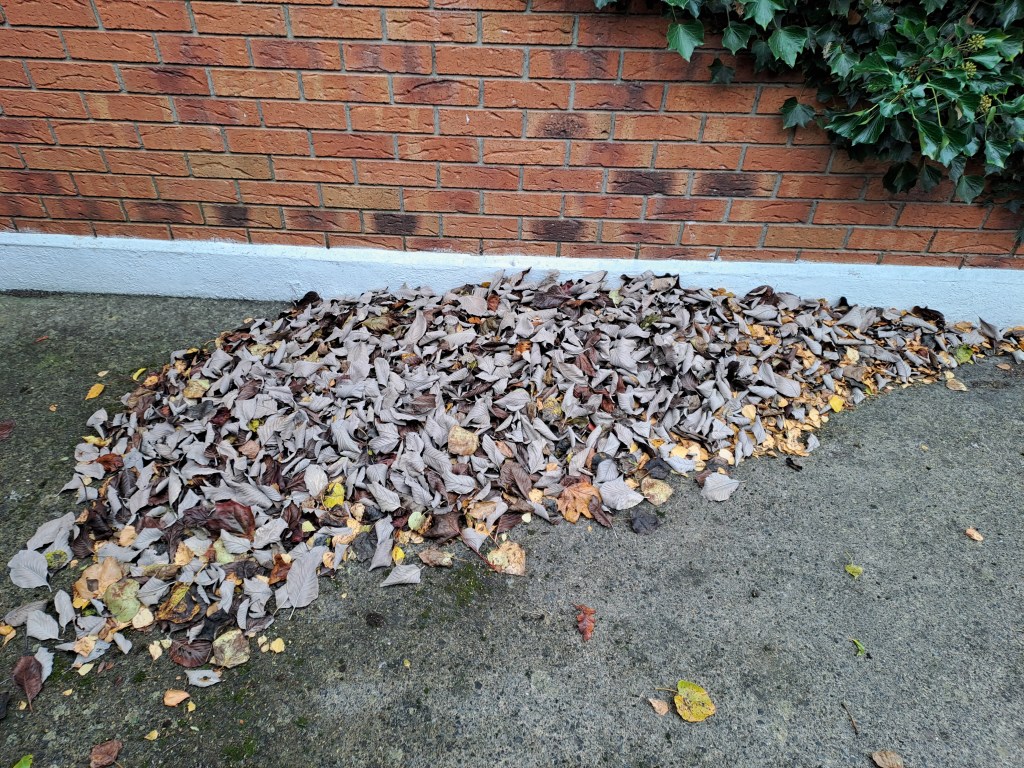
Autumn is definitely here. It’s very nice to live in a tree-lined street but the consequence of that at this time of year is that there are leaves everywhere. They don’t call it “fall” for nothing. Actually I let the leaves lie until they compost down on the actual garden but unfortunately the side of my house is a bit of wind trap and they tend to accumulate there in large quantities. When they do start to break down it makes a slippery hazard for anyone visiting, especially if it rains.

So this lunchtime I cleared away most of the leaves from the path leading up to my front door, in which task I was joined by a little robin who was no doubt hoping I would disturb some bugs or at any rate something edible when I swept up the leaves. I’m not sure this is the same robin that came in my house earlier this year, but it wasn’t afraid to come very close.

Reading a little about robins I discovered that many don’t live to reach their first birthday, but those that do have a good chance of living quite a while longer. The record is 19 years! Today’s robin could be the same one I’ve seen before, but I can’t be certain.

That reminded me that it was about time to start putting the bird feeders out again so I went out and bought some seed and peanuts and fat balls, although I think I’ll keep those for when it’s a bit colder.

At some point soon I’ll have to get the ladders out and trim back the ivy which is once again reaching the top of the wall. That will have to wait a few days, though, as my garden refuse bin is now full and won’t be empty again until Wednesday.

Colder Times

Posted in Biographical, Maynooth with tags , , , on November 22, 2021 by telescoper

All of a sudden winter is here. Until now the temperature has stayed in double figures but it was much colder yesterday and this morning we had a hard frost. It has barely been above freezing at any point today. It was -2 °C at 7.30pm when I got home from work.

I now wish I’d bought some food for the birds at the weekend as the feeders are empty and I think my little avian visitors need some fuel. At least there are lots of berries around. A wood pigeon visits my garden regularly to feast on them and as a result is now as round as a football and probably too fat to fly.

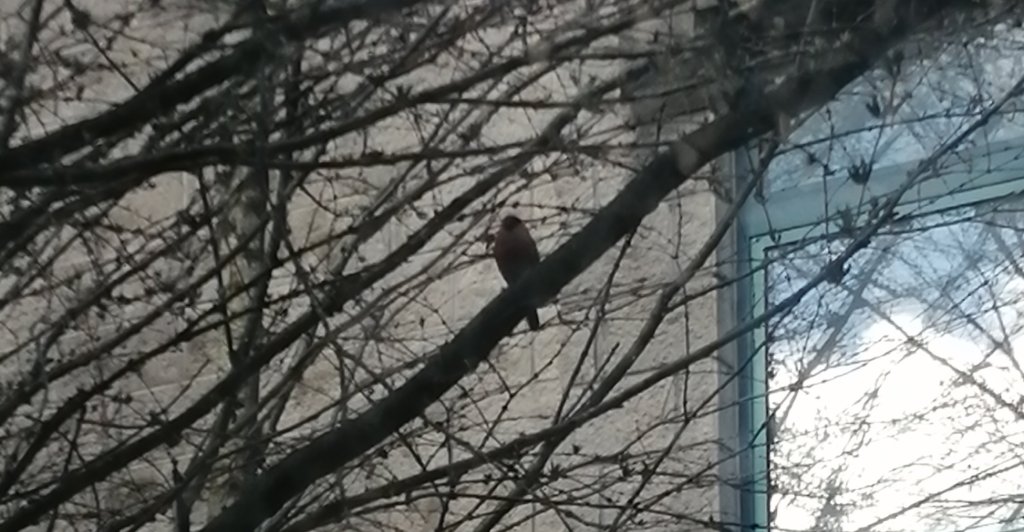
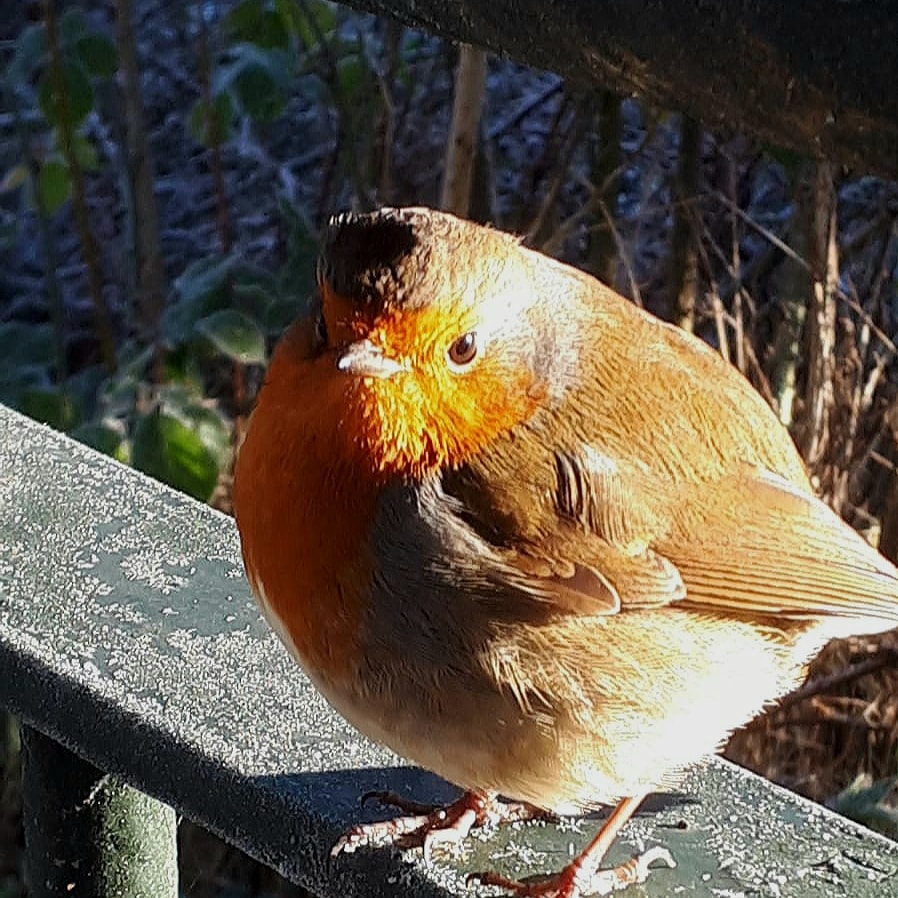
On the subject of birds, this little chap appeared outside my office window last week. The distinctive red colour on the body doesn’t show up at all in the phone picture but, when combined with the black cap on its head, made me think it was a bullfinch. Bullfinches spend the winter here so maybe I’ll see this one again.

I suddenly thought today that it might be an idea to put some bird feeders in the space outside my office window. It’s enclosed by walls on all sides but open above. It would be a very safe space for birds to feed and it would be nice to encourage a few more avian visitors.

Garden Flowers

Posted in Biographical, Maynooth with tags , , , , on July 25, 2021 by telescoper

It seems the weather is about to turn cooler and we may even have some rain this evening. I won’t be sorry at either of those eventualities as I’m not really cut out for the heat, and my garden could do with a bit of water on it.

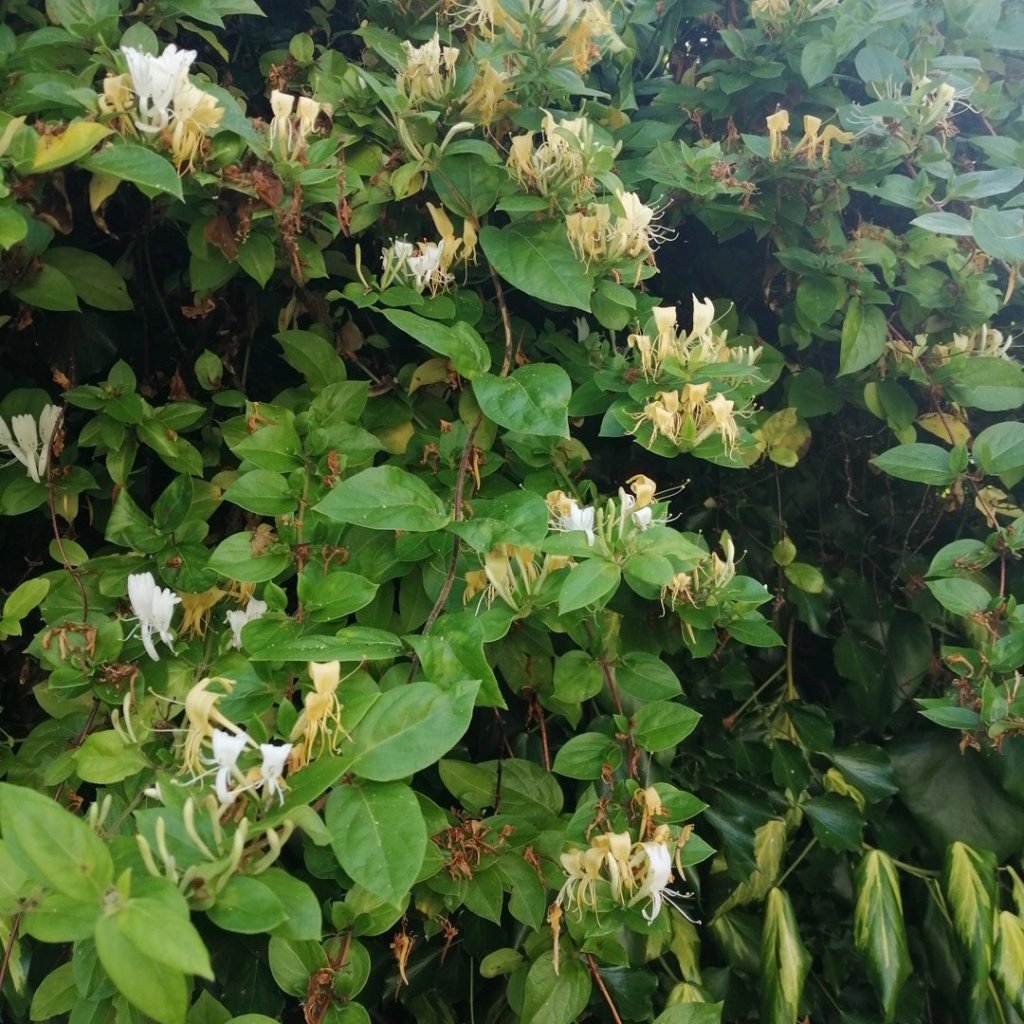
This honeysuckle is looking the worse for wear but has actually been flowering for several weeks already while still keeping its lovely fragrance. The bees like it too!

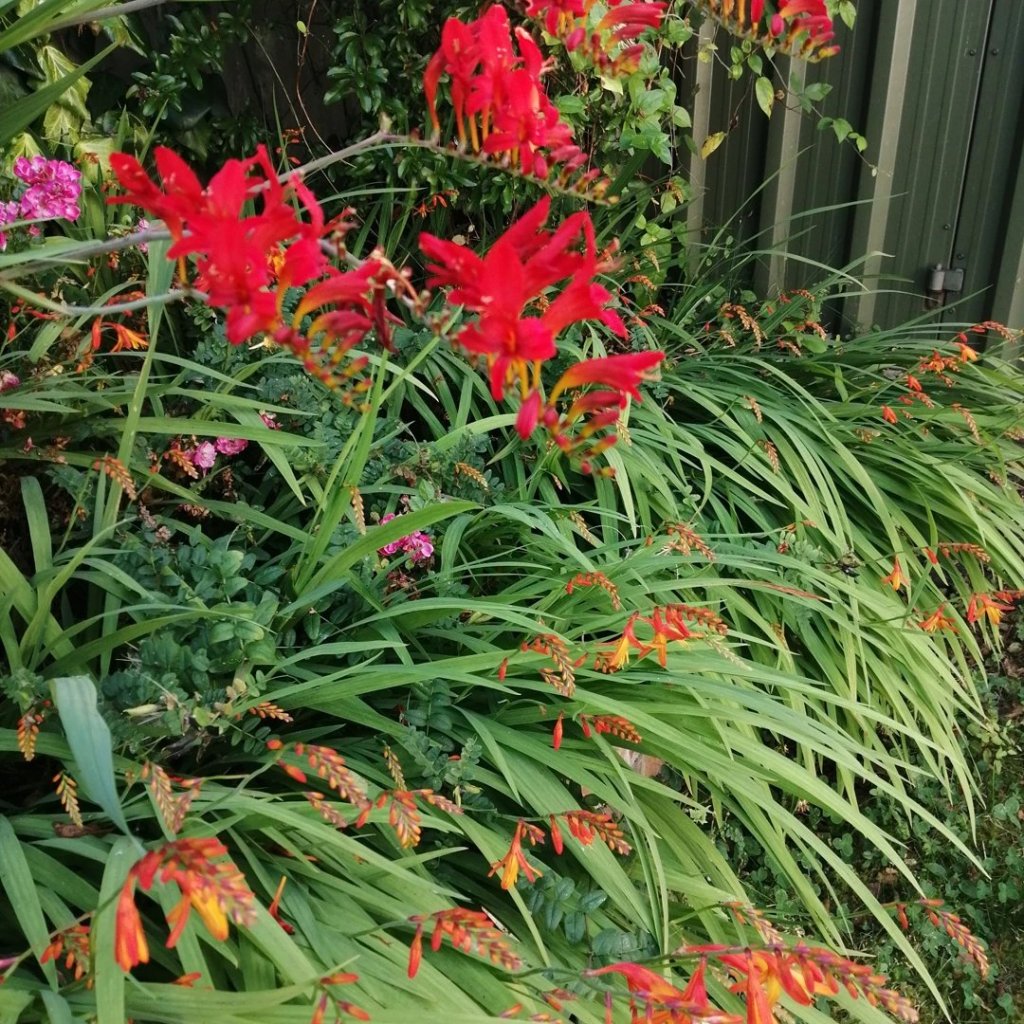
While I was out these started to flower. There’s a couple of different types of Montbretia in there:

I remember they were in flower last summer when I visited the house with a view to buying it. Was that really a year ago?

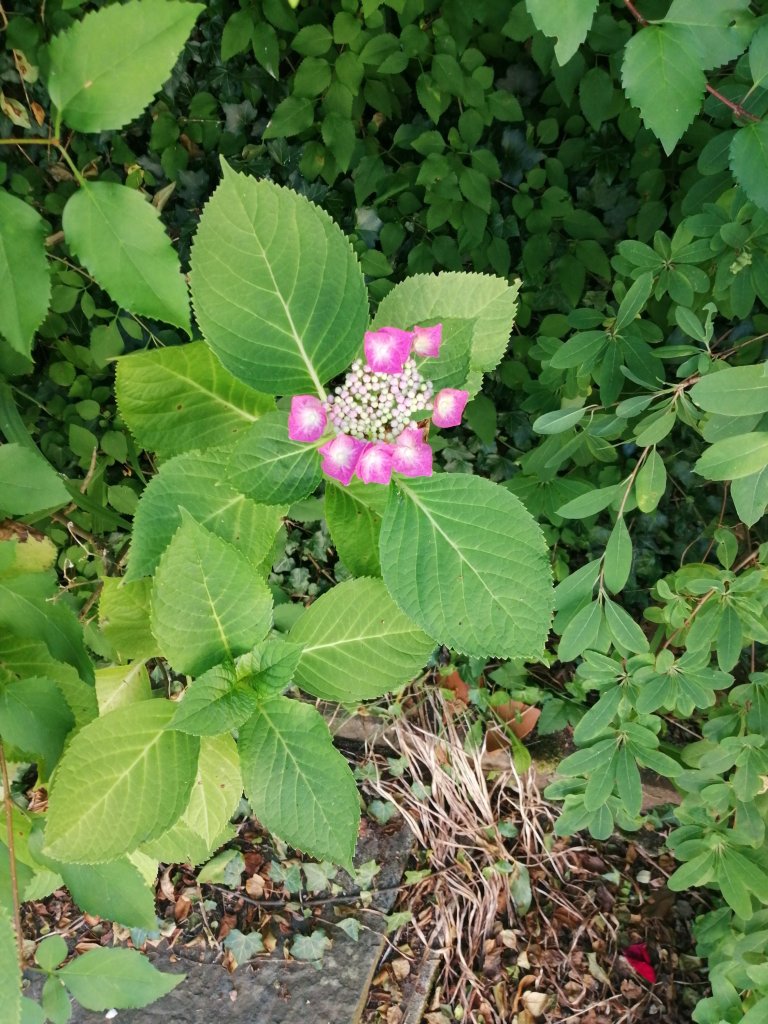
This Hydrangea also flowered while I was away. I don’t think it will last much longer so I almost missed it.

The dryness has probably made it difficult for the birds as well as the plants. A few weeks ago I found a dead blackbird on my garden table. It was just a youngster; there wasn’t a mark on it. I’m not sure why it died but it’s tough being a blackbird. They are born in several broods each year and only live a couple of weeks in the nest before being turfed out to fend for themselves. They like damp conditions and feed on worms and the like, so it’s difficult for them when it’s very dry. I guess sometimes they just don’t adapt quickly enough.

There is no shortage of live birds in the garden; there are plenty of bugs, berries and other things to eat. The dawn chorus is still rather loud but I think they tend to stay in the shade during the day. The one bird that seems to be out and about all the time is the robin.

For the Birds..

Posted in Biographical, Maynooth with tags , , , on January 17, 2021 by telescoper

The Giant Robin of Newgrange

I saw the above picture of a robin on Twitter the other day and it reminded me of the one that visits my garden. I’ve never been quick enough to take a picture of him, but he’s every bit as plump as the one in the picture. If he were taller he’d be spherical.

The robin situation in my garden has seen an important development: another robin has arrived. The new one is smaller than the first and the first time I saw it I only noticed it because it was having a squabble with the plump one. I assumed it was a younger rival, but on subsequent days I saw the two of them together quite peacefully. Since male and female robins are virtually indistinguishable I wonder if they might be a husband and wife team? The fact that I saw them having a row lends support to this theory.

Another interesting thing concerned niger seed. I bought some of this a while ago, together with a feeder that purported to be designed for dispensing it. Niger seed is a fine oily seed very good for the smaller birds. Unfortunately the mesh in the feeder is too coarse and the seed just poured out as I filled it. I put the bag of seed away and filled the feeder with other stuff. Last week I remembered the bag of niger seed and decided to try putting some loose in the bird table. In no time a group of four chaffinches were tucking in. These were definitely two males and two females – the females are notably different in colour. Anyway, they love it – as do a number of other birds, including the robin(s) – and I’ve had to replenish the supply twice.

I usually wait until there don’t seem to be any birds present before going out to check the food supply, but this is a waste of time. Even if the garden appears empty, as soon as I go out there’s a whooshing sound and lots of chirps as birds that had secreted themselves in various trees and hedges take to the air to escape the scary human.

The birds provide a welcome distraction when I take a break from exam marking, as does writing a blog, but I guess I should get back to it now.

The Song of the Dunnock

Posted in Uncategorized with tags , on December 6, 2020 by telescoper

It’s very cold and foggy today and there was a hard frost overnight, all of which wintriness made me go out and replenish the bird feeders. No sooner had I refilled and replaced the one that holds peanuts when I had a visitation from starlings, blue tits and even a jackdaw. There was a blackbird too, but that remained at ground level pecking at the frozen earth.

I was hoping to see my favourite garden visitor, whom I last saw a few days ago. This is the Dunnock (sometimes called a hedge sparrow, though it’s not a member of the sparrow family).

The Dunnock is a fairly drab-looking bird easily mistaken at for a House Sparrow at a quick glance. A quick glance is all you’re likely to get, in fact, because, although they’re not at all uncommon in Ireland, they are very shy. The one – I think it’s the same one – that visits my garden darts out from a hedge from time to time, grabs something from the lawn (presumably a bug of some sort), then darts back again and vanishes. It probably pays to be wary when you’re a bird that feeds on the ground. I’ve never seen it on any of the bird feeders, which contain seeds and nuts.

Anyway, I do enjoy seeing this critter when it makes an appearance. Although I don’t it very often I know it’s around as I hear its song very often. For a small bird it’s very loud indeed, and very distinctive. Here’s a recording:

That rapid-fire jumble of notes is very different from the song of a House Sparrow which is much simpler, consisting of a series of single notes at the same pitch.

Wrens are even smaller but are also very loud. As far as I know I haven’t had one of those in my garden yet.

Garden Variety

Posted in Biographical, Maynooth with tags , , , on October 10, 2020 by telescoper

The modest investment I made in bird feeders when I moved into my new house in Maynooth has paid a considerable dividend in terms of entertainment. As well as a number of starlings and sparrows, I have quite a variety of more exotic species. The other morning, while I was drinking my coffee while looking into the garden before leaving for work, I saw a robin, a great tit, a blue tit, a chaffinch, and (I think) a hedge warbler*. And that was all just in the space of 10 minutes or so.

The show was then brought to a sudden end by the arrival of two jackdaws who scared everything else off and then tried to wreck the nut feeder.

I went outside and chased them away. I have nothing against the jackdaws – they’re actually rather amusing – but I won’t have vandalism in my garden.

The hedge warbler (or dunnock or hedge sparrow, although it’s not a sparrow) is not particularly rare in Ireland but is extremely shy and never gives you a long time to look at it. I’m pretty sure the bird I saw was one, though it was gone in a flash.

The local robin, by contrast, is not shy. I see him very frequently. I think it’s male because of the very bright red of his chest colour; females of the species tend to have colours that look slightly washed out. Male or female this one is very well nourished. In fact it’s so plump as to be almost spherical.

Anyway, all these birds (including the jackdaws) are passerine species, defined by the shape of their feet: they all have three toes pointing forward and one pointing backwards. The order Passeriformes includes perching birds of all kinds, from sparrows and finches to crows and a lot more besides. In fact over half the known bird species belong to this order.

Garden Birds

Posted in Biographical, Maynooth with tags , , , on September 20, 2020 by telescoper
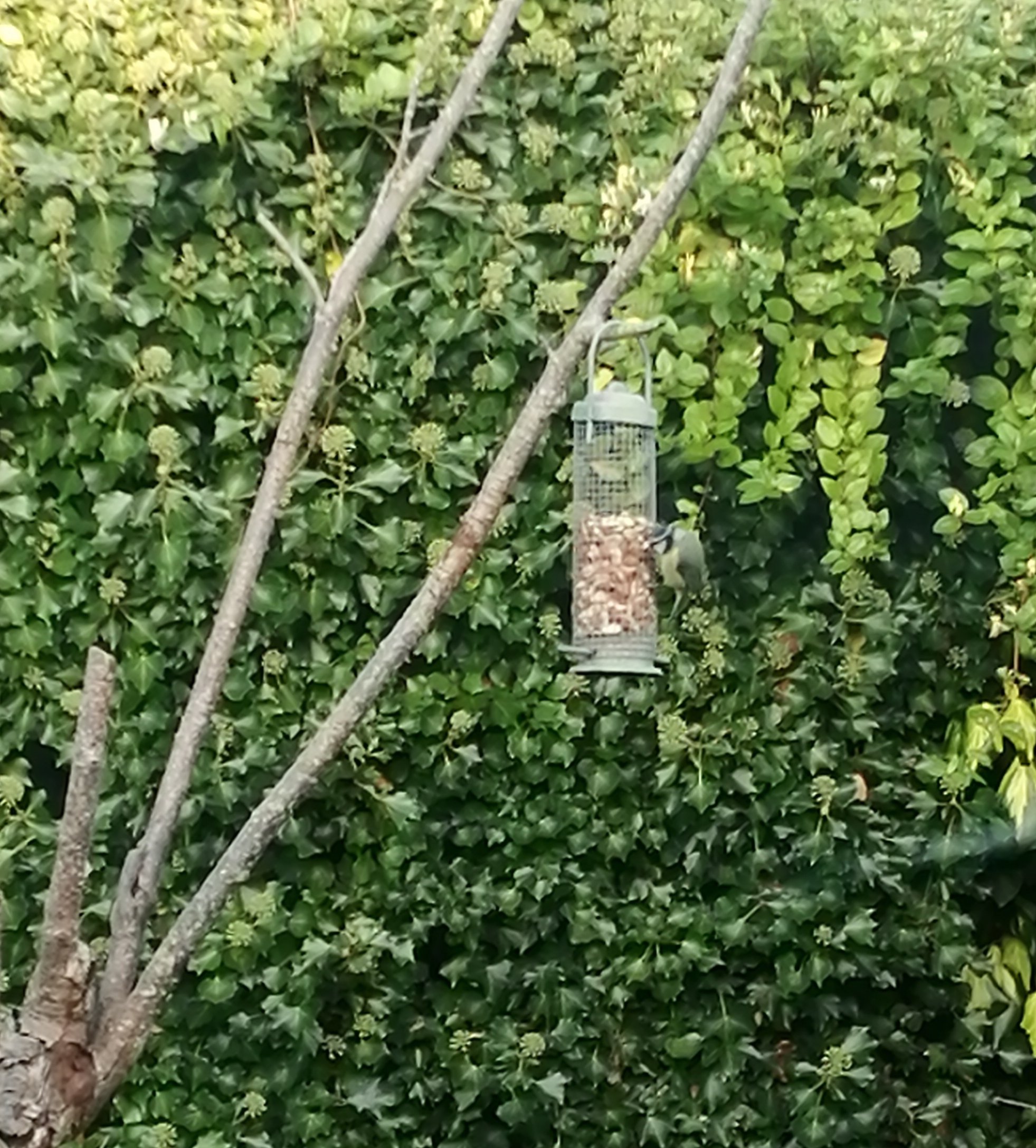
A blue tit at the peanuts

The previous owner of my house left a bird feeder in the shed so I decided to see what sort of birds would come if I put it up. The feeder has quite a wide mesh so I bought a sack of peanuts, filled it up, and suspended from one of the trees.

Almost immediately a group of starlings arrived and took turns at pecking at the contents. I know that some starlings are resident all year round, but there is an annual influx of migratory birds around autumn. It seems a bit early for the continental starlings which usually start to turn up in October. Anyway, they seem ravenously hungry but are rather messy eaters and keep dropping bits on the ground.

The principal beneficiary of the starlings’ messiness is a robin, whose tactic is to wait underneath for peanuts from above. It does not seem keen to attempt the acrobatics needed to feed directly from the feeder. Sparrows do this too, but not when the robin is around as the robin chases them off; robins are feisty little critters. This one isn’t afraid to have a go at the much larger starlings if they descend to ground level.

There are at least two blue tits that visit the garden but they rarely get the chance to get at the peanuts before being scared off by yet more starlings. The picture above is an exception.

To help the smaller birds I bought a second feeder with a finer mesh that the starlings can’t get into this and filled it with mixed seed. The blue tits have this to themselves but obviously like the nuts too and will go to that feeder if there are no starlings.

Yesterday one of the many resident jackdaws tried the peanut feeder but failed in its mission as it was too big to hang on.

So far apart from those mentioned above I’ve also seen a chaffinch and a great tit but mainly it’s been blue tits and starlings. Of course I’m not in during the day so there might well be other species of garden visitor that I don’t see.

I’m thinking of getting a third feeder (for fat balls, etc) but I’m told that around here that will just mean a garden permanently full of rooks jackdaws and magpies. Any suggestions for alternative feeding mechanisms that might attract a wider variety of birdlife are welcome!