Archive for boxing

Lessons from Physics and Biology

Posted in Sport, The Universe and Stuff with tags , , , on August 6, 2024 by telescoper

As I’ve mentioned before on this blog, one of my English teachers at school would occasionally give us exercises in creative writing inspired by `Only Connect’ – the epigraph of the novel Howard’s End by E.M. Forster. We were given two apparently disconnected things (usually news items), asked to think of a possible connection between them and write an story joining them together. From time to time when trying to think of something to write about I’ve resorted to playing the same game and am going to do it today.

This time, I thought I would connect two of my own recent blog posts, one about the case of female boxer Imane Khelife and the other about about the death of theoretical physicist TD Lee. What could the connection be?

Tsung-Dao Lee’s most famous work – for which he won the 1957 Nobel Prize with was on parity violation, which was detected experimentally by Chien-Shiung Wu in 1956. Parity is a conserved quantity in classical physics (e.g. in electromagnetism and gravity) and it was believed until the mid-20th century that it would be conserved in the quantum theory of nuclear interactions too. Wolfgang Pauli, for example, criticized Hermann Weyl’s suggestion of a two-component weakly interacting massless particle because it implied parity violation.

The experimental proof of parity violation in some weak interactions led to a much deeper understanding of fundamental physics, including the the idea of chiral gauge interactions, and the development of the standard model of particle physics. Parity is violated in some strong interactions too. Our simple-minded view of how things are changed as a result of an exception to a widely-held assumption. That’s how progress happens.

You might think now that I’m going to write about the fact that double-helix structure of DNA is right-handed, i.e. that it exhibits a form of parity violation, but that’s not it. Or only a little bit. You see, not all DNA is right-handed…

What does this have to do with Olympic boxing? Well, much of the furore about about Imane Khelif is about the (unproven) assertion that she has XY chromosome and is therefore male and should not be allowed to box in the women’s competition. A ‘biological’ female would have XX chromosomes.

It is true in the vast majority of cases that men have XY chromosomes and women have XX chromosomes, but if you read any reasonably modern book on human biology, the statement that ‘females have XX chromosomes’ is preceded by a “usually” or “in most cases”. But there exceptions: some women have XY chromosomes and some men have XX chromosomes; there are also individuals who have an extra chromosome and are XXY.

How can a person be said to be female if they have XY chromosomes? Well, that is because there is a very long journey between the information encoded in genetic material and the expression of that information in form and function. That entire process determines whether an athlete may nor not have an advantage over another. In a rare, sensible article about the Imane Khelif case I found this

Alun Williams, professor of sports and exercise genomics at Manchester Metropolitan University, said that when considering if a person had an unfair advantage it was necessary to look at chromosomes, levels of testosterone and other hormones, as well as the body’s response to testosterone.

“That then is a clinical assessment, which is really very invasive,” Williams said. “Simply looking at someone’s sex chromosomes … is incomplete.”

In most cases individuals with XY chromosomes develop “male” characteristics and those with XX chromosomes develop “female” but there are exceptions. For example, there are women – with ovaries, a uterus and no male sex organs – who have XY chromosomes. These are biologically female, even if their karyotype indicates otherwise. There is much more to biology than genetics, just as there is much more to physics than electromagnetism and gravity.

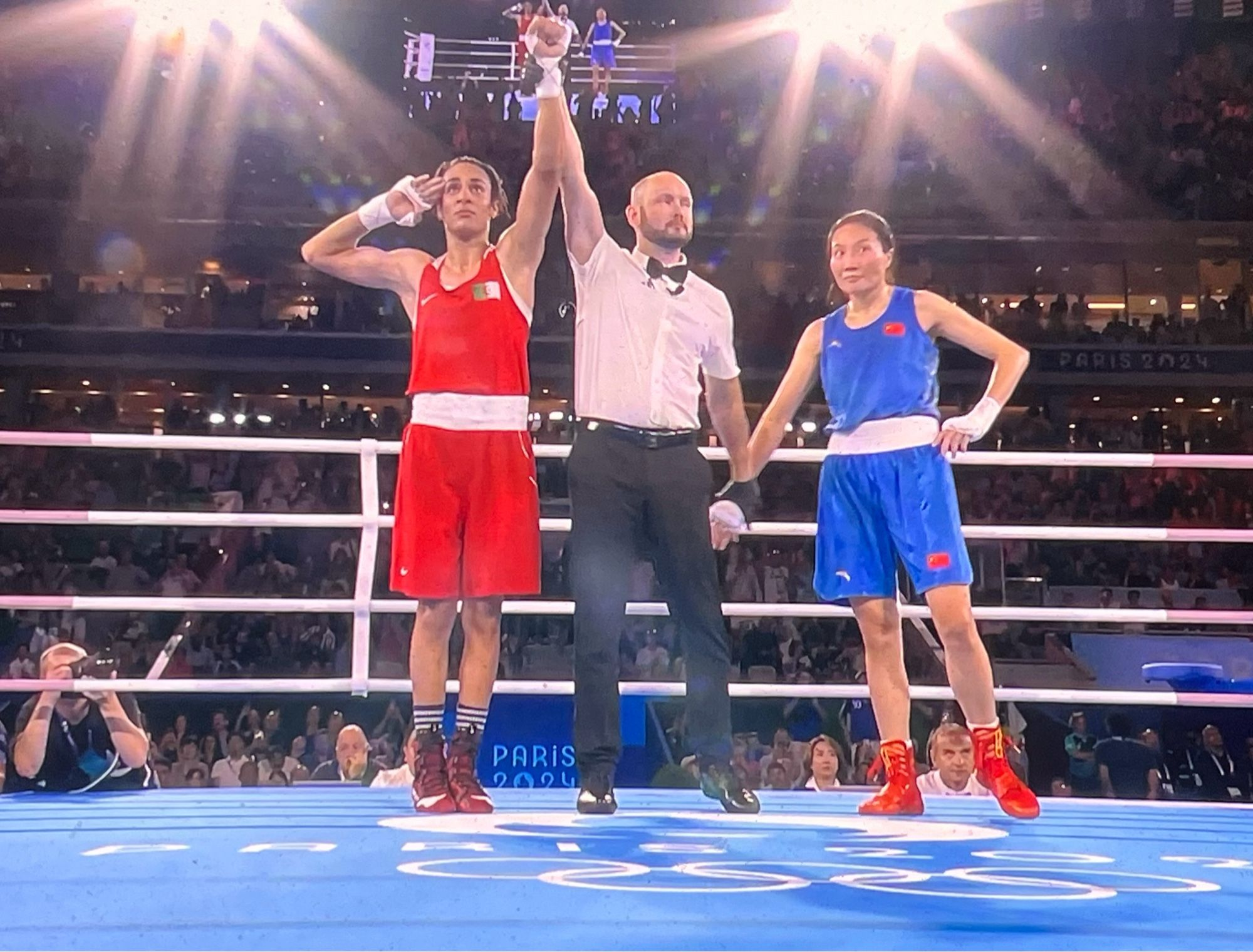
I don’t know whether Imane Khelif has XY chromosomes or not, and frankly I don’t care. The fact is that she was assigned female gender at birth, has been raised as female, and her gender is female as on her passport. She is a woman. I won’t use the phrase biological woman, because it is silly: every human being is biological. Caster Semenya is female too.

You might not care about this case and prefer top stick to the rigid definition that XX=male and XY=female. I don’t think that’s appropriate in sports: chromosomes don’t compete in sports, people do. I’ve also been accused of being ‘unscientific’ for accepting that the exceptions to a rule. On the contrary, I think such exceptions are how our understanding improves, not only in scientific terms but also in our respect for our fellow human beings.

Imane Khelif: a Manufactured Scandal

Posted in Politics, Sport with tags , , , , , , on August 4, 2024 by telescoper

Last week’s news from the 2024 Olympics was dominated by the story of Algerian boxer Imane Khelif who defeated her Italian opponent Angela Carini in the Women’s 66kg (Welterweight) division. Carini quit after 46 seconds saying that she was hit so hard that it hurt. It is surprising that she would even enter the Hitting Each Other In The Face event if she were going to complain that her opponent hit her in the face, Anyway, Khelife subsequently won her next bout against Hungarian Luca Hamori to proceed to the semi-finals and is thereby guaranteed a medal. I hope she wins the Gold for all she’s had to put up, not only for the past few days. She seems to have had a tough life generally.

Khelif’s deserved success has ignited what has been called a “gender row”, based on the fact that she and Taiwanese boxer Lin Yu-ting (who is also competing in the 2024 Olympics, in the 57kg category) were disqualified from the IBA World Championships allegedly for failing “gender eligibility tests”. This decision was made suddenly by the Secretary General of the IBA without any due process and the only documentation available is a message on the dodgy social media platform Telegram. The IOC has commented on these so-called “tests”, see here. Here’s an excerpt:

Those tests are not legitimate tests. The tests themselves, the process of the tests, the ad hoc nature of the tests are not legitimate…

There is a thorough piece by Reuters, which links to the IBA’s own statements here (PDF).

You can draw your own inferences about the motivation for the deliberate manufacture of a scandal by the International Boxing Association, but my own view is that it reeks of sour grapes: the IBA, which has been mired in corruption scandals for decades, is no longer recognized by the International Olympic Committee. I think this whole row was deliberately manufactured.

Such are the levels of ignorance and prejudice about anything to do with gender these days that the usual bigots lined up to condemn Khelif and the IOC on the basis of no evidence whatsoever. Widely circulated claims that Khelif has XY chromosomes and/or high levels of testosterone are neither documented nor verified, but that doesn’t seem to matter to the haters.

I’ve seen posts and comments all over the place asserting that women don’t produce testosterone at all. They do. Men produce oestrogen, too. In both cases it’s a question of quantity. Some women have higher testosterone levels than others. So what? If that makes them better at boxing then so be it.

(I even saw a photograph on social media showing that Khelif wears a groin guard under her boxing shorts. Indeed she does: that’s actually mandatory in both men’s and women’s boxing. The person who posted the image however said that wearing a groin guard is something only men do. Clearly he is unaware that a women’s private parts are also sensitive. I guess he’s never had the opportunity to find out.)

It has been argued that “biological factors” have given Imane Khelif an unfair intrinsic biological advantage over competitors. If that were the case then you would expect her to have been an outstanding boxer from the outset. She wasn’t. In fact she had a poor start to her boxing career, losing her first two competitive bouts; she has lost to other women 9 times altogether. Hardly the performance of some kind of superhuman monster as she is being portrayed. She has improved because she has worked hard on her fitness and technique. She is quite tall for her weight division – 1.78 m (5 ft 10 in) –  and has learnt to make use of her long reach, but how is that unfair? I think she might well struggle against an opponent who can get inside and fight at close range. Tall and rangy versus short and powerful is a contrast you often find in these mid-range weight divisions, which is one of the things that make such contests so interesting.

In any case, don’t all athletes have some sort of intrinsic advantage over the rest of us? Michael Phelps certainly did. People who excel at sports often have extreme physical characteristics, whether physical size, muscular strength, cardio-vascular endurance or whatever. Usain Bolt certainly had the advantage of being born Usain Bolt rather than someone else. Which is not to say that he didn’t have to work on making the most of his physique.

There being no documentary evidence to support their claims that Khelif is a man, others have resorted to crude stereotypes based on her looks. I’ve seen the same sort of comments about black female athletes who are accused of looking like men because they don’t conform to white ideals of femininity. A summary of this type of argument is “women should be banned from boxing if they display masculine characteristics, such as being good at boxing”.

None of this alters the fact that Imane Khelif is a woman and indeed a woman who deserves to be celebrated not only her success in her chosen sport, but also for the dignified way she has braved the abuse she has received. I hope she wins Gold and sends the haters into a state of apoplexy.

UPDATE: Imane Khelif did indeed win Olympic Gold by a unanimous decision. Congratulations to her!

 J. K. Rowling is 59.

Beards, Boxing and Bullshit

Posted in Beards, Sport with tags , , on September 14, 2021 by telescoper

I found out today that this year an IgNobel Prize has been awarded for a paper on Impact Protection Potential of Mammalian Hair: Testing the Pugilism Hypothesis for the Evolution of Human Facial Hair which was actually published last April in the journal Integrative Organismal Biology. This seems to be a bona fide academic journal, though apparently not one that has very high standards.

Anyway, the abstract reads:

Because facial hair is one of the most sexually dimorphic features of humans (Homo sapiens) and is often perceived as an indicator of masculinity and social dominance, human facial hair has been suggested to play a role in male contest competition. Some authors have proposed that the beard may function similar to the long hair of a lion’s mane, serving to protect vital areas like the throat and jaw from lethal attacks. This is consistent with the observation that the mandible, which is superficially covered by the beard, is one of the most commonly fractured facial bones in interpersonal violence. We hypothesized that beards protect the skin and bones of the face when human males fight by absorbing and dispersing the energy of a blunt impact. We tested this hypothesis by measuring impact force and energy absorbed by a fiber epoxy composite, which served as a bone analog, when it was covered with skin that had thick hair (referred to here as “furred”) versus skin with no hair (referred to here as “sheared” and “plucked”). We covered the epoxy composite with segments of skin dissected from domestic sheep (Ovis aries), and used a drop weight impact tester affixed with a load cell to collect force versus time data. Tissue samples were prepared in three conditions: furred (n = 20), plucked (n = 20), and sheared (n = 20). We found that fully furred samples were capable of absorbing more energy than plucked and sheared samples. For example, peak force was 16% greater and total energy absorbed was 37% greater in the furred compared to the plucked samples. These differences were due in part to a longer time frame of force delivery in the furred samples. These data support the hypothesis that human beards protect vulnerable regions of the facial skeleton from damaging strikes.

E A Beseris, S E Naleway, D R Carrier
Integrative Organismal Biology, Volume 2, Issue 1, 2020

This study has attracted a number of silly headlines such as “Big manly beards evolved so we could take punches to the head, study says” and a rebuke from the Beard Liberation Front.

My main problem with the article are (i) that the study itself is very flawed and, worse, (ii) that the claims made of a link to evolution are clearly bullshit; the latter is especially disappointing because the connection to evolution was explicitly caimed by biologists, who really ought to know better.

On point (i) I’ll just point out that the experiment didn’t involve beards or punching. The team built models – sixty of them – made of fibres and epoxy resin to represent human bone, covered in sheepskin to mimic facial hair. Those models were either ‘furred’ (‘full beard’ with 8cm-long hairs), ‘sheared’ (0.5cm length ‘trimmed beard’) or ‘plucked’ (‘hairless’ shaven face). Human hair follicles are four times as thick as those from sheep, but five times less densely packed, so a fleece roughly approximates a beard. The biologists then used a mechanical striker to repeatedly drop a 4.7kg weight onto each model to measure the impact and record the damage.

The results showed that furred models were better than both sheared and plucked models at taking the ‘punch’: a beard will absorb 37% more energy than a shaven face, for example, partly because springy hairs serve as suspension to slow down and soften the blow. As the researchers explain, “the greatest advantage offered by the hair is that it distributes the force of impact over a longer time frame”.


The problem is that this experiment isn’t at all realistic. Dropping a load onto a solid object would simulate hitting a dummy rather than a person; the latter can roll with a punch, the former cannot. In addition, many punches thrown in fights – as opposed to the boxing ring – are not straight to the chin but some variation of the hook that hits the side of the head causing it to rotate. Now allowing the models to rotate is a significant flaw in the experiment.

But the bigger problem with the study is (ii), that its results are interpreted as evidence for evolution on the grounds that facial hair represents a form of ‘sexual dimorphism’ leading to the suggestion that certain facial features evolved as a result of competitive fighting between human males .There is then the idea is that, just as a lion’s thick mane covers vital regions such as the jugular vein, beards help protect against potentially lethal punches to the throat and jaw. This is the so-called ‘pugilism hypothesis’ (from the Latin pugil, pugilis meaning a boxer) and this study says nothing at all about whether or not this is true. Even if you think the experiment is realistic, its results shed no light on the pugilism hypothesis. That is not a matter that can be settled by biomechanics but has to involve evolutionary biology, and specifically how the trait in question might have evolved through natural selection.

Charles Darwin’s 1871 book The Descent of Man discusses hair in great detail but didn’t make the mistake of equating the lion’s mane with human hair: although he argued that the thick hair of various mammals might provide protection in fights between competing males, he believed that human facial hair is a ‘secondary sexual character’ that evolved as a result of female preferences, and rightly pointed out that human populations differ in their ability to grow thick beards — not something you would expect if facial hair has a protective function. Not every biological feature is the result of natural selection either: a given characteristic could be an adaptation that evolved for a specific function, but it could also have no “purpose:

Anyway in reading this silly article I became interested in beards in boxing, given that boxers are generally clean-shaven. A ban on beards in boxing has been in place in many forms of the sport and still is in, for example, the Olympics. There has been recent discussion about a beard ban being a form of discrimination against, say, Sikh boxers and the amateur sport. I think beards are only allowed in professional boxing if both sides agree.

So why would anyone forbid a boxer to wear a beard? I don’t buy the argument about a beard cushioning a punch, for the reasons outlined above and for the fact that the gloves play the role of “distributing the force of impact” far more effectively than a beard would. Some have argued that a full beard may make it difficult for an opponent to locate the line of the jaw and hence strike the wearer’s chin. Another suggestion is that a beard would conceal cuts and bleeding and possible hinder medical attention.

I’m not sufficiently expert to say whether any of these are reasonable, but reading an article like this one by promoter Frank Warren convinces me that the major factor in the beard ban is just an irrational aversion to beards among the boxing hierarchy. In other words, pogonophobia.

The Beast From The East

Posted in Sport with tags , , , on February 27, 2018 by telescoper

From my viewpoint in sunny snow-free Cardiff I can only assume that all this talk of The Beast From The East means that Nikolai Valuev is about to make a comeback to the boxing ring.

Standing a mighty seven foot tall, Valuev is the heaviest and tallest man ever to have been a world boxing champion. He retired from the ring on 2009, but I think he’d still be capable of surviving a few inches of snow…

R.I.P. Muhammad Ali (1942-2016)

Posted in Sport with tags , on June 4, 2016 by telescoper

image

The Greatest.