Archive for Cardiff

Cardiff: City of the Unexpected

Posted in Cardiff, Literature with tags , , on September 18, 2016 by telescoper

It’s been an extraordinary weekend in Cardiff as the city indulged in huge celebrations of the centenary of the birth of writer Roald Dahl, who was born in Llandaff.

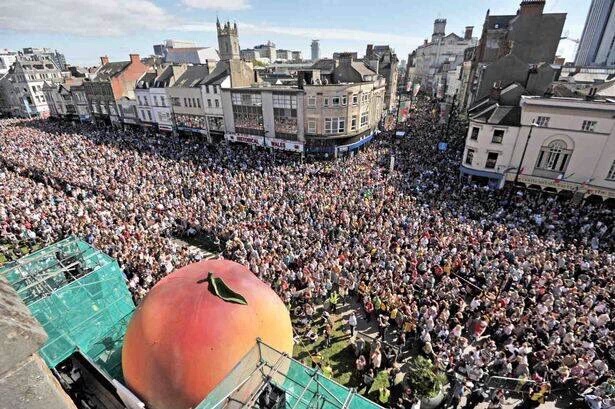
I’ve been too busy with other things to see many of the events organised under the banner of City of the Unexpected, but to give you an idea of the scale here’s a shot of the crowds in front of Cardiff Castle watching the James and the Giant Peach episode.

image

The picture was taken by a member of the South Wales Fire service who were assisting at the event.

This happens also to be the welcome weekend for new students at Cardiff University, and I suspect many were a bit bemused by the goings-on!

It’s also worth mentioning that, as well as being a prolific author of children’s books, Road Dahl was the son of Norwegian immigrants. He was also a fighter pilot in the RAF during World War 2 who served with great distinction in North Africa and Greece, despite being seriously injured when his plane crashed while attempting to land.

Anyway, we’ll done to the organisers of this remarkable event which has put a big smile on the face of this great city.

George’s Marvellous Medicine

Posted in History, Literature with tags , , , on September 13, 2016 by telescoper

Today is the 100th anniversary of the birth of author Roald Dahl, who was born in Llandaff, Cardiff, on 13th September 1916.  To celebrate this occasion, Cardiff University’s School of Chemistry has tried to recreate some of the phenomena described in one of Dahl’s children’s books, George’s Marvellous Medicine. Enjoy!


Cardiff Boundary Changes

Posted in Politics with tags , , , on September 13, 2016 by telescoper

There’s been a lot of discussion in the news about changes to electoral constituencies in the United Kingdom proposed by the Boundary Commissions for England, Wales, Scotland and Northern Ireland. These proposals are intended to achieve two goals: (a) to reduce the total number of constituencies (and hence Members of Parliament) from 650 to 600; and (b) to ensure that the resulting constituencies contain roughly the same number of votes (within 5% either way of the mean number).

In a bit more detail: each constituency in the UK should contain roughly the same number of eligible voters, the so-called “electoral quota” which is reached by dividing the total electorate of the UK by the number of required constituencies, except for the Isle of Wight and two Scottish island constituencies. The quota is then 74,769, based on the electoral register as it stood on 1 December 2015.

The purported aim of (a) is to reduce the running cost of Parliament. I’d be more convinced of that if the previous Prime Minister hadn’t appointed no fewer than 260 Members to the House of Lords, at considerably greater expense than the saving incurred by losing 50 MPs from the House of Commons. The intention of (b) is more reasonable, but it does threaten the rationale of the constituency-based system as it creates some larger and less homogeneous constituencies.

The Boundary Commisssion for Wales has proposed that the Welsh MPs be reduced from 40 to 29, which means the loss of some historically important constituencies altogether and a significant rearrangement of many others.  In fact there isn’t a seat in Wales that isn’t changed in some way. Here’s what the proposals mean for Cardiff, with the existing constituencies on the left and the proposed boundaries on the right:

slide1

I reside in Cardiff West (marked 12 on the left). You will see that the proposal involves extending this constituency on the western side of the River Taff down towards Cardiff Bay. This splits the former constituency Cardiff South and Penarth (11) into two, the western part (mainly Penarth) being absorbed into a new constituency called Vale of Glamorgan East (20 on the right). The other big change is that Cardiff Central (9 on the left) is eliminated entirely, absorbed by an enlarged Cardiff North (18 on the right, formerly 10 on the left) and a new Cardiff South and East (19) on the right. The net change is the loss of one seat in the City of Cardiff, which is currently held by Labour MP Jo Stevens.

I’m sure there’ll be quite a strong reaction to these changes, not least because they are based on the electoral register as it was on December 1st 2015 because the switch to individual electoral registration meant that 770,000 names dropped off the list before this date. The list also does not reflect those who registered to vote ahead of the EU referendum in June.

Going back to Wales for a moment, I think it’s unfair that while Scotland excluded two island constituencies from the quota formula to reflect their specific character, the same did not happen for Ynys Môn (Anglesey), a constituency which has been around since 1536, but which is now to be enlarged into a new entity called Ynys Môn and Arfon.  I’m sure someone will comment on that!

Anyway, these are proposals and there is now a period of consultation. The final boundaries will not be determined until 2018.


Transitional Arrangements

Posted in Cardiff with tags on August 17, 2016 by telescoper

I hope you will excuse a short personal message.

I’ve noticed that quite a few people are emailing me at my Sussex address and are getting a message that I have left (which I have).

I am in fact currently on a month’s (unpaid) leave so that I can deal with a number of personal things. After that, from 1st September, I’ll be rejoining the School of Physics and Astronomy at Cardiff University.

My new email and other contact information should be set up shortly. In the meantime I am reading my email at Sussex, but only replying to very urgent messages. I am, after all, on leave.

I hope this clarifies the situation.

Anyway, it seems I picked a good time for for a holiday, as the weather in Cardiff is lovely!

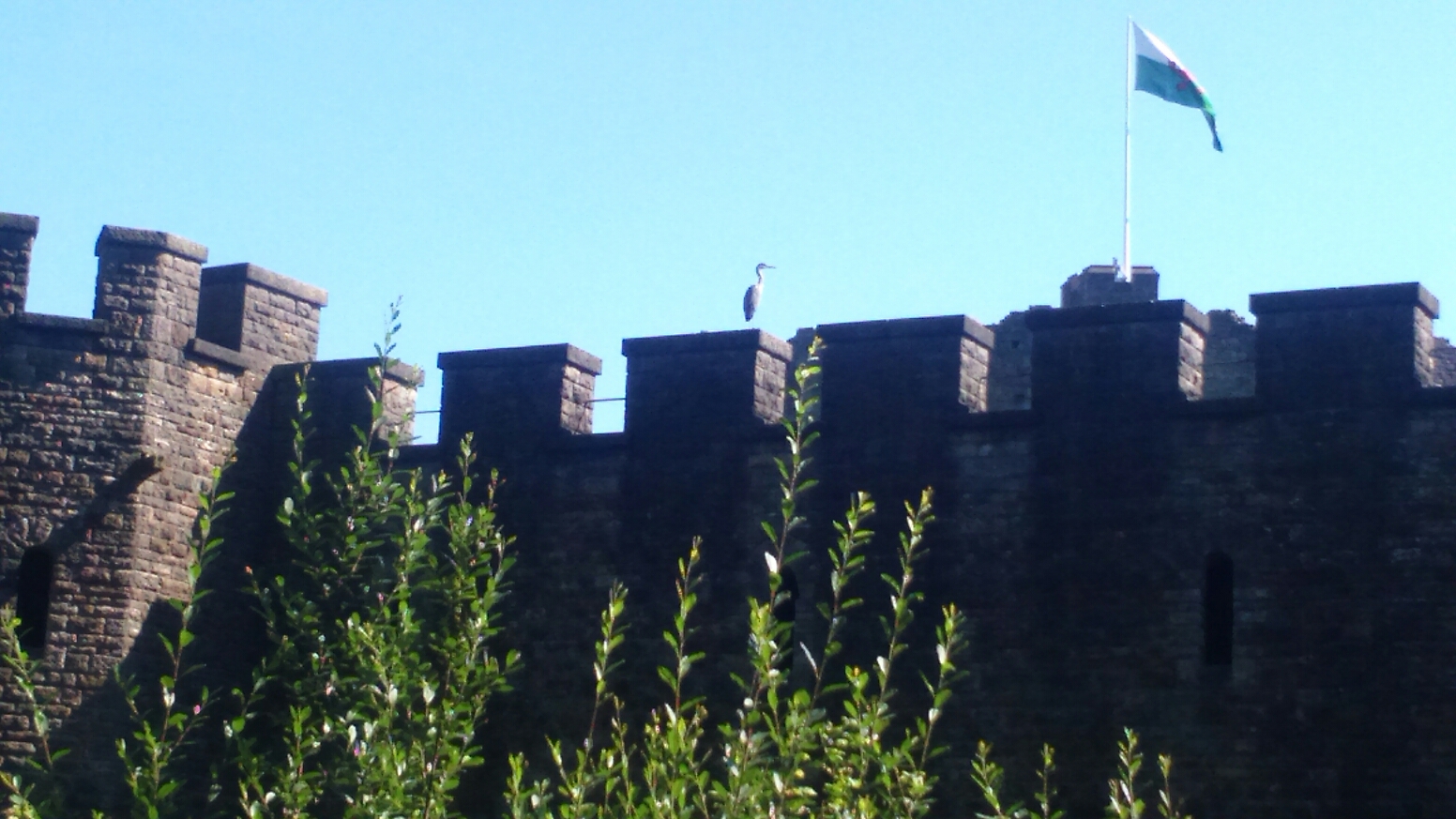
Here for no particular reason is a photograph I took of a heron on the battlements of Cardiff Castle.

image

Glamorgan versus Yorkshire

Posted in Cricket with tags , , , on August 11, 2016 by telescoper

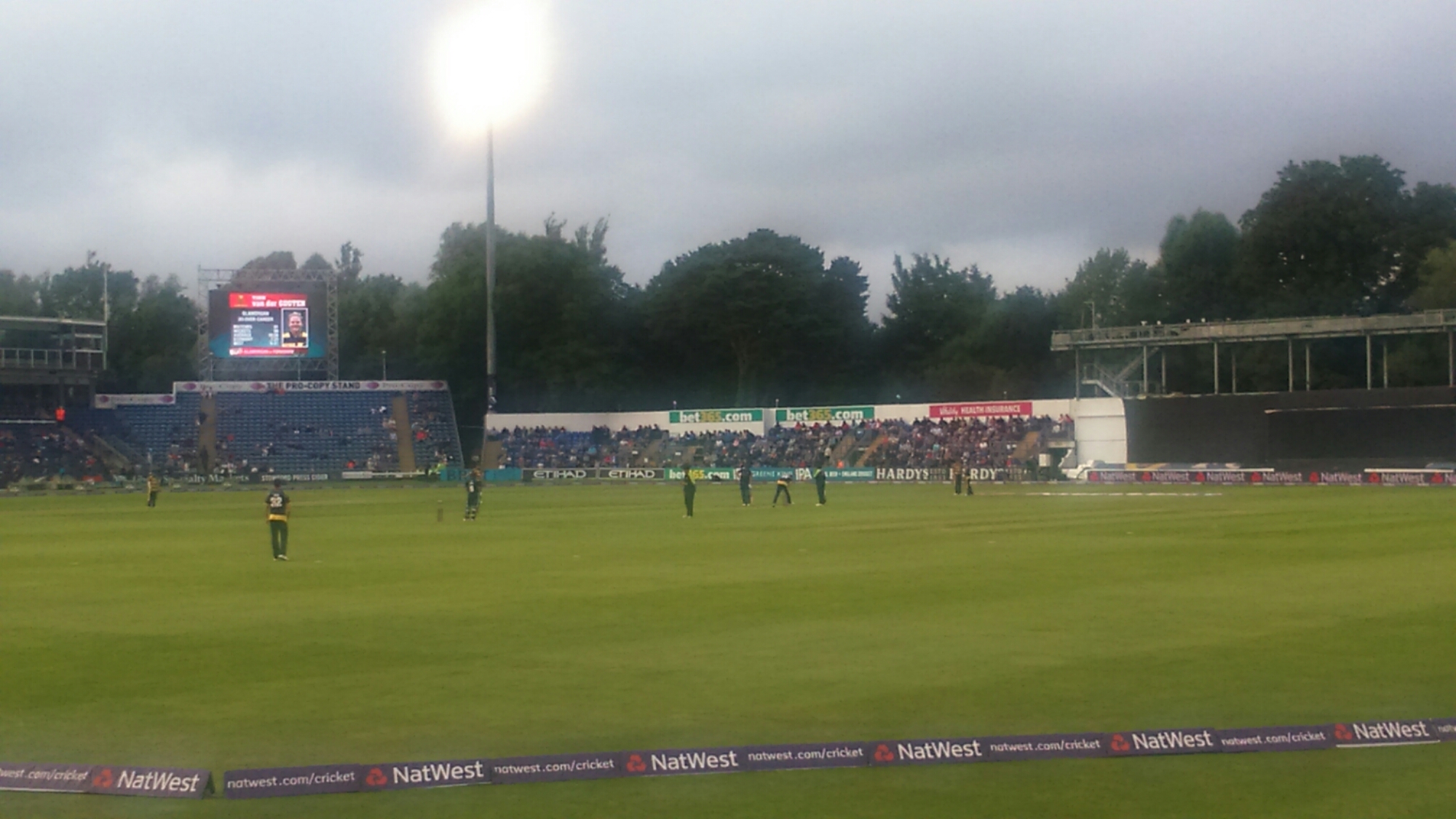
Following the Natwest T20 Blast between Sussex and Glamorgan a couple of weeks ago, I decided tonight to follow Glamorgan’s progress in the competition in their Quarter-final match in Cardiff against Yorkshire.

The SWALEC Stadium – just down the road from my house – wasn’t quite full for the match, but there was a healthy crowd of about 10,000, including lots of families with kids. Part of the reason for that must be the fact that tickets were cheap: £10 for adults and a fiver for kids. Adult tickets for the match at Hove were £26 each…

Anyway, although it was cloudy and not particularly warm, at least it stayed dry.

image

Yorkshire won the toss and batted, getting off to an excellent start largely thanks to the positive batting of David Willey. They reached 101 for 1 of just 9 overs, suggesting the  real possibility of a score of over 200. However, they lost wickets in quick succession – including that of top scorer Willey for 79 (off just 38 balls) and their innings stuttered, eventually closing on 180 for 8. That’s a good score, but Glamorgan were probably pleased to have restricted Yorkshire to nine an over.

Having watched Glamorgan’s batsmen struggle against Sussex I wasn’t exactly filled with confidence that they would reach Yorkshire’s total. They got off to a calamitous start, with opener Lloyd playing on to his first ball from Bresnan. From then on they  never looked like coping with the Yorkshire bowling and were eventually bowled out in 13 overs for 90, just half of Yorkshire’s score. And it could have been worse: at one point they were 37 for 6.

Anyway this leaves only four teams in the competition: Durham, Northants, Notts and Yorkshire. All – you will notice – from the Midlands.

Talking and Speaking

Posted in Biographical, Books, Talks and Reviews with tags , on August 28, 2015 by telescoper

Just back to Brighton after a pleasant couple of days in Cardiff, mainly dodging the rain but also making a small contribution to the annual STFC Summer School for new PhD students in Astronomy. Incidentally it’s almost exactly 30 years since I attended a similar event, as a new student myself, at the University of Durham.

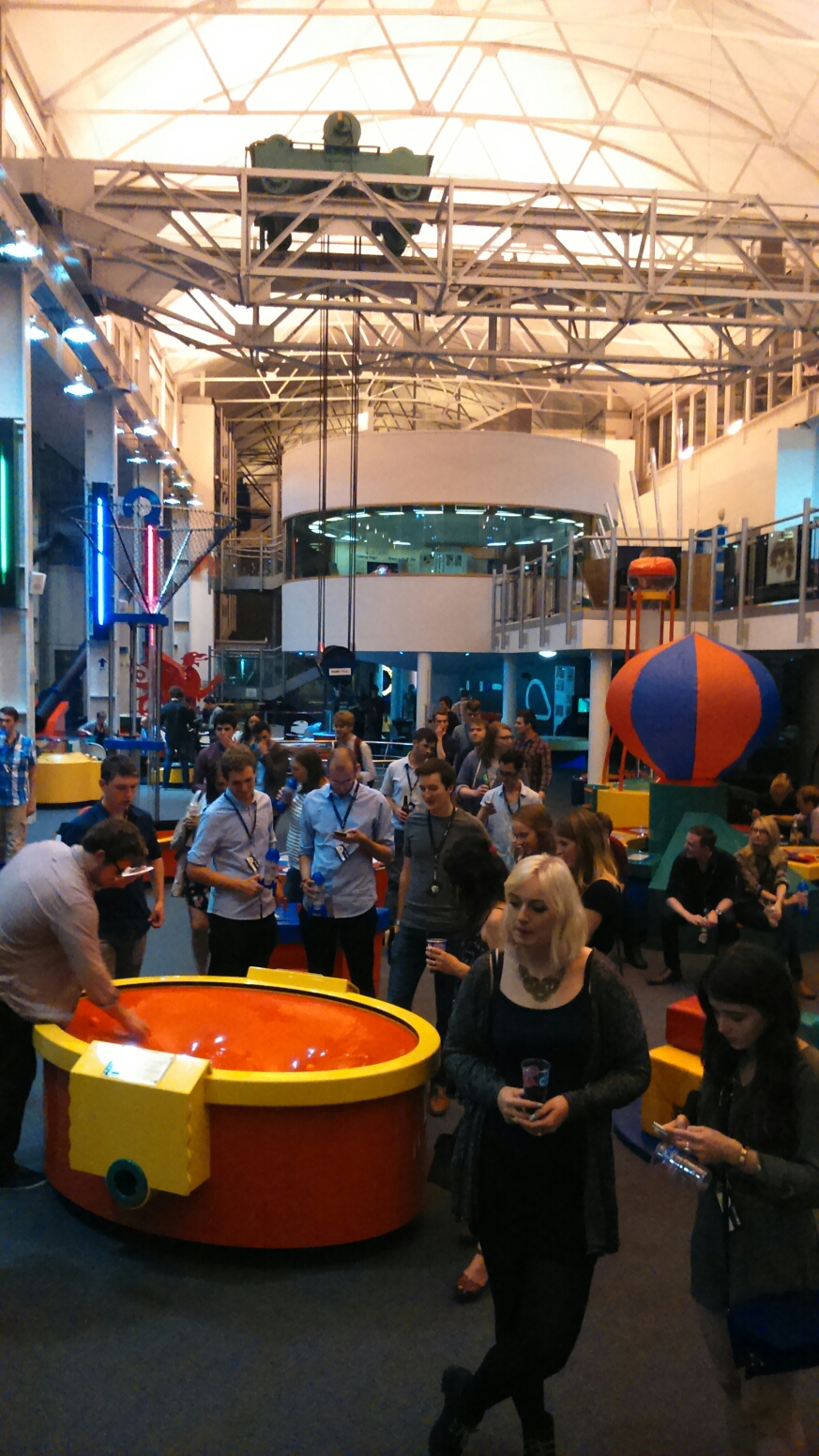
Anyway, I gave a lecture yesterday morning on Statistics in Astronomy (I’ll post the slides on here in due course). I was back in action later in the day at a social barbecue held at Techniquest in Cardiff Bay.

Here’s the scene just before I started my turn:

image

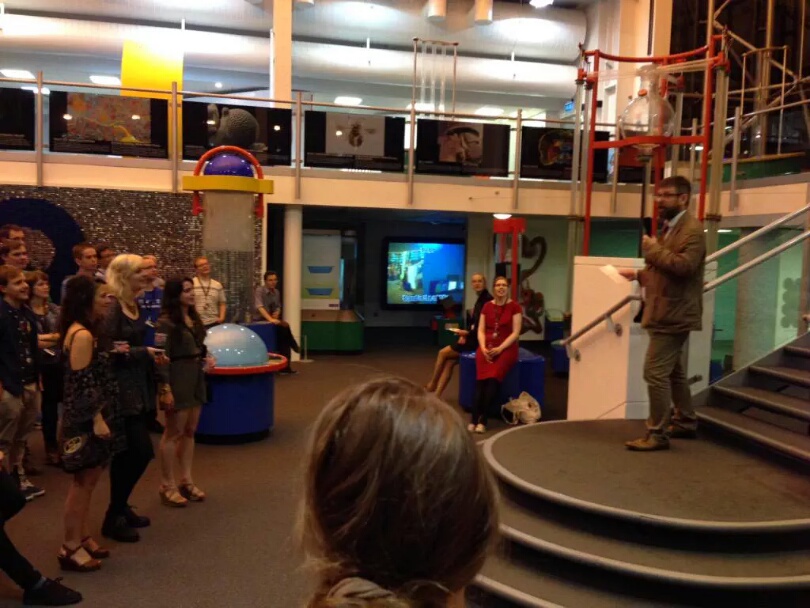
It’s definitely an unusual venue to be giving a speech, but it was fun to do. Here’s a picture of me in action, taken by Ed Gomez:

image

I was asked to give a “motivational speech” to the assembled students but I figured that since they had all already  chosen to do a PhD they probably already had enough motivation. In any case I find it a bit patronising when oldies like me assume that they have to “inspire” the younger generation of scientists. In my experience, any inspiring is at least as likely to happen in the opposite direction! So in the event  I just told a few jokes and gave a bit of general advice, stressing for example the importance of ignoring your supervisor and of locating the departmental stationery cupboard as quickly as possible. 

It was very nice to see some old friends as well as all the new faces at the summer school. I’d like to take this opportunity to wish everyone about to  embark on a PhD, whether in Astronomy or some other subject, all the very best. You’ll find it challenging but immensely rewarding, so enjoy the adventure!

Oh, and thanks to the organisers for inviting me to take part. I was only there for one day, but the whole event seemed to go off very well!

Cricket, Lovely Cricket – Ashes Victory in Cardiff

Posted in Cardiff, Cricket with tags , , , , on July 12, 2015 by telescoper

Last Wednesday (8th July 2015) I had the good fortune to be in the crowd at the SWALEC Stadium in Cardiff to see the first day’s play in the First Test between England and Australia of this summer’s Ashes series. I have to say that I was very apprehensive about how the game would go, but as I was in Wales anyway I couldn’t resist being there to watch it. I think I can say without fear of contradiction that it didn’t turn out too badly.

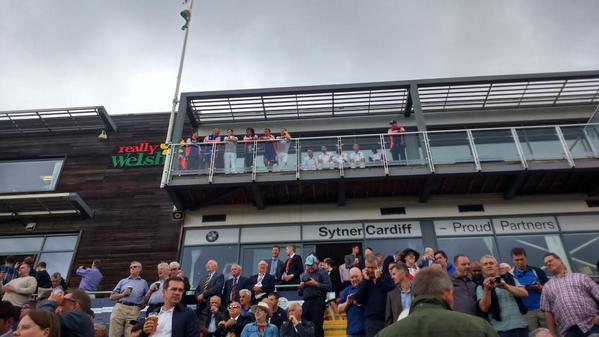
It wasn’t a very auspicious start to the day – light rain was falling as we walked to the ground and at the scheduled start time the England team were still in the pavilion:

England

Play eventually got going about fifteen minutes late, though it could have started earlier had the Powers That Be dispensed with some of the silly preliminaries. It did rain a little before lunch too, but the players didn’t come off. Thereafter the weather steadily improved and we got a full day’s play, closing at about 6.45pm. I even had sunburnt knees as a souvenir, as I had decided to wear shorts for the day and the stand we were in offered no protection from the afternoon sun. Good job I had brought my sunhat.

England had won the toss and decided to bat. The desire to have first use of a good batting pitch must have been tempered in England Captain Alastair Cook’s mind by the likelihood that the overcast conditions would help the Aussie fast bowlers. England struggled early on with the bat, Lyth getting out cheaply playing across a straight one from Hazlewood (who was in the team to replace the injured Ryan Harris) to leave England at 7 for 1. Ballance battled hard at Number 3 but Cook at the other end looked relatively comfortable. Then Michael Clarke threw the ball to offspinner Nathan Lyon to have a go at the lefthanded Cook who seemed impatient to score off him. That proved his downfall as he was out for 20, caught at the wicket, trying to cut a short ball. Ian Bell came, scored one run off a nervous looking lofted drive and was then dismissed leg before wicket by a good inswinger from the excellent Mitchell Starc. At 43-3 England were on the brink, and could have fallen over it a few balls later when new batsman Joe Root played a strange shot at his second ball, a very full swinging delivery from Starc which resulted in an edge that went at a good height to wicket-keeper Brad Haddin diving (somewhat theatrically) to his right. Fortunately for England, Haddin spilled what looked a relatively straightforward chance; having seen the replay a number of times I don’t understand why Haddin didn’t go for it with both hands. At 43-4 England would have been in deep doo-doo, but as it happened Ballance and Root steadied the ship and after a tense morning England reached lunch at 88 for 3.

The ball certainly did swing in that morning session, but the predominant impression I got was that it was a very flat pitch, with very little bounce. Watching from a position square of the wicket to a batsman at the River Taff end, it was noticeable how many balls didn’t carry through to the wicket-keeper. Indeed, Warner’s excellent slip catch to take the wicket of Lyth was harder than it needed to have been because the slips were standing too deep for much of the game. Mitchell Starc was easily the pick of the Australian bowlers; the other Mitchell (Mitchell Johnson) laboured ineffectively on the kind of pitch he clearly doesn’t like to bowl on. He was expensive too. England’s Nemesis of the 13/14 Ashes Tour down under was to finish with 0-111 off 25 overs.

After lunch the sun came out and the character of the play changed. Root and Ballance completed partnership of 153 before Ballance fell for 61 with the score on 196 for 4. This ushered in the belligerent Stokes who didn’t have it all his own way – he got into a tangle trying to hook a Mitchell Johnson bouncer, sending it high over Haddin’s head for six – but Root at the other end had ridden his early luck and made an excellent century. Root is currently in unbelievably good form and it says something for his temperament that he looked bitterly disappointed when he eventually got out for a superb 134, shortly followed by Stokes who made 54. The score was then 293 for 6, by no means enough runs on a good batting pitch but a good recovery from 43-3. Buttler and Moeen Ali added another 50 partnership in quick time until Buttler fell nearly at the end of the day’s play. I was particularly impressed with Moeen’s batting late on and it was he who produced the short of the day for me – a magnificent sweep into the stands for six off the bowling of Lyon. Broad survived a torried couple of overs to leave England on 343-7 at the close of play.

I couldn’t help recalling that the closing score on the first day of corresponding fixture in 2009, which ended famously in a draw, was 336-7. On that occasion, England’s tail wagged brightly the following morning (when I was in the ground) to take their score to 435 all out. As things stood, I felt that the match was evenly poised. If England could do something similar to their feats of 2009 on the second day of this match then they would have a good chance of winning, but if Australia could take quick wickets they would have the edge.

Unfortunately I only had tickets for the first day so I ad to keep up with the rest of the match on the radio and via Twitter. On Day 2, England’s tail did wag – Moeen scoring an excellent 77 – to finish on 430 all out. So far the pattern remained similar to 2009, but that was about to change. Australia got a much better start to their first innings than England had, but lost wickets at the end of Day 2 to close on 264-5 – a far cry from the 248-1 which was their position at the end of Day 2 in 2009. The following morning they were all out for 308, a deficit of 122. England batted again on Day 3 and, not without moments of alarm, accumulated enough runs to build an imposing lead; they were eventually all out at the end of Day 3 for 289. Australia needed to score 412 to win with two days left, though the forecast for Day 5 was for heavy rain.

Clouds had returned to Cardiff for Day 4 (Saturday) and the Australian batsmen were in all sorts of difficulties against the swing on Anderson and Broad. Rogers fell cheaply, Warner was having trouble laying bat on ball, and the runs had dried up. Then Alastair Cook made I think his only tactical mistake of the match: he brough Moeen on to bowl too early. Warner seemed to relax and played some good shots. Moeen was withdrawn after just two expensive overs. The momentum had been handed back to Australia, who began scoring freely. In the last over before lunch they were 97-1, with two batsmen at the crease who were both perfectly capable of posting big scores. Then Cook brough Moeen back for one over before lunch, whereupon he trapped Warner lbw for 52. It was just the fillip England needed. After lunch Smith, Clarke and Voges fell in quick succession to leave Australia in the mire at 106-5. Neither Haddin not Watson stayed around long and Australia were soon 151 for 7. Mitchell Johnson batted defiantly in difficult circumstances, adding 72 for the 8th wicket with Mitchell Starc until their partnership was broken by none other than Joe Root, who as well as being a superb batsman is a spin bowler with an uncanny knack of taking important wickets. Root also took the catch, off the bowling of Moeen Ali, that sealed the game. Australia were all out for 242 about an hour after tea. England had won by 169 runs. Man of the Match: Joe Root, obviously.

So, first blood to England. Of course there are another four Tests to go, starting at Lord’s on Thursday where the pitch may well be much more helpful to the Australian quick bowlers, but this result is better than I imagined at the start of the game and if England can keep it up they at least have a chance of winning back the Ashes. Don’t expect the Aussies to roll over, though. They will be stung by this defeat, and I full expect them to come back hard.

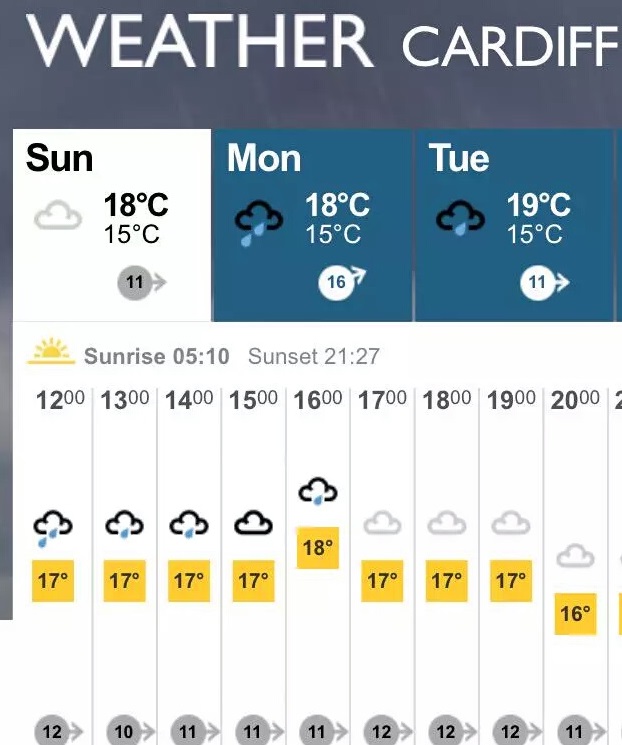
P.S. This was the weather situation in Cardiff earlier today, which would have been the fifth day.

Cardiff_weather

Had Australia batted through to the close on Day 4, it is quite possible that there would have been no play on Day 5, which means the game would have ended in a draw. Now I understand why this Test started on a Wednesday!

P.P.S. Only three members of the current England team played in the 2009 Ashes Test in Cardiff: Anderson, Broad and Cook.
Hen Wlad Fy Nhadau

Posted in Rugby with tags , , , on February 6, 2015 by telescoper

Today marks the start of this season’s RBS  Six Nations Rugby, which kicks off at 8.05pm at the Millennium Stadium  in Cardiff with Wales versus England. The town will be buzzing in the evening, overrun with rugby fans in various states of drunkenness but with that extra special atmosphere that makes this such a fantastic place to be on such occasions, even if you’re not in the ground. It promises to be a bit chaotic, but it’s always an extra special day in Cardiff when the old adversaries meet. I’m heading off this afternoon in order to get there in time, and spending the weekend in Cardiff.

The Six Nations is a difficult competition to predict, but I think Wales must be strong favourites to win this particular match as England have had to cope with a number of injuries to key players.  However, there is one battle whose outcome you can bet your bottom dollar on, and that’s the crowd singing. That one  is always won by the Welsh.

Get a load of this example, from a few years ago which at least gives some idea what I’m talking about. This is the stirring  Welsh National Anthem Hen Wlad Fy Nhadau (Land of My Fathers). And if you feel like singing along, here are the lyrics (in Welsh, of course):

Mae hen wlad fy nhadau yn annwyl i mi,
Gwlad beirdd a chantorion, enwogion o fri;
Ei gwrol ryfelwyr, gwladgarwyr tra mâd,
Tros ryddid gollasant eu gwaed.

Chorus:
Gwlad, Gwlad, pleidiol wyf i’m gwlad,
Tra môr yn fur i’r bur hoff bau,
O bydded i’r heniaith barhau.

Hen Gymru fynyddig, paradwys y bardd;
Pob dyffryn, pob clogwyn, i’m golwg sydd hardd
Trwy deimlad gwladgarol, mor swynol yw si
Ei nentydd, afonydd, i fi.

Chorus

Os treisiodd y gelyn fy ngwlad dan ei droed,
Mae hen iaith y Cymry mor fyw ag erioed,
Ni luddiwyd yr awen gan erchyll law brad,
Na thelyn berseiniol fy ngwlad.

Chorus


UPDATE: the Big Match didn’t turn out quite as I expected. Wales were all over England early on, taking a 10-0 lead. But once they had steadied themselves England began to claw their way back into contention. With the half-time score at 16-8 the game still looked to be heading for a Welsh victory. However in the 2nd half England’s more disciplined approach paid dividends. The English pack, compact and powerful, began to make deep inroads into the Welsh defence and gradually established a stranglehold on the game. Thirteen unanswered points in the second half gave England a memorable victory on a dramatic night. Wales 16 England 21.


Mathematics, Astronomy and the National Secular Society

Posted in Biographical, History, Politics with tags , , , , on January 17, 2015 by telescoper

I imagine that a  great many people have been thinking hard recently about democracy, free speech and religious belief in the wake of the Charlie Hebdo murders in Paris. There’s also been a great deal of stuff in the print media covering these issues. I just want to mention one thing that I have decided to do, namely to join the National Secular Society an organization that campaigns against religious privilege.

Let me reproduce a statement from their webpage here:

The National Secular Society works towards a society in which all citizens, regardless of religious belief, or lack of religious belief, can live together fairly and cohesively. We campaign for a secular democracy with a separation of religion and state, where everyone’s Human Rights are respected equally.

We work in the UK and Europe to challenge the disproportionate influence of religion on governments and in public life. We provide a secular voice in the media, defending freedom and equality as a counterbalance to the powerful religious lobby and some of the more destructive religious impulses that can threaten human rights worldwide.

The National Secular Society is a non-party-political organisation with members from across the social and political spectrum. Our Honorary Associates include MPs and peers, as well as leading figures from politics, journalism, law and the arts.

The NSS is a democratic and independent non-profit organisation which receives no funding from government or other public bodies. Our campaigning is wholly supported by our members and supporters, people like you who share our belief in the urgent need to keep religion and politics separate.

One of the National Secular Society’s very active current campaings is against the egregious Local Government (Religious etc Observances) Bill, which includes a provision that would require local councillors to attend sessions that involve prayers. This bill is wholly unacceptable to me, as it is perfectly possible for councillors of a religious persuasion to pray whenever they like, either before during or after a meeting, without requiring non-believers to be present.

I respect the right of others to whatever religious belief they choose and would not interrupt or disrupt an act of religious observance, but imposing such actions on others is simply unacceptable. I don’t think religious services should be imposed in schools and colleges, and I don’t see why this is any different.

Anyway, the general point is that I firmly believe that the only way we will ever develop a society that allows people of all cultures and beliefs to live in peace with each other and in atmosphere of mutual respect is to remove any reference to religion from our political and legal establishment. It’s a ridiculous anachronism that Bishops of the Church of England sit in the House of Lords, for example.

You’ll all no doubt be glad to know that I’m not going to “preach” about this at length here, although I may from time to time post on matters related to the National Secular Society (NSS), though hopefully in such a way as it doesn’t get confused with that other NSS the National Student Survey. I will however include a little story as a kind of postscript.

When I tweeted about the National Secular Society recently a friend of mine pointed out a curious connection between it, astronomy, and my former employer, Cardiff University. The first ever Professor of Mathematics and Astronomy at the University College of South Wales and Monmouthsire (which eventually became Cardiff University) was a distinguished chap by the name of Henry William Lloyd Tanner, who was appointed to his position in 1883. In November 1883 there was a vigorous campaign by religious types to have him removed because of his connections with the National Secular Society (which was founded way back in 1866); you can read about it here. The campagign did not succeed, and H.W. Lloyd Tanner remained in post until 1909.

We have at least made some progress since 1883, in that nowadays a Professor would not be threatened with the sack on the basis of his religious beliefs or lack of them, but there’s a long way to go before our nation is a truly secular society.

Autumn Leaves In Cardiff

Posted in Biographical, Cardiff with tags , on September 27, 2014 by telescoper

Back in Cardiff for a couple of days to get some more writing done, I took a break to have a cup of tea in the garden. All the signs that summer is now over have now shown themselves: the start of undergraduate lectures (Monday); the Autumnal Equinox (Tuesday); the end of the County Championship on Friday; and so on.

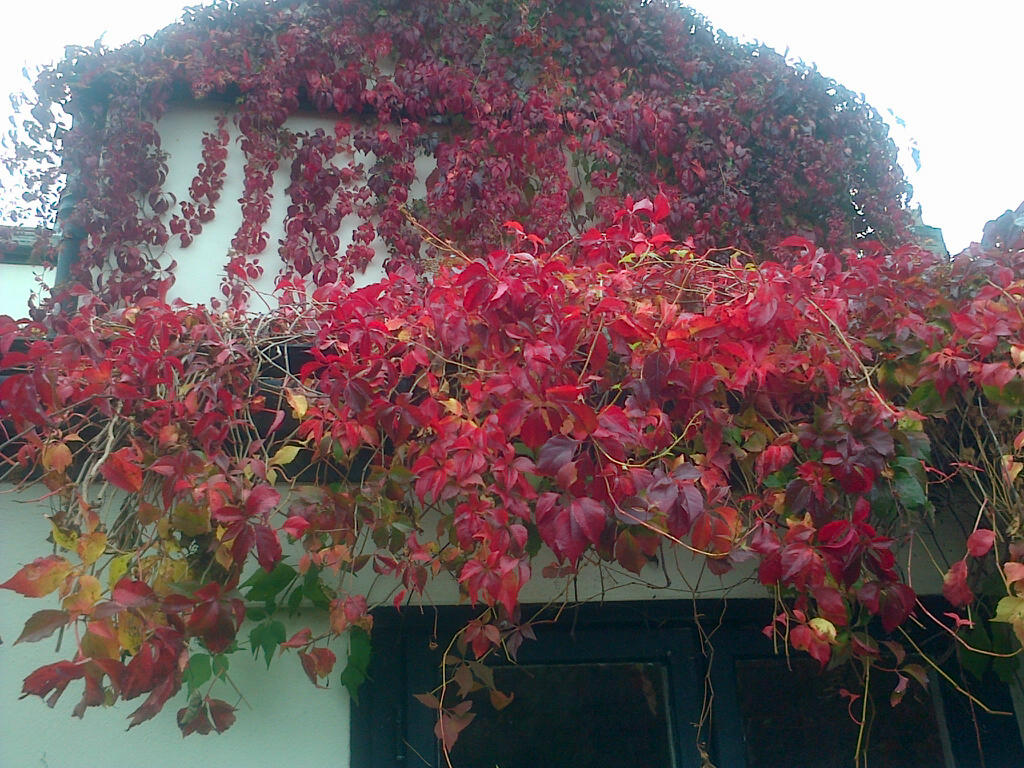
Here in Cardiff the weather is still warm, but the leaves are turning brown and starting to fall. Conkers too. And, most spectacularly, the Virginia Creeper growing at the back of my house has turned blood red. It does look pretty, but I’m sure it’s not good for the gutters or the chimney stack above..