Archive for Cardiff

Snowy Saturday

Posted in Biographical, Sport with tags , , , on November 27, 2010 by telescoper

Up early this morning, cold notwithstanding, to take part in an all-day workshop on Public Attitudes to Science conducted by the market-research organization IPSOS-Mori on behalf of the Department for Business Innovation and Skills (BIS) I can’t really say much about what happened since it’s an ongoing research project, but it was very interesting and particularly nice to talk to the participants (who were aged 18-24). My role was as a “science expert” so my job was to explain a bit about how the kind of science I do actually works in practice, compared with what they thought before the event.

On the way home I had to find my way back through the crowded streets of Cardiff. Today was the last day of the autumn rugby internationals, and Wales were playing New Zealand at home. There was a fantastic atmosphere in the city, as always on match days, although the combination of a rather boisterous rugby crowd with large numbers of Christmas shoppers did slow down my journey home. The game just ended, Wales 25 New Zealand 37; not as one-sided as many feared and a much better spectacle than last week’s awful match against Fiji.

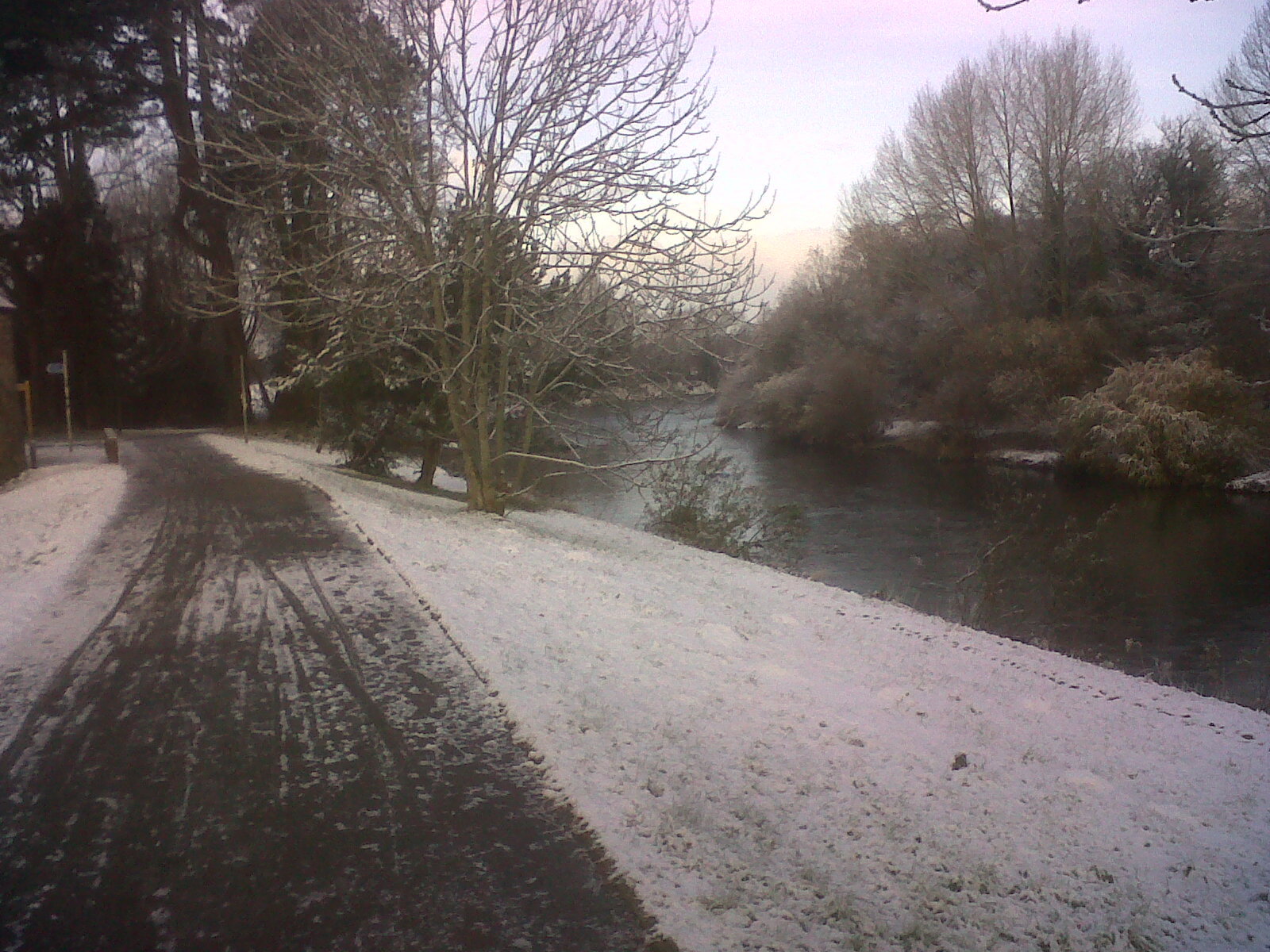
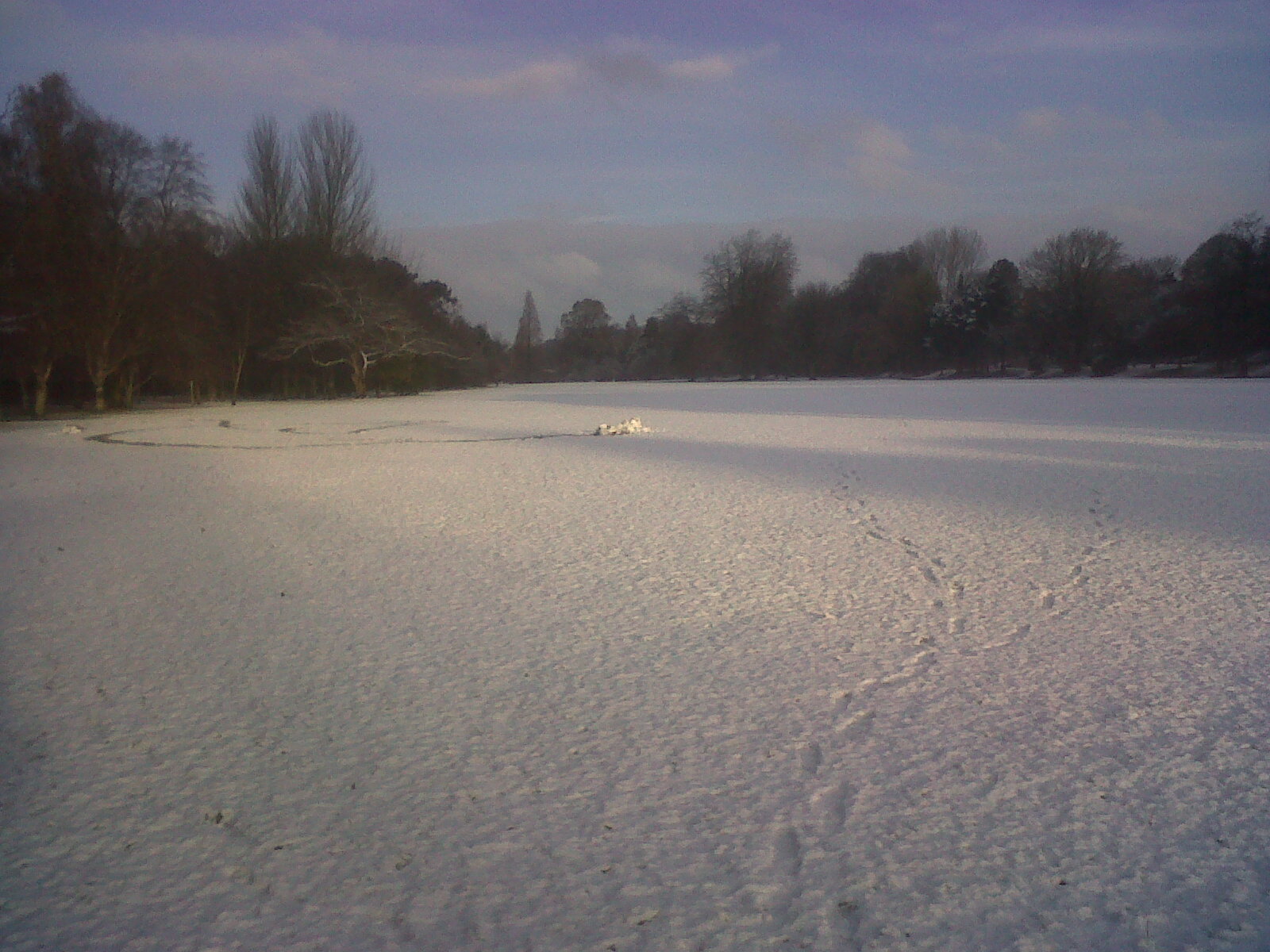
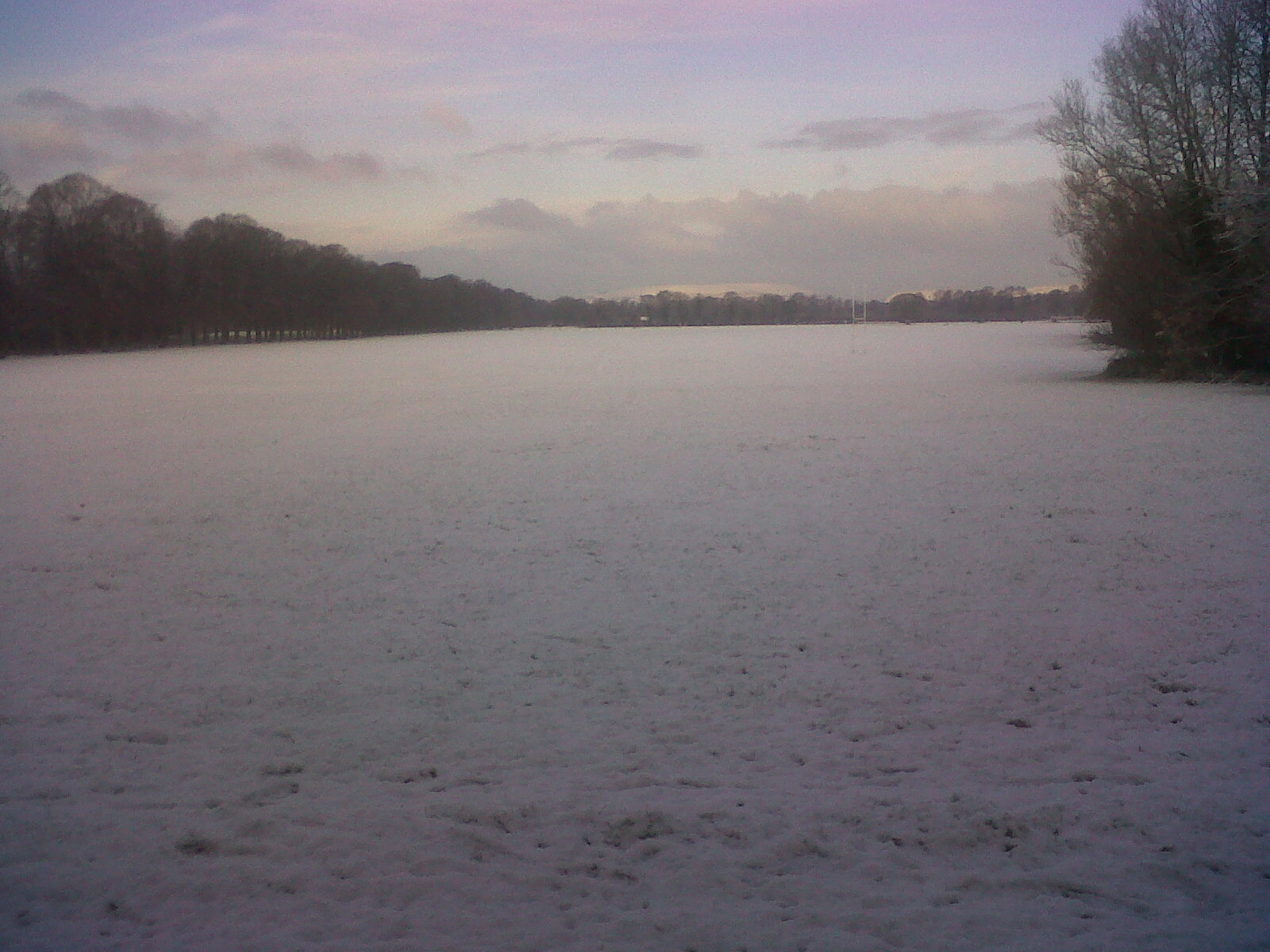
I took a few pictures of Bute Park on my way to the event this morning. It looked very beautiful, but it wasn’t half cold early on. I doubt if there’ll be much rugby played on the sports fields for a while, because the ground is frozen solid at the moment!


Share/Bookmark

A Gloom of Uninspired Research

Posted in Education, Poetry, Politics, Science Politics with tags , , , , , , , on November 26, 2010 by telescoper

I don’t mind admitting that I’m a bit down today. Being stuck at home with a fever and sore throat, and with mounting backlog of things to do isn’t helping my mood. On top of that I’ve got a general sense of depression about the future.

On the one hand there’s the prospect of huge increases in tuition fees for students, the motivation for many demonstrations all around the country (including an occupation here at Cardiff). I have to admit I’m firmly on the side of the students. It seems to me that what is happening is that whereas we used to finance our national gluttony by borrowing on over-valued property prices, we’ve now decided to borrow instead from the young, forcing them to pay for what we got for free instead of paying for it ourselves; it’s no wonder they’re angry. Call me old-fashioned, but I think universities should be funded out of general taxation. How many universities, and what courses, are different questions and I suspect I differ from the younger generation on the answers.

The other depressing thing relates to the other side of academic life, research. The tide of managerialism looks like sweeping away every last vestige of true originality in scientific research, in a drive for greater “efficiency”. I’ve already blogged about how the Science & Technology Facilities Council (STFC) is introducing a new system for grants which will make it impossible for individual researchers with good ideas to get money to start new research projects. Now it seems the Engineering and Physical Sciences Research Council (EPSRC) is going to go down the same road. It looks likely that in future only large-scale, low-risk research done in big consortia will be funded. Bandwagons are in; creativity is out.

Improving “efficiency” sounds like a good idea, but efficiency of what? These plans may reduce the cost of administering research grants, but they won’t do anything to increase the rate of scientific progress. Still, scientific progress can’t be entered easily on a spreadsheet so I suppose in this day and age that means it doesn’t matter.

I found the following in a story in this weeks Times Higher,

A spokeswoman for the Science and Technology Facilities Council also cited stability and flexibility as the main rationales for merging its grants programmes into one “consolidated grant”, a move announced earlier this month.

It looks like STFC has seconded someone from the  Ministry of Truth. The change to STFC’s grant system is in fact driven by two factors. One is to save money, which is what they’ve been told to do so no criticism there. The other is that the costly fiasco that is the new RCUK Shared Services Centre was so badly conceived that it has a grant system that is unable to adminster 5-year rolling grants of the type we have been used to having in astronomy. On top of that, research grants will last only 3 years (as opposed to the previous 5-year duration). There’s a typically Orwellian inversion  going on in our spokesperson’s comment: for “stability and flexibility”, read “instability and inflexibility”.

We’re not children. We all know that times are tough, but we could do with a bit less spin and a bit more honesty from the people ruining running British science. Still, I’m sure the resident spin doctors at STFC are “efficient”, and these days that’s all that matters.

The following excerpt from Wordsworth’s The Excursion pretty much sums it up.

Life’s autumn past, I stand on winter’s verge;
And daily lose what I desire to keep:
Yet rather would I instantly decline
To the traditionary sympathies
Of a most rustic ignorance, and take
A fearful apprehension from the owl
Or death-watch: and as readily rejoice,
If two auspicious magpies crossed my way;–
To this would rather bend than see and hear
The repetitions wearisome of sense,
Where soul is dead, and feeling hath no place;
Where knowledge, ill begun in cold remark
On outward things, with formal inference ends;
Or, if the mind turn inward, she recoils
At once–or, not recoiling, is perplexed–
Lost in a gloom of uninspired research;
Meanwhile, the heart within the heart, the seat
Where peace and happy consciousness should dwell,
On its own axis restlessly revolving,
Seeks, yet can nowhere find, the light of truth.


Share/Bookmark

Twenty20

Posted in Cricket with tags , , , , , on September 8, 2010 by telescoper

Just a quick post to share a picture taken at  last night’s Twenty20 International in Cardiff between England and Pakistan. We had the entire spectrum of Welsh weather to contend with, but the worst of yesterday’s rain was over well before the match started and the SWALEC stadium, just ten minutes’ walk from my house, was a fine sight under a variety of peculiar cloud formations and the floodlights, as you can tell  from the picture I took on my phone.

Pakistan won the toss and batted first, but didn’t make a very good fist of it and were bowled out for a mere 89 from their 20 overs. England had a little wobble during the run chase but in the end won comfortably by 6 wickets.

Unfortunately, the crowd numbered only a few thousand so the atmosphere was a bit flat and Pakistan’s poor showing with the bat made it all a bit of anti-climax, but it was still a good way to precede a nice curry. I’ve heard various theories as to why the attendance was so poor, but I think it’s pretty obvious: at £45  for a game whose format ensures it can last no longer than about three hours,  tickets for this match were just too expensive. I think the authorities should think again about their pricing strategy.


Share/Bookmark

Verdi’s Requiem

Posted in Music with tags , , , , on July 18, 2010 by telescoper

Just back from this evening’s Welsh Prom at St David’s Hall which featured Verdi’s Requiem performed by the BBC National Orchestra of Wales, with the BBC National Chorus of Wales together with the Cardiff Ardwyn Singers and the Cardiff Polyphonic Choir.

I have to admit I must have had a senior moment or two about this because I bought two tickets a while ago but got it into my head that it was last Thursday night. When I looked at the tickets on Thursday, and discovered I’d screwed up,  it transpired the friend I was supposed to go with on Thursday couldn’t make it on Sunday. What a shambles. I think I should apply for home help!

Anyway, I’m glad I went because it’s a fabulous piece that you really have to hear live in order the experience its full effect. Living in Wales might tend  to make one a bit blasé about choral music, but there’s no escaping the awesome power of the massed voices during the famous Dies Irae sequences that return throughout the work, to the accompaniment of a booming bass drum sounding the last judgement. The first time you hear that live I guarantee you’ll be pinned back in your seat.

The latin mass for the dead has inspired some of the greatest music written by some of the greatest composers, but it also seems to bring out something very personal and different from each one. Fauré’s Requiem, for example, is full of a fragile, angelic beauty and it portrays death as joyous release from earthly torment. Verdi’s take is quite different. It’s quite varied, musically, alternately sombre, accepting, meditative and, yes, even joyous too. But you’re never far from the terrifying hammer blows of the Dies Irae; one senses that Verdi’s own view of death was one dominated by fear.

Some say the Verdi Requiem is overwrought, but I don’t think anyone will ever say this piece isn’t dramatic. It’s also full of great tunes and wonderful dramatic contrasts. Is it too melodramatic? That’s a matter of taste. I don’t think it’s melodramatic but it’s certainly operatic, and I certainly don’t mean that to be derogatory. Above all, it’s just very Verdi. And that’s certainly not derogatory either.

The four soloists were all excellent: Yvonne Howard (soprano), Ceri Williams (mezzo), Gwyn Hughes Jones (tenor) and Robert Hayward (bass) and the orchestra did all the right things under the baton of veteran conductor Owain Arwel Hughes.

I enjoyed the performance a lot, but left feeling a bit flat because St David’s Hall was only about 2/3 full. I always enjoy things more when there’s a full house as the atmosphere is always that bit more exciting. I’m not sure why it didn’t attract a better turnout – top price tickets were only £26. Perhaps it was because many classical music fans were listening to the main Prom in London, which this evening featured the great Placido Domingo as Simon Boccanegra?

I’ve never been to one of the Welsh proms before, and was interested to see that, like the Royal Albert Hall, St David’s also has promenaders standing just in front of the orchestra although they were not as numerous as in the Proms themselves.

Life Cycles

Posted in Biographical, Science Politics with tags , , , , , on March 13, 2010 by telescoper

This was a strange Saturday. Usually I don’t do very much on the weekend, except for a bit of shopping, tidying up, and of course the crosswords. Today, however, was one of our undergraduate Open Days wherein prospective students visit the department (usually with their adoring parents) in order to have a look around, learn about our research, and meet some of the staff that will be teaching them if and when they come here.  Our usual Open Days are Thursdays, but some people find it very difficult to get here on a weekday – parents working, school commitments, etc – so we have a few Saturdays too. Since I live within walking distance of the department I don’t mind taking part.

Bizarrely, my job today was to act as a tour guide around the experimental physics labs. I must be one of the least qualified people in the School to do that, as I’m a theoretical astrophysicist. As it happens, we had two groups to show around today and the other guide was Ant Whitworth, also a theoretical astrophysicist (though one who works on star formation, not cosmology like I do). Ours not to reason why. I got a free lunch out of it anyway, and also managed to find most of the places I was supposed to take the visitors to, most of which I’ve never seen before!

Anyway, it was nice to meet and chat with so many young people interested in physics. I hope to see at least some of them in October. Funding will be very tight this year for new undergraduates and although we’ve asked the University to increase our quota to take more students in, we haven’t so far been allowed to do so. I think that is the situation around much of England too, so I think some might not find a place at their chosen institution. I hope there aren’t too many disappointments when the A-level results come out.

The recruitment of undergraduates for next year is part of the cycle of academic life. We’re currently doing the same thing with postgraduates, although fewer people are involved in that case. The end of term comes up next week, then it’s the Easter break. Soon after that we’ll be back into examinations. Some will be graduating this year and we’ll have to say goodbye to them as they make their way into the big wide world. Others will leave for the summer and return to continue their studies next year.

The cycle of academic life is embedded within that of the seasons too. Today was a beautiful spring day in Cardiff. We’ve had sunny weather for a week or so already, but yesterday and today were the first days mild enough in temperature to be called spring. Yesterday evening as I walked home I noticed it wasn’t dark at 6pm, a sign that the days are getting longer. Soon I’ll be able to walk home through Bute Park,  which I can’t do at present because the gate on the east side is closed at sunset. I did, however, go back that way this afternoon after the Open Day activities were over.

There’s a lot of construction work going on, associated with Cardiff City Council’s plan to turn Bute Park into Bute Lorry Park, and one has to complete an obstacle course to get into it on foot these days. Still, once away from the affected areas the rest of the Park is shaping up again for spring and summer and there was quite a crowd there today, just quietly enjoying it for it’s own sake. You know, like a Park should be. I’m not looking forward to having to dodge juggernauts on the way, which is what is what the future seems to have in store.

Apart from the seasons and the cycle of academic life, I also thought on the way home about another cycle that is about to unfold. A General Election is due to be held this year. It seems like yesterday that I cast my vote in the last one, while I was living in Nottingham. Now the politicians are gearing up for the interminable months of electioneering that inevitably presage such events. I’m not at all sure at this point who I’m going to vote for. I’m disillusioned with the main parties and skeptical of the alternatives.

I heard last night on Twitter of a story that Lord Mandelson has promised that “The Science Budget will be spared from cuts”. That’s interesting because we’ve already suffered plenty. Perhaps the word “further” was accidentally omitted. Not that I believe him anyway. Why should I? It’s obviously just electioneering. Science Minister Lord Drayson also recently announced on Twitter that under the next Labour government, the UK will be the best place in the world to do science. I don’t believe that either, although I do have a little more faith in Drayson than I do in Mandelson.

I think the deep cuts already made to fundamental physics have in any case guaranteed the exodus of a huge number of talented scientists. And that’s emphatically not the result of the recession. It’s the result of deliberate government policy, sustained since 2007. I won’t believe New Labour’s claims about science until they own up and reverse the damage they have done, which I don’t think they’re going to do.

I have to admit that I am very fearful not just for the future of astronomy in the UK, but for the UK as a whole. Although people talk about the country being out of recession, the fact remains that we’re teetering on the brink of insolvency. I have a deep-seated feeling  that this election is critical. Very difficult decisions will have to be made over the next two to three years, and if we get them wrong, we could be propelled into a catastrophic decline. The trouble is, I don’t trust any political party to deliver a coherent plan for the recovery. The more I think about it, the more my optimism ebbs away. I hope I’m proved wrong.

Now after all that I haven’t done the Guardian crossword yet! Where’s my pen?
Match Day

Posted in Biographical, Sport with tags , , , , , , , , on February 13, 2010 by telescoper

Unusually for a saturday, I’ve been a bit busy today and I’m also going out later, so I’ll refrain from one of my discursive weekend posts and keep it brief (but not necessarily to any particular point).

Today, of course, is the date of Wales’ first home match in this year’s RBS Six Nations Rugby competition. They lost to England 30-17 last week (at Twickenham) largely because of a bit of indiscipline by Alan Wyn Jones who got himself sent off the field for ten minutes after tripping an England player. England forged ahead during the time Wales were down to 14 men and although Wales fought back later on I thought England deserved to win. It wasn’t, however, a very good game to watch.

The scene was thus set for a home game for Wales in Cardiff  today against Scotland (who lost at home to France last week). It’s really impossible to describe how special it is to be in this city when Wales are playing rugby. The Millennium Stadium can hold about 75,000 which is large compared to Cardiff’s population of around 330,000. The Scottish fans, easily identified by the kilts and the smell of alcohol, were out on the townin large numbers last night. No doubt many of them woke with substantial hangovers this morning, but it has been a beautiful sunny day and the sight of the Scots – blue and tartan – mixing with the Welsh – red and green with a liberal sprinkling of dragons- was marvellous to see as I walked around this morning running a few errands.

The atmosphere in town was just sensational, unique to Cardiff, and enough to make you just want to walk around and soak it up. Actually, enough to make you wish you had a ticket for the match too, which unfortunately I didn’t. Still, it was live on TV.

When I got home the crowds were already walking down past my house towards the stadium, which is only a mile or so away,  for the 2pm kickoff. Among them was the sizeable frame of legendary Welsh rugby hero JPR Williams. He’s quite  old now – a quick look on wikipedia reveals that he was born in 1949 – but he hasn’t changed much at all since his heyday in the 1970s.  Taller than I had imagined.

Anyway, I did a little gardening in the sunshine just before the match started and, standing outside, I could hear the sound of Land of my Fathers being sung before the kickoff all the way from the Stadium. It made the hairs stand up on the back of my neck. Tremendous.

The match itself was strangely disjointed to begin with but ended in extremely exciting fashion. Wales playing surprisingly poorly in the first half and Scotland surprisingly well. Wales appeared nervous and a bit disorganised and the two Scottish tries both involved defensive errors by the Welsh. The half-time score of  Wales 9 Scotland 18 was not what I would have expected before the start of the game, but was a fair reflection of the balance of play at that point.

The second half initially followed a similar pattern, Scotland edging 21-9 ahead at one point,  but Wales gradually crept back into it. However, it was a yellow card for a Scottish infringement that led to Wales gaining enough momentum to claw their way back to 21-24 with a try created by Shane Willians and scored by Leigh Halfpenny. Then, with less than a minute to play,  Scotland lost another player for a cynical piece of foul play that prevented another Welsh try. Wales decided to take the penalty kick to tie the game at 24-24 with just 40 seconds left. The Scots restarted with only 13 men on the field and only seconds left to play, hoping to run down the clock and finish with a draw. However the Welsh were scenting an unlikely victory and the Scots were very tired. The Welsh managed to keep the ball alive – the next dead ball would have been the end of the game – and, unbelievably, Shane Williams popped in to score a try. The match ended Wales 31 Scotland 24.

It wasn’t the best rugby I’ve ever seen in terms of quality, but it’s definitely the most dramatic final ten minutes! I’m not sure the referee was right to allow the restart after the kick to level it at 24-24 as it seemed to me the time was up then. I’m sure the rugby fans in Cardiff  tonight won’t be quibbling, though. The city will be buzzing tonight!

Today was also the day for two important footall matches. In the FA Cup, Cardiff City travelled to Premiership leaders Chelsea and, predictably, got thrashed 4-1. The other match that interested me was Swansea City versus Newcastle United in the Championship. That finished 1-1, a result I was happy with since Swansea are playing well and Newcastle had lost in feeble fashion 3-0 away at Derby County earlier in the week. They go back top, if only by one point.

All in all, a most satisfactory day, and it’s not over yet. Tonight I’m off to the Opera (for the first time in what seems like ages). So guess what tomorrow’s post will be about….

The Curve of Growth

Posted in History with tags , , on December 4, 2009 by telescoper

While I was indisposed earlier this week, I had the chance to read some interesting books about local history. Among the quite surprising facts I turned up about the City of Cardiff was its spectacular population growth. The first official census was held in 1801 and it  showed Cardiff to have a population of 1,870 – much smaller than other Welsh towns like Merthyr Tydfil (7,700) and Swansea (6,000). Every ten years another census was carried out, with the figures for Cardiff growing as follows:

1801 – 1,870
1811 – 2,457
1821 – 3,251
1831 – 6,187
1841 – 10,079
1851 – 18,351
1861 – no data
1871 – 57,363
1881 – no data
1891 – 128,915
1901 – 164,333
1911 – 182,259
1921 – 222,827
1931 – 226,937
1941 – no data
1951 – 243,632
1961 – 283,998
1971 – 293,220
1981 – 286,740
1991 – 296,900
2001 – 305,353

The growth of the docks in Cardiff Bay, driven by the export of coal from the valleys, seems to have been the main factor in driving the population increase, and this accelerated markedly from the middle of the 19th century until the early 20th century.

Early on in the industrial revolution the South Wales valleys were primarily concerned with the production of iron. In February 1794, the 25-mile-long Glamorganshire Canal was opened between Cardiff and Merthyr Tydfil to bring iron products down to the coast and for nearly 50 years was unchallenged as the main transport link between the two towns.  It was later to become the primary route for carrying coal to the Bay.

In October 1839, the Bute West Dock covering 19 acres with 9,400 feet of quays was opened, and the construction of the Dock Feeder to regulate the water supply to the dock from the River Taff was completed.  Entirely paid for by the second Marquis of Bute, this new dock set in motion Cardiff’s amazing growth to become the world’s biggest coal exporting port. The Taff Vale Railway was opened in 1841 between Cardiff and Abercynon and soon overtook the Glamorganshire Canal in economic importance. Coal shipments from Cardiff exceeded one million tons for the first time in 1851. In December 1855, the first historical trainload of Rhondda steam coal arrived at Cardiff, where the Bute East Dock was opened. By 1883 the docks handled six million tons of coal and by 1913 this figure had grown to a staggering 107 million tons.

Much of the labour needed to handle this volume of coal came from immigrants, including very large numbers of Irish but also lots of other people from all around the world. By 1850 there were no less than 20 foreign consulates in Cardiff and the city quickly established the cosmopolitan reputation it has kept to this day.

After the end of the First World War the coal trade suffered because the market was flooded with cheap German coal used for war reparations. That, and the subsequent depression, led to a decline in Cardiff as a port, although it was very busy during the Second World War. About 75 per cent of the supplies for the American forces in Europe were shipped out through Cardiff docks following the D-Day landings in June 1944.  This was a short-lived renaissance; the last ever shipment of coal left Bute Dock in 1950.

Finally, another thing I hadn’t known. Cardiff was only officially recognized as the capital city of Wales in 1955. Prior to that Wales had no separate legal existence, was entirely governed by English Law and was run entirely from Westminster. The strong local rivalry between Cardiff and Swansea largely stems from this time, as Swansea – a much older city – was an unsuccessful contender for the title of capital.

For a whole load of other interesting facts and figures about Cardiff, see the Cardiff Timeline.

Spire Spectra

Posted in The Universe and Stuff with tags , , , , , , on November 27, 2009 by telescoper

OK, so it turns out I lied about not posting today. It’s not because I’m a dishonest professor, though. It’s just that I couldn’t resist drawing your attention to the new results that have just been released by the European Space Agency. To whet your appetite, have a shufty at this exquisite far infrared spectrum of the star VY Canis Majoris taken using the SPIRE instrument for which Cardiff is the lead institute.

VY Canis Majoris (VY CMa) is a red hypergiant, an enormous evolved star located in the constellation Canis Major. With a radius 2600 times that of the Sun, it is the largest known star and it is also one of the most luminous stars known. It is located about 4900 light years away from Earth, has a luminosity in excess of 100,000  solar luminosities, and a mass in the range 30-40 solar masses.

The shell of gas it has ejected displays a complex structure, the so-created circumstellar envelope is among the most remarkable chemical laboratories known in the universe, creating a rich set of organic and inorganic molecules and dust species. Through stellar winds, these inorganic and organic compounds are injected into the interstellar medium, from which new stars orbited by new planets may form. Most of the carbon supporting life on planet Earth was probably made by this kind of evolved star. VY CMa is close to the end of its life and could explode as a supernova at any time.

Spectroscopic results may be a bit less photogenic than pretty pictures, but they often yield much more physically relevant information than simple images. As I’ve mentioned before, it is in spectroscopy where we find the difference between astronomy and astrophysics (or, less politely, between stamp collecting and science).  In this case the spectrum gives a detailed breakdown of the chemical mixture present in the matter ejected by this star.

You can find other stunning examples of Herschel’s infrared spectroscopic capabilities here and you can read more about the involvement of Cardiff astronomers in these stunning new science results on our own pages here.

There’s also a story on the BBC Website.

Les Feuilles Mortes

Posted in Biographical, Columbo with tags , , , on November 16, 2009 by telescoper

After the strain of writing a long post about something halfway interesting yesterday, as well as spending most of today at work composing and sending out  umpteen letters of recommendation for various people’s job applications, I haven’t got the energy to write very much today. However, I was reminded at the weekend that it’s been a while since I posted anything about Columbo.

It’s almost two months in fact since I took the moggy to the vets to have another blood sample extracted, although I think he extracted more from the vet and her assistant than they got from him. They phoned me a day or two later to say that his blood sugar levels were fine and he didn’t need to go back for six months or so.

We’ve settled back into normality, except that I’m keeping a specially close eye on his food intake since the vet declared him officially obese. He’s lost about 350g since he’s been on the current diet, so it’s working. He’s more affectionate too, at least when it’s time for the grub. Cupboard love, I think it’s called.

After a couple of generally fine and temperate months in September and October, we’ve suddenly hit a patch of decidedly inclement weather this November. Over the weekend a fairly intense storm passed over the UK, heavy rainfall causing floods here and there and high winds causing problems in a number of areas. Cardiff is fairly sheltered so the winds didn’t do much serious damage here – at least not that I noticed – apart from bringing down what was left of the leaves on the trees in the surrounding streets and in the park. The effect of the pouring rain on the fallen leaves has been to produce an unpleasant slippy  brown sludge on the paths and pavements.

Columbo has a bit of a thing about windy days and leaves. He always seems to enjoy going out into the garden when it’s blowing a gale. He gets very skittish and chases things about as if he were a youngster again. Well, for a few minutes at least. The recent storms have curtailed this fun a bit. I don’t think there’s much excitement in playing with a pile of soggy leaves stuck to the ground compared to nice dry ones floating in the air.

Columbo isn’t spending so much time outside these days because when he does venture forth he’s as likely as not to come back soaking. Then he usually comes straight to me, leaving a trail of muddy footprints and jumps up covering me with mud and twigs. Once he was so filthy when he came in I had to put him in the shower, although I just sponged him off rather than turning it full on. He’d probably have a heart attack if I did that.

Although the weather has reduced his options, Columbo’s life still seems to present many challenges for him. The main one these days is where to sleep. In the summer he’d quite often snooze outside on the lawn, on the decking or under a bush in the garden. Now these are no longer viable, he still has important decisions as to where to take his repose.

Columbo has four main places to sleep inside the house, and he seems to visit them in the same order each day like a drowsy student moving from one lecture theatre to another. At night he sleeps in a basket in the dining room. After breakfast, and the brief period of wakefulness that follows it, he moves into the sitting room (I think because it catches the sun in the mornings).  In the afternoons he likes the space under the window in the spare bedroom and then in the evenings he likes the mat next to the bath.

He sometimes interrupts his busy schedule of napping to climb onto the sofa, usually when I’m trying to read or do the crossword, to snuggle up and to sleep again always in what looks like an impossibly uncomfortable position.

That’s just about all there is to report for now. Soon, if I can be bothered, I’ll be putting up a Christmas tree. That usually produces a generous batch of  hilarious moments because he likes to play with the decorations, especially if they’re reflective, batting them about to the point of destruction. But I’ll leave that for next time.

By the way, he often sleeps on his back like this. It’s quite strange for a cat, I think.

Wales 1 Russia 3

Posted in Football with tags , , on September 10, 2009 by telescoper

I went last night (9th September) to a mixed group of folks from the department (and various of their relatives) to see the FIFA World Cup “Qualifying” game between Wales and Russia at the Millennium Stadium in Cardiff. I put “qualifying” in inverted commas because, even before last night’s game, Wales were in a situation from which they could no longer qualify from their group. Russia, on the other hand, have a good chance – although they will have to beat Germany to be sure – of making it to the finals in South Africa next year.

When we arrived at the stadium (capacity 74,500), it was clear it was going to be pretty empty for this fixture even though the tickets were only £15 each. In fact the crowd numbered less than 12,000, a majority of which were probably Russian supporters, making the atmosphere inside somewhat eery.

To be honest I expected Russia to win the game fairly comfortably, but Wales had much the better of the opening exchanges and had quite a few chances in the first half an hour. Craig Bellamy (captain for the night) always looked lively, but the Welsh attacks usually lacked incisiveness in the final third of the pitch. Frequently resorting to long-range crosses,  but lacking the finish touch of a natural centre-forward, their sorties were usually dealt with fairly comfortably by a well-organized Russian defence.  Russia’s cagier approach meant that they didn’t get inside the Welsh penalty area so often, but when they did they looked threatening, with Hennessey being forced into two excellent saves during the first half.

In possession, Russia generally tried to slow the game down and pass the ball around waiting for a mistake. This wasn’t all that successful because their passing wasn’t particularly accurate and some of their players lacked the composure necessary to make this strategy work. Wales were much more direct and played  at a higher tempo when they had the ball; their players, however, were generally not as skilful as those in the Russian team. The result was an interesting but rather fragmented game.

On 36 minutes, a little against the run of play, a  bit of magic by Andrei Arshavin – by far the best player on the pitch – took him away from his marker and he released Igor Semshov whose perfectly timed run left him clear through on goal. He finished clinically from close range to put the visitors a goal up, which is how it stayed until half time.

About ten minutes into the second half, Wales were back on level terms. Aaron Ramsey’s poorly struck corner kick seemed to surprise the Russian defence who stood like statues as the ball went to James Collins. He jabbed it home between the Russian goalkeeper and the defender on the line who seemed to get in each other’s way.

After that the game opened up a bit but the quality of play deteriorated as Russia seemed to lose patience with its own passing game. Both sides had chances, but as the game wore on Russia seemed the more likely to score. Eventually, about 71 minutes in, clumsy tackling gave Russia  a free kick. It looked too far out to be threatening, but the Welsh wall melted away as Sergei Ignashevich’s accurate but harmless-looking shot approached. The ball could easily have been dealt with had the wall stayed in place, but it passed through and left the goalkeeper Hennessey with no chance.

Wales tried to salvage a draw in the remaining twenty minutes or so.  They were clearly lacking firepower upfront but the manager John Toshack resisted calls from the crowd to put on an extra attacker. In these final stages it was Russia that looked more likely to get another goal. Finally, in injury time, a comical mix-up in the Welsh defence led to a third for Russia, from Roman Pavlyuchenko.

Overall, I think the score flattered Russia quite a lot. They weren’t as good as I had expected them to be and Wales weren’t as anywhere near as bad as I’d feared.  Russia will definitely have to play a lot better than that if they’re going to make any impression at all in South Africa. Wales, on the other hand, should be reasonably pleased with the way they played for most of the game, given the number of inexperienced players in their side.

No doubt, though, that Russia deserved to win.

You can find a fuller report of the match here.