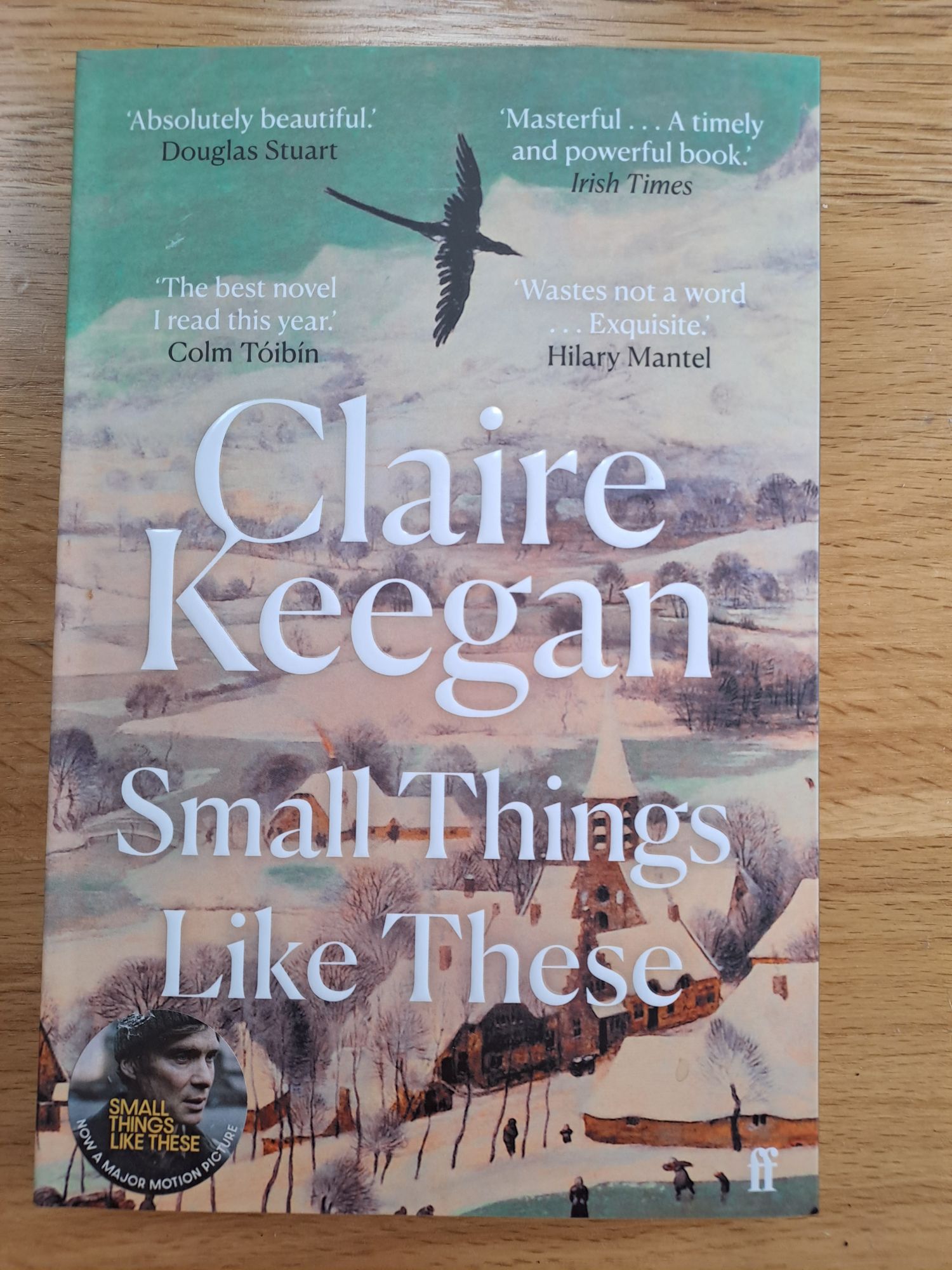
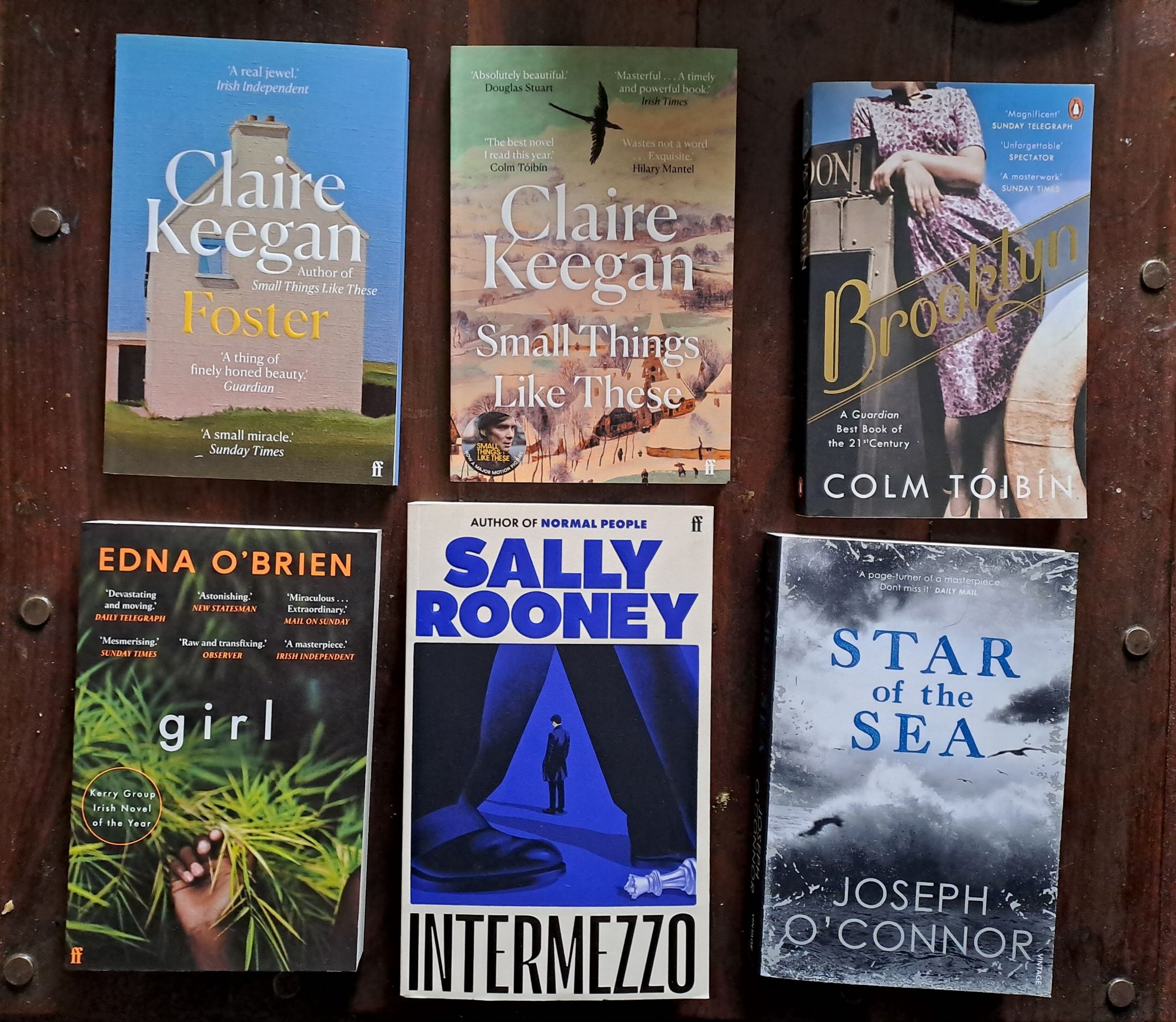
Now on a bit of a roll, I’ve finished reading the third of the six novels I bought earlier this year. The first of these I read was Foster, by Claire Keegan who also wrote the latest, Small Things Like These. There’s much in common between these two works, not only in the beautifully spare writing style with which the stories are told, but also in the message hope of they find in grim circumstances.
The current book is revolves around a character called Tom Furlong, a hard-working and moderately successful timber and coal merchant who makes deliveries around his neighbourhood. It is set in the 1980s, in a time of economic recession, shortly before Christmas. Tom is happily married with five daughters. Tom doesn’t know who his father was; he was raised by a kindly Protestant lady. One day making his delivery round takes him to the local convent, where he sees the harsh treatment of young unmarried mothers in the Magdalene laundry run by the nuns; later visiting the same place to deliver coal he finds a young girl locked in the coalhouse, in the freezing cold. These and other episodes unsettle Tom, by making him think about how lucky he has been, largely thanks to the kindness of others, and how small things can make a huge difference to how one’s life turns out. What he does at the end of the story is not a small thing at all, and we aren’t told how it works out, but it is an act of kindness and he does it for all the right reasons, so we feel it will somehow all work out for the best.
The last novel I wrote about was a work of historical fiction, and so is this. Although it is set in the 1980s, that was a time in which social attitudes in Ireland were much more dominated by the Roman Catholic Church than they are now, the cruelty of the mother-and-baby homes being just one example. Keegan is at pains to point out that the convent is right next door to the local school, two aspects of the same system of social control.
Small Things Like These was published in 2021 and has already been made into a film featuring Cillian Murphy. I haven’t seen the film, unlike Foster in which case I saw the film based on it, An Cailín Ciúin, before reading the book. I must see the film.
P.S. At the end I found myself thinking of these lines from Wordsworth’s Tintern Abbey
As have no slight or trivial influence
On that best portion of a good man's life,
His little, nameless, unremembered, acts
Of kindness and of love.


 In the Dark