Archive for Dracula

Penny Dreadful

Posted in Literature, Television with tags , , , , , , , , on October 1, 2024 by telescoper

The other day I was in the local library and walked past the DVD collection on the way to checking out a couple of books. I noticed the boxed set of the first series of Penny Dreadful which was first broadcast in 2014. Ten years is quite a short time for me to catch up with things so I decided to borrow it. I’m glad I did because I thought it was excellent.

It’s hard to describe what Penny Dreadful is about without making it seem absurd, but it’s a horror drama based in Victorian London that features many characters from fiction of that period, including Mary Shelley’s Frankenstein, Oscar Wilde’s Dorian Gray, and numerous others from Bram Stoker’s Dracula including Professor van Helsing and Mina Harker. There are some originals too: Ethan Chandler, a rodeo performer, and the enigmatic Vanessa Ives. These characters join forces with Malcolm Murray who is attempting to find his daughter Mina (the name of the principal female character in Dracula). Mina is the MacGuffin but the quest to find her is mostly sidelined by other plots.

The title of course refers to the “Penny Dreadful“, a form of cheap fiction that was very popular in Victorian London and which often included a supernatural element, as well as lots of gory violence, as does the TV series. Oscar Wilde’s A Picture of Dorian Gray wasn’t a penny dreadful (nor were Frankenstein and Dracula for that matter) but the mix of characters, both mundane and supernatural, is a very ingenious concoction. It was fun trying to spot the literary references and quotations.

It’s also a bit raunchy in places, although when Dorian Gray was about to get it on with hunky cowboy Ethan Chandler, it cut immediately to the closing credits so, disappointingly, we didn’t see any actual rumpy pumpy.

Anyway, it’s a superb cast including Timothy Dalton as Malcolm Murray, Rory Kinnear as The Creature (from the Frankenstein story), and Eva Green as Vanessa Ives. A young Olly Alexander plays the vampire’s familiar Fenton. It’s beautifully photographed, and the sets are a visual feast for lovers of Victoriana. There are one or two anachronisms in the language and setting, but you have to cut a story like this a bit of slack. For example, the Grand Guignol, which supplies a subplot, was really a Parisian phenomenon.

I’ve seen some criticisms of the plotting, as the episodes don’t really resolve: the next one often starts a new thread rather than tying up the existing loose ends. I didn’t actually mind that at all. It seemed to me that this gives it a dreamlike or rather nightmarish quality.

Anyway, I enjoyed this series a lot and I’ll definitely look out for the other two series, as they may well offer excellent binge viewing during the dark autumn months.
The Sound of Hammer Horror

Posted in Film, Music, Opera with tags , , , , , on August 25, 2012 by telescoper

I’ve been meaning for a while to post a little tribute to British composer James Bernard, and this Bank Holiday Weekend has left me with a bit of time to do so now. Most of you are probably wondering who James Bernard is (or was; he died in 2001), but many of you will have heard his music many times without realising it, for he was the composer who wrote most of the music for the classic British horror movies made by Hammer Film Productions from the late 1950s through to the 1970s.

I’m by no means an aficionado of horror films – or films of any sort for that matter, as I rarely go to the cinema these days – but I do enjoy the opera, which is probably why I find these films so interesting. I don’t think they would have established themselves as the classics there without the unique atmosphere conjured up by James Bernard’s scores. Nor without such fine actors as Christopher Lee and Peter Cushing, of course. The reason for this is that’s not much in these films in terms of purely visual horror – they work so well by creating an undertone of dread and impending terror so that the viewers’ own imaginations frighten them more than what’s shown on the screen. Viewed without the music, most of these films look pretty tame although I have to say I think The Devil Rides Out would have had me hiding behind the sofa even without the music!

Here is a little taste of what is probably his most famous score, for The Horror of Dracula (1958) which starred the inimitable Christopher Lee in the title role.

I think there are two things worth mentioning about this particular piece. The first is that the main theme is built around a three-note motif inspired by the three syllables of the name “Dra-cu-la”. Even more interestingly, Bernard doubles that line in the orchestra a whole tone higher, the resulting clash of harmonies producing that jarring sound that ratchets up the psychological tension. It’s a simple device, but remarkably effective, especially when combined with the unusual percussion.

The second thing that struck me listening to this just now is how reminiscent the entry of the high strings (about 0:49) is of the orchestration of the sea interludes from Benjamin Britten’s opera Peter Grimes. That’s not a surprise at all, because James Bernard was a childhood friend of Britten, and they worked together at various times in later life. Bernard’s music is often atonal and sometimes puts me in mind of Britten’s gripping opera A Turn of the Screw, based on the famous ghost story by Henry James, which also uses atonal techniques to produce an unsettling musical undercurrent. Alban Berg’s opera Lulu (a performance of which I reviewed here) also springs to mind as one in which the lack of a tonal centre in the music produces an atmosphere of disorientation and inner dread.

Dracula

Posted in Film, Music with tags , , , , on May 28, 2012 by telescoper

Last night I went with some friends to the Wales Millennium Centre in sunny Cardiff Bay; not, this time, for an Opera but to see a movie. Well, not just to see a movie but to listen to the soundtrack performed live at the same time. It turned out to be a fascinating and memorable evening, enjoyed by a very large audience.

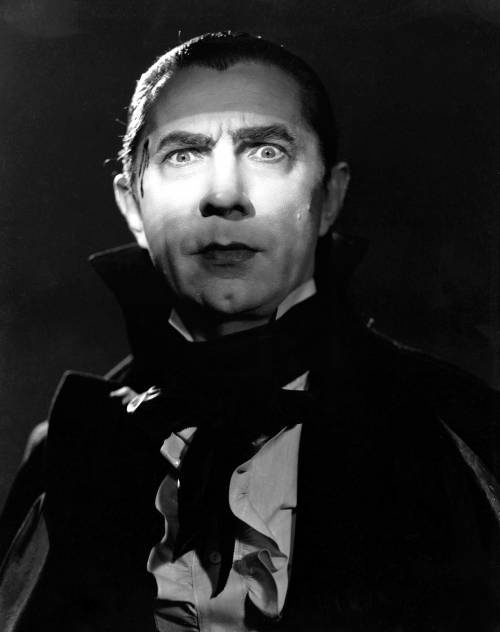
The film was the classic 1931 version of Bram Stoker’s Draculastarring the great Bela Lugosi as the Count. This version – the first of many variations on the theme – was based very closely on the 1927 Broadway play in which Lugosi also played the title role. The music we heard was specially composed to accompany Dracula by Philip Glass, and the man himself was there to perform it. Philip Glass, I mean, not Count Dracula. The musicians numbered six in total, actually, as Philip Glass was joined by the Kronos Quartet  and together they were directed by Michael Riesman, who sat with his back to the audience watching the film on the big screen.

Although the musicians started a bit ropily, they soon pulled themselves together and it became obvious that the music was going to bring a significant new dimension to this pioneering old horror movie. In fact, as a very early “talkie” the original film had no musical score at all and very few sound effects of any kind. The music composed by Philip Glass brings extra dramatic intensity to some of the movie’s iconic sequences, such as the battle of wills when Dracula tries to mesmerise Professor van Helsing. The insistent repetition which is characteristic of Glass’ minimalist approach adds urgency where needed, but there are also contrasting passages of relaxed beauty. The score is also beautifully understated where it needs to be, simple enough not to distract attention away from the screen.

The passing years have not been particularly kind to the film. The effects are often unconvincing (to say the least), especially the  bats-on-strings, some of the acting very hammy, and the audio quality was so poor that the dialogue was often so muffled as to be barely audible (and not helped by bad mixing with the music).

Once you look past these superficial aspects, however, it’s not difficult to understand why this film is regarded as such a classic, because it is a highly original piece of work. It’s a far cry from a modern gore-fest, of course. The horror is implied rather than made explicit; all the actual blood-sucking happens out of shot. But the unsettlingly disjointed narrative, full of unexpected changes of scene and unexplained goings-on, gives it a dream-like feel and conjures up a unique sense of atmosphere. Although it it is now extremely dated, it doesn’t take that much imagination to understand why it created a sensation way back in 1931, with people apparently fainting in shock in the cinema. It also made a huge amount of money at the box office.

Vampire movies  are replete with their own set of clichés – the crucifixes, the absent reflections, the bats, etc etc – but this is the daddy of them all. The one thing that surprised me was the lack of garlic; the favoured protection against this particular member of the Undead is Wolfsbane (a member of the Aconite family of attractive yet lethally poisonous flowering plants; I used to grow a variety called Monk’s-Hood in my garden when I lived in Nottingham).

In the end, however, Dracula owes it all to the mesmerising screen presence of Bela Lugosi. This film made his name, and he was to spend most of the rest of his career typecast as a horror villain. His later years represented a downward spiral. Trouble with sciatica led doctors to prescribe him with opiates, on which he became hooked.  His drug addiction made him notoriously unreliable and work dried up. His career dwindled away into obscure bit parts in poor quality B-movies.

Although Bela Lugosi had his limitations as an actor, he didn’t deserve his fate. I’ve said before on here that I think people should be judged by their best work rather than by their worst, and so it is with Bela Lugosi. He was, and remains, the  Count Dracula.