This poem was set to music in September 1948 by Richard Strauss and became one of his famous Four Last Songs. It was in fact the last of these songs he composed, although it is usually performed as the second song in the sequence. Strauss died in September 1949.
The first verse translates roughly as:
The garden is mourning, cool sinks the rain sinks into the flowers. Summer shudders as it meets its end.
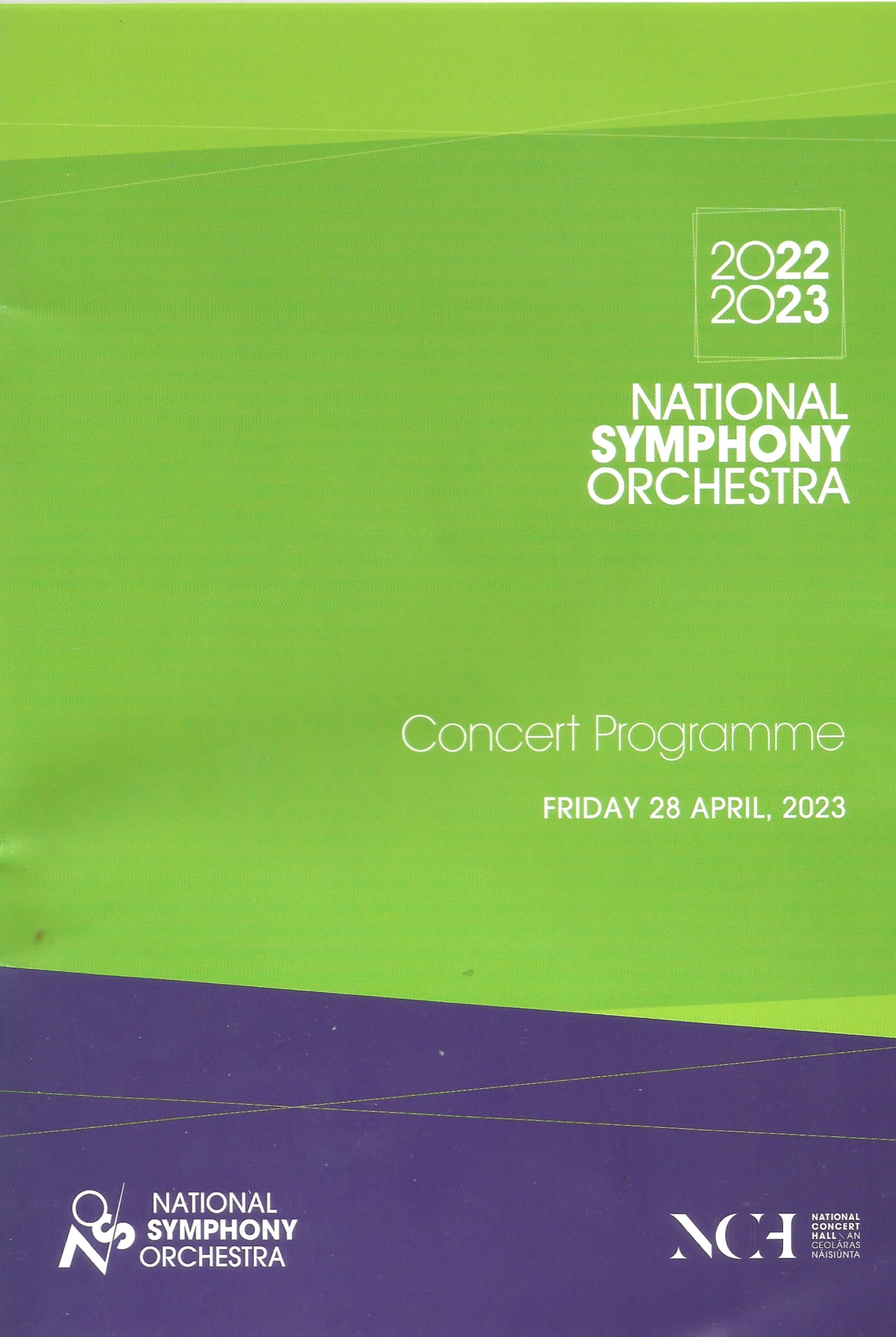
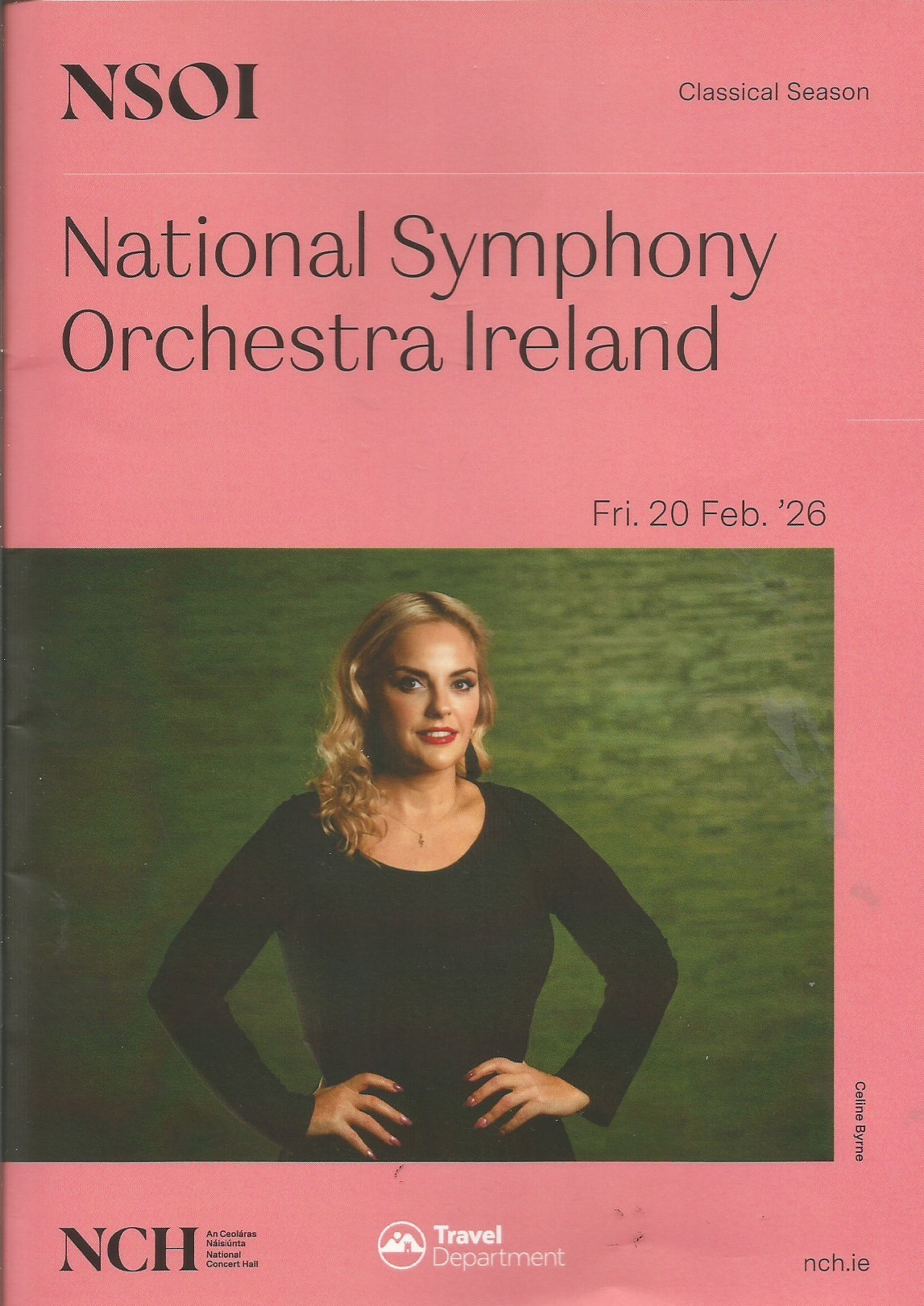
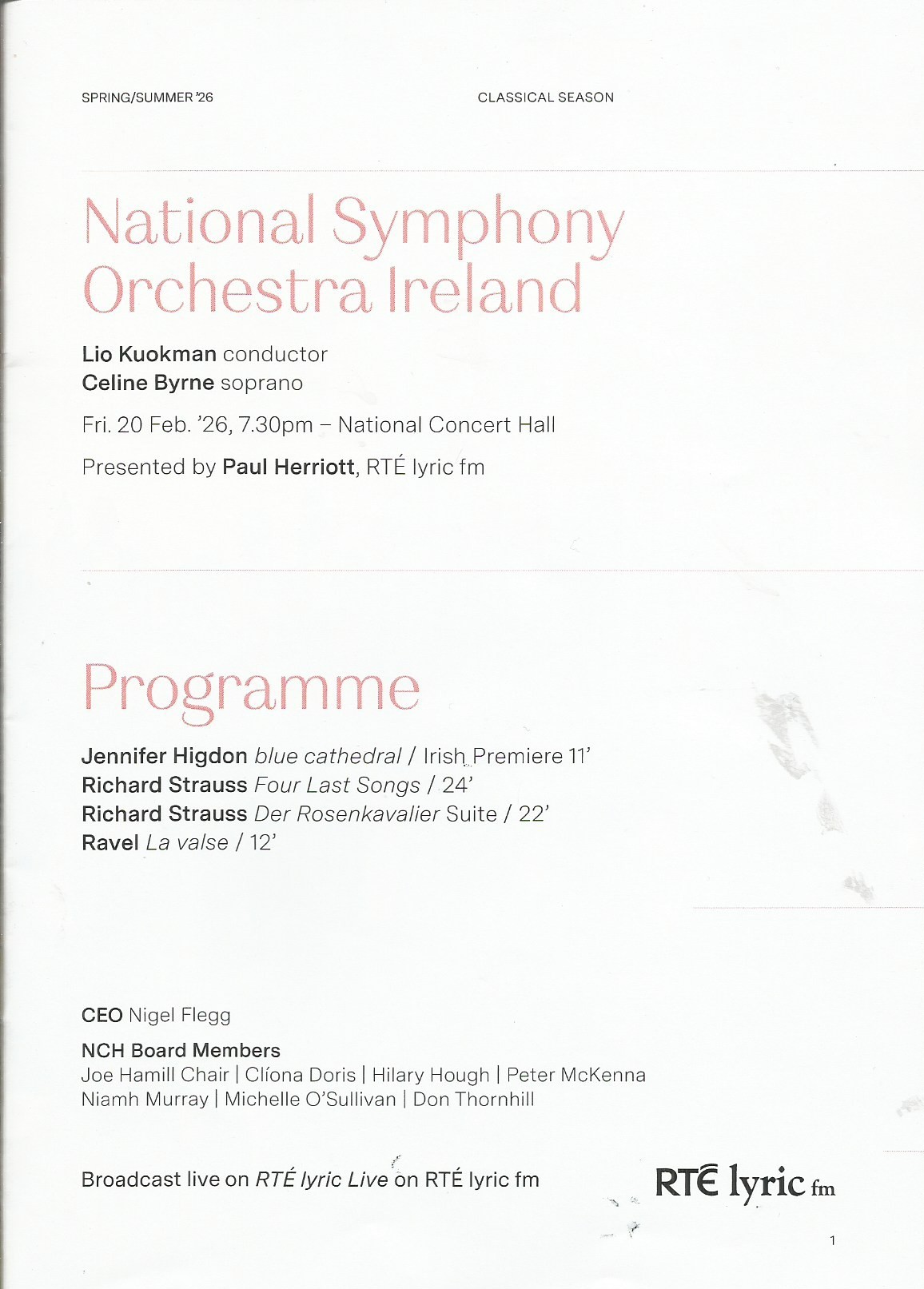
Looking back through my old blog posts, I find that the last time I went to a concert at the National Concert Hall was 10th February 2023. Owing to pressure of work I’ve had neither the time nor the energy to make the trip into Dublin since then, but last night I finally managed to get there for the excellent programme shown above, which was also broadcast live on RTÉ Lyric FM.
On this occasion the National Symphony Orchestra was conducted by Ruth Reinhardt, who last conducted the Orchestra during the pandemic in one of those weird occasions for which most of the musicians were masked, as was she. Anyway, for tonight’s performance she was unmasked long with the rest of the band.
Anton Webern’s Passacaglia(his Opus 1) was a new one on me. It’s not in the 12-tone style he adopted later as a member of the 2nd Viennese School, and can properly be regarded as a (very) late Romantic piece. It’s an intriguing variation of the Passacaglia form (originally a stately dance in triple time built on a bass theme) in that it’s not really a dance and it’s not in triple time, but it is introduced by a theme of eight notes played pizzicato on the strings, which is then followed by a set of variations. The piece only runs about 12 minutes but it packs a lot in. I found it very absorbing and enjoyed it enormously.
The Four Last Songs were published after his death, so Richard Strauss never heard them performed. The very first time they were performed was in 1950 at the Royal Albert Hall, by the London Philharmonia. One can only imagine what it must have been like for the orchestra making this music live for the very first time. Apparently the first time any of them had seen the score was when they turned up for the rehearsal. I’m sure they knew as soon as they started playing that it was a masterpiece.
Last night we heard these songs sung by Amanda Majeski, who arrived on stage resplendent in a black evening gown. I was somewhat surprised to see her using a score for this performance. I would have thought that this was such a standard component of the repertoire that all sopranos would know all the songs off by heart. Perhaps it was just nerves, but I thought the first song, Frühling, lacked warmth but as the concert went on Amanda Majeski got into her stride and by the time she got to Im Abendrot (my favourite) she reached the right level of intensity.
I must single out the leader of the National Symphony Orchestra Elaine Clark for her gorgeous playing of the lovely violin solo in the third song, Beim Schlafengehen. I don’t mind admitting that it brought a tear to my eye.
Incidentally, as far as I know the Four Last Songs were not specifically intended to be performed together as they inevitably are these days. Although the last is my favourite, I think the first three (all based on poems by Herman Hesse) have much more in common with each other than Im Abendrot (which is a poem by Joseph von Eichendorff).
After the wine break we had Symphony No. 3 (“Scottish”) by Felix Mendelssohn. Inspired by a visit to Scotland in 1829 – the first movement was actually composed that year in Edinburgh – it wasn’t completed until over a decade later and should probably be No. 5, but who’s counting? It’s a piece on four movements, with little or no break between them. The first movement starts with a slow theme, like a hymn, but then becomes much more reminiscent of the Hebrides Overture composed in 1830. The landscape of the other three movements is very varied, sometimes cheery, sometimes lush, sometimes tempestuous. The final movement Allegro Vivacissimo has a marking guerriro (“warlike”), which in parts it is, but it also has calmer and more reflective passages before the rumbustious finale.
I always enjoy watching the musicians in these concerts, and could see last night that they were all enjoying themselves hugely. Well done to Ruth Reinhardt and the National Symphony Orchestra for an excellent performance. The hall was by no means full, which was a shame, but the concert was warmly appreciated by those of us there in the audience and no doubt by those listening on the radio.
Now there’s only a month or so to the finale of this concert season so I must try to make the most of the few remaining performances before the summer break…
I thought I’d post this recording of Frühling (“Spring”) which I heard on the radio at the weekend; it seems appropriate enough for the season and for the lovely weather we’re currently enjoying. It features the gorgeous voice of Gundula Janowitz, wonderfully bright and clear like finest crystal. I have so far posted two of the Four Last Songs by Richard Strauss; this makes it three.
Just a quickie today, as I have a lot to do this afternoon. Last night I stayed in and listened to Prom 66, the penultimate Saturday evening concert of the 2010 season of BBC Promenade Concerts from the Royal Albert Hall in London. In fact it was broadcast live on BBC Radio 3, and then shown on BBC television a bit later, a strange arrangement but one that at least let me listen to some of the music twice.
I haven’t listened to all that many of the Saturday concerts this year – on a weekend the scheduling is often somewhat orthogonal to my tastes – but this one was one I’d been looking forward to for ages. It didn’t disappoint. The performance featured the Berlin Philharmoniker conducted by Sir Simon Rattle in a very varied programme of music, including the Prelude to Act I of Parsifal by Richard Wagner and three marvellous orchestral suites by Arnold Schoenberg (Five Pieces for Orchestra, Op. 16) and two of his students from the 2nd Vienna School Anton Webern (Six Pieces for Orchestra, Op. 6) and Alban Berg (Three Pieces for Orchestra, Op. 6). All of these were played quite beautifully by an Orchestra whose name is synonymous with the highest standards of musicianship.
Even better than these, however, was the centrepiece of the concert, Four Last Songs by Richard Strauss, sung by the wonderful Finnish soprano Karita Mattila. I particularly wanted to hear this because the very first recording I bought of the Four Last Songs was by her (conducted by Claudio Abbado). It got mixed reviews when it came out about 10 years ago, but it’s still one of my favourites. Anyway, I thought her performance last night was as moving as any I’ve heard. Ten out of ten.
I’ve always known that the Four Last Songs were published after his death, so Strauss never heard them performed. What I didn’t know before the discussion on TV during the interval immediately after the performance was that the very first time they were performed was in 1950 at the Royal Albert Hall, by the London Philharmonia, so this was an occasion especially redolent for those who love this exquisite work. One can only imagine what it must have been like for the orchestra making this music live for the very first time. Apparently the first time any of them had seen the score was when they turned up for the rehearsal. I’m sure they knew as soon as they started playing that it was a masterpiece.
Anyway, I’ve posted a version of one of the Four Last Songs already – the last one, which happens to be my favourite. I thought I’d put up another one today and, given the historical connection, it seemed apt to pick a recording of the World Premiere of the work from 1950, by the London Philharmonia Orchestra conducted by Wilhelm Furtwängler and featuring the legendary Norwegian soprano Kirsten Flagstad. You have to make some allowance for the sound quality given that it’s such an old live recording, but it’s fascinating to listen to it. For one thing it’s a very different tempo to that of most modern recordings. Here they are performing the second song which, appropriately enough given the time of year, is called September.
I’ve been searching around on Youtube for quite a while trying to decide which is my favourite version of my favourite song. This is Im Abendrot, a poem by Joseph von Eichendorff, as it was set to music by Richard Strauss and published as the last of his Four Last Songs. Strauss wrote the music for this in 1948, just a year before he died.
The poem had a special meaning for Strauss and I think that comes across in the achingly beautiful music he composed for it. The verse is
Wir sind durch Not und Freude
gegangen Hand in Hand;
vom Wandern ruhen wir
nun überm stillen Land.
Rings sich die Täler neigen,
es dunkelt schon die Luft,
zwei Lerchen nur noch steigen
nachträumend in den Duft.
Tritt her und laß sie schwirren,
bald ist es Schlafenszeit,
daß wir uns nicht verirren
In dieser Einsamkeit.
O weiter, stiller Friede!
So tief im Abendrot.
Wie sind wir wandermüde–
Ist dies etwa der Tod?
Although it is basically about death, I find this piece immensely uplifting and joyful. The setting of the last verse in particular reaches parts of me that other music doesn’t reach. The voice floats freely as if suspended in mid-air over the first line (O weiter, stiller Friede!) while the orchestra gently swells beneath it, heightening the suspense. The voice then soars up and away like a majestic bird over the second line of text (So tief im Abendrot) while the orchestra gathers again. The exquisite countermelody rises up to meet the vocal line and they fly together for a while before the words come to and end and it all eventually subsides into a quiet but wonderful sense of fulfilment and peace.
Music just doesn’t get much better than this.
This is the best version I could find on Youtube, by the relatively unknown Gundula Janowitz recorded in 1973 with the Berlin Philharmonic. I’m not saying it’s the best version that’s ever been done – this piece has been recorded by virtually every soprano worthy of the name and everyone will have their favourite- but this is up among the very best.
The views presented here are personal and not necessarily those of my employer (or anyone else for that matter).
Feel free to comment on any of the posts on this blog but comments may be moderated; anonymous comments and any considered by me to be vexatious and/or abusive and/or defamatory will not be accepted. I do not necessarily endorse, support, sanction, encourage, verify or agree with the opinions or statements of any information or other content in the comments on this site and do not in any way guarantee their accuracy or reliability.