Archive for Fraud

Avi Loeb is a Fraud Now

Posted in The Universe and Stuff with tags , , , on July 30, 2025 by telescoper

I saw this video on YouTube about Harvard’s answer to Erich von Däniken and thought I should share it. The introduction to it reads:

Avi Loeb is a Harvard astronomer turned pseudoscience-peddling fraud. Since 2017 he’s been spewing horseshit about how everything is aliens when it definitely isn’t, just to sell a bunch of books to credulous laypeople. Predictably, when the scientific community politely pushes back on his bullshit, he throws a toddler tantrum. I wonder what will happen if someone exposes him in a not so polite manner? Let’s find out.

Here is the video

For supplementary reading I suggest: Ethan Siegel’s Forbes article; Desch and Jackson about Avi’s spherule manuscript: https://arxiv.org/pdf/2311.07699; and the following blog piece by Josh Hedgepeth

Read these carefully. There will be a test next week.

The Mark Brake Scandal, 15 years on…

Posted in Cardiff, Education with tags , , , , on October 20, 2024 by telescoper

This blog has been going for over 16 years now. Those readers who have been following it all that time will remember that in October 2009, 15 years ago, I posted an item about Mark Brake, a Professor at the University of Glamorgan who falsely claimed on a funding application that he had a PhD from Cardiff University. I thought for old times’ sake I would post the article again…

P.S. This story was responsible for me being threatened with a libel action. My response was to pass on the name and address of my solicitor with the message “Go ahead. Make my day” (or words to that effect). I never heard back.

P.P.S. The University of Glamorgan no longer exists as such, as in April 2013 it merged with University of Wales, Newport, to form the University of South Wales

An Exercise in Bayesian Probability

Posted in Bad Statistics with tags , on August 20, 2024 by telescoper

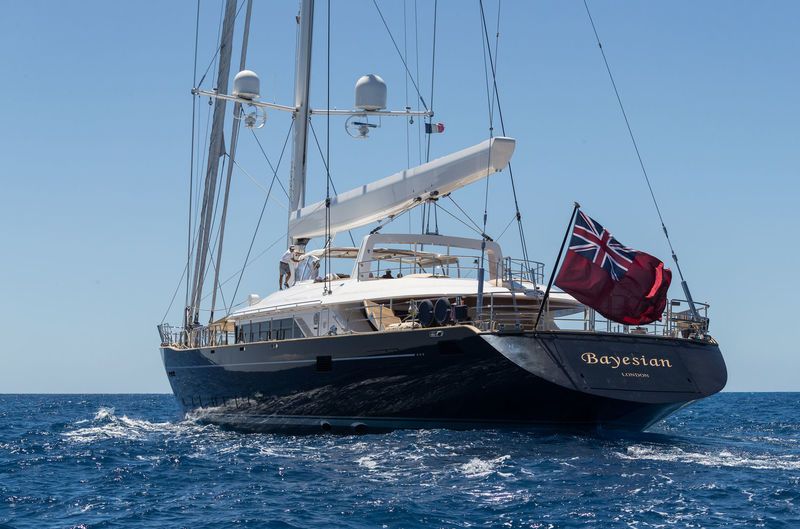
A businessman is on a luxury yacht, celebrating his recent acquittal in a high-profile fraud trial, when the yacht sinks in mysterious circumstances off the coast of Sicily. The businessman is one of six people on board who are missing, presumed dead. Just last week, the businessman’s co-defendant in the aforementioned fraud trial died in a mysterious road accident while out running in Cambridgeshire.

Using Bayesian methods, calculate the probability of these two events being a coincidence. Show your working. To the police.

Update: An investigation into possible manslaughter has been opened by the authorities in Italy.

Bogus Scopus

Posted in Open Access with tags , , , , on June 17, 2024 by telescoper

Just to show that I’m not alone in having severe doubts about the reliability and integrity of Scopus here is an article from Retraction Watch that points out that three of the top ten philosophy journals (according to that database) are fake. Among the facts that could easily have been checked by a competent agency is this:

The same editorial board serves for three journals, with 10 members who are dead. 

The article concludes:

Rankings based on Scopus frequently serve universities and funding bodies as indicators of the quality of research, including in philosophy. They play a crucial role in decisions regarding academic awards, hiring, and promotion, and thus may influence the publication strategies of researchers… Our findings show that research institutions should refrain from the automatic use of such rankings. 

Quite. Any institute that has signed up to the San Francisco Declaration on Research Assessment should not be basing any decisions on Scopus anyway, but I don’t think that goes far enough. Scopus is a corrupting influence. It is high time for universities and other agencies to stop paying their subscriptions and ditch it entirely.

Faking Proceedings

Posted in Open Access with tags , , , , , , on October 2, 2022 by telescoper

Almost every day I get an invitation to a fake conference somewhere, usually somewhere nice (to make the event more attractive). Usually these are caught by my spam filter, but when one isn’t the conference often turns out to be in a field I don’t work in. A small fraction are in cosmology or astrophysics but fortunately those fields are relatively small and it’s quite easy to identify whether or not they are bona fide. I’ve often wondered what happens if you turn up at one of these fake meetings, but not enough to waste money on trying to find out. Perhaps one of my readers knows? One day someone should turn up at one of them with a film crew…

It seems that along with these fake conferences there are fake conference proceedings, not just proceedings of fake conferences but proceedings of conferences that didn’t actually happen.

Publishers make a killing from publishing books of conference proceedings, which generally have a very short shelf-life. I stopped contributing to conference proceedings some time ago as I don’t think they’re worth the effort any more. It’s far better in my view for contributors just to put a copy of their slides on the conference website. I fully accept however that conference proceedings or similar publications may be important in other fields and it does seem that there is still a considerable traffic in them, with some publishers – including Institute of Physics Publishing – setting up special journals to exploit the traffic.

My attention was drawn today to an article in The Times (behind a paywall). The Times piece appears to be based on this one by the excellent Retraction Watch. It seems the IOP publishing system has been comprehensively hacked by (mostly Chinese) publishing mills. As a result the publisher has retracted 494 papers:

The vast majority – 463 articles – are from the Journal of Physics: Conference Series, while 21 are from IOP Conference Series: Materials Science & Engineering, and 10 are from IOP Conference Series: Earth & Environmental Science.

A statement from the IOP explains

These articles are being retracted following an allegation that raised concerns regarding several manuscripts. IOP Publishing has conducted a comprehensive investigation, which indicated that some papers may have been created, manipulated, and/or sold by a commercial entity.

I’m told that to be named as an author of a paper costs anything from about $500 to $US5000, depending on the calibre of the journal and how prominently you want your name to appear. It’s easy to find companies willing to provide such a service, e.g. on Facebook.

Of course this episode raises serious questions about the quality of the peer review applied to these papers, but the more serious issue is how science let itself get into a mindset that fetishizes publications in the first place. The publishing industry must share some of the blame for this. As long as this absurd situation exists there will be unscrupulous people willing and able to exploit it.

Commented out

Posted in Uncategorized with tags , , , on December 3, 2009 by telescoper

Interesting. Very interesting.

You may recall that a few days ago, the Times Higher closed the comments section on their story about Mark Brake, the University of Glamorgan Professor who falsely represented his credentials on a grant application in 2006 by claiming to have a PhD. This is an ongoing story on this blog – see previous posts here, here and here – and I had been logging the comments for future reference. I was worried that the comments might be lost when the Times Higher closed them so I posted them on this blog. I took them offline a bit later because I was worried about possible copyright infringement, but also made several copies which I have lodged in various places for safekeeping.

When I got back home yesterday I spent a bit of time catching up on blog administration and found that the page of Times Higher comments (which was still on my wordpress space, but not available to the public) had been marked “DO NOT REPOST – CONTACT SUPPORT”. I did so, and it was explained to me that they had received a complaint containing the following

.. this post is actually a repost of an entire conversation held on the Times Higher Education Supplement website, which was removed earlier today after the editor there decided that the contents had become too abusive, and was in breach of not only their own sites rules against defamation and liable, but also in breach of several telecommunications acts here in the UK as well as consituting an invasion of privacy into the lives of several people.

Since the Times Higher hadn’t given a reason for deleting the comments thread on its own site, I asked them whether these indeed were the reasons they had removed them and whether they had made this complaint. I suspected not, as for one thing I was sure that employees of  said organ would be able to spell “libel” correctly. Had they – or anyone else – approached me directly with a  good reason I would have been happy to remove them. As it happens nobody contacted me personally about this, and I was a bit annoyed at the underhand way that it was done. Not the only underhand thing that has happened recently in connection with this story.

I received a reply from Phil Baty, one of the editors of the THES, who confirmed that they had decided to close the thread after “complaints” but had not made any approach about my use of the THES comments on this site. He also  stated that

the decision to close the thread should not be taken as any judgement on our part on the behaviour of any individual who posted.

The anonymous complainant thus seems to have deliberately misrepresented the situation to WordPress in order to suppress the contents of my blog page. Sneaky.

Neither WordPress nor the Times Higher would reveal the identity of the complainant, but I can guess. I surmise this was done by an individual anxious to hush up this story and to conceal his identity. I wonder who that might be?

Anyway, the main point of this post is to reassure those at the University of Glamorgan responsible for disciplinary matters that the abusive comments posted on the THES  have not been lost so there’s no reason to give up their investigation into the ongoing serious misconduct of its employees. I’d be delighted to hand over the information if they request it as part of their no doubt strenuous efforts to root out those responsible for bringing their name into disrepute.

I’m sure the University of Glamorgan would have been very upset if  such important evidence of ongoing wrongdoing had been lost so I am happy to be able to allay their fears.

Perhaps the University of Glamorgan might also like to establish whether any of its employees used a deliberate falsehood to persuade WordPress to suppress this evidence? Shouldn’t be too difficult.

PS. I note the recent news that the University of Glamorgan is to get a new Vice-chancellor.

Brake Thread

Posted in Uncategorized with tags , , , on November 26, 2009 by telescoper

Following my post yesterday, the thread of comments relating to the Mark Brake/University of Glamorgan fraud scandal has been removed from the Times Higher story. However, I was logging the thread until very near the end (in fact, until my own  last comment this morning shortly before the comments were closed). I have posted them on a permanent page here to preserve them, but the page is currently offline pending clarification of copyright issues.

I have no idea why the comments were deleted, but I hope it is a sign that the University of Glamorgan is finally investigating this matter. If they are, I expect this matter to reach a speedy conclusion. If not, I will keep you posted on further developments with this and other matters in due course.

I’ve decided to reduce the amout of blogging I do over the next few days to catch up on paper-writing and a few other things, but I don’t think it’s a bad thing if story stays at the top of the page for now.

The Mark Brake Story

Posted in Uncategorized with tags , , , on November 25, 2009 by telescoper

I’m quite surprized to find myself posting yet another item about this story over a month after I originally mentioned it, but after the events of the last few days I really don’t feel like letting it drop.

In case you missed the story first time, Professor Mark Brake (he of the absurdly glowing wikipedia page) falsely represented his qualifications when applying for a research grant in 2006. For some reason, his employer – the University of Glamorgan – did not take the appropriate action of dismissing him for gross misconduct, but instead sacked the person responsible for drawing it to their attention. These are the facts as reported in the Times Higher Education Supplement which I commented on in my second post on this saga a few weeks ago.

The reason for posting about it again is that the Times Higher article is attracting a truly phenomenal number of comments (nearly 600 at the last count). These, roughly speaking, divide into two camps. The first set (including 4 comments by myself under my own name) comprises comments from people dismayed by the fact that Professor Brake’s misconduct appears not to have been investigated properly by the UoG and suggestions that this episode will reflect badly on academia generally unless  it can be sorted out promptly.

The second camp appears to consist of a small number of individuals posting abusively mocking comments under a variety of silly pseudonyms who are clearly attempting to draw attention away from the allegations against Professor Brake. It seems to me to be a very high probability that the culprit himself is behind many of the more absurd comments on the thread. I have been informed by someone working for the University of Glamorgan that Brake has been expressly forbidden to comment on this story, but that the UoG has taken no steps whatsoever to investigate whether he is doing so. In the meantime, contrary to promises made by their press contact to the THES, the UoG  have not yet made any attempt investigate the original misconduct. To quote from a comment I put on the thread myself:

I wish I shared the confidence of some other posters in the willingness of the UoG to treat this matter with appropriate seriousness. I think it is more likely that their “investigation” involves keeping their eyes firmly closed and not opening them unless and until a third party drops a load of direct evidence on their head. The longer they continue to ignore the ongoing misconduct of their own employees, including their abusive posts on this thread, the further the reputation of the University of Glamorgan is tarnished.

Since I revealed that I  that passed the Wales Online story onto the Times Higher, a number of things have happened which I can’t comment on for legal reasons. These events have left me very doubtful that the University of Glamorgan intends to investigate this matter at all and wishes instead that it will all blow over.

Of course readers of this blog can form their own opinions about the importance of this case and/or my interpretation of the facts but, based on what I know, I have drawn the conclusion that it is very important that this matter is not allowed to fade away. For one thing, the professorial salary of this individual is funded by the taxpayer….

I therefore intend to keep posting comments on the THES in support of academic standards and against academic misconduct until something is done. I invite any readers that agree with me to post their comments on the THES thread.

If representatives of the University of Glamorgan or any individual or organization feels I have misrepresented any aspect of this case or if you disagree with me for any other reason, or simply wish to comment, please feel free to express your thoughts through the box below.

STOP PRESS: The Times Higher appears to have closed the thread on this story for reasons not explained. You may still comment here of course.

First Digits and Electoral Fraud in Iran

Posted in Bad Statistics with tags , , on June 22, 2009 by telescoper

An interesting issue has arisen recently about the possibility that the counting of the recent hotly contested Iranian election results might have been fraudulent. I mention it here because it involves  Benford’s Law – otherwise known as the First Digit Phenomenon – which I’ve blogged about before.

Apparently what started this off was a post on the ArXiv by the cosmologist Boudewijn Roukema, but I first heard about it myself via a pingback from another wordpress blog.  The same blogger has written a subsequent analysis here.

I’m not going to go into this in more detail here: the others involved have an enormous headstart and in any case I wouldn’t want to try to steal their thunder.  Suffice to say that there is at least a suspicion that the distribution of first digits in the published results is more uniform than would be expected by chance, given the that the general behaviour under Benford’s Law is to have more digits beginning with the digit “1” than any other. This apparently paradoxical result is quite easily explained. It also provides a way to check for fraud in, for example, tax returns.  How it applies to election results is, however, not so clear and the analysis is a bit controversial.

I’m sure some of you out there will have time to look at this in more detail so I encourage you to do so…


Oh. The story is gathering momentum elsewhere too. See here.