Archive for Gold Open Access

Open Access and Closed Telescopes

Posted in Science Politics, The Universe and Stuff with tags , , , on February 22, 2013 by telescoper

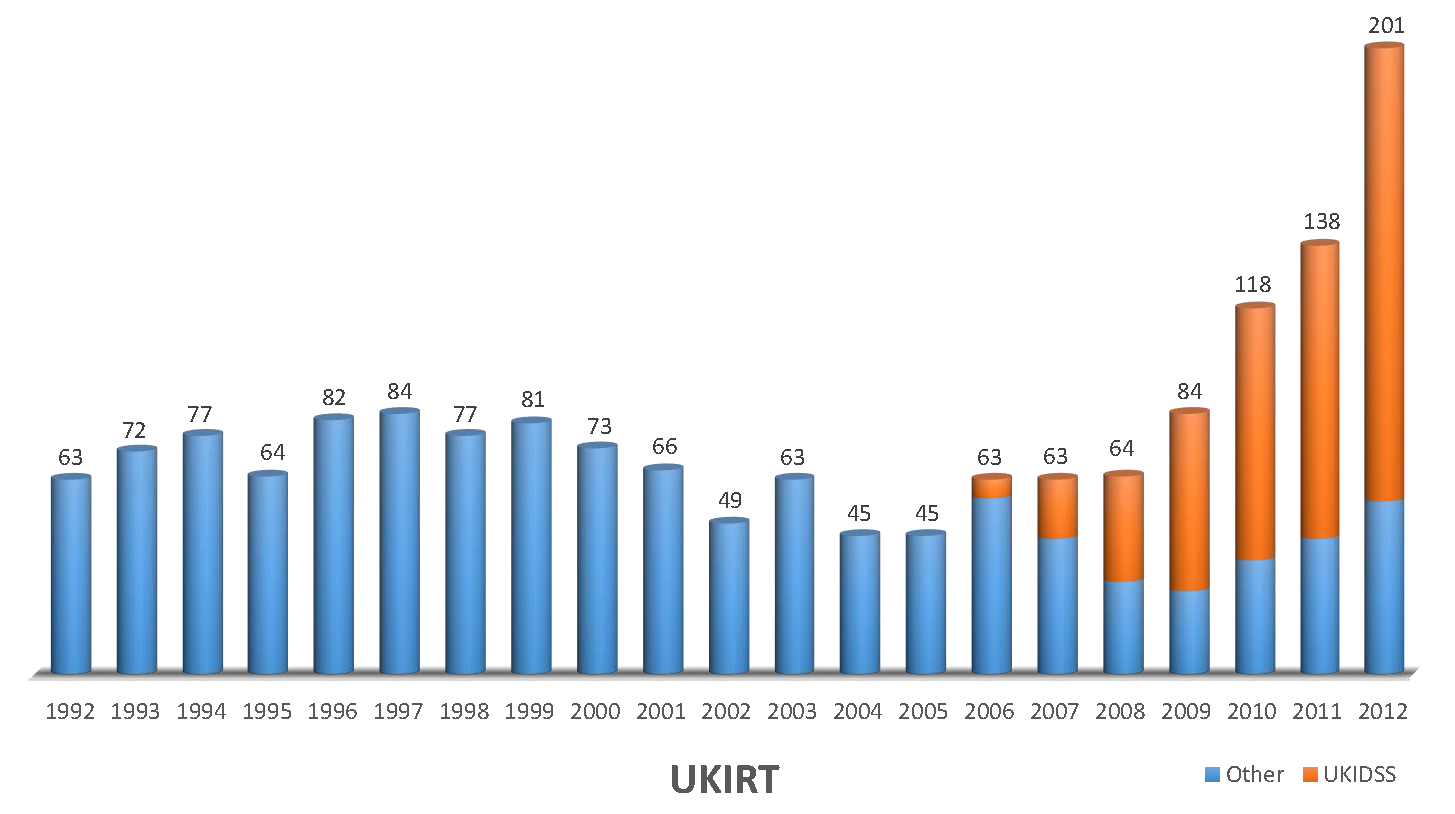
Interesting to note that 2012 was a bumper year for productivity at the UK Infra-Red Telescope (UKIRT), as demonstrated by the following nice graphic.

UKIRT-pubs-2012

Some of my colleagues have expressed a measure of consternation at the fact that unless some individual or organization steps in and offers to take over the running costs, this facility will be closed down at the end of this year (2013). Why shut down a telescope that is generating so many publications?

The answer is of course that, under the UK Government’s new plans for  Gold Open Access, astronomers will be forced to pay Article Processing Charges, possibly exceeding £1000 per paper, in order to disseminate the fruits of their research. The Science and Technology Facilities Council (STFC), which administers the budget for the UK’s astronomy research,  simply can’t afford the level of expenditure required to cover the costs associated with the number of articles being generated by the wanton exploitation of this facility. Indeed, in future, STFC will only be able to operate facilities that produce very few results worthy of publication.

I hope this clarifies the situation.

Missing the Point on Open Access

Posted in Open Access with tags , , , , , , on January 28, 2013 by telescoper

Blogging this week will be a bit patchy as I try to finish off a few Cardiff jobs before the big move to Sussex at the end of the week. However, I have got time today for a quick comment on an article I saw in yesterday’s Observer.

The piece tries argue  that the government’s plans for Open Access, stemming from the Finch Report, amount to an “attack on academic freedoms”, a stance apparently held by a number of eminent historians (and others). The argument is that the Gold Open Access model preferred by RCUK will require the payment of Article Processing Charges (APCs) which could in some cases amount to thousands of pounds per article. Departmental budget holders (possibly administrators rather than academics) will then have to be involved in decisions about which papers can be funded and which can’t. This, it is argued, will mean that researchers will have much less freedom to publish when, where and what they like – the people holding the purse strings will have the final say.

A similar point was made by Mike Cruise in a strange article that appeared in the latest Astronomy and Geophysics (house organ of the Royal Astronomical Society):

Even in the UK it is not clear how the flow of funding for APCs will work. Will universities limit an academic’s publication rate or where he or she can publish? How and by whom will this funding be controlled? Academic freedom may, perversely, be curtailed as a result of open access.

So does Open Access pose a real threat to academic freedom? The answer is “yes”, but only if the Research Councils persist in forcing academics to pay the extortionate APCs demanded by academic publishers, out of all proportion to the real cost of publishing a paper on the internet, which is (at the very most) a few tens of pounds per article. Publishers want a much higher fee than this because they want to maintain their eye-watering profit margins, despite the fact that the “service” they provide has been rendered entirely obsolete by digital technologies. Any protests against open access should be directed to the real enemy, i.e. the profiteers.

The Finch Report was hi-jacked by the publishing lobby, with the result that RCUK has been persuaded to pour  millions of pounds of taxpayers’ money down a gold-plated drain. The model it recommends is absurd and clearly unsustainable. Low-cost repositories and community-based refereeing can deliver Green Open Access at a tiny fraction of the cost of the Gold Option, by cutting out the middle men.

All that’s needed to defend academic freedoms  is to set up on-line subject-based repositories in much the same way as physicists and astronomers have set up the arXiv. In other words, the historians just need an archive.  They should be comfortable with that idea. And as for refereeing, they can do that the way it will shortly be done in astronomy…

P.S.  Astronomy & Geophysics have invited me to write a response to Mike Cruise’s article; my piece should appear in the April 2013 issue. Hopefully it won’t be behind a paywall.

RCUK is throwing money down a gold-plated drain

Posted in Open Access with tags , , , , , , on November 9, 2012 by telescoper

Right. Now I’m annoyed. Annoyed enough to dash off a quick post before getting the train to London to see this year’s RAS Gerald Whitrow Lecture.

RCUK, the umbrella organisation for the United Kingdom’s seven research councils, has announced that it will set aside £17 million next year, and £20 million the year after that, to pay for Gold Open Access publication of the research it sponsors. These funds will be made available to universities in the form of block grants to enable researchers to pay the infamous APCs  (“Article Processing Charges”). The average cost of an APC has been taken from the Finch report (estimated as £1727 plus VAT).

It’s astonishing that RCUK have fallen for this trap. What were they thinking of? The Finch report was clearly hijacked by the vested interests of the academic publishing industry who see the Gold Open Access model as an easy way of maintaining their profit margins at taxpayer’s expense. The new RCUK scheme will simply divert funds away from research into a subsidy for wealthy publishing houses (and, in some cases, the learned societies that run them). The actual cost of processing an article is nothing like £1727 and is any case borne by the people doing the work, i.e. academics who perform the refereeing usually for free. An APC at this level is simply a scam. That the RCUK has fallen for it is a disgrace.

What RCUK should have done was given universities and other research institutions funds to set up and maintain their own Green Open Access databases or international repositories like the arXiv. Throwing money at  Gold Open Access is disastrous way of proceeding. It’s not only ruinously expensive but also unsustainable. In a few years’ time it is inevitable that the traditional academic publishing industry will be bypassed by researchers doing it for themselves. All the money spent propping up the fat cats in the meantime will have been wasted.

However, despite its obvious stupidity, the RCUK did give me one idea. I’ve blogged before about how much learned societies such as the Institute of Physics “earn” from their own publishing houses. In effect, these outfits are living on income provided to them by hard-pressed university library budgets.  In such cases it can be argued that the profits at least remain within the discipline – the IOP does many good things with the money generated by its publishing arm – but is this actually an honest way of supporting the activities of learned societies?

Anyway, it seems clear to me that the financial model under which most learned societies, including the IOP, operate will not operate for much longer, as more and more researchers go for Green Open Access and more and more institutions cancel subscriptions to their ruinously expensive journals. How then can they survive in the long term?

Instead of  splashing money around for Gold Open Access,  RCUK should mandate that all its research be published in Green Open Access mode. That would pull the rug out from under the learned societies, but why not replace the funding they are syphoning off from journal subscriptions with direct block grants. Such grants would have to be audited to ensure that learned societies spend the money on appropriate things, and would probably amount to much less than such organizations currently receive. I don’t think that’s a bad thing. I think there’s a strong case for the IOP to be downsized, actually.

So there’s my suggestion. No RCUK subsidy for the academic publishing industry, but direct subsidies for the learned societies and Green Open Access to be compulsory for all RCUK funded institutions.

How’s that for a plan?

Whither the Learned Societies?

Posted in Open Access with tags , , , , on October 1, 2012 by telescoper

An interesting aspect of the ongoing debate about Open Access publishing is the extent to which “learned societies”, such as the Royal Astronomical Society and the Institute of Physics, rely for their financial security upon the revenues generated by publishing traditional journals.

IOP Publishing is a wholly-owned subsidiary of the Institute of Physics that generates annual income  in the region of £40M from books and journals. This is the largest source of the revenue that the IoP needs to run its numerous activities relating to the promotion of physics.  A similar situation pertains to the Royal Astronomical Society, although on a smaller scale, as it relies for much of its income from Monthly Notices of the Royal Astronomical Society, in which as a matter of fact I publish quite regularly.

Not surprisingly, these and other learned societies are keen to protect their main source of cash. When I criticized the exploitative behaviour of IoP Publishing in a recent blog post, I drew a stern response from the Chief Executive of the Institute of Physics, Paul Hardaker. That comment seems to admit that the high prices charged by IOP Publishing for access to  its journals is nothing to do with the cost of disseminating scientific knowledge but is instead a means of generating income to allow the IoP to pursue its noble aim of  “promoting Physics”. This explains why such organizations have lobbied very hard for the “Gold” Open Access that is being foisted on the research community, rather than the “Green” Open Access that it really wants.

I recently came across another blog post, pointing out that other learned societies around the world are also opposing Green Open Access:

There is also great incentive for the people who manage and run these organisations to defend their cartel. For example, the American Chemical Society, a huge opponent to open access, pays many of its employees, as reported in their 990 tax return, over six figures. These salaries range from $304,528 to $1,084,417 in 2010.

I don’t know the salary of the Chief Executive of the IoP.

The problem with the learned societies behaving this way is twofold. First, I consider it to be inevitable that the traditional journal industry will very soon be completely bypassed in favour of Green Open Access. The internet has changed the entire landscape of scientific publication. It’s now so cheap and so easy to disseminate knowledge that journals are already  redundant, especially in my field of astrophysics. The comfortable income stream that has been used by the IoP to “promote Physics”, as well as to furnish its spacious  buildings in Portland Place and pay the no doubt “competitive” salaries of its officers, will therefore surely dry up in the near future.  The “Gold” OA favoured by such organizations is unjustifiable and unsustainable and it won’t last. The IoP, RAS et al need to find another way of funding their activities pronto, or downsize accordingly.

The other problematic aspect of this  approach is that I think it is fundamentally dishonest. University and institutional libraries are provided with funds to provide access to published research, not to provide a backdoor subsidy for a range of extraneous activities that have nothing to do with disseminating research. The learned societies do many good things – and some are indeed oustandingly good – but that does not give them the right to syphon off funds from their constituents in this way.  Institutional affiliation, paid for by fee, would be a much fairer way of funding these activities.

I should point out that, as a FRAS and a FInstP, I pay annual subscriptions to both the RAS and the IoP. I am happy to do so, as I feel comfortable spending some of my own money supporting astronomy and physics. What I don’t agree with is my department having to fork out huge amounts of money from an ever-dwindling budget for access to scientific research that should be in the public domain because it has already been funded by the taxpayer.

Some time ago I had occasion to visit the London offices of a well-known charitable organization which shall remain nameless. The property they occupied was glitzy, palatial and obviously very expensive. I couldn’t help wondering how they could square the opulence of their headquarters with the quoted desire to spend as much as possible on their good works. Being old and cynical, I came to the conclusion that, although charities might start out with the noblest intentions, there is a grave danger that they simply become self-serving, viewing their own existence in itself as more important than what they do for others.

The academic publishing industry has definitely gone that way. It arose because of the need to review, edit, collate, publish and disseminate the fruits of academic labour. Then the ease with which profits could be made led it astray. It now fulfils little or no useful purpose, but simply consumes financial resources that could be put to much better effect actually doing science. Fortunately, I think the scientific community knows this and the parasite will die a natural death.

But I wonder if the learned societies will go the same way.  Is there a financial model according to which they can enjoy a stable and sustainable future?  Are they actually needed? After all, if we can publish our own physics, why can’t we ourselves also promote it?
Nothing Gold Can Stay

Posted in Open Access, Poetry with tags , , , on September 13, 2012 by telescoper

Nature’s first green is gold,
Her hardest hue to hold.
Her early leaf’s a flower;
But only so an hour.
Then leaf subsides to leaf.
So Eden sank to grief,
So dawn goes down to day.
Nothing gold can stay.

by Robert Frost (1874-1963)