Archive for Karen Cargill

Das Lied von der Erde

Posted in Biographical, Music with tags , , , , , , , on February 22, 2025 by telescoper

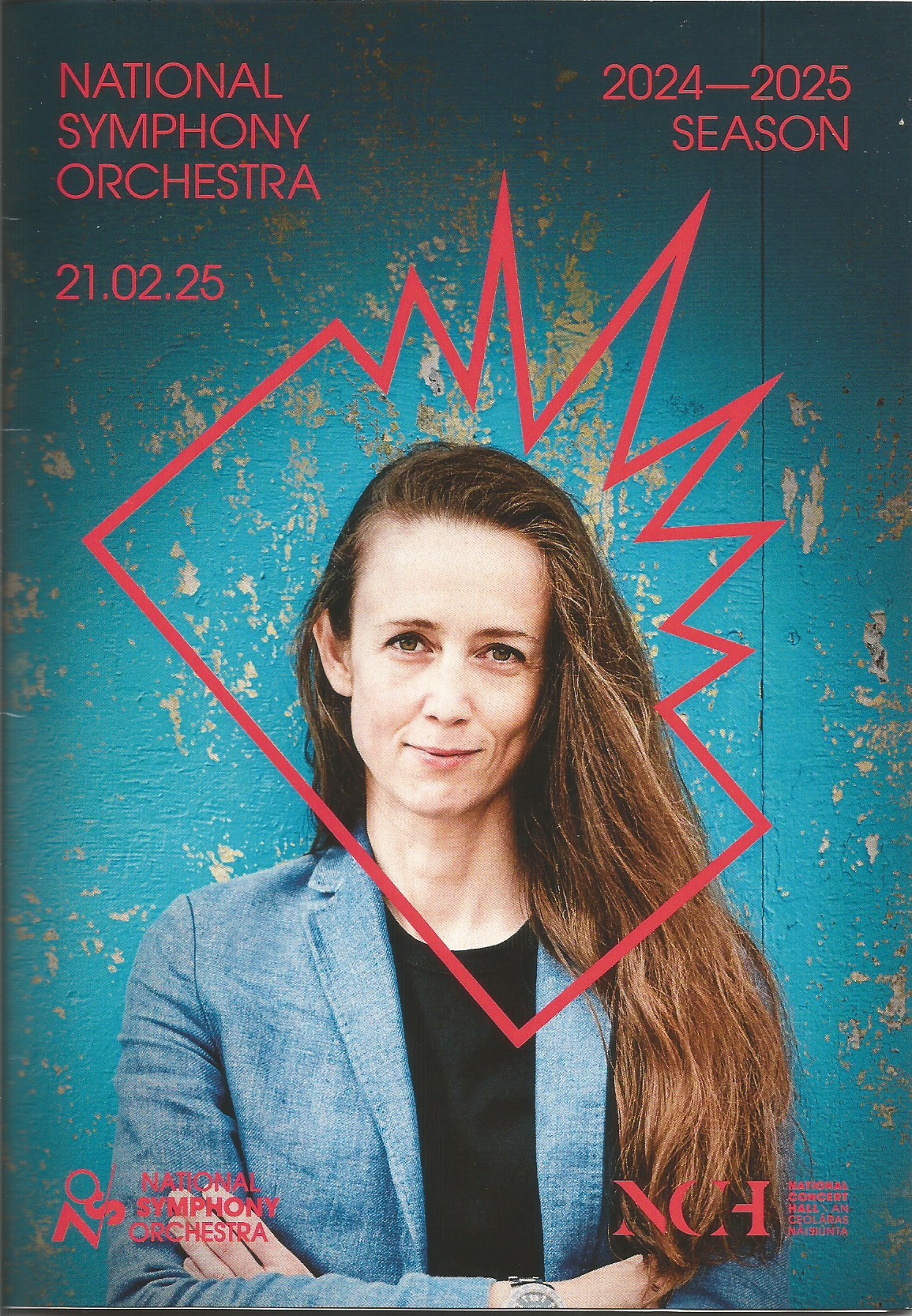
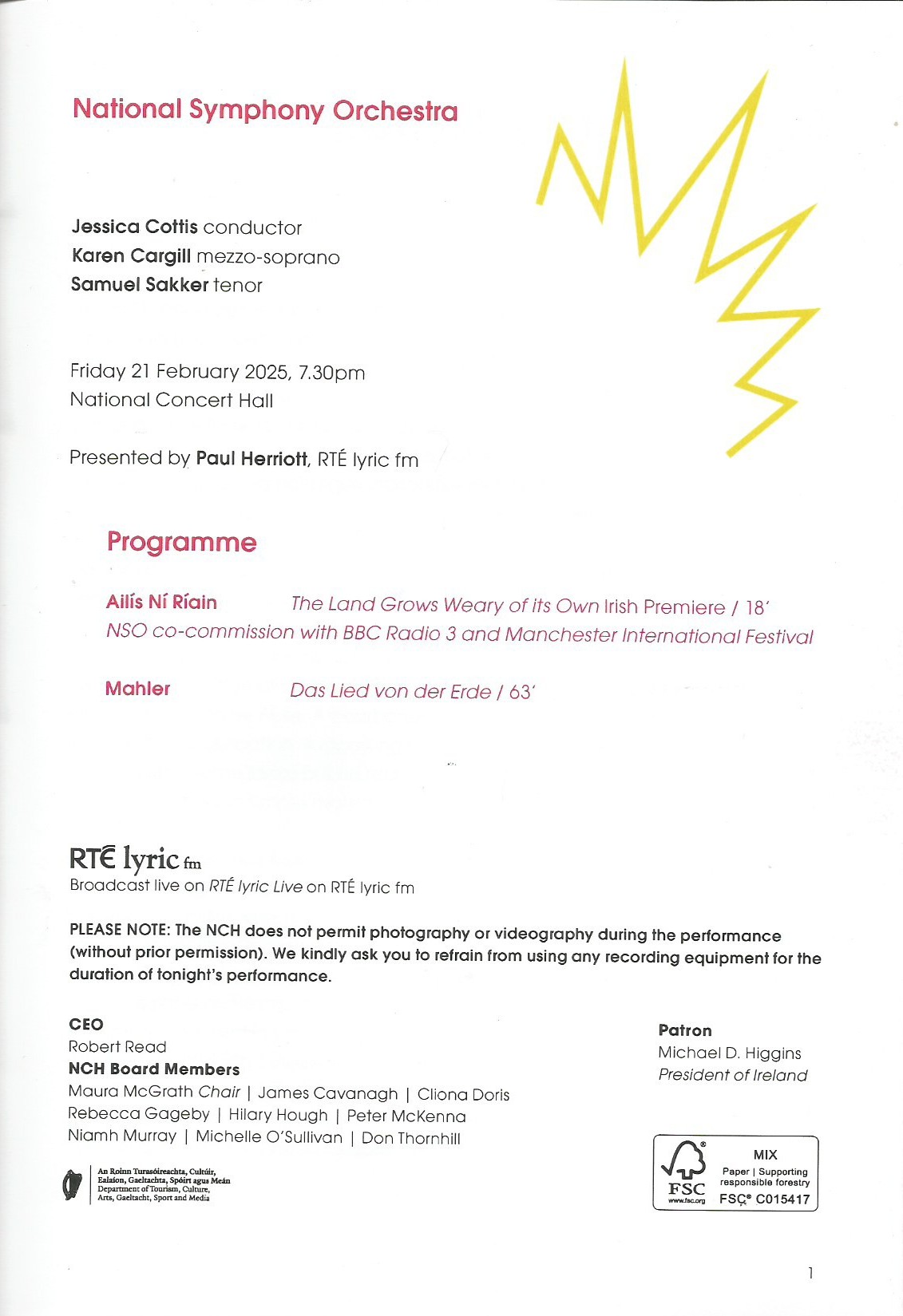
And it came to pass that yesterday evening I travelled into Dublin for another concert at the National Concert Hall. The main item on the menu was Das Lied von der Erde (“The Song of the Earth”), an orchestral work for two voices and orchestra by Gustav Mahler. Sometimes described as a song cycle this piece is a symphony in all but name (and number). Mahler was suspicious about counting this work as his 9th Symphony because of the Curse of the Ninth. He did go on to composer another (numbered) Symphony but did not live to hear it performed. He didn’t live to hear Das Lied von der Erde performed either.

Das Lied von der Erde (“The Song of the Earth”) is a long work – performance time is just over an hour – and it is spread over six movements, thematically linked by translations of classical Chinese poems translated into German by Has Bethge. The final movement, by far the longest, incorporates two texts whereas the others include one each.

This is one of my favourite works but I’ve only ever heard it on the radio or on a recording so I was delighted to see it was coming up at the National Concert Hall. I enjoyed last night’s performance enormously. The National Symphony Orchestra was conducted by Jennifer Cottis with soloists Samuel Sakker (tenor) and Karen Cargill (mezzo-soprano). The start of this piece is difficult for the tenor who has to come in at full volume. At first I thought he was going to struggle, but he hit his straps very quickly and delivered a strong performance. Karen Cargill was superb throughout, her voice very well matched to the demands of the music. I have heard her sing Mahler before, incidentally, in Cardiff, and she was great then too. The whole orchestra played beautifully, but I would pick out the woodwind section for special mention.

That wasn’t the entire concert. There was also the Irish premier of a new work work by Ailís Ní Ríain called The Land Grows Weary of its Own, which is a meditation on the effects on bird populations and migration thereof caused by Earth’s changing climate. It’s an interesting piece, with some fascinatingly complex passages, especially for the percussion. The composer was the audience, but unforunately the auditorium was only about half full for the performance. It only lasts about 20 minutes so the interval came quite quickly. Returning after my glass of wine I could see a much fuller Concert Hall so some people obviously skipped the first piece, which is a shame.

Yesterday was a very rainy and blustery day and on the way home I thought about the number of times I’ve walked from Connolly Station to the NCH yet never been rained on. Last night was no different.

Mahler: Symphony No. 2 (“Resurrection”)

Posted in Music with tags , , , , , , , , , , on October 21, 2016 by telescoper

Last night I was at St David’s Hall in Cardiff yet again, this time for a piece that I’ve never heard in a live performance: Symphony No.2 (“Resurrection”) by Gustav Mahler. This is a colossal work, in five movements, that lasts about 90 minutes. The performance involved not only a huge orchestra, numbering about a hundred musicians, but also two solo vocalists and a sizeable choir (although the choir does not make its entrance until the start of the long final movement, about an hour into the piece). In my seat before the concert I was particularly struck by the size of the brass section of the orchestra, but it turned out to be even larger than it looked as there were three trumpets and three French horns hidden offstage in the wings for most of the performance – they joined the rest of the orchestra onstage for the finale.

The musicians involved last night were the Orchestra and Chorus of Welsh National Opera, and the Welsh National Opera Community Choir, conducted by Tomáš Hanus who is the new music director of Welsh National Opera; this was his St David’s Hall debut. Soloists were soprano Rebecca Evans (who was born in Pontrhydyfen, near Neath, and is a local favourite at St David’s Hall) and mezzosoprano Karen Cargill (making her St David’s debut).

I don’t really have the words to describe what a stunning musical experience this was. I was gripped all the way through, from the relatively sombre but subtly expressive opening movement through the joyously dancing second movement that recalls happier times, the third which is based on a Jewish folk tune and which ends in a shattering climax Mahler described as “a shriek of despair”, the fourth movement is built around a setting of one of the songs from Das Knaben Wunderhorn, sung beautifully by Karen Cargill who has a lovely velvety voice very well suited to this piece, which seems more like a contralto part than a mezzo. The changing moods of the work are underlined by a tonality that shifts from minor to major and back again. All that was wonderfully performed, but it was in the climactic final movement – which lasts almost half an hour and is based on setting of a poem mostly written by Mahler himself, sung by Rebecca Evans, that what was already a very good concert turned into something truly remarkable.

On many occasions I’ve written about Welsh National Opera performances in the opera theatre and in the course of doing so I’ve very often mentioned the superb WNO Chorus. They weren’t called upon until the final movement, but as soon as they started to sing they lifted the concert to another level. At first they sang sitting down, which struck me as a little strange, but later on I realised that they were holding something in reserve for the final moments of the work. As the symphony moved inexorably towards its climax I noticed the offstage brass players coming onto the stage, the choir standing up, and the organist (who had been sitting patiently with nothing to for most of the performance) took his seat. The hairs on the back of my neck stood up in anticipation of a thrilling sound to come. I wasn’t disappointed. The final stages of this piece are sublime, jubilant, shattering, transcendent but, above all, magnificently, exquisitely loud! The WNO Chorus, responding in appropriate fashion to Mahler’s instruction to sing “”mit höchster Kraft” combined with the full force of the Orchestra and the St David’s Hall organ to create an overwhelming wall of radiant sound. Superb.

Mahler himself wrote of the final movement: “The increasing tension, working up to the final climax, is so tremendous that I don’t know myself, now that it is over, how I ever came to write it.” Well, who knows where genius comes from, but Mahler was undoubtedly a genius. People often stay that his compositions are miserable, angst-ridden and depressing. I don’t find that at all. It’s true that this, as well as Mahler’s other great works, takes you on an emotional journey that is at times a difficult one. There are passages that are filled with apprehension or even dread. But without darkness there is no light. The ending of the Resurrection Symphony is all the more triumphant because of what has come before.

The end of the performance was greeted with rapturous applause (and a well-deserved standing ovation). Congratulations to Tomáš Hanus, Karen Cargill, Rebecca Evans and all the musicians who took part in last night’s concert which is one that I’ll remember for a very long time.

P.S. You might be interested to know that St David’s Hall has been ranked in the world’s Top Ten Concert Halls in terms of sound quality. Those of us lucky enough to live in or near Cardiff are blessed to have such a great venue and so many superb great concerts right on our doorstep!

P.P.S. The concert got a five-star review in the Guardian.