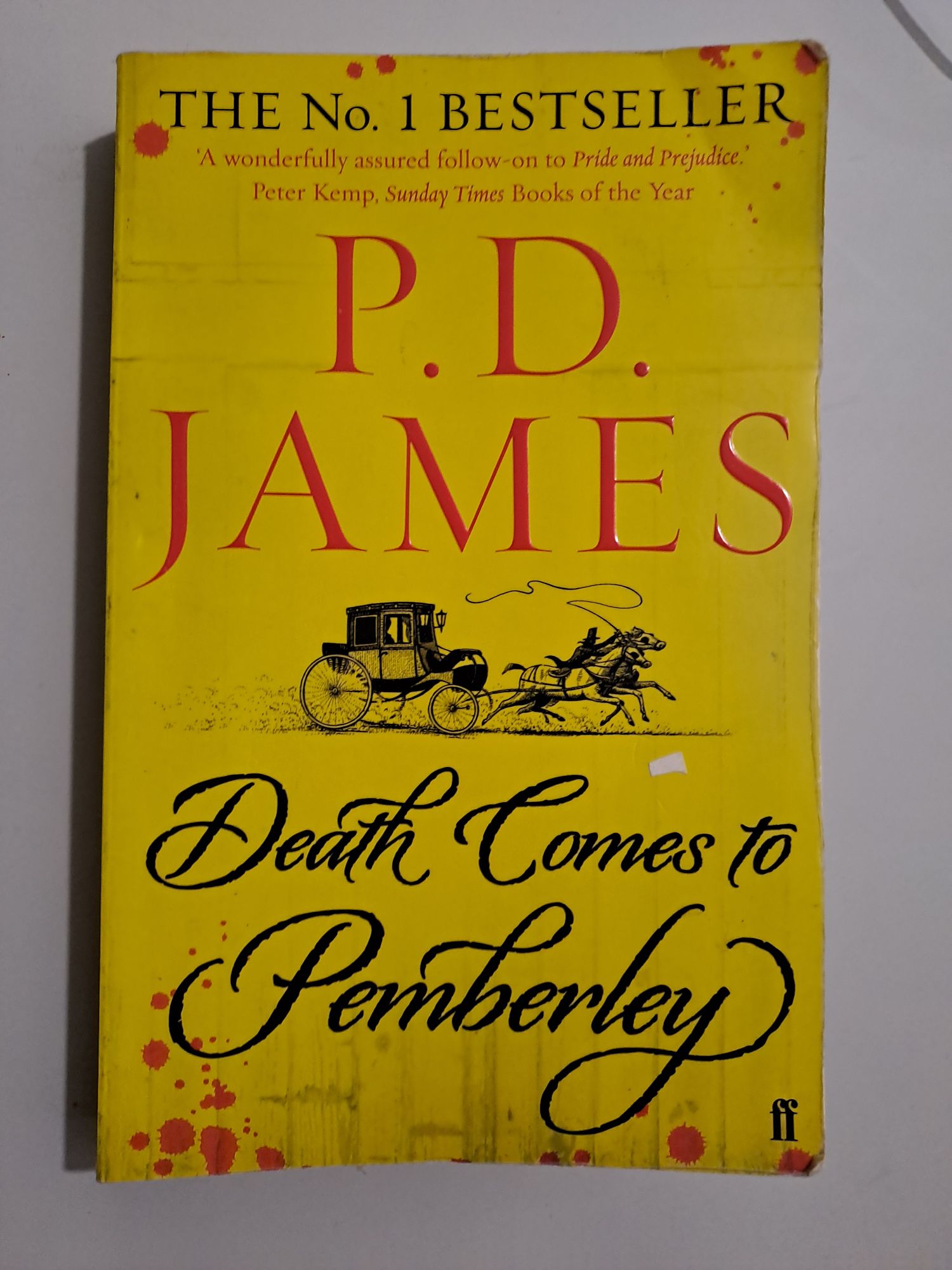
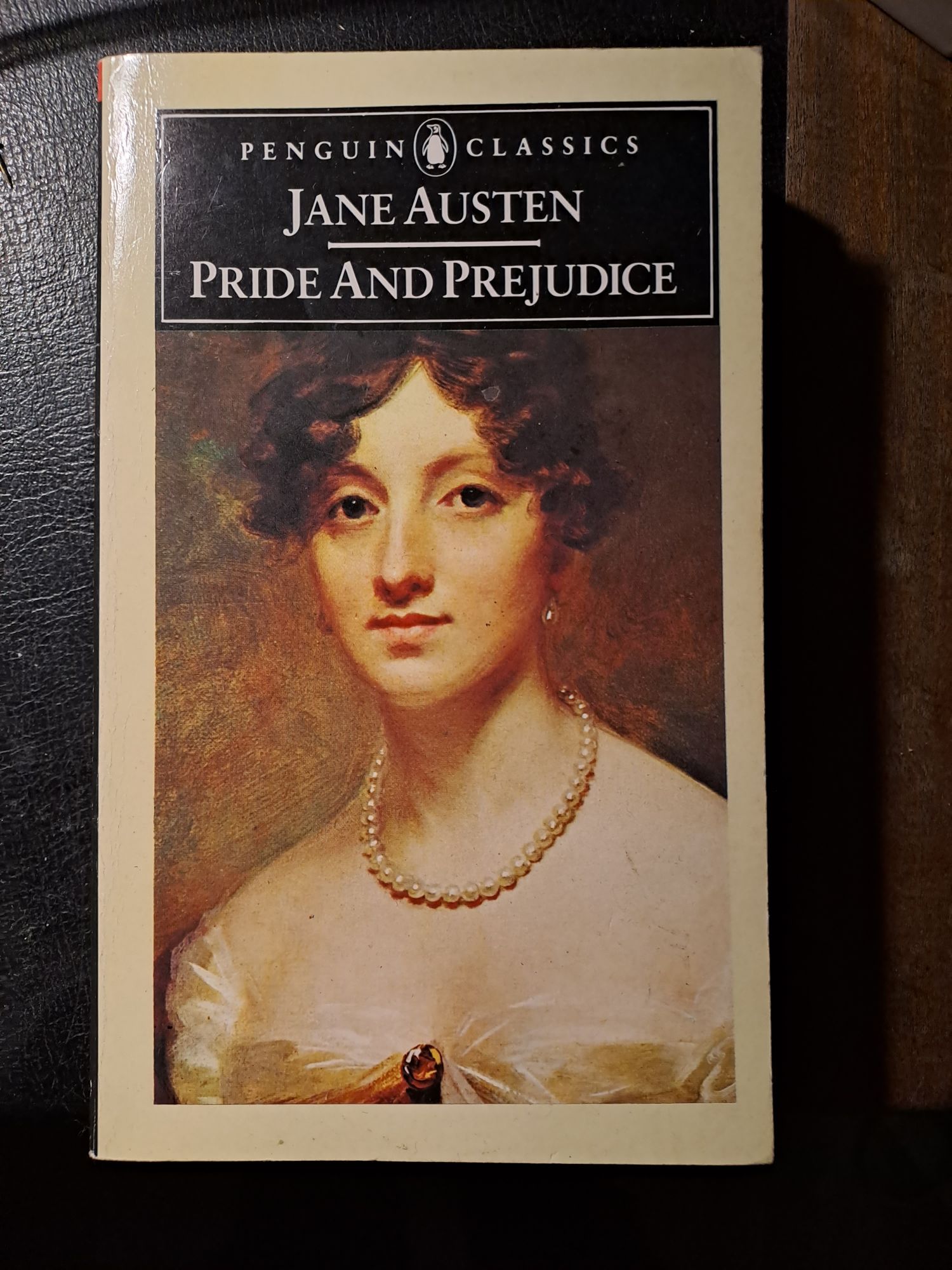
The latest book on my reading list is Death Comes to Pemberley, by P.D. James, which was published in 2011. The author was 90 years old when she began writing it and in her author’s note she admits that the book gave her a chance to indulge herself by combining her flair as a mystery writer with a love of the books of Jane Austen. This book is a skillful pastiche of the style of Jane Austen set in the world of Pride and Prejudice; this is why I re-read that book before departing for Sydney. It has however taken longer than I thought to get around to reading the P.D. James book as I have been rather busy.
It’s interesting to remark that Pride and Prejudice was actually written between 1796 and 1797, but not published until 1813 (and in a revised form). Jane Austen is a wonderful writer, with an elegant and witty style. It’s a hard act to follow, but P.D. James does a fine job. I’ll also remark that the original novel was written at the height of the Napoleonic Wars, and is set in England at a time when the threat of invasion from France was very real, but this barely registers in the plot.
I’ll let the author herself describe the setting
In Death Comes to Pemberley, I have chosen the earlier date of 1797 for the marriages of both Elizabeth and her older sister Jane, and the book begins in 1803 when Elizabeth and Darcy have been happily together for six years and are preparing for the annual autumn ball which will take place the next evening.
With their guests, which include Jane and her husband Bingley, they have been enjoying an informal family dinner followed by music and are preparing to retire for the night when Darcy sees from the window a chaise being driven at seed down the road from the wild woodlands. When the galloping horses have been pulled to a standstill, Lydia Wickham, Elizabeth’s youngest sister, almost falls from the chaise, hysterically screaming that her husband has been murdered. Darcy organises a search party and, with the discovery of a blood-smeared corpse in the woodland, the peace both of the Darcys and of Pemberley is shattered as the family becomes involved in a murder investigation.
P.D. James, Author’s Note, Death Comes to Pemberley
As this is a mystery novel, I will refrain from saying too much about the plot as that would spoil the book for readers. I will say that it is unusual for P.D. James that it isn’t a detective story as such because there isn’t actually a detective. The mystery of the murder is solved in the end by a spontaneous confession.
I get the impression that P.D. James wanted to use this book to add her own explanation of some of the events in Pride and Prejudice so there is a lengthy section at the end that functions to explain the back story. Most of the characters from Pride and Prejudice appear in the present book as bystanders, but they are well described and the overall atmosphere of the book is convincing. Darcy and Elizabeth have changed, but I imagine six years of marriage will do that. Although it’s a pastiche, this book is not at all superficial; the author seems to understand Austen’s characters and, rather than being merely imitative, the result is a genuine homage.
P.D. James passed away in 2014 at the age of 94. I bought Death Comes to Pemberley in 2014 too. The fact that it has taken me a decade to get around to reading it tells you something of how far I had got out of the reading habit. There’s also the point that I knew this was her last book and I was a bit reluctant to finish it knowing that there would be no more. Still, better late than never. I’m very glad I have read it at last as I enjoyed it greatly.
There’s something distinctively English about the novels of P.D. James, although that something is a something that clearly tends to polarize people. Some find her approach a bit too detached and genteel, some find it, “cosy”, snobbish and class-ridden, and some think that she was just an anachronism, harking back too much to the era of Agatha Christie and Dorothy L. Sayers. Yet others can’t understand the attraction of the genre at all. People are welcome to their opinions of course, but I think that the best detective fiction is not just about setting a puzzle for the reader to solve, but also posing questions about the nature of a society in which such crimes can happen. Far from being “cosy”, great crime writing actually unsettles complacent bourgeois attitudes. The solution of the mystery may offer us a form of comfort, but the questions exposed by the investigation do not go away. This is just as true for books set in the present as it is for those set two centuries ago in the world of stately homes and the threat of invasion from Napoleon.

 In the Dark