Archive for Royal Astronomical Society

Bullying and Harassment in Astronomy – The Report

Posted in Harassment Bullying etc, LGBTQ+ with tags , , , , , on May 19, 2024 by telescoper

As I advertised a few days ago, The Royal Astronomical Society has now released its report on Bullying and Harassment in Astronomy. You can download the full report (40 pages, PDF) here. I recommend you to read it as the statistics are stark. Here are a couple of graphical summaries from the RAS Website:

Note the greater prevalence of bullying and harassment directed towards LGBT astronomers.

The recommendations include the introduction of more effective bullying and harassment policies, procedures and safeguards to protect all colleagues, to support students, and to ensure that everyone can achieve their potential and work in a safe and satisfying environment, regardless of their background.

Noble sentiments, but the Royal Astronomical Society can do little itself to change policies, as it is not in the position of employer (except for its own staff in Burlington House) and there is no incentive for the universities and research institutions who employ most astronomers to comply. That will only happen if serious sanctions are imposed for mishandling bullying and harassment cases.

My view – born out by experience – is that it can’t be left to individual institutions to deal with this problem. In case after case, instead of dealing properly with bullying and harassment, senior managers have protected the perpetrators and silenced the victims. Reputation management, they call it. What is needed to start with is a system of independent adjudication, as recommended, for example, by the 21 Group.

This problem is neither confined to astronomy nor to the United Kingdom, and at least part of it is due to the ever-increasing cult of managerialism that places institutional branding ahead of positive workplace culture, paying at most lip-service to the latter.

Bullying and Harassment in Astronomy

Posted in Harassment Bullying etc with tags , , , on May 15, 2024 by telescoper

I have been asked to pass on, via the medium of this blog, the news that this Friday (17th May) the Royal Astronomical Society will launch its report on bullying and harassment in Astronomy. Sorry for the late notice, but no longer being a Fellow of the RAS I didn’t get the announcement directly. Anyway, it’s not too late to sign up to attend Friday’s meeting, either in person or via the live stream, which you can do here:

Don’t call me FRAS

Posted in Biographical, Open Access with tags , , , , on March 22, 2024 by telescoper

Some time ago I mentioned on this blog that I was resigning my Fellowship of the Institute of Physics as a consequence of the IOP’s blatant dishonesty over its publication policy. In a subsequent post giving further details of my fundamental disagreements with IOP Publishing’s profiteering, I stated that

I will decide in the next few days whether or not to resign also from the Royal Astronomical Society for the same reason.

After giving the matter a lot of thought, I have indeed now decided to resign my Fellowship of the Royal Astronomical Society, of which I have been a Fellow since 1990. The main reason for this decision is that I feel it would be inconsistent to remain FRAS after resigning as FInstP when I have the same problem with both institutions, i.e. the way they fund themselves through exploitative publishing practices.

Here is the email I sent to the Royal Astronomical Society earlier today.

Dear Membership Officer,

After much deliberation about the new policy of the Royal Astronomical Society to charge exorbitant fees for publishing in its journals (especially Monthly Notices of the Royal Astronomical Society), I have decided that I cannot in good conscience remain a member of a society that funds itself this way. I therefore resign my Fellowship of the Royal Astronomical Society with immediate effect. Kindly remove me from your membership list. I have cancelled the Direct Debit relating to my subscription.

Regards,

Peter Coles

Other, subsidiary, reasons for resignation include the expense, and the fact that Astronomy & Geophysics, the house magazine of the RAS, one of the few direct benefits of membership, even if it doesn’t have a crossword, only ever arrives in Ireland 6-8 weeks late (if it arrives at all). In any case, since I now live in Ireland, it is much more appropriate for me to participate in the activities of the Astronomical Society of Ireland than the Royal Astronomical Society, which is a UK institution.

As I am no longer a Fellow of the Royal Astronomical Society, I am no longer eligible to remain a member of the RAS Dining Club, of which I have been a member for 15 years, so I have resigned from that too. It has been in any case difficult and expensive for me to attend the dinners since I moved to Ireland. No more dinners at the Athenaeum for me!

Publishing Revenue and the Learned Societies

Posted in Open Access with tags , , , , , on March 8, 2024 by telescoper

A couple of days ago I posted a reaction to a shockingly dishonest article I saw in Physics World which has led me to resign my Fellowship of the Institute of Physics (IoP). I thought I would spend a bit of time now to raising some wider points (which I’ve raised before) about the extent that such organizations (including, in my field,  the Royal Astronomical Society and the Institute of Physics) rely for their financial security upon the revenues generated by publishing traditional journals and why this is not in the best interests of their disciplines.

Take IOP Publishing. This is a wholly-owned subsidiary of the Institute of Physics that has an annual turnover of around £60M generated from books and journals. This revenue is the largest contribution to the income that the IoP needs to run its numerous activities relating to the promotion of physics.  A similar situation pertains to the Royal Astronomical Society, although on a smaller scale, as it relies for much of its income from Monthly Notices of the Royal Astronomical Society, in which I have published quite a few papers in the past.

Not surprisingly, these and other learned societies are keen to protect their main source of cash and have lobbied very hard for the “Gold” Open Access some authorities are attempting to foist on the research community, rather than the far more sensible and sustainable approaches to Open Access employed, for example, by the Open Journal of Astrophysics.

There are two major reasons why I object to this approach, one practical and one ethical.

First, I consider it to be inevitable that the traditional journal industry will very soon be completely bypassed in favour of  other forms of publishing. The internet has changed the entire landscape of scientific publication. It’s now so cheap and so easy to disseminate knowledge that traditional journals are already virtually redundant, especially in my field of astrophysics where we have been using the arXiv for so long that many of us hardly ever look at journals.

The comfortable income stream that has been used by the IoP to “promote Physics”, as well as to furnish its  building in King’s Cross and office in Dublin, will dry up unless these organizations find a way of defending it. The “Gold” OA favoured by such organizations their attempt to stem the tide. I think this move into Gold `Open Access’, paid for by ruinously expensive Article Processing Charges paid by authors (or their organizations) is unsustainable because the research community will see through it and refuse to pay. I can already see signs of this happening.

The other problematic aspect of the approach of these learned societies is that I think it is fundamentally dishonest. University and other institutional libraries are provided with funds to provide access to published research, not to provide a backdoor subsidy for a range of extraneous activities that have nothing to do with that purpose. The learned societies do many good things – and some are indeed outstandingly good – but that does not give them the right to siphon off funds from their constituents by a sort of stealth levy.  Voluntary institutional affiliation, paid for by a fee, would be a much fairer way of funding these activities.

A couple of days ago I decided to cease paying the annual subscription to, and resign my Fellowship of, the Institute of Physics. I was reasonably comfortable spending some of my own money supporting physics, but don’t agree with  researchers having to fork out huge amounts of money in involuntary payment of APCs to the IOP. I will decide in the next few days whether or not to resign also from the Royal Astronomical Society for the same reason.

Some time ago I had occasion to visit the London offices of a well-known charitable organization which shall remain nameless. The property they occupied was glitzy, palatial, and obviously very expensive. I couldn’t help wondering how they could square the opulence of their headquarters with the quoted desire to spend as much as possible on their good works. Being old and cynical, I came to the conclusion that, although charities might start out with the noblest intentions, there is a grave danger that they simply become self-serving, viewing their own existence in itself as more important than what they do for others.

The commercial academic publishing industry has definitely gone that way. It arose because of the need to review, edit, collate, publish and disseminate the fruits of academic labour. Then the ease with which profits could be made led it astray. It now fulfills little or no useful purpose, but simply consumes financial resources that could be put to much better effect actually doing science. I think the scientific community knows this very well, and hopefully the parasite will die a natural death.

The question for learned societies is whether they can find a sustainable funding model that isn’t reliant upon effectively purloining funds from research budgets. If their revenue from publishing does fall, can they replace it? And, if not, in what form can they survive?

Article Processing Charges for Monthly Notices of the Royal Astronomical Society

Posted in Open Access with tags , , , , , on January 19, 2024 by telescoper

As it was foretold, since January 1st 2024 the journal Monthly Notices of the Royal Astronomical Society (MNRAS) is now charging authors an Article Processing Charge (APC) at the (suitably astronomical) level of £2310 (approx €2700 at current rates) for each paper. There are exemptions in certain situations, such as if the author’s institution has signed up to a read-and-publish agreement via JISC (although that still involves a researcher’s institution paying unjustifiable amounts to the publisher).

The fundamental fact is that it just doesn’t cost £2310 to publish a paper online. That APC level is – for one paper – larger than the entire running costs of the Open Journal of Astrophysics for a year.

I did actually laugh out loud when I saw the spin the RAS tried to put on this decision:

The RAS is excited to be a key contributor to the open science movement, helping to drive discoverability and change.

Au contraire. Gold Open Access a serious hindrance to the open science movement, as it involves hugely inflated costs to the authors in attempt to protect revenue in the face of declining subscription income. This means that many potential authors just will not be able to pay. That’s not Open Access. Switching from a ‘fleece-the-libraries’ model to a ‘fleece-the-authors’ alternative can in no way be regarded as a progressive move.

It is true that some institutions will pay the APC on behalf of their authors, but that is hardly the point. If institutions have cash to pay for astronomy publications to be open access then they would do far more good to the research community by giving it to the arXiv rather than to the publishing industry. When authors themselves see how much they have to pay to publish their work, many will realize that it is simply not worth the money. I refuse to pay any APC on principle.

The question for the Royal Astronomical Society, and indeed the other learned societies that fund their activities in a similar way, is whether they can find a sustainable funding model that takes proper account of the digital publishing revolution. If their revenue from publishing does fall, can they replace it? And, if not, in what form can they survive? I’d like to think that future operating models for such organizations would involve serving their respective communities, rather than fleecing them. I’d advocate a institutional subscriptions as a fairer and more transparent alternative to syphoning funds from library budgets or research grants.

Meanwhile, the new regime at MNRAS (and possibly its acceptance on Scopus) have led to steadily increasing activity at the Open Journal of Astrophysics. This morning I announced three more papers. I will post about them on here tomorrow. Diamond Open Access is the way forward. It’s just a question of time before everyone realizes it.

The Club Records

Posted in Biographical with tags , , on January 14, 2024 by telescoper

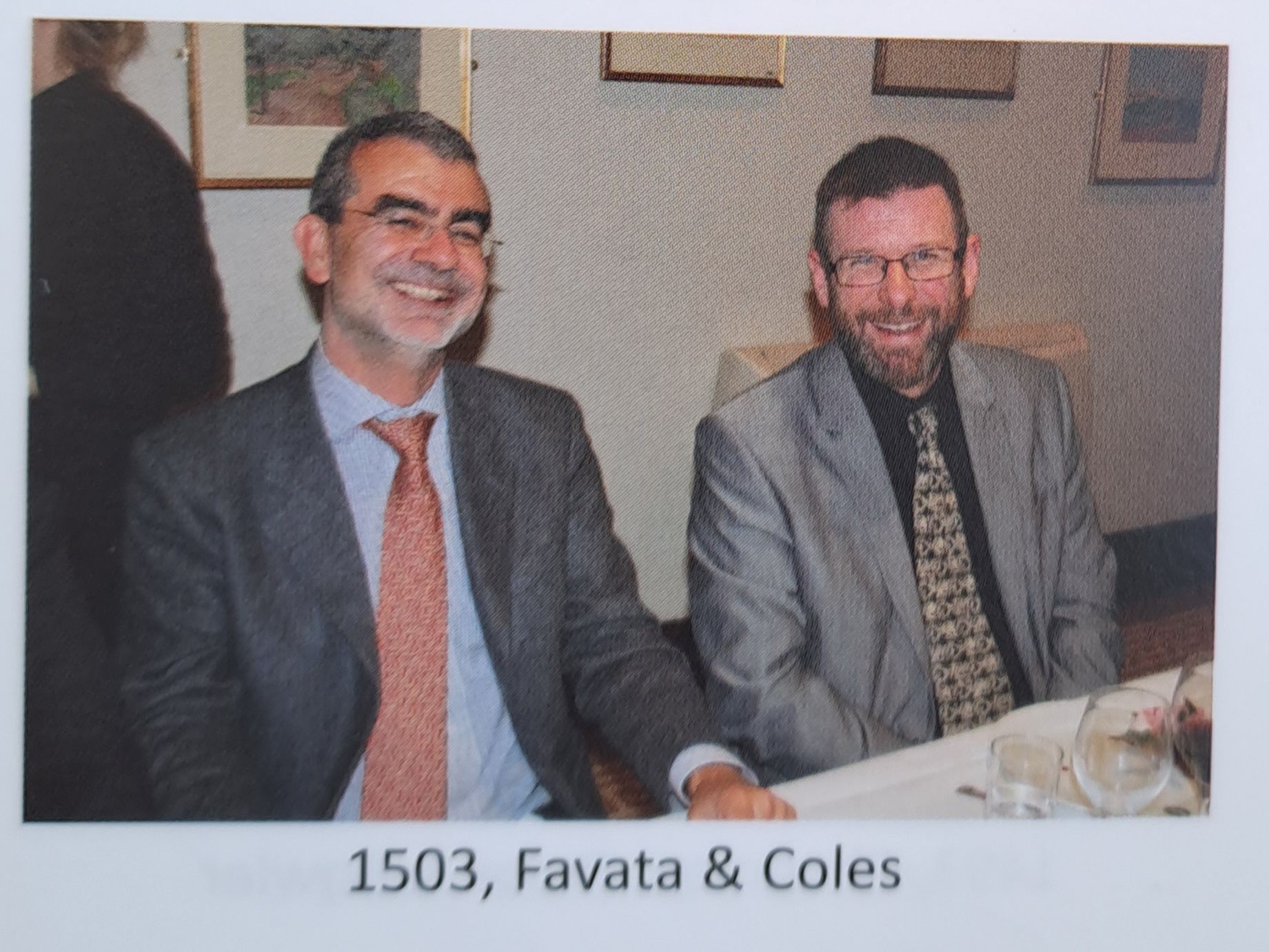
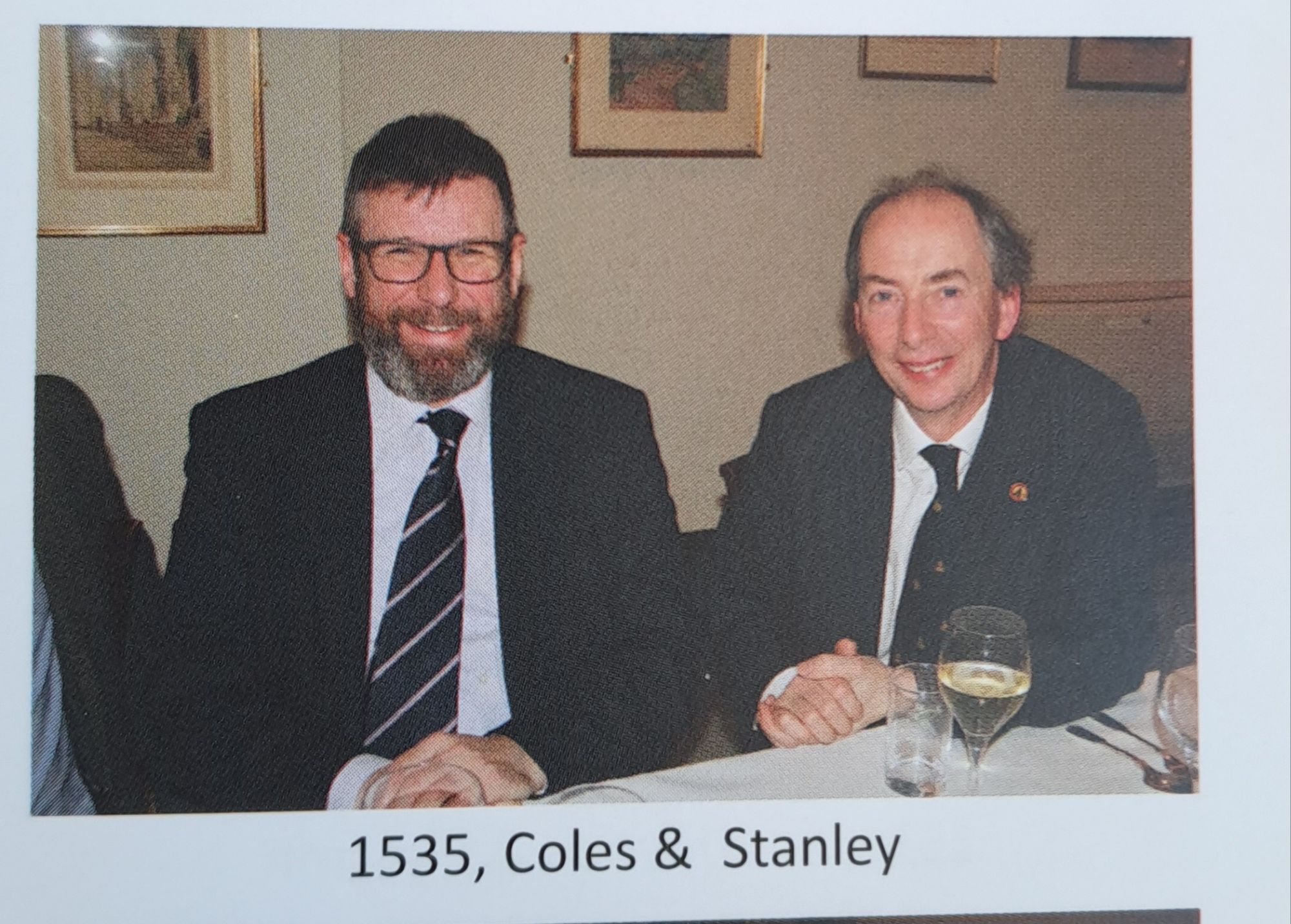
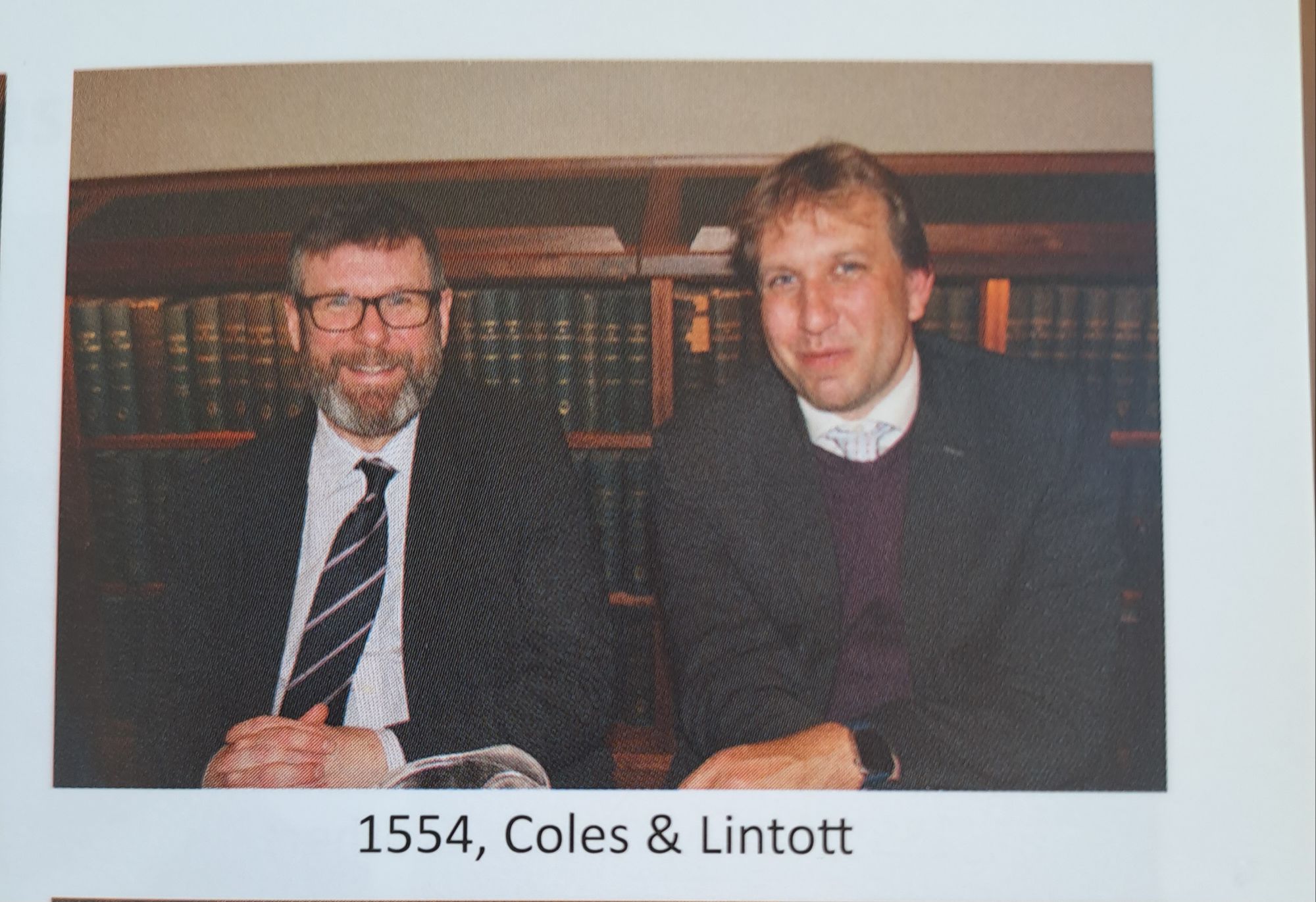
At the R.A.S. Club on Friday I was presented with the latest edition of the Club Records which covers the last 40 years; the Club itself began in 1820. Friday’s dinner was No. 1571, and there are five volumes of records containing lists of everyone who attended each dinner along with descriptions of notable events and a diagram showing who sat next to whom. I only just got the book because pandemic travel restrictions and other matters prevented me from dining much recently.

For the record, I was elected to the Club at the Parish Dinner on 11th January 2008 (Dinner No. 1448) but wasn’t able to dine until October that year (Dinner No. 1453). According to the records I have now dined 60 times (including last Friday). I wonder if I’ll make it to 100?

Anyway, here is a selection of pictures taken at Club Dinners past with various other members:

These pictures remind me that I should perhaps consider wearing some different ties in future!

From London

Posted in Biographical with tags , , on January 13, 2024 by telescoper

Here I am in Heathrow Airport waiting for a flight after a couple of days in London.

Every time I visit London it becomes harder to believe that I actually lived there years ago. On Thursday evening I took a stroll around Soho and walked past this place…

I used to be a member at Ronnie Scott’s and spent many late nights there back in the day. It must be about 25 years since I last set foot inside. I must go again for old times’ sake, but I didn’t have time on this trip.

Yesterday (Friday) was a very busy day, but a pleasant one. I spent the morning at a discussion meeting about Simulation based Inference in Astrophysics at which I learnt a lot. I didn’t attend the whole meeting however as I had to take some time out in the afternoon to do other things. I also met up with a couple of people I haven’t seen in person for a while, only to find out later that they both won Royal Astronomical Society Awards. Congratulations, then, to Pedro Ferreira on his Eddington Medal (Pedro is a member of the Editorial Board of the Open Journal of Astrophysics) and Sarah Kendrew for her part in the Team Award given to the MIRI instrument team for JWST.

After that I went to the “Parish Dinner” of the RAS Club at the Travellers in Pall Mall, which is the occasion when new members are elected by an arcane process defined by some truly bizarre rules. Somehow, though, the outcome turned out fine.

Anyway, I’ll soon be en route to a different part of not-Barcelona, so I think I’ll stretch my legs before the flight.

Among the Travellers

Posted in Biographical, Cardiff, Education, Maynooth with tags , , , , , , on January 7, 2024 by telescoper

With Nollaig na mBan yesterday that’s the festive season over for me, and time to resume my sabbatical. Joining the crowd of post-Christmas travellers at the airport, today I took my first flight of 2024, complete with last-minute change of gate, apart from which all went perfectly to plan. I won’t be returning to Barcelona immediately, however, as I have a things to do in various different parts of not-Barcelona.

I’m in Cardiff now, where it is fine and dry but very cold, and spending a few days in Cardiff to start with. After that I’ll be taking a train to London to attend a meeting at the Royal Astronomical Society, followed by dinner at the R.A.S Club on Friday 12th January.

Coincidentally, Friday’s dinner is rather appropriately at the Travellers Club, rather than the usual Athenaeum (which is unavailable for some reason). I couldn’t attend any of these occasions between October and December as I was in Barcelona, and for a couple of years. In fact I haven’t been able to attend much at all since the bicentennial dinner in 2020 because of the pandemic and subsequent workload issues. I’m not sure if I’ll be able to go to any others this year either, so I’m looking forward to Friday (despite having to pay the arrears on my subscription) because it is the Parish Dinner, when new members are elected. Owing to the arcane complexity of the rules, and the fact that it all happens after the consumption of a great deal of wine, this usually makes for an amusing occasion.

Meanwhile, in Maynooth, preceded by a few days of revision lectures and tutorials, the January examinations start on Friday 12th January too. Students will therefore be returning from their breaks, swapping the Christmas decorations for the austerity of the examination halls. Although I’m not involved in examinations this year, I’d like to take this opportunity to wish all students at Maynooth and elsewhere all the best for the forthcoming ordeals, and the same for all academic staff whose ordeal by marking will come in due course…

An RAS diary at last!

Posted in Biographical with tags on January 4, 2024 by telescoper

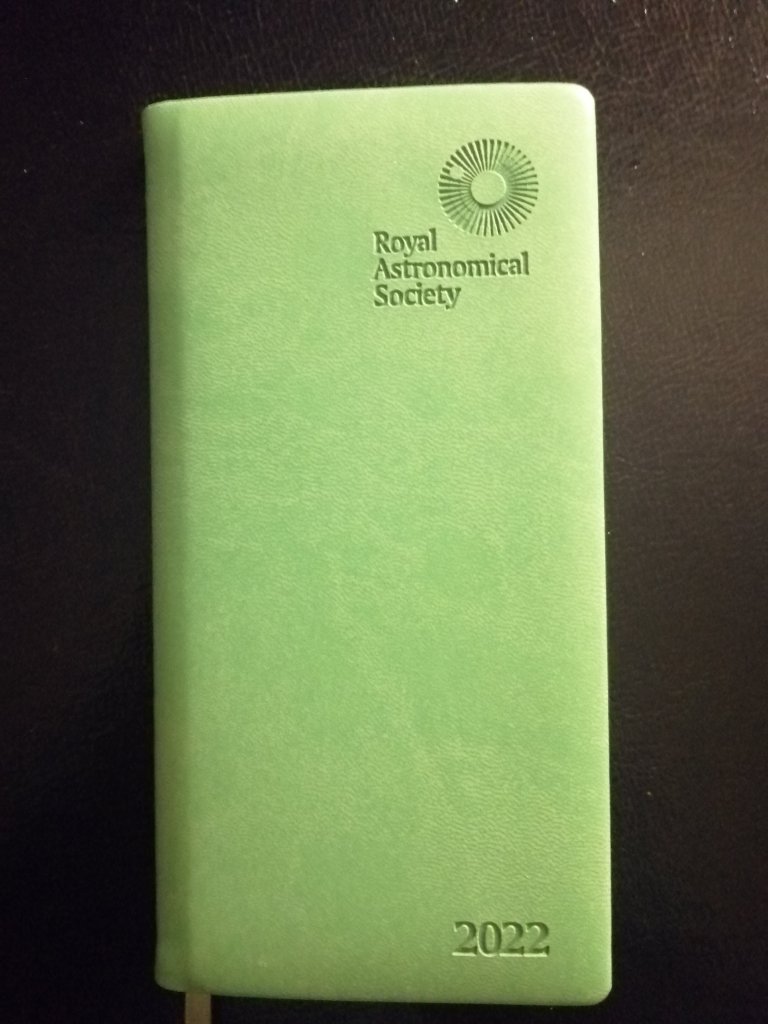
It’s January 4th and my 2024 RAS Diary has at last arrived in Ireland, just a day after I mentioned not having received one this year. According to the customs declaration I see it wasn’t even posted until 22nd December 2023. Why so late?

The diary part of the RAS diary, being I suppose intended for academics, actually runs from October to December the following year. In previous years it has arrived in time to use it for Semester 1 but for the last four years it hasn’t arrived in the post until December at the earliest, meaning that I couldn’t use the first three months in the new diary. I’m actually surprised it got here so quickly given when it was posted.

Anyway, here it is, along with a collection of older ones. It is actually more purple than the blue it appears in the photograph. Notice the change of logo from 2021.

Although many of my colleagues seem not to use them, I like old-fashioned paper diaries. I do run an electronic calendar for work-related events, meetings etc, but I use the paper one to scribble down extra-curricular activities such as concerts and sporting fixtures, as I find the smartphone version of my electronic calendar a bit fiddly.

Article Processing Charges at the Royal Astronomical Society

Posted in Open Access with tags , , , on March 2, 2023 by telescoper

As it was foretold, the Royal Astronomical Society has now officially announced that all its journals will be moving to Gold Open Access. The only thing that surprised me about this is the speed that it will be done – from January 1st 2024. The announcement confirms that the “rumour” I reported in 2020 was true (as I knew it was, given the reliability of the source). I did, however, think the timescale would be “within a few years” and it turns out to be much shorter than that.

For the journal of most relevance to myself, Monthly Notices of the Royal Astronomical Society (MNRAS) this decision means that authors will have to pay an Article Processing Charge (APC) at the (suitably astronomical) level of £2310 for each paper (although there will be exemptions in certain situations). Does anyone genuinely believe that it costs that much to publish an article online? Really?

I did actually laugh out loud when I saw the spin the RAS are trying to put on this decision:

The RAS is excited to be a key contributor to the open science movement, helping to drive discoverability and change.

Au contraire. Gold Open Access a serious hindrance to the open science movement, as it involves hugely inflated costs to the authors in attempt to protect revenue in the face of declining subscription income. Switching from a ‘fleece-the-libraries’ model to a ‘fleece-the-authors’ alternative can in no way be regarded as a progressive move.

Other notable astronomy-related journals, such as the Astrophysical Journal (ApJ) and Astronomy & Astrophysics (A&A), have levied “page charges” (effectively APCs by another name) for as long as I can remember, though in the latter case there is a waiver for researchers in “member” countries. ApJ and other journals also have a waiver scheme for those who cannot afford to pay. For those who have to pay, the fee is usually about $100 per page. For a long time MNRAS was the exception and indeed the only feasible choice for people who don’t have access to funding to cover page charges, including many in the developing world. More recently, however, MNRAS introduced a charge for longer papers: £50 per page over 20 pages, so a paper of 21 pages costs £50 and one of 30 pages costs £500, etc. Now there will be a flat fee of £2310 per paper.

It is true that some institutions will pay the APC on behalf of their authors, but that is hardly the point. If institutions have cash to pay for astronomy publications to be open access then they would do far more good to the research community by giving it to the arXiv rather than to the publishing industry. When authors themselves see how much they have to pay to publish their work, many will realize that it is simply not worth the money. (I refuse to pay any APC on principle.)

The Twitter feed for the Open Journal of Astrophysics (OJAp) was buzzing all day yesterday with negative reactions to the RAS announcement. Obviously I am biased in this matter, but I do encourage those thinking of switching to give it a try. The RAS has played into the hands of OJAp, which publishes papers (online only) in all the areas of Astrophysics covered by MNRAS, and more, but is entirely free both for authors and readers. The annual running costs of OJAp are substantially less than one APC at the level proposed by MNRAS.

The comments I have seen brought this image to my mind:

(The allusion to sharks is not accidental.)

The question for the Royal Astronomical Society, and indeed the other learned societies that fund their activities in a similar way, is whether they can find a sustainable funding model that takes proper account of the digital publishing revolution. If their revenue from publishing does fall, can they replace it? And, if not, in what form can they survive? I’d like to think that future operating models for such organizations would involve serving their respective communities, rather than fleecing them.