Archive for Royal Grammar School

Journeys End

Posted in Biographical, LGBTQ+, Maynooth with tags , , , , on August 31, 2024 by telescoper

Today is 31st August 2024, which is officially the last day of my year-long sabbatical – even if tomorrow is a Sunday, so I won’t be actually returning full-time to the office until Monday 2nd September. After that I have three whole weeks to prepare the new modules I’ll be teaching in the Autumn Semester. I suppose at some point I’ll have to write a report about what I did on my sabbatical, at least from the point of view of work. I’ll keep the rest to myself!

I was planning to cook myself dinner and a few glasses of wine this evening to mark the end of my year of travels. I’ll still be doing that but in the last few days I have been given something else to think about.

About 50 years ago, in September 1974, I was preparing for my first days at the Royal Grammar School (RGS) in Newcastle. I didn’t know anyone else there and had no idea what to expect. I’d won a scholarship under the Direct Grant system so my parents didn’t have to pay fees, which was just as well because they wouldn’t have been able to. The RGS was an all-boys school in those days and most of the boys were from much wealthier backgrounds than I was and their parents paid fees. Many had also been to the RGS Junior School (also fee-paying) whereas I had gone to a state school, so when I arrived for my first day there were quite a few that already knew each other and were much better prepared academically than I was.

The upshot of this was that I found it very difficult there for the first few weeks, both socially and academically. I just wasn’t used to the intensity of the teaching style, the extensive homework, and the fact that I had to try to make friends from scratch.

In the first year the teaching was arranged in “Houses” and the boys in each House had to wear a tie of a specific colour with their (blue) blazer. I was in Eldon House so wore a green tie and my first form was called 1E. Everyone took the same subjects in first and second form.

Among the friends I made in the first year was a boy who had been to the RGS Junior School where he had acquired the nickname “Titch” because of his diminutive stature; his real name was Alan Michael Hawdon although he never used Alan. When he wasn’t “Titch” he was Michael. I found it a bit awkward calling him “Titch” because I was scarcely any taller than he was, but he didn’t mind it at all. Despite not being very tall, he excelled at all sporting events, especially running and gymnastics. He was also very kind, friendly and gregarious. Although I wasn’t anything like as sporty as him, we became good friends. In fact he was the only boy whose home (in Tynemouth) I visited in the first year at RGS. I can’t remember what the occasion was, but we spent an enjoyable day at the coast. I also remember going to the annual school camp in Ryedale and spending quite a lot of time with Titch then. I also remember asking if I could take a picture of him with the old Box Brownie my dad had lent me. He agreed.

The system at RGS was that, after the second year, i.e. after 2E, classes began to diversify and there was some choice of subjects. Forms were no longer composed of students from the same House (though we continued to wear the house tie). When I returned to RGS to start the third year, I was in the “Three Languages” form as I had decided to do German (though I dropped it after one year to concentrate on sciences). I was dismayed to find that Titch was in a different form; since I no longer had any classes with him we drifted apart, though we remained on friendly terms until A-levels and departure for University in 1981 after which I lost contact entirely. All I knew until recently was that he got a Royal Navy Scholarship to do Mechanical Engineering at Nottingham University as a precursor for joining the Navy.

So why am I telling you all this?
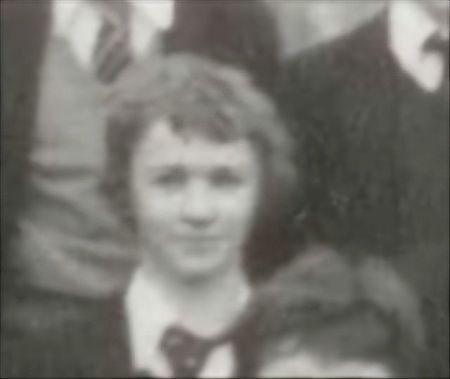
Last week I heard that Michael Hawdon (aka “Titch”) passed away in December 2022. That news came as a shock because he was the fittest and healthiest lad in the class of ’81 and I would have given long odds against him dying at the age of just 59. The picture of him on the left was taken in 1979; the wonky tie was always a trademark.

I gather that, in 1982, before going to university, he had been enlisted to go to the Falklands. However, the ship he was on suffered a mechanical failure and he never got there; the war ended in June 1982 and he went to Nottingham in October that year. After that, he travelled extensively, including spending some time living in New Zealand.

Forty years had passed since we both left RGS and went our very different ways until, in 2021, out of the blue, he sent me an email (signed “Titch”). It seems he had come across my name in connection with some work he had been doing at the UK Space Agency and decided to look me up. He was probably bored during the Covid-19 lockdown but I was very happy that he remembered me at all. Whatever the reason, I was delighted. We exchanged a considerable number of messages sharing memories of RGS days. Then he stopped replying. I don’t know whether he was ill or merely busy, but just a year later he passed away.

I was only 11 when I met Michael Hawdon and so immature that I didn’t know what was going on in my own emotions, but looking back I can see now that I definitely had a crush on him. Maybe it was more than that. I never told him, of course. It wouldn’t have been appreciated let alone reciprocated. I was in any case more than happy just to be able to call him a friend.

I mentioned the photograph of Titch I took in Ryedale just to say that I carried that around with my in my blazer pocket for at least a year. I spent an hour or so today looking for it, but unfortunately it seems I must have lost it. I wish I had been able to find the words to thank him for his friendship all those years ago. The best I can do now is to drink to his memory.

For some we loved, the loveliest and the best
That from his Vintage rolling Time hath prest,
Have drunk their Cup a Round or two before,
And one by one crept silently to rest

The ABC of A-levels

Posted in Biographical, Education, Rugby with tags , , , on August 25, 2022 by telescoper

Yesterday I was having a bit of a clear-out of my office at home ahead of the new teaching term when I came across the above clipping at the back of a box of old papers. It’s from the Newcastle Evening Chronicle in 1981 and it shows the number of A-levels passed that summer by pupils at the Royal Grammar School in Newcastle, which I went to.

I don’t know why I’ve kept this for so long, neither do I know why the local paper felt important to list this information. It probably isn’t allowed to publish such things these days owing to Data Protection regulations but it did so routinely back then. I think it’s OK to publish it now because it has been in the public domain, technically speaking, for over 40 years. The Chronicle also published O-level passes with names, and I have the list with me in it from 1979.

A few things struck me about this list. One is that, while I can put faces to many of the names, there are many to which I can not. Indeed some of the names don’t ring any bells at all. I’m sure I’ve been forgotten by most people in the list too! When I arrived at the school in 1974 I was assigned to a “House” called Eldon along with about 30 other boys. In the first year we were placed at desks in our classroom in alphabetical order. Obviously the first people I got to know were those sitting in adjacent desks. It’s interesting that seven years on, the two names preceding mine in the list above were also in Eldon and had been sitting next to me on the very first day I arrived and they are among the few people from RGS that I am still in regular contact with.

The Sixth Form (two years, “Lower 6th” and “Upper Sixth” to coincide with the length of the A-level course) was divided into Arts and Sciences. The Arts are listed first in alphabetical order, then the Sciences. I was in the latter group. My 4 A-levels were Mathematics, Further Mathematics, Physics & Chemistry. I also did two special papers, in Physics and Chemistry. After A-levels, along with about 20 of the people on the above list, I stayed on for a “7th term” to do the Cambridge Entrance Examination, and the rest is history.

I also note that very few of us had only a single first initial like me. That’s a Coles family trait. My Dad always said that you only use one name so why have extras?

One final comment. Near the bottom of the list you will see the name “J M Webb”. That name is not to do with the James Webb of Space Telescope fame, but Jonathan Webb did go on to play Rugby for England. I didn’t know him well at school because, as well as being separated by alphabetical considerations, he was in a different House (Horsley if I remember correctly).

Generational Guilt

Posted in Biographical, Education, Politics with tags , , , , , , on November 23, 2012 by telescoper

Exhausted near the end of an exceptionally busy week, I found myself taking a short break after a two-hour lecturing session when a student knocked at my door to ask for some advice about applying for PhDs. I was happy to oblige, of course, but after he’d gone it struck me how much tougher things are for today’s generation, compared with how easy it was for me.

I got a scholarship to the local grammar school (The Royal Grammar School in Newcastle upon Tyne) by passing the 11+ examination back in 1974. I got a good education that most pupils at the School had to pay for (or at least their parents did). I got good 0 and A levels, and then passed the post A-level examination to get me into Cambridge. Through contacts at school I got a job for nine months working for a British Gas research station in Cramlington, during which time I earned a nice wage. I went to Cambridge with a healthy bank balance on top of which I received a full maintenance grant. There were no tuition fees then either. When I graduated I was solvent and debt-free.

When I applied for PhDs I did so with no real idea about what research I might do. I wasn’t an outstanding undergraduate student and my personal statement was vagueness personified, but I got a place nonetheless. The stipend was modest, but one could live on it. I never had money worries as a PhD. Nor have I since. It all seems so simple, looking back.

Today’s students have no such luck. The Direct Grant system that paid my school fees was discontinued shortly after I benefited from it. I’m sure I wouldn’t have got into University had I gone to the local comprehensive. Then maintenance grants were discontinued and fees introduced (then rapidly increased from £1000 to first £3000 and then £9000). Graduates now are usually burdened with huge debts. Moreover, when students apply for postgraduate study are nowadays often expected to not only to know precisely what they’re going to do but also be outstandingly good

The pressure we put on graduates now is out of all proportion to what I experienced. The reason? There are more of them overall, so there are more with first-class degrees chasing PhD funding. Many students who are much better than I was at the same stage of my career won’t make it just because of the arithmetic. Many will be discouraged by the finances too. It’s tragic that talented young people should be denied the chance to fulfil their ambitions by not having wealthy parents.

I’m often impressed (and even inspired) by those students who show a determination to pursue academic ambitions despite all the difficulties, but at the same time I feel guilty that it was so much easier in my day. Mine is the generation that decided to transfer the cost of higher education onto students and their families. Mine is also the generation that wrecked the economy by living beyond our means for too long.

To all those young people whose ambitions are thwarted by circumstances beyond their control all I can say is I’m sorry we oldies stole your future.

Hymn to Science

Posted in Biographical, Education, Poetry with tags , , , on July 7, 2010 by telescoper

Mark Akenside was born on 9th November 1721 in the city of Newcastle upon Tyne, which was also my birthplace. He attended the same school that I did too, the  Royal Grammar School, although I went about 250 years later. Akenside was a physician and political activist as well as a poet. I remembered his name when I was tidying up yesterday and found an old school magazine which mentioned him. This is called Hymn to Science. I hope you like it. I doubt if Simon Jenkins will.

Science! thou fair effusive ray
From the great source of mental day,
Free, generous, and refin’d!
Descend with all thy treasures fraught,
Illumine each bewilder’d thought,
And bless my lab’ring mind.

But first with thy resistless light,
Disperse those phantoms from my sight,
Those mimic shades of thee;
The scholiast’s learning, sophist’s cant,
The visionary bigot’s rant,
The monk’s philosophy.

O! let thy powerful charms impart
The patient head, the candid heart,
Devoted to thy sway;
Which no weak passions e’er mislead,
Which still with dauntless steps proceed
Where Reason points the way.

Give me to learn each secret cause;
Let number’s, figure’s, motion’s laws
Reveal’d before me stand;
These to great Nature’s scenes apply,
And round the globe, and thro’ the sky,
Disclose her working hand.

Next, to thy nobler search resign’d,
The busy, restless, human mind
Thro’ ev’ry maze pursue;
Detect Perception where it lies,
Catch the ideas as they rise,
And all their changes view.

Say from what simple springs began
The vast, ambitious thoughts of man,
Which range beyond control;
Which seek Eternity to trace,
Dive thro’ th’ infinity of space,
And strain to grasp the whole.

Her secret stores let Memory tell,
Bid Fancy quit her fairy cell,
In all her colours drest;
While prompt her sallies to control,
Reason, the judge, recalls the soul
To Truth’s severest test.

Let the fair scale, with just ascent,
And cautious steps, be trod;
And from the dead, corporeal mass,
Thro’ each progressive order pass
To Instinct, Reason, God.

Nor dive too deep, nor soar too high,
In that divine abyss;
To Faith content thy beams to lend,
Her hopes t’ assure, her steps befriend,
And light her way to bliss.

Then downwards take thy flight agen;
Mix with the policies of men,
And social nature’s ties:
The plan, the genius of each state,
Its interest and its pow’rs relate,
Its fortunes and its rise.

Thro’ private life pursue thy course,
Trace every action to its source,
And means and motives weigh:
Put tempers, passions in the scale,
Mark what degrees in each prevail,
And fix the doubtful sway.

That last, best effort of thy skill,
To form the life, and rule the will,
Propitious pow’r! impart:
Teach me to cool my passion’s fires,
Make me the judge of my desires,
The master of my heart.

Raise me above the vulgar’s breath,
Pursuit of fortune, fear of death,
And all in life that’s mean.
Still true to reason be my plan,
Still let my action speak the man,
Thro’ every various scene.

Hail! queen of manners, light of truth;
Hail! charm of age, and guide of youth;
Sweet refuge of distress:
In business, thou! exact, polite;
Thou giv’st Retirement its delight,
Prosperity its grace.

Of wealth, pow’r, freedom, thou! the cause;
Foundress of order, cities, laws,
Of arts inventress, thou!
Without thee what were human kind?
How vast their wants, their thoughts how blind!
Their joys how mean! how few!

Sun of the soul! thy beams unveil!
Let others spread the daring sail,
On Fortune’s faithless sea;
While undeluded, happier I
From the vain tumult timely fly,
And sit in peace with thee.