Archive for Seamus Heaney

Requiem for the Croppies – Seamus Heaney

Posted in History, Poetry with tags , , , , , , , , on August 26, 2024 by telescoper

“The Croppy Boy”, a monument in Tralee, County Kerry. Created by Kglavin, CC BY-SA 3.0 <http://creativecommons.org/licenses/by-sa/3.0/&gt; via Wikimedia Commons

The pockets of our greatcoats full of barley…
No kitchens on the run, no striking camp…
We moved quick and sudden in our own country.
The priest lay behind ditches with the tramp.
A people hardly marching… on the hike…
We found new tactics happening each day:
We’d cut through reins and rider with the pike
And stampede cattle into infantry,
Then retreat through hedges where cavalry must be thrown.
Until… on Vinegar Hill… the final conclave.
Terraced thousands died, shaking scythes at cannon.
The hillside blushed, soaked in our broken wave.
They buried us without shroud or coffin
And in August… the barley grew up out of our grave.

by Seamus Heaney (1939-2013)

This poem is about the Battle of Vinegar Hill which took place outside Enniscorthy in County Wexford on 21st June 1798. It was part of the Rebellion of the United Irishmen. The term “croppy” refers to the short cropped hair worn by the rebels, most of whom went into battle carrying only pikes against the artillery and muskets of the crown forces. The battle was a heavy defeat for the United Irishmen over a thousand of whom were killed in what Heaney calls the “final conclave” where the last hopes for the rebellion to succeed were finally crushed. The poem’s final line depicts the barley in the pockets of dead rebels growing through the soil used to bury them, suggesting that the dream of independence would live on.

The Body in the Bellaghy Bog

Posted in History, Poetry with tags , , , , , , , , on January 27, 2024 by telescoper

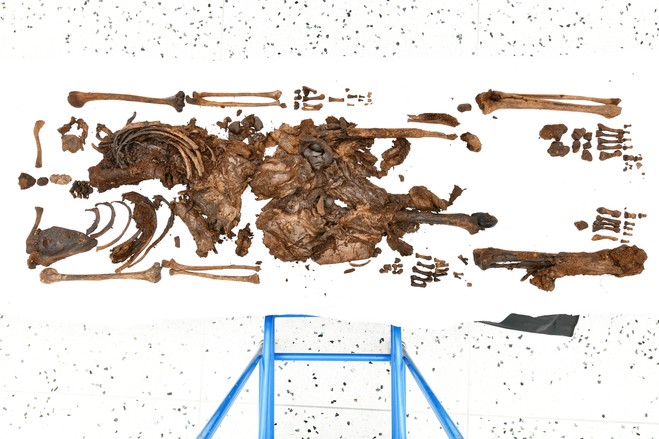
There was an interesting news item last week concerning the discovery of human remains in a peat bog in Bellaghy, County Derry. Radio-carbon dating has established that these remains are about 2,000 years old, so this was a person who lived in the Iron Age; a post-mortem has revealed it to be a teenage boy of around 15 years old. No cause of death has yet been established, but it is generally thought that these bog bodies were people who were executed as a punishment, or perhaps sacrificed for some ritual purpose.

These are neither the oldest nor the best-preserved such remains to be found in Ireland; the oldest belong to Cashel Man, who died, about 4,000 years ago, in the early Bronze Age. Nevertheless, the anaerobic conditions of the bog have slowed decomposition so much that not only bones, but some skin, hair and even parts of internal organs survive. This find is therefore important, not least because it should be possible to obtain detailed information about the DNA of this individual. Understanding of Ireland’s prehistoric past has been upended in recent years by DNA discoveries. What will Bellaghy Boy tell us? And how many more bog bodies are waiting to be found?

Another fascinating aspect of this story is that the location of the remains is very close to the house where the poet Seamus Heaney lived. Heaney wrote a number of poems about bog bodies and it’s ironic that there was one waiting to be found so close to his home.

Anyway, this gives me an excuse to post a vaguely relevant poem by Heaney called Bogland which, appropriately for the title of this blog, comes from a collection called Door into the Dark.

Storm on the Island – Seamus Heaney

Posted in Poetry with tags , , , on January 22, 2024 by telescoper

We are prepared: we build our houses squat,
Sink walls in rock and roof them with good slate.
This wizened earth has never troubled us
With hay, so, as you see, there are no stacks
Or stooks that can be lost. Nor are there trees
Which might prove company when it blows full
Blast: you know what I mean – leaves and branches
Can raise a tragic chorus in a gale
So that you listen to the thing you fear
Forgetting that it pummels your house too.
But there are no trees, no natural shelter.
You might think that the sea is company,
Exploding comfortably down on the cliffs
But no: when it begins, the flung spray hits
The very windows, spits like a tame cat
Turned savage. We just sit tight while wind dives
And strafes invisibly. Space is a salvo,
We are bombarded with the empty air.
Strange, it is a huge nothing that we fear.

by Seamus Heaney (1939-2013)

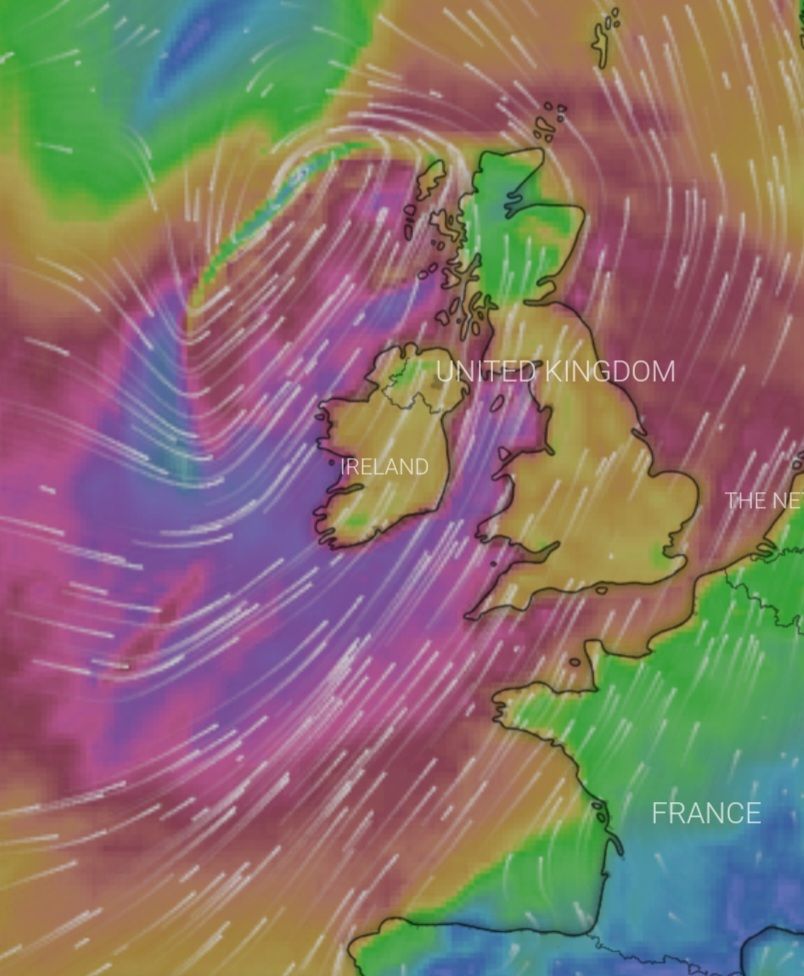
Storm Isha passed overnight, bringing down many trees and leaving many thousands of households without power.

Dare we hope?

Posted in Covid-19, Poetry, Politics with tags , , , , , on November 9, 2020 by telescoper

A short passage from Seamus Heaney’s verse play The Cure at Troy: A Version of Sophocles’ Philoctetes has been much quoted recently. It even ended the RTÉ News last night:

The passage begins

History says, Don’t hope
On this side of the grave.

Well, there’s an additional reason for hope this morning, in the announcement of good progress in the search for a vaccine against Covid-19. The two pharmaceutical companies involved are Pfizer (USA) and BioNTech SE (Germany). The reported efficacy of the vaccine tested so far is over 90%, which is far higher than experts have predicted. Now these are preliminary results, not yet properly reviewed, based on a sample of only 94 subjects, and I’m not sure what motivated the press release so early in the process. I’m given to understand that the type of vaccine concerned here would also be challenging to manufacture and distribute, but we’re due for some good news on the Coronavirus front so let’s be (cautiously) optimistic.

On top of that it seems that Ireland at least is turning the tide against the second wave, with new cases falling every day for over a week:

Dare we hope?

The Strand at Lough Beg – Seamus Heaney

Posted in History, Poetry, Television with tags , , , , , on September 17, 2020 by telescoper

Last night I watched a harrowing but compelling film called Unquiet Graves which is about the activities of the Glenanne gang, a loyalist paramilitary group which carried out in excess of 120 murders during the 1970s including the horrific bombings in Dublin and Monaghan in 1974. Many members of this gang were serving members of the Royal Ulster Constabulary and the Ulster Defence Regiment which ensured that these heinous crimes were never properly investigated and in many cases the families of the victims are still waiting for justice.

The film makes very difficult viewing but is a timely reminder of a terrible period in Irish history and gives reason to reflect on the importance of the Belfast Agreement that brought peace to a part of the world that so recently stood on the brink of civil war.

One of the victims of the Glenanne gang was a young man called Colum McCartney, a cousin of the poet Seamus Heaney. Colum’s car was stopped not far from Armagh by men in army uniforms. He was made to get out and kneel, and then he was shot in the back of the head. His companion, who tried to run away, was shot in the back as he fled. Seamus Heaney composed this poignant elegy to his murdered relative.

In Memory of Colum McCartney

All round this little island, on the strand
Far down below there, where the breakers strive
Grow the tall rushes from the oozy sand.
–Dante, Purgatorio, I, 100-3

Leaving the white glow of filling stations
And a few lonely streetlamps among fields
You climbed the hills toward Newtownhamilton
Past the Fews Forest, out beneath the stars–
Along the road, a high, bare pilgrim’s track
Where Sweeney fled before the bloodied heads,
Goat-beards and dogs’ eyes in a demon pack
Blazing out of the ground, snapping and squealing.
What blazed ahead of you? A faked road block?
The red lamp swung, the sudden brakes and stalling
Engine, voices, heads hooded and the cold-nosed gun?
Or in your driving mirror, tailing headlights
That pulled out suddenly and flagged you down
Where you weren’t known and far from what you knew:
The lowland clays and waters of Lough Beg,
Church Island’s spire, its soft treeline of yew.

There you used hear guns fired behind the house
Long before rising time, when duck shooters
Haunted the marigolds and bulrushes,
But still were scared to find spent cartridges,
Acrid, brassy, genital, ejected,
On your way across the strand to fetch the cows.
For you and yours and yours and mine fought the shy,
Spoke an old language of conspirators
And could not crack the whip or seize the day:
Big-voiced scullions, herders, feelers round
Haycocks and hindquarters, talkers in byres,
Slow arbitrators of the burial ground.

Across that strand of ours the cattle graze
Up to their bellies in an early mist
And now they turn their unbewildered gaze
To where we work our way through squeaking sedge
Drowning in dew. Like a dull blade with its edge
Honed bright, Lough Beg half shines under the haze.
I turn because the sweeping of your feet
Has stopped behind me, to find you on your knees
With blood and roadside muck in your hair and eyes,
Then kneel in front of you in brimming grass
And gather up cold handfuls of the dew
To wash you, cousin. I dab you clean with moss
Fine as the drizzle out of a low cloud.
I lift you under the arms and lay you flat.
With rushes that shoot green again, I plait
Green scapulars to wear over your shroud.

Mid-term Break

Posted in Poetry with tags , on August 31, 2013 by telescoper

I sat all morning in the college sick bay
Counting bells knelling classes to a close.
At two o’clock our neighbors drove me home.

In the porch I met my father crying–
He had always taken funerals in his stride–
And Big Jim Evans saying it was a hard blow.

The baby cooed and laughed and rocked the pram
When I came in, and I was embarrassed
By old men standing up to shake my hand

And tell me they were ‘sorry for my trouble,’
Whispers informed strangers I was the eldest,
Away at school, as my mother held my hand

In hers and coughed out angry tearless sighs.
At ten o’clock the ambulance arrived
With the corpse, stanched and bandaged by the nurses.

Next morning I went up into the room. Snowdrops
And candles soothed the bedside; I saw him
For the first time in six weeks. Paler now,

Wearing a poppy bruise on his left temple,
He lay in the four foot box as in his cot.
No gaudy scars, the bumper knocked him clear.

A four foot box, a foot for every year.

by Seamus Heaney (1939–2013)

Astronomy Look-alikes, No. 26

Posted in Astronomy Lookalikes with tags , on May 21, 2010 by telescoper

I have a theory that erstwhile Professor of Astronomy at Cardiff University Mike Edmunds and celebrated poet Seamus Heaney are in fact the same person. Well, you never see them together, do you?