Archive for Sonnet

A Poem by Alice Oswald

Posted in Politics with tags , , , , , , , , on August 24, 2025 by telescoper

I was shocked to find out yesterday that the poet (and former Professor of Poetry at Oxford University) Alice Oswald has been arrested under the UK’s draconian anti-terrorism laws at a peaceful protest for holding up a sign supporting Palestine Action, an organization opposed to the ongoing genocide being committed by Israel against the people of Gaza. Among the others arrested were an 89-year old woman and a blind man in a wheelchair. I expect these absurd and unjust actions will achieve the exact opposite of what the Government intended.

Anyway, I am an admirer of the poetry of Alice Oswald. I posted one of her poems here, and have four collections of her poems:

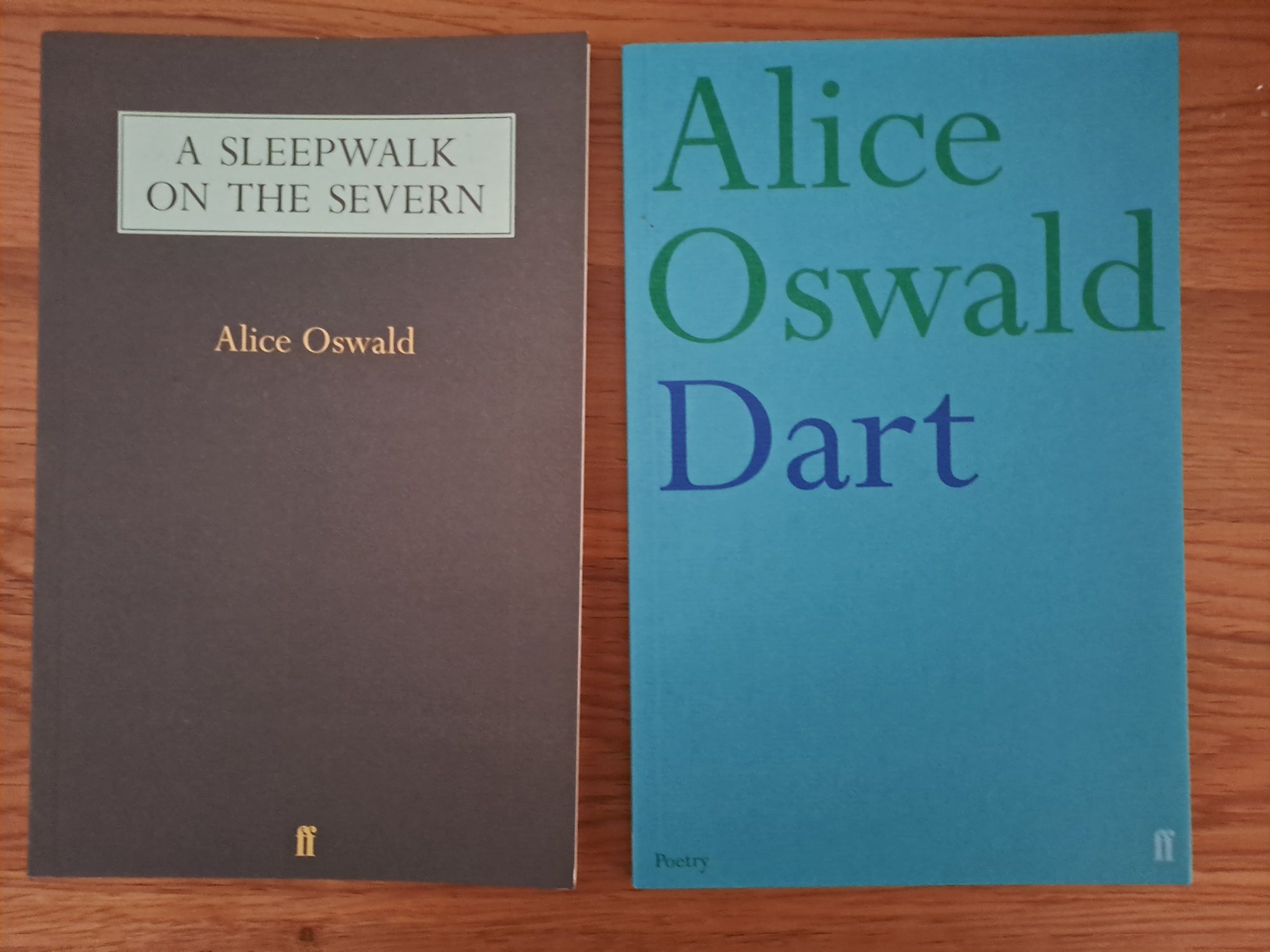
I thought I would post another now to express solidarity with Alice Oswald. This one is from the first of the collections shown above, in which it is simply titled Sonnet, though it is not a form of sonnet I have ever seen before!

Spacecraft Voyager 1 has boldly gone
into Deep Silence carrying a gold-plated disc inscribed with
whale-song
it has bleeped back a last infra-red fragment of language
and floated way way up over the jagged edge
of this almost endless bright and blowy enclosure of weather
to sink through a new texture as tenuous as the soft upward
pressure of an an elevator
and go on and on falling up steep flights of blackness with
increasing swiftness
beyond the Crystalline Cloud of the Dead beyond Plato beyond
Copernicus
O meticulous swivel cameras still registering events
among those homeless spaces gathering in that silence
that hasn't yet had time to speak in that increasing sphere
of tiny runaway stars notched in the year
now you can look closely at massless light
that is said to travel freely but is probably in full flight

by Alice Oswald

Sonnet No. 19

Posted in Poetry with tags , , , , on April 11, 2025 by telescoper
Devouring time, blunt thou the lion's paws
And make the earth devour her own sweet brood,
Pluck the keen teeth from the fierce tiger's jaws
And burn the long-liv'd phoenix in her blood,
Make glad and sorry seasons as thou fleet'st,
And do what e'er thou wilt, swift-footed time,
To the wide world and all her fading sweets:
But I forbid thee one most heinous crime,
O carve not with thy hours my love's fair brow,
Nor draw no lines there with thine antique pen,
Him in thy course untainted do allow
For beauty's pattern to succeeding men.
Yet do thy worst, old time, despite thy wrong,
My love shall in my verse ever live young.

by William Shakespeare (1564-1616)

(I don’t know why it’s been such a long time since I last posted one of Shakespeare’s sonnets.)

Time does not bring relief

Posted in Poetry with tags , , , on June 17, 2014 by telescoper

Time does not bring relief; you all have lied
Who told me time would ease me of my pain!
I miss him in the weeping of the rain;
I want him at the shrinking of the tide;
The old snows melt from every mountain-side,
And last year’s leaves are smoke in every lane;
But last year’s bitter loving must remain
Heaped on my heart, and my old thoughts abide.
There are a hundred places where I fear
To go,—so with his memory they brim.
And entering with relief some quiet place
Where never fell his foot or shone his face
I say, “There is no memory of him here!”
And so stand stricken, so remembering him.

by Edna St Vincent Millay (1892-1950).


On His Blindness

Posted in Poetry with tags , , , , on May 11, 2013 by telescoper

As I often do when I’m at a bit of a loose end, I just picked up a book of poems and dived in at random, which took me straight to the following sonnet by John Milton. I therefore stumbled upon a phrase “(“they also serve who only stand and wait”) which is is such common usage that I had never really thought about where it might have come from. Anyway, this is as nearly perfect an example of a Petrarchean (or Italian) sonnet as you could wish for, although the meaning is often been misinterpreted simply as an encouragement to be passive. Seen in its proper context, it seems to me that what Milton is saying is more like “Don’t be frustrated by what you can’t do, because God also knows your limitations, just do whatever you can – even if it’s not much”. As far as I know the poem is undated, but was presumably written after 1644 when Milton began to lose his eyesight. It could even be as late as 1655 by which time he was completely blind.

When I consider how my light is spent
Ere half my days in this dark world and wide,
And that one talent which is death to hide
Lodged with me useless, though my soul more bent
To serve therewith my Maker, and present
My true account, lest he returning chide,
“Doth God exact day-labour, light denied?”
I fondly ask. But Patience, to prevent
That murmur, soon replies: “God doth not need
Either man’s work or his own gifts: who best
Bear his mild yoke, they serve him best. His state
Is kingly; thousands at his bidding speed
And post o’er land and ocean without rest:
They also serve who only stand and wait.”

by John Milton (1608-1674)

A Sonnet in Autumn

Posted in Poetry with tags , , on October 8, 2011 by telescoper

What lips my lips have kissed, and where, and why,
I have forgotten, and what arms have lain
Under my head till morning; but the rain
Is full of ghosts tonight, that tap and sigh
Upon the glass and listen for reply,
And in my heart there stirs a quiet pain
For unremembered lads that not again
Will turn to me at midnight with a cry.

Thus in winter stands the lonely tree,
Nor knows what birds have vanished one by one,
Yet knows its boughs more silent than before:
I cannot say what loves have come and gone,
I only know that summer sang in me
A little while, that in me sings no more.

Sonnet No. XLIII by Edna St. Vincent Millay (1892-1950)