Archive for St Patrick’s Day

The Day of St Patrick

Posted in History, Maynooth with tags , , , on March 17, 2025 by telescoper

Well, it’s St Patrick’s Day, which is a public holiday here in Ireland, so Lá Fhéile Pádraig sona daoibh go léir!
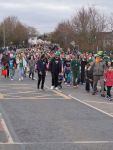
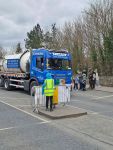
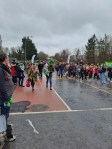
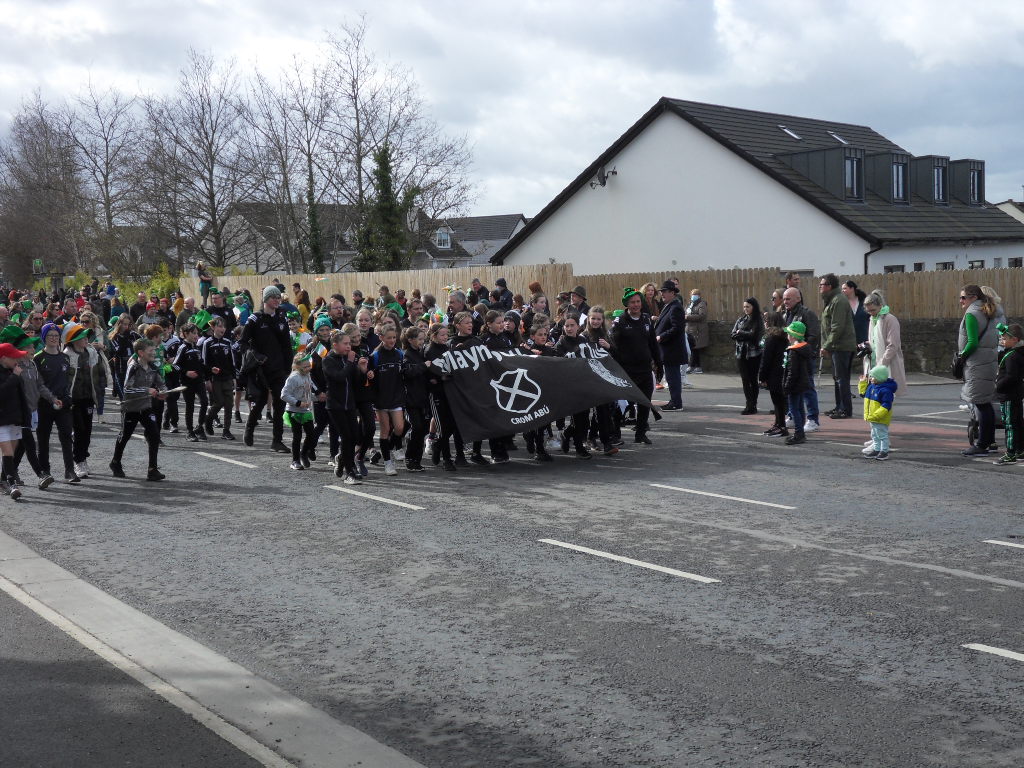
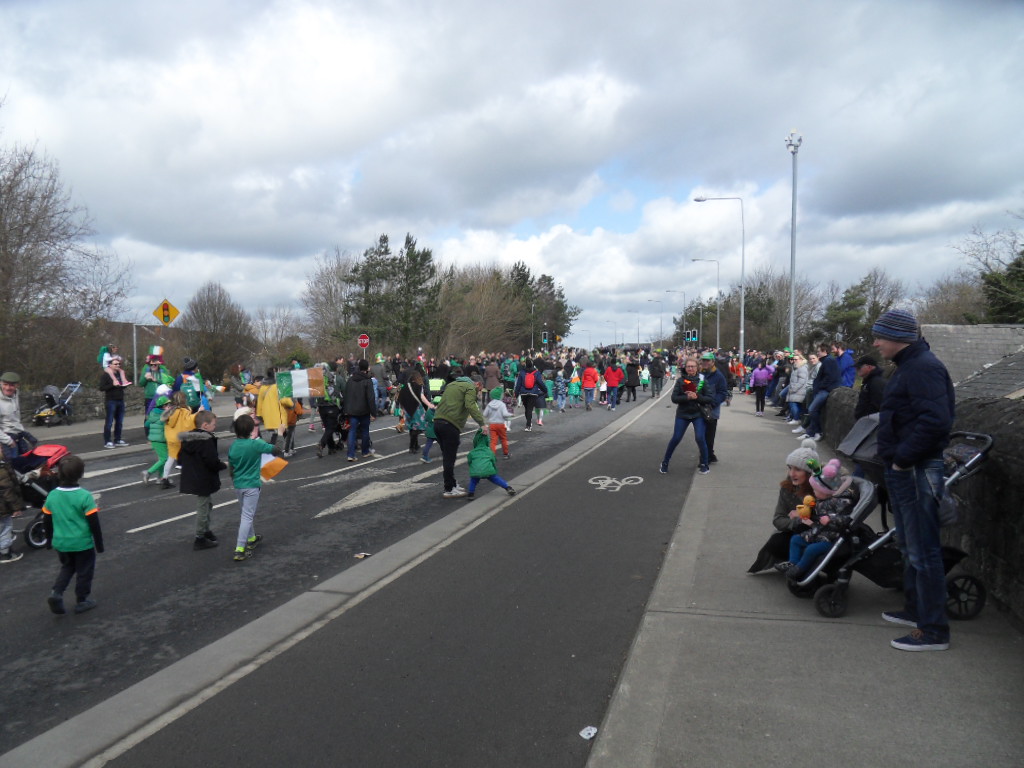
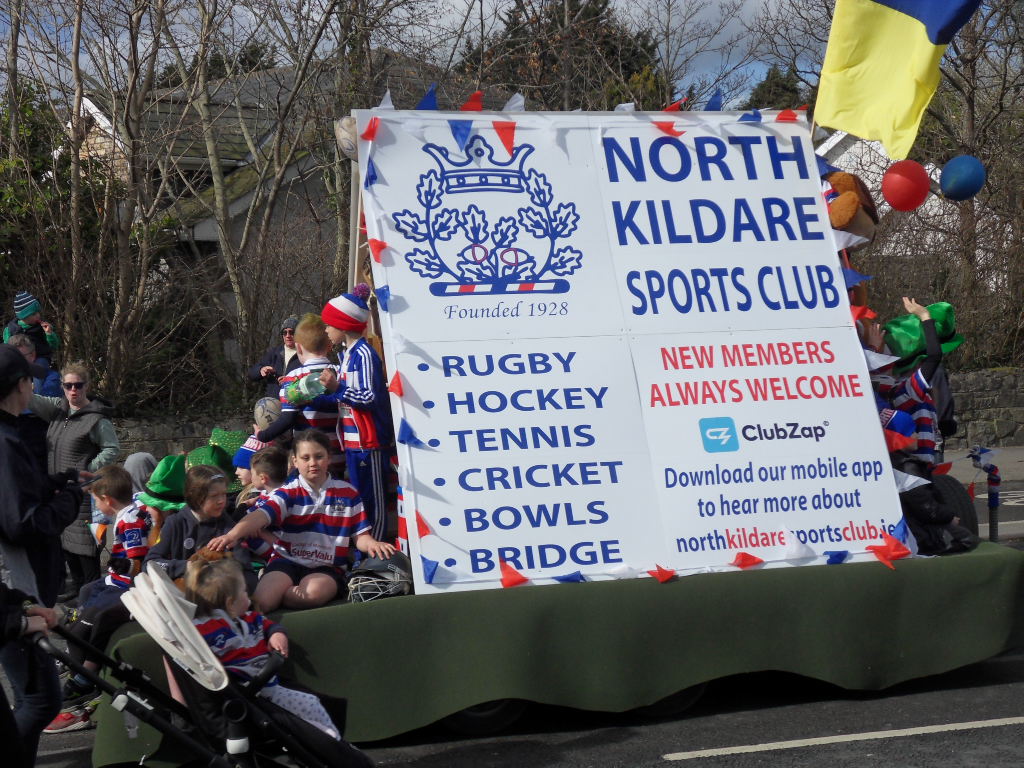
This morning I watched the Parade in Maynooth. It didn’t rain, but it was a strangely subdued affair notable for the lack of music. The isn’t much of an atmosphere if the participants are walking along in silence! You can’t have Craic agus Ceol if there’s no Ceol. I only counted two tractors too; usually there are many more than that. Fortunately, I have a calendar that offers a tractor for every month to make up for this disappointment. Still, it was good to see the kids enjoing themselves. The highlight for me this year was the Coakley Septic Tank Cleaning Truck, which just outdid the Thornton’s Refuse Collection Vehicle for sheer splendour.

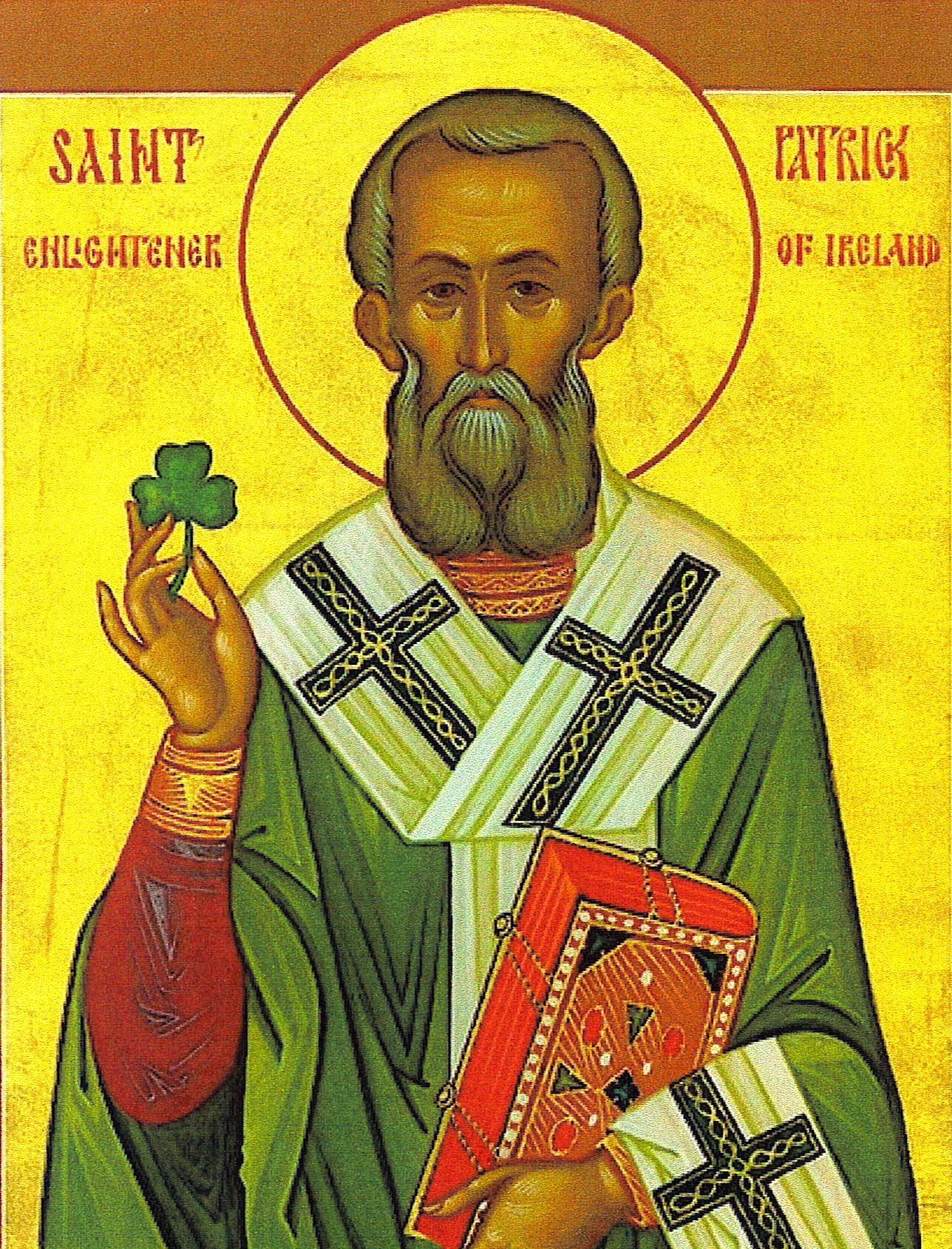
Anyway, I should take the opportunity to write something about St Patrick. Not much is known for certain but it seems he was born in Britain, probably in the late 4th Century AD, probably somewhere around the Severn Estuary, and probably in Wales. It also appears that he didn’t know any Latin. When a young man, it seems he was captured by Celtic marauders coming up the River Severn and taken as a slave to Ireland. He eventually escaped back to Britain, but returned to Ireland as a missionary and succeeded somehow in converting the Irish people to Christianity.


Or did he? This interesting piece suggests his role was of lesser importance than many think.

However it happened, Ireland was the first country to be converted to Christianity that had never been part of the Roman Empire. That made a big difference to the form of the early Church here. The local Celtic culture was very loose and decentralized. There were no cities, large buildings, roads or other infrastructure. Life revolved around small settlements and farms. When wars were fought they were generally over livestock or grazing land. The early Irish Church that grew in this environment was quite different from that of continental Europe. It was not centralized, revolved around small churches and monasteries, and lacked the hierarchical structure of the Roman Church. Despite these differences, Ireland was quite well connected with the rest of the Christian world.Irish monks – and the wonderful illuminated manuscripts they created – spread across the continent, starting with Scotland and Britain. Thanks to the attentions of the Vikings few of these works survive but the wonderful Lindisfarne Gospels, dating from somewhere in the 8th Century were almost certainly created by Irish monks. The Book of Kells was probably created in Scotland by Irish Monks.

The traffic wasn’t entirely one-way however. A few years ago I saw a fascinating documentary about the Fadden More Psalter. This is a leather-bound book of Psalms found in a peat bog in 2006, which is of similar age to the Lindisfarne Gospels. It took years of painstaking restoration work to recover at least part of the text (much of which was badly degraded), but the leather binding turned out to hold a particularly fascinating secret: it was lined with papyrus. The only other books from the same period with the same structure that are known are from the Coptic Church in Egypt. That doesn’t mean that whoever owned the Fadden More Psalter had actually been to Egypt, of course. It is much more this book made its way to Ireland via a sort of relay race. On the other hand, it does demonstrate that international connections were probably more extensive than you might have thought.

Anyway, back to St Patrick’s Day. Saint Patrick’s Day is celebrated on March 17th, the reputed date of his death in 461 AD. Nobody really knows where St Patrick was born, though, so it would be surprising if the when were any better known. In any case, it wasn’t until the 17th Century that Saint Patrick’s feast day was placed on the universal liturgical calendar in the Catholic Church. Indeed, St Patrick has never been formally canonized. In the thousand years that passed any memory of the actual date of his birth was probably lost, so the choice of date was probably influenced by other factors, specifically the proximity of the Spring Equinox (which is this year on Thursday March 20th).

The early Christian church in Ireland incorporated many pre-Christian traditions that survived until roughly the 12th century, including the ancient festival of Ēostre (or Ostara), the goddess of spring associated with the spring equinox after whom Easter is named. During this festival, eggs were used a symbol of rebirth and the beginning of new life and a hare or rabbit was the symbol of the goddess and fertility. In turn the Celtic people of Ireland probably adapted their own beliefs to absorb much older influences dating back to the stone age. St Patrick’s Day and Easter therefore probably both have their roots in prehistoric traditions around the Spring Equinox, although the direct connection has long been lost.

Beard of Ireland 2025

Posted in Beards, Biographical with tags , , on March 10, 2025 by telescoper

Regular readers of this blog will know that, way back in 2020, apparently as the result of some form of administrative error, I was voted St Patrick’s Day Beard of Ireland. Five years have passed and it is now time for Beard of Ireland 2025 and I am among the contenders. The voting is mainly on X/Twitter, on which I have no presence, so I don’t hold out much hope, but if you do want to vote for me please do so there, or elsewhere following the instructions in the attached post from Keith Flett in which he volunteers to be bombarded with direct messages…

P.S. For reference, here is a picture of my beard and I

Paráid Lá Fhéile Pádraig i Maigh Nuad

Posted in Biographical, Maynooth with tags , , on March 17, 2024 by telescoper

Lá Fhéile Pádraig sona daoibh go léir!

Today being 17th March, it is St Patrick’s Day, so I decided to make the most of my last day in Not-Barcelona and go watch the festivities. Here are some snaps I took on Straffan Road as the Parade made its way into town. As you can see it was a bit overcast, and it was also a bit breezy, but it wasn’t cold and everyone seemed to be enjoying themselves!

As usual, the bin wagon was the star of the show.

If you want some live action, you can see this on my Instagram:

Lá Fhéile Pádraig sona daoibh go léir!

Posted in Beards, History, Maynooth with tags , on March 17, 2023 by telescoper

So it’s St Patrick’s Day, a bank holiday here in Ireland. I shall probably observe the festivities in Maynooth later on, though it is pouring down at the moment and very likely to rain on the parade, which starts at 11am. That would be disappointing, as it hardly ever rains in Ireland.

I came second in the Beard of Ireland poll, by the way. Thanks to everyone who voted for me and congratulations to the winner, Aodhan Connolly. A few people have asked for an up-to-date picture of me and my beard, so here goes:


Not many facts are known about the life of St Patrick, but it seems he was born in Britain, probably in the late 4th Century AD, probably somewhere around the Severn Estuary and probably in Wales and according to virtually all artistic depictions of him he had a fine beard. It also appears that he didn’t know any Latin. When a young man, it seems he was captured by Celtic marauders coming up the River Severn and taken as a slave to Ireland. He eventually escaped back to Britain, but returned to Ireland as a missionary and succeeded somehow in converting the Irish people to Christianity.

Ireland was the first country to be converted to Christianity that had never been part of the Roman Empire. That made a big difference to the form of the early Irish Church. The local Celtic culture was very loose and decentralized. There were no cities, large buildings, roads or other infrastructure. Life revolved around small settlements and farms. When wars were fought they were generally over livestock or grazing land. The early Irish Church that grew in this environment was quite different from that of continental Europe. It was not centralized, revolved around small churches and monasteries, and lacked the hierarchical structure of the Roman Church. Despite these differences, Ireland was quite well connected with the rest of the Christian world.

Irish monks – and the wonderful illuminated manuscripts they created – spread across the continent, starting with Scotland and Britain. Thanks to the attentions of the Vikings few of these works survive but the wonderful Lindisfarne Gospels, dating from somewhere in the 8th Century were almost certainly created by Irish monks. The Book of Kells was probably created in Scotland by Irish Monks.

Saint Patrick’s Day is celebrated on March 17th, the reputed date of his death in 461 AD. Nobody really knows where St Patrick was born, though, so it would be surprising if the when were any better known.

In any case, it wasn’t until the 17th Century that Saint Patrick’s feast day was placed on the universal liturgical calendar in the Catholic Church. Indeed, St Patrick has never been formally canonized. In the thousand years that passed any memory of the actual date of his birth was probably lost, so the choice of date was probably influenced by other factors, specifically the proximity of the Spring Equinox (which is this year on Monday, March 20th).

The early Christian church in Ireland incorporated many pre-Christian traditions that survived until roughly the 12th century, including the ancient festival of Ēostre (or Ostara), the goddess of spring associated with the spring equinox after whom Easter is named. During this festival, eggs were used a symbol of rebirth and the beginning of new life and a hare or rabbit was the symbol of the goddess and fertility. In turn the Celtic people of Ireland probably adapted their own beliefs to absorb much older influences dating back to the stone age. St Patrick’s Day and Easter therefore probably both have their roots in prehistoric traditions around the Spring Equinox, although the direct connection has long been lost.

Lá Fhéile Pádraig sona daoibh go léir!

Update. I waited until it stopped raining before leaving the house, which meant that I missed the start of the Maynooth parade but there seemed to be a very good turnout. Here are some snaps of the bit I saw:

Into the Study Break

Posted in Biographical, Education, Maynooth with tags , , , , on March 11, 2023 by telescoper

So here we are, then. We’ve arrived at the half-term Study Break at Maynooth University. Six weeks of Semester 2 down, six to go. There are no lectures, labs or tutorials next week. It’s not actually a holiday, but the lack of teaching duties will enable me to catch up quite a few things I’ve let slip during term. It will also give me the chance to regroup and prepare for final assault on the second half of term.

The spell of freezing weather we’ve had recently has morphed into something a little warmer and a lot wetter. The light dusting of snow we had yesterday has dissolved in the torrential rain stotting against the windows as I write this piece. I’m waiting for a lull in the downpour so I can make a quick dash to the shops before returning to the comfort of my house for the rest of the day. The weather is coming in from the West today, and I spy a little gap heading my way:

Next Friday, March 17th, is of course, St Patrick’s Day, a national holiday in Ireland. I certainly hope the weather is better for the traditional parades on that day!

I’m glad of the arrival of this break, as I’ve been running on empty for the last several days, the fatigue exacerbated by a flare-up of the arthritis in my knees. On Thursday I had to kneel down next to one of the machines in the computer lab to fix something and I had considerable difficulty getting up again. Doctors say that there’s no reliable evidence that arthritis pain correlates with the weather, but in my case it does seem to come on when the weather changes, especially when it suddenly becomes cold or damp. I’ll be due for another steroid shot soon, which should help, and hopefully the weather will improve over the next few weeks. Possibly.

Anyway, the second half of term should be a lot easier than the first. For one thing, we have another break coming up three weeks in. Good Friday is on April 7th, so that is a holiday, as is the following week. Moreover, I usually only give lectures in Computational Physics for 9 of the 12 teaching weeks in the Semester, after which the students will be working on the mini-projects which form part of the assessment for this module.

P.S. It was on 11th March 2020 that the World Health Organization officially announced the Covid-19 pandemic and it was just before the corresponding Study Break that year that the University was closed and we went into lockdown. Can that really have been three years ago?

Paráid Lá Fhéile Pádraig i Maigh Nuad

Posted in Biographical, Maynooth with tags , , on March 17, 2022 by telescoper

Lá Fhéile Pádraig sona daoibh go léir!

Today being 17th March it is St Patrick’s Day, and there not having been a St Patrick’s Day Parade for the last two years in Maynooth, I decided to make the most of my morning off and go watch the festivities. Here are some snaps I took on Straffan Road as the Parade made its way into town. As you can see it was a bit overcast, and it was also a bit breezy, but it wasn’t cold and everyone seemed to be enjoying themselves!

The Vernal Equinox 2021

Posted in History, Maynooth with tags , , , , on March 20, 2021 by telescoper

It is 9.37am Local Time in Ireland on Saturday 20th March 2021 which means that the Vernal Equinox or Spring Equinox (in the Northern hemisphere) is taking place right now!

The Spring Equinox jumped back a day last year because 2020 was a leap year and now is gradually moving forward again. Of course the actual date depends on where you are in the world. The date last year was 20th March (early in the morning) in Ireland, but 19th March (late at night) in New York.

People sometimes ask me how one can define the `equinox’ so precisely when surely it just refers to a day on which day and night are of equal length, implying that it’s a day not a specific time?

The answer is that the equinox is defined by a specific event, the event in question being when the plane defined by Earth’s equator passes through the centre of the Sun’s disk (or, if you prefer, when the centre of the Sun passes through the plane defined by Earth’s equator). Day and night are not necessarily exactly equal on the equinox, but they’re the closest they get. From now until the Autumnal Equinox days in the Northern hemisphere will be longer than nights, and they’ll get longer until the Summer Solstice before beginning to shorten again.

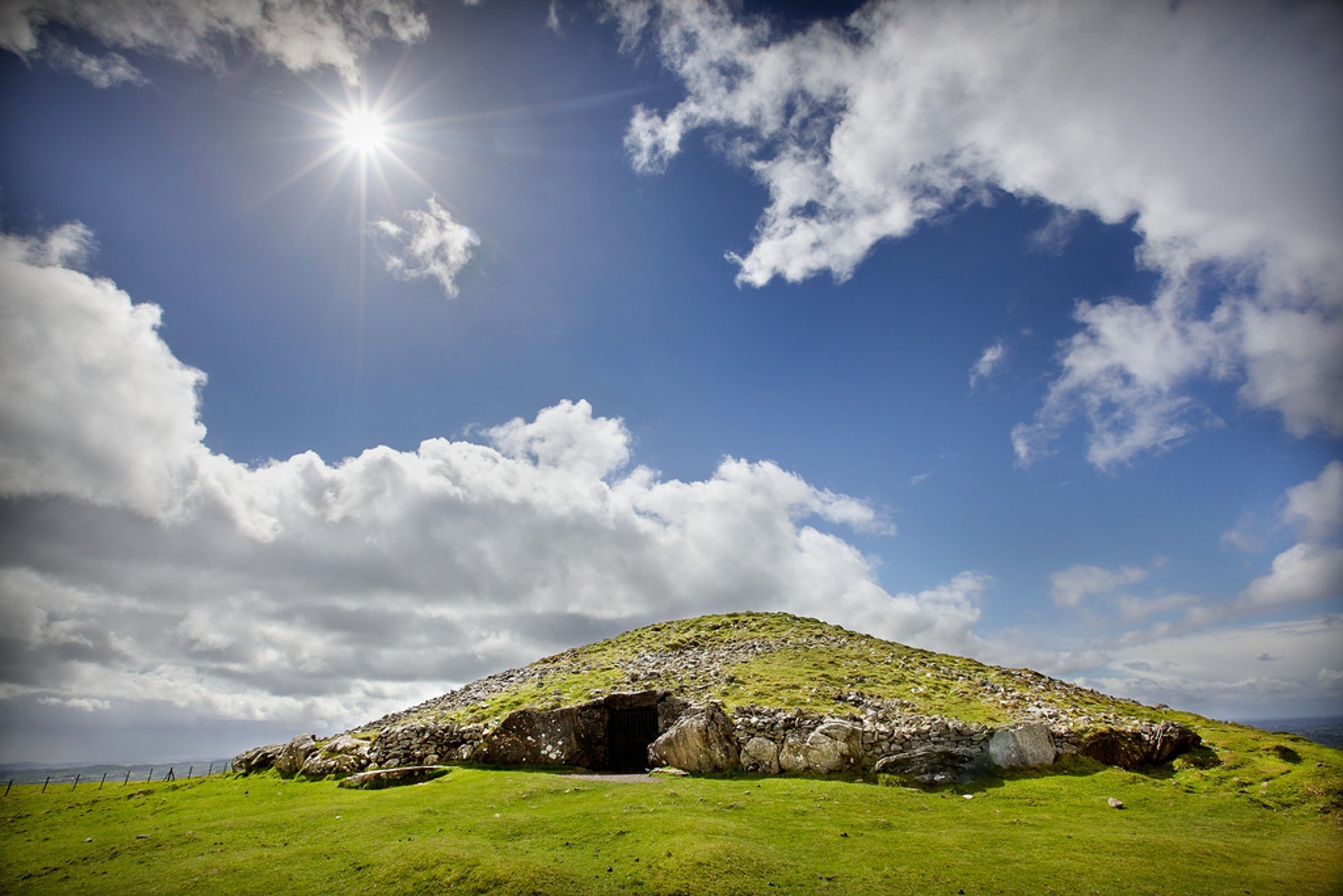
Loughcrew (County Meath), near Newgrange, an ancient burial site and a traditional place to observe the sunrise at the Equinox

Here in Ireland we celebrated Saint Patrick’s day on March 17th, the reputed date of his death in 461 AD. Nobody really knows where St Patrick was born, though, so it would be surprising if the when were any better known.

In any case, it wasn’t until the 17th Century that Saint Patrick’s feast day was placed on the universal liturgical calendar in the Catholic Church. In the thousand years that passed any memory of the actual date was probably lost, so the Equinox was perhaps rebranded for the purpose.

The early Christian church in Ireland incorporated many pre-Christian traditions that survived until roughly the 12th century, including the ancient festival of Ēostre (or Ostara), the goddess of spring associated with the spring equinox after whom Easter is named. During this festival, eggs were used a symbol of rebirth and the beginning of new life and a hare or rabbit was the symbol of the goddess and fertility. In turn the Celtic people of Ireland probably adapted their own beliefs to absorb much older influences dating back to the stone age. St Patrick’s Day and Easter therefore probably both have their roots in prehistoric traditions around the Spring Equinox, although the direct connection has long been lost.

Beard of Ireland 2021 – The Qualifying Round

Posted in Beards with tags , , , on March 9, 2021 by telescoper

Just a quick post to pass on the news that I am in the Second Qualifying Round – known informally as a Beard-Off – for the award of Beard of Ireland 2021. Should you wish to do so you can vote here on Twitter:

The top two from the present Qualifying Round join Shane Lowry and Robin Swann in the final, with the overall winner announced on St Patrick’s Day (next week).

P.S. You may or may not be aware that I actually won this award last year.

The Vernal Equinox 2020

Posted in History, Maynooth with tags , , , , on March 20, 2020 by telescoper

With everything else going on I quite forgot that the Vernal Equinox or Spring Equinox (in the Northern hemisphere) took place today (Friday 20th March) at 3.49am (Irish Time). This is in fact the earliest Spring Equinox for 124 years, the fact that 2020 is a leap year moving it a day earlier in our calendar. It’s a lovely day in Maynooth too!

People sometimes ask me how one can define the `equinox’ so precisely when surely it just refers to a day on which day and night are of equal length, implying that it’s a day not a specific time?

The answer is that the equinox is defined by a specific event, the event in question being when the plane defined by Earth’s equator passes through the centre of the Sun’s disk (or, if you prefer, when the centre of the Sun passes through the plane defined by Earth’s equator). Day and night are not necessarily exactly equal on the equinox, but they’re the closest they get. From now until the Autumnal Equinox days in the Northern hemisphere will be longer than nights, and they’ll get longer until the Summer Solstice before beginning to shorten again.

Loughcrew (County Meath), near Newgrange, an ancient burial site and a traditional place to observe the sunrise at the Equinox

Here in Ireland we celebrated Saint Patrick’s day on March 17th, the reputed date of his death in 461 AD. Nobody really knows where St Patrick was born, though, so it would be surprising if the when were any better known.

In any case, it wasn’t until the 17th Century that Saint Patrick’s feast day was placed on the universal liturgical calendar in the Catholic Church. In the thousand years that passed any memory of the actual date was probably lost, so the Equinox was perhaps rebranded for the purpose.

The early Christian church in Ireland incorporated many pre-Christian traditions that survived until roughly the 12th century, including the ancient festival of Ēostre (or Ostara), the goddess of spring associated with the spring equinox after whom Easter is named. During this festival, eggs were used a symbol of rebirth and the beginning of new life and a hare or rabbit was the symbol of the goddess and fertility. In turn the Celtic people of Ireland probably adapted their own beliefs to absorb much older influences dating back to the stone age.

St Patrick’s Day and Easter therefore probably both have their roots in prehistoric traditions around the Spring Equinox, although the direct connection has long been lost.

St Patrick’s Day Beard of Ireland 2020

Posted in Beards, Biographical with tags , on March 17, 2020 by telescoper

Lá Fhéile Pádraig Sona Daoibh!

Today is St Patrick’s Day, a national holiday in Ireland, so I’ve swapped working from home for not working from home.

Anyway it has been officially announced that I am the winner of the 2020 Beard of Ireland poll. Thank you so much to everyone who voted for me!

It is was a nail-biting contest (though we all washed our hands carefully afterwards).

The runner-up was Aodhán Connolly who is from Northern Ireland, as were many of the other contenders. There was a nice piece in the Belfast Telegraph but I haven’t seen anything in the Republic.

Anyway, for those who asked here is one of those selfie picture things that young people do, showing current beard configuration.

Now wash your hands please!