Archive for Summer Solstice

Summer Solstice 2025

Posted in Irish Language, The Universe and Stuff with tags , , , , on June 21, 2025 by telescoper

In case you weren’t aware, the Summer Solstice in the Northern hemisphere took place this morning Saturday June 21, 2025 at 02:42 UTC (03:42am local Irish Time). Among other things, this means that today is the longest day of the year (as defined by the interval between sunrise and sunset).

According to this website, the interval between sunrise and sunset in Dublin today will be 17 hours and 12 seconds. which is a whole second longer than yesterday (!) and six seconds longer than tomorrow.

In the Northern hemisphere, days will get shorter from the Summer Solstice until the Winter Solstice in December.

The nights are drawing in. Although sunset does carry on getting a bit later for a few days, the days definitely start getting shorter from now on. I explained this in earlier posts here.

Incidentally, the word for “solstice” in the Irish language is grianstad which translates literally as “sun-stop”. The Summer Solstice is Grianstad an tSamhraidh“. The nominative singular word for “Summer”, a masculine noun in Irish, is Samhradh, but in the construction used here, “of summer”, it is in the genitive case so becomes Samhraidh. Moreover, when a masculine noun beginning with s- in the singular genitive is preceded by the definite article an) it experiences an initial mutation in the form of a t-prothesis; hence (an tSamraidh is “of the Summer”.

The Winter Solstice is Grianstad an Gheimhridh. The word for winter is Geimhreadh, which is masculine, and has a genitive form Geimhridh. In this case, however, because it doesn’t begin with “S” there is no t-prothesis but instead a lenition (séimhiú) that softens the initial “G” indicated by the “h”. Hence Grianstad an Gheimhridh, “Sun-stop of the Winter”.

I hope this clarifies the situation.
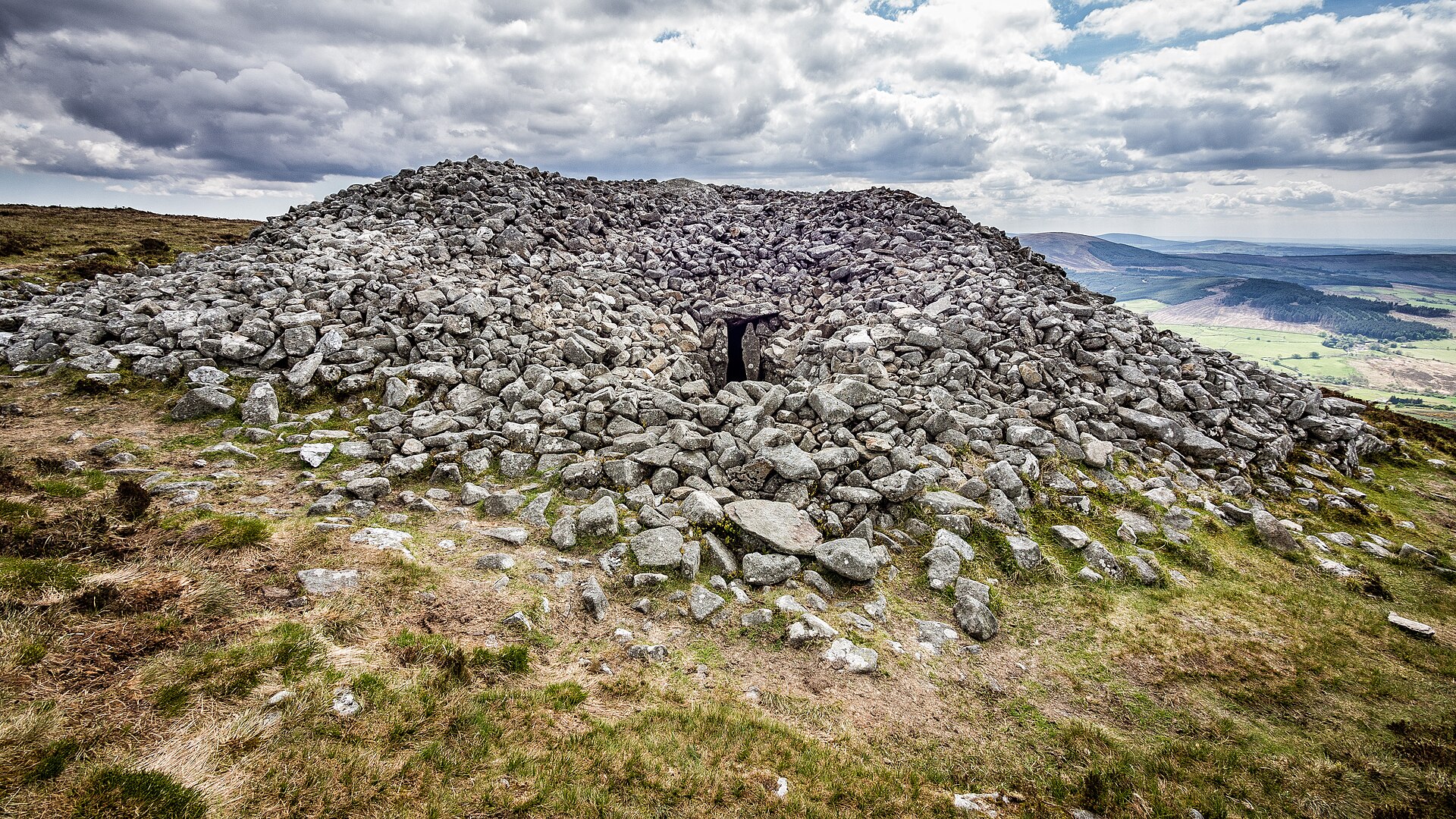
Climbing to Seefin Passage Tomb on the Summer Solstice – Tarn MacArthur

Posted in Poetry with tags , , on June 20, 2025 by telescoper
Seefin Passage Tomb, County Wicklow, photographed by Joe King – Own work, CC BY-SA 3.0, https://commons.wikimedia.org/w/index.php?curid=26328239

The Summer Solstice in the Northern Hemisphere takes place tomorrow, on Saturday June 21 2025, at 02:42 UTC (03:42am local Irish Time). In advance of the big event I thought I’d share this poem I found online, which seems appropriate to the occasion.

No one knows what calls us, days like this
that seem to stretch all sense of reason:
the hillside scrub abuzz with silver-washed

and dark green fritillary, the red grouse
and hare, a lone buzzard counterpoised
on the breeze overhead, near motionless,

weighing the balance of each warm
and distant heartbeat. And who would
claim the old gods dead when the sudden

cadence of your breath slips to the sound
of something pulsing through from the far side
of the ridge, neither ghost nor glossolalia

but wholly of the earth, like the hum
that guided you through summer nights
in childhood when you found yourself alone,

and a field too far from home, as the light
began to fade. Sometimes what we love
is the incongruity of things: the latent sense

of having been here yet having never been
before, that strangely familiar clutch of stones,
how every shadow beckons with a promise

of safekeeping. If, as someone said,
it’s true that the souls to match our souls
lie patiently in wait to take our places

when we step aside, then we should lower
our sights from the brilliance of the sky
and down towards this aperture of darkness.

To enter the tomb is to enter the one world
we know, the cool walls of the passage
summoning us forth with the chance hope

of an earthly meeting. Alone, you are
not alone, the carved stone appears to say.
Nothing is eternal, and everything remains.

by Tarn MacArthur

The Summer Solstice 2024

Posted in Barcelona with tags , , on June 20, 2024 by telescoper

With all the excitement I almost forgot that Summer Solstice in the Northern hemisphere takes place later today, Thursday 20th June 2024, at 21.51 Irish Time (20.51 UTC) or 22.51 local time here in Barcelona.

Among other things, this means that today is the longest day of the year around these parts. Sunrise in Barcelona this morning was 06:17 and sunset at 21:28.  The length of the day – the interval between sunrise and sunset – today is 15:10:13. Compare this with Dublin (sunrise 04:56, sunset 21:56, and day length 17:00:12).

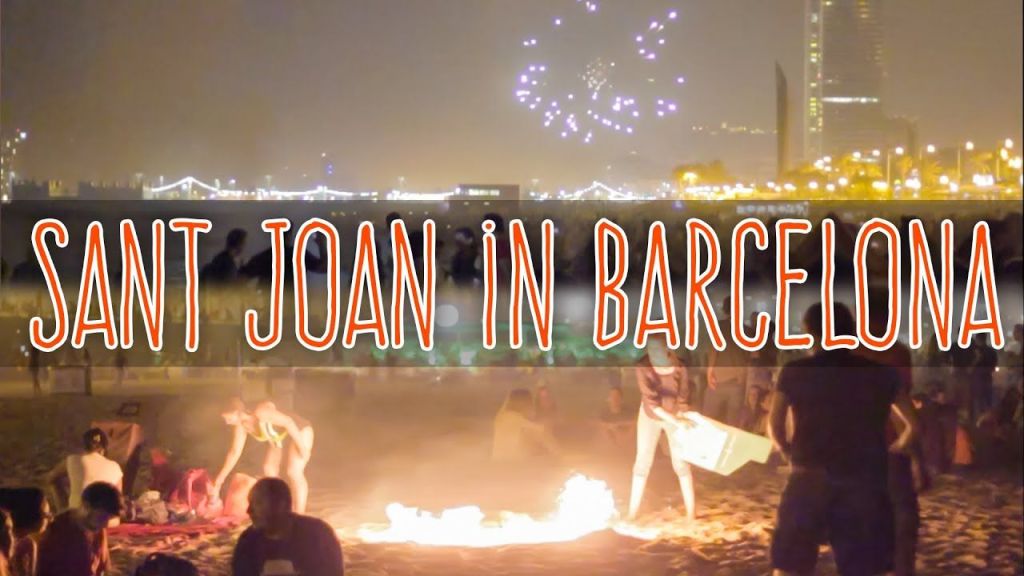
This Sunday (23rd June)  sees the Feast Day of St John (Sant Joan),  which is celebrated in Barcelona with fireworks and bonfires, and people partying all night long on the beach. Monday is a holiday, presumably to allow people to recover. I am, of course, far too old, for that sort of thing.

The Pagan University Year

Posted in Education, Maynooth with tags , , on June 22, 2022 by telescoper

This morning we had the usual end-of-year meeting of the University Examination Board. It’s been a difficult year so it was a longer meeting than usual but it went reasonably smoothly. Marks will be released to students either tomorrow or Friday. That basically concludes the formal business for the academic year.

The proximity of this important event to yesterday’s Summer Solstice got me thinking again about the academic year and how it relates to the old pagan calendar.

In the Northern hemisphere, from an astronomical point of view, the solar year is defined by the two solstices (summer, around June 21st, and winter, around December 21st) and the equinoxes (spring, around March 21st, and Autumn, around September 21st). These four events divide the year into four roughly equal parts each of about 13 weeks.

Now, if you divide each of these intervals in two you divide the year into eight pieces of six and a bit weeks each. The dates midway between the astronomical events mentioned above are (roughly) :

  • 1st February: Imbolc (Candlemas)
  • 1st May: Beltane (Mayday)
  • 1st August: Lughnasadh (Lammas)
  • 1st November: Samhain (All Saints Day)

The names I’ve added are taken from the Celtic/neo-Pagan (and Christian terms) for these cross-quarter days. These timings are rough because the dates of the equinoxes and solstices vary from year to year. Imbolc is often taken to be the 2nd of February (Groundhog Day) and Samhain is sometimes taken to be October 31st, Halloween. But hopefully you get the point.

Incidentally, the last three of these also coincide closely with traditional Bank Holidays in Ireland, though these are always on Mondays so often happen a few days away. The first has not been a holiday but from next year there will be a new Bank Holiday that occurs on or near 1st February, which completes the set of cross-quarter-day holidays.

Anyway, it is interesting (to me) to note the extent that the academic year here in Ireland is defined by these dates.

Usually the first semester of the academic year starts on or around September 21st (Autumnal Equinox) and finishes on or Around December 21st (Winter Solstice). Half term (study week) thus includes the Halloween Bank Holiday (Samhain).

After a break for Christmas and a three-week mid-year exam period Semester Two starts on or around 1st February (Imbolc). Half-term is then around March 21st (Vernal Equinox, which roughly coincides with St Patrick’s Day March 17th) and teaching ends around May 1st (Imbolc). More exams and end of year business take us to the Summer Solstice and the (hypothetical) vacation. Most of us get to take the 1st August holiday (Lughnasadh) off at least!

So we’re basically operating on a pagan calendar.

The Summer Solstice 2021

Posted in The Universe and Stuff with tags , , , , , , on June 20, 2021 by telescoper

The Summer Solstice in the Northern hemisphere happens tomorrow, Monday 21st June 2021, at 04:32  Irish Time (03:32 UTC). Among other things, this means that tomorrow is the longest day of the year around these parts.  Usually I post about the Solstices and Equinoxes close to the time that they occur,  and on the same day, but because I don’t want to get up before 4.32am and few would be awake to read it then, I thought I’d do this one in advance.

Sunrise in the Dublin area is about 04:56 local time tomorrow and sunset is at 21:57: the interval between sunrise and sunset will be just about 1s longer on 21st June than today, 20th June, and 5 seconds longer than Tuesday 22nd June. The longest day will last 17 hours and 11 seconds (approximately) so make the most of it – it’s all downhill from now on!

Days will get shorter from tomorrow until the Winter Solstice in December, although this does not mean that sunset will necessarily happen earlier on 22nd  than it does tomorrow. In fact it is a little later. This is because there is a difference between mean solar time (measured by clocks) and apparent solar time (defined by the position of the Sun in the sky), so that a solar day does not always last exactly 24 hours. A description of apparent and mean time was given by Nevil Maskelyne in the Nautical Almanac for 1767:

Apparent Time is that deduced immediately from the Sun, whether from the Observation of his passing the Meridian, or from his observed Rising or Setting. This Time is different from that shewn by Clocks and Watches well regulated at Land, which is called equated or mean Time.

The discrepancy between mean time and apparent time arises because of the Earth’s axial tilt and the fact that it travels around the Sun in an elliptical orbit in which its orbital speed varies with time of year (being faster at perihelion than at aphelion).

Using a rapid calculational tool (Google), I found a table of the local mean times of sunrise and sunset for Dublin around the 2021 summer solstice. This shows that the earliest sunrise was actually on 17th June and the latest sunset is on 24th.

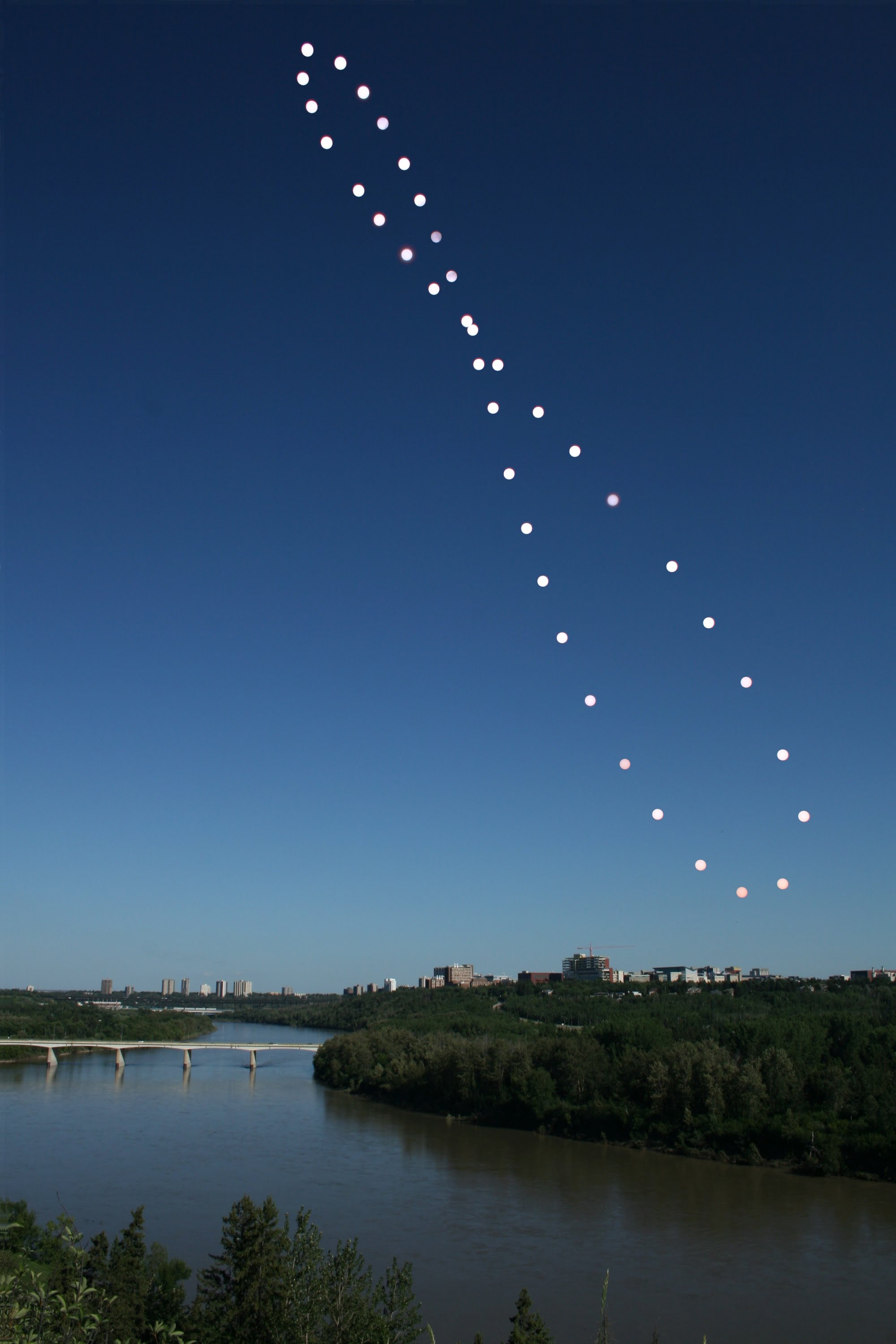
If you plot the position of the Sun in the sky at a fixed time each day from a fixed location on the Earth you get a thing called an analemma, which is a sort of figure-of-eight curve whose shape depends on the observer’s latitude. Here’s a photographic version taken in Edmonton, with photographs of the Sun’s position taken from the same position at the same time on different days over the course of a year:

maxresdefault

The summer solstice is the uppermost point on this curve and the winter solstice is at the bottom. The north–south component of the analemma is the Sun’s declination, and the east–west component is the so-called equation of time which quantifies the difference between mean solar time and apparent solar time. This curve can be used to calculate the earliest and/or latest sunrise and/or sunset.

P.S. A bit of light googling revealed to me that if you live in York then your sunrise on 21st June 2021 is at 4.32am, precisely the same time as the Solstice.

The Summer Solstice 2020

Posted in The Universe and Stuff with tags , , , , , , on June 20, 2020 by telescoper

The Summer Solstice in the Northern hemisphere happens this evening, Saturday 20th June 2020, at 22:43 Irish Time (21.43 UTC). Among other things, this means that today is the longest day of the year. This is an earlier day in June than you might expect, primarily because 2020 is a leap year.

Days will get shorter from today until the Winter Solstice in December, although this does not mean that sunset will necessarily happen earlier tomorrow than it does today. In fact it is a little later. This is because there is a difference between mean solar time (measured by clocks) and apparent solar time (defined by the position of the Sun in the sky), so that a solar day does not always last exactly 24 hours. A description of apparent and mean time was given by Nevil Maskelyne in the Nautical Almanac for 1767:

Apparent Time is that deduced immediately from the Sun, whether from the Observation of his passing the Meridian, or from his observed Rising or Setting. This Time is different from that shewn by Clocks and Watches well regulated at Land, which is called equated or mean Time.

The discrepancy between mean time and apparent time arises because of the Earth’s axial tilt and the fact that it travels around the Sun in an elliptical orbit in which its orbital speed varies with time of year (being faster at perihelion than at aphelion).

Using a rapid calculational tool (Google), I found a table of the local mean times of sunrise and sunset for Dublin around the 2020 summer solstice. This shows that today is indeed the longest day (with a time between sunrise and sunset of 17 hours and 10 seconds), but sunset on 21st June is actually a bit later than this evening, but sunrise is also bit later so the day is indeed (slightly) shorter.

In fact if you plot the position of the Sun in the sky at a fixed time each day from a fixed location on the Earth you get a thing called an analemma, which is a sort of figure-of-eight curve whose shape depends on the observer’s latitude. Here’s a photographic version taken in Edmonton, with photographs of the Sun’s position taken from the same position at the same time on different days over the course of a year:

maxresdefault

The summer solstice is the uppermost point on this curve and the winter solstice is at the bottom. The north–south component of the analemma is the Sun’s declination, and the east–west component is the so-called equation of time which quantifies the difference between mean solar time and apparent solar time. This curve can be used to calculate the earliest and/or latest sunrise and/or sunset.

The Summer Solstice 2019

Posted in Uncategorized with tags , , , , , , on June 21, 2019 by telescoper

The Summer Solstice in the Northern hemisphere happens today, Friday 21st June 2019, at 16.54 Irish Time (15.54 UTC). Among other things, this means that today is the longest day of the year. Days will get shorter from now until the Winter Solstice in December. Saturday June 22nd will be two seconds shorter than today!

This does not mean that sunset will necessarily happen earlier tomorrow than it does today however.  This is because there is a difference between mean solar time (measured by clocks) and apparent solar time (defined by the position of the Sun in the sky), so that a solar day does not always last exactly 24 hours. A description of apparent and mean time was given by Nevil Maskelyne in the Nautical Almanac for 1767:

Apparent Time is that deduced immediately from the Sun, whether from the Observation of his passing the Meridian, or from his observed Rising or Setting. This Time is different from that shewn by Clocks and Watches well regulated at Land, which is called equated or mean Time.

The discrepancy between mean time and apparent time arises because of the Earth’s axial tilt and the fact that it travels around the Sun in an elliptical orbit in which its orbital speed varies with time of year (being faster at perihelion than at aphelion).

Using a rapid calculational tool (Google), I found a table of the local mean times of sunrise and sunset for Dublin around the 2019 summer solstice. This shows that today is indeed the longest day (with a time between sunrise and sunset of 17 hours and 10 seconds), but sunset on 22nd June is actually a bit later than this evening, while sunrise is a bit later.

In fact if you plot the position of the Sun in the sky at a fixed time each day from a fixed location on the Earth you get a thing called an analemma, which is a sort of figure-of-eight curve whose shape depends on the observer’s latitude. Here’s a photographic version taken in Edmonton, with photographs of the Sun’s position taken from the same position at the same time on different days over the course of a year:

maxresdefault

The summer solstice is the uppermost point on this curve and the winter solstice is at the bottom. The north–south component of the analemma is the Sun’s declination, and the east–west component is the so-called equation of time which quantifies the difference between mean solar time and apparent solar time. This curve can be used to calculate the earliest and/or latest sunrise and/or sunset.