Archive for Ulysses

Bloomsday 2025

Posted in Literature with tags , , , on June 16, 2025 by telescoper

So it’s 16th June, a very special day in Ireland – especially Dublin – because 16th June 1904 is the date on which the story takes place of Ulysses by James Joyce. Bloomsday – named after the character Leopold Bloom – is an annual celebration not only of all things Joycean but also of Ireland’s wider cultural and literary heritage.

If you haven’t read Ulysses yet then you definitely should. It’s one of the great works of modern literature. And don’t let people put you off by telling you that it’s a difficult read. It’s a long read,  that’s for sure -it’s over 900 pages – but the writing is full of colour and energy and it has a real sense of place. It’s a wonderful book. I’ve read it three times now, once as a teenager, once in my thirties, and again last year when I’d reached sixty.

Anyway, here’s an excerpt with an astromomical theme, which seems to me to fit this blog:

With what meditations did Bloom accompany his demonstration to his companion of various constellations?

Meditations of evolution increasingly vaster: of the moon invisible in incipient lunation, approaching perigee: of the infinite lattiginous scintillating uncondensed milky way, discernible by daylight by an observer placed at the lower end of a cylindrical vertical shaft 5000 ft deep sunk from the surface towards the centre of the earth: of Sirius (alpha in Canis Maior) 10 lightyears (57,000,000,000,000 miles) distant and in volume 900 times the dimension of our planet: of Arcturus: of the precession of equinoxes: of Orion with belt and sextuple sun theta and nebula in which 100 of our solar systems could be contained: of moribund and of nascent new stars such as Nova in 1901: of our system plunging towards the constellation of Hercules: of the parallax or parallactic drift of socalled fixed stars, in reality evermoving wanderers from immeasurably remote eons to infinitely remote futures in comparison with which the years, threescore and ten, of allotted human life formed a parenthesis of infinitesimal brevity.

I’ll also mention that, starting at 8am on  RTÉ Radio 1 Extra (but also available at other times on the RTÉ player), you  can listen to the classic radio broadcast of Ulysses from 1982.

Bloomsday Barcelona

Posted in Barcelona, LGBTQ+, Literature with tags , , , , , , on June 16, 2024 by telescoper

So it’s June 16th which means it is Bloomsday. I looked around for ways to celebrate this day in Barcelona and found that there is a Irish bar on La Rambla called Bloomsday. When I went there, though, I was disappointed to find it not only closed, but apparently abandoned:

Barcelona gets a mention – just one – in James Joyce’s Ulysses:

Noon slumbers. Kevin Egan rolls gunpowder cigarettes through fingers smeared with printer’s ink, sipping his green fairy as Patrice his white. About us gobblers fork spiced beans down their gullets. Un demi sétier! A jet of coffee steam from the burnished caldron. She serves me at his beck. Il est irlandais. Hollandais? Non fromage. Deux irlandais, nous, Irlande, vous savez ah, oui! She thought you wanted a cheese hollandais. Your postprandial, do you know that word? Postprandial. There was a fellow I knew once in Barcelona, queer fellow, used to call it his postprandial. Well: slainte! 

I can confirm that there is no shortage of queer fellows here, but I’ll have to have my lunch before I can have a postprandial but slainte! to you too.

Bloomsday 2022

Posted in Biographical, Literature with tags , , , , on June 16, 2022 by telescoper

So it’s 16th June, a very special day in Ireland – and especially Dublin – because 16th June 1904 is the date on which the story takes place of Ulysses by James Joyce. Bloomsday – named after the character Leopold Bloom – is an annual celebration not only of all things Joycean but also of Ireland’s wider cultural and literary heritage. This year the Bloomsday Festival marks the centenary of the first publication of the complete Ulysses in Paris; it had been published in instalments before that but 2022 was when the full novel was published.

Here is a little video produced by the Irish Foreign Ministry spreading the impact of Bloomsday around the world:

This is also the first time for a few years that Bloomsday events have been held in person. I was toying with the idea of going into Dublin and wandering about some of the locations described in Ulysses, but I have too much work to do. One day I should try to write a paraody of Ulysses about a day in the life of a man who doesn’t go anywhere or do anything except spend the whole day on Microsoft Teams while real life passes him by.

If time permits, however, I will go out and buy the ingredients for a Gorgonzola and mustard sandwich, although unfortunately I shall have to forego the glass of Burgundy that Mr Bloom had with his.

Update: I tried the Gorgonzola and mustard sandwich. It’s an interesting (!) taste, but I don’t think I want to taste it again.

If you haven’t read Ulysses yet then you definitely should. It’s one of the great works of modern literature. And don’t let people put you off by telling you that it’s a difficult read. It really isn’t. It’s a long read that’s for sure -it’s over 900 pages – but the writing is full of colour and energy and it has a real sense of place. It’s a wonderful book.

(There’s also quite a lot of sex in it….)

A Century of Ulysses

Posted in Biographical, Literature with tags , on February 2, 2022 by telescoper


When I woke up this morning the radio reminded me that today, 2nd February 2022, is the centenary of the first complete publication of  Ulysses by James Joyce. It had been published in installments before that, but it took a publisher in Paris to bite the bullet and publish the whole thing. The publication date also happened to be the 40th birthday of the author.

I have toyed with the idea of going into Dublin on Bloomsday (16th June, the day on which Ulysses is set) and wandering about some of the locations described in, but what with work and lockdowns I haven’t got round to it.  Maybe this year will be the time!

Or perhaps instead I’ll prepare dinner this evening in a style that Leopold Bloom would enjoy:

He liked thick giblet soup, nutty gizzards, a stuffed roast heart, liver slices fried with breadcrumbs, fried hen cod’s roe. Most of all he liked grilled mutton kidneys which gave his palate a fine tang of faintly scented urine.

Or perhaps not.

If you haven’t read Ulysses yet then you definitely should. It’s one of the great works of modern literature. And don’t let people put you off by telling you that it’s a difficult read. It really isn’t. It’s a long read that’s for sure -it’s over 900 pages – but the writing is full of colour and energy and it has a  real sense of place. It’s a wonderful book.

(There’s also quite a lot of sex in it….)

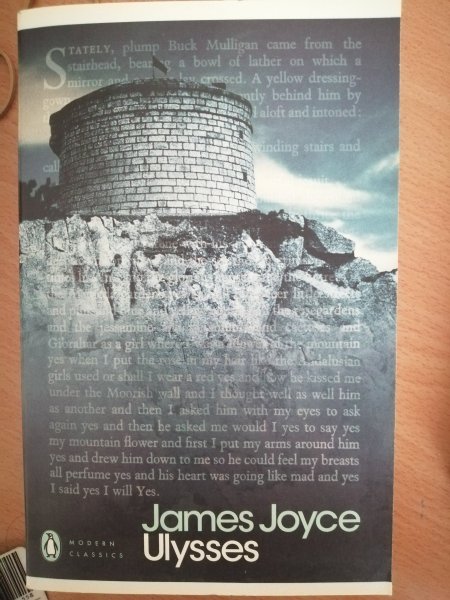
I’ve read Ulysses twice, once when I was a teenager and again when I was in my thirties. I then lent my copy to someone and never got it back. The copy shown above is a new one I bought last year with the intention of reading the novel again now that I live in Ireland but I sadly have not had the time yet. I will, though.

#Bloomsday and Things Joycean

Posted in Literature with tags , , on June 16, 2021 by telescoper

So it’s 16th June, a very special day in Ireland – and especially Dublin – because 16th June 1904 is the date on which the story takes place of Ulysses by James Joyce. Bloomsday – named after the character Leopold Bloom – is an annual celebration not only of all things Joycean but also of Ireland’s wider cultural and literary heritage. Of course it’s mainly virtual this year, as it was last year.

I was toying with the idea of going into Dublin and wandering about some of the locations described in Ulysses, but I have too much work to do. Maybe next year.  Instead I thought I’d prepare dinner this evening in a style that Leopold Bloom would enjoy:

He liked thick giblet soup, nutty gizzards, a stuffed roast heart, liver slices fried with breadcrumbs, fried hen cod’s roe. Most of all he liked grilled mutton kidneys which gave his palate a fine tang of faintly scented urine.

Or perhaps not.

If you haven’t read Ulysses yet then you definitely should. It’s one of the great works of modern literature. And don’t let people put you off by telling you that it’s a difficult read. It really isn’t. It’s a long read that’s for sure -it’s over 900 pages – but the writing is full of colour and energy and it has a  real sense of place. It’s a wonderful book.

(There’s also quite a lot of sex in it….)

I’ve read Ulysses twice, once when I was a teenager and once when I was in my thirties. I then lent my copy to someone and never got it back. The copy shown above is a new one I bought last year with the intention of reading the novel again now that I live in Ireland but I sadly have not had the time yet. I will, though.

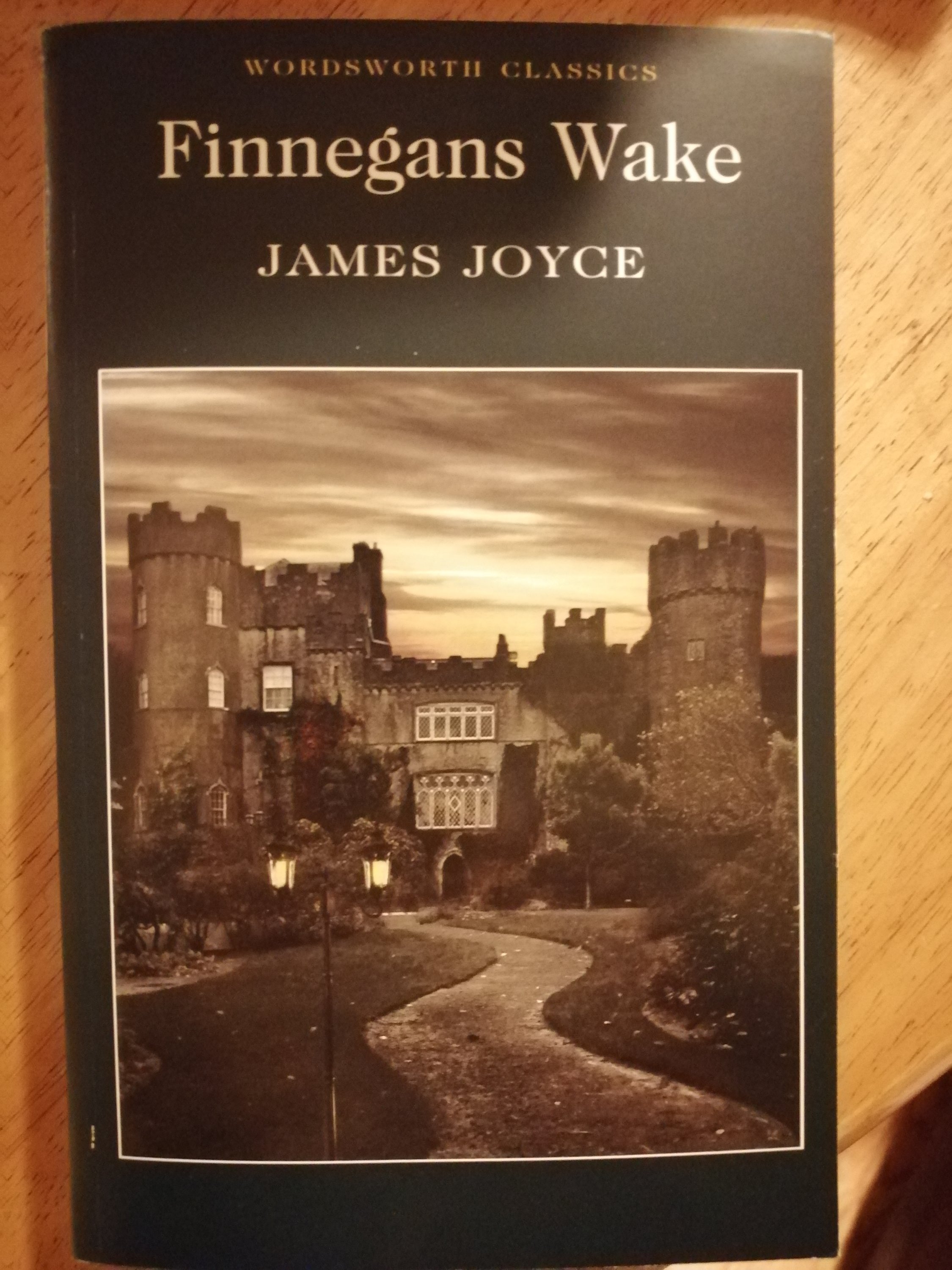
I did manage to read all of Finnegans Wake last summer which I think is quite a difficult read so I approached it by rationing myself to ten pages per day and going slowly, often reading it out loud. In many ways it’s really a more like a very long poem than a prose work. It is

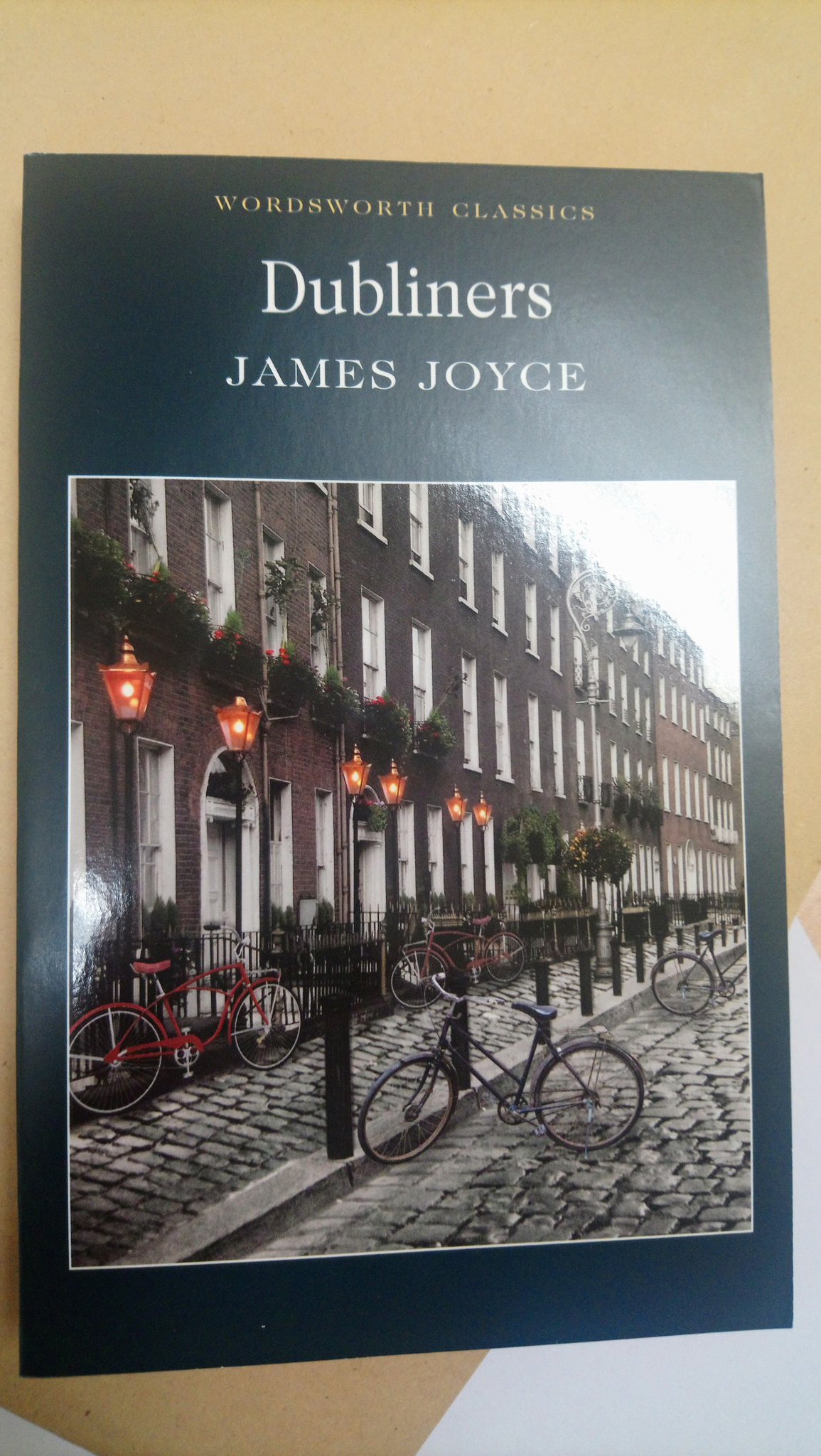
Incidentally if you would like to limber up before making an attempt on either  Ulysses or Finnegans Wake I recommend this set of short stories.

But if you don’t fancy reading it you can listen to an epic 29 hour dramatisation of Ulysses on the radio via RTÉ; see here for details.

Bloomsday!

Posted in Literature with tags , , on June 16, 2020 by telescoper

So it’s 16th June, a very special day in Ireland – and especially Dublin – because 16th June 1904 is the date on which the story takes place of Ulysses by James Joyce. Bloomsday – named after the character Leopold Bloom – is an annual celebration not only of all things Joycean but also of Ireland’s wider cultural and literary heritage.

If you haven’t read Ulysses yet then you should. It’s one of the great works of modern literature. And don’t let people put you off by telling you that it’s a difficult read. It really isn’t. It’s a long read that’s for sure -it’s over 900 pages – but the writing is full of colour and energy. It’s a wonderful book.

(There’s also quite a lot of sex in it….)

I’ve read it twice, once when I was a teenager and once when I was in my thirties. I then lent my copy to someone and never got it back. The copy shown above is a new one I bought last year with the intention of reading the novel again now that I live in Ireland but I sadly have not had the time yet. I will, though.

Incidentally if you would like to limber up before making an attempt on Ulysses I recommend this set of short stories.

But if you don’t fancy reading it you can listen to an epic 29 hour dramatisation of Ulysses on the radio via RTÉ; see here for details.

Ulysses

Posted in Poetry with tags , , on December 13, 2010 by telescoper

I hope you don’t mind me digging  into my poetry collection for today’s post. It’s the last week of term and the days are so manic with so much to do I’m struggling to find time to post anything original. This poem, Ulysses by Alfred Lord Tennyson,  comes from the file marked “uplifting”. Like many great poems it works on several levels. It’s a scholarly treatment, with references to Virgil, Homer, and even Shakespeare. It carries a universal message not to surrender meekly to the advancing years. Above all, though, it’s a dramatic monologue, its forceful use of language, for my money, the match for anything in Shakespeare. If any poem needs to be read out loud to be enjoyed, this is it…

It little profits that an idle king,
By this still hearth, among these barren crags,
Matched with an aged wife, I mete and dole
Unequal laws unto a savage race,
That hoard, and sleep, and feed, and know not me.

I cannot rest from travel: I will drink
Life to the lees: all times I have enjoyed
Greatly, have suffered greatly, both with those
That loved me, and alone; on shore, and when
Through scudding drifts the rainy Hyades
Vext the dim sea: I am become a name;
For always roaming with a hungry heart
Much have I seen and known; cities of men
And manners, climates, councils, governments,
Myself not least, but honoured of them all;
And drunk delight of battle with my peers;
Far on the ringing plains of windy Troy.
I am part of all that I have met;
Yet all experience is an arch wherethrough
Gleams that untravelled world, whose margin fades
For ever and for ever when I move.
How dull it is to pause, to make an end,
To rust unburnished, not to shine in use!
As though to breath were life. Life piled on life
Were all to little, and of one to me
Little remains: but every hour is saved
From that eternal silence, something more,
A bringer of new things; and vile it were
For some three suns to store and hoard myself,
And this gray spirit yearning in desire
To follow knowledge like a sinking star,
Beyond the utmost bound of human thought.

This is my son, mine own Telemachus,
To whom I leave the scepter and the isle
Well-loved of me, discerning to fulfill
This labour, by slow prudence to make mild
A rugged people, and through soft degrees
Subdue them to the useful and the good.
Most blameless is he, centered in the sphere
Of common duties, decent not to fail
In offices of tenderness, and pay
Meet adoration to my household gods,
When I am gone. He works his work, I mine.

There lies the port; the vessel puffs her sail:
There gloom the dark broad seas. My mariners,
Souls that have toiled, and wrought, and thought with me
That ever with a frolic welcome took
The thunder and the sunshine, and opposed
Free hearts, free foreheads you and I are old;
Old age had yet his honour and his toil;
Death closes all: but something ere the end,
Some work of noble note, may yet be done,
Not unbecoming men that strove with Gods.
The lights begin to twinkle from the rocks:
The long day wanes: the slow moon climbs: the deep
Moans round with many voices. Come, my friends,
‘Tis not too late to seek a newer world.
Push off, and sitting well in order smite
The sounding furrows; for my purpose holds
To sail beyond the sunset, and the baths
Of all the western stars, until I die.
It may be that the gulfs will wash us down:
It may be we shall touch the Happy Isles,
And see the great Achilles, whom we knew.
Though much is taken, much abides; and though
We are not now that strength which in the old days
Moved earth and heaven; that which we are, we are,
One equal-temper of heroic hearts,
Made weak by time and fate, but strong in will
To strive, to seek, to find, and not to yield.

And I couldn’t resist putting this little clip of the late John Gielgud‘s majestic reading of the last few measures. Forget the fact that it’s from a commercial for a bank and, in my opinion, is nearly ruined by completely unnecessary and intrusive musical accompaniment, just listen to the words and how Gielgud (near the end of his own life)  gets perfectly inside their meaning.   There’s none of Dylan Thomas’ “rage against the dying of the light” here, just a dignified refusal to surrender. Listen to the way he speaks “..until I die”, and you’ll understand what I mean.


Share/Bookmark