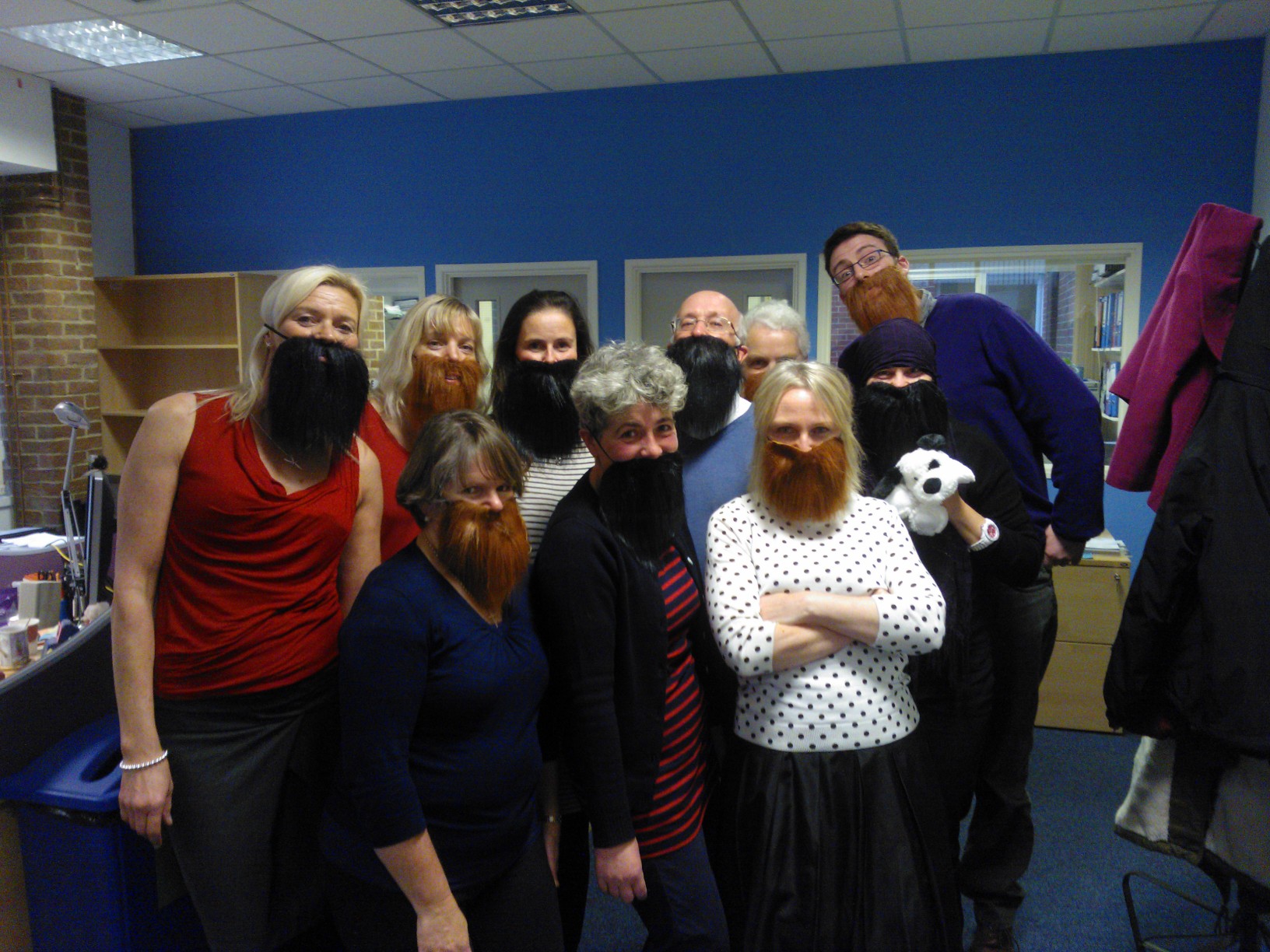
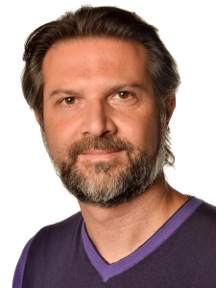
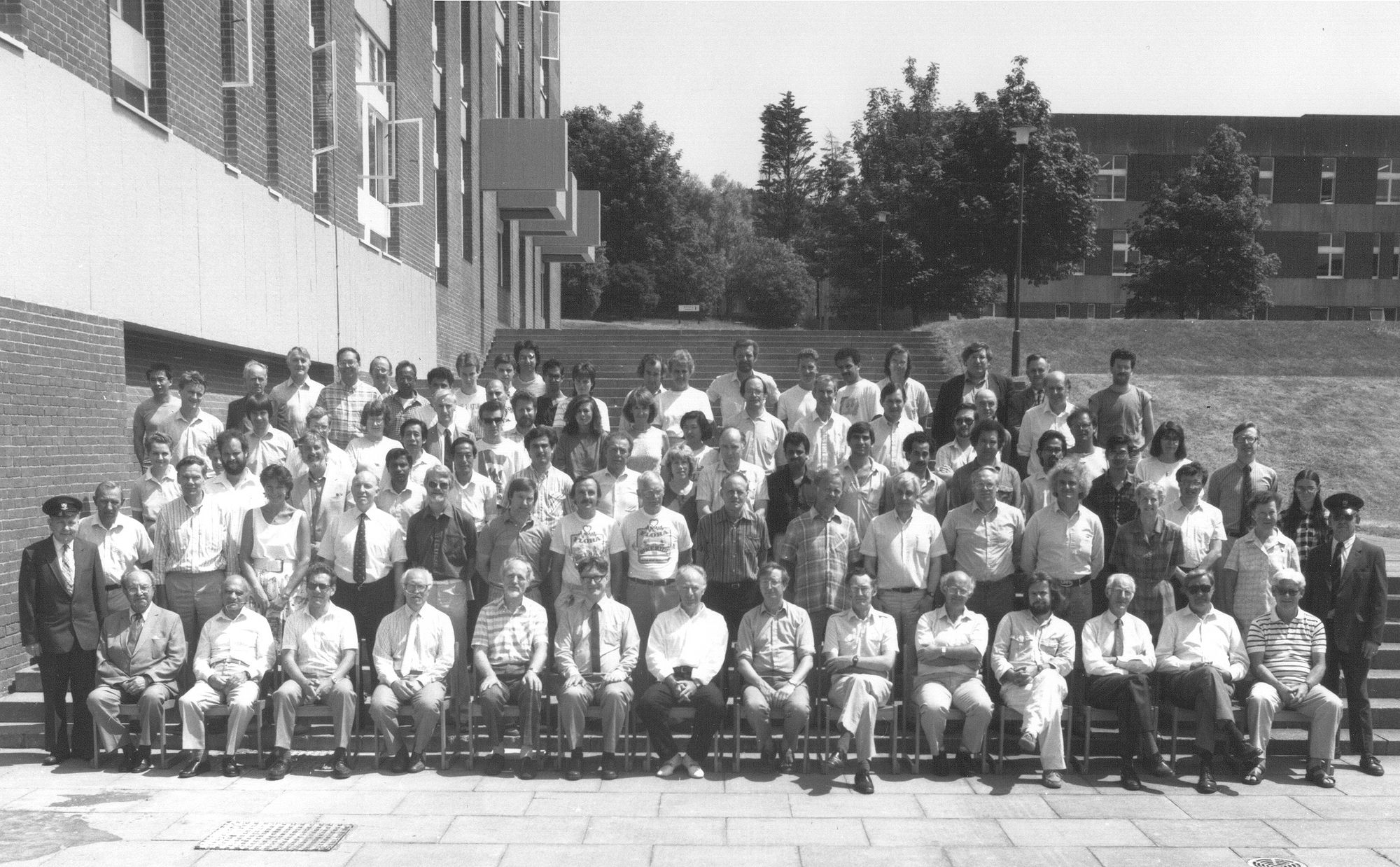
Well, here’s a blast from the past! This is the School Photograph for the School of Mathematical and Physical Sciences at the University of Sussex, vintage 1989. The School was called MAPS in those days; over the years we’ve lost an A and are now called MPS. Anyway, see if you can spot yours truly in this picture; you can click on the picture to make it larger. I did my PhD (actually DPhil) there from 1985-88 and then stayed on for a two-year postdoctoral position until 1990; so if you can spot me that’s what I looked like as a PDRA!
Follow @telescoperArchive for University of Sussex
A picture from the past!
Posted in Biographical with tags School of Mathematical and Physical Sciences, University of Sussex on December 12, 2013 by telescoperQuantum Technology – a Sussex Strength
Posted in Finance, Politics, Science Politics, The Universe and Stuff with tags Chancellor's Autumn Statement, Quantum Technology, University of Sussex on December 9, 2013 by telescoperAmid all the doom and gloom in the Chancellor’s Autumn Statement delivered last week there’s a ray of sunshine for research in Physics in the form of an injection of around £270 million in Quantum Technology. According to the Financial Times,
The money will support a national network of five research centres, covering quantum computing, secure communications, sensors, measurement and simulation.
Details of the scheme are yet to be released, but it seems the network will consist of “regional centres” although how evenly it will be spread across the regions remains to be seen. How many will be in the Midlands, for example?
We’re very happy here with this announcement here in the School of Physics & Astronomy at the University of Sussex as we have a well-established and expanding major research activity in Quantum Technology and an MSc Course called Frontiers of Quantum Technology. Moreover, as members of the South East Physics Network (SEPNet) we seem to be in a good position to be for funds as a truly regional centre. Assuming, that is, that the scheme hasn’t already been divvied up behind closed doors before it was even announced!
The investment announced by the government mirrors a growing realization of the potential for economic exploitation of, e.g., quantum computing which is bound to lead to a new range of career opportunities for budding physics graduates.
I’d welcome any comments from people who know any more information about the details of the new investment, as I’m too lazy to search for it myself…
Follow @telescoperMPS Beard of the Year: The Contenders!
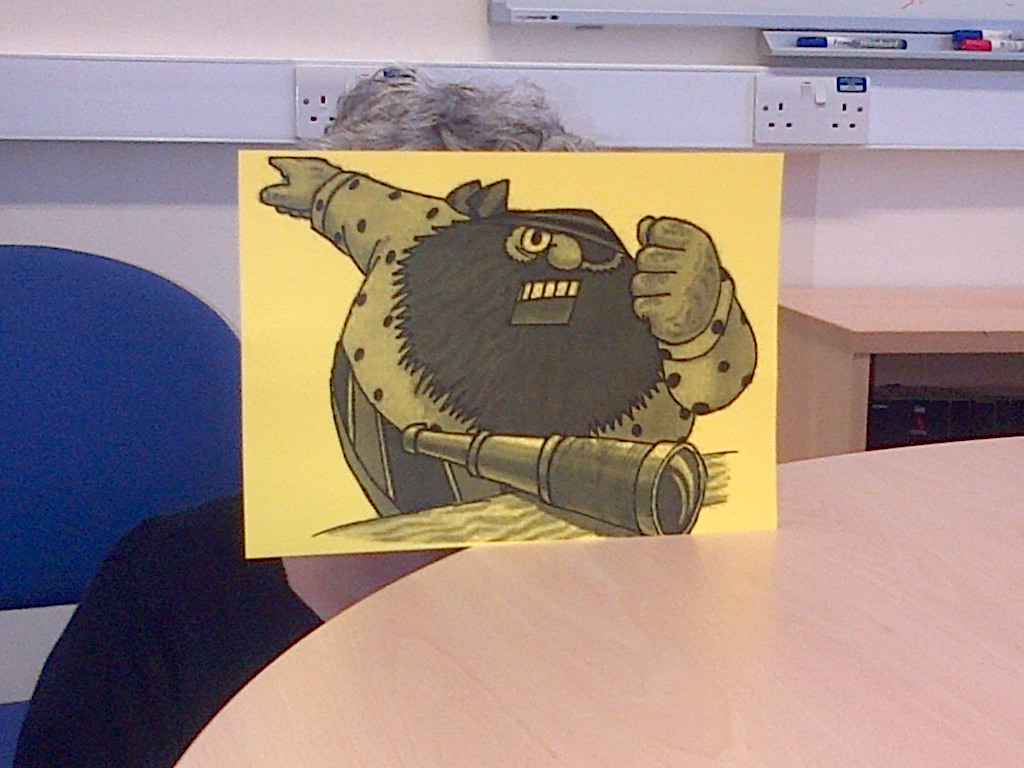
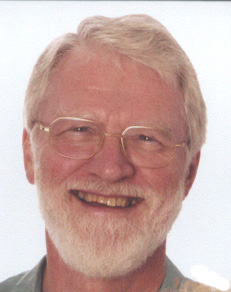
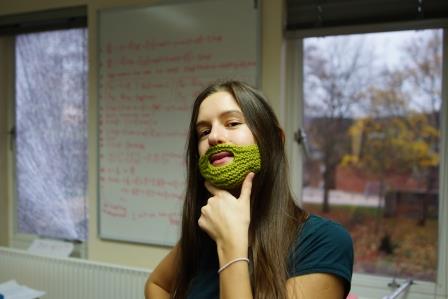
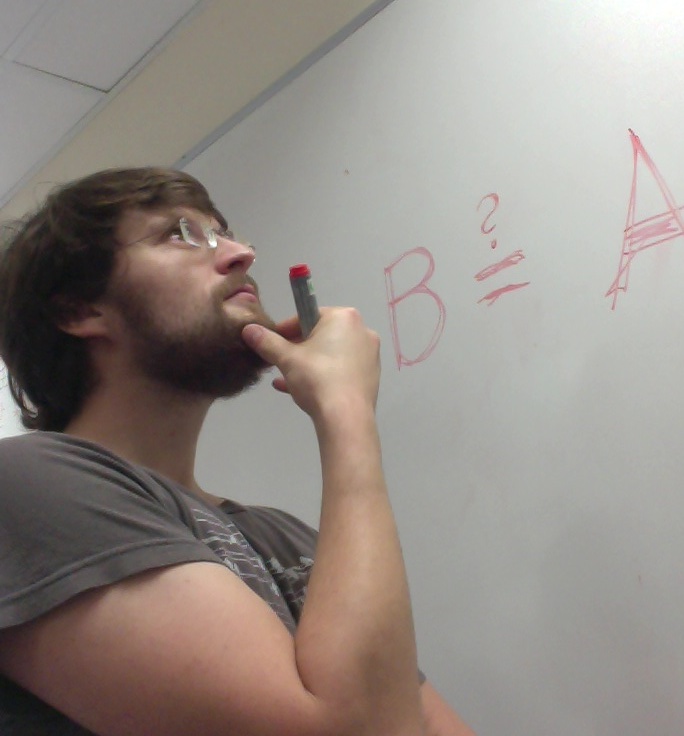
Posted in Beards with tags beards, November, University of Sussex on December 2, 2013 by telescoperNominations for the Inaugural Beard of the Year Poll at the School of Mathematical and Physical Sciences at the University of Sussex closed on Friday 29th November. We now move to the final phase of the competition, with a public vote. I’m afraid I had to rule out some of the nominees because no photographic evidence was supplied. I also have a sneaking suspicion that some of those who made the short list may not be entirely authentic. Please make your own mind up when casting your vote.
Before introducing the contestants, I’d like to say a big public thank you to our caterers, Chartwells, for producing this lovely cake for a little “Movember” event we had in the School on Friday afternoon:
The purpose of “Movember” is to raise awareness about testicular and prostate cancer, and mental health issues. We’ve gone a bit further and gone for a fully bearded version of the event, but in any case I hope that this bit of fun will at least remind blokes (who are notoriously bad at looking after themselves) to check our their bits every now and again. In any case always remember that facial hair is not just for Movember, but for life…
Anyway, to the contenders (in no particular order)
Now you have seen all the choices, please vote here:
The winner will be announced on Wednesday 11th December.
Follow @telescoperSussex Astronomy Research – The Videos!
Posted in The Universe and Stuff with tags astronomy, Astrophysics, Chris Byrnes, Ilian Iliev, Kathy Romer, PhD, PhD Opportunities, Seb Oliver, University of Sussex on November 19, 2013 by telescoperAs autumn turns to winter the thoughts of many an undergraduate turn to the task of applying for PhDs. Nowadays this involves a lot of trawling through webpages looking for interesting projects and suitable funding opportunities.
In order to help prospective postgraduates this year, the Astronomy Centre at the University of Sussex has produced a number of videos to give some information about the available projects. To start with, here are four examples, covering topics in theoretical, computational and observational astrophysics:
For information, we’re expecting to offer at least six PhD studentships in Astronomy for September 2014 entry. Also there’s a University-wide postgraduate open day coming up on December 4th..
Follow @telescoperSunset over Falmer Campus
Posted in Brighton, Poetry with tags A. E. Housman, Brighton, Falmer, University of Sussex on November 15, 2013 by telescoperEnsanguining the skies
How heavily it dies
Into the west away;
Past touch and sight and sound
Not further to be found,
How hopeless under ground
Falls the remorseful day.
The astronomer who came in from the cold
Posted in History, Politics, The Universe and Stuff with tags Astronomy Centre, Cold War, Ed Salpeter, KGB, University of Sussex on November 1, 2013 by telescoperHere’s a fascinating little bit of history for you. The other day I discovered the old Visitor’s Book in which staff of the Astronomy Centre at the University of Sussex used to record the names of distinguished guests who appeared here to give seminars. There are many illustrious names in the book, including for example at the bottom of this page (from 1968), Ed Salpeter.

However, the name to which I’d like to draw your attention is in the middle of this page. On 17th August 1968 the Astronomy Centre played host to two Russian visitors, an astrophysicist called Dr G.S. Khromov from the Sternberg Astronomical Institute in Moscow and a chap from the state-run Novosti Press Agency by the name of Gennadi I. Gerasimov.
I know little of Khromov’s work in astrophysics, but it is significant that he was permitted to visit the United Kingdom during the Cold War period, long before Glasnost and the eventual break-up of the Soviet Union. The second name is much more famous. Gennadi Ivanovich Gerasimov rose through the ranks of the Soviet System and eventually during the 1980s became Foreign Affairs spokesman for Mikhail Gorbachev and press spokesman for Eduard Shevardnadze.
So what was he doing in Sussex in 1968 attending an astronomy seminar? Well, the answer to that is that during the 1960s Russian scientists were generally only allowed to visit the West if they were accompanied by a “minder”, usually some form of KGB operative whose job was to ensure the scientist did not defect; the use of a press agency as cover story was pretty standard in such cases. I’ve heard similar stories from Russian colleagues who travelled to the west under similar constraints during this period, and even some in which the scientist was the cover story for the agent!
So Gennadi Gerasimov was almost certainly at one time a KGB agent. Given the career of the current President of Russia, this should come as no surprise…
Follow @telescoperThe Grand MPS School Away(half)day
Posted in Education with tags Department of Mathematics, Department of Physics & Astronomy, School of Mathematical and Physical Sciences, University of Sussex on October 30, 2013 by telescoperVery late posting a blog today because I’ve been busy all day, preparing for and then hosting an “Awayday” in the School of Mathematical and Physical Sciences (MPS) at the University of Sussex. Actually, it was only half a day, and it didn’t really going that far away either, but I hope we won’t be prosecuted under the Trades Description Act..
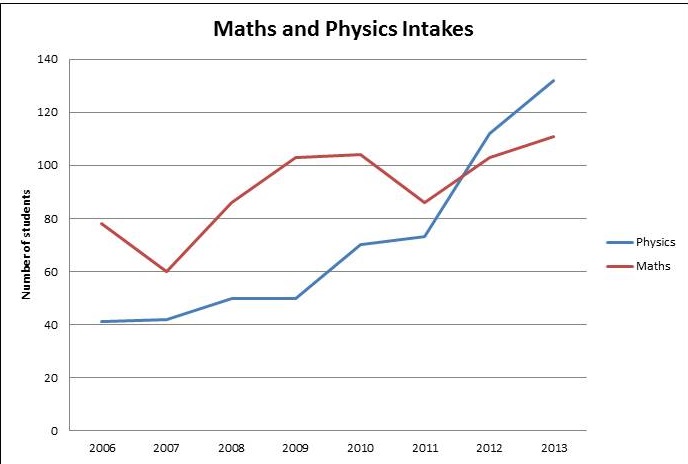
This event is something I started thinking about just as soon as I arrived in Sussex in February this year, and we’ve been preparing for it actively for quite a long time. The background to it is that the School has expanded dramatically over the last few years, especially in the Department of Physics & Astronomy. The Department of Mathematics has grown too, but at a more modest rate. Here, for example, is the annual intake of undergraduate students for our two departments over the last few years:
To cope with this growth in student numbers our complement of academic staff has increased by about 50%, from around 40 just a year ago to a present number of 60. We have also increased our research income considerably over the same period. I hasten to add that none of this is my doing – it’s all down to the hard work of staff who were doing their stuff brilliantly long before I arrived.
Of course it’s great to be Head of a School that is doing so well, but I am very conscious that we need to ensure we continue to provide a good experience for students during this period of growth and also to make sure that has we get bigger, all staff and students feel that they still have a voice in how the School is run. To that end we set up an event in which most members of the staff were invited – academics, administrative and technical support included – as well as our student reps. Kelly McBride, President of the Students Union, also came along. In all, over eighty people attended; there would have been more had we not scheduled it during the local schools’ half-term, which was the only available slot.
The event, held in the spacious Conference Centre in Bramber House, was mainly focussed on teaching and a large part of it involved staff forming groups to discuss various themes: lectures, small group teaching, assessment, feedback, and so on. Before that there were presentations from myself (giving some background, including information about the School’s budget and how our finances work as well as how we measure up in the dreaded League Tables), from our School Administrator talking about issues relating to our admirable office staff, and our Technical Services Supervisor giving a perspective on the challenges facing our technical support staff. Each group comprised a cross-section of the School and each was given a theme to discuss. We then reconvened en masse to share the results of each discussion.
I was a bit nervous beforehand as to how it would all work, especially as there has never been an event of this sort in MPS. I was more nervous before this event than I have been about anything for ages, actually. I wondered how engaged staff would feel and whether the event would turn out to be as inclusive as I’d intended, i.e. whether everyone would feel able to contribute on equal terms. In the end I think it worked out pretty well. In fact we ran over by about an hour, primarily because the discussion was so extensive.
It’s not for me to say whether the day was a success or not, but although there were some things that didn’t work so well overall I was quite satisfied. In particular I was impressed with the number of good practical suggestions that came forward in the final session. We’re going to be working hard to synthesize these comments into a form we can work into our plans for the future.
Most of the comments I heard from people who participated in this event after it finished were positive too. If anyone present happens to read this blog I’d be interested to hear their views through the comments.
Without anticpating the feedback too much, I’m pretty sure that, with a few tweaks (mainly to focus things a bit better with fewer “themes” for discussion), this will become a regular fixture in the MPS calendar. As we get used to such events we’ll probably get even more out of them. I also hope that other Schools of the University of Sussex might find this event a useful model for similar activities they could hold themselves.
I’d like to end with a public “thank you” to everyone who took part and made it so enjoyable and stimulating, to Oonagh and Steve for their input, to Catering and Conference Services for all their help (and yummy food) and above all to the inestimable Miss Lemon for the huge amount of work she put in to the preparations (especially the monopoly theme for the groups, which was inspired..).
Now, however, I am completely knackered and will be going home to have a glass bottle of wine to recover. Busy day tomorrow too. Toodle-pip!
Busy Busy Bee…
Posted in Uncategorized with tags Bee, Osmia Bicolor, University of Sussex on October 26, 2013 by telescoperI saw this the other day and thought I’d post it here because it’s so fascinating. I’ve seen a few of these little bees on the Falmer campus of the University of Sussex, actually, but didn’t know what they were and pay much attention to them. The species is Osmia bicolor, a beautiful solitary bee that inhabits chalk grassland and nests in old snail shells. This one is bringing pieces of grass to camouflage the shell in which she has nested; the video was filmed on the University of Sussex campus.
Follow @telescoperWidening Participation – Outreach versus Bursaries
Posted in Biographical, Education, Finance with tags Bursaries, Outreach, Student Finance, Times Higher, University of Sussex, widening participation on September 5, 2013 by telescoperThis morning I came across a University of Sussex News Item which explains that Sussex has made the shortlist, published today (Thursday 5 September), for Widening Participation or Outreach Initiative of the Year in the Times Higher Education Awards 2013. This piece reminded me of a discussion I had a while ago about the whole approach to widening participation in University education, an issue made all the more serious by the introduction of £9K a year tuition fees. In particular
The University has increased spending on widening participation activities to £8.1 million a year, with over half of this spent on the innovative First Generation Scholars scheme, which supports students who are from low-income backgrounds or who are the first in their family to go to university.
Before commenting on this in any detail I should put my cards on the table. When I went to University in 1982 I was the first in my family ever to go to university. I’m also, at least as far as my immediate family goes, the last. However, in those days there was no need for a First Generation Scholars scheme: there were no tuition fees and, because I don’t come from a wealthy background, I qualified for a full maintenance grant. Life (in Cambridge) as an undergraduate student was fairly comfortable.
Times have changed a lot. Many more people go to university nowadays, but the price is that support for those who don’t have access to family funds is now spread very thinly. There are no full maintenance grants, and the fees are very high. Looking back, though, I don’t think it would have been the tuition fees that might have deterred me from going to university. After all, they don’t have to be paid back until after graduation, and when one’s income exceeds a certain level. What would have made a difference would have been the withdrawal of maintenance. Without the grant, I simply wouldn’t have been able to study without getting a job. Apart from the amount of work involved in doing my degree, the recession of the early 1980s meant that jobs were very hard to come by.
To get back to the news item I mentioned earlier, I have always thought there is a tricky calculation to be made when it comes to designing programmes intended to encourage students from as wide a range of backgrounds as possible to come to university, whether that be to do with socio-economic considerations, gender, ethnicity, age or anything else. The question is whether pumping money into bursaries is actually effective. I can imagine that a large bursary, perhaps equivalent in money terms to the old maintenance grant, would genuinely influence the decision of a prospective student, but if the pot is shared out among very many people the resulting bursaries are fairly modest. How much does a bursary have to be to make a difference? Answers on a postcard.
The other side of the debate is what the balance should be between bursaries and outreach. In a subject like Physics one of the principal obstacles faced by pupils from the state sector is the dire shortage of physics teachers as well as the lack of laboratory facilities in schools. Here in the Department of Physics & Astronomy at Sussex we have a very large (and growing) outreach programme which includes giving kids from local schools the chance to come into our building and do specially designed experiments in a laboratory set aside for the purpose. This kind of activity is intended to get those of school age thinking about doing Physics or Astronomy, which they might not otherwise do.
I don’t see bursaries and outreach as mutually exclusive approaches to the goal of widening participation. It’s more a question of the balance. How do we decide how to allocate resources? Is there research on the effectiveness of different programmes?
As always, comments are welcome via the box below!
Follow @telescoper
Physics and Statistics
Posted in Bad Statistics, Education with tags A-level, Physics, statistics, University of Sussex on August 16, 2013 by telescoperPredictably, yesterday’s newspapers and other media were full of feeble articles about the A-level results, and I don’t just mean the gratuitous pictures of pretty girls opening envelopes and/or jumping in the air. I’ve never met a journalist who understood the concept of statistical significance, which seems to account for the way they feel able to write whatever they like about any numbers that happen to be newsworthy without feeling constrained by mathematical common-sense. Sometimes it’s the ridiculous over-interpretation of opinion polls (which usually have a sampling uncertainty of ±3 %), sometimes its league tables. This time it’s the number of students getting the top grades at A-level.
The BBC, for example, made a lot of fuss about the fall in the % of A and A* A-level grades, to 26.3% this year from 26.6% last year. Anyone with a modicum of statistical knowledge would know, however, that whether this drop means anything at all depends on how many results were involved: the sampling uncertainty depends on size N approximately as √N. For a cohort of 300000 this turns into a percentage uncertainty of about 0.57%, which is about twice as large as the reported fall. The result is therefore “in the noise” – in the sense that there’s no evidence that it was actually harder to get a high grade this year compared with last year – but that didn’t prove a barrier to those editors intent on filling their newspapers and websites with meaningless guff.
Almost hidden among the bilge was an interesting snippet about Physics. It seems that the number of students taking Physics A-level this year has exceeded 35,000 in 2013. That was set as a government target for 2014, so it has been reached a year early. The difference between the number that took Physics this year (35,569) and those who took it in 2006 (27,368) is certainly significant. Whether this is the so-called Brian Cox effect or something else, it’s very good news for the future health of the subject.
On the other hand, the proportion of female Physics students remains around 20%. Over the last three years the proportion has been 20.8%, 21.3% and 20.6% so numerically this year is down on last year, but the real message in these figures is that despite strenuous efforts to increase this fraction, there is no significant change.
As I write I’m formally still on Clearing business, sitting beside the telephone in case anyone needs to talk to me. However, at close of play yesterday the School of Mathematical and Physical Sciences had exceeded its recruitment target by quite a healthy margin. We’re still open for Clearing, though, as our recent expansion means we can take a few more suitably qualified students. Physics and Astronomy did particularly well, and we’re set to welcome our biggest-ever intake into the first year in September 2013. I’m really looking forward to meeting them all.
While I’m on about statistics, here’s another thing. When I was poring over this year’s NSS results, I noticed that only 39 Physics departments appeared in the survey. When I last counted them there were 115 universities in the UK. This number doesn’t include about 50 colleges and other forms of higher education institutions which are also sometimes included in lists of universities. Anyway, my point is that at most about a third of British universities have a physics department.
Now that is a shocking statistic…
Follow @telescoper