Archive for University of Sussex

Physics & Astronomy at Sussex – The Videos!

Posted in Brighton, Education with tags , , on January 20, 2016 by telescoper

So the annual University admissions cycle is getting into gear, which means I’ll be spending quite a few Saturdays giving talks and chatting to prospective students and their parents. As we prepare for  the first of Applicant Visit Days at the University of Sussex (on Saturday 23rd January) we’ve produced a number of videos featuring current students in the Department of Physics & Astronomy. I thought I’d share a couple here.

First here’s Anjelah, a student on our 4-year MPhys degree in Theoretical Physics. She still seems quite keen, despite having taken my Theoretical Physics module in her second year!

Here’s Joe, a 4-year MPhys (Physics) student:

And here’s another by Linn, who is on the BSc in Physics with Astrophysics degree:

You’ll notice that both of them talk about our dedicated study spaces, which the students really like. We’re one of the few Physics & Astronomy Departments in the UK – in fact the only that I know of – that has turned over the management of a large suite of rooms over to our students. We don’t just allow them to use the rooms 24 hours a day; we also give them a budget for furniture and books and they basically decide what they want and how to arrange it all. We also provide a constant supply of free tea and coffee (although I have to admit that I do pop in there from time to time and help myself too).


The Renaissance of Sussex Physics

Posted in Education, The Universe and Stuff with tags , , on January 10, 2016 by telescoper

I’m grateful to Darren Baskill for compiling this plot which shows the number of graduates in Physics (including Astrophysics) from the Department of Physics & Astronomy at the University of Sussex since 2004.

Physics

The last two columns are projections, of course, but we can be rather confident about the numbers. The increase over the last few years is predominantly a result of having  more students enter our Physics programmes, but there has also been a significant increase in progression  rates (as a consequence of excellent teaching), which is why we think the predicted numbers of graduates in 2016 and 2017 are likely to be accurate.

One reason for the recent growth was that in 2008 – a particularly low year on the above graph – the Higher Education Funding Council for England (HEFCE) recognized that Physics departments in the South East were struggling to recruit sufficient numbers of students to be financially viable. This led to the formation of SEPNet, a five-year programme which resulted in an injection of cash to promote physics across the South East of England via a range of activities, including a vigorous outreach programme. This almost immediately began to increase the number of applications to do Physics at Sussex (and indeed across the SEPNet consortium), with the result that 3-4 years later the number of graduates started to climb. SEPNet-2, which started in 2013, has developed this initiative still further, with new initiatives in collaborative graduate education.

(For the record note that I took over as Head of School at the beginning of 2013. I will make no further comment…)

This increase in student numbers has generated more income for the Department, all of which is invested back into teaching, research and other activities (including more outreach!) to create a broader curriculum, more choice for students, and more teaching staff;  the number of staff in Physics & Astronomy has increased from 23 to 40 since 2013, for example.

The income generated by this expansion has allowed us to broaden our research base too. This seems an appropriate time to mention that a new research group in Materials Physics has just been established within the Department. Professor Alan Dalton from the University of Surrey will be joining the Department next month as Professor of Materials Physics, and several further appointments will follow to establish a new research activity in his area of interest.

Alan’s research interests focus on understanding the fundamental structure-property relationships in materials containing one- and two- dimensional structures such as carbon nanotubes, graphene and other layered nanomaterials. Alan is  particularly interested in developing viable applications for nano-structured organic composites (mechanical, electrical and thermal). He is also interested in the directed-assembly and self-assembly of nanostructures into functional macrostructures and more recently interfacing biological materials with synthetic inorganic and organic materials and associated applications.

I’m delighted by this development, which will not only create an entirely new research activity but also add significantly to the range of options we can offer students, as well as new opportunities for undergraduate projects and placements. It also has enormous potential to build links with other Departments, especially Chemistry (which is part of the School of Life Sciences).

To end with, I thought I would also comment on another chart that Darren produced:

FemalePhysics

Apart from showing the very high levels of achievement of our students, this provides quantitative evidence of something I had suspected for some time. Although the proportion of female Physics students overall has hovered around 23% with little change since 2004, the propotion of female students getting first class degrees is significantly higher than for male students.

So there you are. Women are better at Physics than men. Discuss.


MPS 2015 – The Photograph

Posted in Beards, Biographical with tags , on October 15, 2015 by telescoper

I’ve been on the go since 8am today, so I’m going home earlier than usual (i.e. before 7pm). I have just got time before I go to share this picture of  staff of the School of Mathematical and Physical Sciences at the University of Sussex taken one sunny day in September.

MPS Sep 2015

I am proud that in my role as Head of School I have provided such effective leadership. The number of beards has clearly increased since last year!


The Nobel Prize for Neutrino Oscillations

Posted in The Universe and Stuff with tags , , , , , , , , on October 6, 2015 by telescoper

Well the Nobel Prize for Physics in 2015 has been announced. It has been awarded jointly to Takaaki Kajita and Arthur B. McDonald for..

the discovery of neutrino oscillations, which prove that neutrinos have mass.

You can read the full citation here. Congratulations to them both. Some physicists around here were caught by surprise because the 2002 Nobel Prize was also awarded for neutrino physics, but it is fair because this award goes for a direct measurement of neutrino oscillations, which is an important breakthrough in its own right; the earlier award was for measurements of solar neutrinos. For a nice description of the background you could do worse than the Grauniad blog post by Jon Butterworth about neutrino physics.

In brief the a process in which neutrinos (which have three distinct flavour states, associated with the electron, mu and tau leptons) can change flavour as they propagate. It’s quite a weird thing to spring on students who previously thought that lepton number (which denotes the flavour) was always conserved. I remember years ago having to explain this phenomenon to third-year students taking my particle physics course.  I decided to start with an analogy based on more familiar physics, but it didn’t go to plan.

A charged fermion such as an electron (or in fact anything that has a magnetic moment, which would include, e.g. the neutron)  has spin and, according to standard quantum mechanics, the component of this in any direction can  can be described in terms of two basis states, say |\uparrow> and |\downarrow> for spin in the z direction. In general, however, the spin state will be a superposition of these, e.g.

\frac{1}{\sqrt{2}} \left( |\uparrow> + |\downarrow>\right)

In this example, as long as the particle is travelling through empty space, the probability of finding it with spin “up” is  50%, as is the probability of finding it in the spin “down” state. Once a measurement is made, the state collapses into a definite “up” or “down” wherein it remains until something else is done to it.

If, on the other hand, the particle  is travelling through a region where there is a  magnetic field the “spin-up” and “spin-down” states can acquire different energies owing to the interaction between the spin and the magnetic field. This is important because it means the bits of the wave function describing the up and down states evolve at different rates, and this  has measurable consequences: measurements made at different positions yield different probabilities of finding the spin pointing in different directions. In effect, the spin vector of the  particle performs  a sort of oscillation, similar to the classical phenomenon called  precession.

The mathematical description of neutrino oscillations is very similar to this, except it’s not the spin part of the wavefunction being affected by an external field that breaks the symmetry between “up” and “down”. Instead the flavour part of the wavefunction is “precessing” because the flavour states don’t coincide with the eigenstates of the Hamiltonian that describes the neutrinos’ evolution. However, it does require that different neutrino types have intrinsically different energies  in quite  a similar way similar to the spin-precession example. In the context of neutrinos however the difference in energy means a difference in mass, and if there’s a difference in mass then not all flavours of neutrino can be massless.

Although the analogy I used isn’t a perfect, I thought  it was a good way of getting across the basic idea. Unfortunately, however, when I subsequently asked an examination question about neutrino oscillations I got a significant number of answers that said “neutrino oscillations happen when a neutrino travels through a magnetic field….”. Sigh. Neutrinos don’t interact with  magnetic fields, you see…

Anyway, today’s announcment also prompts me to mention that neutrino physics is one of the main research interests in our Experimental Particle Physics group here at Sussex. You can read a recent post here about an important milestone in the development of the NOvA Experiment which involves several members of the Department of Physics and Astronomy in the School of Mathematical and Physical Sciences here at the University of Sussex. Here’s the University of Sussex’s press release on the subject. In fact Art McDonald is a current collaborator of our neutrino physicists, who have been celebrating his award today!

Neutrino physics is a fascinating subject even to someone like me, who isn’t really a particle physicist. My impression of the field is that was fairly moribund until about the turn of the millennium  when the first measurement of atmospheric neutrino oscillations was announced. All of a sudden there was evidence that neutrinos can’t all be massless (as many of us had long assumed, at least as far as lecturing was concerned).  Now the humble neutrino is the subject of intense experimental activity, not only in the USA and UK but all around the world in a way that would have been difficult to predict twenty years ago.

But then, as the physicist Niels Bohr famously observed, “Prediction is very difficult. Especially about the future.”

Flexible Degrees through Sussex Choice

Posted in Education with tags , , , , , , on September 24, 2015 by telescoper

I just noticed an item in the Times Higher about a new development in the approach to degree structures at the University of Leicester. The piece begins

A growing number of students undertake several work placements and internships over the course of their degree to increase their chances of securing a graduate-level job. But an initiative at the University of Leicester aims to make it easier for undergraduates to learn the range of skills that employers are looking for during their studies.

I feel obliged to point out that, in fact, here at the University of Sussex we already have a scheme (called “Sussex Choice”) that already allows this, as well as a number of other initiatives under the same banner. The University of Leicester’s “initiative” is of course a good development, but it’s not as ground-breaking as the Times Higher story suggests.

Sussex choice allows students the following opportunities:

  • “Electives” in topics not connected with the main subject of their course, e.g. science modules for Arts and Humanities students. I teach on one of these, actually.
  • “Pathways” allowing students to transform their degree into a major/minor combination. This is basically what the University of Leicester is proposing to start.
  • “Placements”, i.e. paid internships, which can be either professional (e.g. in industry) or research-based (e.g. working with a research group inside our outside the University). These can be either integrated within the course of study, leading to (for example) a  degree title which includes (“with a Professional Placement” or “with a Research Placement”) or “voluntary”, usually in subject not directly related to the degree subject.
  • “Study Abroad” opportunities, allowing students to take a term or a year abroad at one of our partner universities.

With very few exceptions – generally due to restrictions imposed by accrediting bodies for some degree programmes – It is possible, for example,  in the Department of Physics & Astronomy, for students to do a Research Placement abroad, combining the latter two of these opportunities; two of our students went to Tsinghua University in China to do precisely this, as part of an exchange agreement. You can read about the students’ experiences of these and other opportunities at Berkeley and  Texas in the United States and Uppsala University (Sweden) here.

Here is the PVC Clare Mackie (my boss!)  explaining the Sussex Choice scheme in a little video…

Early Autumn?

Posted in Brighton with tags , , , on August 24, 2015 by telescoper

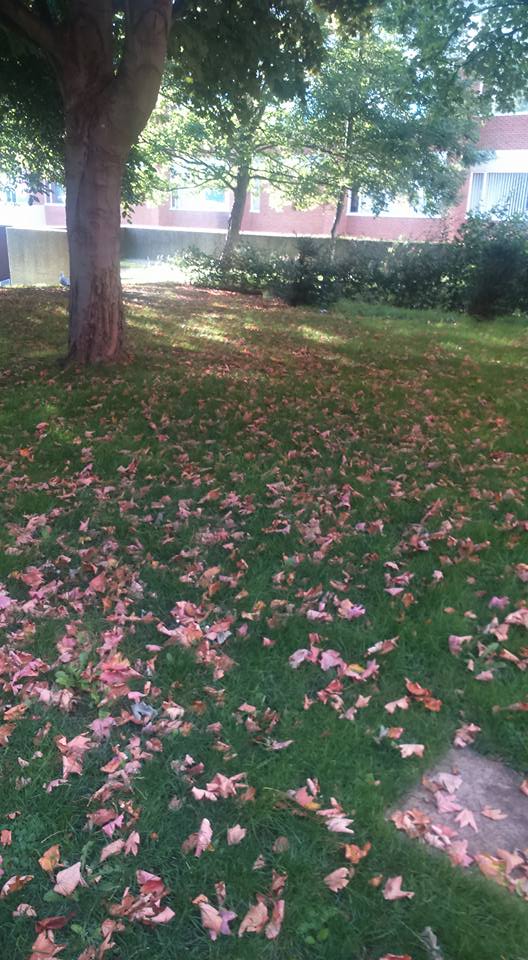
This seems a bit strange. I was on campus yesterday (23rd August) and noticed that the leaves are already falling from the trees:

Early Autmn

Has Autumn come early to Sussex this year? Or is this normal? Anyone noticed anything like this elsewhere?

A Tribute to Richard Attenborough

Posted in Film with tags , , on August 24, 2015 by telescoper

It’s a year to the day since Richard Attenborough passed away, so the University of Sussex (of which he was Chancellor for many years) paid tribute to his life and work in memorable style at the weekend, against the backdrop of the newly-refurbished Attenborough Centre for the Creative Arts, which will be officially opened next week.

Clearing Advice for Mathematics, Physics and Astronomy Applicants!

Posted in Education with tags , , , , on August 12, 2015 by telescoper

Well, tomorrow is the big day. This year’s A-level results are out on Thursday 13th August, with the consequent scramble across the country to confirm places at university. Good luck to all students everywhere waiting for your results. I hope they are what you expected!

For those of you who didn’t get the grades they needed, I have one piece of very clear advice:

1-dont-panic

The clearing system is very efficient and effective, as well as being quite straightforward to use, and there’s still every chance that you will find a place somewhere good. So keep a cool head tomorrow and follow the instructions. You won’t have to make a decision until 5pm tomorrow, so there’s plenty of time to explore all the options.

As a matter of fact we will have places in the School of Mathematical & Physical Sciences at the University of Sussex. Whether you’re interested in Physics, Astrophysics, Astronomy or Mathematics (or even a combination of those subjects), why not just take a look at the University’s Clearing Page and give us a ring? I’ll be helping out on the phone lines tomorrow myself, so I might get to talk to you in person.

Anyway, here’s a video featuring our excellent admissions team, led by the inestimable Rob Evans, to explain the process:

The 2015  National Student Survey results are just out and they show that the Department of Mathematics has a 94% rating for overall satisfaction; the Department of Physics & Astronomy has 91%. Click the relevant link for more information on our courses in Physics & Astronomy or for Mathematics!

Mathematics at Sussex – The Video!

Posted in Education with tags , on July 29, 2015 by telescoper

Here’s a nice little promotional video about the Department of Mathematics at the University of Sussex, featuring some of our lovely staff and students along with some nice views of the campus and the city of Brighton. Above all, I think it captures what a friendly place this is to work and study. Enjoy!

Exciting Opportunity in Experimental Physics at the University of Sussex!

Posted in Education, The Universe and Stuff with tags , , , , on July 23, 2015 by telescoper

Just a quick update on the news that Department of Physics & Astronomy at the University of Sussex has an exciting opportunity in the form of a brand new Chair position in Experimental Physics. The advertisement appeared on the University of Sussex website somedays ago. But it has now appeared on Nature Jobs and the Times Higher websites. It is also in today’s print edition of the Times Higher. At least I think it is. I couldn’t find a copy in W.H. Smith’s when I went there today. Obviously it has sold out because word has got out about this job!

I’m taking the liberty of reposting a description of the new position here, but for fuller details please visit the formal advertisement.

–0–

The School of Mathematical and Physical Sciences seeks to appoint a Professor in Experimental Physics in the Department of Physics & Astronomy to lead the next phase of expansion and diversification of the research portfolio within the School by establishing an entirely new research activity in laboratory-based physics.

Sufficient resources will be made available to the selected candidate to establish a new group at Sussex in their field of experimental physics including, for example, condensed matter (interpreted widely), materials science, nanophysics or biophysics. Applicants in research areas with scope for interdisciplinary collaborations with other Schools at the University of Sussex (e.g. Life Sciences, Engineering & Informatics or Brighton and Sussex Medical School) are encouraged, especially  those in areas with potential for generating research impact, as defined in the context of the UK Research Excellence Framework.

The successful applicant will have a proven track-record of success in obtaining substantial external funding through research grants and/or industrial sponsorship.

The appointee will be supported with substantial (seven-figure) sum for start-up funding and an extensive newly-refurbished laboratory space. The financial package on offer will also support the appointment of at least two further experimental lectureships; the appointed professor is expected to be strongly involved in recruitment to these positions.

Informal (and confidential) enquiries may be addressed in the first instance to the Head of School, Professor Peter Coles (P.Coles@sussex.ac.uk).