Archive for Vernal Equinox

The Vernal Equinox 2026

Posted in Biographical, Maynooth, The Universe and Stuff with tags , , , on March 20, 2026 by telescoper
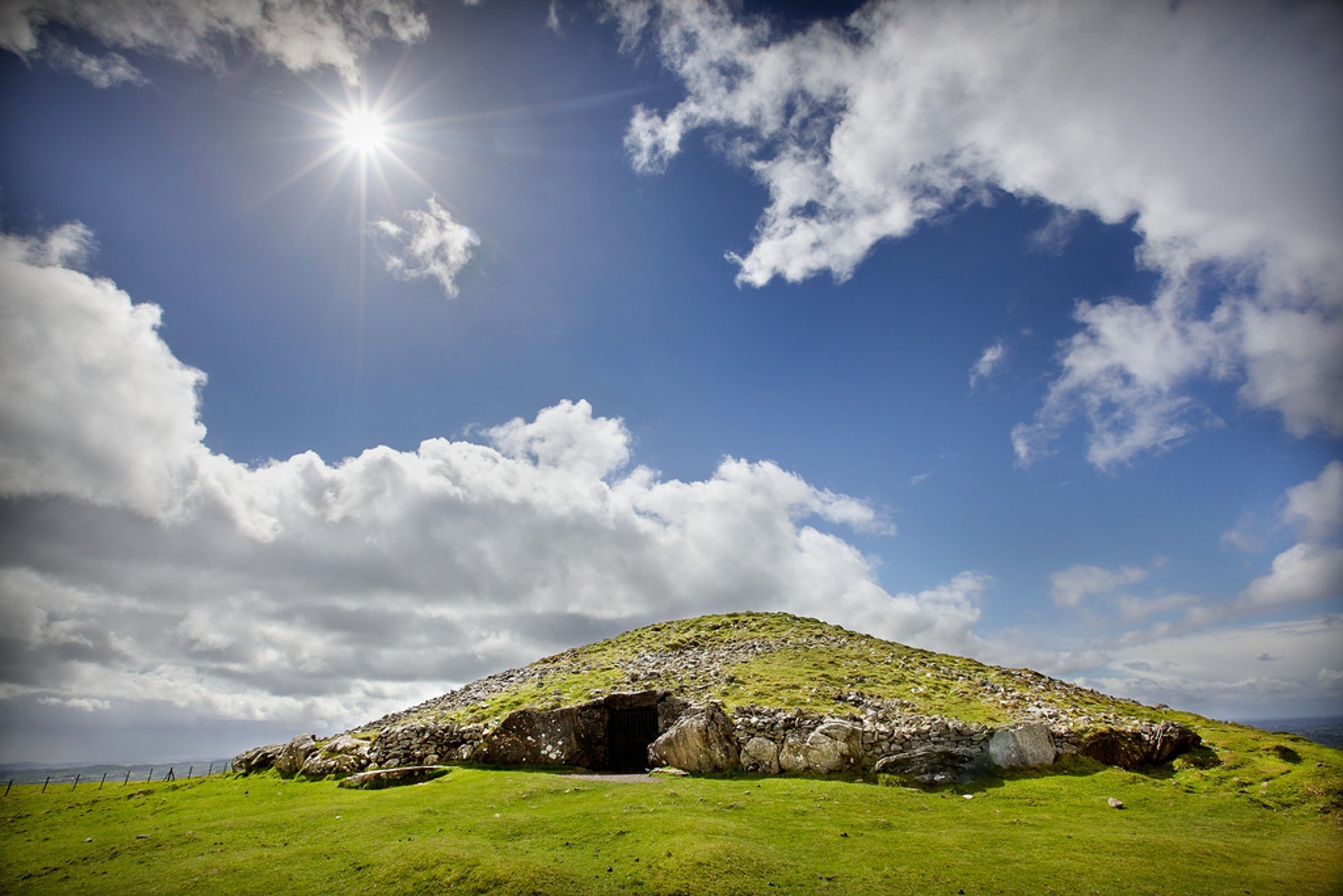
Loughcrew Cairn: for a few days on and around the Vernal Equinox the rays of the rising Sun penetrate the passage and illuminate the back stone.

Just a quick note to mention that the Vernal Equinox (Spring Equinox) in the Northern hemisphere happens this afternoon, Friday 20th March 2026, at 14.46 UTC (which is 2.46 pm local time here in Ireland. Many people in the Northern hemisphere regard the Vernal Equinox as the first day of Spring, atlhough round these parts that is taken to be 1st February (Imbolg). Of course in the Southern hemisphere, this is the Autumnal Equinox.

The date of the Vernal Equinox is often given as 21st March, but in fact it has only been on 21st March twice this century so far (2003 and 2007); it was on 20th March in 2008, has been on 20th March every spring from then until now, and will be until 2044 (when it will be on March 19th). I’ll be retired by then.

Anyway, people sometimes ask me how one can define the `equinox’ so precisely when surely it just refers to a day on which day and night are of equal length, implying that it’s a day not a specific time? The answer is that the equinox is defined by a specific event, the event in question being when the plane defined by Earth’s equator passes through the centre of the Sun’s disk (or, if you prefer, when the centre of the Sun passes through the plane defined by Earth’s equator). Day and night are not necessarily exactly equal on the equinox, but they’re the closest they get. From now until the Autumnal Equinox, days in the Northern hemisphere will be longer than nights, and the days will continue get longer until the Summer Solstice on June 21st before beginning to shorten again.

The Vernal Equinox 2025

Posted in Biographical, Maynooth, The Universe and Stuff with tags , , on March 20, 2025 by telescoper
Loughcrew Cairn: for a few days on and around the vernal equinox the rays of the rising Sun penetrate the passage and illuminate the back stone.

Just a quick note to mention that the Vernal Equinox (Spring Equinox) in the Northern hemisphere happens this morning, Thursday 20th March 2025, at 9.01 UTC (which is 9.01am local time here in Ireland, i.e. in about half an hour). Many people in the Northern hemisphere regard the Vernal Equinox as the first day of spring; of course in the Southern hemisphere, this is the Autumnal Equinox.

The date of the Vernal Equinox is often given as 21st March, but in fact it has only been on 21st March twice this century so far (2003 and 2007); it was on 20th March in 2008, has been on 20th March every spring from then until now, and will be until 2044 (when it will be on March 19th).

Anyway, people sometimes ask me how one can define the `equinox’ so precisely when surely it just refers to a day on which day and night are of equal length, implying that it’s a day not a specific time? The answer is that the equinox is defined by a specific event, the event in question being when the plane defined by Earth’s equator passes through the centre of the Sun’s disk (or, if you prefer, when the centre of the Sun passes through the plane defined by Earth’s equator). Day and night are not necessarily exactly equal on the equinox, but they’re the closest they get. From now until the Autumnal Equinox, days in the Northern hemisphere will be longer than nights, and the days will continue get longer until the Summer Solstice before beginning to shorten again.

P.S. This time last year I was in Barcelona. Time passes.

The Vernal Equinox 2024

Posted in Barcelona, The Universe and Stuff with tags , , on March 20, 2024 by telescoper

Loughcrew (County Meath, Ireland), near Newgrange, an ancient burial site and  traditional place to observe the sunrise at the Equinox

Just a quick note to mention that the Vernal Equinox, or Spring Equinox, (in the Northern hemisphere) took place today, Wednesday 20th March 2024, at 3.06 UTC (which was 4.06am CET, where I am at, though I was sound asleep at the time). Many people in the Northern hemisphere regard the Vernal Equinox as the first day of spring; of course in the Southern hemisphere, this is the Autumnal Equinox.

The date of the Vernal Equinox is often given as 21st March, but in fact it has only been on 21st March twice this century so far (2003 and 2007); it was on 20th March in 2008, has been on 20th March every spring from then until now, and will be until 2044 (when it will be on March 19th). This year the equinox happened before dawn, so sunrise this morning could be taken to be the first sunrise of spring. It felt more like summer, sipping coffee on my terrace in Barcelona:

This reminds me of a strange conversation I had on a plane recently. I was chatting to the person sitting next to me, who happened to be British. When he asked what I did for a living, I replied that I was an astrophysicist. He then complained that he preferred the old days when the Spring Equinox was on March 21st, and that now that Britain was out of the European Union he hoped it would change back…

Anyway, people sometimes ask me how one can define the `equinox’ so precisely when surely it just refers to a day on which day and night are of equal length, implying that it’s a day not a specific time?

The answer is that the equinox is defined by a specific event, the event in question being when the plane defined by Earth’s equator passes through the centre of the Sun’s disk (or, if you prefer, when the centre of the Sun passes through the plane defined by Earth’s equator). Day and night are not necessarily exactly equal on the equinox, but they’re the closest they get. From now until the Autumnal Equinox, days in the Northern hemisphere will be longer than nights, and they’ll get longer until the Summer Solstice before beginning to shorten again.

The Vernal Equinox 2023

Posted in Biographical, The Universe and Stuff with tags , , , , , on March 20, 2023 by telescoper

The Vernal Equinox, or Spring Equinox, (in the Northern hemisphere) takes place on Monday 20th March 2023, at 21.24 UTC (which is this evening at 9.24pm local Irish Time). I’m posting this 12 hours in advance of the big event to give you plenty of notice.

Many people regard the Vernal Equinox as the first day of spring; of course in the Southern hemisphere this is the Autumnal Equinox. The date of the Vernal Equinox is usually given as 21st March, but in fact it has only been on 21st March twice this century so far (2003 and 2007); it was on 20th March in 2008, has been on 20th March every spring from then until now, and will be until 2044 (when it will be on March 19th). This year, however, the Sun will already have set in Ireland before the Equinox, so sunrise tomorrow 21st March could reasonably be taken to be the first dawn of Spring.

People sometimes ask me how one can define the `equinox’ so precisely when surely it just refers to a day on which day and night are of equal length, implying that it’s a day not a specific time?

The answer is that the equinox is defined by a specific event, the event in question being when the plane defined by Earth’s equator passes through the centre of the Sun’s disk (or, if you prefer, when the centre of the Sun passes through the plane defined by Earth’s equator). Day and night are not necessarily exactly equal on the equinox, but they’re the closest they get. From now until the Autumnal Equinox, days in the Northern hemisphere will be longer than nights, and they’ll get longer until the Summer Solstice before beginning to shorten again.

Loughcrew (County Meath), near Newgrange, an ancient burial site and a traditional place to observe the sunrise at the Equinox

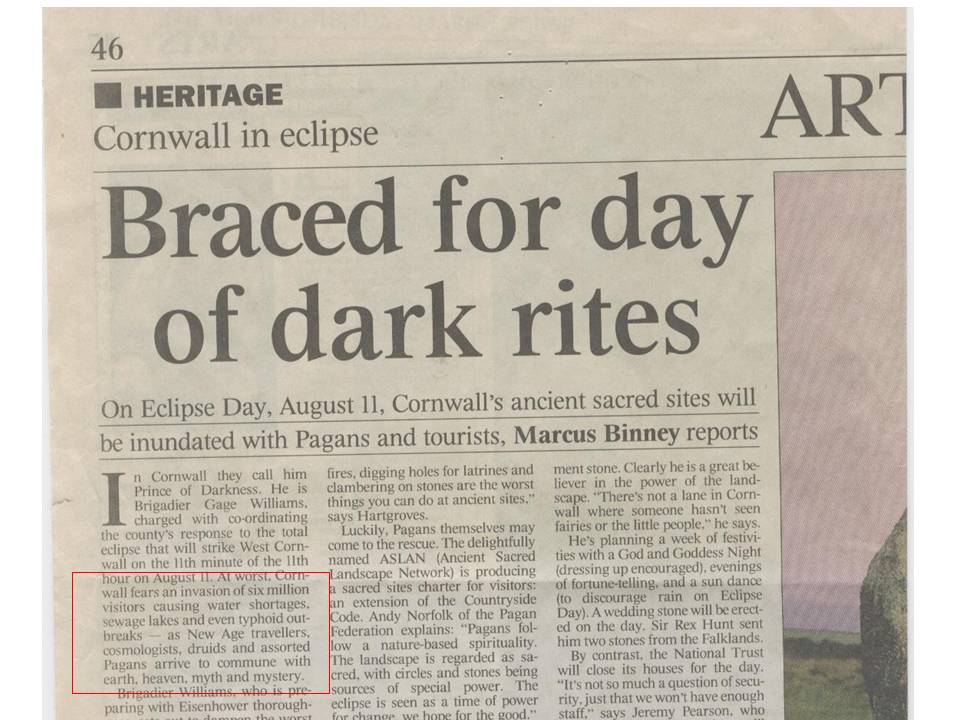
There’s usually a lot of neo-Pagan nonsense going around at the Solstices and Equinoxes, which reminded me of the following clipping related to an even more significant astronomical event, a total eclipse. I found it in The Times, in 1999, just before the total eclipse that was visible from parts of the United Kingdom on August 11th of that year. It was a feature about the concerns raised by certain residents of Cornwall about the possible effects of the sudden influx of visitors on the local community. Here is a scan  of a big chunk of the story, which you probably can’t read…

.and here is a blow-up of the section shown in the red box, which places cosmologists such as myself in rather strange company:

In protest, I wrote a letter to the The Times saying that, as a cosmologist, I thought this piece was very insulting … to Druids. They didn’t publish it.

The Vernal Equinox 2022

Posted in Maynooth with tags , , , on March 20, 2022 by telescoper

Just a quick note to say that the Vernal Equinox, or Spring Equinox, (in the Northern hemisphere) takes place this afternoon at 15.33 UTC (which is 3.33 pm local Irish Time). Many people regard this as the first day of spring. The weather in Maynooth is certainly spring-like. Of course in the Southern hemisphere this is the Autumnal Equinox.

The date of the Vernal Equinox is usually given as 21st March, but in fact it has only been on 21st March twice this century so far (2003 and 2007); it was on 20th March in 2008, has been on 20th March every spring from then until now, and will be until 2044 (when it will be on March 19th).

People sometimes ask me how one can define the `equinox’ so precisely when surely it just refers to a day on which day and night are of equal length, implying that it’s a day not a specific time?

The answer is that the equinox is defined by a specific event, the event in question being when the plane defined by Earth’s equator passes through the centre of the Sun’s disk (or, if you prefer, when the centre of the Sun passes through the plane defined by Earth’s equator). Day and night are not necessarily exactly equal on the equinox, but they’re the closest they get. From now until the Autumnal Equinox days in the Northern hemisphere will be longer than nights, and they’ll get longer until the Summer Solstice before beginning to shorten again.

Loughcrew (County Meath), near Newgrange, an ancient burial site and a traditional place to observe the sunrise at the Equinox

Here in Ireland we celebrated Saint Patrick’s day on March 17th, the reputed date of his death in 461 AD. Although he may have been born in Wales, nobody really knows for sure precisely where St Patrick was born, though, so it would be surprising if the when were any better known.

In any case, it wasn’t until the 17th Century that Saint Patrick’s feast day was placed on the universal liturgical calendar in the Catholic Church. In the thousand years that passed any memory of the actual date was probably lost, so the Equinox was perhaps rebranded for the purpose.

The early Christian church in Ireland incorporated many pre-Christian traditions that survived until roughly the 12th century, including the ancient festival of Ēostre (or Ostara), the goddess of spring associated with the spring equinox after whom Easter is named. During this festival, eggs were used a symbol of rebirth and the beginning of new life and a hare or rabbit was the symbol of the goddess and fertility. In turn the Celtic people of Ireland probably adapted their own beliefs to absorb much older influences dating back to the stone age. St Patrick’s Day and Easter therefore probably both have their roots in prehistoric traditions around the Spring Equinox, although the direct connection has long been lost.

The Vernal Equinox 2021

Posted in History, Maynooth with tags , , , , on March 20, 2021 by telescoper

It is 9.37am Local Time in Ireland on Saturday 20th March 2021 which means that the Vernal Equinox or Spring Equinox (in the Northern hemisphere) is taking place right now!

The Spring Equinox jumped back a day last year because 2020 was a leap year and now is gradually moving forward again. Of course the actual date depends on where you are in the world. The date last year was 20th March (early in the morning) in Ireland, but 19th March (late at night) in New York.

People sometimes ask me how one can define the `equinox’ so precisely when surely it just refers to a day on which day and night are of equal length, implying that it’s a day not a specific time?

The answer is that the equinox is defined by a specific event, the event in question being when the plane defined by Earth’s equator passes through the centre of the Sun’s disk (or, if you prefer, when the centre of the Sun passes through the plane defined by Earth’s equator). Day and night are not necessarily exactly equal on the equinox, but they’re the closest they get. From now until the Autumnal Equinox days in the Northern hemisphere will be longer than nights, and they’ll get longer until the Summer Solstice before beginning to shorten again.

Loughcrew (County Meath), near Newgrange, an ancient burial site and a traditional place to observe the sunrise at the Equinox

Here in Ireland we celebrated Saint Patrick’s day on March 17th, the reputed date of his death in 461 AD. Nobody really knows where St Patrick was born, though, so it would be surprising if the when were any better known.

In any case, it wasn’t until the 17th Century that Saint Patrick’s feast day was placed on the universal liturgical calendar in the Catholic Church. In the thousand years that passed any memory of the actual date was probably lost, so the Equinox was perhaps rebranded for the purpose.

The early Christian church in Ireland incorporated many pre-Christian traditions that survived until roughly the 12th century, including the ancient festival of Ēostre (or Ostara), the goddess of spring associated with the spring equinox after whom Easter is named. During this festival, eggs were used a symbol of rebirth and the beginning of new life and a hare or rabbit was the symbol of the goddess and fertility. In turn the Celtic people of Ireland probably adapted their own beliefs to absorb much older influences dating back to the stone age. St Patrick’s Day and Easter therefore probably both have their roots in prehistoric traditions around the Spring Equinox, although the direct connection has long been lost.

The Vernal Equinox 2020

Posted in History, Maynooth with tags , , , , on March 20, 2020 by telescoper

With everything else going on I quite forgot that the Vernal Equinox or Spring Equinox (in the Northern hemisphere) took place today (Friday 20th March) at 3.49am (Irish Time). This is in fact the earliest Spring Equinox for 124 years, the fact that 2020 is a leap year moving it a day earlier in our calendar. It’s a lovely day in Maynooth too!

People sometimes ask me how one can define the `equinox’ so precisely when surely it just refers to a day on which day and night are of equal length, implying that it’s a day not a specific time?

The answer is that the equinox is defined by a specific event, the event in question being when the plane defined by Earth’s equator passes through the centre of the Sun’s disk (or, if you prefer, when the centre of the Sun passes through the plane defined by Earth’s equator). Day and night are not necessarily exactly equal on the equinox, but they’re the closest they get. From now until the Autumnal Equinox days in the Northern hemisphere will be longer than nights, and they’ll get longer until the Summer Solstice before beginning to shorten again.

Loughcrew (County Meath), near Newgrange, an ancient burial site and a traditional place to observe the sunrise at the Equinox

Here in Ireland we celebrated Saint Patrick’s day on March 17th, the reputed date of his death in 461 AD. Nobody really knows where St Patrick was born, though, so it would be surprising if the when were any better known.

In any case, it wasn’t until the 17th Century that Saint Patrick’s feast day was placed on the universal liturgical calendar in the Catholic Church. In the thousand years that passed any memory of the actual date was probably lost, so the Equinox was perhaps rebranded for the purpose.

The early Christian church in Ireland incorporated many pre-Christian traditions that survived until roughly the 12th century, including the ancient festival of Ēostre (or Ostara), the goddess of spring associated with the spring equinox after whom Easter is named. During this festival, eggs were used a symbol of rebirth and the beginning of new life and a hare or rabbit was the symbol of the goddess and fertility. In turn the Celtic people of Ireland probably adapted their own beliefs to absorb much older influences dating back to the stone age.

St Patrick’s Day and Easter therefore probably both have their roots in prehistoric traditions around the Spring Equinox, although the direct connection has long been lost.

Spring Equinox in the Ancient Irish Calendar | 20 March 2019

Posted in Uncategorized with tags , , , on March 20, 2019 by telescoper

I’m sharing this interesting post with a quick reminder that the Vernal Equinox in the Northern Hemisphere occurs today, 20th March 2019, at 21:58 GMT.

Equinoctial Molehills

Posted in Biographical, Bute Park, The Universe and Stuff with tags , , , on March 20, 2018 by telescoper

Very busy today, what with a return to lecturing in Cardiff and so on, so I’ve just got time for a quick post to mark the fact that the Vernal Equinox in the Northern Hemisphere took place today, Tuesday 20th March 2018, at 16.15 UTC (which is 16.15 GMT). This means that the Sun has just crossed the celestial equator on its journey Northward. Some people regard this as the first day of spring, which is fair enough as it does correspond fairly well to the end of the Six Nations rugby.

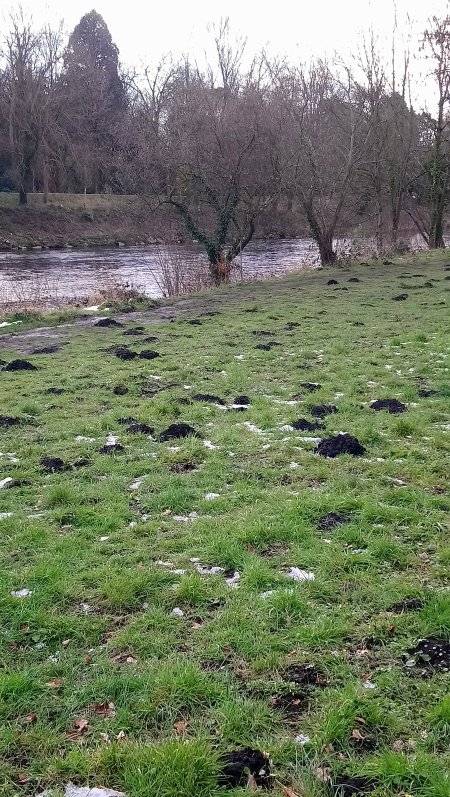
It wasn’t exactly spring weather when I walked into work this morning, as there are still bits of snow around in Bute Park.

More significantly, a huge number of molehills have appeared. Not quite a mole of molehills, but still quite a few. I’m not sure of the reason for all this molar activity. Perhaps moles have special rituals for marking the Vernal Equinox?

Incidentally I was dismayed to see that my Royal Astronomical Society diary gives the time of the 2018 Vernal Equinox as 16.16 GMT while the wikipedia page I linked to above gives 16.15 GMT. I find a discrepancy of this magnitude extremely unnerving. Or am I making a mountain out of a molehill?

My Last Will – by Sir Walter Raleigh (no, not that one…)

Posted in Biographical, Poetry with tags , , , on March 20, 2017 by telescoper

The vernal equinox in the Northern hemisphere passed this morning at 10.29 GMT, heralding the start of spring – a time when naturally our thoughts turn to death and decay. Which is no doubt why I remembered this poem  I came across some time ago but for some reason haven’t posted yet. It’s quite astonishing how many websites attribute this verse to the Elizabethan courtier and explorer Sir Walter Raleigh, who was indeed an accomplished poet, but the use of language is very clearly not of that period. In fact this was written by Professor Sir Walter Alexander Raleigh (1861-1922). What he says in this poem about his own untidiness is I’m afraid very true also of me, but the semi-joking tone with which he opens gives way to something far more profound, and I think the last two lines are particularly powerful.

When I am safely laid away,
Out of work and out of play,
Sheltered by the kindly ground
From the world of sight and sound,
One or two of those I leave
Will remember me and grieve,
Thinking how I made them gay
By the things I used to say;
— But the crown of their distress
Will be my untidiness.

What a nuisance then will be
All that shall remain of me!
Shelves of books I never read,
Piles of bills, undocketed,
Shaving-brushes, razors, strops,
Bottles that have lost their tops,
Boxes full of odds and ends,
Letters from departed friends,
Faded ties and broken braces
Tucked away in secret places,
Baggy trousers, ragged coats,
Stacks of ancient lecture-notes,
And that ghostliest of shows,
Boots and shoes in horrid rows.
Though they are of cheerful mind,
My lovers, whom I leave behind,
When they find these in my stead,
Will be sorry I am dead.

They will grieve; but you, my dear,
Who have never tasted fear,
Brave companion of my youth,
Free as air and true as truth,
Do not let these weary things
Rob you of your junketings.

Burn the papers; sell the books;
Clear out all the pestered nooks;
Make a mighty funeral pyre
For the corpse of old desire,
Till there shall remain of it
Naught but ashes in a pit:
And when you have done away
All that is of yesterday,
If you feel a thrill of pain,
Master it, and start again.

This, at least, you have never done
Since you first beheld the sun:
If you came upon your own
Blind to light and deaf to tone,
Basking in the great release
Of unconsciousness and peace,
You would never, while you live,
Shatter what you cannot give;
— Faithful to the watch you keep,
You would never break their sleep.

Clouds will sail and winds will blow
As they did an age ago
O’er us who lived in little towns
Underneath the Berkshire downs.
When at heart you shall be sad,
Pondering the joys we had,
Listen and keep very still.
If the lowing from the hill
Or the tolling of a bell
Do not serve to break the spell,
Listen; you may be allowed
To hear my laughter from a cloud.

Take the good that life can give
For the time you have to live.
Friends of yours and friends of mine
Surely will not let you pine.
Sons and daughters will not spare
More than friendly love and care.
If the Fates are kind to you,
Some will stay to see you through;
And the time will not be long
Till the silence ends the song.

Sleep is God’s own gift; and man,
Snatching all the joys he can,
Would not dare to give his voice
To reverse his Maker’s choice.
Brief delight, eternal quiet,
How change these for endless riot
Broken by a single rest?
Well you know that sleep is best.

We that have been heart to heart
Fall asleep, and drift apart.
Will that overwhelming tide
Reunite us, or divide?
Whence we come and whither go
None can tell us, but I know
Passion’s self is often marred
By a kind of self-regard,
And the torture of the cry
“You are you, and I am I.”
While we live, the waking sense
Feeds upon our difference,
In our passion and our pride
Not united, but allied.

We are severed by the sun,
And by darkness are made one.