ESA/Euclid/Euclid Consortium/NASA. Background galaxies: NASA, ESA, and S. Beckwith (STScI) and the HUDF Team.
Since I’ve been working today on stuff related to ESA’s Euclid mission, I thought I would post a brief update on the mission status before I go home. The official channel to which I refer you for full updates is here.
A message was sent out on Saturday to member of the Euclid Consortium indicating that the commissioning phase of the Euclid satellite was essentially completed, although with some issues still to be fixed. In particular, as has previously been reported, there is an issue with stray light in the VIS instrument, which will have to be coped with. To prevent stray sunlight getting onto VIS detectors, Euclid will be configured to operate at a range of specific angles with respect to the Sun. This means that the survey strategy will have to be adapted in order to be as optimal as possible with this new constraint.
The next phase after the commissioning phase is called performance verification, for which control switches over to the science ground segment. The operations team will then operate the spacecraft in the same way as required for the full survey in order to assess the performance of the instruments and obtain calibration data ahead of the start of the full survey.
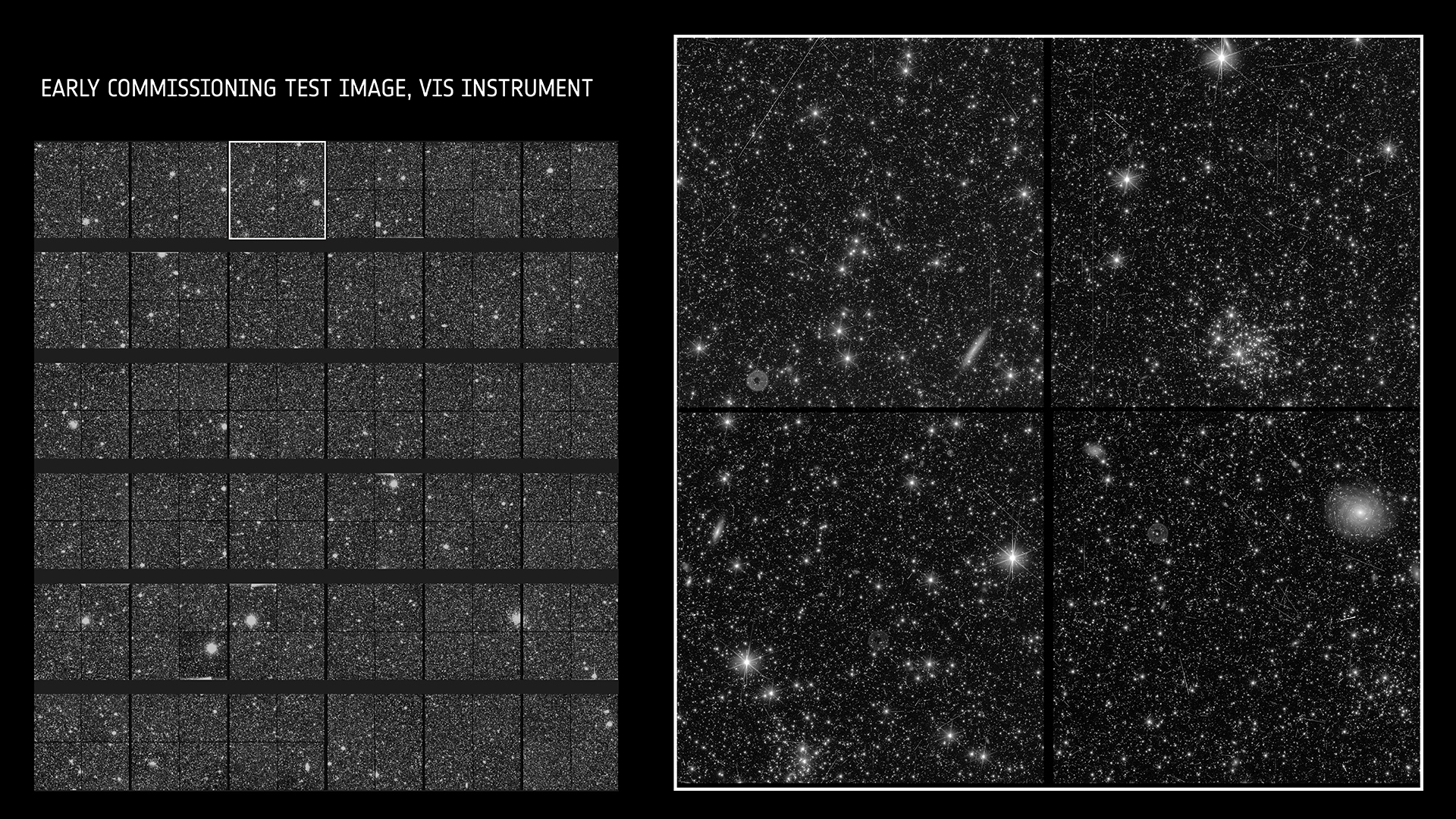
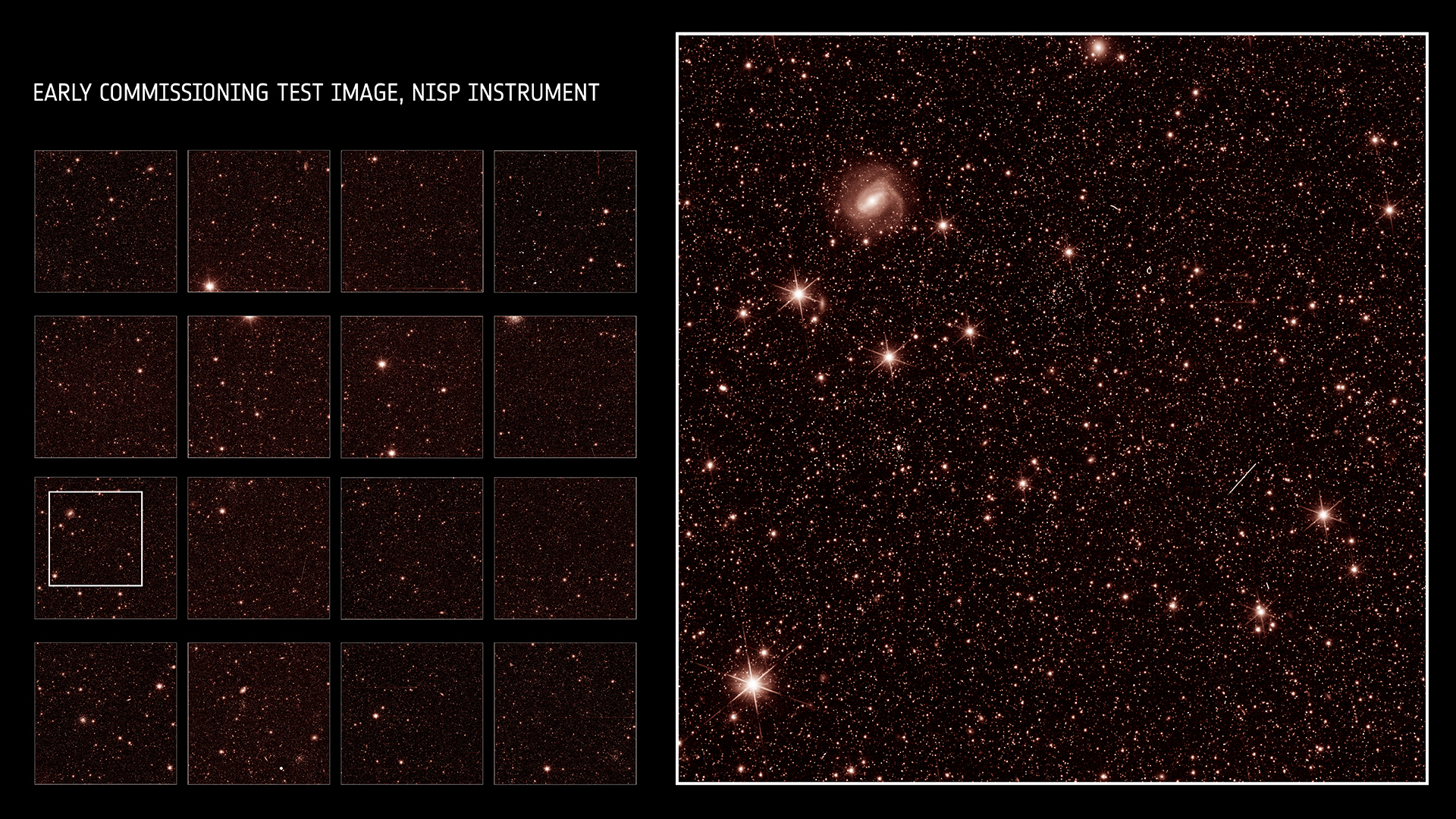
As I promised a couple of days ago, the “first light” images from the European Space Agency’s Euclid mission have now been released. You can find all the details here, but a summary is that these are “engineering” images, rather than part of the full survey to be undertaken by Euclid, and the commissioning of the instruments is not quite finished, but the telescope is now in focus and both instruments (the visual instrument, VIS, and the Near-Infrared Spectrometer & Photometer, NISP) are working well enough to show some preliminary results.
Anyway, here are the pictures released today, first from VIS:
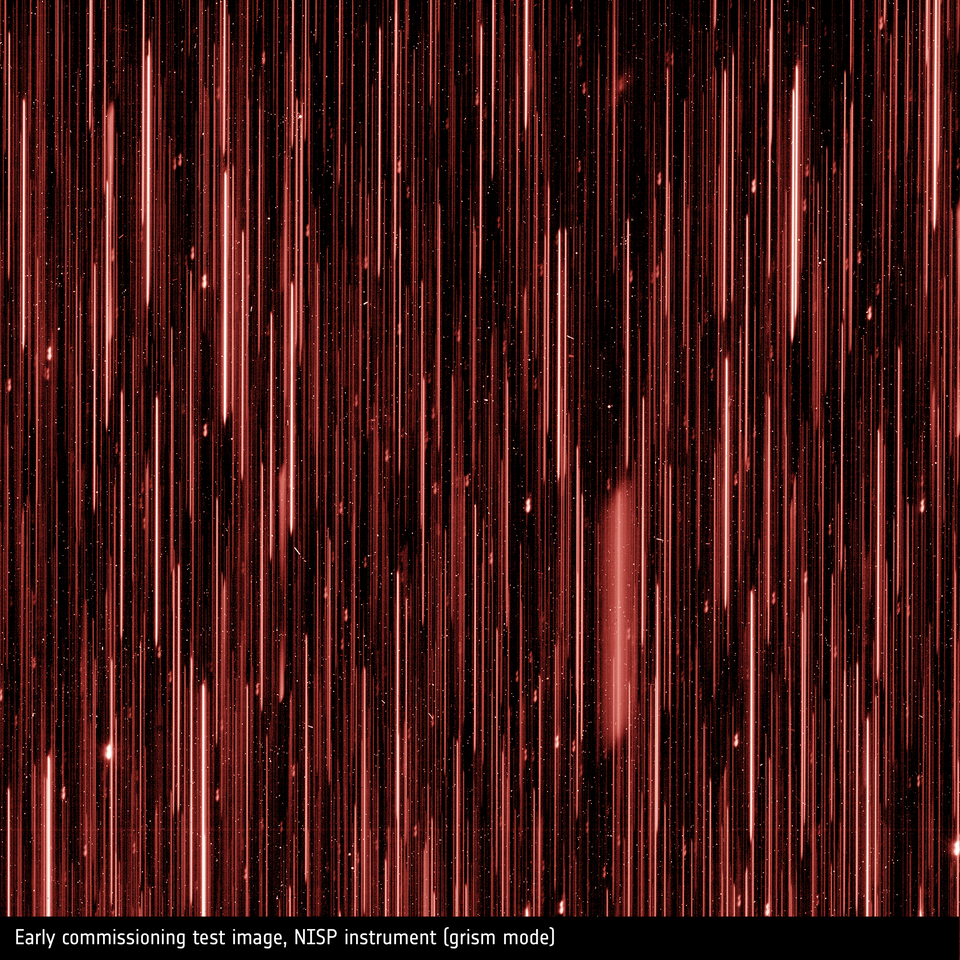
This final one, also from NISP, shows it working in grism mode, which allows the light from sources to be dispersed into a spectrum, enabling us to get much more information about the sources galaxies than a straightforward image would. The resulting images look a bit strange to the untrained eye – as the light from a point is spread out into a streak – but the result is wonderfully rich in information:
For more information – and some higher-resolution images – see the official Euclid press release here.
For myself, I’d just say these images are absolutely amazing given that they were taken during the commissioning phase and the instruments aren’t fully tweaked yet. Over the next few weeks, there will be a performance verification phase which will tell us how good Euclid will be at meeting its science goals. But so far it’s all looking very good indeed. I’ve only ever seen simulations of what would come out and it’s very exciting to see what the real thing looks like!
Hats off to the brilliant instrumentation experts who not only designed and built the kit but who have been working so hard on the commissioning. They’ve done so much in the month that has passed since the launch!
P.S. You can find here a nice explainer of some of the instrumental artefacts you might have spotted in the images above.
The views presented here are personal and not necessarily those of my employer (or anyone else for that matter).
Feel free to comment on any of the posts on this blog but comments may be moderated; anonymous comments and any considered by me to be vexatious and/or abusive and/or defamatory will not be accepted. I do not necessarily endorse, support, sanction, encourage, verify or agree with the opinions or statements of any information or other content in the comments on this site and do not in any way guarantee their accuracy or reliability.


 In the Dark