Archive for 2010

Publish or be Damned

Posted in Science Politics, The Universe and Stuff with tags , , , , , , , , , on August 23, 2010 by telescoper

For tonight’s post I thought I’d compose a commentary on a couple of connected controversies suggested by an interestingly provocative piece by Nigel Hawkes in the Independent this weekend entitled Peer Review journals aren’t worth the paper they’re written on. Here is an excerpt:

The truth is that peer review is largely hokum. What happens if a peer-reviewed journal rejects a paper? It gets sent to another peer-reviewed journal a bit further down the pecking order, which is happy to publish it. Peer review seldom detects fraud, or even mistakes. It is biased against women and against less famous institutions. Its benefits are statistically insignificant and its risks – academic log-rolling, suppression of unfashionable ideas, and the irresistible opportunity to put a spoke in a rival’s wheel – are seldom examined.

In contrast to many of my academic colleagues I largely agree with Nigel Hawkes, but I urge you to read the piece yourself to see whether you are convinced by his argument.

I’m not actually convinced that peer review is as biased as Hawkes asserts. I rather think that the strongest argument against  the scientific journal establishment  is the ruthless racketeering of the academic publishers that profit from it.  Still, I do think he has a point. Scientists who garner esteem and influence in the public domain through their work should be required to defend it our in the open to both scientists and non-scientists alike. I’m not saying that’s easy to do in the face of ill-informed or even illiterate criticism, but it is in my view a necessary price to pay, especially when the research is funded by the taxpayer.

It’s not that I think many scientists are involved in sinister activities, manipulating their data and fiddling their results behind closed doors, but that as long as there is an aura of secrecy it will always fuel the conspiracy theories on which the enemies of reason thrive. We often hear the accusation that scientists behave as if they are priests. I don’t think they do, but there are certainly aspects of scientific practice that make it appear that way, and the closed world of academic publishing is one of the things that desperately needs to be opened up.

For a start, I think we scientists should forget academic journals and peer review, and publish our results directly in open access repositories. In the old days journals were necessary to communicate scientific work. Peer review guaranteed a certain level of quality. But nowadays it is unnecessary. Good work will achieve visibility through the attention others give it. Likewise open scrutiny will be a far more effective way of identifying errors than the existing referee process. Some steps will have to be taken to prevent abuse of the access to databases and even then I suspect a great deal of crank papers will make it through. But in the long run, I strongly believe this is the only way that science can develop in the age of digital democracy.

But scrapping the journals is only part of the story. I’d also argue that all scientists undertaking publically funded research should be required to put their raw data in the public domain too. I would allow a short proprietary period after the experiments, observations or whatever form of data collection is involved. I can also see that ethical issues may require certain data to be witheld, such as the names of subjects in medical trials. Issues will also arise when research is funded commercially rather than by the taxpaper. However, I still maintain that full disclosure of all raw data should be the rule rather than the exception. After all, if it’s research that’s funded by the public, it is really the public that owns the data anyway.

In astronomy this is pretty much the way things operate nowadays, in fact. Maybe stargazers have a more romantic way of thinking about scientific progress than their more earthly counterparts, but it is quite normal – even obligatory for certain publically funded projects – for surveys to release all their data. I used to think that it was enough just to publish the final results, but I’ve become so distrustful of the abuse of statistics throughout the field that I think it is necessary for independent scientists to check every step of the analysis of every major result. In the past it was simply too difficult to publish large catalogues in a form that anyone could use, but nowadays that is simply no longer the case. Astronomers have embraced this reality, and it is liberated them.

To give a good example of the benefits of this approach, take the Wilkinson Microwave Anisotropy Probe (WMAP) which released full data sets after one, three, five and seven years of operation. Scores of groups around the world have done their best to find glitches in the data and errors in the analysis without turning up anything particularly significant. The standing of the WMAP team is all the higher for having done this, although I don’t know whether they would have chosen to had they not been required to do so under the terms of their funding!

In the world of astronomy research it’s not at all unusual to find data for the object or set of objects you’re interested in from a public database, or by politely asking another team if they wouldn’t mind sharing their results. And if you happen to come across a puzzling result you suspect might be erroneous and want to check the calculations, you just ask the author for the numbers and, generally speaking, they send the numbers to you. A disagreement may ensue about who is right and who is wrong, but that’s the way science is supposed to work.  Everything must be open to question. It’s often a chaotic process, but it’s a process all the same, and it is one that has servedus incredibly well.

I was quite surprised recently to learn that this isn’t the way other scientific disciplines operate at all. When I challenged the statistical analysis in a paper on neuroscience recently, my request to have a look at the data myself was greeted with a frosty refusal. The authors seemed to take it as a personal affront that anyone might have the nerve to question their study. I had no alternative but to go public with my doubts, and my concerns have never been satisfactorily answered. How many other examples are there wherein application of the scientific method has come to a grinding halt because of compulsive secrecy? Nobody likes to have their failings exposed in public, and I’m sure no scientists likes see an error pointed out, but surely it’s better to be seen to have made an error than to maintain a front that perpetuates the suspicion of malpractice?

Another, more topical, example concerns the University of East Anglia’s Climatic Research Unit which was involved in the Climategate scandal and which has apparently now decided that it wants to share its data. Fine, but I find it absolutely amazing that such centres have been able to get away with being so secretive in the past. Their behaviour was guaranteed to lead to suspicions that they had something to hide. The public debate about climate change may be noisy and generally ill-informed but it’s a debate we must have out in the open.

I’m not going to get all sanctimonious about `pure’ science nor am I going to question the motives of  individuals working in disciplines I know very little about. I would, however, say that from the outside it certainly appears that there is often a lot more going on in the world of academic research than the simple quest for knowledge.

Of course there are risks in opening up the operation of science in the way I’m suggesting. Cranks will probably proliferate, but we’ll no doubt get used to them- I’m a cosmologist and I’m pretty much used to them already! Some good work may find it a bit harder to be recognized. Lack of peer review may mean more erroneous results see the light of day. Empire-builders won’t like it much either, as a truly open system of publication will be a great leveller of reputations. But in the final analysis, the risk of sticking to our arcane practices is far higher. Public distrust will grow and centuries of progress may be swept aside on a wave of irrationality. If the price for avoiding that is to change our attitude to who owns our data, then it’s a price well worth paying.

Share/Bookmark

Dingbats, surface readings, and literally what it says

Posted in Crosswords with tags , , , , , , , on August 22, 2010 by telescoper

It’s been a long time since I posted anything in the box marked crosswords, so I thought I’d remedy that today.

As I’ve explained before, I’m a regular entrant in the monthly Azed competition in the Observer. There’s actually an Azed cryptic crossword every week, but every four weeks there’s a special one  in which contestants have not only to complete the (usually quite tricky) puzzle, but also to supply a clue for a word for which only a definition was given. There are prizes for the best clues each time, as judged by Azed himself, and a league table is built up over the year.

I don’t mind admitting that I much prefer solving the puzzles to setting clues of my own. Perhaps that’s consistent with the fact that I don’t enjoy setting examination questions much! However, I do enter the clue-writing competition every time it comes up. I’ve never won it, but I’ve had several VHC (Very Highly Commended) which count in the honours table. I’ve gradually improved my ranking year on year, and perhaps one day I’ll actually win the  coveted Azed bookplate. However, I’ve got a long way to go before I can produce clues of the ingenuity and subtlety of the regular winners.

Last year, I started brightly and was for a long time neck-and-neck with the novelist Colin Dexter in the league table. However, over the last few months my clues didn’t find favour with Mr Azed while his were much better. He finished in 8th place, while I languished in joint 40th; the complete table is here.

My best clue last year (I think) was in Azed 1967 for the word SUBORDINATELY:

In the manner of an inferior sandwich, prepared ‘to a New York deli recipe’ (13)

It’s a fairly straightforward one, as these things go, consisting of two parts, a definition and a cryptic allusion to the word being clued.  “In the manner of an inferior..” is the definition, meaning “subordinately”. The cryptic allusion in this case is the word “SUB” (meaning an American-style sandwich) followed by an anagram of the collection of letters indicated by what’s inside the quotes, i.e. to+a+NY+deli+r, the NY and r being standard abbreviations. “Prepared” is an anagram indicator.

The clue also has a nice surface reading, I think, which is an aspect many setters don’t seem to bother with. The surface reading is just how the clue reads when you don’t try to interpret it as a cryptic clue. I much prefer clues that read like something that  as could be written or said in a different context to a crossword, as well as making grammatical and syntactical sense.

The winning clue for this word was by D.F. Manley, who is one of the setters for the Times, with an &lit clue:

As in ‘B-role’ duty possibly (13)

This type of clue is regarded by many setters as the cleverest kind, but I have to admit that I have a love-hate relationship with them. Here the definition and cryptic allusions are supplied not by two different parts of the clue, but by two different readings of the whole thing. The cryptic allusion in this case is an anagram indicated by the word “possibly”, i.e. SUBORDINATELY is an anagram of AS IN B ROLE DUTY. The definition is “&lit”, i.e. “and literally what it says”. This is where I think setters push the boundaries a bit too far. I don’t think “As in B-role duty possibly” is really a very fair definition of SUBORDINATELY, and this clue has a very clumsy surface reading too. It’s undoubtedly clever, but I don’t like it as much as some of the others. In general I think these kind of clues are more appreciated by setters, who know how hard they are to concoct, than by solvers.

Anyway, today saw the announcement of the results of the first round of the current Azed competition, and I got another VHC for the slightly obscure word FOULARD (a kind of scarf or handkerchief). My clue was

A square covering La Dame’s head? (7)

This is an “&lit” too, but the cryptic allusion isn’t an anagram. FOUR is a perfect square so “A square covering La” is FOU(LA)R, and Dame’s Head is D (first letter of “Dame”), hence FOULARD. The whole clue also serves as a fair definition, I think, because a “square” can be a scarf (the wikipedia example of a foulard shows the typical way of wearing it, around the head); it also suggests a French word. Anyway, I’m off quickly out of the blocks again with a VHC, and am currently in 4th place in the table! That might be the highest I’ve ever been. I doubt it will last, though.

I also do the Guardian Prize crossword puzzle every week, which has many potential setters some of whom seem to bend the rules beyond breaking point. Last week’s Guardian competition puzzle (No. 25089) by Paul contained a number of clues that I didn’t like at all. They weren’t particularly difficult but had neither a  fair definition nor a good surface reading. Take, for example,

Dr Castier? (5,2,3,5)

and

M – give it ten? (5,2,5)

The question marks are a conventional way of indicating that something funny is going on, but they’re not sufficient to give   fair indications of the solutions in this case. These are, in fact, reverse clues of a form sometimes known as a dingbat or a rebus. The first one gives THROW IN THE TOWEL, which is clued thus: DR(CAST)IER,  with DRIER defining TOWEL and CAST defining THROW. In similar vein the second one is HAND IN GLOVE, via M(GIVE)ITTEN, with GIVE=HAND and MITTEN=GLOVE. Clever, but neither clue has any definition whatsoever of the answer phrase nor any surface reading other than gibberish. I might have forgiven Dr Castier? were it a familiar name from history or literature, but it isn’t. It was just made up for this puzzle. A very poor show, in my view. Anyone can make a clue by flinging random letters together.

There were several other clues of this type in the puzzle, so once you have one of them the others are quite easy.  However, in my opinion, they’re all pretty dismal clues on their own. I only ever buy the Guardian these days on Saturdays, largely for the weekend Prize crossword. If they carry on using puzzles as feeble as that one I’ll ditch it altogther. However, this week we were back to good old Araucaria, which restored my faith. My favourite  clue was

The wrong way to be (4)

The solution is left as an exercise.

Open Admissions

Posted in Education with tags , , , , , , , on August 21, 2010 by telescoper

As I predicted  last week, the A-level results announced on Thursday showed another increase in pass rates and in the number of top grades awarded, although I had forgotten that this year saw the introduction of the new A* grade. Overall, about 27% of students got an A or an A*, although the number getting an A* varied enormously from one course to another. In Further Maths, for example, 30% of the candidates who took the examination achieved an A* grade.

Although I have grave misgivings about the rigour of the assessment used in A-level science subjects, I do nevertheless heartily congratulate all those who have done well. In no way were my criticisms of the examinations system intended to be criticisms of the students who take them and they thoroughly deserve to celebrate their success.

Another interesting fact worth mentioning is that the number of pupils taking A-level physics rose again this year, by just over 5%, to a total of just over 30,000. After many years of decline in the popularity of physics as an A-level choice, it has now grown steadily over the past three years. Of course not everyone who does physics at A-level goes on to do it at university, but this is nevertheless a good sign for the future health of the subject.

There was a whopping 11.5% growth in the number of students taking Further Mathematics too, and this seems to be part of a general trend for more students to be doing science and technology subjects.

The newspapers have also been full of  tales of a frantic rush during the clearing process and the likelihood that many well-qualified aspiring students might miss out on university places altogether. Part of the reason for this is that the government recently put the brake on the expansion of university places, but it’s not all down to government cuts. It’s also at least partly because of the steady increase in the performance of students at A-level. More students are making their offers than before, so the options available for those who did slightly less well than they had hoped very much more limited.

In fact if you analyse the figures from UCAS you will see that as of Thursday 19th August 2010, 383,230 students had been secured a place at university. That’s actually about 10,000 more than at the corresponding stage last year. There were about 50,000 more students eligible to go into clearing this year (183,000 versus 135,000 in 2009), but at least part of this is due to people trying again who didn’t succeed last year. Clearly they won’t all find a place, so there’ll be a number of very disappointed school-leavers around, but they also can try again next year. So although it’s been a tough week for quite a few prospective students, it’s not really the catastrophe that some of the tabloids have been screaming about.

I’m not directly involved in the undergraduate admissions process for the School of Physics & Astronomy at Cardiff University, where I work, but try to keep up with what’s going on. It’s an extremely strange system and I think it’s fair to say that if we could design an admissions process from scratch we wouldn’t end up with the one we have now. Each year our School is given a target number of students to recruit; this year around 85. On the basis of the applications we receive we make a number of offers (e.g.  AAB for three A-levels, including Mathematics and Physics, for the MPhys programme). However, we have to operate a bit like an airline and make more offers than there are places. This is because (a) not all the people we make offers to will take up their offer and (b) not everyone who takes up an offer will make the grades.

In fact students usually apply to 5 universities and are allowed to accept one firm offer (CF) and one insurance choice (CI), in case they missed the grades for their firm choice. If they miss the grades for their CI they go into clearing. This year, as well as a healthy bunch of CFs, we had a huge number of CI acceptances, meaning we were the backup choice for many students whose ideal choice lay elsewhere. We usually don’t end up recruiting all that many students as CIs – most students do make the grades they need for their CF, but if they miss by a whisker the university they put first often takes them anyway. However, this year many of our CIs held CFs with universities we knew were going  to be pretty full, and in England at any rate, institutions are going to be fined if they exceed their quotas. It therefore looked possible that we might go over quota because of an unexpected influx of CIs caused by other universities applying their criteria more rigorously than they had in the past. We are, of course, obliged to honour all offers made as part of this process. Here in Wales we don’t actually get fined for overshooting the quota, but it would have been tough fitting excess numbers into the labs and organizing tutorials for them all.

Fortunately, our admissions team (led by Helen Hunt Carole Tucker) is very experienced at reading the lie of the land. As it turned out, the feared influx of CIs didn’t materialise, and we even had a dip into the clearing system to  recruit one or two good quality applicants who had fallen through the cracks elsewhere.  We seem to have turned out all right again this year, so it’s business as usual in October. In case you’re wondering, Cardiff University is now officially full up for 2010.

There’s a lot of guesswork involved in this system which seems to me to make it unnecessarily fraught for us, and obviously also for the students too! It would make more sense for students to apply after they’ve got their results not before, but this would require wholesale changes to the academic year. It’s been suggested before, but never got anywhere. One thing we do very well in the Higher Education sector is inertia!

I thought I’d end with another “news” item from the Guardian that claims that the Russell Group of universities – to which Cardiff belongs – operates a blacklist of A-level subjects that it considers inappropriate:

The country’s top universities have been called on to come clean about an unofficial list or lists of “banned” A-level subjects that may have prevented tens of thousands of state school pupils getting on to degree courses.

Teachers suspect the Russell Group of universities – which includes Oxford and Cambridge – of rejecting outright pupils who take A-level subjects that appear on the unpublished lists.

The lists are said to contain subjects such as law, art and design, business studies, drama and theatre studies – non-traditional A-level subjects predominantly offered by comprehensives, rather than private schools.

Of course when we’re selecting students for Physics programmes we request Physics and Mathematics A-level rather than Art and Design, simply because the latter do not provide an adequate preparation for what is quite a demanding course.  Other Schools no doubt make offers on a similar basis. It’s got nothing to do with  a bias against state schools, simply an attempt to select students who can cope with the course they have applied to do.

Moreover, speaking as a physicist I’d like to turn this whole thing around. Why is it that so many state schools do teach these subjects instead of  “traditional” subjects, including sciences such as physics?  Why is that so many comprehensive schools are allowed to operate as state-funded schools without offering adequate provision for science education? To my mind that’s a real, and far more insidious, form of blacklisting than what is alleged by the Guardian.

Death and Strawberries

Posted in Poetry with tags , , , , on August 20, 2010 by telescoper

This week in August 2010 has taken on quite a melancholy mood. Only a few days ago there was the death of physicist Nicola Cabibbo. Yesterday I heard that the great Russian mathematician Vladimir Igorevich Arnold, who did a lot of work of interest to physicists, had also passed away aged 72. And then this morning I was saddened to hear of the death of the wonderful Scottish poet Edwin Morgan, of pneumonia, at the age of 90.

It’s always sad when someone who has contributed so much to their field – whether it’s artistic or scientific – passes away, but the consolation is that each of them in their own way has left a wonderful legacy that remains to be treasured and will also inspire future generations.

Anyway, I thought I’d mark the passing of Edwin Morgan with my favourite poem of his, called Strawberries.

There were never strawberries
like the ones we had
that sultry afternoon
sitting on the step
of the open french window
facing each other
your knees held in mine
the blue plates in our laps
the strawberries glistening
in the hot sunlight
we dipped them in sugar
looking at each other
not hurrying the feast
for one to come
the empty plates
laid on the stone together
with the two forks crossed
and I bent towards you
sweet in that air

in my arms
abandoned like a child
from your eager mouth
the taste of strawberries
in my memory
lean back again
let me love you

let the sun beat
on our forgetfulness
one hour of all
the heat intense
and summer lightning
on the Kilpatrick hills

let the storm wash the plates

It may surprise you to learn that this poem is not written by a man to a woman, but from one man to another. A similar reaction is sometimes provoked by certain of Shakespeare’s Sonnets. It came as a shock to quite a few people when it was finally revealed, in fact, because Edwin Morgan kept to himself for a very long time who this was written about. Actually, it wasn’t until he was 70 that the poet stepped out of the closet, announced that he was gay, and explained that the poem was written about an experience he shared with another man. He maintained that at least part of the reason for him not being open publically was that he didn’t want to be branded as a “gay” poet, and that his poems were intended to be universal, which (in my view) they are but then that depends on what kind of universe you live in.

Paperback Writer

Posted in Books, Talks and Reviews with tags , on August 19, 2010 by telescoper

I’ve had a bit too much on my plate over the last couple of days to be able to find the time to post anything, but I thought break silence and get into the swing of things with a bit of gratuitous self-promotion.

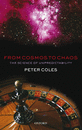
My little book From Cosmos to Chaos is today officially published in paperback. I’m glad the new edition has come out because it gave me a chance to correct quite a large number of typographical errors in the original edition – some of them very embarrassing!  I had spotted many of them before publication, but unfortunately there was a breakdown in the proof correcting process and the changes I’d requested were not made to the version that got printed. Fortunately the publishers, Oxford University Press, gave me the chance to do proper corrections to the text for the paperback version so hopefully it has many fewer bugs in it than the original hardcover version.
Anyway, I would like to take this opportunity to thank those people who contacted me to point out some of the egregious errors. Of course I  really put them there deliberately to check that the readers were paying attention..

Nicola Cabibbo (1935-2010)

Posted in The Universe and Stuff with tags , , , , on August 16, 2010 by telescoper

Just a short post to convey the very sad news that the great Italian physicist Nicola Cabibbo passed away today at the age of 75. I know I’m not alone in thinking that he should have received a share of the Nobel prize in 2008, which was awarded to Yoichiro Nambu (half the prize) and the other half was split between Makoto Kobayashi and Toshihide Maskawa.

As I wrote in 2008:

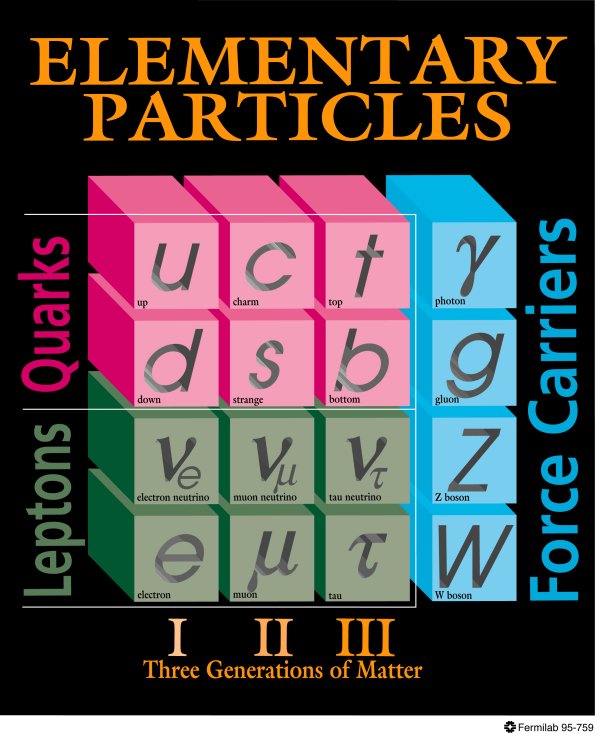
All three are extremely distinguished physicists and their contributions certainly deserve to be rewarded. But, in the case of Kobayashi and Maskawa, the Nobel Foundation has made a startling omission that I really can’t understand at all and which even threatens to undermine the prestige of the prize itself.The work for which these two were given half the Nobel Prize this year relates to the broken symmetry displayed by weak interactions between quarks. We now know that there are three generations of quarks, each containing quarks of two different flavours. The first generation contains the up (u) and the down (d), the second the strange (s) and the charmed (c), and the third has the bottom (b) and the top (t). OK, so the names are daft, but physicists have never been good at names.

The world of quarks is different to penetrate becauses quarks interact via the strong force which binds them close together into hadrons which are either baryons (three quarks) or mesons (a quark and an anti-quark).

But there are other kinds of particles too, the leptons. These are also arranged in three generations but each of these families contains a charged particle and a neutrino. The first generation is an electron and a neutrino, the second a muon and its neutrino, and the third has the tau and another neutrino. One might think that the three quark generations and the three lepton generations might have some deep equivalence between them, but leptons aren’t quarks so can’t interact at all by the strong interaction. Quarks and leptons can both interact via the weak interaction (the force responsible for radioactive beta-decay).

Weak interactions between leptons conserve generation, so the total number of particles of electron type is never changed (ignoring neutrino oscillations, which have only relatively recently been discovered). It seemed natural to assume that weak interactions between quarks should do the same thing, forbidding processes that hop between generations. Unfortunately, however, this is not the case. There are weak interactions that appear to convert u and/or d quarks into c and/or s quarks, but these seem to be relatively feeble compared to interactions within a generation, which seem to happen with about the same strength for quarks as they do for leptons. This all suggests that there is some sort of symmetry lurking somewhere in there, but it’s not quite what one might have anticipated.

The explanation of this was proposed by Nicola Cabibbo who, using a model in which there are only two quark generations, developed the idea that states of pure quark flavour (“u” or “d”, say) are not really what the weak interaction “sees”. In other words, the quark flavour states are not proper eigenstates of the weak interaction. All that is needed is to imagine that the required eigenstates are a linear combination of the flavour states and, Bob’s your uncle, quark generation needn’t be conserved. This phenomenon is called Quark Mixing. What makes it simple for only two generations is that it can be described entirely by one number: the Cabibbo angle, which measures how much the quark flavour basis is misaligned with the weak interaction basis. The angle is small so the symmetry is only slightly broken.

Kobayashi and Maskawa generalized the work of Cabibbo to the case of three quark generations. That’s actually quite a substantial task as the description of mixing in this case requires not just a single number but a 3×3 matrix each of whose entries is complex. This matrix is universally called the Cabibbo-Kobayashi-Maskawa (CKM) matrix and it now crops up all over the standard model of particle physics.

And there’s the rub. Why on Earth was Cabibbo not awarded a share of this year’s prize? I was shocked and saddened to find out that he’d been passed over despite the fact that his work so obviously led the way. I can think of no reason why he was omitted. It’s outrageous. I even feel sorry for Kobayashi and Maskawa, because there is certain to be such an outcry about this gaffe that it may detract from their success.

But really

I hope, however,  that controversy doesn’t intrude too much on what I hope will be the forthcoming celebration of Cabibbo’s immense contributions to particle physics. I’ll leave it to the experts to write more detailed appreciations that do better justice to his achievements. I’ll just say that I only met him once in real life, but found him charmingly modest and altogether quite delightful company. He will be greatly missed.


Share/Bookmark

Cat Nap

Posted in Columbo with tags , on August 15, 2010 by telescoper

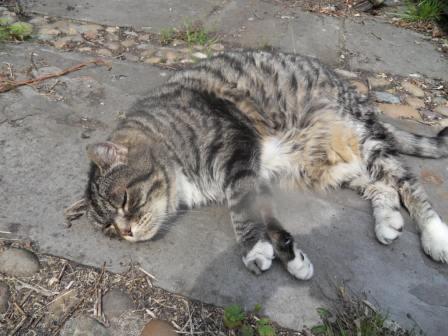
It’s been a month since I last posted an update about Columbo so I thought I’d put up a quick item.There’s been no repeat of his recent nosebleed, and he’s showing no after-effects at all. As you all know, he’s not exactly in the first flush of youth – so there’s no more of the racing-around-like-a-mad-thing he did when he was kitten. He still likes to go for the odd wander about, but it’s strictly in his own time. In fact he’s still spending quite a lot of time out of doors, as the weather, though not as good as June and July because it has rained a bit, is at least reasonably warm.

However, he did recently discover a new comfy spot, in the cupboard under the stairs which he has now added to his collection of places to sleep. Other well-established locations are: under the coffee table in the sitting room, on the mat next to the bath, behind the trees at the end of the garden, and in the corner of the spare bedroom, as well as his basket of course. It must occupy his mind to a considerable degree deciding which of these spots to sleep in. Still, sleeping is mainly what he does so it’s obviously important to do it right. It’s a hard life, being a cat…

The other day I did a bit of work in the garden. When I’d finished I swept up various bits and pieces into a pile but realised I’d forgotten to bring a shovel. When I came back with said implement, Columbo had appeared from nowhere and was rolling around in the pile of muck. It seems far from unusual for cats to enjoy rolling around in leaves, twigs and general dirt. Probably it’s a good way for a moggy to scratch their back. Anyway, after a few minutes’ escstatic rolling around, Columbo nodded off on the path right next to the rubbish so I decided to take a picture.

The Next Decade of Astronomy?

Posted in Science Politics, The Universe and Stuff with tags , , , , , , , on August 14, 2010 by telescoper

I feel obliged to pass on the news that the results of the Decadal Review of US Astronomy were announced yesterday. There has already been a considerable amount of reaction to what the Review Panel (chaired by the esteemed Roger Blandford) came up with from people much more knowledgeable about observational astronomy and indeed US Science Politics, so I won’t try to do a comprehensive analysis here. I draw your attention instead to the report itself  (which you can download in PDF form for free)  and Julianne Dalcanton’s review of, and comments on, the Panel’s conclusions about the priorities for  space-based and ground-based astronomy for the next decade or so over on Cosmic Variance.  There’s also a piece by Andy Lawrence over on The e-Astronomer’s blog. I’ll just mention that Top of the Pops for space-based astronomy is the Wide-Field Infrared Survey Telescope (WFIRST) which you can read a bit more about here, and King of the Castle for the ground-based programme is the Large Synoptic Survey Telescope (LSST). Both of these hold great promise for the area I work in – cosmology and extragalactic astrophysics – so I’m pleased to see our American cousins placing such a high priority on them. The Laser Interferometer Space Antenna (LISA), which is designed to detect gravitational waves, also did very well, which is great news for Cardiff’s Gravitational Physics group.

It will be interesting to see what effect – if any – these priorities have on the ranking of corresponding projects this side of the Atlantic. Some of the space missions involved in the Decadal Review in fact depend on both NASA and ESA so there clearly will be a big effect on such cases. For example, the proposed International X-ray Observatory (IXO) did less well than many might have anticipated, with clear implications for  Europe (including the UK).  The current landscape  of X-ray astronomy is dominated by Chandra and XMM, both of which were launched in 1999 and which are both nearing the end of their operational lives. Since X-ray astronomy can only be done from space, abandoning IXO would basically mean the end of the subject  as we know it, but the question is how to bridge the  the gap between the end of these two missions and the start of IXO even if it does go ahead but not until long after 2020? Should we keep X-ray astronomers on the payroll twiddling their thumbs for the next decade when other fields are desperately short of manpower for science exploitation?

On a more general level, it’s not obvious how we should react when the US gives a high priority to a given mission anyway. Of course, it gives us confidence that we’re not being silly when very smart people across the Pond endorse missions and facilities similar to ones we are considering over here. However, generally speaking the Americans tend to be able to bring missions from the drawing board to completion much faster than we can in Europe. Just compare WMAP with Planck, for instance. Trying to compete with the US, rather than collaborate, seems likely to ensure only that we remain second best. There’s an argument, therefore, for Europe having a programme that is, in some respects at least, orthogonal to the United States; in matters where we don’t collaborate, we should go for facilities that complement rather than compete with those the Americans are building.

It’s all very well talking of priorities in the UK but we all know that the Grim Reaper is shortly going to be paying a visit to the budget of the  agency that administers funding for our astronomy, STFC. This organization went through a financial crisis all of its very own in 2007 from which it is still reeling. Now it has to face the prospect of further savage cuts. The level of “savings” being discussed  – at least 25%  -means that the STFC management must be pondering some pretty drastic measures, even pulling out of the European Southern Observatory (which we only joined in 2002). The trouble is that most of the other ground-based astronomical facilities used by UK astronomers have been earmarked for closure, or STFC has withdrawn from them. Britain’s long history of excellence in ground-based astronomy now hangs in the balance. It’s scary.

I hope the government can be persuaded that STFC should be spared another big cut and I’m sure that there’s extensive lobbying going on.  Indeed, STFC has already requested input to its plans for the ongoing Comprehensive Spending Review (CSR). With this in mind, the Royal Astronomical Society has produced a new booklet designed to point out the  relevance of astronomy to wider society. However I can’t rid from my mind the memory a certain meeting in London in 2007 at which the STFC Chief Executive revealed the true scale of STFC’s problems. He predicted that things would be much worse at the next CSR, i.e. this one. And that was before the Credit Crunch, and the consequent arrival of a new government swinging a very large axe. I wish I could be optimistic but, frankly, I’m not.

When the CSR is completed then STFC will have yet again to do another hasty re-prioritisation. Their Science Board has clearly been preparing:

… Science Board discussed a number of thought provoking scenarios designed to explore the sort of issues that the Executive may be confronted with if there were to be a significant funding reduction as a result of the 2010 comprehensive spending review settlement. As a result of these deliberations Science Board provided the Executive with guidance on how to take forward this strategic planning.

This illustrates a big difference in the way such prioritisation exercises are carried out in the UK versus the USA. The Decadal Review described above is a high-profile study, carried out by a panel of distinguished experts, which takes detailed input from a large number of scientists, and which delivers a coherent long-term vision for the future of the subject. I’m sure not everyone agrees with their conclusions, but the vast majority respect its impartiality and level-headedness and have confidence in the overall process. Here in the UK we have “consultation exercises” involving “advisory panels” who draw up detailed advice which then gets fed into STFC’s internal panels. That bit is much like the Decadal Review. However, at least in the case of the last prioritisation exercise, the community input doesn’t seem to bear any obvious relationship to what comes out the other end. I appreciate that there are probably more constraints on STFC’s Science Board than it has degrees of freedom, but there’s no getting away from the sense of alienation and cynicism this has generated across large sections of the UK astronomy community.

The problem with our is that we always seem to be reacting to financial pressure rather than taking the truly long-term “blue-skies” view that is clearly needed for big science projects of the type under discussion. The Decadal Review, for example, places great importance on striking a balance between large- and small-scale experiments. Here we tend slash the latter because they’re easier to kill than the former. If this policy goes on much longer, in the long run we’ll end up a with few enormous expensive facilities but none of the truly excellent science that can be done from using smaller kit.  A crucial aspect of this that that science seems to have been steadily relegated in importance in favour of technology ever since the creation of STFC.  This must be reversed. We need a proper strategic advisory panel with strong scientific credentials that stands outside the existing STFC structure but which has real influence on STFC planning, i.e. one which plays the same role in the UK as the Decadal Review does in the States.

Assuming, of course, that there’s any UK astronomy left in the next decade…

In the Dark

Posted in Poetry with tags on August 13, 2010 by telescoper

Here’s a verse by a poet who’s quite new to me – Felix Dennis – who I learned about because he’s doing a nationwide tour this autumn to celebrate the publication of a new book and a flyer for it came in the post this morning. I only read it because it wasn’t a bill, but it seems he’s quite a colourful character, and I might go along when he visits Cardiff (on 29th September, at the Glee Club in Cardiff Bay). Anyway, I had a shufti at his website and found a poem on it called In the Dark, so obviously I just had to post it here! Enjoy!

I knuckle an eye with my fist—
Fragments of non-existent light
Erupt where they cannot exist,
Blinding my non-existent sight.

We huddle by day in our joys,
Swaddled in rags of silk and hope
Like toddlers at play with toys:
By night, we twist all silk to rope

To tether the tiger, Desire,
And cradle demons, lest they wake
And set the lakes of Guilt afire,
As the walls of our dreaming shake.

The candle has guttered and died.
Here in the dark— within my mind
My terrors and tigers collide:
And all have eyes, but I am blind.

Grade Inflation

Posted in Education, Politics with tags , , , on August 12, 2010 by telescoper

Still too busy to post anything too substantial, but since this year’s A-level results are out next week – with the consequent scramble for University places – I thought I’d take a few minutes to share this  graph (taken from an article on the BBC website) which shows the steady dumbing-down improvement of educational standards student performance over the last few decades.

Nowadays, on average, about 27 per cent of students taking an A-level get a grade A. When I took mine (in 1981, if you must ask) the fraction getting an A was about 9%. It’s scary to think that I belong to a generation that must be so much less intelligent than the current one. Or could it be – dare I say it? – that A-level examinations might be getting easier?

Looking at the graph makes it clear that something happened around the mid-1980s that initiated an almost linear growth in the percentage of A-grades. I don’t know what will happen when the results come out next week, but it’s a reasonably safe bet that the trend will continue.

I can’t speak for other subjects, but there’s no question whatsoever that the level of achievement needed to get an A-grade in mathematics is much lower now than it was in the past. This has been proven over and over again. A few years ago, an article in the Times Higher discussed the evidence, including an analysis of the performance of new students on a diagnostic mathematics test they had to take on entering University.  The same test, covering basic algebra, trigonometry and calculus, had been administered every year so provided a good diagnostic of real mathematical ability that could be compared with the A-level grades achieved by the students.  They found, among other things, that students entering university with a grade B in mathematics in 1999 performed at about the same level as students in 1991 who had failed mathematics A-level.

The steadily decreasing level of mathematical training students receive in schools poses great problems not only for mathematics courses, but also for subjects like physics. We have to devote so much more time on the physics equivalent of “basic training” that we struggle to cover all the physics we should be covering in a degree program. Thus the dumbing down of A-levels leads to pressure to dumb down degrees too.

That brings me to the prospect of huge cuts – up to 35% if the stories are true – in government funding for universities, leading to pressure to shorten the traditional three-year Bachelors degree to one that takes only two years to complete. If this goes ahead it won’t be long before a student can get a degree by achieving the same level of knowledge as would have been displayed by an A-level student 30 years ago. Are we supposed to call this progress?

Or perhaps this business about two year degrees all really  does make sense. Maybe we should just accept that universities have to offer such courses because the school system has become broken beyond repair over the last 30 years, and it will be up to certain Higher Education institutions from now on to do the job that school sixth-forms used to do, i.e. teach A-levels.