Archive for 2010

The Planck Sky

Posted in The Universe and Stuff with tags , , , , , , , on July 5, 2010 by telescoper

Hot from the press today is a release of all-sky images from the European Space Agency’s Planck mission, including about a year’s worth of data. You can find a full set of high-resolution images here at the ESA website, along with a lot of explanatory text, and also here and here. Here’s a low-resolution image showing the galactic dust (blue) and radio (pink) emission concentrated in the plane of the Milky Way but extending above and below it. Only well away from the Galactic plane do you start to see an inkling of the pattern of fluctuations in the Cosmic Microwave Background that the survey is primarily intended to study.

It will take a lot of sustained effort and clever analysis to clean out the foreground contamination from the maps, so the cosmological interpretation will have to wait a while. In fact, the colour scale seems to have been chosen in such a way as to deter people from even trying to analyse the CMB component of the data contained in these images. I’m not sure that will work, however, and it’s probably just a matter of days before some ninny posts a half-baked paper on the arXiv claiming that the standard cosmological model is all wrong and that the Universe is actually the shape of a vuvuzela. (This would require only a small modification of an earlier suggestion.)

These images are of course primarily for PR purposes, but there’s nothing wrong with that. Apart from being beautiful in its own right, they demonstrate that Planck is actually working and that results it will eventually produce should be well worth waiting for!

Oh, nearly forgot to mention that the excellent Jonathan Amos has written a nice piece about this on the BBC Website too.

Dust

Posted in Poetry, The Universe and Stuff with tags , , , on July 4, 2010 by telescoper

I was reading through a collection of poems by Rupert Brooke this lazy sunday afternoon and found this. I haven’t posted much poetry recently so thought I’d add it here. I’m sure my many friends who work on astrophysical dust will enjoy it, especially those involved with the European Space Agency’s  Herschel Space Observatory. Apparently they’re all “passionate about dust”. If that’s true I wonder if one of them might want to write a wikipedia entry on the subject, because for some reason there isn’t one…

When the white flame in us is gone,
And we that lost the world’s delight
Stiffen in darkness, left alone
To crumble in our separate night;

When your swift hair is quiet in death,
And through the lips corruption thrust
Has still’d the labour of my breath –
When we are dust, when we are dust !

Not dead, not undesirous yet,
Still sentient, still unsatisfied,
We’ll ride the air, and shine, and flit,
Around the places where we died,

And dance as dust before the sun,
And light of foot and unconfined,
Hurry from road to road, and run
About the errands of the wind.

And every mote, on earth or air,
Will speed and gleam, down later days,
And like a secret pilgrim fare
By eager and invisible ways,

Nor ever rest, nor ever lie,
Till, beyond thinking, out of view,
One mote of all the dust that’s I
Shall meet one atom that was you.

Then in some garden hush’d from wind,
Warm in a sunset’s afterglow,
The lovers in the flowers will find
A sweet and strange unquiet grow

Upon the peace; and, past desiring,
So high a beauty in the air,
And such a light, and such a quiring,
And such a radiant ecstasy there,

They’ll know not if it’s fire, or dew,
Or out of earth, or in the height,
Singing, or flame, or scent, or hue,
Or two that pass, in light, to light,

Out of the garden, higher, higher. . . .
But in that instant they shall learn
The shattering ecstasy of our fire,
And the weak passionless hearts will burn

And faint in that amazing glow,
Until the darkness close above;
And they will know – poor fools, they’ll know!
One moment, what it is to love.

The Hawking Paradox

Posted in The Universe and Stuff with tags , , , on July 3, 2010 by telescoper

I found this on Youtube. The programme was made for the BBC TV series Horizon and first broadcast in the UK in 2005. You’ll find yours truly in a couple of places, when I was working at the University of Nottingham and had more hair. In fact got a bit of stick, from some people at a certain University I used to attend, for being insufficiently reverential in my comments about Stephen Hawking but, for what it’s worth, I stand by everything I said. I do admire him enormously as a physicist, but I think his very genuine contributions are sometimes lost in the cult that has developed around him.

Anyway, I thought the programme turned out relatively well. Horizon has gone steadily downhill since 2005, obviously because I haven’t been involved…

It’s in 5 parts so if you want to watch all of it, you will need to click through to the next at the end of each segment.

Catsnap

Posted in Columbo with tags , on July 3, 2010 by telescoper

It’s been a while since I posted anything about Columbo, so I decided to take a quick picture of him in the garden. Now the roses have gone, but the lilies are out and I thought it would look nice to get a snap of him with them in the background. He didn’t seem to keen to pose, however, and I had to settle for this one in which he looks more than a little grumpy…

The hot humid weather we’ve been having recently broke on Thursday with a considerable downpour of rain. Columbo was delighted. With him being diabetic I have to make sure he gets plenty of water so I give him a fresh bowlful every morning. Usually, however, he prefers to go outside and drink rainwater from varies containers around the garden. During the hot spell these have gradually dried up and he’s been forced to drink the water I provide, which he clearly doesn’t like as much. I asked the vet about this and he said it’s because tap water smells funny to cats. Dirty water in a manhole cover doesn’t, apparently.

Anyway, when it rained Columbo went out and started lapping water up from puddles and off the leaves of the shrubs in the garden. He obviously loved it, although he was a very soggy moggy when he finally decided he’d had enough.

One of the drawbacks of Cardiff is that it’s a pretty damp place generally, partly because it rains quite often and partly because it’s very low-lying. My own house is near the River Taff – on its flood plain, in fact – so the water table isn’t far down. The result of this is that the garden can become a profusion of slugs and snails. Fortunately, I’ve never had the problem that some neighbours have had with slugs getting into the house. The hot weather has kept them away this year, but when I went out yesterday morning they were all over the lawn and even climbing up the walls. Obviously they prefer damp conditions, but it doesn’t take much to make them spring into life. Today’s warm again and I didn’t see any this morning. I wonder where they go when it’s too dry?

It’s sunny again today and Columbo’s reverted to his usual place in the shade at the end of the garden, emerging occasionally to make a half-hearted attempt to catch butterflies. The slightly odd weather seems to have done wonders for flowering plants – the roses were lovely this year, and the honeysuckle is still going which probably explains the large number of butterflies.

I wish I could persuade some songthrushes to visit and feast upon my latent slug population, but I suppose with a fierce cat lurking in the bushes they’re wise to stay away.

Astronomy Look-alikes, No. 33

Posted in Astronomy Lookalikes with tags , on July 2, 2010 by telescoper

Last week’s epic first-round singles match at Wimbledon between John Isner and Nicholas Mahut will have reminded many people of the classic 1969 contest between Pancho Gonzales and Charlie Pasarell. What isn’t so well known is that after retiring from the professional tennis circuit, Pancho Gonzales took up a new identity as cosmologist Carlos Frenk. Makes a change from serving up balls for a living. Oh no, wait, hang on…

Pancho Gonzales

Carlos Frenk

New light through a gravitational lens

Posted in The Universe and Stuff with tags , , , , on July 1, 2010 by telescoper

New data from the European Space Agency’s Herschel Space Observatory have just been released that shed new light on a well-known gravitational lens system involving the cluster Abell 2218. You can get more details and higher-resolution pictures from the STFC press release or from the dedicated Herschel Outreach Website, but I couldn’t resist putting this nice picture up.

Image Credit: ESA/SPIRE and HERMES Consortia

This triptych shows the region of sky around the massive galaxy cluster Abell 2218, as seen by the SPIRE instrument on Herschel and by the Hubble Space Telescope. On the far left, we have images at the three SPIRE wavelength bands (in the far-infrared part of the spectrum), while the centre image is a false-colour composite. The centre of the galaxy cluster is shown as a white cross-hair, while the large orange-yellow blob just below it is a much more distant galaxy.

On the far right you can see an optical image of the same cluster taken using the Hubble Space Telescope. Working at much shorter, optical wavelengths, the resolution here is much higher. This makes it possible to see the complicated pattern of  arcs caused by the distortion of light as it travels through the gravitational field of the cluster from background sources to the observer. The cluster acts as a gigantic optical system that produces magnified but warped images of very distant galaxies that lie behind it. It’s not designed to act as proper lens, of course, so the images it produces are deformed versions of the original, but they yield sufficient clues to work out the optical properties of the gravitational lens.

Clusters like this tend to contain lots of elliptical galaxies which are not bright in the SPIRE wavebands, so what we see with Herschel is very different from the Hubble view. What Herschel has  done in this particular case is  to reveal that this  gravitational lens produces at least one bright image in the far-infrared part of the spectrum. This is produced by a very distant galaxy which we probably would not have been able to see at all, even with Herschel, had it not been located fortuitously close to a perfect alignment with the optical axis of the Abell 2218 system. Although the image we see is distorted we can still learn a lot about the source that produced using the new data.

Astronomy Look-alikes, No. 32

Posted in Astronomy Lookalikes with tags , on June 30, 2010 by telescoper

Has anyone else noticed the similarity between astronomer Professor James Dunlop and former Time Lord David Tennant? I wonder if by any chance they might be related?

Jim Dunlop

David Tennant

All in a day’s work

Posted in Art, Biographical, Education, Science Politics, The Universe and Stuff with tags , , , , , on June 30, 2010 by telescoper

I got back from yesterday’s trip to a very muggy London with a raging sore throat and a brain as sluggish as an England defender on an action replay. Come to think of it, I must be as sick as a parrot. I’m sweating like a pig too, although I don’t know whether that’s a symptom of anything nasty or just because it’s still so warm and humid. Anyway, in view of my likely incoherence I thought I’d keep it brief (again) and just mention a few salient points from the last day or two.

I went to London as part of my duties as External Examiner for the MSc Course in Astrophysics at Queen Mary, University of London. Of course all the proceedings are confidential so I’m not going to comment on anything in detail, except that I spent a bit of time going through the exam scripts before the Examiners’ Meeting in a room that did a very passable impersonation of a heat bath. When I was later joined by the rest of the Exam Board the temperature soared still further. Fortunately the business went relatively smoothly so nobody got too hot under the collar and after concluding the formal business, a few of us cooled off with a beer or two in the Senior Common Room.The students spend the next couple of months writing their dissertations now that the written exams are over, so we have to reconvene in October to determine the final results. I hope it’s a bit cooler by then.

I couldn’t stay long at Queen Mary, however, as I had a working dinner to get to. Regular readers of this blog (both of them) may remember that I’m involved in project called Beyond Entropy which is organized by the Architectural Association School of Architecture. I’ve been working on this occasionally over the months that have passed since I first blogged about it, but deadlines are now looming and we need to accelerate our activity. Last night I met with the ever-enthusiastic Stefano Rabolli Pansera at the house of Eyal Weizman by Victoria Park in the East End, handily close to Queen Mary’s Mile End campus. Assisted by food and wine we managed to crystallise our ideas into something much more tangible than we had managed to do before on our theme of Gravitational Energy. The School has offered us expert practical assistance in making prototypes and  I’m now much more optimistic about our exhibit coming together, not to mention excited at the prospect of seeing it on display at the Venice Architecture Biennale. I won’t say what we’re planning just yet, though. I’d rather wait until it’s done before unveiling it.

Incidentally, here’s a link to a  lecture by Eyal Weizman where he gives some interesting perspectives on architectural history.

Finally, and nothing to do with my trip to the Big Smoke, I noticed today on the Research Fortnight Blog that the Higher Education Funding Council for Wales (HEFCW) is planning to reduce the number of universities in Wales “significantly” from its current level of 12. This is an interesting development and one that I’ve actually argued for here. Quoting Leighton Andrews, Welsh Assembly Minister responsible for higher education, the piece says

“This target does not mean fewer students,” he said in a statement. “But it is likely to mean fewer vice chancellors. We will have significantly fewer HE institutions in Wales but they will be larger and stronger.”

How these reductions will be achieved remains to be seen, but it seems obvious that quite a few  feathers will be ruffled among the management’s plumage in some institutions and it looks like some vice chancellors will be totally plucked!

Spoof Positive?

Posted in Science Politics, Uncategorized with tags , on June 29, 2010 by telescoper

Only time for a brief post today, as I’m shortly off to London for some external examining in the East End.

It’s interesting that yesterday’s #SpoofJenks day generated so many contributions that the Guardian decided to get the main instigator, particle physicist Jon Butterworth, to write about it on their Science Blog.  My own contribution of yesterday gets a mention there too.

I have to say I found the whole thing very amusing and wholeheartedly agree with Jon Butterworth (whose original spoof started it all off) when he explained that his primary aim was more to let off steam and less to try to persuade Simon Jenkins of the error of his ways. I felt the same way. Better to poke fun back than allow him to get to you.

I didn’t feel parody was necessary in Simon Jenkins’ case because his arguments are full of factual errors and non sequitur. In fact, it did occur to me that his piece might be deliberately ironic. Could one of the prime movers behind the Millennium Dome really be serious when he talks about the wastefulness of CERN? Perhaps he’s spoofed us all. But even that wouldn’t excuse his snide personal attack on Martin Rees.

Anyway, as you will have noticed, I  just went for straight mockery and had a good half-an-hour of lunchtime fun writing it.  A few people seem to have liked my piece, but at least one blogger found it “unpleasant”. You can’t win ’em all. For what it’s worth, I still think he deserved it.

In fact, I posted a considerably less vitriolic reaction to Jenkins article on Saturday, but trying to respond in rational terms was something I found very frustrating. Only a few hundred people read this blog so it’s pretty futile to try to take on a columnist from a national newspaper that’s read by hundreds of thousands. I’m not sure he’s listening anyway, as he’s written similar drivel countless times before. Far better, in my view, to join the collective piss-taking. At least it got the Guardian interested.

Maybe after all this Jenkins will actually engage in a dialogue with scientists instead of merely insulting them? Perhaps. But I’m not holding my breath.

Please help Simon

Posted in Uncategorized with tags , on June 28, 2010 by telescoper

jenkins460

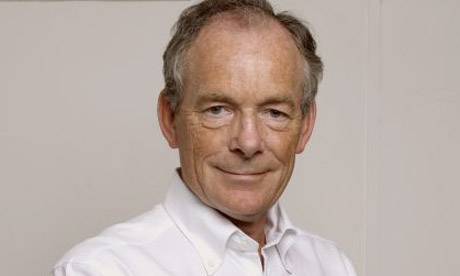
This is Simon. He is 67 years old. Simon has had a tough time of it recently. He really needs your help. This is Simon’s story.

Simon was quite bright as a small child, but things started to go wrong for him  early on in life. He was bullied at public school by a vicious gang of “nerds” who forced him to look at their calculations. Later, a terrifying incident with a pipette in a chemistry lesson left him emotionally scarred. He started to have paranoid delusions and  nightmares about Men in White Coats. More recently  he began to suffer hallucinations involving Mammoths. He suspects all scientists are after his money. His behaviour is obsessive. Every gadget fills him with terror.  His actions are bizarre and unpredictable. He is no longer able to cope with everyday life and needs constant supervision.

Fortunately, Simon has a generous and loving friend called Alan (who edits a national newspaper).  Alan noticed that Simon had severe problems and decided to care for him. Alan provided sheltered accommodation for Simon and created a job, so Simon could earn a basic living doing simple tasks, such as writing a column in The Guardian.

Sadly, however, things have recently started to go wrong. Simon’s behaviour has deteriorated even further. He has become increasingly incoherent. He is unable to write his column without repeating himself over and over again. Worse, he sometimes gets out of the padded cell secure unit office Alan has provided for him, wandering about the premises foaming at the mouth and raving about the Large Hadron Collider. This is embarrassing Alan and the other people he works with. Simon has also recently been found sticking pins in a wax effigy of Lord Rees.

To make matters worse, Alan’s business has started to fail. He is losing money and can no longer afford to pay for Simon’s upkeep. Alan has become depressed by his newspaper’s falling circulation and the stress of having to cope with looking after Simon. He is desperate for help.

Without your assistance, the future looks bleak for both Simon and Alan.  Please send your contributions to Alan’s Personal Assistant:

Poppy Cock,
The Guardian,
Kings Place
90 York Way
London
N1 9GU

Please mark your envelope Get this Nutter off my Hands Appeal and make your cheques out to The Margaret Thatcher Home for the Bewildered (Maximum Security Divison). If you can’t afford to send money, any other gifts would be appreciated, especially crayons and colouring-in books (but not if they are about science).

Thank you for your help. Have a nice day. Unless you’re a scientist.

PS. You may find updates on the progress of this appeal on Twitter (look for #SpoofJenks).

Related Posts

  • William Waldegrave challenges journalists to explain Simon Jenkins to the general public
  • Martin Rees to blame for England’s World Cup exit, says Simon Jenkins
  • Brian Cox ate my Hamster
  • Nature Blog #SpoofJenks posts
  • Scientists Experiment with Simon Jenkins (at the Guardian website)