Archive for June, 2012

The End of the Viva

Posted in Biographical, Education with tags , , , , , on June 13, 2012 by telescoper

I’m stuck at home today, waiting for UPS to come and collect a defective printer. Any time between 9am and 7pm, they said. Very helpful. Anyway, I’ve got plenty to do while I’m here, catching up on STFC Astronomy Grant Panel business that I’ve been too busy to attend to. Also, this week’s Private Eye has just arrived in the post, so I’ll take a break at some point to do the crossword by Cyclops. It’s a lovely day. Pity I can’t sit in the garden. I’d miss the doorbell when the carrier arrives.

Anyway, the past two days have been largely given over to the business of examinations in the School of Physics & Astronomy at Cardiff University. The External Examiners spent a big slice of Monday doing viva voce examinations of selected candidates; not just those on borderlines, but also some others for “calibration”. I wasn’t involved in them this year, but have taken part in the past as External in various places. Obviously these examinations are very stressful for the students, and also quite difficult to conduct fairly, but sometimes provide useful insights in the cases where a student’s marks put them on a knife-edge between two degree classifications (or even between pass and fail).

Anyway, in its infinite wisdom Cardiff University has decided to scrap the viva voce examination after next year. From 2014 onwards we’ll just have to apply a formula to deal with borderline cases; the algorithm involves counting how many modules were passed at the higher level, etc. Actually, I probably agree with this for the purposes of classifying degrees. Twenty minutes’ questioning under stress can hardly be expected to yield much objective  information about a candidate’s knowledge of the subject that dozens of written papers and other assessments. Often, in my experience, students (especially the shy ones) are so nervous that the shutters come down almost straight away.  I would  prefer a system which is algorithmic as possible, so everyone knows what the rules are, rather than relying on subjective judgements.

As external, I always found the viva examinations a useful way of getting feedback from the students on their course which can be fed back – either usefully or not – to the department. In losing the viva  for drawing up the classification lists, I hope that we can find another way for the externals to talk to students in some other context to get some feedback about the course. Perhaps they could attend for project talks, or something like that?

Yesterday, the entire Board of Examiners (including Externals) gathered to go through all the individual cases and draw up the Honours List. I was delighted when I saw all the consolidated marks in advance of the meeting, to see how well how many of our students had done. There were one or two difficult cases, but in the end we produce the lists. As I went back to my office, students were already gathering in the corridor by the noticeboard where it is always placed as soon as the definitive final version has been prepared, shortly after the meeting closed.

Soon I heard whoops of joy and laughter and had a quick look to see the students congratulating one another. As always on such occasions, I was tempted to go along and chat to a few of them but, as always, I resisted doing so. It’s a time for them, the students, not us, the staff.

Anyway, congratulations to all those who had good news yesterday!

I hope your hangovers aren’t too bad…

Astronomy’s Next Big Thing

Posted in Science Politics, The Universe and Stuff with tags , , , , on June 12, 2012 by telescoper

I woke up this morning to hear an item about astronomy on the 7 o’clock news on BBC Radio 3. That doesn’t happen very often so I thought I’d follow it up with a short post before I head off to work.

The news item I heard followed up an announcement yesterday that the governing Council of the European Southern Observatory (ESO) had  approved the European Extremely Large Telescope (E-ELT) programme – which is to produce what will be the world’s largest ground-based optical telescope. Extremely Large is putting in mildly, of course. Its main mirror will be a colossal 39 metres in diameter (with a collecting area of almost a thousand square metres) and will have to made in bits with a sophisticated adaptive optics system to ensure that it can counter the effects of the Earth’s atmosphere and the limitations  of its own structure to  reach a phenomenal angular resolution of 0.001 arc seconds.

For more details on the telescope, see the official website here or the wikipedia article here, where you can also read more about the science to be done with E-ELT.

This telescope has been in planning for many years, of course. In fact, it began as an even more ambitious concept, a 100-metre diameter monster which I used to call the FLT. Over the years, however, for a mixture of technical and financial reasons, this was progressively de-scoped.

Yesterday’s announcement doesn’t mean that work will start immediately on building the E-ELT. That won’t happen until sufficient funding is secured and in the case of some countries, governmental approval obtained. Recent decisions by the UK Science and Technology Facilities Council to close down telescopes in Hawaii clearly anticipated the need to make some headroom in future budgets to enable this to happen. The best-case scenario is probably for E-ELT to take a decade or so to complete.

Of course the concentration of funding in ever and ever larger international facilities – such as E-ELT and the Square Kilometre Array – does create tensions within the UK astronomical community. Many scientists do excellent work with relatively small facilities, including those about to be closed down to make room for E-ELT. In the near future, the only ground-based optical facilities to which UK astronomers will have access will be operated by the European Southern Observatory. With fewer but larger (and more expensive) facilities operated by international agencies carrying out projects run by vast consortia, observational astronomy is definitely going the way of particle physics…

The problem  comes when the Next Big Thing  is too big to be built.  We might have already seen X-ray astronomy bubble burst in this way. To quote my learned friend Andy Lawrence:

Fundamentally, the problem is that X-ray astronomy has hit the funding wall. Everything gets inexorably bigger and more ambitious. Eventually its all or nothing… so when the answer is nothing … ah.

What will come after the Large Hadron Collider, or the E-ELT?  Is Big Science about to get too big?

Sic Transit Gloria Monday

Posted in The Universe and Stuff with tags , , , on June 11, 2012 by telescoper

I can never resist a terrible pun, so thought this would be an especially  good day to post this video from NASA’s Solar Dynamics Observatory,  showing views of last week’s Transit of Venus taken at several different wavelengths..


Teaching (about) Physics

Posted in Education with tags , , , on June 10, 2012 by telescoper

So the academic year nears its end. This week we have the dreaded meetings of the Examination Boards, complete with External Examiners, ordeal by viva voce for selected students, and finally the lists go up announcing success (or otherwise) for this year’s finalists. It’s all a lot of work – and I’m sure also extremely stressful for the students waiting for their results.

If it’s any consolation for any students reading this post, I can assure you that there’s no lack of stress on this side of the fence either. I always feel a sense of dread opening the packets of examination scripts, and this year was no different. Have I set the exam too hard? Will the marks be a fair reflection of the students’ ability? Have they learned anything at all from the hours I spent droning on? These questions are all the more apt for a third-year class, since these are the papers that really count in determining the final outcome of their course. When the lists go up later this week, one’s delight at the sight of happy (or relieved) faces is always tempered by sadness when things have obviously gone wrong.

Coincidentally, I noticed the other day that a former student from the School of Physics and Astronomy at Cardiff University posted an item on her blog giving her view of her degree. It’s a very frank assessment of her own opinion of the course she took, including a list of her  three favourite courses. None of the ones I lectured are amongst them, by the way, in case you think I’m mentioning it for egocentric reasons. Indeed, I’m pretty confident that I’m one of the lecturers she didn’t like at all!

The main thing is that, for better or worse, our course involves an enormous amount of contact time with academic staff.  In the new fee regime students will pay the same £9K for a science course as they would for the Arts and Humanities:

See, doing a Physics and Astronomy degree, I had about 20 contact hours. With lab time. so in one month I had out stripped the BA people for an entire academic year. So in the 12 weeks of one semester, I have had more contact time than they will get in their entire degree. Worth it?

As for whether we make the best use of the time we devote to teaching, that’s a different matter. We have in fact recently overhauled the entire curriculum so we’ll see whether that has the desired effect. One can’t please all of the people all of the time, so we’ve tried to introduce new teaching methods – e.g. fewer lectures, more problems classes – to try to engage better with more students. Only time will tell whether it works.

Anyway, although it’s not one of the topics of her post, Harriet’s blog brought something from the back of my mind where it usually lurks ready to trouble me when I start to think about teaching physics. The point is that most of us involved in teaching physics at University level think that what we should be doing is training people to be professional physicists. That means teaching them to do physics the way it is actually done by people who do research. That means that, especially in Astronomy, students have to grapple with strange unit systems, peculiar terminology and quite a lot of maths. Those aren’t put into our courses in order to torment students – they’re there in the curriculum because they’re there in the world of (astro)physics research. It would be dishonest for us to pretend we were training physicists if we made out that it was all easier than it actually is.

What I mean to say is that I don’t think it should be our job to present physics in a way that’s different from (specifically easier than) the way it is  done at the coalface, in the world of scientific research.  What we should be doing is giving students the skills and confidence to solve the difficult problems a scientist can expect to confront in that situation. To be honest I don’t think we do that particularly well either, but that’s the aim. And that’s why our courses are mainly taught by people who actually do physics and why we claim our teaching is research-led.

That’s an oversimplification, of course. Especially in earlier years, much of the undergraduate curriculum – Newtonian Mechanics, Electromagnetism, Quantum Mechanics, etc  – is not “frontier” stuff so probably doesn’t require an active researcher to teach it. On the other hand, none of that is exactly easy so anyone who is going to teach it competently needs to have mastered it themselves. And in later years, the more specialist material and projects certainly require an active research environment.

Anyway, the point is that  in the new fee regime science courses will attract the same level of funding as courses in, e.g. English Literature. But a course in Physics requires physicists to teach it, while a course in literature does not require a team of successful novelists. Given the fact that the way we teach physics is more expensive by a very large margin, should we be rethinking our approach to the basic physics degree, and leave all the fancy research-led stuff to Masters courses?

Should we really be trying to teach all our students how to do physics? Or should we just be teaching them about physics?

The Echoing Green

Posted in Poetry, Sport with tags , , , , on June 10, 2012 by telescoper

The sun does arise,
And make happy the skies.
The merry bells ring
To welcome the spring.
The skylark and thrush,
The birds of the bush,
Sing louder around,
To the bells’ cheerful sound,
While our sports shall be seen
On the echoing green.

Old John with white hair
Does laugh away care,
Sitting under the oak,
Among the old folk.
They laugh at our play,
And soon they all say:
‘Such, such were the joys
When we all, girls and boys,
In our youth-time were seen
On the echoing green.’

Till the little ones weary
No more can be merry;
The sun does descend,
And our sports have an end.
Round the laps of their mother
Many sisters and brothers,
Like birds in their nest,
Are ready for rest;
And sport no more seen
On the darkening green.

by William Blake (1757-1827)

Posted to mark the “Great British Summer of Sport“, although I doubt if William Blake would have approved of the modern Olympics, which is nothing more a publicly-subsidised celebration of  consumerism  run  for the benefit of sponsors and corporate guests of multinational junk-food merchants.

Port of Call

Posted in Jazz with tags , , , , on June 9, 2012 by telescoper

This morning I was listening to a classic jazz album recorded in 1960 (in New York City) and called The World of Cecil Taylor. I’ve had for a very long time, but haven’t listened to it for ages. I don’t know why that is, because it’s brilliant. I haven’t posted much about Cecil Taylor on here so I thought I’d do a quick post about it with a sample in the form of my favourite track, Port of Call.

The 1960s saw a number of crucial innovations in the development of jazz, e.g. removing the bar stucture, making improvisations no longer dependent upon recurrent chordal patterns, and getting rid of fixed tempos. Looking back of the evolutionary history of this music, it’s clear that this album should be placed right at the spot where the old coalesced with the new. Throughout, Cecil Taylor’s solos are built by mixing paraphrases of thematic elements with very free improvisation but on Port of Call you can see more obviously signs of the transition between past and future. On the whole, this track conforms more closely to past keyboard transitions than the others: Taylor’s solo divides cleanly into 8-bar segments, with his left hand accentuating the harmonic shifts while his right supplies the melody. But there are also dazzling parallel runs which still sound strikingly modern and which few pianists could pull off so effortlessly at such a fast tempo. His total command of the instrument allows his imagination to find expression through it. Idea after idea comes flooding out as his solo progresses, quicksilver clusters of notes falling like heavy rain on crystal. Awesome.

P.S. The other members of the trio are Buell Neidlinger on bass and Dennis Charles on drums.

Big Bang: Who’s the Daddy?

Posted in History, The Universe and Stuff with tags , , , , on June 8, 2012 by telescoper

Time, I think, for a frivolous Friday poll.

I stumbled across a post on the Physics World Blog concerning a radio broadcast about Georges Lemaître.

Here’s a description of said programme:

Few theories could claim to have a more fundamental status than Big Bang Theory. This is now humanity’s best attempt at explaining how we got here: A Theory of Everything. This much is widely known and Big Bang Theory is now one of the most recognisable scientific brands in the world. What’s less well known is that the man who first proposed the theory was not only an accomplished physicist, he was also a Catholic priest. Father Georges Lemaître wore his clerical collar while teaching physics, and not at Oxford, Cambridge or MIT but at the Catholic University of Leuven in Belgium. It was this unassuming Catholic priest in an academic backwater who has changed the way we look at the origins of the universe. His story also challenges the assumption that science and religion are always in conflict. William Crawley introduces us to the “Father” of the Big Bang.

The question is whether the word “Father” in the last sentence should be taken as anything more than a play on the title he’d be given as a Catholic priest?

Lemaître’s work was highly original and it undoubtedly played an important role in the development of the Big Bang theory, especially in Western Europe and in the United States. However, a far stronger claim to the title of progenitor of this theory belongs to Alexander Alexandrovich Friedman, who obtained the cosmological solutions of Einstein’s general theory of relativity, on which the Big Bang model is based, independently of and shortly before Lemaître did. Unfortunately the Russian Friedman died in 1925 and it was many years before his work became widely known in the West. At least in my book, he’s the real “father” of the Big Bang, but I’m well aware that this is the source of a great deal of argument at cosmology conferences, which makes it an apt topic for a quick poll:

P.S. I prefer to spell Friedman with one “n” rather than two. His name in his own language is Алекса́ндр Алекса́ндрович Фри́дман and the spelling “Friedmann” only arose because of later translations into German.

Janteloven

Posted in Uncategorized with tags , , , on June 8, 2012 by telescoper

I’ve only got time for a quick post, but I thought it would be nice on this rainy and windswept day to pass on the news that the Danish Parliament (Folketinget) yesterday voted – by a majority of 85:24 – to approve laws allowing same-sex couples to marry.

This vote – and particularly the size of the majority – is yet more evidence that there’s something splendid in the state of Denmark. Danes have a much stronger commitment to real equality than can be found in most countries including, sadly, my own. While our politicians utter meaningless platitudes and offer feeble compromises, the Danes just get on and do the right thing. Can it be a coincidence that Denmark is the happiest country in the world?

I have visited Denmark on many occasions but I’m by no means an expert on Danish culture. I do wonder, therefore, how the progressive social agenda relates to the concept of Janteloven developed in a famous pre-War novel by Aksel Sademose to describe a type of social behaviour Denmark which is, on the one hand, strictly egalitarian but also, on the other, rigidly conformist. This “you’re no better than me” attitude has clearly found its way into many aspects of modern Danish life. I found an interesting blog article about Janteloven, for example, which says:

It stresses cooperation above competition, and it can be a relief from that persistent, capitalistic pressure to always excel, all the time. It requires respect for all, not only for the most “respectable.” It has been rewritten in a much more encouraging tone, as a recipe for teamwork.

On the other hand, one can see that this attitude might easily lead to a fatalistic outlook that stifles creativity and discourages originality and cultural diversity.

So is the success of the equal marriage lobby in Denmark an offshoot of, or a reaction against, Janteloven?

Answers on a postkort, please…

STFC Programmatic Review

Posted in Science Politics with tags , , , on June 7, 2012 by telescoper

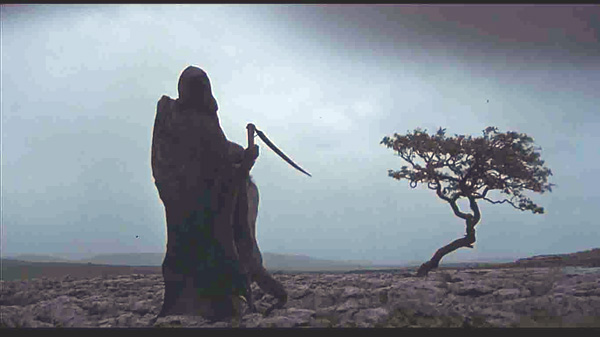
Following hard on the heels of  its decision to close the UK Infra-red Telescope and the James Clerk Maxwell Telescope on Hawaii, the Science and Technology Fatalities Council today announced the next stage of its Programmatic Review.

STFC graciously invites your contribution to this exercise, which is to be conducted by a Mr Reaper from Swindon…

R.I.P. Ray Bradbury (1920-2012)

Posted in Finance, Literature with tags , , on June 7, 2012 by telescoper

I was deeply saddened yesterday to hear news of the death at the age of 91 of writer Ray Bradbury. The resulting wave of comments on twitter and facebook from friends and colleagues and the wider world testifies to the joy and wonder he brought into so many lives. Bradbury was so much more than a science fiction writer (although he did write great science fiction). He was a rare example of an author whose work transcended genre. His limitless imagination and fluid writing style also allowed him to make light work of that most difficult form, the short story.

One of my  very first blog posts – way back in October 2008 – was inspired by a collection of Ray Bradbury stories called The October Country.  To mark his passing I thought I’d recycle it here. World news hasn’t changed much, so it’s still relevant. Except  it’s not October. Yet.

–0–

I don’t know why I stopped reading science fiction and fantasy stories. I don’t know exactly when either. Perhaps it was a gradual thing to do with getting older. But when I was a teenager that’s the sort of thing I read all the time. I was a big fan of Michael Moorcock and read book after book of his stories, from the swords and sorcery novellas to the amazing End of Time series, and even the trippy psychedelic 1960s adventures of Jerry Cornelius. I enjoyed Tolkien, Mervyn Peake, Isaac Asimov,  Arthur C. Clarke and many others which I usually binge-read by buying everything I could find by a given author and ploughing through them one after the other.

One of the authors whose work I devoured in this way was Ray Bradbury, and his books are among the few that I still like to re-read from time to time. To be honest, I wasn’t all that keen on the pure science fiction books like The Martian Chronicles, but I loved his collections of macabre short stories. Perhaps it’s because I now know how difficult it is to write in that genre that my appreciation of his story-telling skill has if anything grown with time.

I was watching the news last night about the continuing tailspin in the world’s stock markets and it reminded me of one of my favourite collections of Ray Bradbury stories, The October Country. I rummaged around in the stacks of old paperbacks I still haven’t got around to putting on shelves – mainly because I haven’t got around to buying enough shelves – and finally located my copy. It’s a weirdly eclectic mixture of the whimsical and the frightening.

The October Country of the title isn’t a specific place. It is many places:

..a picturesque Mexican village where death is a tourist attraction; a city beneath the city where drowned lovers are silently reunited; a carnival midway where a tiny man’s most cherished fantasy can be fulfilled night after night. The October Country’s inhabitants live, dream, work, die–and sometimes live again–discovering, often too late, the high price of citizenship. Here a glass jar can hold memories and nightmares; a woman’s newborn child can plot murder; and a man’s skeleton can wage war against him. Here there is no escaping the dark stranger who lives upstairs…or the reaper who wields the world.

What binds the separate tales together is the way Bradbury conjures up an atmosphere that is both autumnal and alien, both familiar and unnerving, like that of a long-forgotten room where dust gathers on lost artefacts of the past.

But what does this have to do with Stock Markets?

The baffling thing is that the greatest episodes of spine-chilling terror that grip the stock market from time to time also always seem to happen in October. The great Wall Street Crash of 1929 happened in October. More recently, the 1987 crash known Black Monday happened in the same month. Now, in 2008, although the credit crunch has been with us for a significant time, the most dramatic drops in share prices have also been in October.

In order to find the answer to why this is the case I went to Wikianswers and discovered somebody has already posted the question, but so far there have been no answers.

Whatever it is, something about October seems to give investors the jitters.

I blame Ray Bradbury.