Archive for October, 2013

Australia: Cyclones go up to Eleven!

Posted in Bad Statistics with tags , , , , , , , on October 14, 2013 by telescoper

I saw a story on the web this morning which points out that Australians can expect 11 cyclones this season.

It’s not a very good headline, because it’s a bit misleading about what the word “expected” means. In fact the number eleven is the average number of cyclones, which is not necessarily the number expected, despite the fact that “expected value” or “expectation value” . If you don’t understand this criticism, ask yourself how many legs you’d expect a randomly-chosen person to have. You’d probably settle on the answer “two”, but that is the most probable number, i.e. the mode, which in this case exceeds the average. If one person in a thousand has only one leg then a group of a thousand has 1999 legs between them, so the average (or arithmetic mean) is 1.999. Most people therefore have more than the average number of legs…

I’ve always found it quite annoying that physicists use the term “expectation value” to mean “average” because it implies that the average is the value you would expect. In the example given above you wouldn’t expect a person to have the average number of legs – if you assume that the actual number is an integer, it’s actually impossible to find a person with 1.999! In other words, the probability of finding someone in that group with the average number of legs in the group is exactly zero.

The same confusion happens when newspapers talk about the “average wage” which is considerably higher than the wage most people receive.

In any case the point is that there is undoubtedly a considerable uncertainty in the prediction of eleven cyclones per season, and one would like to have some idea how large an error bar is associated with that value.

Anyway, statistical pedantry notwithstanding, it is indeed impressive that the number of cyclones in a season goes all the way up to eleven..

Elektra

Posted in Opera with tags , , , on October 13, 2013 by telescoper

I seem to have spent more time in London than in Brighton over the last week, and on Saturday I was in the Big Smoke again, for a Night at the Opera. This was a trip I’ve been looking forward to for some time, because it was made possible by the good folks of the School of Physics & Astronomy at Cardiff University: when I left at the end of January this year they presented me with a gift voucher for the Royal Opera House in Covent Garden, which I’ve only just around to using. So before going on, let me take the opportunity express my gratitude for such a lovely gift!

The Opera I went to see was Elektra by Richard Strauss, in a revival of Charles Edwards’s production that first ran in 2003. Elektra is a complex story (geddit?) set in ancient Mycenae, whose ruling class is gripped by a terrible family feud. The Opera begins with Elektra deranged with grief because of the murder of her father, Agamemnon, by her mother, Clytemnestra. She resolves to take revenge on her mother and her allies. Her hopes are initially thwarted when her sister Chrysothemis refuses to help and she hears of the death of her brother Orestes. However, Orestes is not dead; he returns to the Palace and, together with a companion, goes on a bloody rampage. The final scenes see the stage covered with dead bodies and the murderers drenched in blood. Elektra rejoices that her revenge is complete, but the fulfilment of her goal leaves her with nothing left to live for; the collapses and dies.

That’s what you go to the Opera for, a happy ending!

I thoroughly enjoyed the performance. Elektra is an opera in one Act, so it runs for about two hours without an interval. Christine Goerke was absolutely outstanding as Elektra, as was Iain Paterson as Orestes. The music by Richard Strauss is full of contrasts: at times dark and brooding, but at others with a radiant beauty. Those extremes represent the psychological extremes of the story: Elektra’s obsession with revenge is a distorted reflection of her love for her father. The Orchestra of the Royal Opera House conducted by Christopher Willis, standing in for Andris Jansons who was ill, added excellent colour and dynamics to the action on stage.

With all the corpses coming back to life in bloodstained costumes, the curtain call looked the Zombie Apocalypse had started, but we managed to escape and made it to an excellent Italian restaurant in time for a splendid supper followed by too much grappa. I didn’t get back to Brighton until late this afternoon…

Ode to a Small Lump of Green Putty I Found in my Armpit One Midsummer Morning

Posted in Poetry on October 12, 2013 by telescoper

Putty. Putty. Putty.
Green Putty – Grutty Peen.
Grarmpitutty – Morning!
Pridsummer – Grorning Utty!
Discovery….. Oh.
Putty?….. Armpit?
Armpit….. Putty.
Not even a particularly
Nice shade of green.
As I lick my armpit and shall agree,
That this putty is very well green.

(Excerpt) by Grunthos the Flatulent (translated by Douglas Adams)

RAS Council

Posted in Biographical, Science Politics with tags on October 11, 2013 by telescoper

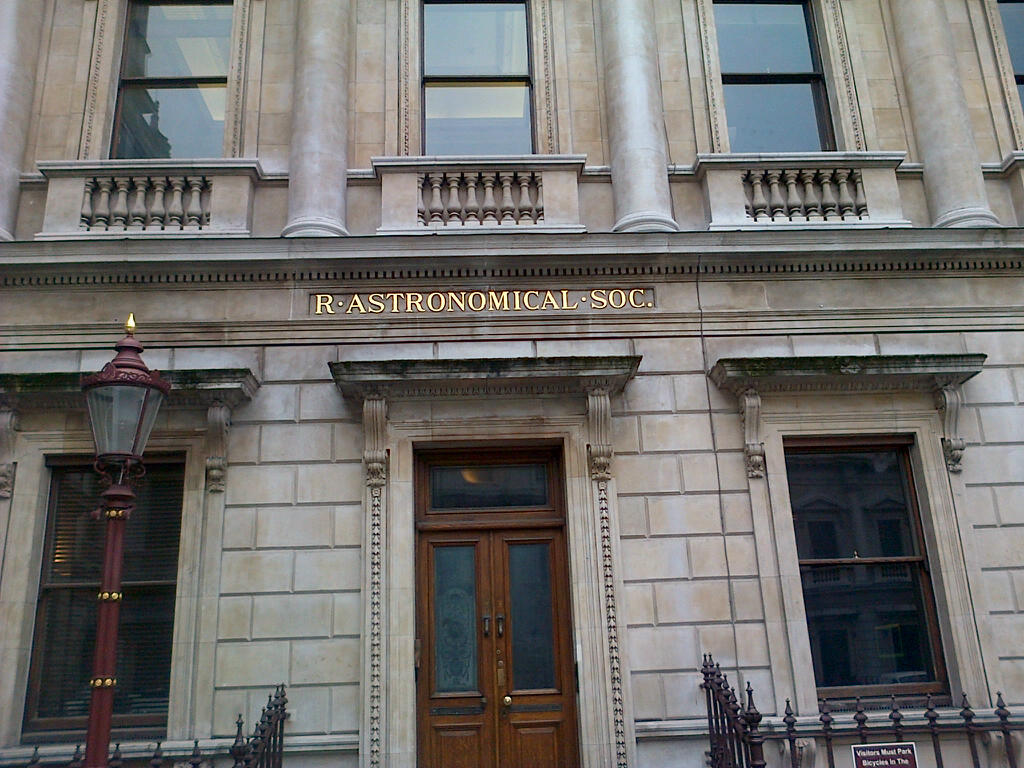
Up in London once more, this time in Burlington House, Piccadilly, for my first meeting as a duly elected Member of the Royal Astronomical Society Council. I’ll update on any non-confidential news later on if there is any and if I get time, but we’re about to start so that’s it for now…

Picture Postscript

Posted in Uncategorized with tags on October 10, 2013 by telescoper

I thought you might like to see the dedication written on the back of the seat in front of me at Roberto Devereux on Sunday..

Maria Stuarda & Roberto Devereux

Posted in Uncategorized with tags , , , , , , on October 10, 2013 by telescoper

I spent last weekend in Cardiff in order to catch the remaining two operas in the series of three bel canto Tudor operas by Gaetano Donizetti being staged by Welsh National Opera; my review of the first, Anna Bolena, which I saw a month ago, can be found here.

Saturday night (5th october) in Cardiff Bay saw me at the splendid Wales Millennium Centre for Maria Stuarda. Although inspired by the story of Mary Queen of Scots, the plot of this Opera is almost entirely imagined. In particular, the dramatic centrepiece of the story is a meeting between Maria Stuarda and Queen Elizabeth I an event that never actually happened. In the Opera it is this encounter – which, to put it mildly, doesn’t go very well – that leads to Elizabeth finally making the decision to have Mary Stewart executed.

The Opera begins with Elizbeth I under pressure from her Court to marry the Duke of Anjou and to show mercy towards Mary Queen of Scotland (who has ambitions for the throne of England) who has been under house arrest for the best part of twenty years. She sees the political advantage of an alliance with France through marriage, but is secretly in love with Roberto (aka Robert Dudley, Earl of Leicester) who is actually keen on Mary. When Elizabeth and Mary actually do meet – accidentally, when Elizabeth is out hunting – their hatred for each other is impossible to disguise. After some terse exchanges, Mary loses her temper and denounces Elizabeth. Doomed, she is taken back into captivity; Elizabeth finally signs her death warrant, and orders Roberto to witness the execution. Protesting her innocence Mary says her goodbyes and is led off to be beheaded. End of story.

The plot may not be historically accurate but it’s ideal material for an opera, with the Chorus of Welsh National Opera in good form and Donizetti’s beautiful score to counterpoint the seething emotions of love, jealousy and revenge. Lasting around 2 hours and 45 minutes (including the interval) it’s also sharper and more focussed than Anna Bolena. The highlight of the evening was Judith Howarth’s stunning performance as Maria Stuarda, whose huge voice invested her role with immense dramatic power; Alastair Miles was a sombre and sonorous Talbot and Adina Nitescu was pretty good as Elisabetta (Elizabeth). Costumes were dark, and scenery minimal, as in Anna Bolena. The one thing I didn’t like was Maria Stuarda’s tartan skirt, not exactly the most subtle way of marking out the Queen of Scotland, which stuck out like a sore thumb among the black dresses on stage.

And so to Roberto Devereux, which finds an older Queen Elizabeth trying to protect her lover Robert Devereux (Earl of Essex) against charges of treason emanating from his enemies at court until she discovers that he also loves another woman, although she doesn’t know who it is; in fact it is her friend Sarah Duchess of Nottingham. Meanwhile the Duke of Nottingham isn’t too happy about Roberto’s dalliances with his wife. Eventually the net closes on Roberto and he attempts to flee but is captured, foolishly carrying a gift given to him by Sarah. His fate is sealed and he is executed, but not before Sarah shows up and reveals herself to be Elizabeth’s rival. Elizabeth has a sudden change of mind and attempts to halt Roberto’s execution, but she’s too late. In remorse the Queen longs for her own death.

The star of this show was undoubtedly the Orchestra of Welsh National Opera, who were on superb form, right from opening bars of the overture with its deliciously wry references to the National Anthem. Conductor Daniele Rustoni, who was great in Anna Bolena too, bouncing about in the pit, clearly enjoys Donizetti’s music enormously and got the very best out of the musicians.

The production was a bit strange though. Mostly sombre and minimal as the previous two Tudor operas, it nevertheless included some bizarre variations in costume and scenery. Leonardo Capalbo as Roberto Devereux was a leather-clad gigolo whose diminutive stature contrasted with the tall and elegant Alexandra Deshorties as a rather vampy Queen Elizabeth, even dressed in leather like a dominatrix for some of the time; although her attire was a bit incongruous I actually thought she was fabulous. Later on, even more strangely, a giant mechanical spider appeared on stage. I didn’t really get the point of this contratption, but thought the sudden injection of Steampunk imagery was a blast. After all, you don’t go to the opera expecting everything to make sense. The elderly blue-rinsed lady sitting next to me didn’t agree: “I don’t think so” she said in a loud voice when the aforementioned arachnid began its perambulation across the set…

Anyway, I enjoyed all three of these operas. Each has much to offer, though I think Maria Stuarda is the best overall. Some people seem to think that Bel Canto operas just consist of a series of vocal exercises with those not involved hanging around on stage clearing their throats ready for their turn. That’s entirely unfair. There’s real drama in these works and I commend Welsh National Opera for their courageous decision to stage all three of them in a single season.
Yesterday in Parliament

Posted in Science Politics, The Universe and Stuff with tags , , , , , on October 9, 2013 by telescoper

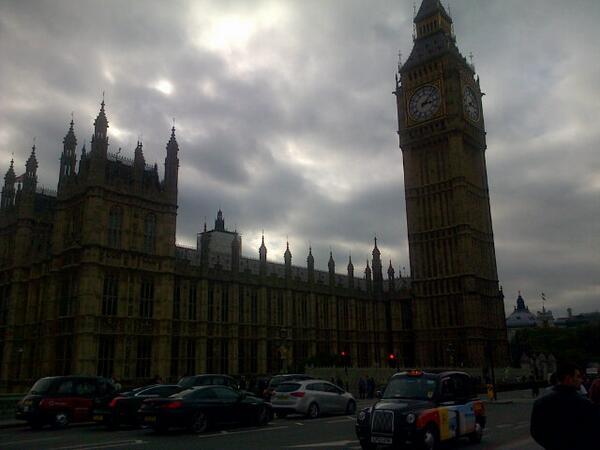
Yesterday afternoon I arrived in a rather muggy Westminster to attend a reception at the Houses of Parliament associated with an exhibition called Unveiling the Universe in all its Light which is currently set up inside the Palace of Westminster but will later go on tour around the UK.

Parliament

It took me a while to find the way in. I lived in London for the best part of 9 years but never bothered to visit the Houses of Parliament (at least not the interior), so I was quite excited as, clutching my invitation in a rather sweaty hand, I eventually joined the queue to go through the security checks. That didn’t take very long, so despite getting lost in the corridors of power en route – it’s a bit of a maze inside – I had plenty of time to see the exhibition before joining the assembled throng in the Strangers’ Dining Room. There, surrounded by walls covered in expensive but tasteless flock wallpaper, I had a couple of couples of glasses of wine and ate some posh sandwiches while chatting to various astronomers, particle physicists and others, including a contingent of familiar faces from the Science and Technology Facilities Council.

It was a coincidence, of course, that this event took place on the day that the Nobel Prize for Physics was announced; it was impressive that posters were already there celebrating the award to Peter Higgs. General opinion was delight that Higgs had won a share of the prize, but sadness that Tom Kibble had been left out.

There were upbeat speeches by Minister for Universities and Science David Willetts (who isn’t as tall as he looks on telly), Andrew Miller (Chair of the Parliamentary Select Committee on Science and Technology), John Womersley (Chief Executive of STFC) and Lord Rees (Astronomer Royal). I think everyone present came away with a strong sense that astronomy and particle physics had strong political backing. Martin Rees in particular said that he thought we were living in a “golden age” for fundamental science, involving an exciting interplay between the inner space of subatomic particles and the outer space of cosmology. I couldn’t agree more.

The 2013 Nobel Prize for Physics .. goes to Englert and Higgs

Posted in Science Politics, The Universe and Stuff with tags , , , , , , on October 8, 2013 by telescoper

Well, there we are. After an excruciating (and unexplained) delay the 2013 Nobel Prize for Physics has gone to François Englert and Peter Higgs. You can find the full press release here; the first section of text reads:

François Englert and Peter W. Higgs are jointly  awarded the Nobel Prize in Physics 2013 for the  theory of how particles acquire mass. In 1964, they  proposed the theory independently of each other  (Englert together with his now deceased colleague  Robert Brout). In 2012, their ideas were confirmed  by the discovery of a so called Higgs particle at the  CERN laboratory outside Geneva in Switzerland. The awarded theory is a central part of the Standard  Model of particle  hysics that describes how the world is  constructed. According to the Standard Model, every­thing, from flowers and people to stars and planets,  consists of just a few building blocks: matter particles.  These particles are governed by forces mediated by force  particles that make sure everything works as it should. The entire Standard Model also rests on the existence  of a special kind of particle: the Higgs particle. This  particle originates from an invisible field that fills up  all space. Even when the universe seems empty this  field is there. Without it, we would not exist, because  it is from contact with the field that particles acquire  mass. The theory proposed by Englert and Higgs  describes this process.

Anyway, congratulations to the two Laureates. I did get a bit excited when the rumour started that the winner this year would be someone born in Newcastle upon Tyne whose first name is Peter, but I guess I’ll have to wait until next year..

Oh, and François Englert is the first ever Belgian winner of the Nobel Prize for Physics!

I have to head off to London for a Parliamentary Reception organized by the Science & Technology Facilities Council, so I’ll have to leave it there but please feel free to add reactions to the announcement via the Comments Box.

P.S. Yesterday’s poll is now closed.

Physics Nobel Betting

Posted in Science Politics, The Universe and Stuff with tags , , , , , , , on October 7, 2013 by telescoper

I’m back in circulation just in time for tomorrow’s announcement of the 2013 Nobel Prize for Physics. The smart money is going on an award for the discovery of the Higgs Boson, but to whom should it be awarded. Today’s Grauniad summarizes the difficulties thus:

The committee can contrive the wording of the prize to narrow the number downwards and this is likely to happen. The prize could go to François Englert, who published the idea first, and Peter Higgs, who was second, but crucially was first to flag up the new particle. But that would rebuff the trio of Gerald Guralnik, Carl Richard Hagen and Tom Kibble, who developed the theory separately and published just a month after Higgs. The possibility has already caused acrimony among the scientists. Guralnik and Hagen, two US researchers, believe European physicists have conspired to erase their contribution from history.

This doesn’t seem to me to be entirely accurate, though. As far as I understand it, Higgs was the only one of the names above to mention a massive scalar particle, There is, I believe, therefore a strong case that the Nobel Prize should be awarded to Peter Higgs outright. Or if not to him, to some other person called Peter who was born in the North East…

However, I am used to being in a minority of one so there will undoubtedly be many others who feel differently.  Time for a poll! This one is different from my usual ones, in that you are allowed to vote more than once. Please use up to three votes: if you think Peter Higgs should win it outright vote three times for him. If you think it should be a three way split then vote for three different people, etc.

I should say that I don’t think the Nobel Committee for Physics is allowed to make an award to an institution such as CERN, but I’ve left that option in to see whether folks think that tradition should change..

UPDATE: Here are the Thomson-Reuters predictions, including Marcy, Mayor and Queloz for Extra Solar Planets…


Interlude

Posted in Uncategorized on October 2, 2013 by telescoper

This afternoon I’m going off to get my head examined (!) and thereafter will be indisposed for a few days during which I’ll unable to connect to the interwebs. Nothing serious, I hasten to add.  Normal services will be resumed as soon as possible (probably on Monday 7th October)  but, for the time being, there will now follow a short intermission.