Archive for May, 2014

Space is the Place: 100 Years of Sun Ra

Posted in Jazz, The Universe and Stuff with tags , , , , on May 22, 2014 by telescoper

When I’m struggling to find the time or the inspiration to write a blog post, serendipity usually comes to the rescue. A post on Twitter just alerted me to the fact that today is the 100th birthday of  Sun Ra, one of the most extraordinary composers and bandleaders of the 20th Century; was born Herman Poole Blount in Bimingham, Alabama, on 22nd May 1914. From the 1950s, until his death in 1993, Sun Ra led various combinations of musician in bands with various permutations of names involving the word Arkestra, such as the Blue Universe Arkestra and the Solar Myth Arkestra. He himself played keyboards, sometimes solo and sometimes with huge bands  of over 30 musicians; his music touched on virtually the entire history of jazz, from ragtime to swing music, from bebop to free jazz. He was also  one of the first musicians, in any genre to make extensive use of electronic keyboards.

He never achieved mainstream commercial success, but was a prolific recording artist with a cult following, partly fuelled by his outrageous claims to have been born not on Earth but on Saturn and the fact that much of his music was to do with space travel. Quoted in Jazziz magazine

They really thought I was some kind of kook with all my talk about outer space and the planets. I’m still talking about it, but governments are spending billions of dollars to go to Venus, Mars, and other planets, so it’s no longer kooky to talk about space

Quite. In fact, Sun Ra developed a complex performing identity based on his music, “cosmic” philosophy, and poetry. He abandoned his birth name, took on the persona of Sun Ra (Ra being the ancient Egyptian god of the sun), and often dressed in the style of an ancient Egyptian pharoah, as in the video clip. In other words, he was very odd.

At this point you’re probably thinking this is all a bit “New Age” and heading in the direction of Charlie Parker‘s Private Hell, one of my favourite Gary Larson cartoons:

However, although I admit Sun Ra’s music is eclectic, outrageous and sometimes downright mystifying, it also has a marvellous coherence to it maintained as his style evolved over four decades and is consistently imbued with a powerful sense of the Jazz tradition.  In fact, I think Charlie Parker would have approved. I know I do! Anyway, whatever I think, the music of Sun Ra has withstood its skeptics and detractors for generations and long may it continue to do so. The world needs more of his kind.

To give a taste of his music, here is the classic album Space is the Place in its entirety (at least until it gets taken off Youtube for copyright violation!):


Sakharov Oscillations in Cosmology

Posted in The Universe and Stuff with tags , , , , on May 21, 2014 by telescoper

No time for much of a post today, but I couldn’t resist commenting on something I picked up from Twitter just now. Today is the 93rd anniversary of the birth of the nuclear physicist and dissident Andrei Dmitrievich Sakharov who died in 1989. Sakharov is probably more famous for his political campaigning and the award of the Nobel Peace Prize in 1975 than for his work in physics, but I couldn’t resist mentioning a classic paper by him which was first published in Russian in 1965.

Here is the abstract:

Sakharov

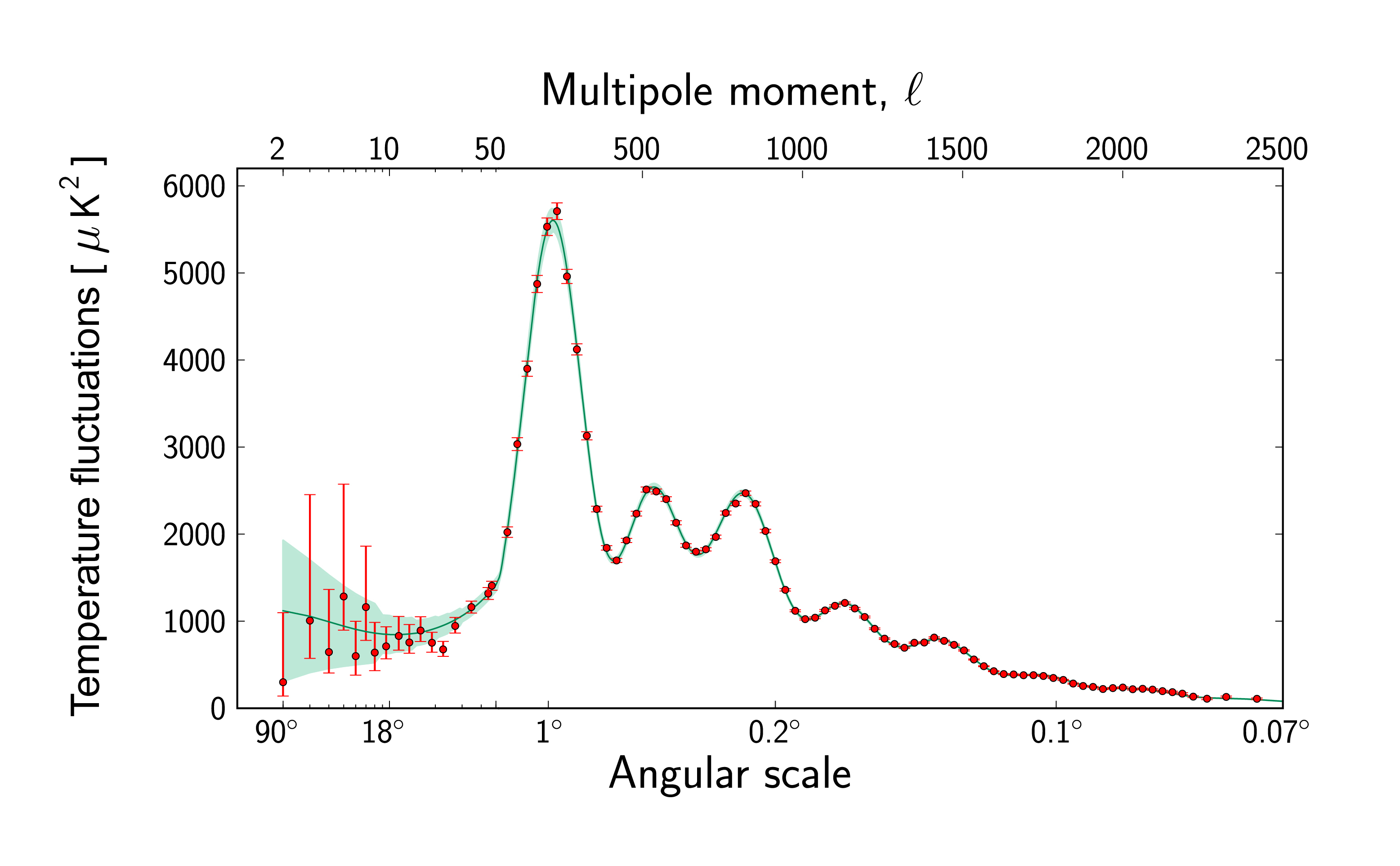
The importance of this remarkable paper for modern cosmology can’t be overstated, although many modern cosmologists have either forgotten it or were never aware of it in the first place. The details are a bit out of date, but the idea that density perturbations that grew by a process of gravitational instability to form galaxies and the large-scale structure of the Universe has survived almost fifty years, and plays a central role in the standard cosmological model. Moreover, the Sakharov Oscillations predicted in this paper manifest themselves in the temperature fluctuations of the cosmic microwave background as measured by, e.g., the Planck experiment:

Planck_power_spectrum_orig

The wiggles in the power spectrum plotted above appear because these fluctuations, generated in the modern theory during an episode of cosmic inflation, are set up in phase and thus reach the epoch of scattering at different phases of their oscillation and hence with different amplitudes. The detailed behaviour of the spectrum displayed above tells us a huge amount about the composition and evolution of the Universe.

When Francesco Lucchin and I were writing the first edition of our cosmology textbook (second edition here) we were careful to acknowledge Sakharov’s role in the development of cosmological theory, which wasn’t generally reflected in texts written outside Russia. I particularly recall the late Leonid Grischuk banging on about Sakharov’s work at many conferences in order to ensure he got proper credit and some books, e.g. Zel’dovich and Novikov’s two-volume Relativistic Astrophysics, do acknowledge him correctly. Somehow, however, the CMB wiggles never acquired the name of Sakharov; the peaks in the spectrum are often still called Doppler Peaks or Acoustic Peaks, when surely they should be Sakharov Peaks. It’s probably too late to change the nomenclature now, but there you go.

Anyway, I’ve now realized that I was working on the First Edition of Coles & Lucchin in 1994 which is now twenty years ago so before I get too depressed about the passage of time I’ll stop writing and get on with something else!

Anyway, I’ve now realized that

KlezMahler

Posted in Music with tags , , , , , , on May 20, 2014 by telescoper

For my second experience of this year’s Brighton Festival I went last night to the Brighton Dome Concert Hall to see a show called KlezMahler. I wasn’t quite sure what I was in for when I turned up but it turned out to be great fun and I’m glad I went.

The first half of the concert featured the Aurora Orchestra. Their main item was Symphony No. 1 by Gustav Mahler. I’ve heard this symphony played live before, but not quite like this. The Aurora Orchestra numbers only fifteen musicians: two violins, and one each of viola, cello, double bass, flute, oboe, clarinet, bassoon, horn, trumpet, trombone, harp, timpani and percussion. The arrangement for this “Chamber Orchestra” was done by Ian Farrington.

The result was fascinating and illuminating. Gone of course were the lush string textures and towering crescendi of a full symphony orchestra. A small force simply can’t hope to generate that kind of experience. On the other hand, what one gets in compensation is the ability to hear much more clearly how the piece is put together because everything is so much crisper. It must be very demanding to play a symphony like this, as each invidual instrument is very exposed, but these musicians have a very good account of the work. In places I found myself uncomfortable with the balance between different sections and the lack of oomph sometimes made it all sound rather tinny, but by and large I found it very interesting. I still prefer the bigger orchestral sound, but I did learn a lot from this “Mahler Light” arrangement. It was, however, a bit like being presented with an X-ray when you thought you were going to get a photograph!

The third movement of Mahler’s first symphony includes a section in which he produces the sound of a Jewish Klezmer band, which gives a hint as to how this piece fits in with the rest of the programme. Preceding Mahler 1 in the first half of the concert was a piece for solo clarinet (Fantasie by Widmann) and a traditional Doina from Romania (a form of improvised funereal lament) again played on a solo clarinet, this time situated offstage in the circle. The latter piece was particularly moving and well played.

After the interval we heard the She’Koyokh Klezmer Music Ensemble, who treated us to some traditional Klezmer music as well as other folk music from Eastern Europe. In fact their opening number, if I recall correctly, was from Turkey and it featured the very distinctive vocal style of Sigem Aslan. They played with great veuve and vitality and not inconsiderable virtuosity too. There was even an audience singalong in the middle. Some way into their set they were joined by members of the Aurora Orchestra. I felt that adding more musicians had the effect of somehow diffusing the impact of the original band, giving it a little less bite. That’s not to say however that the music wasn’t enjoyable because it certainly was!

There’s a taster of their style on this video:

It’s probably now obvious what the idea behind the concert was. Here it is as stated in the programme:

Iain Farrington’s dazzling chamber orchestra arrangement of Mahler’s Symphony No. 1, placed alongside a selection of klezmer and folk music performed by members of Aurora and She’koyokh, reveals the musical influences and inspirations behind Mahler’s masterpiece with new clarity. This will be an evening of insight and inspiration, eloquence and exuberance.

For my money it certainly succeeded in its aim. Bravo KlezMahler!


Incidentally, as a Jazz fan, I’ve often wondered about the influence that Klezmer might have had on the musical development of clarinettists like Benny Goodman. Here’s an example of his playing when he was young:

The opening of this does sound to me very Klezmery. What do you think?


Examination Times

Posted in Biographical, Education with tags , , , , , on May 19, 2014 by telescoper

After a gloriously sunny weekend, it’s now a gloriously sunny Monday. There always seems to be good weather when students are revising for, or actually taking, their examinations. It’s Mother Nature’s special torture. The bus I was on this morning went past a large crowd of students waiting outside the Sports Hall in the bright sunshine for some examination or other.  The sight did remind me that I usually post something about examinations at this time of year, so here’s a lazy rehash of my previous offerings on the subject.

My feelings about examinations agree pretty much with those of  William Wordsworth, who studied at the same University as me, as expressed in this quotation from The Prelude:

Of College labours, of the Lecturer’s room
All studded round, as thick as chairs could stand,
With loyal students, faithful to their books,
Half-and-half idlers, hardy recusants,
And honest dunces–of important days,
Examinations, when the man was weighed
As in a balance! of excessive hopes,
Tremblings withal and commendable fears,
Small jealousies, and triumphs good or bad–
Let others that know more speak as they know.
Such glory was but little sought by me,
And little won.

It seems to me a great a pity that our system of education – both at School and University – places such a great emphasis on examination and assessment to the detriment of real learning. On previous occasions, before I moved to the University of Sussex, I’ve bemoaned the role that modularisation has played in this process, especially in my own discipline of physics.

Don’t get me wrong. I’m not opposed to modularisation in principle. I just think the way modules are used in many British universities fails to develop any understanding of the interconnection between different aspects of the subject. That’s an educational disaster because what is most exciting and compelling about physics is its essential unity. Splitting it into little boxes, taught on their own with no relationship to the other boxes, provides us with no scope to nurture the kind of lateral thinking that is key to the way physicists attempt to solve problems. The small size of many module makes the syllabus very “bitty” and fragmented. No sooner have you started to explore something at a proper level than the module is over. More advanced modules, following perhaps the following year, have to recap a large fraction of the earlier modules so there isn’t time to go as deep as one would like even over the whole curriculum.

In most UK universities (including Sussex), tudents take 120 “credits” in a year, split into two semesters. In many institutions, these are split into 10-credit modules with an examination at the end of each semester; there are two semesters per year. Laboratories, projects, and other continuously-assessed work do not involve a written examination, so the system means that a typical  student will have 5 written examination papers in January and another 5 in May. Each paper is usually of two hours’ duration.

Such an arrangement means a heavy ratio of assessment to education, one that has risen sharply over the last decades,  with the undeniable result that academic standards in physics have fallen across the sector. The system encourages students to think of modules as little bit-sized bits of education to be consumed and then forgotten. Instead of learning to rely on their brains to solve problems, students tend to approach learning by memorising chunks of their notes and regurgitating them in the exam. I find it very sad when students ask me what derivations they should memorize to prepare for examinations. A brain is so much more than a memory device. What we should be doing is giving students the confidence to think for themselves and use their intellect to its full potential rather than encouraging rote learning.

You can contrast this diet of examinations with the regime when I was an undergraduate. My entire degree result was based on six three-hour written examinations taken at the end of my final year, rather than something like 30 examinations taken over 3 years. Moreover, my finals were all in a three-day period. Morning and afternoon exams for three consecutive days is an ordeal I wouldn’t wish on anyone so I’m not saying the old days were better, but I do think we’ve gone far too far to the opposite extreme. The one good thing about the system I went through was that there was no possibility of passing examinations on memory alone. Since they were so close together there was no way of mugging up anything in between them. I only got through  by figuring things out in the exam room.

I think the system we have here at the University of Sussex is much better than I’ve experienced elsewhere. For a start the basic module size is 15 credits. This means that students are usually only doing four things in parallel, and they consequently have fewer examinations, especially since they also take laboratory classes and other modules which don’t have a set examination at the end. There’s also a sizeable continuously assessed component (30%) for most modules so it doesn’t all rest on one paper. Unusually compared with the rest of the University, Physics students don’t have many examinations in the January mid-year examination period either. Although there’s still in my view too much emphasis on assessment and too little on the joy of finding things out, it’s much less pronounced than elsewhere. Maybe that’s one of the reasons why the Department of Physics & Astronomy does so consistently well in the National Student Survey?

We also have modules called Skills in Physics which focus on developing the problem-solving skills I mentioned above; these are taught through a mixture of lectures and small-group tutorials. I don’t know what the students think of these sessions, but I always enjoy them because the problems set for each session are generally a bit wacky, some of them being very testing. In fact I’d say that I’m very impressed at the technical level of the modules in the Department of Physics & Astronomy generally. I’ve been teaching Green’s Functions, Conformal Transformations and the Calculus of Variations to second-year students this semester. Those topics weren’t on the syllabus at all in my previous institution!

Anyway, my Theoretical Physics paper is next week (on 28th May) so I’ll find out if the students managed to learn anything despite having such a lousy lecturer. Which reminds me, I must get the rest of their revision notes onto the Study Direct website…

Elsevier Journals – The QMUL Figure

Posted in Open Access with tags , on May 18, 2014 by telescoper

More information on the scandalous cost of academic journals.

How would you feel if your institution paid over half a million pounds a year to Elsevier?

edwardfhughes's avatarEdward F Hughes

A few weeks ago I reblogged Tim Gowers’ post about the cost of Elsevier journals. I noticed that my own institution (QMUL) had deflected his Freedom of Information request. Curious to learn more, I did some digging.

It turns out that QMUL paid a total of £545,306.93 to Elsevier for the academic year 2013/14. Interestingly this is more than other universities that joined the Russell Group recently. However it’s still much cheaper than the bill Cambridge, UCL, Imperial or Edinburgh face.

Unfortunately QMUL weren’t able to provide any further breakdown of the figures. Apparently this information isn’t available to the university, which seems like a very odd way of doing business. I think it likely that the vast majority of the cost is the subscription fee.

I should point out that QMUL and Cambridge certainly have differentiated access to Elsevier journals. For example QMUL Library does not have access to Science Direct…

View original post 214 more words

The Tempest in Musick

Posted in Brighton, Literature, Music with tags , , , , , , , on May 17, 2014 by telescoper

I haven’t done a music review type of thing on this blog for some time, for the simple reason that I haven’t had the time to go to many live music events recently. However, this being Festival time in Brighton I felt I should make an extra-special effort to take a bit of time out to take in a bit of culture. All work and no play and all that.

Anyway, yesterday evening found me in the Concert Hall of the Brighton Dome for a performance entitled The Tempest in Musick by the New London Consort. The programme for the show featured all the music written for the 17th and early 18th century revivals of William Shakespeare’s play, The Tempest. That in itself tells an interesting story. In 1667, after the Restoration of the Monarchy, John Dryden and Willian Davenant put together an enlarged and adapted version of Shakespeare’s play with a host of new characters and numerous musical interludes and additions. This piece was later revised further  aa number of times, each including even more music, a process which culminated in a semi-operatic version compiled by Thomas Shadwell in 1674. As if Shakespeare’s original tale were not exotic enough, these new versions had extra devils, Tritons, and Nereids along with spectacular stage effects and costumes. London audiences clearly wanted to let their hair down after the severe restrictions on popular entertainment imposed by Puritans during the Protectorate. The Shadwell version was the top show in London for over fifty years: it ran from 1674 until 1728, until it was eventually replaced in popularity by The Beggar’s Opera.

In the concert we heard most if not all of the music that survives from the multiple revivals and revisions of the Tempest, written by various composers over the period 1667 to 1712, including a setting of “Dear pretty youth” by Henry Purcell dated to 1695. There were two different versions of the most famous song from the original play, Full Fathom Five, sung by Ariel:

Full fathom five thy father lies;
Of his bones are coral made;
Those are pearls that were his eyes;
Nothing of him that doth fade,
But doth suffer a sea-change
Into something rich and strange.
Sea-nymphs hourly ring his knell:
Ding-dong.
Hark! now I hear them — Ding-dong, bell

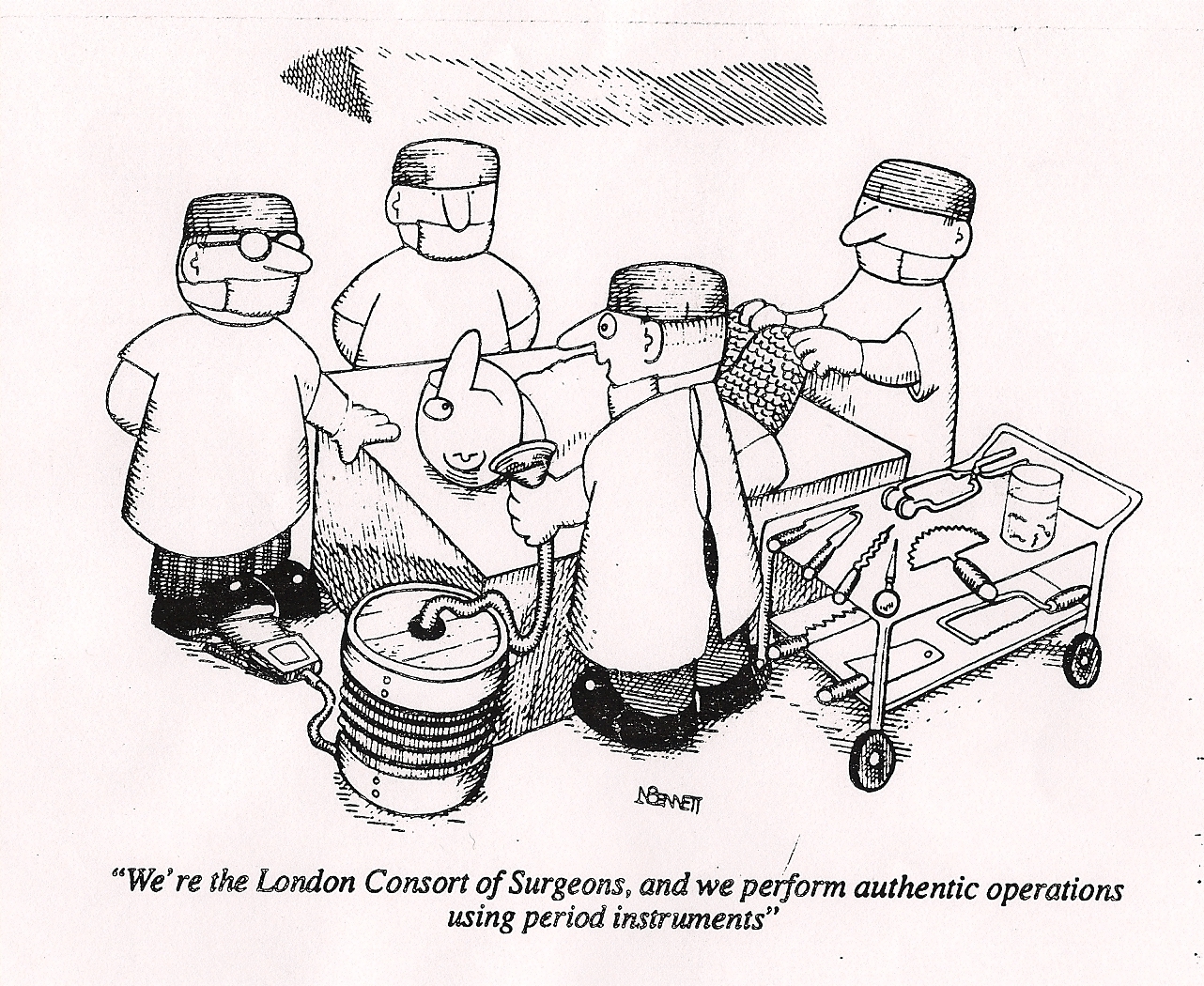
Of course the New London Consort play using period instruments, which gives me an excuse to post this again:

periodinstruments

I’m not a fan of period instruments generally, but because of the historical interest in the music I thought I’d give it a go. I had grave misgivings when I saw that the musicians were to be directed by David Roblou from a harpsichord, but decided to grit my teeth and perservere instead of fleeing to the nearest pub.

As it happened, although it was good in parts, the concert basically just confirmed my prejudices. To start with, much of the music is very ordinary and the musicians for the most part failed to bring it to life. The strings, played without vibrato throughout and occasionally rather ragged to boot, didn’t produce much in the way of colour or dynamics; this way of playing also exposed their uncertain pitching. The recorders, a long way from the audience right at the back of the stage, found it difficult to project. They would have been much better off in a smaller venue, I think, especially because of the large gap between audience and stage left for standing customers (of whom there were very few). The dreaded harpsichord was barely audible too. Not that I’m complaining about that.

On the other hand there was some brilliant trumpet playing by Simon Munday on a period instrument. Also I think this is the first time I’ve ever heard a Serpent played and I really enjoyed hearing it. Apart from these highlights though I found the music rather undistinguished and the performance curiously flat.

The singing was much better: the three lovely female voices (Anna Dennis, Faye Newton and Penelope Appleyard) are worth mentioning and tenor Jorge Navarro-Colorado sang well and was a striking presence on stage during the occasional semi-staged pieces. I wasn’t that keen on any of the bass-baritones though.

I realise that there will probably be early music fans out there who would have loved last night’s performance. That’s fine of course. Les gouts et les couleurs ne se discutent pas.


On a Forenoon of Spring

Posted in Poetry with tags , , , on May 16, 2014 by telescoper

I’m glad I am alive, to see and feel
The full deliciousness of this bright day,
That’s like a heart with nothing to conceal;
The young leaves scarcely trembling; the blue-grey
Rimming the cloudless ether far away;
Briars, hedges, shadows; mountains that reveal
Soft sapphire; this great floor of polished steel
Spread out amidst the landmarks of the bay.

I stoop in sunshine to our circling net
From the black gunwale; tend these milky kine
Up their rough path; sit by yon cottage-door
Plying the diligent thread; take wings and soar–
O hark how with the season’s laureate
Joy culminates in song! If such a song were mine!

by William Allingham (1824-1889)


The Russian Orthodox Church Condemns Eurovision

Posted in LGBTQ+ with tags , , on May 15, 2014 by telescoper

Eurovision_1

That BICEP Rumour…

Posted in The Universe and Stuff with tags , , , on May 14, 2014 by telescoper

So there’s been another twist in the story of BICEP2 and whether or not it has actually detected primordial gravitational waves.

This time it is a blog post on a site called Résonaances by Adam Falkowski who alleges that the BICEP2 team has made a pretty astounding error in their analysis of the data. This suggestion has been picked up by a couple of fairly influential science news sites (here and here). The BICEP2 team deny having made any such error and are quoted in the news stories defending their results in robust terms.

Before I continue let me make it clear that I stand by the scepticism I have expressed on this blog about this result (which, in fact, is shared by many of my colleagues in the cosmology fraternity1). The problem is that the measurement is made at a single frequency (150 GHz) and it is by no means clear on that basis whether it has the black-body spectrum that would characterize it as being associated with the cosmic microwave background rather than some sort of foreground emission. At 150 GHz the major worry is that polarized emission from galactic dust might contribute significantly to the signal, and might even swamp any primordial contribution.

Anyway, the blog post states that:

To estimate polarized emission from the galactic dust, BICEP digitized an unpublished 353 GHz map shown by the Planck collaboration at a conference.  However, it seems they misinterpreted the Planck results: that map shows the polarization fraction for all foregrounds, not for the galactic dust only (see the “not CIB subtracted” caveat in the slide). Once you correct for that and rescale the Planck results appropriately, some experts claim that the polarized galactic dust emission can account for most of the BICEP signal.

Here’s the map concerned as it appeared in the conference talk as presented on the blog post:

culprit

The point about this is that dust emission increases with frequency, so that at 353 GHz it would be expected to dominate the primordial cosmic microwave component. However, if one can measure the polarized component of this emission at high frequency (where it is larger and consequently easier to measure) then one could try to estimate the polarized contribution at the lower frequency measured at 150 GHz by BICEP2 by assuming it has a similar polarized fraction. This is actually just about the only way to estimate the foreground contribution.

Unfortunately in this map there is an additional unpolarized foreground arising from the Cosmic Infrared Background (CIB) which comprised integration dust emission from extragalactic sources. Including this component makes the polarized fraction look lower than it would if it were separated out and only the more highly polarized Galactic contribution considered. In other words including the CIB leads to an underestimate of the polarized fraction and consequently an underestimate of the foreground contamination at 150 GHz.

So now there are three issues:

  1. Did BICEP2 actually use this digitized image to estimate the polarized foreground for their experiment?
  2. Did they make the error of which they have been accused?
  3. Does this invalidate the BICEP2 announcement?

The answer to (1) is that I don’t know for sure but it’s certainly possible that they did. It sounds a pretty ropey approach, but the Planck data are not publicly available so they had to improvise. Even if (1) is the case, I am not at all sure that (2) is true. They may have, but in their responses to the suggestion they have denied it. It seems such a silly error that I’d be surprised, but that doesn’t in itself make it untrue.

However, even if (1) and (2) are the case that doesn’t mean that (3) is true, i.e. it does not imply that the entire analysis presented by BICEP2 is wrong. They have several different estimates of the foreground contribution using other methods so the entire result clearly does not stand or fall on the basis of the use of this particular map in a particular way.

I repeat what I’ve said before in response to the BICEP2 analysis, namely that the discussion of foregrounds in their paper is disappointing. I’d also say that I think the foreground emission at these frequencies is so complicated that none of the simple approaches that were available to the BICEP2 team are reliable enough to be convincing. My opinion on the analysis hasn’t therefore changed at all as a result of this rumour. I think BICEP2 has definitely detected something at 150 GHz but we simply have no firm evidence at the moment that it is primordial. That will change shortly, with the possibility of other experiments (specifically Planck, but also possibly SPTPol) supplying the missing evidence.

I’m not particularly keen on the rumour-mongering that has gone on, but then I’m not very keen either on the way the BICEP2 result has been presented in some quarters as being beyond reasonable doubt when it clearly doesn’t have that status. Yet.

Rational scepticism is a very good thing. It’s one of the things that makes science what it is. But it all too easily turns into mudslinging.

Note: 1 I use the word “fraternity” in the sense given in the Chambers Dictionary as “any set of people with something in common” rather than as “an all-male N American college association”. Cosmology is neither “all-male” nor exclusively American and I did not mean to imply either by my use of English.


Sibelius of the Rings

Posted in Film, Music with tags , , , , , on May 13, 2014 by telescoper

My frame of mind for the day is largely determined by what is playing on BBC Radio 3 when it switches on at 6am as it does every morning to wake me up. This morning it happened to be the rousing Intermezzo from the Karelia Suite by Jean Sibelius. An intermezzo is very often a piece of fairly nondescript music played while people change the sets on stage during an opera or theatre performance, but this one is actually a terrific piece in its own right.

Often when the radio switches on when I’m asleep I don’t actually wake up immediately, but somehow seem to be able to incorporate the music into a dream. As I slowly emergedfrom my slumbers this morning my half-asleep mind somehow put this music together with a sort of action replay of the Ride of the Rohirrim, as Theoden’s army arrives to relieve the siege of Minas Tirith from The Lord of the Rings; the preamble fits well with the riders and horses gathering into line and preparing for battle, and the main theme conjures up the subsequent cavalry charge in rousing fashion.

My lunchtime task today has therefore been to find a clip of the film on Youtube and see how the music works. I suggest you turn the sound off the film clip (first youtube link) and let it run until about 58s in before starting the second which has the actual music on it. That way the peak of the crescendo and loud cymbal crash in Sibelius’ score coincides with the impact of the charge upon the orc formation.