With lyrics by Sammy Cahn and tune by Jule Styne, the song Time After Time was written in 1947 and rapidly became a jazz standard. Trumpeter and singer Chet Baker certainly took a shine to it and recorded many versions over the years. I already posted one version from 1956 here. Here’s another excellent one, from Belgium TV in 1964. Chet Baker had an unusual vocal style for jazz: smooth and with little vibrato, rather like his playing on the trumpet. There’s quite a long trumpet solo in this one during which you can hear the influence of Miles Davis very clearly.
Archive for Jazz
Time After Time – Chet Baker
Posted in Jazz with tags Chet Baker, Jazz, Time After Time on September 29, 2026 by telescoperEverybody Digs Bill Evans
Posted in Film, Jazz with tags Anders Danielsen Lie, Bill Evans, Everybody Digs Bill Evans, film, Jazz, Paul Motian, Scott La Faro on September 20, 2026 by telescoperI’m not exactly an avid cinema-goer but I couldn’t resist taking a short trip into Dublin to see Everybody Digs Bill Evans, a biographical drama about the late great jazz pianist Bill Evans, the trailer for which is above.
I suppose Bill Evans is best known for his wonderful contributions to what many people regard as the greatest jazz album of all time, Kind of Blue which was released in 1959. This film, however, focuses on the period after he had left the Miles Davis band that made that album in order to pursue a career leading a piano trio. It could be argued that it was this step that led to Bill Evans’s most important contribution to the evolution of jazz because he basically created the modern piano trio, converting it from what it had been before – a pianist with bass and drum backing – to an equal partnership of the three diverse instruments. To put such a combination together required him to find musicians of equal creativity and understanding, and he found them when he formed his first regular trio with the brilliant Scott LaFaro on bass and Paul Motian on drums. In a short period that band made four superb albums (two in studio, Portrait in Jazz and Explorations, and two live, Sunday at the Village Vanguard and Waltz for Debby). Astonishingly, the music for the two live albums was recorded on the same day, 25th June 1961.
Just when it seemed a wonderful future was opening up for the trio, tragedy struck. Bassist Scott LaFaro was killed in a car accident, just 10 days after the Village Vanguard date. He was just 25 years old. Evans was completely devastated by this event, so much so that he stopped playing completely for several months. He was paralysed by grief. For a man whose whole life revolved around playing the piano this was an indication of the depth of the bereavement he felt. It also made Evans sink even deeper into the heroin habit he was already struggling with.
The film focusses on the the period after LaFaro’s death, when Bill Evans stays in New York City with his brother Harry (who was also a musician) before his escalating drug use forces him to leave in order to detox with is parents in Florida. It’s essentially a portrait of a man’s struggles with grief and his inner demons, and is at times grim but it is keenly felt and very absorbing. Bill Evans was a shy and introverted man who found his own talent hard to cope with, and was consequently very insecure, but the film does not try to turn him into some kind of martyr. Neither does it try to come up with a glib “explanation” of his heroin addiction. Like the complex harmonic progressions that abound in the music, not everything has a straightforward resolution. The honesty of the film is one of its greatest strengths.
The look of the film is very “art house”. Shot (mostly) in stark black-and-white (see the trailer), it makes striking use of light and shadow. In places it reminded me a lot of Night of the Hunter. Another interesting thing is that although it is set largely between New York and Florida, it was actyually shot in Ireland!
Mark O’Halloran’s script avoids a linear narrative, instead jumping backwards and forewards, giving the story a dreamlike quality. For example, flash-forwards to the 1970s are shot in vibrant saturated colour to contrast with the monochrome of the rest of the film. These sequences are previews of yet more tragedy in Evans’s life: the deaths by suicide of his partner Ellaine Schultz in 1973 and his brother Harry Evans in 1979. Bill Evans himself passed away in 1980.
Finally I have to take my hat off to Norwegian actor Anders Danielsen Lie for his utterly compelling performance as Bill Evans. I can’t think of many examples of an actor so completely inhabiting such an enigmatic role. I suppose he was helped because there are quite a few examples of Evans playing and talking on film, but even so it was a standout performance.
Everybody Digs Bill Evans is highly recommended, and not only for jazz fans! It’s showing at The Lighthouse and the Irish Film Institute in Dublin.
P.S. The title of the film is the same as that of a studio album made by an earlier manifestation of the Bill Evans Trio, with Sam Jones on bass and Philly Joe Jones on drums, before he teamed up with Scott LaFaro and Paul Motian.
P.P.S. Since Autumn is coming on, here’s my favourite track from Portrait in Jazz with Bill Evans, Scott LaFaro and Paul Motian showing what they could do.
My Bucket’s Got a Hole in It
Posted in Biographical, Jazz, Maynooth with tags Humph at the Conway, Humphrey Lyttelton, Jazz, King's Birthday Honours, My Bucket's Got a Hole in It on June 14, 2026 by telescoper“Only connect” is EM Forster’s best known adage about writing, though he didn’t mean it in the context of a “shitty WordPress blog”. Nevertheless I do find it fun sometimes to connect disparate things, so here goes.
I was doing a turn in the garden this afternoon when I noticed that an old bucket left here by the previous occupant had corroded enough to develop a hole:
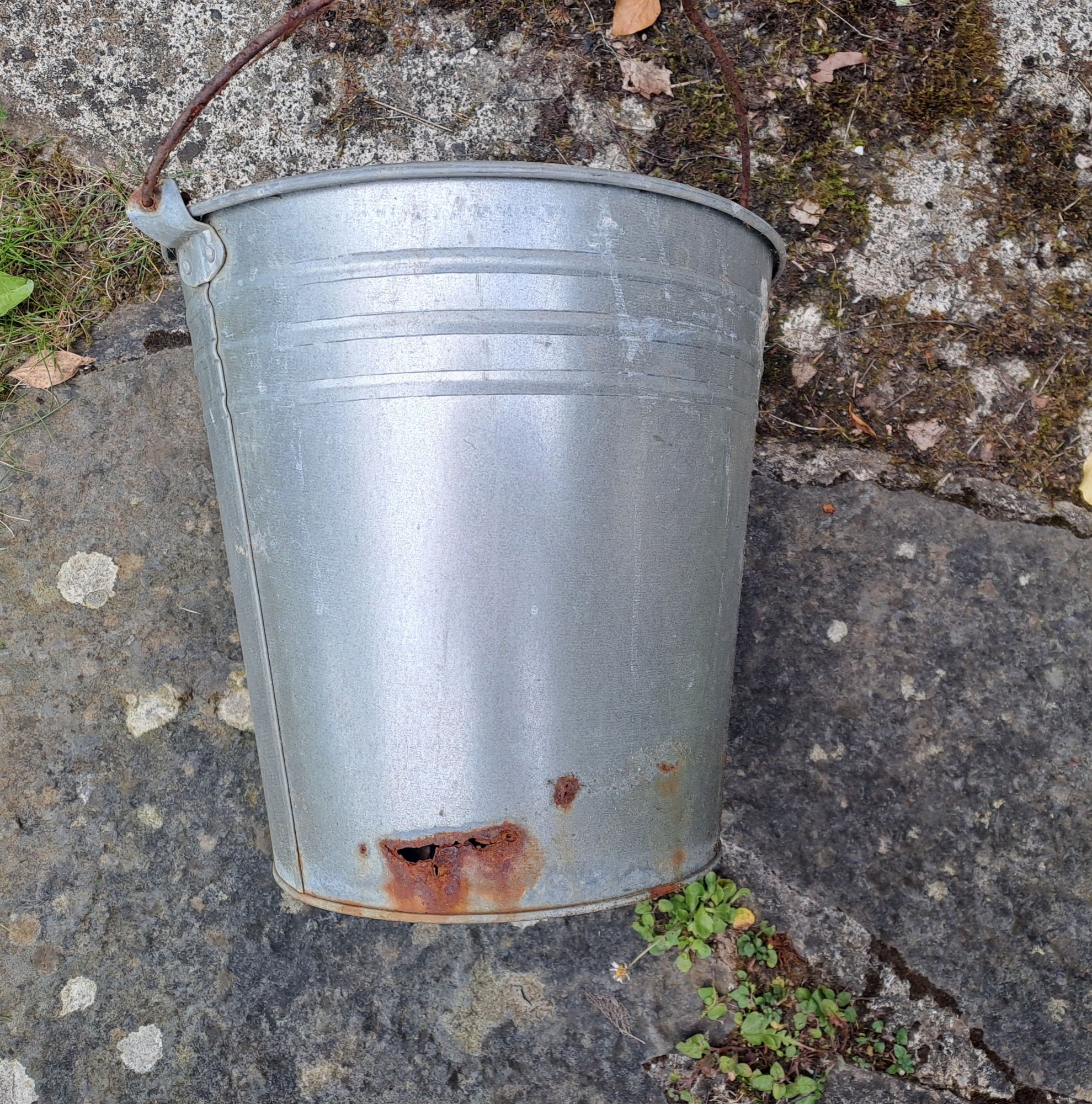
This reminded me of the old song My Bucket’s Got a Hole in It and especially this very enjoyable version of it by Humphrey Lyttelton’s 1954 seven-piece live at the Conway Hall in London.
It’s hard to believe that it’s 18 years since Humph passed away, but it’s great to hear his voice again in the introduction to the track which ends the A side of the album Humph at the Conway. The cartoon on the cover is by him too. The record features Humph on trumpet, the clarinet by Wally Fawkes (who plays the first clarinet solo) and Bruce Turner on alto sax who switches to clarinet for the second solo but plays sax in the ensembles which sound absolutely terrific as a result. Many “trad” jazz fans took against Humph for including a saxophonist in his band, but Bruce Turner was a great musician and added a new dimension. The other members of the band were Johnny Parker (piano), Micky Ashman (bass), Freddy Legon (banjo) and George Hopkinson (drums).
So that’s one connection. Another is that yesterday saw the announcement of the King’s Birthday Honours in the UK, which was not covered widely here in in Ireland, but which independently reminded me that Humphrey Lyttelton turned down a knighthood on principle back in 1995. Good for him!
Joy Spring – Clifford Brown & Max Roach
Posted in Jazz with tags Clifford Brown, George Morrow, Harold Land, Jazz, Joy Spring, Max Roach, Richie Powell on May 13, 2026 by telescoperThis tune popped into my head when I was walking home this evening so after dinner I listened to my CD of the terrific 1954 album Clifford Brown & Max Roach, on which it first appeared. Trumpeter Clifford Brown wrote the tune Joy Spring when he was just 23 for his wife Larue and it became a jazz standard. This first version features a quintet jointly led by Brown and Max Roach on drums, together with hugely underrated tenor saxophonist Harold Land, Richie Powell on piano (younger brother of Bud Powell, whose influence you can hear in his playing) and George Morrow on bass. The whole album is great, but I think the standout tracks are this version of Joy Spring and their version of Duke Jordan’s tune Jordu. Brown’s solo on Joy Spring demonstrates his beautifully crisp articulation and his superb capacity for sustained melodic invention, moving into and out of double-time. He only plays two choruses, but packs so much into them. Enjoy!
Despite it’s happy feel, this track will always be tinged with tragedy. Less than two years after this session both Clifford Brown and Richie Powell were killed in a car crash: Brown was 25 and Powell 24.
The Original Peaky Blinders Jazz Band
Posted in History, Jazz, Television with tags Garrison Pub, Jazz, ODJB, Original Dixieland Jazz Band, Peaky Blinders on April 15, 2026 by telescoperI’ve been greatly enjoying the boxed set of six seasons of Peaky Blinders that I received as a gift recently. I may do a sort of review when I get to the end, but until then I thought I’d throw in a few tangential things. This post is an example. Here’s another one. This clip is from Episode 2 of Series 1, when the Shelby family are celebrating the reopening of the Garrison pub after it was destroyed by a firebomb earlier on. Listen to the background music at the start.
The music being played is Livery Stable Blues by the Original Dixieland Jazz Band, a record I blogged about here. Released in 1917, it is no exaggeration to say that this was the first every commercial jazz record; I blogged about the 100th anniversary of its release.
The band was originally called the “Original Dixieland Jass Band“. A few months later they changed the “Jass” to “Jazz” – it is claimed because people kept defacing their posters by removing the letter “J” – and the new name stuck. The Original Dixieland Jazz Band is usually referred by Jazz buffs as the ODJB.
Led by cornettist Nick LaRocca and clarinettist Larry Shields, the ODJB was a group of white musicians from in and around New Orleans who had picked up their musical ideas from listening to musicians there, including playing for the pioneering mixed-race band led by Papa Laine, before moving to Chicago which is where they were spotted by representatives of the Victor label. Although the sound quality isn’t great, it gives a good insight to what ealy jazz drummers were like – thumping bass and tom-toms but little use of the cymbals – and shows Larry Shields was a dab hand at glissandi…
Series 1 of Peaky Blinders is set in 1919 (mainly in Birmingham but also with scenes in London). Not a lot of people know that the ODJB actually visited England in 1919. They performed in review at the Hammersmith Palais and then did a command performance in front of King George V, who (apparently) particularly enjoyed their version of Tiger Rag. There is no evidence that they visited Birmingham, but we get a glimpse before the above clip of a band decked out to look like them, playing live in the Garrison pub. I very much enjoy little details like that!
De-Dah – Elmo Hope Trio
Posted in Jazz with tags De-Dah, Elmo Hope, Elmo Hope Trio, Jazz, Paul Chambers, Philly Joe Jones on January 14, 2026 by telescoperI’m in the middle of marking examinations so I will only do a brief post, while I take a short break, to follow up on the one about Hampton Hawes I did a couple of days ago. When I wrote that one it struck me that there are rather a lot of great musicians, especially pianists like Hampton Hawes, who were never appreciated as much as they should have been. Another that springs to mind is Elmo Hope, for whom Thelonious Monk seems to have been a great influence and who therefore provides an interesting contrast with Hampton Hawes who was perhaps more influenced by Bud Powell. Elmo Hope died young, largely because of a bad heroin habit, which also affected his career through his erratic behaviour and the criminal record he acquired for narcotics offences. He was a really fine musician and composer, though, with a very original voice and idiosyncratic sense of time. This track was recorded in 1953 with Paul Chambers on bass and Philly Joe Jones on drums, both of whom were to find fame with Miles Davis a few years later.
R.I.P. Cleo Laine (1927-2025)
Posted in Jazz with tags Cleo Laine, George Gershwin, Jazz, John Dankworth on July 25, 2025 by telescoper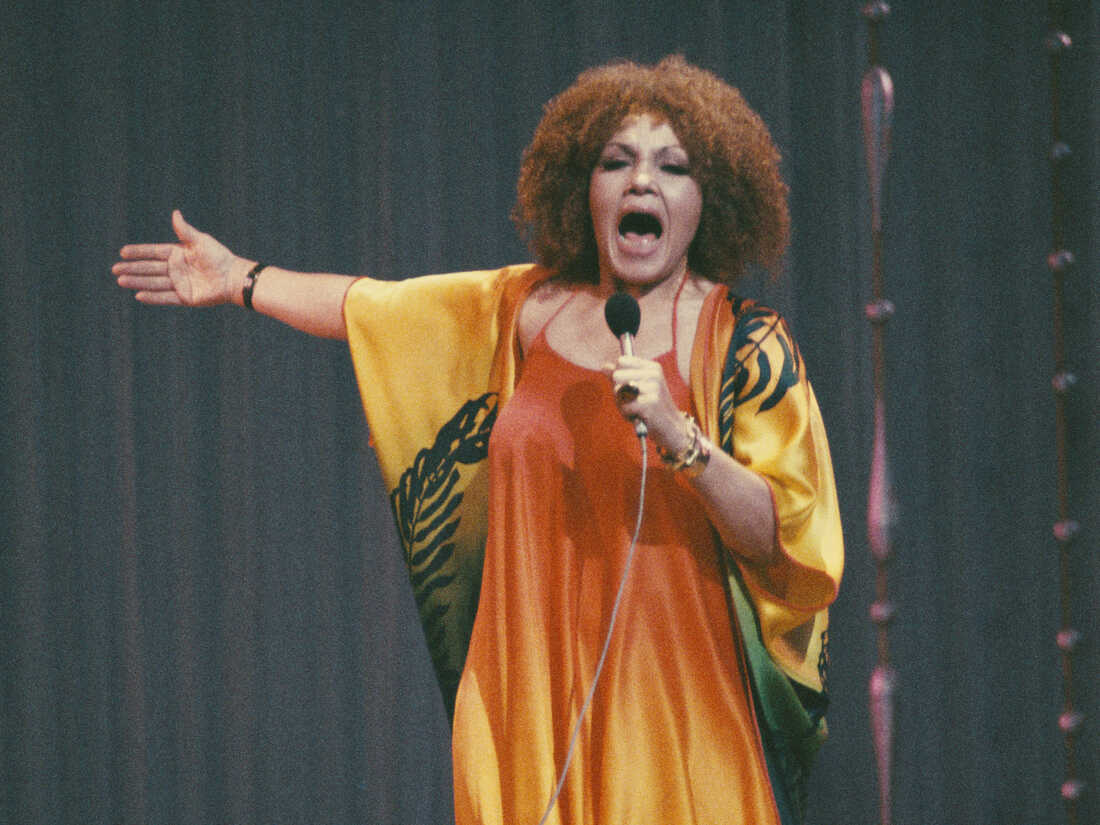
I just heard the very sad news of the death at the age of 97 of that great jazz singer, Cleo Laine. Although stylistically related to Sarah Vaughan, her voice was instantly recognisable. It always struck me that most British jazz singers would adopt an American accent when performing, but Cleo Laine always kept a very crisp diction and sounded very English…
I think it’s her musical and personal partnership with John Dankworth (who passed away in 2010) for which she will be known best. He hired Cleo Laine as a singer for his small band in 1951; they married in 1958 and remained together for over 50 years, until separated by John’s death.
I think it is appropriate to use this lovely version of George Gershwin’s great tune Lady be Good (with lyircs by his brother Ira) as a tribute. It’s always good to end on a high note. John Dankworth takes a back seat – as he often did when Cleo was singing – but the band is in great form. Unfortunately there is no personnel listing, apart from John Dankworth. The small band you see and hear here was drawn from his larger orchestra and many of the musicians therein doubled on different instruments. The vibes player, for example, could be Alan Branscombe, who also played piano. Or he could be the pianist. The trumpeter could very well be a young Kenny Wheeler.
Anyway, if you didn’t realise what a terrific vocalist Cleo Laine was, then pin back your lugholes around 2 minutes in where she demonstrates a range and level of vocal ontrol that would put many opera singers to shame.
Happy 85th Birthday, Herbie Hancock!
Posted in Jazz with tags Donald Byrd, Herbie Hancock, Jazz, The House of the Rising Sun on April 12, 2025 by telescoperProlific jazz pianist, composer, and arranger Herbie Hancock was born on 12th April 1940, which means that today is his 85th birthday. I’ve posted quite a few pieces of music featuring Herbie Hancock over the years so I thought I’d put up something a little different to mark his birthday in the form of this unusual but very cool version of The House of the Rising Sun, featuring Donald Byrd on trumpet, Hancock on piano, Kenny Burrell on guitar, Bob Cranshaw (bass) and Grady Tate (drums) and the Donald Byrd Singers. This track appeared on the album Up With Donald Byrd which wasn’t well received when it came out in 1964, but I like it!
P.S. I did a Google search for Herbie Hancock House of the Rising Sun and found this:

Fat Tuesday again…
Posted in Jazz with tags Fat Tuesday, Humphrey Lyttelton, Jazz, Paseo Jazz Band on March 4, 2025 by telescoperWell, it’s Shrove Tuesday, Pancake Day, Mardi Gras and Fat Tuesday which gives me four excuses to post this lovely old record made by Humphey Lyttelton’s Paseo Jazz Band in the early Fifties. That’s the band that featured Humph’s regular crew alongside a number of London’s marvellous West Indian musicians of the time, hence the abundance of percussion and the resulting infectious calypso beat. I’ve posted this before but the link died, so here it is again. Enjoy!
Keith Jarrett, The Köln Concert – 50 years on
Posted in Jazz with tags Jazz, Keith Jarrett, The Köln Concert on January 24, 2025 by telescoperI was just reminded that it was on 24th January 1975 – 50 years ago today – that pianist Keith Jarrett played a live solo concert at the Opera House in Köln, West Germany. The concert was recorded and released on ECM Records as a double LP later that year. It went on to become the best-selling solo album in jazz history and the best-selling piano album ever. It’s a must-have for anyone interested in jazz.
You don’t need me to tell you why as the whole concert is available for your listening pleasure here:


