Archive for June, 2015

The Tim Hunt Debacle

Posted in Politics, Science Politics with tags , , , on June 14, 2015 by telescoper

After a whole day off yesterday to recover from an exceptionally busy week I’m back in the office on a Sunday to sort out a few things before leaving tomorrow on a short trip to the Midlands, of which more, perhaps, anon.

In a way I’m quite glad I have been so busy over the last few days, with Exam Boards and the like. Had I had time I might have been tempted to write a post at some point about the Tim Hunt affair which broke on Tuesday. As it turns out, everything moved so quickly that anything I wrote would have been overtaken by events. In any case I didn’t feel that I had much to add to the excellent response written by the Head of the Department of Physics & Astronomy, Prof. Claudia Eberlein, in the Huffington Post on Thursday.  However, now I have a little bit of time I thought I would add a few comments.

I hope it goes without saying that I thought Tim Hunt’s comments about female scientists, made in public at an event in South Korea, were outrageous and indefensible.  My heart sank when I found out what he’d said. I might have believed his story that they were intended to be humorous had it not been for an awful non-apology on Radio 4, which effectively made that line of defence untenable. Nobel Prize winning biochemist he may be, but Tim Hunt clearly has a lot to learn about how to interact with people. When we find ourselves in a hole, most of us have the sense to stop digging.

I know my opinion here differs from that of some of my friends and colleagues, but I also think University College London did the right thing in asking him to resign. I’ve heard it argued that it over the top for him to lose his job over his remarks. But that’s not what happened. In fact, Tim Hunt is in his seventies and has been effectively retired for many years; his position at UCL was honorary (i.e. unpaid). I don’t think the severance of his relationship with UCL can be construed as an excessive punishment. In today’s Observer there’s a piece in which Tim Hunt claims he has been “hung out to dry” . I have to admit that I find his attempt to portray himself as victim to be as nauseating as his earlier apology.  I think UCL were fully justified in severing their relationship with Tim Hunt. This is not an issue of freedom of speech. Tim Hunt had every right to express his opinions. Those opinions are, however, completely incompatible with the values of the institution with which he was associated and his statement of them harmful to the reputation if UCL. He simply had to go.

On the other hand, there’s a lot about this story that troubles me greatly. Although some of the social media reaction to Tim Hunt’s comments was incisively humorous, some was unpleasant and some downright nasty. Worse, the Twitterstorm that raged last week also unleashed the gutter press, chiefly the Daily Mail, whose hacks tried to drag Prof. Mary Collins (Hunt’s wife) into the story. That was unpleasant, even by the standards of the Daily Mail. Mary Collins’ private life has nothing to do with her husband’s failings.

Anyway, I hope that a line will now be drawn under this episode. Tim Hunt should now be left alone to enjoy his retirement. As someone once said of someone else “I’ve nothing against his family, but I’m glad he will be spending more time with them”.

Nobody should be deluded that the departure of one high-profile academic will solve anything.  Tim Hunt was one senior academic stupid enough make offensive comments in public. There are countless others in positions of power and influence who hold very similar opinions but only express them behind closed doors, or under the cover of anonymity. Indeed, I know a number of senior academics who put on a public show of being in favour of equality and diversity but in private have acted deliberately to undermine the careers of, usually junior, female scientists. The culprits aren’t always men, either..

P.S. In the interest of full disclosure I should point that I have never met Tim Hunt so do not know what his views really are. Neither do I have any connection with University College London.

Cricket Quiz

Posted in Cricket, History on June 13, 2015 by telescoper

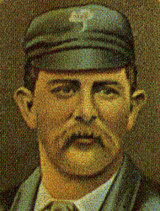
Too lazy to do a proper post today, I though I would try a little cricket quiz. This legendary cricketer featured in today’s Independent Prize Cryptic. Can you put a name to the face?

image

Answers through the comments box please!

Pass List Party

Posted in Biographical, Education with tags , , on June 12, 2015 by telescoper

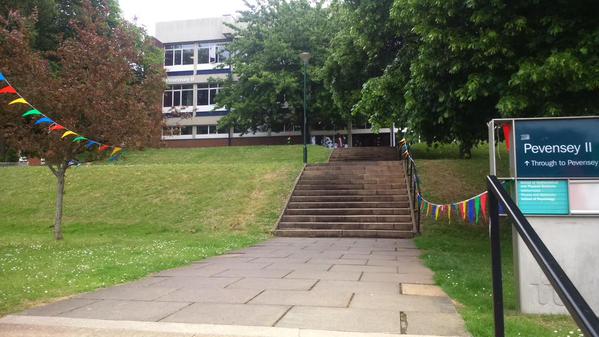
Well, just as it happened last year the pass lists for students in the School of Mathematical and Physical Sciences at the University of Sussex went up at noon today. Students and staff started to gather a bit in advance and we also made a few preparations for the celebration with bunting to welcome people into Pevensey 2…

pass_list party

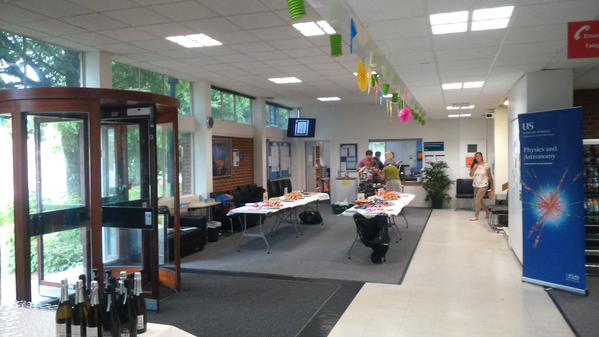
..as well as food and refreshments indoors:

Pass_list_part 2

We had toyed with the idea of having a barbecue, but reckoned that was taking too much of a chance with the weather. Of course it turned out fine.

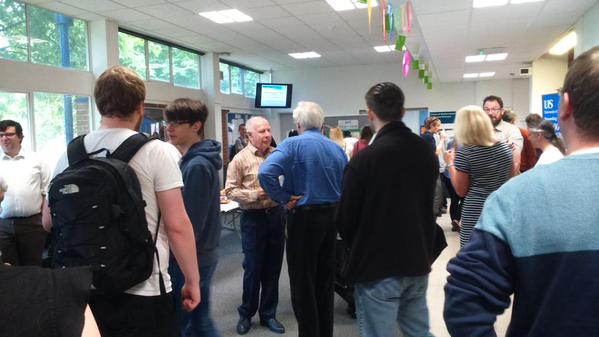
When the results were wheeled out there was an immediate scrum accompanied by plentiful popping of Prosecco corks.

pass _list_party 3

I made a short speech to congratulate all our students on their success and then handed over to the Head of Department for Physics & Astronomy, Prof. Claudia Eberlein, to announce the prize winners. I had to leave at 12.30 to attend the University Senate which always takes place on the last day of term. When I came back the party was still going on, and there was even a little bit of booze left. There had been one or two glitches, including me signing one of the lists in the wrong place necessitating the printing of another copy and also some of the progressing students were accidentally omitted from one of them. That latter event caused a bit of consternation but was all remedied quickly.

We had another excellent set of results this year so the students can be justifiably proud of their achievements. I’d like to take this opportunity to congratulate them again and I look forward to presenting the graduands for their degrees at the Brighton Dome in a month or so.


Lines Composed on the Occasion of the Death of Sir Christopher Lee

Posted in Film, Poetry with tags on June 11, 2015 by telescoper

So. Farewell
Then Christopher Lee.
You starred in many
Hammer Horror films.

Dracula, for example.
Keith’s mum says
You were sexy
In that.

But sadly now you
Are no longer
Undead.

I think there
Was also
A film in
Which you played
Alan Whicker,

But I may be wrong
On that
One.

Oh, and you were in
Lord of the Rings,
too. As
Ian McKellen.

     by P. Coles (aged 52)

R.I.P. Ornette Coleman

Posted in Jazz with tags , , , on June 11, 2015 by telescoper

I’m now officially in mourning.

I just heard the news that  Ornette Coleman has passed away at the age of 85. He was one of the true innovators of Jazz and his influence on the development of this music over the last 50 years has been absolutely immense. I don’t have the words to pay adequate tribute to the either the man or his music, so I’ll just highlight two tracks from my favourite album of his, which was recorded Live at the Golden Circle club in Stockholm  in 1965, and was proclaimed “Record of the Year” the following summer in Downbeat magazine.  This  features a trio of Coleman on alto sax, David Izenzon on bass, and Charles Moffit on bass. By the mid-60s Ornette Coleman had already established his reputation as leading light of avant-garde saxophonists and, in his own way, was as great an influence on jazz as Charlie Parker, Sonny Rollins and John Coltrane had been just a few years earlier, but this album is, for me, when Ornette Coleman underwent the transition to greatness.

The track European Echoes starts in a deceptively simple manner, with Ornette’s little two-note statements over a fast waltzy 3/4 foundation provided by Izenzon and Moffitt. It then eases into  a passage marked by freer improvisations by Ornette, the meter changing at the same time to 4/4. Ornette plays for more than half the track, after which Izenzon and Moffitt take over for all but the final minute, at which point Izenzon drops out and Moffitt plays an intricate percussion solo.

Although most people I know recognize the virtuosity of modern jazz musicians they don’t really like the music very much. On the other hand fell in love with this track as soon as I heard it, partly because it begins simply enough for a beginning saxophonist to play along with, but also because it’s highly original without being  at all self-indulgent. In fact, at one level, everything Ornette Coleman  does on this track is quite simple; he plays the saxophone here like he’d just discovered the instrument and was in the process of finding out what it could do; at least in his early years, he didn’t have much of a technique at all in the conventional sense but nevertheless managed to produce amazing music. This a view echoed by the great Charles Mingus in quote I got from another blog about Ornette Coleman:

Now aside from the fact that I doubt he can even play a C scale in whole notes—tied whole notes, a couple of bars apiece—in tune, the fact remains that his notes and lines are so fresh. So when [the jazz dj] Symphony Sid played his record, it made everything else he was playing, even my own record that he played, sound terrible.

I did learn to enjoy and admire Ornette Coleman’s more “difficult” music later on, but  European Echoes was the track that convinced me that Ornette Coleman was a genius.

Though from the same album, Faces and Places is quite a different kettle of fish. It goes like the clappers right from the start, with some terrific work on the drums by Moffit, skittering along on the cymbals with interludes of powerful rapid-fire accents on the skins. Fantastic stuff.

I’ve decided that I’m going to spend this  evening listening to Ornette Coleman records and drinking to his memory.

Rest in Peace, Ornette Coleman (1930-2015).

Six key trends in contemporary statistics that really could revolutionise astronomical data analysis …

Posted in Biographical, The Universe and Stuff with tags on June 11, 2015 by telescoper

I’ve just come across this very interesting astrostatistics site, and I thought I’d reblog a piece from it. In fact I did make a very crude attempt back in the 90s to do something very like the SPDE analysis described here, but it came to nothing and I dropped the idea. Now it seems that there’s been a great deal of more recent activity in this area which I knew nothing about so it might be worth reviving interest in it.

Now. Where did I put those notes?

Robotic Failures

Posted in Uncategorized with tags , on June 10, 2015 by telescoper

This made me chuckle so I couldn’t resist sharing it here. I think it’s amazing that robots have now become so sophisticated that they are now perfect in their ability to emulate the behaviour of a human being….or at least one who’s totally drunk!

The Latest TV – Experimental Particle Physics at Sussex

Posted in Brighton, The Universe and Stuff with tags , , , , on June 10, 2015 by telescoper

I just came across this clip featuring our own Prof. Antonella de Santo of the Department of Physics & Astronomy at the University of Sussex (where she leads the Experimental Particle Physics group) talking about the group’s work on The Latest TV, a new documentary TV station based in Brighton.

An “Enfys” for Sussex…

Posted in Biographical, LGBTQ+ with tags , , , on June 9, 2015 by telescoper

As Head of School for Mathematical and Physical Sciences I get to do all kinds of jobs across the University to do with all kinds of matters, academic and non-academic alike. In the course of one of these – chairing the University’s Human Resources Committee – it occurred to me that it was very strange that it was a bit strange that a University (Sussex) so close to a famously gay-friendly city (Brighton) didn’t have any real forum for LGBT staff to share information, to support each other, and to run social, cultural or other events. It also seemed strange to me that the University of Sussex was not part of the Stonewall Diversity Champions scheme. Even worse, there is no official University staff representation at Brighton’s annual Pride celebrations, though the Student LGBTQ society has

My former institution, Cardiff University, not only has a thriving staff network (called Enfys, the Welsh word for “Rainbow”) and belongs to the Stonewall scheme, it also ranks 24th in the top 100 Equality Index of all UK employers.

Anyway, it was definitely with Enfys in mind that I suggested setting up a similar network here on the Sussex campus, open to all staff (not just academics). I wasn’t sure whether there would be any enthusiasm for it, but the senior management of the University gave me their backing to try.

And so it came to pass that we announced that a network was being set up, and there would be a kind of “launch party” on 18th June to plan what sort of things we would do. I had no idea how many people would be interested and was quite prepared for the idea to bomb completely. However, just a couple of weeks after the initial announcement we have more than 50 people on the mailing list, and I’m expecting good turnout for the launch which I hope will be a fun occasion in itself but also the start of something very interesting to be part of. I also hope people bring plenty of ideas for the sorts of events and activities we can organize and the energy and enthusiasm to work at actually bringing these ideas into being.

One of the most important things we have to do, though, is to come up with a name. Although I nicked the idea from them I don’t think we can really use Enfys. And “Sussex University LGBT Staff Network” sounds a bit dull. Any suggestions?

Pelléas et Mélisande at WNO

Posted in Opera with tags , , , on June 8, 2015 by telescoper

Having had a very busy working birthday it was nice to take off to Cardiff for the weekend for a delayed treat. For me the cultural event of the weekend in the Welsh capital was neither One Direction nor the Manic Street Preachers, both which bands were playing there that weekend. It wasn’t even the Ladyboys of Bangkok, which I would definitely have preferred to either of the former acts. No, it was an evening at the Wales Millennium Centre for a new production of Pelléas et Mélisande by Claude Debussy.

This was an opera that was quite new to me, though I did know that the previous production of this work by Welsh National Opera was back in 1992 and the conductor was none other than Pierre Boulez. There is a famous recording of the piece on Deutsche Grammaphon, so the bar was set rather high for the new production. I don’t often agree with opera reviews so don’t usually read them before I go in case they put me off, but I did read the review in the Guardian of the opening night (May 31st) performance of this one as I was sent it by a friend. As it turns out there’s little I can add to George Hall’s review. It was absolutely magnificent.

The plot of Pelléas et Mélisande is, on one level, fairly simple. Prince Golaud finds a mysterious young woman, Mélisande, lost in a forest. She becomes his wife and goes to live with him in the castle of his grandfather, King Arkel of Allemonde. After a while, though, Mélisande gets the hots for Golaud’s younger half-brother Pelléas and he reciprocates her feelings. Eventually Golaud starts to suspect that there’s something going and goes out of his way to find out how far the relationship has developed. He even gets his own child, Yniold, to spy on the couple. Since it’s all getting a bit weird, Pelléas decides to leave the castle but arranges to meet Mélisande one last time before he departs. Golaud gatecrashes the meeting and kills Pelléas in a jealous rage. Mélisande eventually dies too, but not until it is revealed that she has given birth to a daughter. Golaud never really finds out “the truth”, i.e. whether Pelléas and Mélisande ever consummated their love for each other.

But of course the plot tells only part of the story. This opera is based on the symbolist play of the same title by Maurice Maeterlinck. It’s an essential component of the symbolist manifesto that art should try to represent absolute truths that can only be expressed indirectly. Consequently very little in Pelléas et Mélisande is quite what it seems on the surface. The characters are enigmatic, especially Mélisande, and the boundary between reality and imagination is often blurred to such an extent that it takes on the quality of a dream.

That may all seem very confusing, but what binds it all together is Debussy’s music which was a revelation to me: all the sensuality I associate with his music was there, but it’s far darker and more mysterious than I’d imagined in my mind’s ear before the show. I have to say that the Orchestra of Welsh National Opera under the direction of Lothar Koenigs was absolutely magnificent. This was probably the best I’ve ever heard them play – and they’ve been excellent many times I’ve heard them. They obviously rose magnificently to the challenge set by Pierre Boulez. As for the singers, I don’t think there were any weak links at all but for me the pick of them was Rebecca Bottone in the “trouser role” of the young boy, Yniold. She sang and acted quite beautifully.

I didn’t realise straightaway, but the set was based on the same metallic structure used for the WNO production of Lulu, although in this case it wasn’t festooned with body parts, although there was a pool of water around it. Come to think of it, there is quite a lot in common between the characters of Lulu and Mélisande, which may be why they did it that way. Or it might just have been to save money. Anyway, cylindrical structure in the centre of the stage was used very cleverly indeed. At one time it represented a tower, at another a well, and even when it wasn’t being used it added a touch of steampunk to the look.

I also have to mention the staging of the final scene. Mélisande’s death was depicted most movingly, wrapped in black scarves by maidservants. At the end of the performance, the rest of the cast are escorted offstage by a representation of death there’s a beautiful image of rebirth as a hand rises defiantly from a white shroud.

Congratulations to Welsh National Opera on this production. I don’t think I’m often given to exaggeration but I’d call this one a triumph!