Archive for October, 2015

A celebration of Sir Fred Hoyle at the Royal Astronomical Society

Posted in Biographical, The Universe and Stuff with tags , , , on October 13, 2015 by telescoper

I had to miss this meeting – because I was involved in a special Senate meeting on Friday afternoon – but I did make it to the “famous RAS Dining Club” afterwards where I had a brief chat with the author of this post, Cormac O’ Raifeartaigh.

Here, for reference, is the Athenaeum, where we dined on Friday..

Athenaeum

cormac's avatarAntimatter

The birth centenary of the noted British astrophysicist Sir Fred Hoyle was celebrated on Friday at the Royal Astronomical Society with a one-day meeting of talks describing Sir Fred’s many contributions to 20th century physics. While he is chiefly remembered in some quarters as the physicist who was ‘wrong on the big bang’, Sir Fred in fact made a number of seminal contributions to modern physics in several fields. Indeed, it was a treat to witness former collaborators and students recall his contribution to stellar nucleosynthesis, accretion physics, stellar structure, astrobiology and cosmology, to name but a few.

I hadn’t been to the RAS before although I was elected a Fellow a few years ago, and I was stunned by its fantastic location in central London location. it is housed in the famous Burlington House on Piccadilly, sharing the premises and courtyard with the Linnean Society, the Geological Society

View original post 903 more words

Astronomy Look-alikes, No. 97

Posted in Astronomy Lookalikes with tags , , on October 10, 2015 by telescoper

I found an appropriate look-alike for University of California at Berkeley astronomer and serial sexual harasser Geoff Marcy:

image

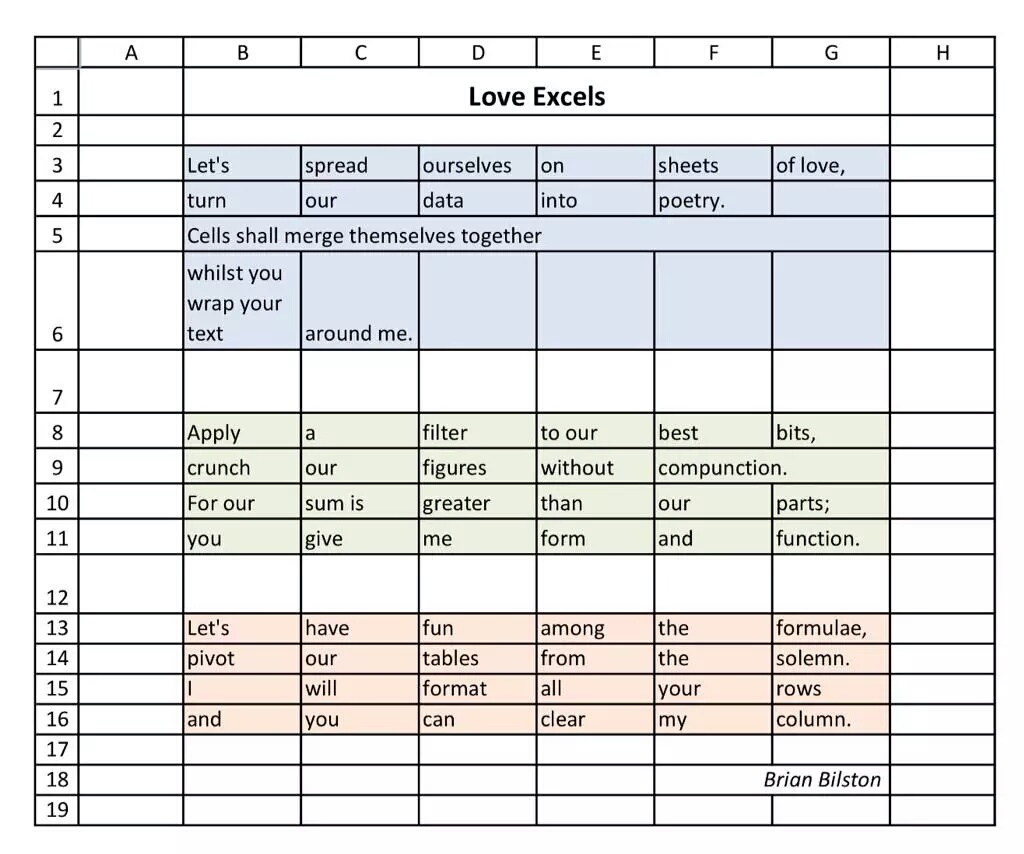
Love Excels, by Brian Bilston

Posted in Poetry on October 10, 2015 by telescoper

image

by Brian Bilston.

Sussex – The Aerial Perspective

Posted in Brighton with tags , , on October 9, 2015 by telescoper

This very nice short video by Scott Wright was made using a camera on a drone, giving some unusual perspectives on familiar Sussex landmarks!


Awayday in Croydon

Posted in Uncategorized on October 8, 2015 by telescoper

No time for a proper post as I have been out of the office all day, at a Planning Meeting. These “Awaydays” are held away from one’s normal place of work, in an attractive  scenic location that inspires and offers a refreshing change of perspective.

What better place to choose for such an activity, therefore, than Croydon…

image

Astronomy Look-alikes, No. 96

Posted in Astronomy Lookalikes with tags , on October 7, 2015 by telescoper

Heavens above!

It has been drawn to my attention that there is a remarkable similarity in visual appearance between planetary astronomer Albert Einstein and the creator of the theory of general relativity Jean-Pierre Bibring. I wonder if, by any chance, they might be related?


Bibring


The Nobel Prize for Neutrino Oscillations

Posted in The Universe and Stuff with tags , , , , , , , , on October 6, 2015 by telescoper

Well the Nobel Prize for Physics in 2015 has been announced. It has been awarded jointly to Takaaki Kajita and Arthur B. McDonald for..

the discovery of neutrino oscillations, which prove that neutrinos have mass.

You can read the full citation here. Congratulations to them both. Some physicists around here were caught by surprise because the 2002 Nobel Prize was also awarded for neutrino physics, but it is fair because this award goes for a direct measurement of neutrino oscillations, which is an important breakthrough in its own right; the earlier award was for measurements of solar neutrinos. For a nice description of the background you could do worse than the Grauniad blog post by Jon Butterworth about neutrino physics.

In brief the a process in which neutrinos (which have three distinct flavour states, associated with the electron, mu and tau leptons) can change flavour as they propagate. It’s quite a weird thing to spring on students who previously thought that lepton number (which denotes the flavour) was always conserved. I remember years ago having to explain this phenomenon to third-year students taking my particle physics course.  I decided to start with an analogy based on more familiar physics, but it didn’t go to plan.

A charged fermion such as an electron (or in fact anything that has a magnetic moment, which would include, e.g. the neutron)  has spin and, according to standard quantum mechanics, the component of this in any direction can  can be described in terms of two basis states, say |\uparrow> and |\downarrow> for spin in the z direction. In general, however, the spin state will be a superposition of these, e.g.

\frac{1}{\sqrt{2}} \left( |\uparrow> + |\downarrow>\right)

In this example, as long as the particle is travelling through empty space, the probability of finding it with spin “up” is  50%, as is the probability of finding it in the spin “down” state. Once a measurement is made, the state collapses into a definite “up” or “down” wherein it remains until something else is done to it.

If, on the other hand, the particle  is travelling through a region where there is a  magnetic field the “spin-up” and “spin-down” states can acquire different energies owing to the interaction between the spin and the magnetic field. This is important because it means the bits of the wave function describing the up and down states evolve at different rates, and this  has measurable consequences: measurements made at different positions yield different probabilities of finding the spin pointing in different directions. In effect, the spin vector of the  particle performs  a sort of oscillation, similar to the classical phenomenon called  precession.

The mathematical description of neutrino oscillations is very similar to this, except it’s not the spin part of the wavefunction being affected by an external field that breaks the symmetry between “up” and “down”. Instead the flavour part of the wavefunction is “precessing” because the flavour states don’t coincide with the eigenstates of the Hamiltonian that describes the neutrinos’ evolution. However, it does require that different neutrino types have intrinsically different energies  in quite  a similar way similar to the spin-precession example. In the context of neutrinos however the difference in energy means a difference in mass, and if there’s a difference in mass then not all flavours of neutrino can be massless.

Although the analogy I used isn’t a perfect, I thought  it was a good way of getting across the basic idea. Unfortunately, however, when I subsequently asked an examination question about neutrino oscillations I got a significant number of answers that said “neutrino oscillations happen when a neutrino travels through a magnetic field….”. Sigh. Neutrinos don’t interact with  magnetic fields, you see…

Anyway, today’s announcment also prompts me to mention that neutrino physics is one of the main research interests in our Experimental Particle Physics group here at Sussex. You can read a recent post here about an important milestone in the development of the NOvA Experiment which involves several members of the Department of Physics and Astronomy in the School of Mathematical and Physical Sciences here at the University of Sussex. Here’s the University of Sussex’s press release on the subject. In fact Art McDonald is a current collaborator of our neutrino physicists, who have been celebrating his award today!

Neutrino physics is a fascinating subject even to someone like me, who isn’t really a particle physicist. My impression of the field is that was fairly moribund until about the turn of the millennium  when the first measurement of atmospheric neutrino oscillations was announced. All of a sudden there was evidence that neutrinos can’t all be massless (as many of us had long assumed, at least as far as lecturing was concerned).  Now the humble neutrino is the subject of intense experimental activity, not only in the USA and UK but all around the world in a way that would have been difficult to predict twenty years ago.

But then, as the physicist Niels Bohr famously observed, “Prediction is very difficult. Especially about the future.”

An Open Letter to the Times Higher World University Rankers

Posted in Education, The Universe and Stuff with tags , , , , , , , , on October 5, 2015 by telescoper

Dear Rankers,

Having perused your latest set of league tables along with the published methodology, a couple of things puzzle me.

First, I note that you have made significant changes to your methodology for combining metrics this year. How, then, can you justify making statements such as

US continues to lose its grip as institutions in Europe up their game

when it appears that any changes could well be explained not by changes in performance, as gauged by the metrics you use,  but in the way they are combined?

I assume, as intelligent and responsible people, that you did the obvious test for this effect, i.e. to construct a parallel set of league tables, with this year’s input data but last year’s methodology, which would make it easy to isolate changes in methodology from changes in the performance indicators.  Your failure to publish such a set, to illustrate how seriously your readers should take statements such as that quoted above, must then simply have been an oversight. Had you deliberately witheld evidence of the unreliability of your conclusions you would have left yourselves open to an accusation of gross dishonesty, which I am sure would be unfair.

Happily, however, there is a very easy way to allay the fears of the global university community that the world rankings are being manipulated: all you need to do is publish a set of league tables using the 2014 methodology and the 2015 data. Any difference between this table and the one you published would then simply be an artefact and the new ranking can be ignored. I’m sure you are as anxious as anyone else to prove that the changes this year are not simply artificially-induced “churn”, and I look forward to seeing the results of this straightforward calculation published in the Times Higher as soon as possible.

Second, I notice that one of the changes to your methodology is explained thus

This year we have removed the very small number of papers (649) with more than 1,000 authors from the citations indicator.

You are presumably aware that this primarily affects papers relating to experimental particle physics, which is mostly conducted through large international collaborations (chiefly, but not exclusively, based at CERN). This change at a stroke renders such fundamental scientific breakthroughs as the discovery of the Higgs Boson completely worthless. This is a strange thing to do because this is exactly the type of research that inspires  prospective students to study physics, as well as being direct measures in themselves of the global standing of a University.

My current institution, the University of Sussex, is heavily involved in experiments at CERN. For example, Dr Iacopo Vivarelli has just been appointed coordinator of all supersymmetry searches using the ATLAS experiment on the Large Hadron Collider. This involvement demonstrates the international standing of our excellent Experimental Particle Physics group, but if evidence of supersymmetry is found at the LHC your methodology will simply ignore it. A similar fate will also befall any experiment that requires large international collaborations: searches for dark matter, dark energy, and gravitational waves to name but three, all exciting and inspiring scientific adventures that you regard as unworthy of any recognition at all but which draw students in large numbers into participating departments.

Your decision to downgrade collaborative research to zero is not only strange but also extremely dangerous, for it tells university managers that participating in world-leading collaborative research will jeopardise their rankings. How can you justify such a deliberate and premeditated attack on collaborative science? Surely it is exactly the sort of thing you should be rewarding? Physics departments not participating in such research are the ones that should be downgraded!

Your answer might be that excluding “superpapers” only damages the rankings of smaller universities because might owe a larger fraction of their total citation count to collaborative work. Well, so what if this is true? It’s not a reason for excluding them. Perhaps small universities are better anyway, especially when they emphasize small group teaching and provide opportunities for students to engage in learning that’s led by cutting-edge research. Or perhaps you have decided otherwise and have changed your methodology to confirm your prejudice…

I look forward to seeing your answers to the above questions through the comments box or elsewhere – though you have ignored my several attempts to raise these questions via social media. I also look forward to seeing you correct your error of omission by demonstrating – by the means described above – what  changes in league table positions are by your design rather than any change in performance. If it turns out that the former is the case, as I think it will, at least your own journal provides you with a platform from which you can apologize to the global academic community for wasting their time.

Yours sincerely,

Telescoper

Honeysuckle Rose

Posted in Jazz with tags , , on October 5, 2015 by telescoper

Not too well today – and ridiculously busy – so I thought I’d post a brief pick-me-up by the “King of Swing”.  I remember that my Dad – who was a semi-professional Jazz drummer – wasn’t all that keen on Benny Goodman’s clarinet playing, which he regarded as “too clinical”. In fact many jazz writers also refer to Benny Goodman as “unemotional”. I can’t agree – the clarinet on this track is absolutely sensational to me, and I find it a joy to listen to over and over again. And if that wasn’t enough for a three-minute 78 there’s also a fine solo from pioneering electric guitarist Charlie Christian and Cootie Williams on trumpet on this big band version of Fats Waller’s familiar composition Honeysuckle Rose.

The 2015 Nobel Prize for Physics: could it be Vera Rubin?

Posted in Science Politics, The Universe and Stuff with tags , , , on October 4, 2015 by telescoper

Just a quick note to point out that the 2015 Nobel Prize for Physics will be announced next Tuesday, 6th October. According to the Nobel Foundation’s website the announcement will be made “no earlier than 11.45am” Swedish time, which is one hour ahead of British Summer Time.

As is the case every year there’s quite a lot of speculation going on about who might garner this year’s prize. There’s a piece in Nature and another in Physics World, to give just two examples. There’s also the annual prediction from Thomson Reuters, which has never to my knowledge been correct (although some of the names they have suggested for a given year have won it in a subsequent year); perhaps they will strike lucky this time round.

For myself, I’ll just say that I think Vera Rubin is conspicuous by her absence from the list of Nobel Physics laureates – her classic work on galactic rotation and the evidence for dark matter in galaxies surely deserves an award, possibly alongside Kent Ford. Most Nobel Prizes are awarded for work done decades before the year of the award; the research in this case was mostly done in the 1970s. I think recognition is long overdue. I’m biased in favour of astronomy, of course, but my fingers will be crossed that Vera Rubin’s time will come on Tuesday!

I’m not going to open a book  – even Ladbrokes stopped taking bets on the Nobel Prize for Physics some years ago! – but I’d be interested to hear opinions through the comments box…