What can be done to increase the number of women in physics? This question keeps committees busy and researchers funded, but the solution seems as elusive as squaring the circle. Four years ago, however, I did my bit: I transitioned from male to female. As this also meant that the number of men in physics was simultaneously reduced by one, it was, as they say in football, a “six-pointer”.
I hasten to add that I didn’t transition in order to improve the male-female ratio among physicists; that really would have been a remarkable thing to do. However, it did mean that when my wave function collapsed into the F state, I was able to conduct some controlled social observations in my work as a teacher. I’m the same person and I’m doing the same job, but in a different gender role.
After a degree, PhD and postdoctoral research I trained…
One of the sad items of news that appeared last week while I was indisposed was the death at the age of 91 of legendary recording engineer Rudy van Gelder. He was the man who established the sound of a huge proportion of the greatest Jazz records made in the 1950s and 60s, including classic albums on the Blue Note, Prestige and Impulse labels by musicians of the calibre of Miles Davis, John Coltrane, Sonny Rollins and Art Blakey. It’s quite unusual for sound engineers to become famous, but Van Gelder certainly did and his passing has left us with a priceless legacy of extraordinary music.
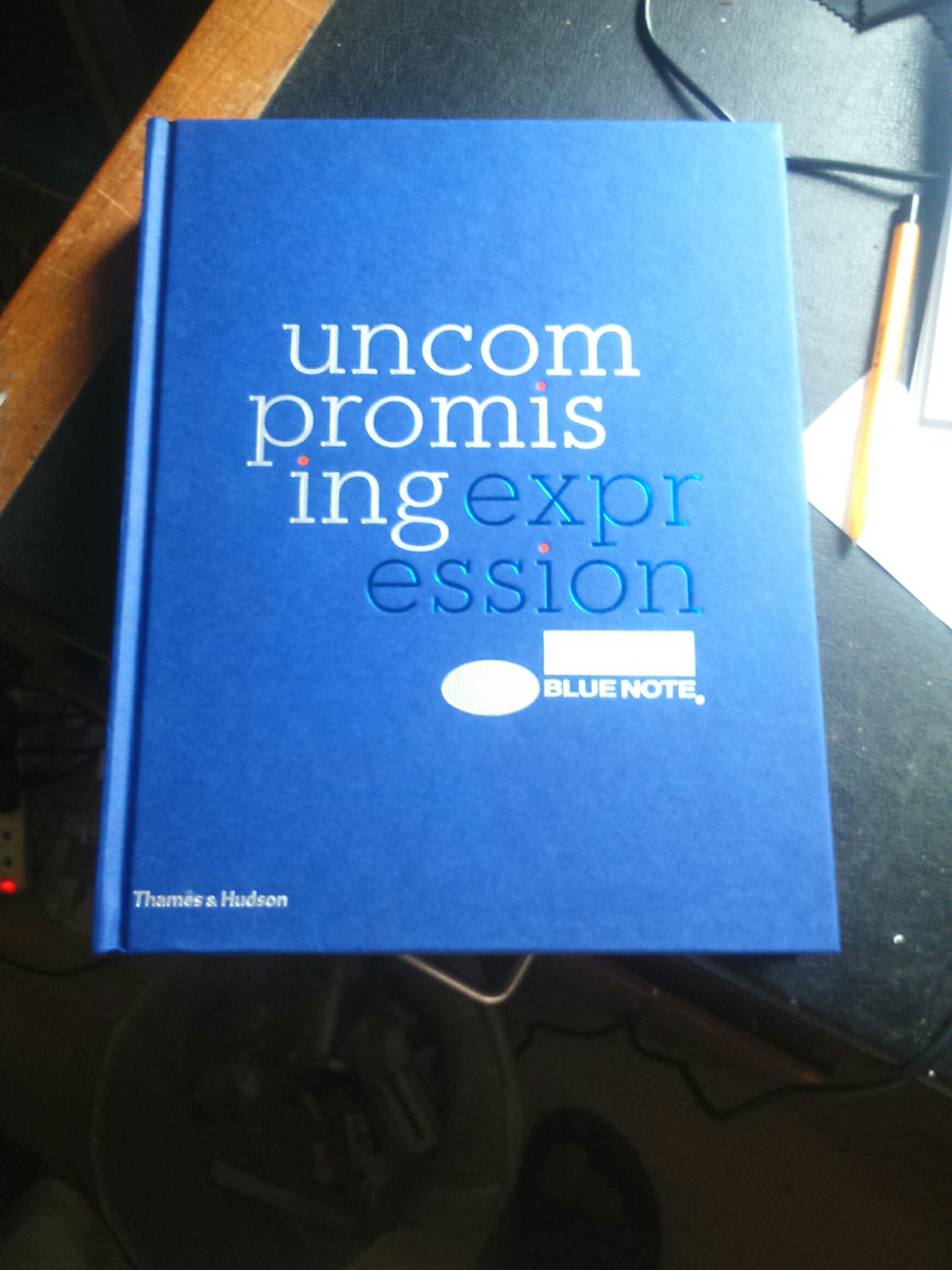
By sheer coincidence, one of the books I took with me to read in hospital was this:
Written by Richard Havers, this is an excellent illustrated history of the legendary record label, Blue Note. Blue Note began with a number of classic recordings from the era of Sidney Bechet, Edmond Hall and Bunk Johnson, but it was the post-bebop era that really established the label in terms of sound and distinctive artwork:
Van Gelder’s first recording studio was set up in his house in Hackensack, New Jersey, and it was probably because of the unsuitable shape of the room he used that he experimented so much with, e.g., the number and placing of microphones and in the way he mixed the tapes do produce a much fuller sound than was typical for jazz recordings of that era. He moved to a bigger house – again with a built in studio – later on, but stuck by many of his earlier innovations.
One immediate result of his habit of close-miking both solo and backing instruments – he was known to use three mikes on the drums, which was unheard of at the time – and recording them as “hot” as possible, was that he guaranteed that his records would have a huge and vibrant sound when played on a gramophone or jukebox. He also captured the unique sound that Miles Davis created when he played the trumpet with a Harman mute. When Miles moved from Prestige to another label he asked their engineers to reproduce exactly what Van Gelder had done. They wouldn’t -or couldn’t – do it.
Not everyone approved of Van Gelder’s approach. You can read some severe criticisms here. Some musicians – including Charles Mingus – didn’t like the sound at all either. But there’s no question that what he did brought a new dimension to what was an extraordinarily creative time for Jazz. An astonishing fraction of the great records described in the book I mentioned above were recorded by him. As a tribute I’m including the record that for me established the Blue Note sound, Moanin’ by Art Blakey and the Jazz Messengers recorded in Van Gelder’s Hackensack Studio, New Jersey in 1958, the cover of which is shown above.
Today is my first day back in the School of Physics and Astronomy at Cardiff University. Although my job title, Professor of Theoretical Astrophysics, is the same as it was when I was here in a previous incarnation it will be quite a different job and I’m going to be located in a different building (though not far from my old office). In fact my office is in a newly refurbished space connected with the Data Innovation Research Institute just on the other side of a car park from my old office. It looks like being an exciting time over the next few months and years as new staff across a range of disciplines join the Institute, expanding its research portfolio from astrophysics (especially gravitational wave research) into biomedical sciences and beyond.
Here’s a little video about the Data Innovation Research Institute, which is about conducting fundamental research into the aspects of managing, analysing and interpreting massive volumes of textual and numerical information:
But for the moment it’s been a day for administrative matters: taking my P45 to the Human Resources Department, getting my new Staff ID card, trying to get myself set up on the University computer network, and so on. Oh, and I’ve agreed to do some teaching in the Spring Semester, a Level 4 module on The Physics of the Early Universe. It will be nice to be teaching some cosmology again!
The views presented here are personal and not necessarily those of my employer (or anyone else for that matter).
Feel free to comment on any of the posts on this blog but comments may be moderated; anonymous comments and any considered by me to be vexatious and/or abusive and/or defamatory will not be accepted. I do not necessarily endorse, support, sanction, encourage, verify or agree with the opinions or statements of any information or other content in the comments on this site and do not in any way guarantee their accuracy or reliability.



 In the Dark