A small taster of the late Paul Scofield‘s magnificent reading of T.S. Eliot’s Four Quartets. This is the last section of the last part, Little Gidding.
Follow @telescoperArchive for December, 2016
Little Gidding – V read by Paul Scofield
Posted in Literature with tags Little Gidding, Paul Scofield, T.S. Eliot on December 3, 2016 by telescoperI Know Nothing!
Posted in Television with tags Andrew Sachs, Fawlty Towers on December 2, 2016 by telescoperBelshazzar’s Feast
Posted in Music with tags BBC National Chorus of Wales, BBC National Orchestra of Wales, Double Concerto for Violin and Cello, Edward Elgar, Frederick Delius, Martyn Brabbins, Paul Watkins, Tasmin Little on December 2, 2016 by telescoperLast night I made my way through the foggy streets of Cardiff to St David’s Hall to attend a concert by the BBC National Orchestra of Wales (joined for the second half by the BBC National Chorus of Wales and Members of Bristol Choral Society) conducted by Martyn Brabbins for a programme of music by British composers, culminating in a performance of Belshazzar’s Feast by William Walton. The whole concert was broadcast live on BBC Radio 3 and you can listen to it here on iPlayer for the next month.
The concert began with the “concert overture” In the South (Alassio) by Edward Elgar. I put “concert overture” in inverted commas because, at about 25 minutes, it’s a bit long for an overture and is really more like a tone poem. Elgar wrote most of it when on holiday in Italy in 1904. He was actually planning to write a full symphony but the inspiration he’d hoped to get from fine weather didn’t transpire because it was even colder and damper in Alassio than in his native Malvern. Incidentally, Alassio is in the North of Italy not the South. The music Elgar composed when the weather improved is not a full symphony, but a bright and colourful piece which comprises a number of episodes, some pastoral and some tempestuous. It’s richly orchestrated and served as an enjoyable warm-up for the musicians (and audience). Conductor Martyn Brabbins, by the way, was sporting an impressive beard which lent him extra gravitas on the podium.
The second item on the agenda was the Double Concerto for Violin and Cello by Frederick Delius, which provided an interesting contrast, from an overture that’s too long for an overture to a concerto that’s too short – at around 20 minutes in duration – to be a concerto. The two principals here were Tasmin Little (violin) and Paul Watkins (cello), both of whom played very well but the sound balance made the cello a little hard to hear over the rest of the orchestra, despite the fact the orchestra was pared down a little for this piece, with some of the strings and the percussion that was heavily used in the Elgar being removed. This work, which is rather rhapsodic in form, certainly has its moments of beauty – especially when the violin and cello combine – but overall I found it hard to discern an overall structure and sense of development. Perhaps I’m being harsh, though, as talk in the bar during the interval that followed immediately was generally very enthusiastic about this piece. Tasmin Little also appeared in the lounge to sign CDs and talk to fans.
After the interval was the main event, William Walton‘s sumptuous Belshazzar’s Feast. This was originally commissioned by the BBC in 1929 who asked for a “small-scale choral work” which would be suitable for a radio broadcast. I’m not sure what part of “small-scale” Walton didn’t understand, but he produced a work that required orchestral and choral forces far too large to be accommodated in the original studio venue, so it wasn’t performed until 1931 at the Leeds Music Festival. To be fair to Walton it is a fairly short work – about 35 minutes long – but it packs a huge range of choral and orchestra textures. It’s of the form of a cantata based on words taken from Psalm 137 (“By the rivers of Babylon…”) and the Book of Daniel, divided into a series of episodes that run into each other. It tells the story of Babylonian king Belshazzar who defiles the holy vessels of the Jews (who are in captivity in Babylon) by using the vessels to toast the heathen gods. A ghostly apparition appears in the form of a human hand which writes on the wall `MENE, MENE, TEKEL UPHARSIN’ (which is to say ‘Thou art weighed in the balance and found wanting’). Belshazzar is killed that very night, and his kingdom falls to bits.
For this piece the Orchestra was back up to full strength, with two additional banks of brass instruments in the tiers above and to either side of the stage and the might St David’s Hall organ was also deployed. Behind the main body of the BBC National Orchestra of Wales were the massed ranks of the singers: the BBC National Chorus of Wales and members of the Bristol Choral Society and on stage was bass soloist Neal Davies. They combined to produce a truly exhilarating performance. I loved every minute and was deeply impressed by the variety and expressiveness of Walton’s score. The end of the concert was greeted with rapturous – and richly deserved – applause. I’ve never heard this piece live before, only on record, and I’m very glad to have been able to hear it done so well in such a great venue with such great singers and musicians.
And then I was out in the cold again, walking back to Pontcanna. The fog was even thicker after the concert than it was before and I found my usual path through Sophia Gardens completely enshrouded in a mist so dense I couldn’t see where I was going. I had to make a diversion onto Cathedral Road where there was at least some illumination. When I got home I realized I hadn’t had any dinner so had a cheese sandwich. Not exactly a feast, but at least I didn’t defile any sacred drinking vessels either…
P.S. The next concert I’ll be going to at St David’s Hall is the traditional seasonal performance of Handel’s Messiah..
Follow @telescoper
Crossword Update
Posted in Crosswords with tags Azed Crossword, Azed No. 2321, Everyman, Financial Times, Observer, Times Literary Supplement on December 1, 2016 by telescoperI haven’t posted anything for a while in the folder marked `Crosswords’ so here’s a quick update on the situation with respect to my adventures in the land of cruciverbalism.
This morning I received the latest issue of the Times Literary Supplement, and found this on the back page:

I like doing this crossword, as it involves an interesting mixture of literary references and more usual cryptic clues. Also, the prize is not a dictionary but a cheque for £40. I’ve actually won this weekly competition three times this year, which means I’ve netted £120 – more than enough to pay for the subscription. Since the TLS is also very interesting to read (once the crossword has been finished), this seems to be working out rather nicely!
I’ve had a couple of other wins recently. This set of dictionaries courtesy of the Everyman puzzle in the Observer:
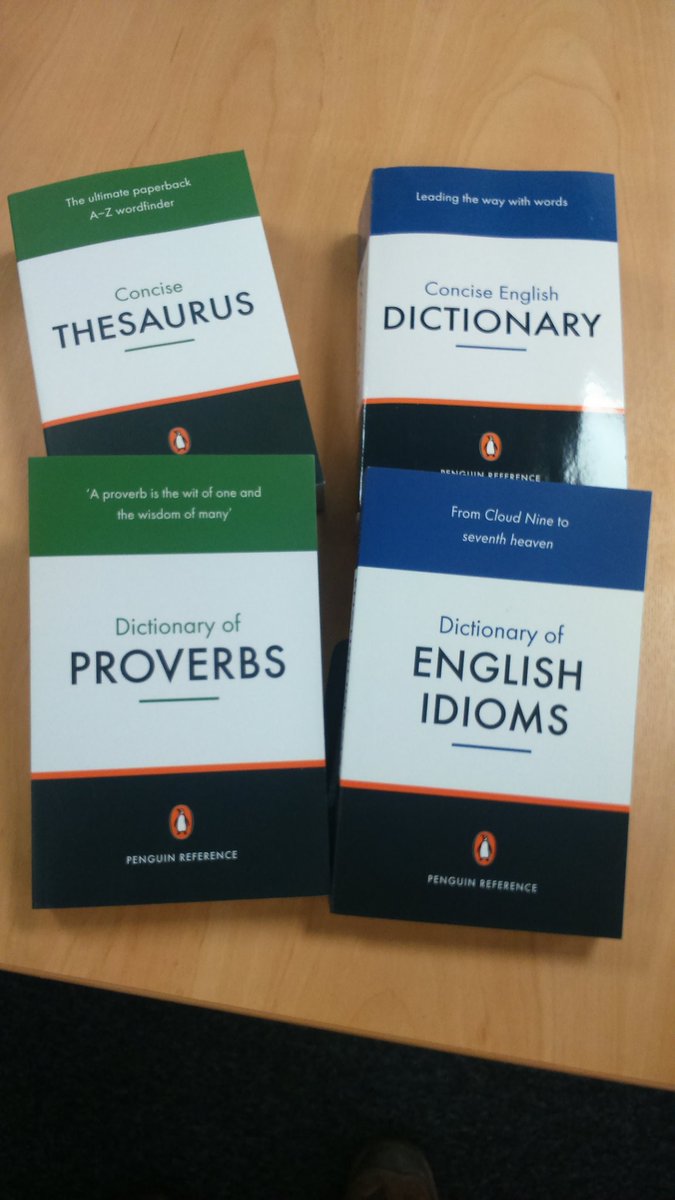
And this pair of non-dictionaries courtesy of the Financial Times:

This good news aside however I must pass on some very distressing information. It is with great dismay at the accelerating decline of Western civilisation that I have to point out that I think there was a mistake in the latest Azed crossword (No. 2321). The clue at 21 down reads:
Remains of pyre – death of Cleo – packed with African timber? (7)
The checked lights give A-HHE-P, which strongly suggests ASH-HEAP (hyphens are not clued in Azed puzzles). The first part of the clue – `Remains of pyre’ – then parses as the definition. The cryptic part then comprises two parts: ‘death of Cleo’ (suggesting ASP) fits with ASHHEAP if ASP is `packed with African timber’, i.e. if a four-letter word meaning `African timber’ is included within ASP. I can’t find any such word HH-A, but SHEA is a kind of African tree. That, however, would give ASSHEAP which (as well as sounding a bit rude) does not fit with the definition or the checked light at 26 down (HEARTH, i.e. HEART+H).
I’m pretty sure, therefore, that this is a slip by the setter.
Follow @telescoper
 In the Dark