Archive for September, 2017

The Wipers Times

Posted in Uncategorized with tags , , , on September 13, 2017 by telescoper

Although I regularly go to the opera and concerts of various kinds in Cardiff I don’t often go to the theatre here, but I made an exception last night to go and see The Wipers Times at the New Theatre. I’m glad I did, as it was a marvellously entertaining evening. As an added bonus there was a short question-and-answer session with authors Nick Newman and Ian Hislop (both of Private Eye) on the stage after the performance:
Apologies for the crummy picture, but we were rather a long way away in the Upper Circle:  that’s Ian Hislop in the middle and Nick Newman on the left.

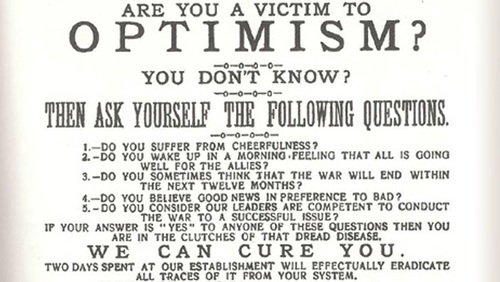
The play is based around the true story of a group of soldiers under the command of Lieutenant Colonel Frederick Roberts and Lieutenant Colonel Jack Pearson of the Nottinghamshire & Derbyshire Regiment (`The Sherwood Foresters’) who, while scavenging for material to reinforce trenches near Ypres in 1916, stumble across an old printing press. They decided to put this incongruous item to use by publishing a satirical newspaper called The Wipers Times, `Wipers’ being British Army slang for `Ypres’. The newspaper was a great success, running to 23 issues, and was not only hugely popular with troops but was also circulated widely at home, sometimes to the consternation of the authorities.

Here’s a sample clipping from one of the original issues:
And lest you think Roberts and Pearson were cynical malingerers, both served with distinction in battle. Roberts, for example, was awarded the Military Cross for conspicuous gallantry under fire during the Battle of the Somme. He also almost died in a gas attack, but insisted on rejoining his men after only a short period as an invalid. The humour of The Wipers Times was not at all meant to be seditious: it was just a way of using  humour to restore a bit of humanity to the inhumanity of the situation the soldiers found themselves in.

It’s not hard to see why this story appealed to Messrs Hislop and Newman: the humour of `The Wipers Times’ is fruit of the same tree of irreverent satirical humour  that produces Private Eye, even down to the spoof Christmas adverts! All the jokes in the play are taken directly from the original Wipers Times and they have endured exceedingly well, including some pointed references to the poor standard of journalism in the Daily Mail. Interestingly, the butt of most of the jokes is mostly not the Germany enemy, but the Top Brass of the British Army.  The assortment of puns,  musical-hall jokes and comic songs in among the pieces of biting satire is extremely funny in its own right, but gains extra power by its proximity to the awful reality of the trenches. In some ways it inhabits the same territory  Blackadder goes Fourth but the fact that it is based on real characters in a real situation gives it a different dimension. The authors have tried to keep everything as historically accurate as possible, and the authenticity adds to the comedy.  I am no military historian, but it happens that I do know, for example, that the Sherwood Foresters were involved in the Battle of the Somme in 1916; I wrote about it here. The script is very polished and an excellent ensemble cast keeps the show cracking along in brilliant style.

It’s worth mentioning the postscript to the story. Both Roberts and Pearson survived the War, but neither could find work when they came back to England and both emigrated, one to Argentina and the other to Canada. Both men died in the 1960s, unremembered in this country. It was only after the TV version of The Wipers Times was broadcast in 2013, and researchers were put to work finding out more about them, that their obituaries were published in the Times.

The Wipers Times is on in Cardiff until Saturday and I thoroughly recommend you catch it while you can, either here or elsewhere as it is currently on tour.

Storm Damage

Posted in Bute Park, Cardiff with tags on September 13, 2017 by telescoper

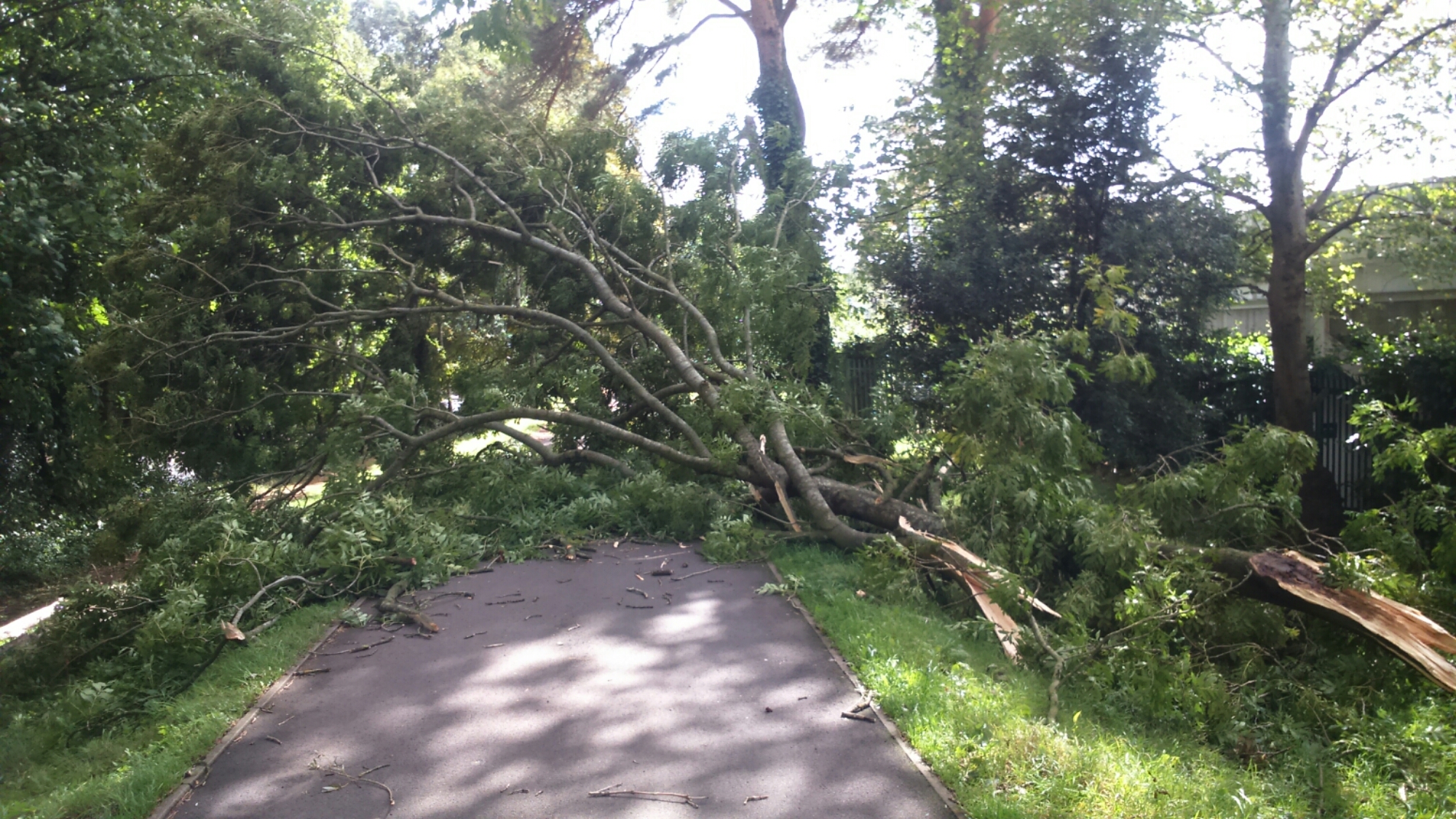
It was rather windy last night, thanks to Storm Aileen. This morning my garden contained quite a few  broken branches and other wind-blown items of  detritus that weren’t there yesterday. 

But all that was nothing compared to what I saw on the way to work past the back of the SSE SWALEC stadium at Sophia  Gardens.

It’s quite a busy path but I think the tree probably came down in the early hours of the morning so I don’t think any lives were at risk.

Storms are not unusual at this time of year, but this one seems to be a bit earlier than normal.

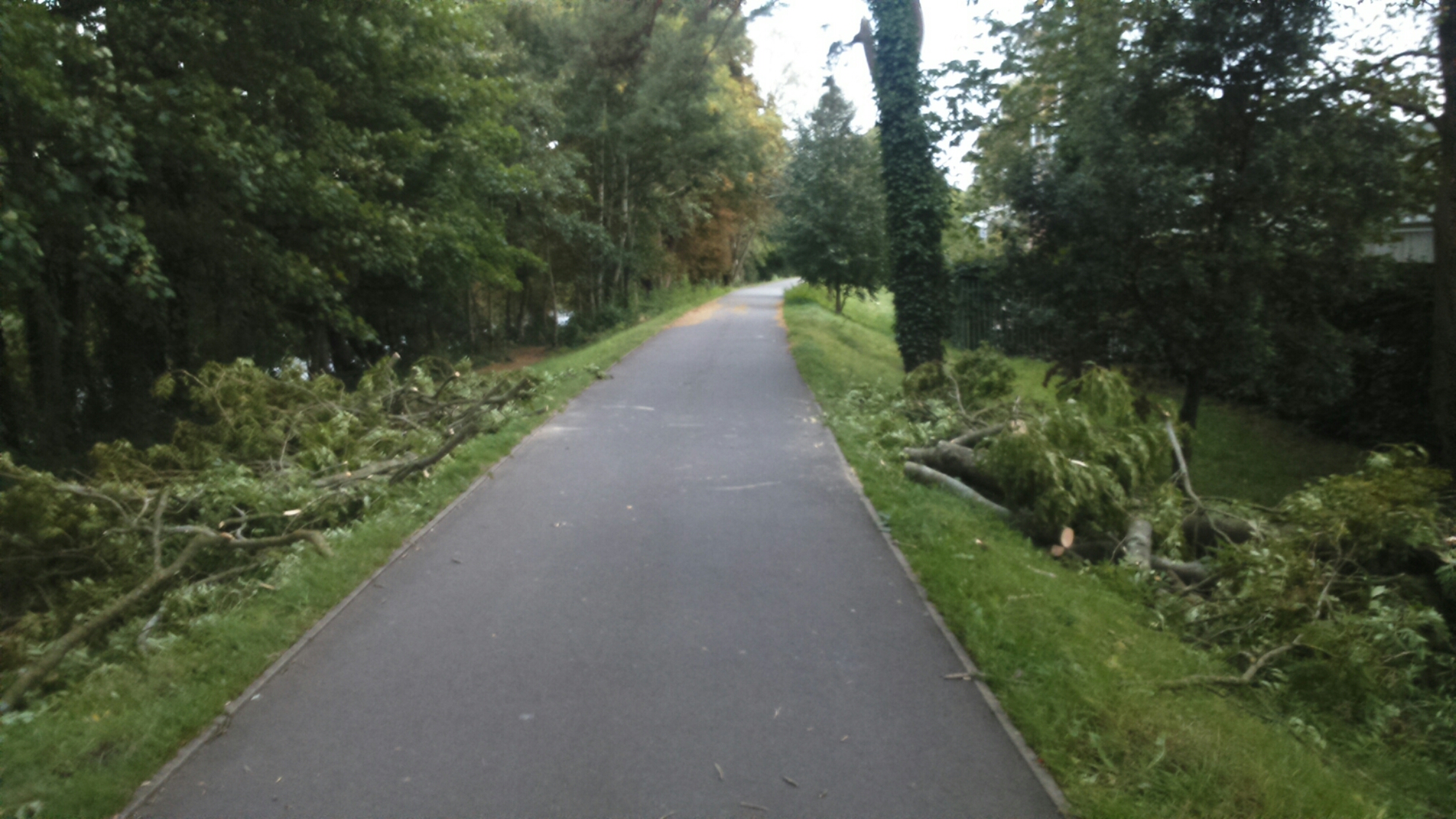
Update: the same scene this evening

Good work by the Council!

Countdown to Cassini’s Grand Finale

Posted in The Universe and Stuff with tags , , , , on September 12, 2017 by telescoper

In case you didn’t realise, this week sees the end of the superbly successful NASA mission Cassini, which has been exploring Saturn, its ring systems and its many satellites since it arrived there in 2004, including sending the Huygens probe into the largest moon Titan. Its final act will be to plunge into Saturn itself, which it will do on Friday 15th September, taking measurements all the way until it is destroyed. It has already started the final manoeuvre that will end when it enters the planet’s atmosphere. Radio contact with the spacecraft is expected to be lost  just before 1pm GMT.  For further information about this final act, see here.

Cassini was launched in on October 15 1997, so its mission will have lasted  one month shy of twenty years (although there were many years of preparation before that). Although I don’t work on Solar System studies, I have followed the progress of Cassini with great interest over the years primarily because there was a group (led by Carl Murray) working on Cassini (specifically on its imaging system) at Queen Mary when I was there during the 1990s.  I was there in 1997 when the spacecraft was launched, but at that time the rendezvous date with Saturn of 2004 seemed in the unimagineably distant future. Seven years seems a very long time when you’re young!

Anyway, I’m sure Carl (along with all the other scientists working on the Cassini mission) will feel sadness when it all finally comes to an end, but the consolation will be that the mission  has been such a spectacular scientific triumph. Here’s a video about the end of Cassini, showing some of the highlights of the mission and some of the thoughts of the scientists that have been working in it for so long.


On the Edgeworth Series…

Posted in Bad Statistics, The Universe and Stuff with tags , , on September 12, 2017 by telescoper

There’s a nice paper on the arXiv today by Elena Sellentin, Andrew Jaffe and Alan Heavens about the use of the Edgeworth series in statistical cosmology; it is evidently the first in a series about the Edgeworth series.

Here is the abstract:

Non-linear gravitational collapse introduces non-Gaussian statistics into the matter fields of the late Universe. As the large-scale structure is the target of current and future observational campaigns, one would ideally like to have the full probability density function of these non-Gaussian fields. The only viable way we see to achieve this analytically, at least approximately and in the near future, is via the Edgeworth expansion. We hence rederive this expansion for Fourier modes of non-Gaussian fields and then continue by putting it into a wider statistical context than previously done. We show that in its original form, the Edgeworth expansion only works if the non-Gaussian signal is averaged away. This is counterproductive, since we target the parameter-dependent non-Gaussianities as a signal of interest. We hence alter the analysis at the decisive step and now provide a roadmap towards a controlled and unadulterated analysis of non-Gaussianities in structure formation (with the Edgeworth expansion). Our central result is that, although the Edgeworth expansion has pathological properties, these can be predicted and avoided in a careful manner. We also show that, despite the non-Gaussianity coupling all modes, the Edgeworth series may be applied to any desired subset of modes, since this is equivalent (to the level of the approximation) to marginalising over the exlcuded modes. In this first paper of a series, we restrict ourselves to the sampling properties of the Edgeworth expansion, i.e.~how faithfully it reproduces the distribution of non-Gaussian data. A follow-up paper will detail its Bayesian use, when parameters are to be inferred.

The Edgeworth series – a method of approximating a probability distribution in terms of a series determined by its cumulants – has found a number of cosmological applications over the years, but it does suffer from a number of issues, one of the most important being that it is not guaranteed to be a proper probability distribution, in that the resulting probabilities can be negative…

I’ve been thinking about how to avoid this issue myself, and mentioned a possibility in the talk I gave at South Kensington Technical Imperial College earlier this summer. The idea is to represent the cosmological density field (usually denoted δ) in terms of the square of the modulus of a (complex) wave function ψ i.e. |ψψ*|. It then turns out that the evolution equations for cosmic fluid can be rewritten as a kind of Schrodinger equation. One powerful advantage of this approach is that whatever you do in terms of approximating ψ, the resulting density ψψ* is bound to be positive. This finesses the problem of negative probabilities but at the price of introducing more complexity (geddit?) into the fluid equations. On the other hand, it does mean that even first-order perturbative evolution of ψ guarantees a sensible probability distribution whereas first-order evolution of δ does not.

Summer’s Ending

Posted in Bad Statistics, Biographical, Cricket with tags , , , , , on September 11, 2017 by telescoper

There’s no escaping the signs that summer is drawing to a close. The weather took a decidedly autumnal turn  at the end of last week, and though I resisted the temptation to turn the central heating on at Chateau Coles I fear it won’t be long before I have to face reality and take that step. I hope I can hold out at least until the conventional end of summer, the autumnal equinox, which this year happens at 21.02 BST on Friday, 22 September.

Saturday saw the Last Night of the BBC Proms season. I’ve enjoyed a great many of the concerts but I only listened to a bit of the first half of the Last Night as I find the jingoism of the second half rather hard to stomach. I did catch Nina Stemme on the wireless giving it some welly in the Liebestod from Tristan und Insolde, though.  Pretty good, but difficult to compare with my favourite version by Kirsten Flagstad.

One of the highlights of the season, just a few days ago, was Sir András Schiff’s late-night performance of Book I of The Well Tempered Clavier which had me captivated for two hours, until well past my usual bedtime…

However, as the Proms season ends in London the music-making continues in Cardiff with a new series of international concerts at St David’s Hall and Welsh National Opera’s new season at the Wales Millennium Centre (which starts on 23rd September). I notice also that, having finished his complete Beethoven cycle,  Llŷr Williams is embarking on a series of recitals of music by Schubert, starting on November 9th at the Royal Welsh College of Music and Drama.

Another sign that summer is over is that the last Test Match of the summer has ended. Excellent bowling by Jimmy Anderson (and, in the first innings, by Ben Stokes) meant that England had only a small total to chase, which they managed comfortably. Victory at Lord’s gives England a 2-1 win for the series over West Indies. That outcome is welcome for England fans, but it doesn’t do much to build confidence for the forthcoming Ashes series in Australia. England’s pace bowlers have shown they can prosper in English conditions, when the Duke ball can be made to swing, but in Australia with the Kookaburra they may find success much harder to come by. More importantly, however, only two of England’s five top-order batsmen are of proven international class, making their batting lineup extremely fragile. So much depends on Cook and Root, as I don’t think it is at all obvious who should take the other three positions, despite a whole summer of experimentation.

There are a few one-day internationals and Twenty20 matches coming up as well as three full weeks of County Championship fixtures. In particular, there are two home games for Glamorgan in the next two weeks (one against Northants, starting tomorrow, and one next week against Gloucestershire). Their last match (away against Derbyshire) was drawn because three of the four days were lost to rain, but weather permitting there should still be a few opportunities to see cricket at Sophia Gardens this year.

And of course it will soon be time to for the start of the new academic year, welcoming new students (including the first intake on our MSc courses in Data-Intensive Physics and Astrophysics and new PhD students in Data-Intensive Science who form the first intake of our new Centre for Doctoral Training). All that happens just a couple of weeks from today, and we’re having a big launch event on 25th-26th September to welcome the new intake and introduce them to our industrial and academic partners.

Anyway, that reminds me that I have quite a lot to do before term starts so I’d better get on with it, especially if I’m going to make time to watch a few days of cricket between now and the end of the month!

Random Image

Posted in Bad Statistics on September 10, 2017 by telescoper

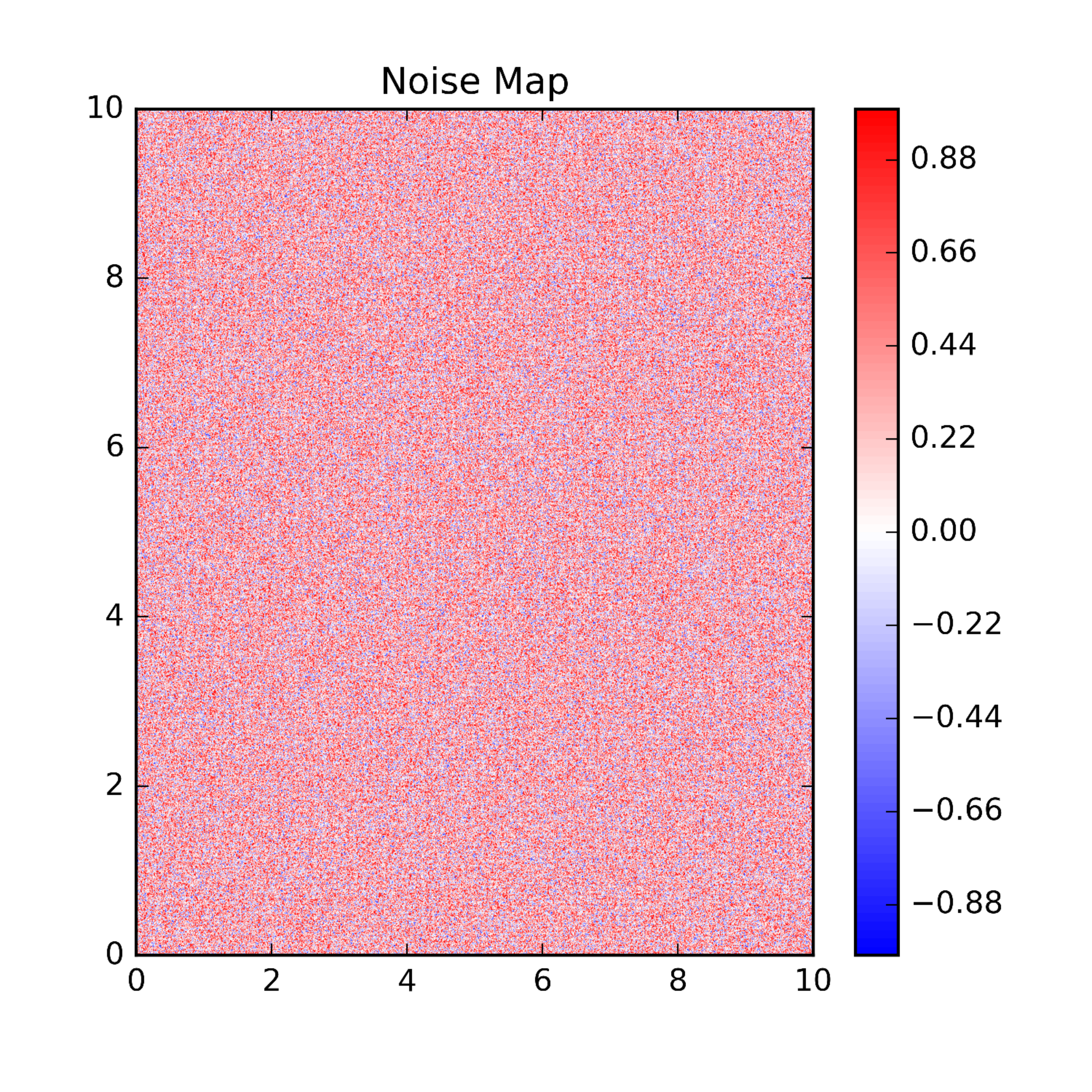
No time for a proper post today so here’s a random* picture made by my student, Will..

*In some sense…

Blowers.

Posted in Cricket on September 10, 2017 by telescoper

A warm tribute to Henry Blofeld who today did his last commentary for Test Match Special, as England beat the West Indies by 9 wickets at Lord’s.

Jimmy Anderson took 7 for 42 in the West Indies 2nd innings and passed 500 Test wickets in the process.

bowlingatvincent's avatarsportslaureate

Pre- the final curtain there was the inevitable falling over backwards; too many forced ‘dear old things, too much cranking up of the emotional. Vaughan and Tufnell maybe slightly nervously fawning.

The Old Pro, though, ploughed on, admirably briskly – because that’s what his generation do, right? – because he had a game to commentate on; because ‘tremendous fun’ loometh.

TMS, of course. Blowers. Dressed to kill; impossibly vital and irretrievably amiable, as always. No doubt aware of the doe-eyes around him but impressively focused on that uniquely distracted world-view, drawn in to Lords and to his cricket.

Throughout he remained seemingly unaffected by the smiley furore around him. Doing his thing – scene-setting, describing. All of it via that, yaknow… voice.

There have been contenders, overs the decades, for the Voice of Cricket moniker. Few if any (Arlott, Benaud, perhaps?) have breached that bubble of national/international consciousness in quite…

View original post 937 more words

The People’s March for the European Union

Posted in Politics on September 9, 2017 by telescoper

I’m very sorry I couldn’t be in London today for the People’s March for the EU

I hope it went well and applaud all those who took part!

Jazz, Icarus and Henri Matisse

Posted in Art, Biographical with tags , , , on September 8, 2017 by telescoper

I forgot to mention that while I was in London last weekend I visited the exhibition Matisse in the Studio at the Royal Academy of Arts in Burlington House (Piccadilly). It’s an interesting show, covering not only on the art works by Henri Matisse but also various items he had collected and kept in his studio, some of which appear in his paintings in various forms. Anyway, do go to the exhibition if you can – it’s there until November 12th.

Anyway, all that reminded me of this famous image by Matisse, called Icarus, which seems to fit the theme of this blog. It appears in a small booklet called Jazz which consists of collages and other images as well as text written by the artist himself.

School of Statistics for Astrophysics, Autrans, France, October 9-13

Posted in Uncategorized on September 8, 2017 by telescoper

I just found out about this interesting conference in France coming up next month. Apparently there are still some places left!

Julyan Arbel's avatarStatisfaction

Didier Fraix-Burnet (IPAG), Stéphane Girard (Inria) and myself are organising a School of Statistics for Astrophysics, Stat4Astro, to be held in October in France. The primary goal of the School is to train astronomers to the use of modern statistical techniques. It also aims at bridging the gap between the two communities by emphasising on the practice during works in common, to give firm grounds to the theoretical lessons, and to initiate works on problems brought by the participants. There have been two previous sessions of this school, one on regression and one on clustering. The speakers of this edition, including Christian Robert, Roberto Trotta and David van Dyk, will focus on the Bayesian methodology, with the moral support of the Bayesian Society, ISBA. The interest of this statistical approach in astrophysics probably comes from its necessity and its success in determining the cosmological parameters…

View original post 218 more words