Archive for October, 2018

Government of Ireland Postdoctoral Fellowships

Posted in Uncategorized with tags , on October 23, 2018 by telescoper

A busy teaching days is over, but before I go home I thought I’d use the medium of this blog to advertise the Government of Ireland Postdoctoral Research Fellowships which have just been announced by the Irish Research Council.

These positions are of one or two years’ duration starting from 1st October 2019. The research relating to the fellowship can be in any discipline (including Astrophysics and Cosmology) and can be held in any University in the Irish Republic (including Maynooth). The deadline for applications is 29th November 2018.

For further information, see here.

Anyone interested in applying to hold one of these positions in Maynooth is welcome to contact me privately for advice or assistance.

The Signs of Age

Posted in Biographical, The Universe and Stuff with tags , , , , on October 23, 2018 by telescoper

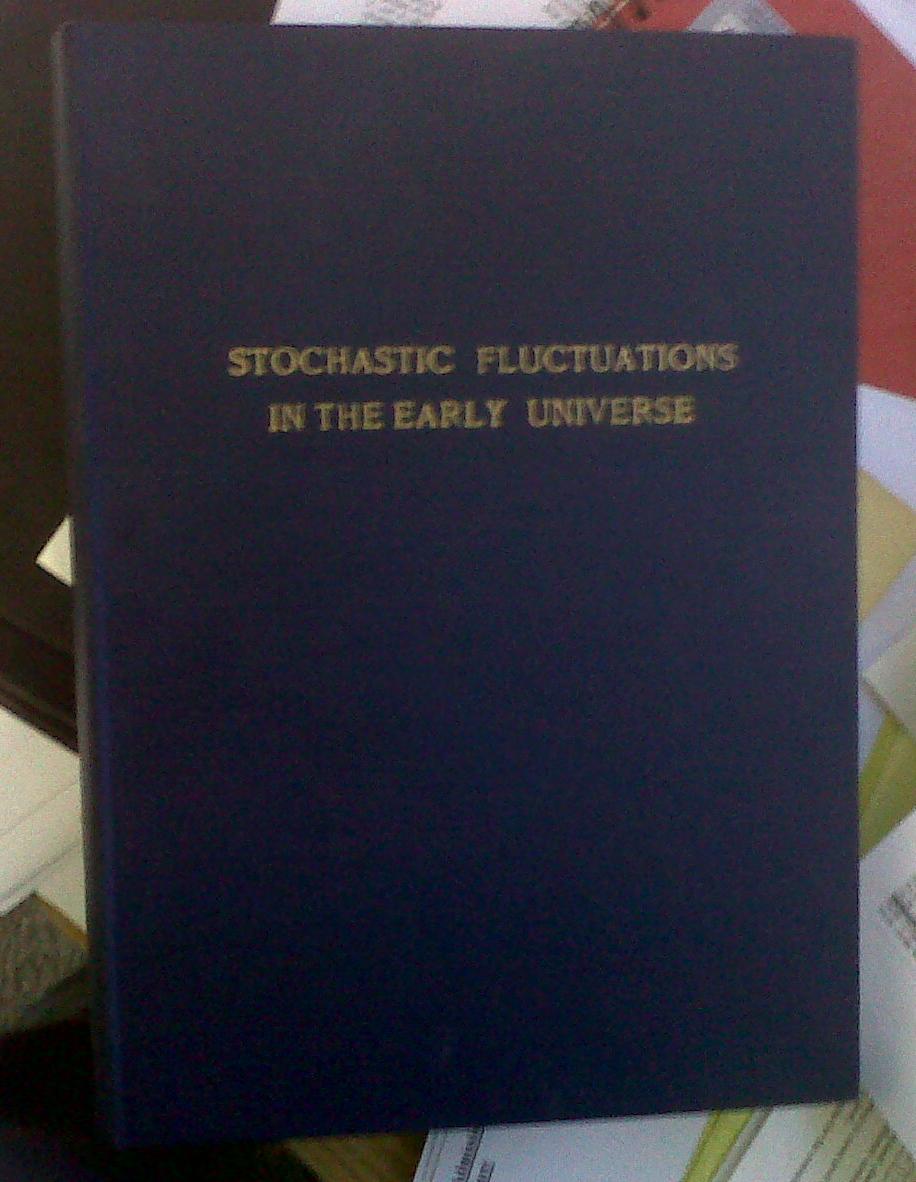
I was feeling very tired yesterday evening and in my vegetative state I suddenly realised that last month I missed a significant personal anniversary. In September 1988, now over thirty years ago I submitted my DPhil thesis at the University of Sussex. Here it is..
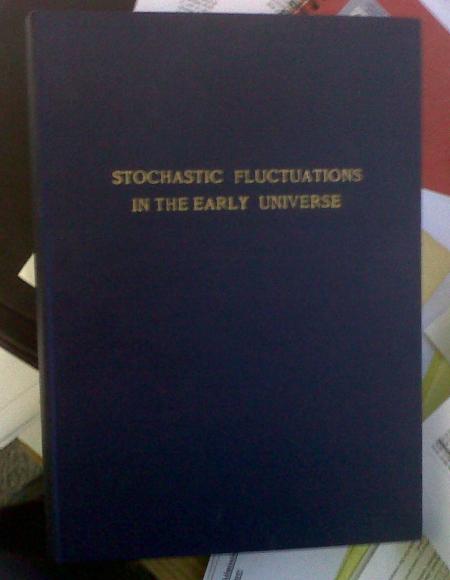
It was to be another couple of months until I had my viva (an experience I’d definitely rather forget) so I didn’t get to receive the postgraduate degree formally until the following summer, but at least I finished and submitted within the three years my funding allowed. Incidentally, mine was one of the first generation of theses at the University of Sussex to be typeset in LaTeX. At least I avoided the hassle of having carbon copies made!

The field of cosmology has changed so much in the three intervening decades that I’m sure current graduate students would find my thesis as incredibly simple-minded as I do. There weren’t any measurements of CMB temperature patterns in those days (the COBE results were not announced not until 1992) so I had to generate simulated observations, for example. Still, a few of the things in my thesis have stood the test of time, in the form of papers that still get cited to this day. I was lucky that my research  was in an area that was about to take off, rather than one that was already in decline, and that there will still problems around that were easy enough for me to tackle!

The way of working was very different too: the fact that my generation didn’t have computers on our desks makes younger graduate students wonder how we managed to do anything at all! I still amuse my colleagues with my habit of writing out bits of code in longhand on paper  and `desk-checking’ them before typing them in.

The fact that I now have over 30 years’ postdoctoral experience definitely adds to the feeling of getting very old, along with the all-pervading fatigue, the random aches and pains that afflict me from time to time, failing eyesight, and the tendency of Facebook to send me advertisements about stairlifts, hearing aids, and (worst of all) golf equipment.

The start of University term in late September brings with it a new intake of students that always looks even  younger than the last. That produces a strange alternation of feelings. On the one hand, working in a University means that you’re always surrounded by bright young students which is a good thing when you’re getting on a bit in that it reminds you that you were once like that. On the other, the proliferation of young persons around does force you to face up to how old you actually are.

I remember some years ago I was teaching a module on astrophysics as part of which I did a lecture on supernovae. In the middle of that I said to my class: “of course, you will all remember SN 1987A” (which was detected while I was a PhD student). Blank faces. I then realized that none of them had even been born in 1987. Nowadays it is the case that I was already a Professor when all my undergraduate students were born.

But these signs of age are as nothing compared to the shock I underwent when a few months ago I discovered that I’m older than Nigel Farage.

Counting String Theory Standard Models

Posted in The Universe and Stuff with tags , on October 22, 2018 by telescoper

I saw a paper on the arXiv and couldn’t resist a (snarky) comment. Here is the abstract:

We derive an approximate analytic relation between the number of consistent heterotic Calabi-Yau compactifications of string theory with the exact charged matter content of the standard model of particle physics and the topological data of the internal manifold: the former scaling exponentially with the number of Kahler parameters. This is done by an estimate of the number of solutions to a set of Diophantine equations representing constraints satisfied by any consistent heterotic string vacuum with three chiral massless families, and has been computationally checked to hold for complete intersection Calabi-Yau threefolds (CICYs) with up to seven Kahler parameters. When extrapolated to the entire CICY list, the relation gives about 1023 string theory standard models; for the class of Calabi-Yau hypersurfaces in toric varieties, it gives about 10723 standard models.

Isn’t  10723 also the number of angels that can dance on the head of a pin? That number of models for the price of one theory looks like a bargain to me!

But, seriously, people often complain that string theory isn’t really scientific because it isn’t predictive. That clearly isn’t true. String theory is the most predictive theory ever: it can predict anything you want!


Halloween in LaTeX

Posted in History, mathematics on October 21, 2018 by telescoper

I forget where I found this list of spooky LaTeX commands but, with the dreaded Halloween coming up soon, I thought I’d share it here.

Anyway, it reminded of the mathematical curve known in English as The Witch of Agnesi, the witch of which is a mistranslation of the Italian versiera meaning a ‘sheet’ (ie the rope connecting to a ship’s sail) rather than a shortened version of ‘avversiera’ meaning ‘a female devil’ or ‘witch’.

The March for a People’s Vote

Posted in Politics on October 20, 2018 by telescoper

I can’t be there in London today because of other commitments here in Ireland but I send my very best wishes to everyone marching in London today.

It seems the weather is good so I hope you all have a fantastic day!

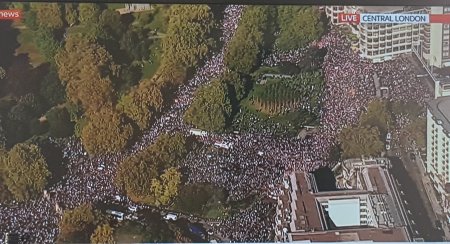
Update: it seems that one or two people have turned up:

It turns out there were about 700,000 at the demonstration. The march won’t in itself change anything, but everyone who took part in it will surely now feel stronger and more energised for the struggles to come, while those on the other side are getting seriously rattled.

Imagine the scale of the protests when the Government announces its intention to proceed without a Withdrawal Agreement.

The Hooded Crow

Posted in Maynooth with tags , , on October 19, 2018 by telescoper

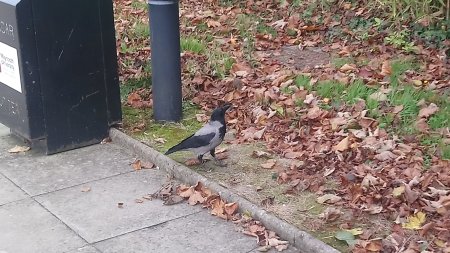
Although they’re less numerous in Maynooth than Rooks and Jackdaws, I have seen a few of these birds around the place but they’ve always been reluctant to stay still long enough to be photographed.

This is a Hooded Crow and it inhabits the same ecological niche as the Carrion Crow, which has all black feathers; a Hooded Crow looks a bit like a Magpie but instead of sharp black and white it is scruffy dark grey and off-white.

I’ve never seen a Hooded Crow in England or Wales but apparently they are prevalent in Scotland and Ireland. It used to be thought that Hooded Crows and Carrion Crows were just regional variations of the same species, but nowadays they are regarded as distinct.

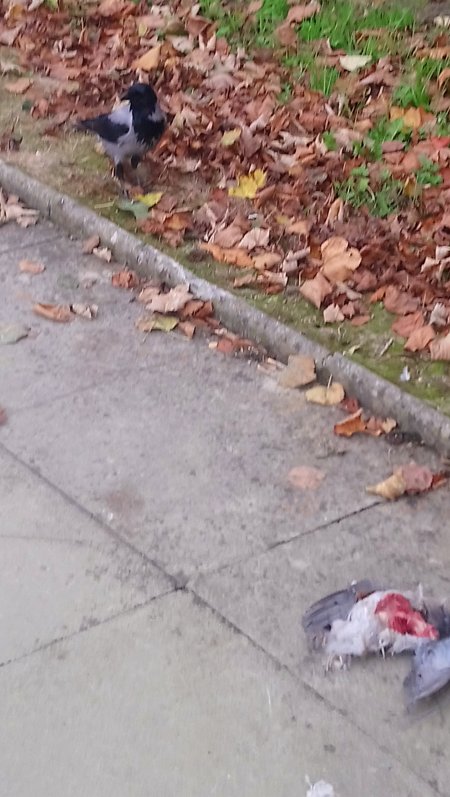
Anyway, I wondered why this one was not as shy as the others I have seen until I looked down.

Realising that I was interrupting this one’s supper of fresh carrion in the form of a dead pigeon, I left him/her to it and carried on in my journey…

The Open Journal Tweets!

Posted in Open Access with tags , on October 19, 2018 by telescoper


I’ve got a busy day today with teaching and other things so I’m just taking a brief moment to let you know that the Open Journal of Astrophysics now has Twitter account which, if you are so minded, you can follow here


Misty Maynooth

Posted in Maynooth on October 18, 2018 by telescoper

I took this picture of St Patrick’s College on the way into work this morning. It turned out quite well, so I’m sharing it here.

A Breakthrough for a Bigot

Posted in Biographical, LGBTQ+, The Universe and Stuff with tags , , , on October 18, 2018 by telescoper

You may recall that a few months ago I wrote a post about Dr Aron Wall, whose research speciality is Black Hole Thermodynamics, and who is moving to Cambridge next year to take up a Lectureship. Yesterday I heard the news that Dr Wall (who is currently at Stanford) has been awarded a New Horizons Breakthrough Prize of $100,000. Three such prizes are awarded each year for outstanding early career researchers.

This is just a reminder that, when he isn’t doing theoretical physics, Dr Wall also runs a blog in which he expresses outspokenly homophobic views. For example, one piece included bigoted generalizations such as:

…the notoriously promiscuous, reckless, and obscene lifestyle characteristic of the cultural venues of the gay community.

It sounds like he knows a lot about these places. Does he visit them often? The press release from Stanford does not say.

You can read his whole piece for yourself* and decide what you think. As a gay man I found it thoroughly offensive, but what I think is not as important as what effect this person’s presence in the teaching staff will mean for any LGBT+ students at DAMTP. I hope Dr Wall enjoys the compulsory Equality and Diversity Training he will be required to undergo as a new member of staff and that he does not let his extremist beliefs interfere with his responsibility as a lecturer to treat all staff and students with the respect they deserve.

(*He’s deleted it, so I linked to an archived version…)

Some people have said that Dr Wall’s private beliefs are his own business, as long as he is good at his job. I agree with that. However his beliefs are no longer private. He has himself chosen to make them public. I think that makes a big difference. His views are known publicly, and that does not help to provide a welcoming environment for LGBT+ students (which I would have thought was part of his job). You might say that `It’s OK. Just keep him away from LGBT+ students’. That seems to me a pathetic response, no different from saying that it’s acceptable to employ a serial sexual harasser as long as you keep him away from female students. The duty of a member of academic staff is to the entire academic community (staff and students), not just the fraction of it that the staff member isn’t bigoted against.

I just wonder whether the Breakthrough Prize would have been awarded to a person with outspoken racist or sexist views? And should prizes be awarded to people who are good at science regardless of attitudes that cast severe doubt on their ability or willingness to foster a spirit of inclusivity within which other scientists can flourish?

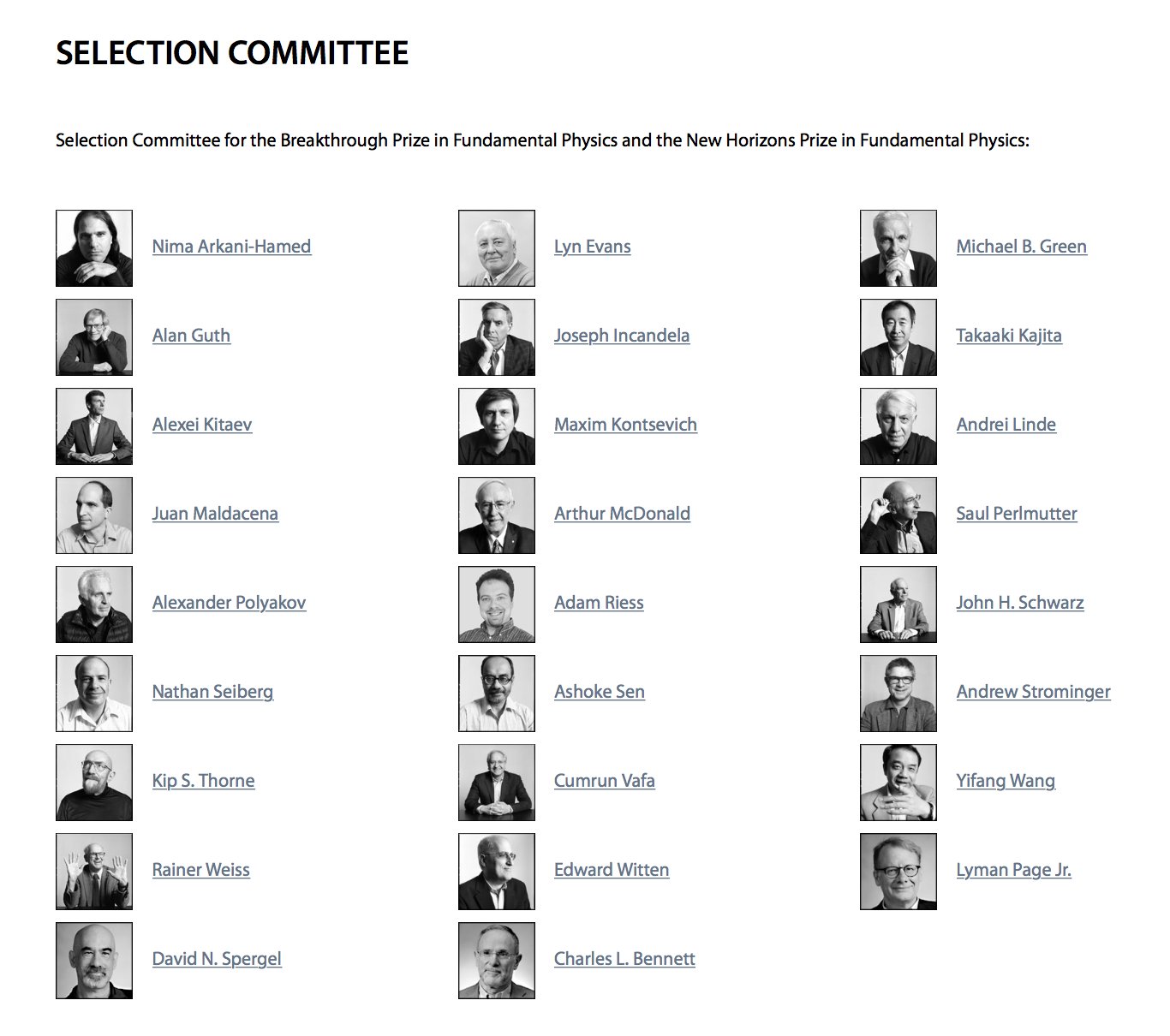
P.S. Note the diversity of the panel that made this award!

R.I.P. Prof. Michael J Thompson

Posted in Biographical, The Universe and Stuff with tags , , , on October 17, 2018 by telescoper

I just returned from giving a lecture to find an email in my inbox delivering the awful news that Professor Michael J. Thompson (pictured above) passed away unexpectedly on 15th October 2018, while at a scientific meeting in Tokyo.

Thompson’s scientific research activity was primarily in the field of helioseismology, astroseismology, solar physics, and inverse problems. He worked extensively in developing and applying inverse techniques in helioseismology and, in particular, measuring the stratification, rotation, and large-scale flows in the solar interior.

Along with being the Deputy Director and Chief Operating Officer of the National Centre for Atmospheric Research (NCAR) in Boulder, Colorado, Michael Thompson was also an NCAR senior scientist. From 2010 to 2014 he directed the High Altitude Observatory and was an associate director of NCAR. Prior to joining NCAR, Mike Thompson was Head of the School of Mathematics and Statistics in the University of Sheffield, and was formerly a Professor of Physics at Imperial College London. I knew him very well personally from the time before that, as we worked together for many years in the Astronomy Unit in the School of Mathematical Sciences at Queen Mary, University of London. Although we didn’t work in the same topics we had many interesting discussions about inverse problems in our respective fields, as well as many other topics (especially cricket). I recall that he taught an MSc course on cosmology, which he volunteered to do as he was interested in learning more about the subject.

More recently we kept in touch regularly via dinners at the RAS Club, of which he was a member, until he moved to the USA. It is through the Club mailing list that I learnt the sad news of his death.

I know I can speak for everyone who knew him in saying that he was not only a first-rate scientist but also a greatly valued colleague and an extremely nice man. Mike will be greatly missed by everyone who knew him, and I extend my deepest condolences to his family at what must be a very difficult time.


UPDATE: Here’s a news item about Mike’s death from the local paper in Boulder Colorado.