Archive for June, 2019

Euclid Updates

Posted in Euclid, The Universe and Stuff with tags , , , , on June 17, 2019 by telescoper

Following the Euclid Consortium Meeting in Helsinki a couple of weeks ago, here are a couple of updates.

First, here is the conference photograph so you can play Spot The Telescoper:

(The picture was taken from the roof of the Finlandia Hall, by the way, which accounts for the strange viewpoint.

The other update is that the European Space Agency has released a Press Release releasing information about the location on the sky of the planned Euclid Deep Fields. Here they are (marked in yellow):

These deep fields amount to only about 40 square degrees, a small fraction of the total sky coverage of Euclid (~15,000 square degrees), but the Euclid telescope will point at them multiple times in order to detect very faint distant galaxies at enormous look-back times to study galaxy evolution. It is expected that these fields will produce several hundred thousand galaxy images per square degree…

Selecting these fields was a difficult task because one has to avoid bright sources in both optical and infrared (such as stars and zodiacal emission) so as not to mess with Euclid’s very sensitive camera. Roberto Scaramella gave a talk at the Helsinki Meeting showing how hard it is to find fields that satisfy all the constraints. The problem is that there are just too many stars and other bits of rubbish in the sky getting in the way of the interesting stuff!


For much more detail see here.


The Coloured Ball Illusion

Posted in Art on June 16, 2019 by telescoper

This image, created by David Novick, is the most impressive colour illusion I have ever seen: all the balls are actually the same colour, brown.

If you don’t believe me, zoom in on any one of them…

I don’t really know why this fascinating image causes the effect that it does, but think it is a combination of hardware and software issues! The hardware issues include the fact that colour receptors are not distributed uniformly at the back of the human eye, so colour perception is different when peripheral cues are present, and also that their spectal response is rather broad with considerable overlap between the three types of cell. The software issue is something to do with how the brain resolves a colour when there are other colour nearby:nNotice how the balls take on the colour of the lines passing across them..

A Ring of Controversy Around a Black Hole Photo

Posted in The Universe and Stuff on June 15, 2019 by telescoper

This is a long post but well worth reading if you want to know what we really know about the black hole in M87..

Matt Strassler's avatarOf Particular Significance

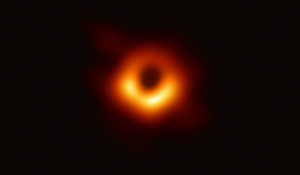
It’s been a couple of months since the `photo’ (a false-color image created to show the intensity of radio waves, not visible light) of the black hole at the center of the galaxy M87, taken by the Event Horizon Telescope (EHT) collaboration, was made public. Before it was shown, I wrote an introductory post explaining what the ‘photo’ is and isn’t. There I cautioned readers that I thought it might be difficult to interpret the image, and controversies about it might erupt.EHTDiscoveryM87

So far, the claim that the image shows the vicinity of M87’s black hole (which I’ll call `M87bh’ for short) has not been challenged, and I’m not expecting it to be. But what and where exactly is the material that is emitting the radio waves and thus creating the glow in the image? And what exactly determines the size of the dark region at…

View original post 6,013 more words

The End of the Common Travel Area?

Posted in Biographical, Cardiff, Politics with tags , , on June 14, 2019 by telescoper

I’m back in Cardiff for a couple of days after flying from Dublin this morning.

When my flight arrived at Cardiff Airport there was yet again a full passport and immigration check on all passengers.

There is supposed to be a Common Travel Area including the UK and Ireland (as well as the Channel Islands and the Isle of Man), and passport checks are not supposed to be made routinely at borders within the CTA.

I have noticed passport checks happening at Cardiff Airport before (e.g. here and here) but I’ve previously imagined there was some specific reason for them. Passport checks have, however, been carried out every time I have arrived in Cardiff recently and it is now abundantly clear that there has been a material change of policy.

When I got to the desk and handed over my passport I asked the Officer whether these checks were being imposed all the time now. She said yes: there are now full passport and immigration checks on all flights to Cardiff from Dublin.

This is from the UK Government’s website:

Well, if they check all passengers on all flights then that sounds like ‘routine’ to me. In other words the British authorities are violating the Common Travel Area agreement just weeks after undertaking to uphold it.

Did someone say ‘Perfidious Albion’?

Special 1919 Eclipse Centenary Offer!

Posted in History with tags , on June 13, 2019 by telescoper

A little later than planned, a paper what I wrote for Contemporary Physics to commemorate the centenary of the 1919 Eclipse Expeditions has now appeared online. The print edition will be available in due course.

Here is the abstract:

Unfortunately the paper is behind a paywall, but as a special dispensation I am to offer FIFTY free downloads of the paper to friends, colleagues and random people on the internet.

If you’d like to download a FREE copy of the PDF of the paper A revolution in science: the eclipse expeditions of 1919 then you may do so by clicking this link. How’s that for clickbait?

UPDATE: the free copies have now all gone so I removed the link.

To be honest I’m not sure what stops you sending the PDF to anyone else, but apparently those are the rules…

Astronomy Bookalike

Posted in Astronomy Lookalikes on June 13, 2019 by telescoper

It has been pointed out to me that I haven’t contributed anything to my collection of Astronomy Lookalikes recently. My only excuse is that I haven’t really thought of any. I’ll try to get it going again. Suggestions are always welcome.

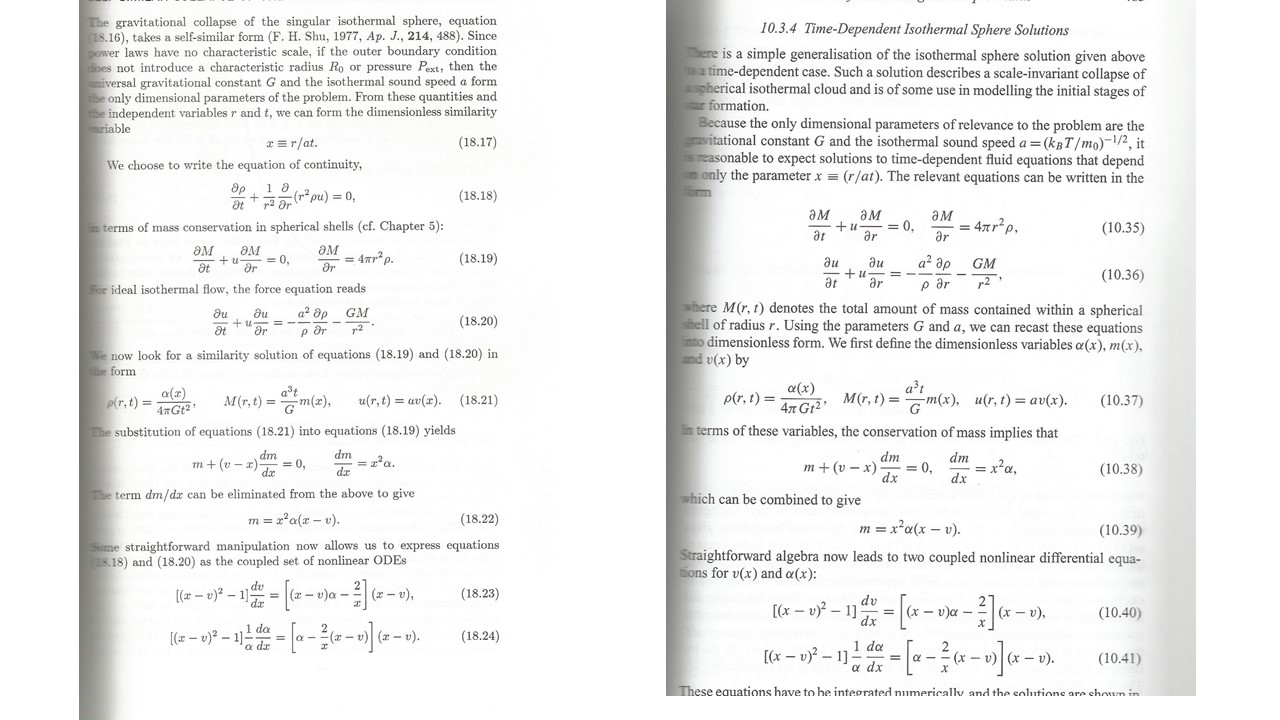
In the meantime take a look at this book look-alike:

If you click on the picture you can make it bigger.

These two pages are taken from two different books on Astrophysics written about a decade apart by two different authors. This is by no means the only point of similarity between these particular volumes. I wonder if by any chance they might be related?

I couldn’t possibly comment.

Blue Murder in Glasgow

Posted in Biographical with tags , , , , , on June 12, 2019 by telescoper

We have our final meeting of the Examination Board in the Department of Theoretical Physics at Maynooth University tomorrow in the presence of External Examiner who is visiting for the purpose.

For some reason thinking about this impending event reminded me of a strange encounter I had many years ago when I worked at Nottingham University and had almost forgotten about. Perhaps it’s just because it was the same time of year. Anyway, while I remember it I thought I might as well write about it here.

One day in June 2003, when I got home to my house in Beeston after work, I found that a card had been put through my letterbox. It was from Nottingham CID and bore the name of a Detective Sergeant followed by `Vice Squad’. I forget his actual name. Apparently the Officer concerned had called when I wasn’t in and left the note asking me to call back. I was a bit perturbed that it was apparently to do with something under the remit of the Vice Squad but it didn’t give any details except for a telephone number. Anyway, being a cooperative person, I phoned the number and a few days later the policeman came to my house to interview me.

It turned out to have nothing to do with the Vice Squad nor even anything to do with Nottingham. It was to do with an incident in Glasgow that had happened almost a year previously (in 2002): the policeman who interviewed me just happened to be available to run this particular errand on behalf of the Glasgow CID.

The police had traced me because I had paid a bill in a curry house in the Byres Road area of Glasgow’s West End with my credit card. I should explain that the reason I was having a meal in Glasgow that night was that at that time I was External Examiner for the undergraduate courses in Astronomy at the University of Glasgow, a task that involved staying two nights in a B&B near the University. In fact when I spoke to the Police Officer I was about to go to Glasgow again for the same purpose.

I was asked to recall my movements for the evening concerned (24th June 2002). It was almost a year previously and I couldn’t help much, but I did remember that I (along with some companions from the Department) tried to get into the curry house earlier in the evening, but it was very busy so we adjourned to a pub for a pint or two before returning and getting a table. A helpful comment below reminded me that the establishment concerned was  Ashoka in Ashton Lane, in the West End of Glasgow.


I could remember only two things really. One was that it was a warm sunny evening and there were lots of people outside drinking in the sunshine. The other that it was getting dark when we left Ashoka after the meal, which at that time of year would make it rather late. The Officer pointed out that my credit card had been charged after 11pm, which fits with that recollection. I had paid for my meal with the intention of claiming the cost on expenses. The food was excellent, by the way.

`Can you describe the other people in the restaurant when you were there?’ he asked me. I could barely remember who was at my table, never mind any strangers, and couldn’t think of anything useful to say at all except that it was very busy.

`What’s this all about?’, I asked the Officer.

It was then revealed to me that somebody had been murdered that night, just around the corner from where I was staying. Actually he had been left for dead in the driveway of his house with serious head injuries received in the early hours of the following morning, and died a few days later. The police strongly suspected he had eaten in the same restaurant we were in, possibly with the person or persons who killed him. The Officer showed me a picture of the victim but it didn’t ring any bells.

Because of the time that had elapsed I wasn’t able to help very much at all, though to be honest I doubt I would have been able to help if I’d been asked the day after the event. I just wasn’t paying much attention, and there wasn’t a row or anything that I might have noticed.

And that was that. Interview over. I signed a witness statement and the Officer left.  I never heard any more about it.  It was obviously a cold case then – otherwise the Police  wouldn’t have been following such tenuous leads – and it’s an even colder case now. I believe the case was featured on Crimewatch or some such, but without success.

The murder (still unsolved) was of a man called Alex Blue. According to Wikipedia:

A businessman from the city’s west end, Blue was found outside his home with head injuries. He died two days later. Blue ran a taxi business with an annual turnover of £7m. One theory is that he was the victim of a house buying scam. He told friends he was in the process of buying a new house and planned to view it the day after he was attacked. It was later discovered the home had never been on the market. Although nobody has been charged with the murder, Blue’s mother and brother are convinced they know who murdered him. His brother said: “I know who was behind this but they got someone else to carry out their dirty work for them.”

It’s very unlikely now that whoever killed him will ever be brought to justice.

Investigating Sexual Harassment in Universities

Posted in Education with tags , on June 12, 2019 by telescoper

This morning I came across a piece in the Guardian about a report from the UK Office for Students about hate crime and sexual harassment in Universities.

One of the recommendations of the report is that that Universities should hire specialist staff to investigate sexual harassment.

I’ve thought a lot about this issue since I blogged about the Bode versus Mundell case a few years ago (here and here). I hope we can all agree that we need to strive to create working environments wherein harassment and bullying simply do not happen, but sadly they do happen and until that changes we need to find ways of dealing with the perpetrators fairly but firmly and promptly.

In another post I made two suggestions.

The first was that organizations of a sufficient size to bear the cost should have independent misconduct investigators rather than relying on staff from the same workplace. This role could even be fulfilled by someone from a different organization altogether. Universities, for example, could set up a shared resource to deal with this kind of thing. I’ve now come to the conclusion that such investigators should not be employees of the university in question, as they would come under pressure to hush things up – which clearly happens now. It seems to me that far too many institutions prioritize limiting reputational damage over doing the right thing for their staff and students.

Having independent investigators would avoid any real or perceived conflict of interest but, perhaps more importantly, a dedicated investigator could carry out the work much more quickly than a senior academic who is busy with many other things and who would probably have had only cursory training.

The other suggestion I made is that confidentiality agreements covering related disciplinary matters should become void if an employee leaves the institution, whether that is as a result of dismissal or because they leave before investigations are completed. That would put an end to the game of “pass the harasser”.

I am not saying that these will solve the problem completely. To mind they are necessary but not sufficient. Any further suggestions through the comments box are welcome.

Ten Little Englanders

Posted in Politics on June 11, 2019 by telescoper

Starring an illustrious cast of sociopaths, liars and drug addicts, Ten Little Englanders is an adaptation of one of Agatha Christie’s most famous detective stories, usually known by its less offensive title And Then They Were None.

Plot Summary: A group of of ten people find themselves on a small isolated island off the coast of Europe, lured there by the promise of a job as Prime Minister. One by one they all perish, stabbed in the back apparently by each other. But who could have struck the last blow? (continued, page 94).

Boards and Consultations

Posted in Education, Maynooth with tags , , , on June 10, 2019 by telescoper

Back from Helsinki, I’m now in the midst of Examination Board business. That’s two Boards for me, one for the Department of Theoretical Physics and the other for the Department of Engineering (as I’ve been teaching Engineering Mathematics).  We’ve already Preliminary meetings for both and this afternoon had the `Final’ Board for Engineering in the presence of the external examiners. The Final ‘Board’ for Theoretical Physics with the external is on Thursday. But that’s not the end of it – there is an overall University Examination Board that covers all courses in the University to formally bring an end to the examination process.

That’s quite a lot of Boards.

It is not until after all the Boards have done their business that the students get their marks and not long after that we have a Consultation Day, where

Staff will be available in all Departments to discuss results with students. Students are entitled to see their examination scripts if they wish, these will be generally available on this day or at another mutually convenient time.

When I was Head of the School of Mathematical and Physical Sciences at Sussex University I tried to introduce such a system there, but it was met with some resistance from staff who thought this would not only cause a big increase in workload and but also lead to  difficulties with students demanding their marks be increased. That has never been my experience elsewhere: only a handful take up the opportunity and those that do are told quite clearly that the mark cannot be changed.  Last year I had only one student who asked to go through their script. I was happy to oblige and we had a friendly and (I think) productive meeting.

If I had my way we would actually give all students their marked examination scripts back as a matter of routine. The fact that we don’t is no doubt one reason for relatively poor performance in student satisfaction surveys about assessment and feedback. Obviously examination scripts have to go through a pretty strict quality assurance process involving the whole paraphernalia of examination boards (including external examiners), so the scripts can’t be given back immediately but once that process is complete there doesn’t seem to me any reason why we shouldn’t give their work, together with any feedback written on it,  back to the students in its entirety.

I have heard some people argue that under the provisions of the Data Protection Act students have a legal right to see what’s written on the scripts – as that constitutes part of their student record – but that’s not my point here. My point is purely educational, based on the benefit to the student’s learning experience.

Anyway, I don’t know how widespread the practice is of giving examination scripts back to students so let me conduct a totally unscientific poll. Obviously most of my readers are in physics and astronomy, but I invite anyone in any academic discipline to vote:

And, of course, if you have any further comments to make please feel free to make them through the box below!