Archive for September, 2019

Who uses LinkedIn?

Posted in Science Politics, The Universe and Stuff with tags , , , , on September 5, 2019 by telescoper

We had a talk at INAM2019 yesterday about the Astronomical Science Group of Ireland which is about to be re-launched with a new website. One of the main reasons for doing this is that Ireland recently joined the European Southern Observatory and in order to capitalize on its involvement it is important to persuade the Irish government to invest in the resources needed (especially postdocs, etc) to do as much science as possible using ESO facilities. At the moment there isn’t a very well organized lobby for astronomy in Ireland.

One of the suggestions made yesterday was that astronomers in Ireland should join LinkedIn in order to raise their profile individually and collectively.

I am not, and have never been, on LinkedIn and this is the first time I’ve ever even thought of joining it (though I do from time to time receive emails from people I don’t know asking me to). I’ve always thought it was for more businessy types. I don’t know of any astronomers (or scientists generally) who use it either, but that may be just because I’m not on it and wouldn’t know either way.

I just thought therefore, that I might invite any readers of this blog – whether astronomers or not – if they use LinkedIn to please comment on its usefulness or otherwise using the box below. Please also comment on whether you think it would help astronomers in Ireland organize in the manner envisaged.

Across the Border

Posted in Biographical, Politics with tags , , on September 5, 2019 by telescoper

I’ve got a bit of time to spare between breakfast and the start of a new day of talks at INAM2019 so I thought I’d rattle off a short travelblog.

I went straight to Armagh Observatory and Planetarium from the bus station when I arrived yesterday so had to check in to my hotel after the end of the day’s session. I had reserved a room online (and brought the confirmation with me) so I thought that would just take a few minutes. Unfortunately the hotel had lost the booking so had to start again, which took quite a while. However, to make up for the inconvenience they put me in an `Executive Room’ with a balcony. It is indeed quite luxurious and I now wish I were staying for more than one night. Sadly, however, I have to get the bus back to Dublin this evening as I have lots to do tomorrow.

On the trip up here the main thing I noticed after crossing the border into Northern Ireland was the number of Union flags on display on telegraph poles, lampposts and buildings. I learned from a booklet in the conference pack that the Orange Order was founded in County Armagh and there are obviously strong unionist sentiments around. Flags and sashes and regalia as symbols of national and/or religious identity seem to mean a lot to some people. I find it all rather baffling.

Among the more trivial things I noticed were a change in typeface for the road signs, the fact that roads are numbered as in Great Britain (e.g. `A28′) rather than in Ireland, and that post boxes here are red rather than green. Oh, and Tayto crisps are different here too..

Of course yesterday was a big day in the United Kingdom Parliament, with Boris Johnson suffering yet another humiliation as a cross-party bill was put through the House of Commons attempting to stop a `No Deal’ Brexit. Johnson then attempted to call a General Election but failed to secure sufficient votes, Jeremy Corbyn refusing to support the motion unless and until the No-Deal Bill becomes law.

I don’t know where these shenanigans will lead, but it seems to me that humiliating Boris Johnson is a good thing in itself so I watched the events last night in my hotel room with some satisfaction. Of course if there is a General Election, a new Parliament could repeal the `No Deal’ Act anyway, so in the long run this could all amount to very little.

I’m still eligible to vote in a UK General Election but there is one soon I really don’t know what I’ll do.

The Road to Armagh for INAM 2019

Posted in Biographical, Talks and Reviews with tags , , on September 4, 2019 by telescoper

In a week of firsts I now find myself for the first time in Armagh for my first ever Irish National Astronomy Meeting, INAM 2019. Unfortunately I can’t stay for the whole meeting as I have things to do in Maynooth on Friday, but I’m looking forward to the next day and a half.

By the way, I got here from Maynooth by bus, via Dublin. There is a direct service from Busáras in central Dublin to Armagh, which takes about 1 hour and 40 minutes. The bus carries on from there to Derry.

I may post a few updates from the meeting about the science talks. Mine is not until tomorrow afternoon so I can relax and enjoy the presentations before then.

Here’s a picture of the auditorium. Garret Cotter from Oxford is talking about Gamma Ray Astronomy..

ERC Starting (and Finishing) Grants

Posted in Politics, Science Politics with tags , , , , on September 3, 2019 by telescoper

Just time for a quick note to announce that the European Research Council has announced the winners of the latest round of `Starting Grants’ (which are intended to further the research plans of early career researchers). Full details are here. Congratulations to all the winners, and especially  Erminia Calabrese in the School of Physics & Astronomy at Cardiff University!

In all, 408 applicants were selected for funding, hosted in 24 different countries. The split by nationality and discipline is as follows:

I’ll make two comments on the numbers.

First, the United Kingdom is host to a total of 64 awards. It is however very unclear what will happen in the case of a `No Deal’ Brexit in which the British Government refuses to honour its existing financial commitments. Hopefully even in this case these grants will go ahead in some form (perhaps funded directly by the UK).

Second, note that there is only one award for Ireland and nothing in either Physical Sciences or Life Sciences. This is very disappointing, but is probably a fair reflection of the Irish governments ongoing failure to invest in basic science.

It’s not that the Irish aren’t good at research. Here is another graphic that shows that 7 Irish researchers were actually awarded grants under this scheme, but none of them chose to hold their awards in Ireland:


That tells you something about the environment for early career researchers in this country.

The imminent departure of the United Kingdom from the European Union makes its future participation in such schemes unlikely. Brexit could be a great opportunity for the research community in Ireland, if only the Irish Government would seize it, but it would first need to recognize the benefits of increasing investment in research. Sadly I don’t think it will.


The Road to Galway

Posted in Maynooth, Talks and Reviews with tags , on September 2, 2019 by telescoper

Well, today is my first working day in the office of Head of the Department of Theoretical Physics at Maynooth University so I’m going to start as I mean to continue… er … by leaving around lunchtime.

Actually, no. I’m leaving after lunch for a very special reason: I’m getting the bus to Galway to give a talk at Galway Astronomy Club which is in the Harbour Hotel in Galway this evening.

It’s a three-hour trip on the bus (each way), so I’m leaving in time hopefully to have a look around Galway, which I’ve never visited before. Hopefully I’ll get time to upload a few pictures later on. Although I have plenty of work to do on the journey, I’m looking forward to travelling through such exotic locations as Enfield, Kilbeggan, and Athlone on the way.

Oh, and the talk is open to the public so if you’re in or around Galway this evening do come along!

Update: 14.15 I’m on the bus, en route and it’s raining.

Update: I made it to Galway a little bit late but still in time for a quick look around.

A bit of a rainbow..

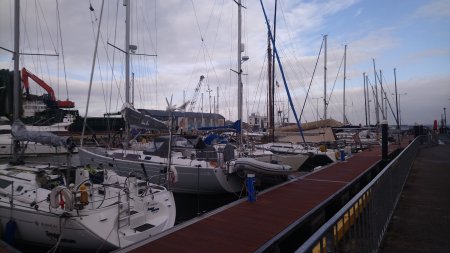
The Harbour

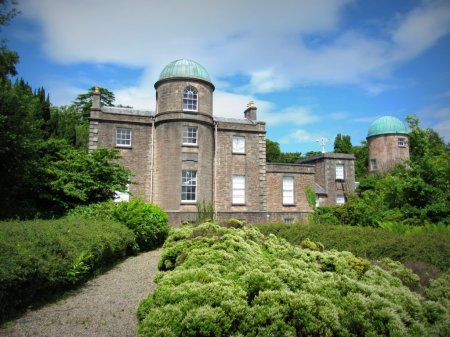
The Venue.

Update: I’m back in the B&B on Nun’s Island. The talk seems to have gone down quite well. Thanks to Galway Astronomy Club for the invitation, for the very warm reception, and for the very interesting questions afterwards!

September 1st, 1939

Posted in Uncategorized with tags , , on September 1, 2019 by telescoper

Today, September 1st 2019, is the 80th anniversary of the Nazi invasion of Poland that led to the outbreak of World War 2. Although I have posted it before, this poem by W.H. Auden seems a good wsy to mark the event.

I sit in one of the dives
On Fifty-second Street
Uncertain and afraid
As the clever hopes expire
Of a low dishonest decade:
Waves of anger and fear
Circulate over the bright
And darkened lands of the earth,
Obsessing our private lives;
The unmentionable odour of death
Offends the September night.

Accurate scholarship can
Unearth the whole offence
From Luther until now
That has driven a culture mad,
Find what occurred at Linz,
What huge imago made
A psychopathic god:
I and the public know
What all schoolchildren learn,
Those to whom evil is done
Do evil in return.

Exiled Thucydides knew
All that a speech can say
About Democracy,
And what dictators do,
The elderly rubbish they talk
To an apathetic grave;
Analysed all in his book,
The enlightenment driven away,
The habit-forming pain,
Mismanagement and grief:
We must suffer them all again.

Into this neutral air
Where blind skyscrapers use
Their full height to proclaim
The strength of Collective Man,
Each language pours its vain
Competitive excuse:
But who can live for long
In an euphoric dream;
Out of the mirror they stare,
Imperialism’s face
And the international wrong.

Faces along the bar
Cling to their average day:
The lights must never go out,
The music must always play,
All the conventions conspire
To make this fort assume
The furniture of home;
Lest we should see where we are,
Lost in a haunted wood,
Children afraid of the night
Who have never been happy or good.

The windiest militant trash
Important Persons shout
Is not so crude as our wish:
What mad Nijinsky wrote
About Diaghilev
Is true of the normal heart;
For the error bred in the bone
Of each woman and each man
Craves what it cannot have,
Not universal love
But to be loved alone.

From the conservative dark
Into the ethical life
The dense commuters come,
Repeating their morning vow;
‘I will be true to the wife,
I’ll concentrate more on my work,’
And helpless governors wake
To resume their compulsory game:
Who can release them now,
Who can reach the dead,
Who can speak for the dumb?

All I have is a voice
To undo the folded lie,
The romantic lie in the brain
Of the sensual man-in-the-street
And the lie of Authority
Whose buildings grope the sky:
There is no such thing as the State
And no one exists alone;
Hunger allows no choice
To the citizen or the police;
We must love one another or die.

Defenseless under the night
Our world in stupor lies;
Yet, dotted everywhere,
Ironic points of light
Flash out wherever the Just
Exchange their messages:
May I, composed like them
Of Eros and of dust,
Beleaguered by the same
Negation and despair,
Show an affirming flame.

Phase Correlations and the LIGO Data Analysis Paper

Posted in Bad Statistics, The Universe and Stuff with tags , , , on September 1, 2019 by telescoper

I have to admit I haven’t really kept up with developments in the world of gravitational waves this summer, though there have been a number of candidate events reported in the third observing run (O3) of Advanced LIGO  which began in April 2019 to which I refer you if you’re interested.

I did notice, however, that late last week a new paper from the LIGO Scientific Collaboration and Virgo Collaboration appeared on the arXiv. This is entitled A guide to LIGO-Virgo detector noise and extraction of transient gravitational-wave signals and has the following abstract:

The LIGO Scientific Collaboration and the Virgo Collaboration have cataloged eleven confidently detected gravitational-wave events during the first two observing runs of the advanced detector era. All eleven events were consistent with being from well-modeled mergers between compact stellar-mass objects: black holes or neutron stars. The data around the time of each of these events have been made publicly available through the Gravitational-Wave Open Science Center. The entirety of the gravitational-wave strain data from the first and second observing runs have also now been made publicly available. There is considerable interest among the broad scientific community in understanding the data and methods used in the analyses. In this paper, we provide an overview of the detector noise properties and the data analysis techniques used to detect gravitational-wave signals and infer the source properties. We describe some of the checks that are performed to validate the analyses and results from the observations of gravitational-wave events. We also address concerns that have been raised about various properties of LIGO-Virgo detector noise and the correctness of our analyses as applied to the resulting data.

It’s an interesting paper that gives quite a lot of detail, especially about signal extraction and parameter-fitting, so it’s very well worth reading.

Two particular things caught my eye about this. One is that there’s no list of authors anywhere in the paper, which seems a little strange. This policy may not be new, of course. I did say I haven’t really been keeping up.

The other point I’ll mention relates to this Figure, the caption of which refers to paper [41], the famous `Danish paper‘:

The Fourier phase is plotted vertically (between 0 and 2π) and the frequency horizontally. A random-phase distribution should have the phases uniformly distributed at each frequency. I think we can agree, without further statistical analysis,  that the blue points don’t have that property!  Of course nobody denies that the strongly correlated phases  in the un-windowed data are at least partly an artifact of the application of a Fourier transform to a non-stationary time series.

I suppose by showing that using a window function to apodize the data removes phase correlations is meant to represent some form of rebuttal of the claims made in the Danish paper. If so, it’s not very convincing.

For a start the caption just says that after windowing resulting `phases appear randomly distributed‘. Could they not provide some more meaningful statistical statement than a simple eyeball impression? The text says little more:

In addition to causing spectral leakage, improper windowing of the data can result in spurious phase correlations in the Fourier transform. Figure 4 shows a scatter plot of the Fourier phase as a function of frequency … both with and without the application of a window function. The un-windowed data shows a strong phase correlation, while the windowed data does not.

(I added the link to the explanation of `spectral leakage’.)

As I have mentioned before on this blog, the human eye is very poor at distinguishing pattern from randomness. There are some subtleties involved in testing for correlated phases (e.g. because they are periodic) but there are various techniques available: I’ve worked on this myself (see, e.g., here and here.). The phases shown may well be consistent with a uniform random distribution, but I’m surprised the LIGO authors didn’t present a proper statistical analysis of the windowed phases to prove beyond doubt the point they seem to be trying to make.

Then again, later on in the caption, there is a statement that `the phases show some clustering around the 60 Hz power line’. So, on the one hand the phases `appear random’, but on the other hand they’re not. There are other plausible clusters elsewhere too. What about them?

I’m afraid the absence of quantitative detail means I don’t find this a very edifying discussion!