I heard this moving anti-war song performed by Liam Clancy on the radio yesterday on the 10th anniversary of his death and thought I’d share it here.
Follow @telescoperArchive for December, 2019
And the Band played Waltzing Matilda
Posted in Music with tags And the Band played Waltzing Matilda, Liam Clancy on December 5, 2019 by telescoperR.I.P. Bob Willis (1949-2019)
Posted in Cricket with tags Bob Willis, cricket on December 4, 2019 by telescoperJust back from a lecture to find news of the death at the age of 70 of former England fast bowler and captain Bob Willis. I’m sure I’m not the only person who is now reminiscing about that day at Headingley in 1981 when Australia needed only 130 to win and, as Wisden later described it, “Willis ran in to bowl as if the Devil were at his heels”. As Christopher Martin-Jenkins wrote:
With his Test career in doubt for the umpteenth time, Willis, of the big heart and vicious bounce, gave it everything he knew. Brushing aside the cost of regular no-balls, he bowled at fierce pace to a shorter length and a straighter line than in the first innings. And suddenly Australia’s foundation crumbled…
R.I.P. Bob Willis (1949-2019)
Follow @telescoperThe Relativity of Beards
Posted in Beards, History, The Universe and Stuff with tags Albert Einstein, George Francis Fitzgerald, Hendrik Lorentz, special relativity, Thought Experiment on December 4, 2019 by telescoperIn my first-year module on Mechanics and Special Relativity, I’ve just moved on to the part about Special Relativity and this afternoon I’m going to talk about the Lorentz-Fitzgerald contraction or, as it’s properly called here in Ireland, the Fitzgerald-Lorentz contraction.
The first thing to point out is that the physicists George Francis Fitzgerald and Hendrik Lorentz, though of different nationality (the former Irish, the latter Dutch), both had fine beards:
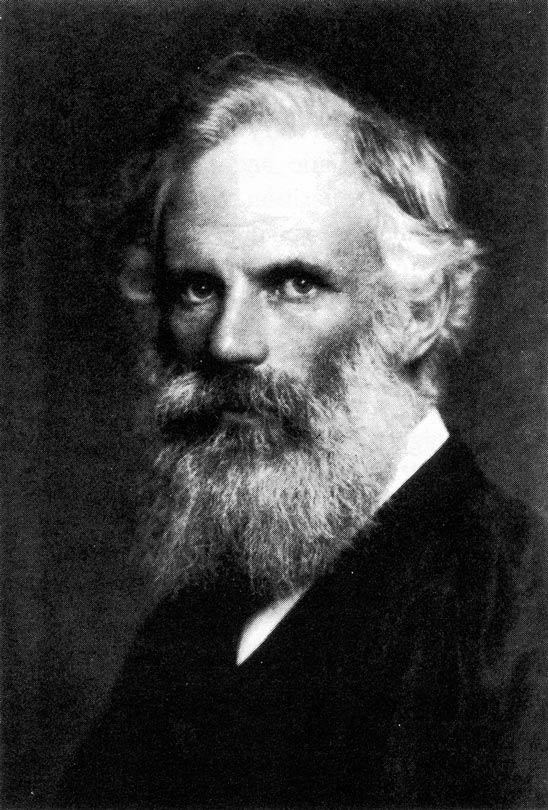
George Francis Fitzgerald (1851-1901)
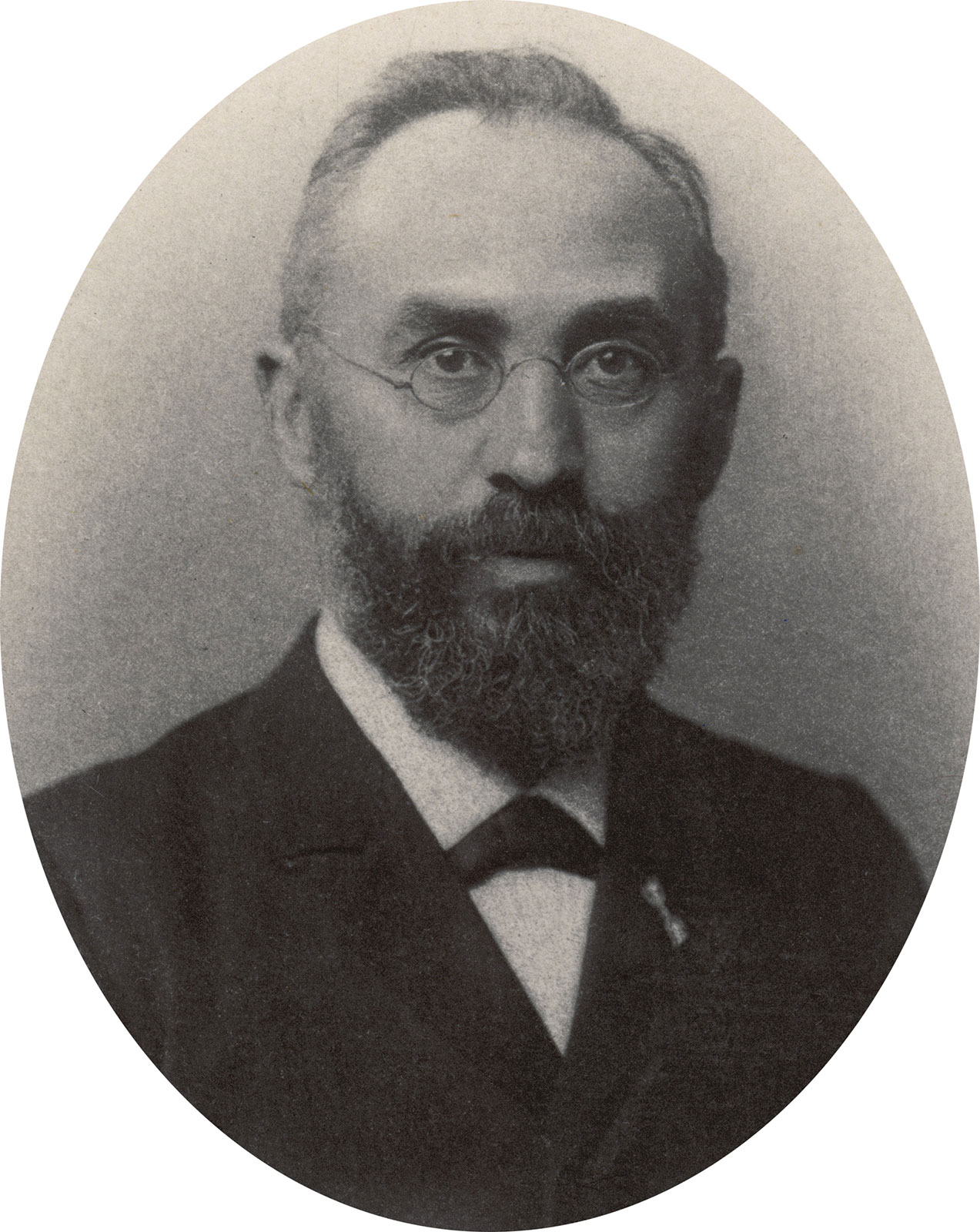
Hendrik Lorentz (1853-1928)
One of the interesting things you find if you read about the history of physics just before Albert Einstein introduced his theory of special relativity in 1905 was how many people seemed to be on the verge of getting the idea around about the same time. Fitzgerald and Lorentz were two were almost there; Poincaré was another. It was like special relativity was `in the air’ at the time. It did, however, take a special genius like Einstein to crystallize all that thinking into a definite theory.
Special relativity is fun to teach, not least because it throws up interesting yet informative paradoxes (i.e. apparent logical contradictions) arising from that you can use to start a discussion. They’re not actually paradoxes really logical contradictions, of course. They just challenge `common sense’ notions, which is a good thing to do to get people thinking.
Anyway, I thought I’d mention one of my favorite such paradoxes arising from a simple Gedankenerfahrung (thought experiment) here.
Imagine you are in a railway carriage moving along a track at constant speed relative to the track. The carriage is dark, but at the centre of the carriage is a flash bulb. At one end (say the front) of the carriage is a portrait of Lorentz and at the other (say the back) a portrait of Fitzgerald; the pictures are equidistant from the bulb and next to each portrait is a clock.The two clocks are synchronized in the rest frame of the carriage.
At a particular time the flash bulb goes off, illuminating both portraits and both clocks for an instant.
It is an essential postulate of special relativity that the speed of light is the same to observers in any inertial frame, so that an observer at rest in the centre of the carriage sees both portraits illuminated simultaneously as indicated by the adjacent clocks. This is because the symmetry of the situation means that light has to travel the same distance to each portrait and back.
Now suppose we view the action from the point of view of a different inertial observer, at rest by the trackside rather than on the train, who is positioned right next to the centre of the carriage as the flash goes off. The flight flash travels with the same speed in the second observer’s frame, but this observer sees* the back of the carriage moving towards the light signal and the front moving away. The result is therefore that this observer sees the two portraits light up at different times. In this case the portrait of Fitzgerald is lit up before the portrait of Lorentz.
Had the train been going in the opposite direction, Lorentz would have appeared before Fitzgerald. That just shows that whether its Lorentz-Fitzgerald contraction or Fitzgerald-Lorentz contraction is just a matter of your frame of reference…
But that’s not the paradoxical thing. The paradox is although the two portraits appear at different times to the trackside observer, the clocks still appear show the same time….
*You have to use your imagination a bit here, as the train has to be travelling at a decent fraction of the speed of light. It’s certainly not an Irish train.
Follow @telescoper
What would you have done?
Posted in Biographical with tags London, London Bridge attack, Narwhal Tusk on December 3, 2019 by telescoperThe shocking news of the violence near London Bridge on Friday 29nd November in which two people were murdered by a terrorist who was himself subsequently killed by police has had me rattled for several days, and I was nowhere near the event. I can’t begin to imagine what it must have been like for those caught up in this awful episode especially those who were wounded or lost loved ones. Condolences to all affected.
I was particularly affected by the images of the civilians who tackled the murderer on London Bridge, one with a fire extinguisher and one with a narwhal tusk he took down from the wall of Fishmonger’s Hall, where the attack began.
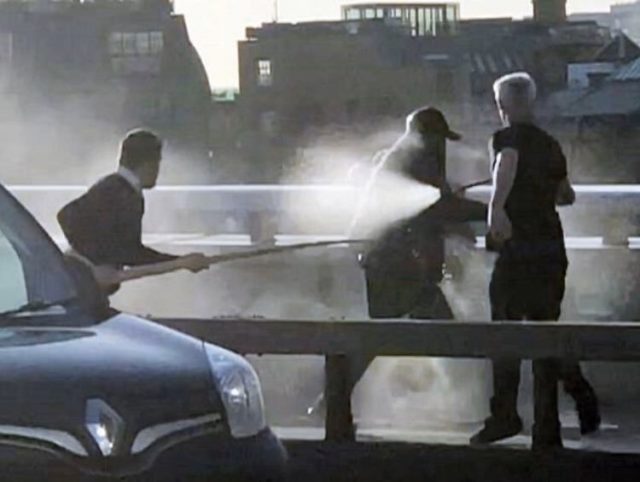
These men showed unbelievable courage putting themselves in positions of extreme danger to keep others from harm. The man with the tusk (who is called Lukasz and is from Poland) received five stab wounds in the course of this desperate struggle but kept going until the police arrived. `Hero’ is an overused word, but it definitely applies to Lukasz.
I always find events like this very disturbing because I can’t resist mentally putting myself in the position of those caught up in them. What would I have done? Would I have had the courage – and the speed of thought – to react the way these men did? Would you?
None of us really know the answer, of course. In the heat of the moment ordinary people can perform extraordinary deeds but, speaking for myself, I don’t think I would have been of much use in that situation. I wish I could believe I was hero material, but I doubt that is the case. Above all, though, I’m just grateful that I’ve never been tested in such a way. Had I been, I suspect I would have been found wanting. On the other hand, it seems likely to me that anyone who is a hero in their own mind is nothing of the sort in reality.
On that note I should mention that after Saturday’s Open Day I went home and had a short nap before dinner. As often seems to be the case when I have an bit of kip in the afternoon I had a rather vivid dream. On that occasion the dream found me using my walking stick to fight off a masked assailant, the stick being a more effective weapon in the dream than I think it would have been in reality!
Anyway, I won’t give the terrorist any notoriety by naming him and I won’t link to the odious comments of the (several) politicians who have sought to make capital out of these terrible events. I’ll just say that Britain needs brave Polish immigrants far more than it needs cowardly Old Etonians.
Follow @telescoperNew Publication at the Open Journal of Astrophysics!
Posted in OJAp Papers, Open Access, The Universe and Stuff with tags Anthony Pettitt, arXiv:1306.2144, Bayesian Inference, CrossRef, Farhan Feroz, Importance Nested Sampling, Mike Hobson, open science, The Open Journal of Astrophysics on December 2, 2019 by telescoperWe have published another new paper at The Open Journal of Astrophysics. We actually published this one last week but (presumably because of the Thanksgiving holiday) it has taken longer than usual to register the DOI with Crossref and I held off mentioning this paper here until everything was sorted.
Here is a grab of the overlay:

The authors are Farhad Feroz and Mike Hobson of the Cavendish Laboratory at the University of Cambridge (UK), Ewan Cameron (now at Oxford, UK) and Anthony N. Pettitt of Queensland University of Technology in Australia.
You can find the accepted version on the arXiv here. This version was accepted after modifications requested by the referee and editor. Because this is an overlay journal the authors have to submit the accepted version to the arXiv (which we then check against the copy submitted to us) before publishing; version 3 on the arXiv is the accepted version (which contains a link to updated software).
It is worth mentioning a couple of points about this paper.
The first is that it is mainly a statistical methods paper rather than astrophysics per se but it does contain applications to astrophysics and cosmology and, more relevantly, was posted on the `Instrumentation and Methods for Astrophysics’ section on the arXiv. The Editorial Board felt that we should consider it for publication because our rule for whether a paper can be considered for publication in the Open Journal of Astrophysics is stated clearly on our instructions for authors:
We apply a simple criterion to decide whether a paper is on a suitable topic for this journal, namely that if it it is suitable for the astro-ph section of the arXiv then it is suitable for The Open Journal of Astrophysics.
So far our publication list is dominated by papers in `Cosmology and Nongalactic Astrophysics’ and `Instrumentation and Methods for Astrophysics’ (which is not surprising given its origin) but we would be very happy to get more submissions from other areas, especially Stellar and Planetary astrophysics. Hint! Hint!
The other point to make is that this paper actually appeared on the arXiv over six years ago and has been widely cited as a preprint but it has never previously been published by a journal. The Editorial Board felt that we should consider it for publication in order to ensure that it is properly curated and citations properly assigned, but we treated it as a new submission and sent it out for review just like any other paper. The review led to some changes and, most importantly, a few updates to the software which you can find here. The editorial process has been quite lengthy for this paper but I think we have done a valuable service to the community in reviewing and publishing this paper.
P.S. Just a reminder that we now have an Open Journal of Astrophysics Facebook page where you can follow updates from the Journal should you so wish..
Follow @telescoperYet another easy physics problem…
Posted in Cute Problems with tags A-level, mechanics, Physics, Science on December 2, 2019 by telescoperLast week I posted a little physics problem that generated a large amount of traffic (at least by the standards of this blog), so I thought I’d try another one.
The examination comprised two papers in those days (and a practical exam); one paper had long questions, similar to the questions we set in university examinations these days, and the other consisted of short questions in a multiple-choice format. This question is one of the latter. Incientally, for those of you who have asked, the multiple-choice examination contained 50 such questions to be answered in 2½ hours, which is three minutes per question.

(You can assume that the acceleration due to gravity is 9.8 ms-2.)
And here is a poll in which you may select your answer:
Comments on or criticisms of the question are welcome through the comments box…
Follow @telescoperTwo Years in Maynooth!
Posted in Biographical, Maynooth on December 1, 2019 by telescoper
Mí na Nollag (the Month of Christmas) is how you say December in the Irish language. Today is the first of that month, which it makes it precisely two years to the day since I started work at Maynooth University. That seems a very long time ago as so much has happened since I wrote my first blog post after arriving in Ireland!
When I first moved here quite a lot of people asked me why I was moving to Ireland so I wrote quite a long post about it here. In december 2017 I wouldn’t have predicted that the UK would still be in the European Union but as I said in that post:
I think it’s still quite possible that the Brexit project will fail under the weight of its own contradictions, but that no longer matters. The damage has already been done. The referendum campaign, followed by the callous and contemptuous attitude of the current UK Government towards EU nationals living in Britain, unleashed a sickening level of xenophobia that has made me feel like a stranger in my own country. Not everyone who voted `Leave’ is a bigot, of course, but every bigot voted for Brexit and the bigots are now calling all the shots. There are many on the far right of UK politics who won’t be satisfied until we have ethnic cleansing. Even if Brexit is stopped the genie of intolerance is out of the bottle and I don’t think it well ever be put back. Brexit will also doom the National Health Service and the UK university system, and clear the way for the destruction of workers’ rights and environmental protection. The poor and the sick will suffer, while only the rich swindlers who bought the referendum result will prosper. The country in which I was born, and in which I have lived for the best part of 54 years, is no longer something of which I want to be a part.
Although two years on Brexit still hasn’t happened, the intervening two years have confirmed my worst fears. England has become increasingly intolerant and xenophobic and the forthcoming General Election looks set to usher in an utterly terrible government of fraudsters, liars and charlatans who will destroy all that is decent in the United Kingdom. The one silver lining I can see is that there is a chance at least that within my lifetime there will be a united Ireland. I’m very much looking forward to the party if that happens!
I’ve had several academic visitors from the UK over the last few months (including two on Friday). None have asked why I moved to Ireland. With UK universities currently on strike and the wider domestic political situation a shitshow of epic proportions, I’m not surprised about that at all. Ireland is by no means a paradise, but I’m glad I’m here.
Follow @telescoper
 In the Dark