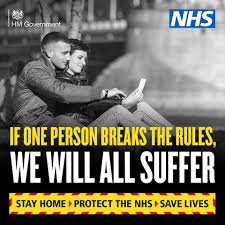
The above message was sent out by the UK Government on April 15. Obviously it’s not meant to apply to anyone by the name of Dominic Cummings..
Follow @telescoper
The above message was sent out by the UK Government on April 15. Obviously it’s not meant to apply to anyone by the name of Dominic Cummings..
Follow @telescoper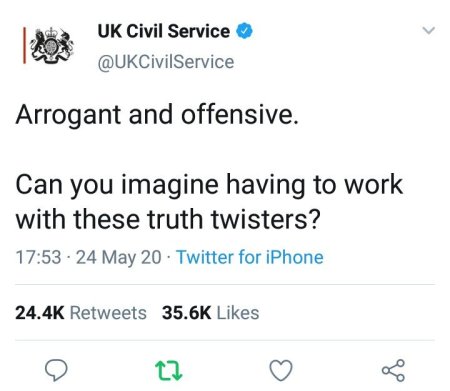
This extraordinary tweet (now deleted) was posted by the official UK Civil Service account after the Prime Minister’s shameful attempt to defend the obvious wrongdoing of his boss, the unelected official Dominic Cummings. It was only live for about ten minutes but was very widely circulated, as the stats show.
Whoever posted the tweet has obviously now lost their job, but it had to be said and I applaud them.
The Cummings affair demonstrates even more clearly that the UK Government considers itself above the rule of law. People need to wake up, quickly.

More immediately, Boris Johnson has just thrown the UK’s response to Covid-19 in the bin. If the rules don’t apply to Cummings why should anyone else obey them?
Follow @telescoperNot a lot of people know that the 1983 film Educating Rita, starring Julie Walters and Michael Caine, though mostly set in Northern England, was entirely shot in Ireland.
For example, the scenes at the University in which Caine’s character Frank works were filmed at Trinity College Dublin. Here’s the facade from an early scene:

A list of many of the outdoor scenes and their actual locations can be found here.
One thing I hadn’t realised until yesterday involves the short part of the film in which Frank is on holiday in France. Here is a still from that sequence.

The setting is St Patrick’s College Maynooth!
Other scenes supposed to be in France were filmed just down the road from Maynooth, in Celbridge.
I never thought Maynooth looked particularly French, but there you go. You live and learn…
Follow @telescoperThere have been dozens of versions of the old song See See Rider and its origins are lost in the mists of time, but I’m pretty sure that the first ever recording was this one, made in October 1924 by the fabulous Gertrude `Ma’ Rainey (vocals) together with a stellar backing group including Louis Armstrong on cornet, Buster Bailey on clarinet and Fletcher Henderson on piano.
Follow @telescoper
It’s amazing how many people there are on social media who seem completely convinced that hydroxychloroquine is a totally effective remedy for Covid-19.
In a (probably vain) attempt to stem the tide of gullibility I’m sharing this link to an article in The Lancet.
If you can’t be bothered to read the paper here is the summary of the conclusions:
We were unable to confirm a benefit of hydroxychloroquine or chloroquine, when used alone or with a macrolide, on in-hospital outcomes for COVID-19. Each of these drug regimens was associated with decreased in-hospital survival and an increased frequency of ventricular arrhythmias when used for treatment of COVID-19.
It’s not a properly randomised trial (which probably should be done at some point) but this study does support the view that hydroxychloroquine has no therapeutic value against COVID-19. Why then have so many fallen for the myth that it has?
Update: June 4th the Lancet article referred to above has now been retracted…

Although we’re still in the middle of this year’s examination period at Maynooth University many of us are having to give considerable thought to how we might manage the forthcoming return to work that is being phased in. The next stage is due to begin on June 8th.
One of the immediate issues to grapple with is how to maintain social distancing for staff and research students. Undergraduates will be an even bigger problem but they’re not due back until September.
Thinking about this I was reminded of an old post I wrote in 2011 about office space many years ago in response to the Higher Education Council for England (HEFCE) report entitled “Performance in Higher Education” which looked into university estates management. Among other things, this report stated that in English universities academics are assigned an average of 13.2 sq m of office space per person, Scottish institutions offer 14.5 sq m, and Welsh universities a “whopping” 15.7 sq m. By contrast the average office space per person across all sectors in the UK 10-12 sq m.
In the time since then I noticed that many universities put up many new buildings, many of them involving large open-plan spaces instead of individual offices. That’s because these are much cheaper to build.
I even came to work in an open-plan office myself for a couple of years in the Data Innovation Research Institute at Cardiff University. I had lovely considerate office mates there but even so it wasn’t always an environment in which it was easy to concentrate. It was of course impossible to conduct confidential discussions or hold tutorials there.
Anyway, you can read my other objections to open-plan offices there. I won’t repeat them here.
For the record I should say that I, and the other permanent teaching staff at Maynooth University all have an individual office. The return to work for us should therefore be relatively easy to manage.
My point on this occasion is that if we are to ensure 2m social distancing for staff that means a minimum of 12.56 square metres (based on a circle of radius 2m) or, more realistically, a square of side 4m, ie 16 square metres. This is assuming a person can move within the space allocated rather than being permanently rooted to the spot.
That level of distancing would mean reducing the capacity of open-plan office spaces considerably. Moreover, operating such spaces in shifts in order to achieve this will probably require deep cleaning between shifts. Shared spaces of any kind, including laboratories, are going to be hard to manage at this time.
Individual offices for the sole use of one staff member would not require any such measures.
All those shiny new University buildings with big open-plan spaces for dozens of staff aren’t looking so clever now are they?
Follow @telescoper
It occurred to me that there might be among the readers of this blog people interested in a job opportunity just announced at the Hamilton Institute at Maynooth University, which exists to promote interdisciplinary research spanning applied mathematics, computer science, engineering, and statistics. Applicants from any of those areas are welcome.
There is a lot more detail including instructions on how to apply here. The deadline is at the end of September 2020.
Follow @telescoperEpisode 5, in which I explain using a golf ball just how empty the Universe is. It is so empty, in fact, that even the crowded places are very empty. And as for the empty places, they’re practically nothing.
Follow @telescoper

by Remedios Varo Uranga (1908-63), painted in 1947, 25.5× 21cm, gouache on cardboard.
Follow @telescoper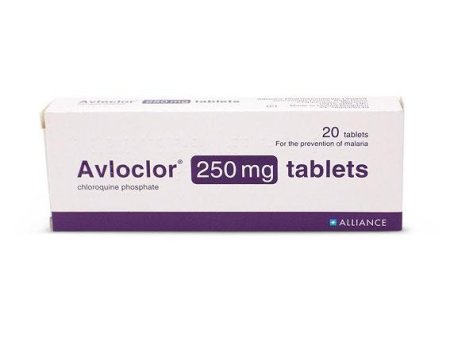
All this business about Donald Trump recommending the drug hydroxychloroquine as a treatment for Covid-19 reminded me of my first trip to India in the 1990s. I hadn’t travelled very much outside Europe before that and was quite nervous, so I bought a couple of books about travelling in India. Among other things, they both recommended taking precautions against Malaria.
I made an appointment with my GP, who asked exactly where I was going and, after consulting a book, he wrote out two prescriptions, for the drugs paludrine and chloroquine. I was to start taking them a week before travelling and continue for two weekd after returning. The paludrine came in small tablets to be taken every day; chloroquine was in a much bigger tablet taken once a week. The brand name for the latter was Avloclor. I have good reason to remember it.
The paludrine was no trouble but the chloroquine was horrible. For one thing it tasted so foul that even with a huge amount of water it was difficult to prevent unpleasant sensations as it went down. Worse, it has a long list of side effects, the mildest of which include nausea, loss of appetite, diarrhoea, upset stomach, stomach pain, rash, itching, and hair loss. More serious symptoms include heart problems, blurred vision, and suicidal thoughts. The list of warnings that came with the tablets was so long that I started to wonder how bad Malaria can be…
I’m told that anti-Malarial drugs are notoriously unpleasant, especially those given to soldiers stationed in theme tropics who presumably get the cheapest sort.
I didn’t experience any of the more serious issues, thank goodness, but I had a selection from the former list, plus a sprinkling of mouth ulcers. I knew these were caused by the chloroquine as I always got them the day after I took the tablet: they went away after a day or two but came back when I took the next week’s dose. Presumably I just couldn’t down the tablet quickly enough to avoid some of it affecting my mouth.
I was in India for about six weeks and was plagued by this for the whole time. I really enjoyed the spicy food while I was there, but found it quite difficult for a couple of days each week.
Now although chloroquine is related to hydroxychloroquine it isn’t quite the same thing. I gather, however, it does have similar side effects. As far as I’m aware there is no evidence that either of these drugs is effective against Covid-19 so in my opinion you would have to be crackers to run the risk of seriously unpleasant or even worse consequences for no therapeutic gain.
Follow @telescoper
 In the Dark