Archive for October, 2020

Open Access, but at what cost?

Posted in Open Access with tags , on October 23, 2020 by telescoper

I couldn’t resist passing on the news that the Max Planck Digital Library has signed an agreement with the Nature Publishing Group to enable authors in about 120 German institutes to publish Open Access articles in Nature journals.

That’s the set up, now here’s the punchline.

Each paper published in this way will cost the authors – or more accurately the authors’ institutes and/or research grants – the sum of €9,500.

No that’s not a misprint. It’s about $11,200, or about £8600. For each paper. Typical article processing charges in the range of $2000 or so are already out of all proportion to the cost of publishing scientific papers; at this level they are simply ridiculous. Recent experiences suggest these charges are out of all proportion to the quality of the editorial process too!

The person who negotiated the arrangement, Ralf Schimmer, Head of Information at the MPDL seems to think it is a good deal. It’s certainly a good deal for Nature Publishing Group, but to anyone else it’s yet another egregious example of profiteering by the academic journal industry. The Academic Journal Racket strikes again!

Why is that so many academics and learned societies fail to see the extent to which they are being ripped off by these publishers? The only explanation I can think of is that it is the same reason why some people pay to produce vanity publications…

Maynooth University Library Cat Update

Posted in Maynooth with tags on October 22, 2020 by telescoper

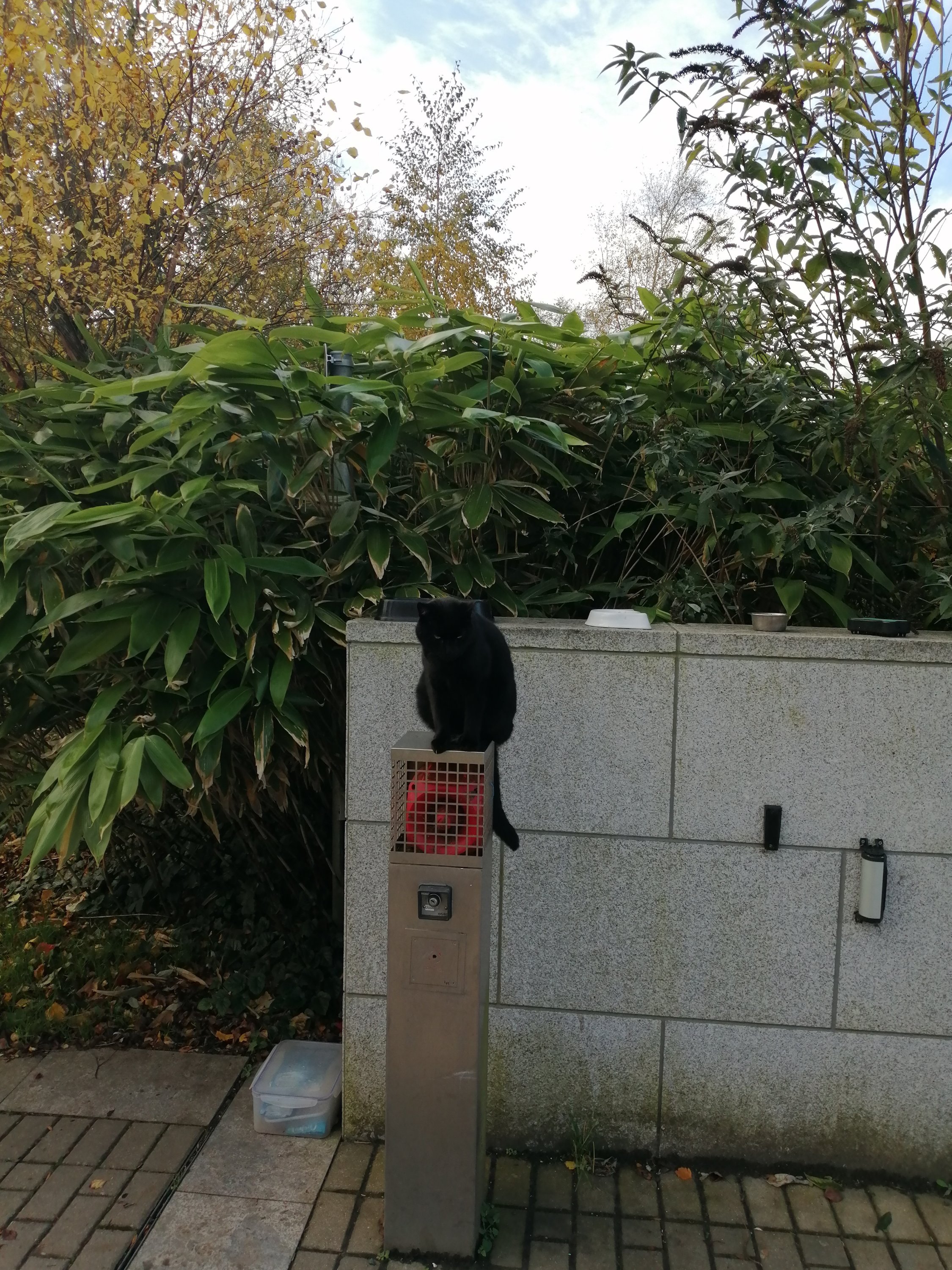
As we enter a six week period of Level 5 restrictions in Ireland I thought I’d post a quick update about Maynooth University Library Cat just to reassure readers that he is doing fine.

Yesterday I passed by his post on the way to my 2pm lecture in Physics Hall, the last such lecture I’ll be giving in that location for at least six weeks. I found him having a post-prandial wash having just scoffed the food on the bowl on the wall to the right. He is clearly in good health. I noticed that he has a plentiful supply of food (see the box to the bottom left) so he’s well set. In any case he won’t be as isolated on campus as in the earlier lockdown in March as a significant number of staff and students are still on campus and several buildings remain open this time, which was not the case before.

R.I.P. James Randi (1928-2020)

Posted in LGBTQ+, The Universe and Stuff with tags , , , , on October 22, 2020 by telescoper

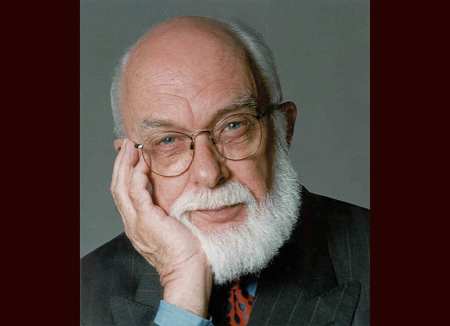
Yesterday I heard the sad news of the death, at the age of 92, of stage conjuror, humanist and famous debunker of charlatans, James Randi.  I guess quite a few of my readers won’t have heard of him, but he was a really interesting character. His real name was Randall James Hamilton Zwinge and he was born in Toronto. He was a professional magician (i.e. a conjuror) with the stage name “The Amazing Randi” who spent most of the last four decades debunking psychics and exposing fraudulent claims of the paranormal. Those of you out there old enough to remember the 1970s will recall the  “paranormalist”  Uri Geller being a household name for his numerous TV appearances bending spoons, stopping clocks and generally exhibiting supernatural powers. Randi exposed these as simple conjuring tricks, and got himself sued for his trouble.

There’s an interesting connection between the Uri Geller phenomenon and physics. In the 1970s, when Geller was at the height of his popularity, a physicist called John G. Taylor took great interest in him and the things that he appeared to be able to do. Professor of applied mathematics at King’s College, London, Taylor was (and remains) a very distinguished scientist and was the first to take the paranormal phenomena displayed by Geller seriously. When Uri Geller visited Britain in 1974, Taylor conducted scientific tests of Geller’s feats of metal bending using all the paraphernalia of modern science, including a Geiger counter. Taylor also experimented with some of the children and adults who claimed to manifest psychic abilities after seeing Uri Geller’s appearances on British television programs. Taylor’s interest in such phenomena was not only in its scientific validation, but also in investigation of the way in which such phenomena take place and the nature of the forces involved. He suggested the phenomena may be some low-frequency electromagnetic effect generated by human beings.

Through the 1970s Taylor was regarded as fully endorsing the paranormal metal bending of Uri Geller, but gradually has made more guarded statements; then in 1980 he largely retracted his support for Geller’s paranormal talents. In 1974 he wrote

The Geller effect—of metal-bending—is clearly not brought about by fraud. It is so exceptional it presents a crucial challenge to modern science and could even destroy the latter if no explanation became available.

Taylor then spent three years of careful investigation of such phenomena as psychokinesis, metal bending, and dowsing, but could not discover any reasonable scientific explanation or validation that satisfied him. He was particularly concerned to establish whether there is an electromagnetic basis for such phenomena. After failing to find this he did not believe that there was any other explanation that would suffice. Most of his experiments under laboratory conditions were negative; this left him in a skeptical position regarding the validity of claimed phenomena.

In contrast to the endorsement in his first book, Superminds, he published a paper expressing his doubts in a paper in Nature (November 2, 1978) titled “Can Electromagnetism Account for Extra-sensory Phenomena?” He followed this with his book Science and the Supernatural (1980) in which he expressed complete skepticism about every aspect of the paranormal. In his final chapter he stated:

We have searched for the supernatural and not found it. In the main, only poor experimentation [including his own], shoddy theory, and human gullibility have been encountered.

Taylor’s investigation of the Geller effect is interesting because it shows that physics doesn’t have all the answers all the time, particularly not when the phenomena in question involve people. Physics research proceeds by assuming that Nature is not playing tricks, and that what can be measured must represent some sort of truth. This faith can be easily exploited by a charlatan. James Randi always argued that scientists aren’t the right people to detect tricks performed by people: this is best left to tricksters. There’s no reason to believe that a theoretical physicist – no matter how brilliant – can spot the way a clever deception is carried out. The best person to see that is a magician, someone like James Randi. Set a thief to catch a thief, and all that…

I wrote a blog post about James Randi about a decade ago because it was not until then, when he had reached the age of 81 that he revealed to the public that he was gay. I feel a bit sad that took him so long to step out of the closet, but I’m sure he was glad he made the decision. From wikipedia I learn that he married his partner José Alvarez in 2013. I hope their time together was happy, and send my condolences to José  on his loss.

Rest in peace, James Randi (1928-2020).
A Question of Phosphine

Posted in Astrohype, The Universe and Stuff with tags , , , on October 21, 2020 by telescoper

Remember all the excitement last month about the claimed detection of phlogiston phosphine in the atmosphere of Venus?

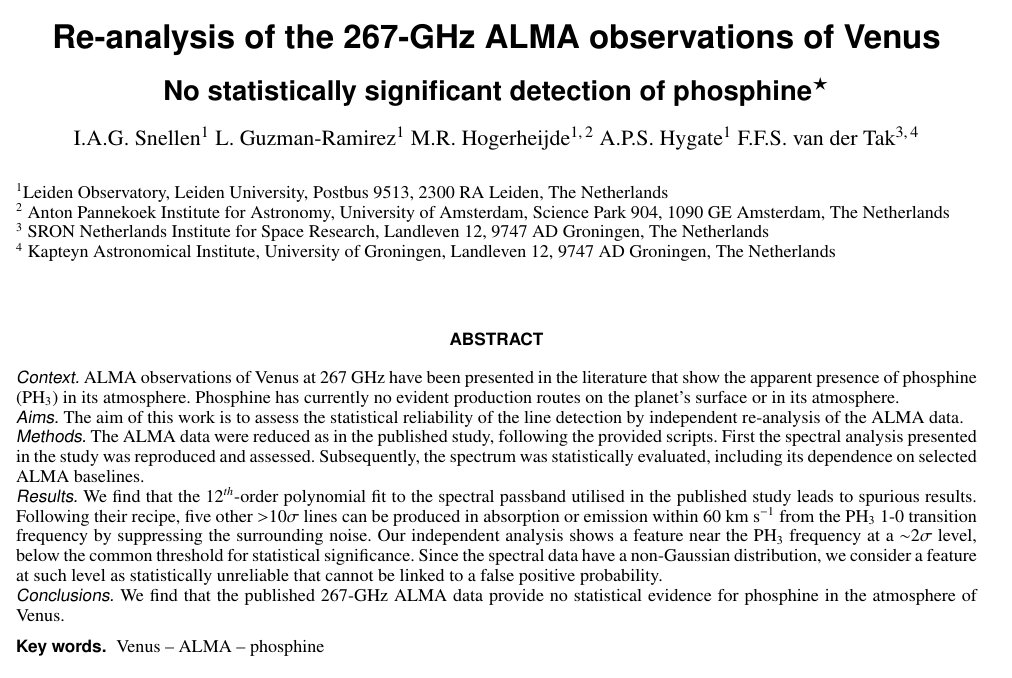
Well, a wet blanket appears to have been thrown over it by a new paper on the arXiv by Snellen et al. Here is the abstract:

The conclusions are very clear, but the paper hasn’t been refereed yet. Let’s see what the authors of the original work have to say. For myself, I think a proper (i.e. Bayesian) analysis of the data is called for…

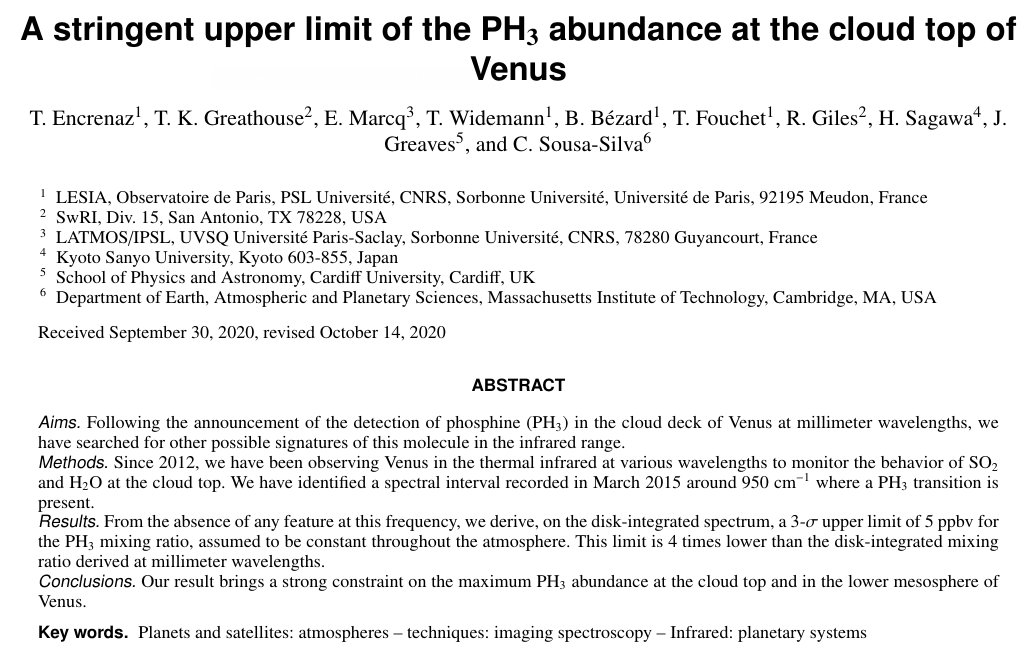
I should also mention in this context another paper on the arXiv from a few days ago, which uses a null detection to place an upper limit on the phosphine abundance.

Note that one of the authors of this second paper is Jane Greaves, who was on the original discovery paper.

Life at Level Five

Posted in Covid-19, Education, Maynooth, Politics with tags , , , on October 20, 2020 by telescoper

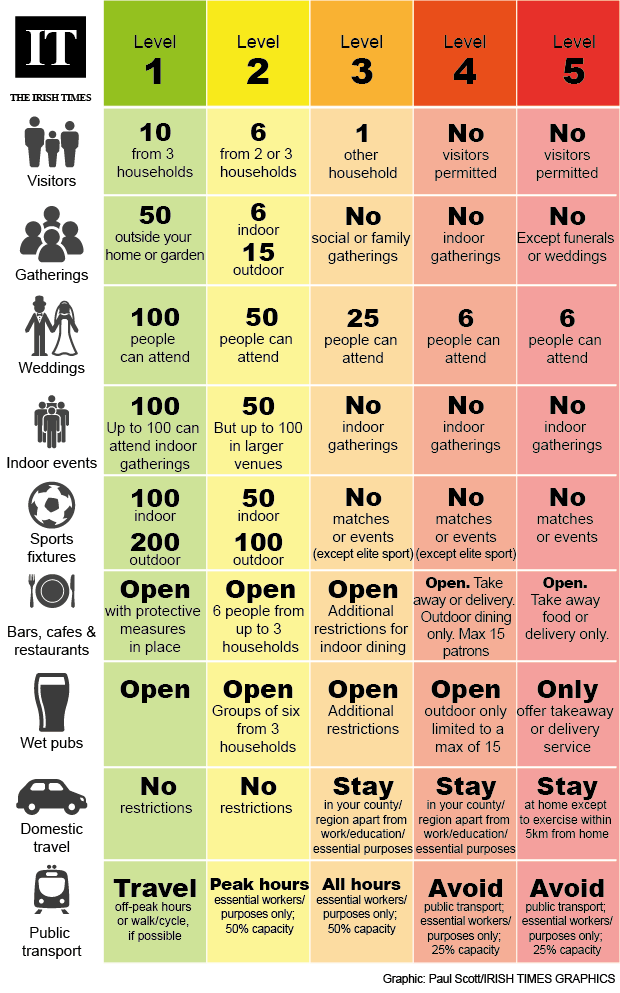
After refusing to do so two weeks ago, last night the Government decided to move all Ireland onto Level 5, the highest level of Covid-19 restrictions, for six weeks (although with some tweaks, e.g. the number of people allowed to weddings):

I think the previous refusal to implement tougher restrictions was a big mistake and has cost two weeks of exponential growth in new cases for no obvious benefit. I thought at the time that moving to Level 5 was inevitable giving the steep growth in numbers:

https://twitter.com/telescoper/status/1313445173142183938

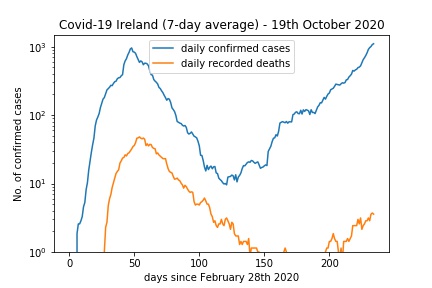
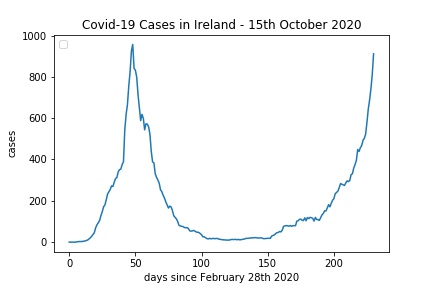
Here, for information is the latest plot of confirmed cases (as of last night):

The 7-day average of new cases is higher than it was at April’s peak, though thankfully the number of deaths is lower. Hospital (and specifically ICU admissions) are however, rising steadily.

We don’t know yet of any specific implications for teaching here at Maynooth University, though it will certainly mean even more teaching moves online. I think my own lectures will continue as Panopto webcasts in much the same way as before, except from my office rather than from a lecture theatre and without the handful of students who have so far been attending them in person. Next week (beginning 26th October) is our Study Week break which offers a bit of time to rearrange things. My first-year module has lectures on Mondays, Tuesdays and Wednesdays. Because the new restrictions kick in at midnight on Wednesday, that lecture will be the last one I do in a lecture theatre for a while. At least I got the best part of four weeks’ worth of lectures in that way.

More generally workers are required to work from home if they can with an exception for “essential services”. The general guidance given here includes:

11. The following services relating to professional, scientific and technical activities:

(a) the provision of engineering, technical testing activities and analysis (including the performance of physical, chemical and other analytical testing of materials and products);

(b) the provision of scientific research and development services;

(c) regulation, inspection and certification services, in accordance with law, of a particular sector by a body created by statute for that purpose.

and

16. The following services relating to education activities:

(a) primary and post primary school;

(b) higher and further education, insofar as onsite presence is required and such education activities cannot be held remotely.

This implies that the campus will not be closed like it was in March, so that this is not going to be a complete lockdown for either research or teaching. Moreover 16(b) does suggest that even laboratory-based teaching may carry on, but we await confirmation on that.


Goodbye, John

Posted in Biographical with tags , , on October 19, 2020 by telescoper

Today, along with many other friends and colleagues, and members of his family I attended (via Zoom) the funeral of my thesis supervisor Professor John D Barrow who passed away on September 26th. This was my first experience of a funeral by Zoom and it felt very strange sitting in my office watching the proceedings. I had a quick look at the list of participants and saw many names I recognized. I suspect many of them were taking a short break from work too. The list was long, so it was a good turnout, virtually speaking. At least some of the closest family members were able to be there, at Westminster College in Cambridge, to pay tribute. The Astronomy Royal, Lord Rees, was also present and he gave a characteristically eloquent eulogy.

Not being of the Christian faith I didn’t participate in the prayers, but as the coffin was carried out at the end for the committal I found myself saying out loud “Goodbye, John”. I’d like to take this opportunity to thank John’s family, especially Elizabeth, for giving me this chance to say goodbye.

UPDATE: An obituary of John, written by Michael Rown-Robinson, is now available online on the Guardian website.


Going Dutch: a new approach to Research Funding?

Posted in Education, Maynooth with tags , on October 18, 2020 by telescoper

My attention was recently drawn to a proposal for a radical overhaul of the research funding system in the Netherlands by the Dutch Academy of Sciences.

The document I linked to above is in Dutch but the principles are easily understood. To prevent academics having to waste so much time writing proposals that have a very limited chance of success, it is proposed to introduce “rolling grants” for which no application is needed.

Every new Assistant Professor (equivalent to Lecturer) would be given €250K working capital to be used to fund research as the person sees fit. This would rise to €375K on promotion to Associate Professor (equivalent to Senior Lecturer/Reader), and €500K for a full Professor.

This system would have the advantage of giving all new staff the chance to establish their research without having to go through the lottery of a responsive-mode grant system while also ensuring that academics would have the freedom to choose their own priorities without having to follow an agenda imposed by external bodies (which is often influenced politically in such a way as to stifle original research in fields deemed not to be of immediate economic benefit, which is particularly true here in Ireland).

The creation of such a scheme guaranteeing a baseline of research funding for all academic staff would cost money beyond the savings made by reducing the wasted effort associated with the writing and reviewing of lengthy applications. That is the main reason it will not be implemented in Ireland where the Government sees University funding as a very low priority. I cite the almost complete neglect of the Third Level sector in last week’s budget, apart from the €250 given to each student in the hope that it will stop them complaining about having most of their teaching switched online…

It does seem to me to be a completely crazy system that employs people on the basis of their research experience but gives them no resources to carry out their research. For myself I’m not complaining so much about lack of funding – as a theorist my research is very cheap – but of lack of that most precious resource of all, time.

Pictures from a Mediaeval Bestiary, No. 78 – The Snail

Posted in Uncategorized on October 17, 2020 by telescoper

Covid-19: Out of Control

Posted in Covid-19, Maynooth, Politics with tags , , on October 16, 2020 by telescoper

The latest Covid-19 figures for Ireland make grim reading. Yesterday the number of new cases was the highest it has ever been since the start of the pandemic in March (though part of this is due to increased testing). The 7-day average is climbing relentlessly. It’s not the incidence rate itself which is the cause of alarm, it’s the fact that it is on an exponential trajectory again (with a doubling time only just over a week):

Yesterday evening the National Public Health Emergency Team advised that the entire country should immediately move to Level 5 for a period of six weeks.

Will the Government agree to this escalation? NPHET advised such a move less than a fortnight ago, but to no avail. Since then the situation has deteriorated more quickly than anyone predicted. It’s easy to be wise after the event but I think that decision was a very bad mistake. Even if they agree now, precious time will have been lost. There are now so many cases that contact tracing is effectively impossible, and hospitals are already feeling the strain. Unless something drastic is done now, by next month the health system will be overloaded. In my opinion it will be a scandal if there is no immediate move to Level 5.

Failing to move to Level 5 earlier this month was the second big mistake this Government has made. The first was the decision taken in June to wind down restrictions starting from 20th July, earlier than the original ‘Roadmap’ indicated. That was a mistake because it sent out a message that the pandemic was almost over. The change in behaviour among certain sectors of the public was immediate. Complacency set in, and the second wave started. It seems to me that the Roadmap was working so there was no need to change it.

Most European countries are experiencing a `second wave’ of Covid-19, in many cases worse than the first, so I’m not saying that adhering to the original Roadmap would have prevented a similar phenomenon in Ireland. I am saying that it could have been slowed considerably. By loosening the constraints too quickly and then not applying them again quickly enough, in both cases bowing to pressure from vested interests, the Government has made a difficult situation far worse than it need have been. They’ve let the situation get out of control and now nobody knows how it is going to end.

Thought for the Day

Posted in mathematics, Maynooth on October 15, 2020 by telescoper