Archive for May, 2023

Announcing the Maynooth MSc in Theoretical Physics & Mathematics!

Posted in Education, Maynooth on May 9, 2023 by telescoper

About a month ago I used the medium of this blog to give a sneak preview of our new MSc course in Theoretical Physics & Mathematics which had just been approved. Well, the course details are now public and now it is open for applications. For further details see here.

The new postgraduate course will be run jointly between the Departments of Theoretical Physics and Mathematics & Statistics, with each contributing about half the material. The duration is one calendar year (full-time) or two years (part-time) and consists of 90 credits in the European Credit Transfer System (ECTS). This will be split into 60 credits of taught material (split roughly 50-50 between Theoretical Physics and Mathematics) and a research project of 30 credits, supervised by a member of staff in a relevant area from either Department.

This new course is a kind of follow-up to the existing undergraduate BSc Theoretical Physics & Mathematics at Maynooth, also run jointly. We think the postgraduate course will appeal to many of the students on that programme who wish to continue their education to postgraduate level, though applications are very welcome from suitably qualified candidates who did their first degree elsewhere.

Postgraduate admissions in Ireland operate differently from the UK, in that there is a central system in Ireland (called PAC) that is similar to the undergraduate admissions system; in the UK PG courses are dealt with by individual institutions. You will need to apply online via PAC after the following the instructions here. The requisite PAC code for the full-time version of the course is MHQ56.

Please note also that Maynooth University offers Taught Masters Scholarships for high-flying applicants. If you apply by 30th June you may be eligible for one of these!

Euclid’s Cosmic Mystery Contest!

Posted in Euclid, The Universe and Stuff with tags , on May 9, 2023 by telescoper

I just saw the announcement of this competition and thought I’d share it here to encourage people to enter:

The winner gets a trip to European Space Operations Centre (ESOC) in Darmstadt which will be Mission Control for Euclid, which will be launched from Florida in July.

You can find out more about the competition, including the rules and instructions on how to enter, here.

Here are some suggestions:

You could choose to bake a cake, cross stitch, design a fabric, paint, draw, dance or anything else that comes to mind that symbolizes these proportions 5-25-70 and helps others understand just how much of the Universe we know and don’t know.

Once you have created your creation you have to put an image or a video of it on social media. For more ideas see here.

P.S. The Universe’s vital statistics of 5-25-70 would seem to present quite a challenge if someone were to design an outfit!

A Resignation Issue

Posted in Open Access with tags , , on May 8, 2023 by telescoper

I see the Observer has picked up on a story I wrote about a couple of weeks ago concerning the resignation of the entire Editorial Board of an Elsevier journal called Neuroimage. This story was reported in Nature on 21st April. Here is a quote from the Observer article:

Neuroimage, the leading publication globally for brain-imaging research, is one of many journals that are now “open access” rather than sitting behind a subscription paywall. But its charges to authors reflect its prestige, and academics now pay over £2,700 for a research paper to be published. The former editors say this is “unethical” and bears no relation to the costs involved.

Observer, 7th May 2023

“Unethical” is far too polite a word. Apparently the former editors intend to set up their own Open Access journal instead. Good!

This action demonstrates that researchers are starting to realize that the current system of ‘Gold’ Open Access is indeed a scam, and it’s a terrible shame that we have ended up having it foisted upon us. Fortunately, being forced to pay APCs of many thousands of euros to publish their papers, researchers are at last starting to realize that they are being ripped off.

The Editorial Board of Neuroimage and its sister journal Neuroimage: Reports resigned in protest at the `extreme’ APC levels imposed by the publisher, Elsevier, which they claim is being “too greedy”. Note however that the level of APC reported in the quote above is by no means exceptionally large.

I’m sure other academics will follow this example, as it becomes more and more obvious that the current arrangements are unsustainable. Previously the profits of the big publishers were hidden in library budgets. Now they are hitting researchers and their grants directly, as authors themselves now have to pay, and people who previously hadn’t thought much about the absurdity of it all are now realizing what a racket academic publishing really is.

If you’re an Editor of a journal that charges “article processing” fees of several thousand euros per paper then I think you should be considering your position…

Changes in the Calendar

Posted in Biographical, Cardiff, Education, Maynooth on May 7, 2023 by telescoper

As I often do on a Sunday morning, I just sat down to look at my timetable for the forthcoming week. Until Friday 12th this is “Study Week” and my Outlook calendar is noticeably less cluttered than recently because teaching ended on Friday 5th May. Although I had a lecture and a tutorial on Friday morning I did find Campus was already much quieter than usual. Many students at Maynooth University rent rooms here for only part of the week and Fridays are generally quiet because some students leave on Thursday evening if they don’t have classes on Fridays, and I suppose some that do usually have Friday classes will have had them cancelled as the lecturer had finished the syllabus. My two classes on Friday were actually for revision, actually.

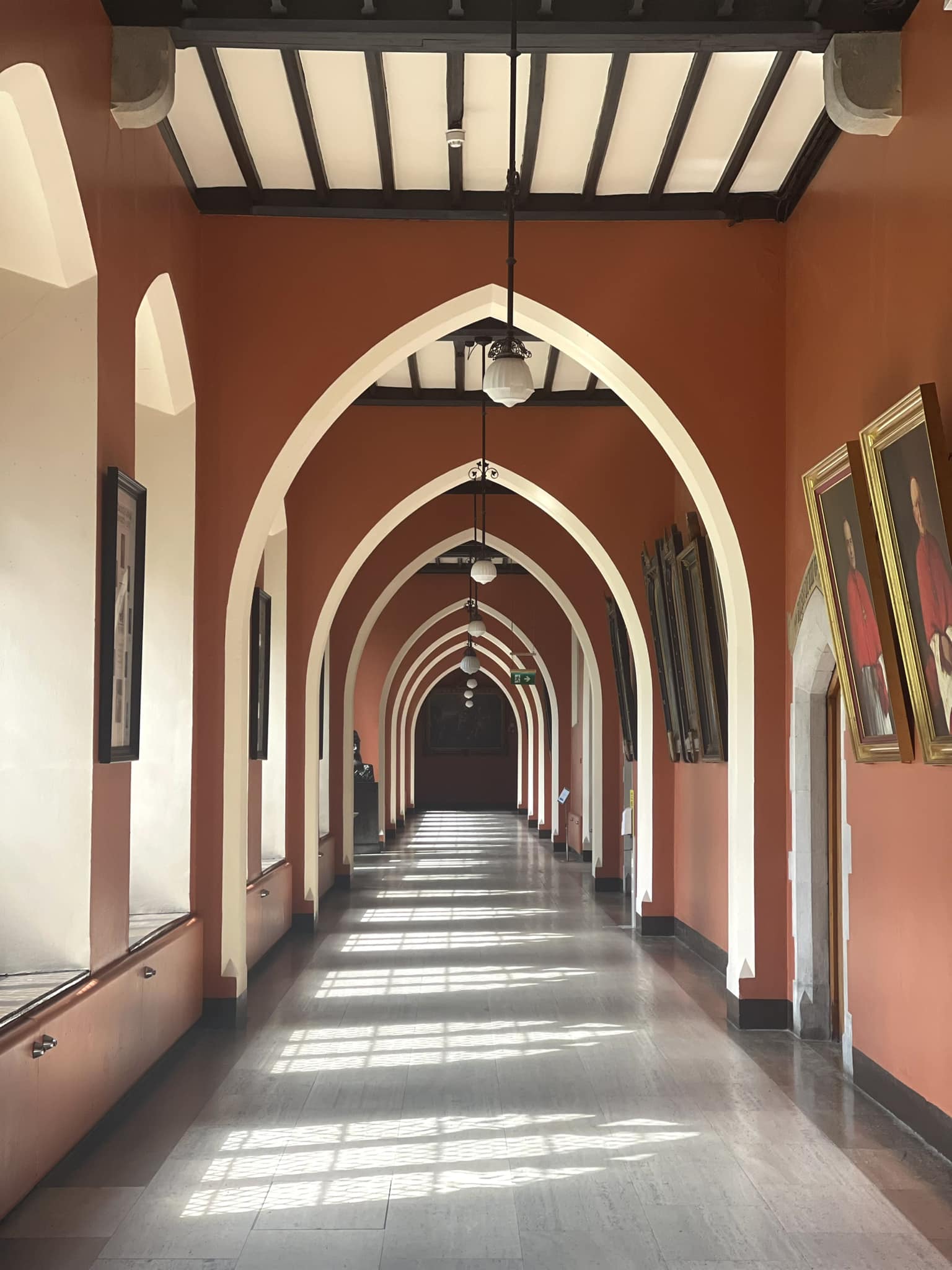
At any rate the cloisters of St Patrick’s House looked rather empty on Friday as I headed for a quick lunch in Pugin Hall before the final-year project presentations in the afternoon.

Incidentally, colleagues in other departments have reported a drastic decline in lecture attendance over the last few weeks. I can’t say I’ve noticed that myself but my classes are by no means statistically representative.

I will be doing two more revision classes next week, one for Advanced Electromagnetism and one for Computational Physics. don’t know how many will attend these but it’s the students’ last chance to ask me questions before the examinations, which are on Thursday 18th May and Saturday 20th May respectively. Friday 12th May marks the start of the Examination Period – for some reason this always starts on a Friday – during which many teaching rooms are unavailable so we don’t usually do revision classes beyond Study Week.

I won’t be teaching either of these modules next academic year. In fact I won’t be teaching anything next year, as I’ll be off on sabbatical. I’ll miss the teaching and am particularly sad that I won’t see the class in my 3rd year module again, unless some of them remain for Masters or PhD studies, as they will complete their studies next year while I am away. Since I am officially on leave from 1st September 2023, my final teaching-related responsibility for this year will be marking the repeat examinations in August.

In case anyone asks, I don’t know who’ll be delivering the modules I did this year, but the handover shouldn’t be too hard as there are complete sets of notes for all of them (and plenty of problem sets).

I don’t know which modules I’ll be giving when I return either, but I hope there’s an opportunity for a bit of a reshuffle. In particular, I’ve been doing Computational Physics for six years now and maybe it’s time for a fresh pair of hands on that one. It’s not that I dislike it at all – in fact I like it – but I think there are good arguments for a refresh every now and again. I’ve always taken the view that anyone employed in a physics department should be able to teach any subject up to the 3rd year so I don’t particularly mind what happens next. At any rate it would be nice to have a go at a few different things before I retire. Who knows, I might even get to teach some astrophysics or cosmology at some point?

It’s not just about undergraduate teaching, of course. Study Week or not I still have the regular meetings with my research students, a cosmology discussion group and a Euclid telecon. But my main objective between now and the arrival of my examination scripts to mark is to finish two manuscripts that are very late. I’ve no excuse for that other than poor time management by myself.

Looking further ahead, the launch of Euclid is scheduled for the first half of July and I hope to find time to organize some sort of public event related to this. I’m also attending the Euclid Consortium annual meeting in Copenhagen at the end of June. I’ve also been invited to contribute to the UK National Astronomy Meeting, which is in early July this year, in Cardiff…

A Day of Celebration (?)

Posted in Biographical, Politics with tags , on May 6, 2023 by telescoper

The latest version of Private Eye (the cover of which is shown above) arrived in the post yesterday. I thought I’d leave it until today to read it. Apparently there’s some sort of event happening in London which appears to be causing some disruption to traffic. I’m not watching RTÉ One, the main TV channel here in Ireland, but it seems to be showing a special four hour long episode of Coronation Street. I’m surprised there’s so much interest over here in what’s going on in Poundland.

I’m told that today’s events are a celebration of “British values”, which means locking up peaceful protestors who disagree with the Establishment. On the bright side, taunting the population with a conspicuous display of wealth in the middle of a cost-of-living crisis while the rivers fill with shit and the country crumbles all around will do wonders for those campaigning for a Republic.

I already live in a Republic, of course, and today I’ll be celebrating not the Coronation but the end of teaching term. I’ll be doing a bit of gardening, watching the URC quarter finals, cooking myself a self-indulgent dinner and of course doing the Private Eye crossword. Oh, and toasting the Tories’ resounding defeat in Thursday’s local elections

Assessment in the Age of AI

Posted in Education, Maynooth with tags , , , , on May 5, 2023 by telescoper

The arrival of AI bots such as ChatGPT continues to cast a shadow over student assessment in the third-level institutions, as academics are realizing that these algorithms are getting better and better at the tasks asked of students, especially straightforward writing tasks (perhaps including simple calculations) as well as the traditional student essay.

Before going further I have to admit that I’ve never really understood the obsession in some parts of academia with “the Essay” as a form of assessment. I agree that writing skills are extremely important but they’re not the only skills it is important for students to acquire during the course of a degree. Learning how to do things seems to me to be more important than writing about things other people have done. While forms of assessment in science subjects have evolved considerably over the last 50 years, some other domains still seem to concentrate almost exclusively on “The Essay”.

Systems such as ChatGPT can produce text on demand (with a variable degree of success) using sources on the internet. This is not great at dealing with technically complex specialist topics but can produce plausible if somewhat superficial offerings in many circumstances where something less demanding is required. I know that staff in some science departments find that these systems can score essentially 100% on their first-year coursework assignments. Urgent meetings are being called and working groups being set up about this. Panic is in the air.

My immediate response to the situation is very twofold:

  1. Don’t panic!
  2. If an assessment can be aced by a bot then it should not contribute towards credit unless the students do it in a supervised environment, e.g. as an in-class test rather than a take-home assignment.
  3. More importantly, if a student with only a superficial knowledge can score a high mark on an assessment, what is the value of the assessment anyway?

It seems to me that the intervention of ChatGPT should cause academics to reflect much more deeply on what it is that they are trying to assess, and that should lead to new forms of assessment that can’t be performed by AI bots as well as the scrapping of many existing assessment activities, many of which (in my opinion) are pointless. There is so much inertia in academia, however, that such a radical rethink will be forthcoming on the timescale required.

All of which waffly nonsense reminded me of a joke I heard many years ago.

Q: How many academics does it take to change a lightbulb?

A: What do you mean, change?

Sisters, Lovers & Traitors: INO in Maynooth

Posted in Maynooth, Opera with tags , , , , , , , on May 4, 2023 by telescoper

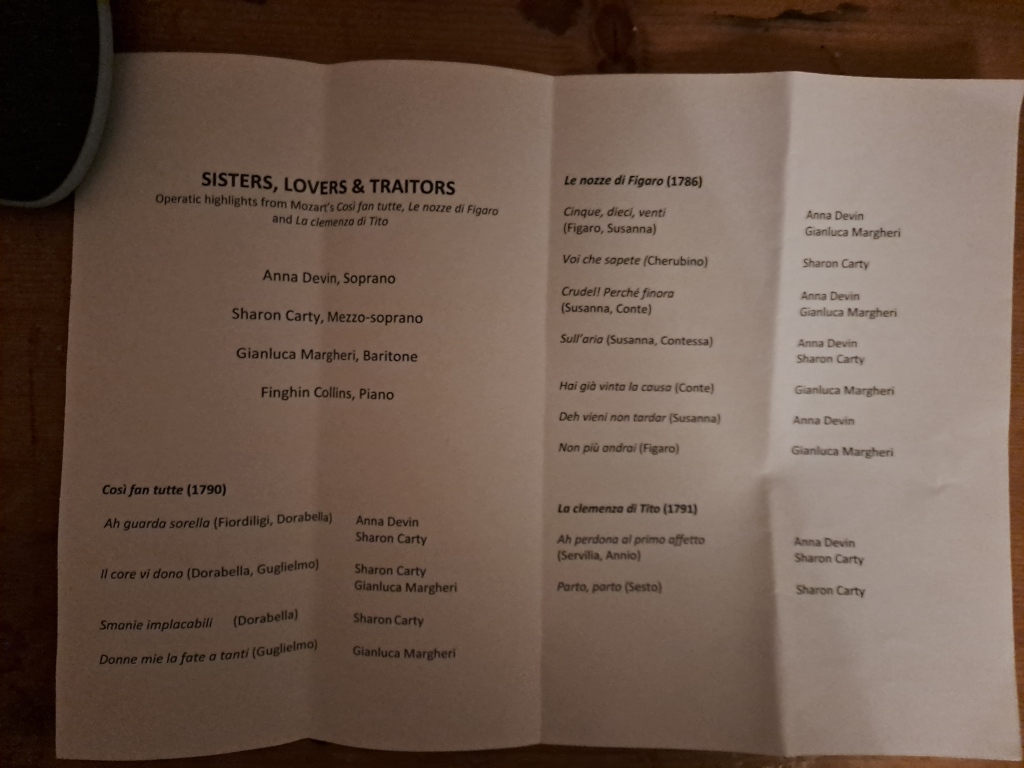
I don’t often get the chance to attend a concert in Maynooth, but I did this evening when I went to the Aula Maxima on Maynooth University South Campus for a performance of arias and duets from Mozart operas by singers from Irish National Opera.

The artists involved were Anna Devin (Soprano), Sharon Carty (Mezzo), and Gianluca Margheri (Baritone) . All were excellent, but I particularly loved Italian Gianluca Margheri’s richly sonorous voice. Fine accompaniment was provided on the piano by Finghin Collins (who, incidentally, last featured on this blog in an item about a very different type of music).

INO are currently rehearsing their forthcoming production of Cosi fan tutte which provided the first four pieces; it features two sisters of course, Fiordiligi and Dorabella. These were followed by a selection from Le nozzle di Figaro, including the lovely duet Sull’aria. The final two pieces were from La clemenza di Tito, a much less familiar work, which was composed at roughly the same time as The Magic Flute and is arguably Mozart’s final opera.

The encore was a trio performance of Là ci darem la mano from Don Giovanni, usually a duet but in this case with the part of Zerlina shared between Anna Devin and Sharon Carty.

It was a very enjoyable programme, very well received by the audience, and an ideal break from a busy end-of-term schedule, especially on a rainy night like tonight. Now, I must remember to get tickets for Cosi fan tutte to give me a break from examination marking!

Swan Update

Posted in Maynooth with tags , , on May 4, 2023 by telescoper

Not long ago I posted an item about the swans of Maynooth, expressing anticipation of the forthcoming cygnets. Well, they have arrived at last; seven in total. Here’s a picture I took this morning near the harbour and one a couple of days ago further along the Royal Canal.

The family probably won’t go far from their nest while the cygnets are very small, and the adults will stay very close to their little ones for quite a while, but soon they’ll be taking longer journeys and the youngsters will roam a little on their own. I spoke to two guys who work by the canal who have a little shed next to the harbour on the Royal Canal. They told me that when they’ve grown up a bit the cygnets regularly knock on the door of the shed to ask for food. They also warned me not to make any sudden movements near the Swan family, as Mr Swan can be very aggressive. All of them were very relaxed when I saw them, however.

P.S. It is interesting that the word “swan” is Germanic (cf. Schwann) while the word “cygnet” is via French cygne (cf. Latin cygnus, Greek κύκνος); the Irish word for “swan” is “eala”.

A Midweek Lecture

Posted in Biographical, Education with tags , , , , on May 3, 2023 by telescoper

It’s halfway through the last week of teaching term, and it’s been a busy day. Earlier on, I gave my final “proper” lecture of the Semester in Advanced Electromagnetism, about the reflection and transmission of electromagnetic waves at interfaces. That’s basically optics, but done in terms of the electric and magnetic fields. I have two more classes this week, on Friday, but these will be revision tutorials devoted to going through past examination questions etc. I’ve had special requests for problems involving conformal transformations and the method of images, so that should be fun!

Meanwhile, my Computational Physics class are working hard on their projects, due in on Friday. My office is opposite the lab so I’ve had a few students coming to ask for help, but mostly they are just beavering away. I hope most of them are writing up by now. I just did a quick check and nobody has submitted anything yet. I suppose that, as usual, they will all wait until the last minute!

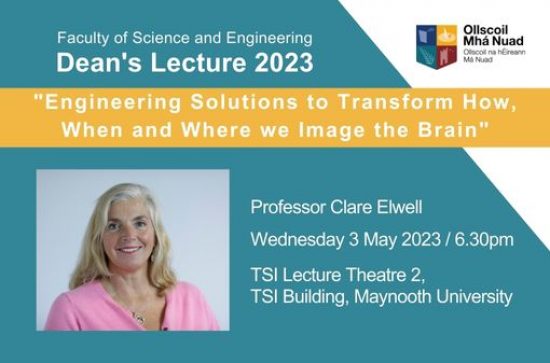
I have a telecon coming up in a few minutes, but after that I’ll be attending this public lecture:

The speaker, Professor Clare Elwell is a physicist at University College London, where she is the Director of the Near Infrared Spectroscopy (NIRS) Group. Specifically, Prof Elwell develops non-invasive techniques to study brain function, paving the way for defining early markers of autism, developing more targeted care following brain injury, and for better understanding brain development in global health settings. Prof Elwell described her pioneering work in using invisible near infrared light to probe the human brain. Near Infrared Spectroscopy (NIRS) is a portable, wearable, low-cost brain imaging technology which can be used to study the brain in newborn babies, toddlers and adults in a range of different scenarios.

I’ll post an update when I get home after the lecture. Actually, there’s no need because the lecture was streamed and a recording is now available. The lecture starts a fairly long way in and the sound didn’t start until part-way through the introductions so I’ve cued the link to the start of the lecture itself.

It was a very interesting lecture by a very engaging speaker. The audience was smaller than I’d expected, though, with less than a hundred in the theatre. This might be because it was scheduled in the middle of the last week of teaching term, which is a very busy time of year for academic staff.

Unknown Unknowns

Posted in Bad Statistics, History on May 2, 2023 by telescoper

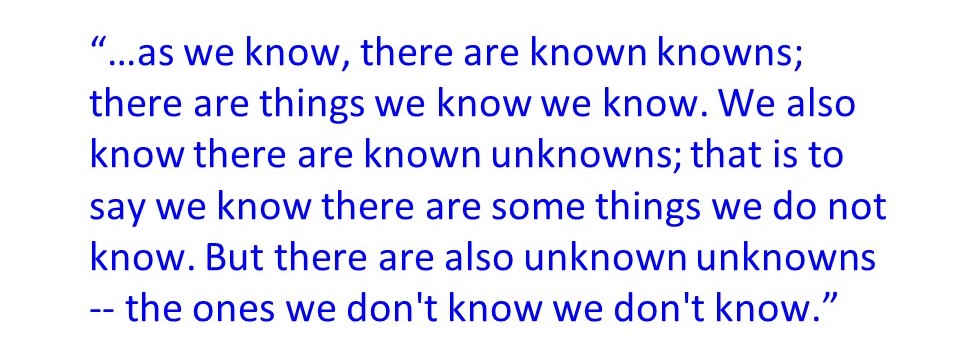
I was surprised today that some students I was talking to couldn’t identify the leading American philosopher and social scientist responsible for this pithy summation of the limits of human knowledge:

Obviously it’s from before their time. How about you? Without using Google, can you identify the origin of this clear and insightful description?