Archive for December, 2025

Viva Chair

Posted in Biographical, Maynooth with tags , , , , on December 5, 2025 by telescoper

Yesterday afternoon I acted as Chair of the viva voce examination for a PhD degree in the Department of Mathematics & Statistics at Maynooth University. I have done this once before at Maynooth, in the Department of Biology, but had to look back through my archive of blog posts to find out when that was: it was in June 2023.

For those of you not familiar with how this works, a PhD involves doing research into a particular topic and then writing up what you’ve done in a thesis. The thesis is a substantial piece of work, often in the region of 100,000 words (200 pages or so), which is then assessed by two examiners (one internal to the university at which the research was done, and one external). They read copies of the thesis and write preliminary reports on it. Then the candidate has to defend it in an oral examination, which was what happened yesterday, after which they make a recommendation to the university about whether the degree should be awarded.

There aren’t many rules for how a viva voce examination should be conducted or how long it should last, but the can be as short as, say, 90 minutes and can be as long as 5 hours or more. The examiners usually ask a mixture of questions, some about the details of the work presented and some about the general background. Sometimes, especially in Mathematics, the candidate might be asked to use the chalkboard to explain something, as was the case yesterday.

The unpredictable content of a viva voce examination makes it very difficult to prepare for, and it can be difficult and stressful for the candidate (as well as just tiring, as it can drag on for a long time). However, call me old-fashioned but I think if you’re going to get to call youself Doctor of Philosophy you should expect to have to work for it. 

I found it interesting when I first arrived here that viva voce examinations at Maynooth follow a similar practice to those at my previous institution, Cardiff University my previous institution, in that each viva has a Chair as well as the usual internal and external examiners. The Chair is really only present to ensure fair play, that proper procedure is followed, and that all the paperwork is done in timely fashion. The Chair is rarely (if ever) called upon to intervene in the viva itself, though I have on some previous occasions done so, mainly to ask if the candidate and/or examiners would like to take a comfort break. Other than that it’s just a matter of sitting quietly and getting on with something else while the viva proceeds.

I have done quite a lot of examinations as internal or external examiner over the years and most institutions don’t have a Chair – only the two examiners and the candidate are present. Cardiff University is an exception: I chaired a quite a few vivas when I was there. The difference there was that the Chair was from the same School (Physics & Astronomy) as the candidate, whereas in Maynooth the Chair must be from a different Department (which is why I was asked to Chair examinations in Biology and, more recently, Mathematics).

I think having an independent Chair is a good idea, but I do understand that it involves finding a person willing to do it which, it seems, sometimes slows down the organization of a viva, as the process does not start until a Chair is appointed.

Anyway, in this case it all went well. The candidate passed, the forms were filled in and sent to the relevant people. Now there are just minor corrections to be done, everything approved at the relevant Faculty meeting, and then the PhD degree can be conferred.

Like a Million Pounds…

Posted in Biographical, Open Access with tags , , , , , , , on December 4, 2025 by telescoper

I’ve come down with some sort of lurgy and had to cancel a tutorial that was due to take place today, which I am sorry about. I did, however, manage to rise from my sick bed earlier this morning to publish a paper at the Open Journal of Astrophysics. When I checked the publishing dashboard I saw that this one is paper No. 425. This is a significant figure if you reckon by the cost of an Article Processing Charge (APC) at Monthly Notices of the Royal Astronomical Society. The current APC is £2356 per paper. If you multiply this by 425 the result is just over a million pounds (£1,001,300 to be exact). The Open Journal of Astrophysics, being a Diamond Open Access journal, is totally free for authors.

I mentioned a couple of weeks ago, that this is a small fraction of the money being wasted by the astronomical community worldwide on publication charges but if even a small operation like ours can save a million pounds, just think of what could happen if we all published this way! For one thing, there would certainly be more money available for actual research. That doesn’t only go for astronomy, of course: almost every scientific discipline is being ripped off by publishers who have hijacked the Open Access movement to generate income from APCs.

I’ll repeat the quotation I posted yesterday about a scandal relating to corporate publishing giant Elsevier

The scandal exposes the windfall profits of scientific publishers, who in recent years have amassed billions of dollars in earnings from public funds earmarked for science.

It’s a shocking idea, I know, but what if we spent public funds on what they are supposed to be spent on rather than handing millions to greedy publishers?

Yet Another Elsevier Scandal

Posted in Open Access with tags , , , on December 3, 2025 by telescoper

I wish to draw your attention to an article in the Spanish newspaper El Pais. I encourage you to read the full article, which in English here, and the headline is this:

The article is about a very dodgy journal called Science of the Total Environment published by Elsevier. As far as I can tell, despite the scandal, this journal is still listed in Scopus which is meant to mean that it is a quality journal. One shouldn’t be surprised however, because Scopus is itself owned by Elsevier. Why anyone would trust Scopus for anything is completely beyond me.

As well as the huge revenues and profit margins revealed in the article, it also mentions that Erik Engstrom, CEO of RELX (the multinational that owns Elsevier), earned more than €15 million ($17.4 million) in 2024 between his salary and other compensation. Nice work if you can get it…

Here’s a quote:

The scandal exposes the windfall profits of scientific publishers, who in recent years have amassed billions of dollars in earnings from public funds earmarked for science.

Quite so. I’ve been saying as much for years, in fact, and it is the major reason for setting up the Open Journal of Astrophysics. In my opinion, however, the scandalous behaviour of publishers is only half the problem: equally to blame are the institutions that go along with it.

MAUVE Image Simulation

Posted in The Universe and Stuff with tags , , , on December 2, 2025 by telescoper

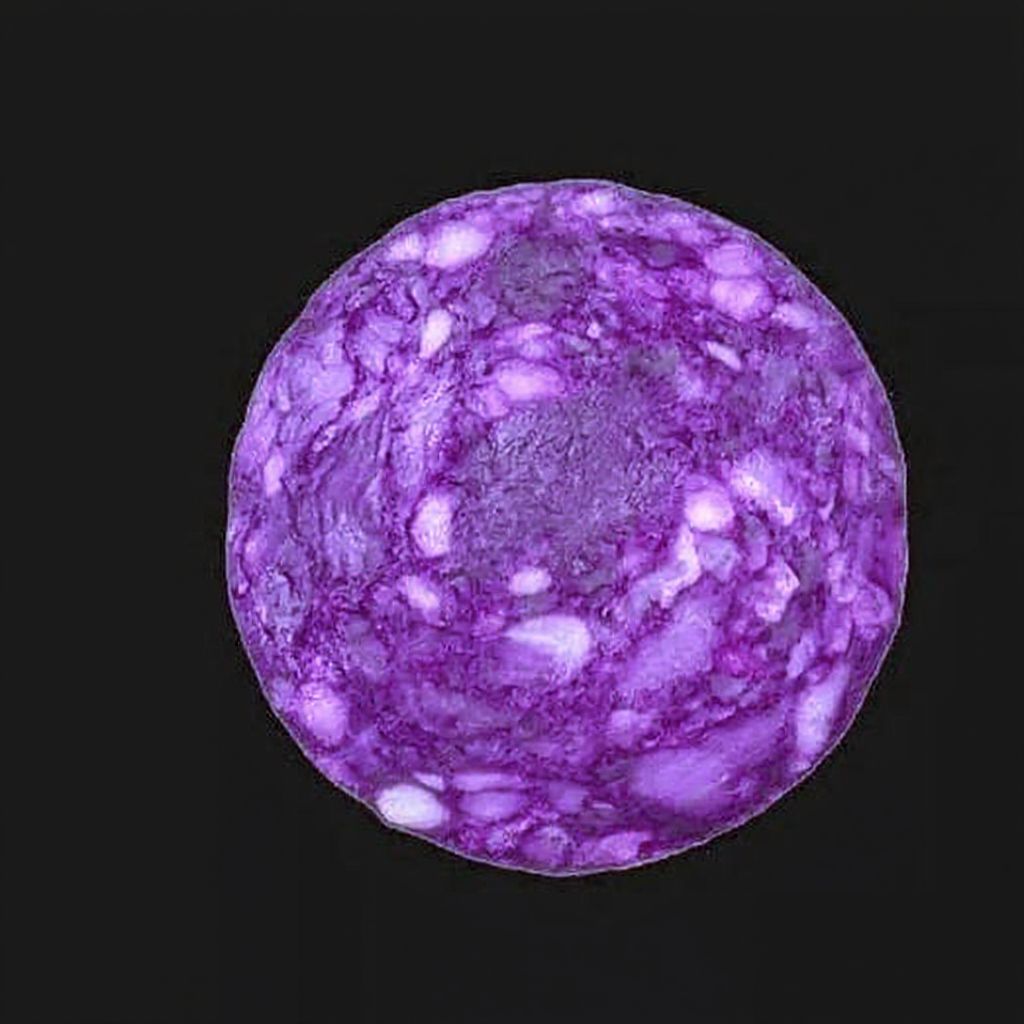
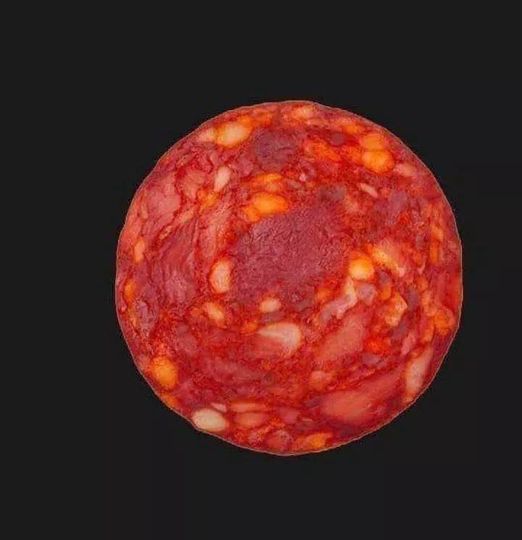
Since the successful launch of the MAUVE satellite on Friday, the telescope has been undergoing verification and calibration. Meanwhile, I’ve been hard at work using my advanced image processing skills to simulate what images of astronomical objects seen in other wavebands might look like using MAUVE.

Here’s an example.

The original picture below is a famous image that needs no introduction. Simply move the slider to the left to reveal the MAUVE version…

P.S. Apologies that the software does not quite scale the images correctly.

World Aids Day

Posted in Biographical, LGBTQ+ with tags , , on December 1, 2025 by telescoper

Today, 1st December, is World Aids Day, which is dedicated to raising awareness of the AIDS pandemic caused by the spread of HIV infection, mourning those who have died of the disease, and showing solidarity with those living with HIV. In my case it’s also a day for remembering how lucky I have been.

Here’s me just about to leave the house this morning with my red ribbon.

Eight Years in Maynooth…

Posted in Artificial Intelligence, Biographical, Education, Maynooth with tags , , on December 1, 2025 by telescoper
Maynooth University Library, home of the famous cat

Today is 1st December 2025, which means that it’s eight years to the day since I started work at Maynooth University. Despite the frustrations, I’m still very happy I made the move all that time ago.

We’ve now had more than a year since the merger of the former Departments of Theoretical and Experimental Physics. This has gone pretty well, actually, with significant improvements in terms of some steps forward in rationalising teaching. It does, however, feel less like a merger and more like an acquisition, with the theoretical activity effectively subsumed into the old Experimental Physics department. I suppose that was inevitable given the relative sizes of the two former Departments, but it has led to a loss of identity and the loss of the group spirit we use to have in Theoretical Physics. To add to this a number of familiar faces have left – two of my own PhD students, Aonghus Hunter-McCabe and Aoibhinn Gallagher have graduated and left, as have others with different supervisors. I am delighted for their success, of course, but will miss having them around.

I continue to enjoy teaching, and was pleasantly surprised to continue doing the same modules this academic year as last. The big change in that regard has been the adoption of different assessment methods to deal with the possibility of students using AI to do their coursework. That seems to be going reasonably well, though I’ll have to wait until the January examinations to see the outcomes.

The thing I’m probably most proud of over the past eight years is, with the huge help of staff at Maynooth University Library, getting the Open Journal of Astrophysics off the ground and attracting some excellent papers. This year has seen yet more significant growth, publications this year set to reach 200, after 120 in 2024 and just 50 the year before that (2024). We’re still smaller than many of the mainstream astrophysics journals, but we’re still growing…

Anyway, eight years of service mean that only two remain until I can claim the full state pension. I’ll be retiring as soon as I can afford to. There were Open Days at Maynooth on Friday and Saturday (28th and 29th November, respectively). These were for prospective students to enter in September 2026. Since I don’t teach any first or second year Physics modules now, and that is likely to continue, it looks like I’ll never see any of that intake in class.