When I moved to Ireland, almost nine years ago, one of the words I discovered had a usage with which I was unfamiliar was grind. My first encounter with this was after a lecture on vector calculus when a student asked if I knew of anyone who could offer him grinds. I didn’t know what he meant but was sure it wasn’t the meaning that sprang first into my mind so I just said no, I had just arrived in Ireland so didn’t know of anyone. I resisted the temptation to suggest he try finding an appropriate person via Grindr.
I only found out later that grinds are a form of private tuition and they are quite a big industry in Ireland, particularly at secondary school level. School students whose parents can afford it often take grinds in particular subjects to improve their performance on the Leaving Certificate. It seems to be less common for third level students to pay for grinds, but it does happen. More frequently, university students actually offer grinds to local schoolkids as a kind of part-time employment to help them through college.
The word grind can also refer to a private tutor, i.e. you can have a maths grind. It can also be used as a verb, in which sense it means `to instil or teach by persistent repetition’.
This sense of the word grind may be in use in the United Kingdom but I have never come across it before, and it seems to me to be specific to Ireland at least in current usage. A colleague sent me a link to an article about Carew Arthur Meredith, who worked at Trinity College Dublin from 1943 to 1964 but who was previously at Cambridge University and lived there until 1939:
After graduating, Meredith married Sybil Clark and settled down to what was to be for many years his occupation: that of university coach or “grinder.”
This establishes a possible conduit for the transfer of the word “grinder” from England to Ireland and it inspired me to look at the trusty online Oxford English dictionary which includes examples of usage. In fact the OED gives as examples of “grind” as a transitive or intransitive verbs and as a noun as well as the verbal noun “grinding” and the deverbal noun “grinder”. Here are some pertinent quotes. The first below, incidentally, is from a book of American college slang, demonstrating that the word had crossed the Atlantic by 1851.
Here are the most relevant examples, some of them hilariously susceptible to a double entendre.
n. Steady hard work; labour of a monotonous kind, esp. close and hard study; an instance of this, a dull and laborious task.
1851
Grind, an exaction; an oppressive action. Students speak of a very long lesson which they are required to learn, or of anything which is very unpleasant or difficult to perform as a grind.
B. H. Hall, Collection of College Words
1857
A medical student would have told him, that a ‘Grind’ meant the reading up for an examination under the tuition of one who was familiarly termed ‘a Grinder’—a process which Mr. Verdant Green’s friends would phrase as ‘Coaching’ under ‘a Coach’.
‘C. Bede’, Mr. Verdant Green Married xi. 93
vi. To work hard at a subject of study under the direction of a tutor or ‘grinder’.
1835
I am obliged to ‘grind’..that is, undergo a private examination with an authorized teacher or tutor.
E. Forbes in G. Wilson & A. Geikie, Memoir of Edward Forbes (1861) vi. 176
1870
After grinding with private-tutor Mylius the requisite time, Lessing entered the school of Camenz.
J. R. Lowell, Among my Books (1873) 1st Series 308
vt. To teach (a subject) in a steady laborious manner; also, to prepare (a pupil) in a subject.
1815
implied in:
Perhaps when Tom leaves Oxford..we may contrive some gainful grinding [i.e. tutorial] scheme between us. [at grinding n.]
J. Keble, Letter to Coleridge in Mem. (1869) iv. 63
1848
A pack of humbugs, and quacks, that weren’t fit to get their living but by grinding Latin and Greek.
W. M. Thackeray, Vanity Fair: A Novel Without a Hero lvi. 502
1859
[Dr. Bennett] undertook to grind him in anatomy and physiology.
G. Wilson & A. Geikie, Memoir of Edward Forbes vi. 180
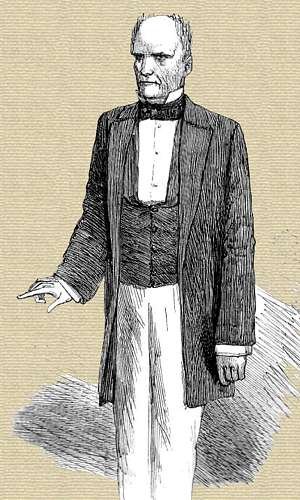
In Hard Times by Charles Dickens there is a character by the name of Mr Thomas Gradgrind, a grimly utilitarain school superintendent who insisted on teaching only facts. Hard Times was published in 1954 which is after some of the quotations above so Dickens did not originate the use of “grind” in teaching. He may have amplified it, of course.
This demonstrates that these terms were established in 19th Century England, but does not explain how their usage died out there but still flourishes in Ireland. Can anyone shed light on this? First recorded usages of grind, etc in Irish literature would be most helpful!

 In the Dark